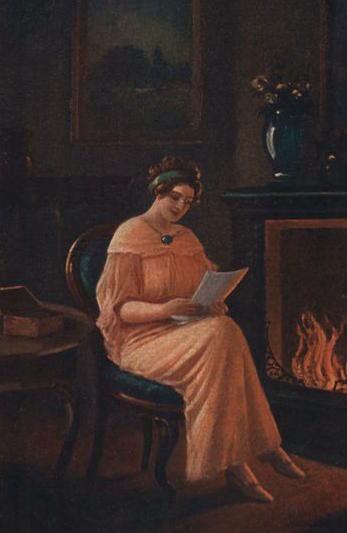
Isabella and the Interrupted Night

For more than a quarter of a century, Isabella edited newspapers (like The Pansy), wrote innumerable novels and short stories, taught classes on homemaking and child rearing, served congregations as a pastor’s wife, and designed Sunday school lessons for children. In between all that, she somehow managed to travel extensively.

Sometimes she was called upon to deliver an address at a conference. Other times she was the guest of a ladies’ missionary society or Bible study, where she often read chapters from one of the stories or novels she was working on at the time. (You can read more about that here.)

Newspaper clipping of an article titled "W.C.T.U. Day." Monday, Aug. 22, will be W.C.T.U. day at the Central New York Assembly, Summit Park. The program follows: 10:30 Crusade Psalm, crusade hymn and prayer; music; conference, Department Work, led by county president; Woman and Temperance, Mrs. G. R. Alden (Pansy); 12, noontide prayer; music. Afternoon - Music; The Saloon a National Problem Rev. Stanley B. Roberts; 2:45, music; medal contest; music; report of judges. Mrs T. M. Foster is county president of the W. C. T. U. and Mrs. L. T. Sherrill musical director.
From the Rome, New York “Daily Sentinel,” August 18, 1898.

When she returned home from one of her many trips, her family gathered around her so she could tell them all about the places she went and the people she met. Her niece, Grace Livingston Hill wrote:

“She saw everything, and she knew how to tell, with glowing words, about the days she had been away so that she lived them over again for us. It was almost better than if we had been along, because she knew how to bring out the touch of pathos or beauty or fun, and her characters were all portraits. It listened like a book.”

One time in particular, Isabella returned home with an extraordinary story. Speaking at the same event had been a woman who was active in many of the same efforts that were of interest to Isabella, such as woman’s suffrage, and the temperance movement. Like Isabella, the woman was well known across the country as a writer and as a much-in-demand public speaker. It was this woman who recounted to Isabella an incident that happened to her.

With the woman’s permission (and with a promise to keep the woman’s identity a secret), Isabella wrote a short story based on the woman’s experience.

The premise of the story is this: A woman traveling by train to a speaking engagement notices an older man and younger woman traveling together on the same train. She quickly realizes she had come upon a couple in the middle of an elopement—and that the young would-be bride is having second thoughts!

How Isabella’s friend intervened (and what happened after) were recounted in Isabella’s story. When it was finished, Isabella sent the story off to a Christian newspaper that was pledged to publish a certain number of her stories each year.

To her surprise, the editor wrote back to ask Isabella if she had considered that the story might suggest to young people “evil ways of which they had never read.”

Can you imagine that? The editor actually worried that Isabella’s story about an elopement might have a negative or “evil” influence on the young people who read it!

In the end, Isabella withdrew the story, locked it away, and forgot all about it. Then, in the late 1920s, she came across the old manuscript and decided to expand the story into a novel.

The result was An Interrupted Night, and the story’s lead character of Mrs. Mary Dunlap was based on Isabella’s friend and the unusual events she told Isabella about decades before.

An Associated Press newspaper photo of Isabella in her later years.

By the time she finished writing the book and submitted it to a publisher, Isabella was in frail health. When the publisher asked her to make some edits to her manuscript, Isabella’s niece, Grace Livingston Hill, stepped in to help her “put it into final shape.”

The book was released in the fall of 1929 with a decidedly modern-looking cover:

Book cover illustrated in the art deco style of the 1920s with a highly stylized profile of a woman's face drawn in tan and orange set against a plain black background. Set in orange type at the top the title "An Interrupted Night." The same orange type is at the bottom with the author's name.

And it was received by a decidedly modern audience that took the story’s premise of an eloping couple in stride. Isabella later wrote that she “exploded with laughter” when she thought about how much the world had changed in the years since she first wrote the story.

Now An Interrupted Night is available for twenty-first century readers to enjoy with a brand new cover:

Book cover showing a young woman carrying a suitcase striding purposefully down the boarding platform of a train station while other people enter and exit nearby train cars.

Mary Dunlap is on her way to a speaking engagement when the train on which she travels experiences engine trouble and must make an unexpected stop for the night. While frustrated by the delay, Mrs. Dunlap quickly realizes a couple on the train is in the middle of an elopement—and the would-be bride is having second thoughts! Drawing on God’s strength, Mrs. Dunlap intervenes; but can she convince the young woman to abandon her plan and return home to her mother before it’s too late?

An Interrupted Night is now available from The Pansy Shop, along with novels by Rev. Charles M. Sheldon, Mary McCrae Culter, and other Christian authors in Isabella’s circle of family and friends. Click on the tab in the menu above, or click here to check out The Pansy Shop!

BY THE WAY …

Who do you think was the “real” Mrs. Mary Dunlap? Frances Willard or Emily Huntington Miller Perhaps Harriett Lothrop (who wrote as “Margaret Sidney”)? Leave your guess in the comments below!

Isabella’s Glory

In her novel Wise and Otherwise, Isabella wrote about a group of people who lived at a boarding house and the influences they had on each other. One of the residents, Mrs. Sayles, invited her dearest friend Dell Bronson to visit and take a room at the same boarding house. Isabella describes their reunion this way:

Mrs. Sayles went about during the rest of that day with very shining eyes, and very happy, expectant face, which was not shaded in the least when on the morrow she had been sitting for half an hour close beside her friend, and was now with her in her dressing-room, waiting while the rich masses of brown hair were being smoothed and braided into shape.

Isabella knew whereof she wrote. Like Dell Bronson, Isabella also had rich masses of brown hair that she wore in a braid, arranged at the back of her head.

A pencil and charcoal drawing of Isabella as a young woman. Her hair is parted in the middle and drawn to the back of her head where it is arranged in a braided coil.
A publicity image of Isabella, drawn from a photo of her when she was about age 30.

Her niece, Grace Livingston Hill, admired Isabella’s hair, and described it this way:

Her eyes were dark and had interesting twinkles in them that children loved; her hair was long and dark and very heavy, dressed in two wide braids that were wound round and round her lovely head in smooth coils, fitting close like a cap.

Black and white photo of Isabella wearing her hair parted in the middle and drawn smoothly back into a braided bun at the back of her head.
Isabella about age 35

But that wasn’t all Grace admired about her aunt’s hair. She wrote:

When [her hair] was unbraided and brushed out, it fell far below her knees and was like a garment folding her about.

Black and white photo of Isabella in profile. Her hair is parted in the middle and smoothed back into a braided bun at the back of her head.
Isabella about age 40

Grace went on to confess:

How I adored that hair and longed to have hair just like it! How I even used in secret to tie an old brown veil about my head and let it fall down my back, and try to see how it would feel to have hair like that. Nobody else in the world looked just as lovely as did she.

Black and white photo of Isabella Alden in profile, showing her hair parted in the middle and combed back into a braided bun at the back of her head.
Isabella, about age 60.

Isabella kept the same simple yet becoming hairstyle throughout her adult life.

Are you surprised to learn how long Isabella’s hair was? What is the longest length you’ve ever grown your hair?

A Letter from Ida White

It’s difficult to describe how incredibly popular The Pansy magazine was. As the editor, Isabella received hundreds of letters every month from parents and children. Sometimes they wrote in response to a question Isabella posed in an article or story. Sometimes children wrote stories of their own and sent them to Isabella for her feedback.

Other times children confided their problems to Isabella and asked for her advice; others simply wrote to tell Isabella about their day.

Photo of a small desk, set beneath a window. On the desk is a piece of paper; at the top of the paper is written "Dear Pansy." Beside the paper on the desk is a pencil and some books with old-fashioned leather covers and spintes.

In 1891 a little girl named Ida White wrote a letter about her family and home life that Isabella found so charming, she published the entire letter in The Pansy magazine for all her readers to see. Here is Ida’s letter.

Dear Pansy:

My hair has grown out in curls about three inches long all about my face and neck.

We have a little baby at our house, which we call Blue-eyed Pansy. His name is George Washington.

Both of my little brothers are tongue-tied, and have two toes on the same foot, grown together. They are as much alike as twins could be, only one is nine years, and the other three months old. Mamma took him to church last Sunday and he squealed; she took him out in the hall, and he squealed there; then she took him out in the yard, and gave him a roll on the grass. He cannot talk, but he has heard the word “look” so much, that he tries to say it, or seems to.

We have a little dog named “Tip.” He is about the size (and my sister thinks he is almost as sweet) as a pound of yellow sugar. We have four little kittens; their names are Adams, Lincoln, Jefferson, and Grant. We live on a farm in a two-story house, a mile and a half west of the village. We have two hundred little chickens.

A small puppy peers at a little chick that has just hatched and still has a bit of egg shell on its head.

A little oriole built its nest on a tree in our front yard; then a cuckoo stole the nest, and they brought up their families together. We have pansies blooming on the north side of the house. We have flowers from March till frost; and plenty of beautiful little hummingbirds, and innumerable bumble-bees.

I have an uncle living in California that mamma and I never saw; when he comes to see us, I will tell you about California. I would like to go to New York, and to Niagara Falls, and to see the ocean.

I think it is real good and kind of you to read other people’s children’s scratching, and give them a chance to write; and I love you for it. I hope your Ray will live till he is a man, for I think he will be a good and benevolent gentleman. You may publish my letter if you want to.

Good-by,
Ida White.

In the last paragraph of her letter, Ida mentioned Isabella’s son “Ray.” At the time, Raymond Alden was three years old and the apple of Isabella’s eye. She often shared little stories in the magazine about his antics and mentioned him when she replied to children’s letters (“No, we haven’t any dog; but our Ray, whenever we ask him what he would like to have for a birthday present, says, “A big, black dog.”).

By all accounts, Ida’s wish came true, for Raymond Alden grew up to be a well-loved, well-respected and extremely “benevolent gentleman.”

Isabella’s Most Difficult Year, Part 2

This is the second of two posts about Isabella’s most difficult year. If you missed the first post, you can read it here.

In the spring and summer months of 1924, Isabella and her family carried on without her beloved husband, Ross, who died in March of that year.

The influenza epidemic that precipitated Rev. Alden’s death had waned, but there were still reported cases as late as the summer of 1924. That’s when Isabella’s sister Marcia fell ill.

Black and white photo of a woman of about 60 years of age. Her wavy hair is parted in the middle and softly drawn up into a bun at the back of her head. She wears a dress with a high neckline and a soft shawl-style collar. The sleeves are long and have white cuffs trimmed with lace at her wrists. She holds an open book in her hands.
Marcia Livingston

Again a doctor was called to the house in Swarthmore to treat her, but the virus had weakened her heart. On August 7, Marcia succumbed to myocarditis, a rare but serious condition that causes inflammation of the heart muscle.

It had to have been a devastating blow to Isabella. For their entire lives, she and Marcia had been close. Marcia was the sister who tended Isabella when she was young, who watched over her when she was ill, and prayed that Isabella would choose Christ as her Saviour (you can read more about that here). Marcia helped introduced Isabella to her husband Ross; and after Isabella married, the Livingstons and the Aldens shared a home in Florida, and lived as neighbors at Chautauqua. They were as close as sisters could be.

Black and white photograph of two elderly women sitting together. They are both wear their hair parted in the middle and pulled back to a braided but at the back of their heads. Isabella is dressed in a long-sleeved, high-neck blouse and skirt and she is knitting. Marcia wears a dark colored, high neck, long-sleeve dress and holds an open book in her hands.
Isabella Alden (left) and her sister Marcia Livingston (courtesy Daena Creel).

Isabella wrote:

I held the dear hand of my one remaining sister Marcia all that day, and prayed for one more clasp of it, one look of recognition, all in vain. She went, as did my dear husband, without a word or look.

Marcia was laid to rest in Johnstown, New York; that was where Marcia and Isabella grew up, and where Marcia met her husband Charles (you can read more about that here). Her grave is beside Charles’ grave and the grave of their infant son Percy.

Photo of a large stone grave marker that reads: Marcia Macdonald wife of Charles M. Livingston 1832 - 1924.
Marcia Macdonald Livingston’s grave marker in the Johnstown Cemetery.

Although there’s no known record of it, Isabella, Grace, and other family members may have traveled to New York for the interment. If they did make the journey, it’s probable that Isabella’s son Raymond did not accompany them.

By the time Marcia died, Raymond was receiving medical care in Philadelphia for a chronic condition. All his life Raymond endured a painful form of eczema that caused open sores and blisters, leaving him prone to infection. In May of 1924, Raymond’s condition became worse, and he began to regularly see a doctor in Philadelphia.

Black and white full-body photo of a gentleman standing out of doors in front of a large stone building. He wears a three-piece suit, a bowler hat and spectacles. One hand is in his trouser pocket; in the other hand he holds a pair of gloves.
Raymond Alden, from the Stanford University 1923 Yearbook.

By July Raymond’s wife Barbara wrote to her cousin about Raymond’s health, saying that although he was still very sick, he had shown “marked improvement.”

Newspaper clipping. Headline: Prof. R. M. Alden Reported Better. Marked improvement in the condition of Prof. Raymond M. Alden, who has been seriously ill for several months in Swarthmore, PA., is reported in a recent letter to Mrs. Alden's cousin, Miss Effa Spencer, who is now in Carmel. Although Dr. Alden is still very sick, his condition is now hopeful and his convalesence encouraging.
From The Peninsula Times Tribune, July 15, 1924.

But his improvement was short-lived. By September Raymond was suffering from an infection and, possibly, from an allergic reaction to medications he was given.

On September 27, less than two months after the death of his aunt, Raymond Alden died. Isabella was with him at the end.

“Mamma, fan me!” was the quick eager word my dear boy said, and the next minute he was gone.

Grace later wrote:

My saintly uncle went first, then my precious mother, and then my brilliant cousin, Dr. Raymond M. Alden. One blow after another that nearly crushed us all.

The family held a private funeral service for Raymond in Philadelphia; then it was time for the Aldens to leave Swarthmore and return to their Palo Alto home. Grace described it this way:

Then my dear aunt, courageous and wonderful through it all, went back to her California home with her brave daughter-in-law, and her five grandchildren.

Newspaper clipping. Headline: Return to Palo Alto. Mrs. G. R. Alden, Mrs. Raymodn Macdonald Alden and the latter's two younger children, Elizabeth and Raymond, Jr., have returned to Palo Alto after a year's absence in Pennsylvania. Mrs. Alden's oldest son, Donald, returned earlier int he month to enter Stanford. The other two children, John and Ronald, are in Pasadena with their aunt.
From The Peninsula Times Tribune, October 18, 1924.

There must have been times when Isabella felt the acute loneliness of losing the three most important people in her life. She once wrote to Grace:

There is no one in all the world who needs me any more. I’m too old to help anybody in any way, and too weak to be anything but a burden to those who have already more than they can bear. Why can’t I go now to my eternal rest? Does it seem to you wrong to pray for this?

There were other times when she spoke of the many family members who had died over the years, and asked impishly, “What do they think of us all by this time? Do they meet together and talk us all over?” She thought often of the loved ones who had “gone ahead” and wrote to Grace:

Sometimes I have to put my hands over my eyes in the darkness and say: “Casting all—All—ALL your care upon Him.” Oh, why doesn’t He take me home?

But God did not call her home. Isabella lived with Barbara and her grandchildren in the house she and Ross built on Embarcadero Road in Palo Alto for another six years.

A young woman with dark hair stands facing the camera. She wears a coat and a hat with a wide brim and tall feathers sticking up from the crown. Her hair is styled in a bouffant with a bun on top of her head hidden by the hat.
Barbara Hitt Alden, about 1910

By all accounts, Barbara was loving and kind and “more than a daughter” to Isabella. And despite Isabella’s belief that she was “too weak to be anything but a burden” to Barbara, she would soon find that her work on Earth was not done, and that she had one last novel to write before she would be called Home to her Saviour.

Next Month: Isabella’s Final Novel

You can read more about the house Isabella and Ross built in Palo Alto by clicking here.

Click here to read the story of how Marcia and Charles Livingston introduced Isabella to her husband, Ross.

Isabella’s Most Difficult Year

On the surface, it may seem that Isabella led a charmed life. Her husband was beloved a minister and a leader in the Presbyterian Church.

Black and white photo of an elderly man wearing a cleric's collar and suit. His head is bald on top, and he has a full beard and mustache. He wears a pair of wire-rimmed glasses.
Gustavus “Ross” Alden in later years (about 1912)

Her son Raymond was a talented writer, a beloved teacher, and an esteemed academic.

Black and white photo of an elderly woman. She is seated and holding a book in her hands she appears to be reading.
Isabella Alden, about 1895.

Isabella, herself, had been a successful author for decades, as well as an influential editor of various Christian magazines for young people and adults.

With so many proud accomplishments in her life, it’s hard to remember that Isabella had her share of heartache and loss.

Some of those losses were made all the more difficult because they occurred almost in a back-to-back fashion during one six-month period in her life. And it happened one-hundred years ago.

The year 1924 began on a positive note for the entire Alden family. Isabella’s son Raymond—who was head of the English Department at Stanford University in California—was on sabbatical so he could teach courses at Columbia University in New York. It was an exciting career opportunity for Raymond.

A black and white photo of a young man dressed in a suit and wearing a pair of eyeglasses.
Undated photo of Raymond Macdonald Alden.

His topics during that Spring Session at Columbia were:

  • English Literature from 1780 to 1830.
  • Shakespeare
  • Versification
Clipping from catalog. Heading: ENGLISH AND COMPARATIVE LITERATURE below which is a listing of professors. Highlighted portion reads "Visiting Professor: R. M. Alden."
Raymond Alden listed as a Visiting Professor in the English and Comparative Literature department, Columbia Course Catalog for 1923-1924.

Raymond, his wife Barbara, and their five children (ages 2 to 14) made the move east together and rented a home within an easy commute to Columbia’s campus.

Portrait of a young woman wearing clothing with a high collar neckline and large puffed sleeves that were in style about 1890.
Barbara Hitt Alden, in her early twenties.

Isabella and her husband Ross went, too. Ross was 92 years old and had been officially retired from the ministry for some time, but he still enjoyed excellent health and a quick wit and intellect. Isabella was still writing novels, but she too had “retired” and had adopted a much slower pace when it came to her work.

Isabella and Ross moved into the Swarthmore, Pennsylvania home of Isabella’s sister Marcia Livingston and niece Grace Livingston Hill. Grace often described Marcia and Isabella as “inseparable” sisters, and for the majority of their lives, the Aldens and the Livingstons spent much of their time together.

It was while the Aldens were staying with Marcia and Grace in Swarthmore in the spring of 1924 that tragedy struck.  

Photograph of a large two-story home with brick accents set back from the street with lush green lawns and mature trees.
Grace Livingston Hill’s Home, Swarthmore, PA.

At that time Philadelphia was dealing with an influenza epidemic. The particular strain that prevailed during the spring of 1924 often caused pneumonia.

Newspaper clipping. Headline: HEALTH DIRECTOR WARNS OF DANGER. Tells Public to Watch February and March Cold Symptoms. These Two Months Shown as Highest in Pneumonia Mortality.
From The Philadelphia Inquirer, February 18, 1924.

Unfortunately, antibiotics like penicillin and sulfonamides were not as widely available as they are today; so doctors could offer little in the way of treatment for pneumonia, beyond recommending bed rest, and drinking fluids. Almost every day newspapers reported new outbreaks of the influenza virus, as well as the number of deaths, and it often seemed as if no one was safe.

Newspaper clipping. Headline: BABE RUTH STRICKEN BY FLU, PNEUMONIA IS RESULT NOW FEARED. Article: Babe Ruth, the Sultan of Swat, baseball's biggest attraction and the game's longest hitter, is seriously ill at a local hotel. Just now Ruth is suffering from an attack of flu, but there is danger he will develop pneumonia within the next twenty-four hours. According to Dr. W. T. Wootton, there is a great deal of congestion over Ruth's left lung.
From The Philadelphia Inquirer, March 1, 1924.

Health officials warned that a common cold or a mild case of the flu could quickly turn into a deadly case of pneumonia. Unfortunately, that is exactly what happened to Rev. Alden. At ninety-two years of age he was particularly susceptible to pneumonia, and although the family brought in a physician in to treat him, he died on March 29, 1924.

Newspaper clipping. Dr. Alden's death at the home of his niece, Mrs. Grace Livingston Hill, followed an illness of only 48 hours. Up to that time he had been strong and vigorous, although in his 93rd year. Funeral services, followed by cremation, were held in Swarthmore.
From The Peninsula Times Tribune, April 14, 1924.

His death was reported in newspapers across the country and the tributes and remembrances came pouring in. People wrote about their memories of when he was their church minister. They related the anecdotes he used to illustrate his sermons and teachings; and they mentioned the close friendships they formed with him in the Sabbath School classes he taught.

Perhaps Isabella had a chance to read some of those tributes. And she no doubt relied upon her sister Marcia’s support, as well as the tender care that Raymond, Barbara and Grace would have provided.

Isabella made the decision to remain in Swarthmore until summer, so Raymond could fulfill his teaching responsibilities at Columbia. Then, the Alden family planned to travel together back to their home in Palo Alto, California, where Rev. Alden’s remains would be laid to rest.

In her remembrances of her uncle, Grace recalled a poem he wrote and had printed as a New Year greeting card. He sent the cards to the members of his Bible class the last winter he was with them before going to Swarthmore. It reads:

TODAY

We are living today—not tomorrow,
For no morrow was ever yet seen;
And for joy, or for pain, or for sorrow,
Only yesterdays ever have been.

God gives us duties—just for today;
And His strength He bestows by the hour,
“Grace is sufficient” we still hear Him say,
So we trust Him for wisdom and power.

And since today is all that He gives,
Let us treasure the day as it stands.
It matters, then, much how everyone lives
For tomorrow God holds in His hands.

G. R. Alden

Next: Isabella’s Most Difficult Year, Part 2

The Domestic Problem

Isabella Alden believed that young Christian women who must earn a living would—for the most part—be better off doing so by hiring themselves out as domestic helpers in Christian homes, rather than taking jobs in factories or stores.

Illustration of a young woman about 1910 wearing a long-sleeved, floor-length dress over which is an apron. In one hand she holds a canned grocery item. With her other hand she gestures toward a large, ornately-decorated cast-iron stove. Beside her is a kitchen work table holding a jar, a bowl, a bucket, a spoon and glass.

She used that idea as the premise for her short story “Their Providence” (which you can read for free by clicking here).

Isabella believed a Christian home offered a safer living environment for a single young woman; and that she would be protected from the coarse worldly influences she would find if she lived in a boarding house.

Illustration of a young girl from about 1910. She wears her brown hair up in a loose bun with a large black bow. Her floor-length dress is black with a white collar, cuffs, and a white lace-trimmed apron.

She also believed that living with a Christian family would reinforce the beliefs and principles Christian girls grew up with, such as keeping the Sabbath holy, regularly attending church, having daily Bible readings, and engaging in mission work.

Isabella knew the arrangement could be problematic. In her novel Ester Ried’s Namesake she wrote about a head-strong, quick-tempered young heroine who was hired as a live-in domestic helper for a Christian family that often treated her very poorly. But in true “Pansy” fashion, the characters in her novel eventually recognized their shortcomings and, with God’s help, learned to forgive and influence each other for good.

Illustration of a woman about 1900 wearing a high-necked, long-sleeved shirt and a brown skirt, over which is a white apron. In one hand she holds a recipe book; in the other she holds a pan of backed bread. Behind her another woman wearing a servant's cap pours a liquid from a saucepan into bowls placed on a table. Behind them is a large cast-iron stove. On top of the stove is a kettle with steam coming from its spout.

She also shared her idea of young women working as domestic help in some of her speaking engagements and in magazine articles she wrote.

But the concept was not always a welcome one. In 1911 Isabella received a letter from a young woman in Ohio who disagreed with Isabella’s advice.

I have recently read, in a paper or yours, a remark about “lovely Christian homes” where self-respecting girls could earn their living as helpers. I wonder if you really have any idea how these “lovely” people treat their hirelings? I think you had in mind the comfort of your well-to-do friends, rather than the girls whom you advised.

When you talk about girls finding good “homes” I don’t think you stop to consider both sides. What does “home” mean, if not a place where one has entire freedom to come and go, to plan one’s work, and work one’s plans?

I cannot see how any self-respecting person who has always had her own home could live as a hireling in other people’s homes. Could you? My observation has shown me that a condescending manner is the very best that even “lovely Christian people” have for their domestic helpers.

—Ohio.

Isabella had heard such criticisms before, some of which were “kind and sensible” and others “supercilious and snappy.” Here’s how she responded to the letter writer from Ohio:

“Notwithstanding the letter writer’s opinion, I believe I had in mind the comfort of both employer and employed when I urged self-respecting girls who had their living to earn to choose an average Christian home in which to earn it, in preference to factories, shops, and other public places. You, my dear girls, who have written to me, are starting this argument from the wrong platform.

“The foundation question is not, “How shall I secure me a home where I can have entire freedom to come and go, to plan my own work, etc.” but, “Is doing housework in other people’s homes a good and respectable way for a young woman to earn her living, and can she in this way hope to secure the reasonable conveniences and comforts of a home?”

“To this question I reply with an unhesitating Yes.

Illustration of a young woman about 1895. She wears a black dress with a high collar and puffed sleeves, and a white apron. She is pouring liquid from a copper pan into a soup tureen that rests on a kitchen table beside a variety of vegetables.

“The only—or almost the only—work open to women in which careful previous training is not demanded, nor even expected, is domestic service. Here the demand has been so much greater than the supply that absolutely untrained and ignorant help has rushed in and created the conditions that now exist.

“The attitude of the average employer toward her servant is endurance: she is unable to commend her work, she can only tolerate it. She has learned to conduct herself accordingly; and the multitude of decently educated, reasonably well brought up American girls who cannot be artists nor teachers nor stenographers, but must, nevertheless, earn their living, have, because of the above state of things, given this form of work a wide berth and rushed into shops and offices and factories, instead.

Illustration of a young woman from about 1895, wearing a green dress with large puffed sleeves. The skirt is floor length and over the skirt she wears a white apron tied around her waise.

“Now, let us look for a moment at one of the exceptions:

“She is an American girl with a partial high school education. She planned to be a teacher, but something happened. Illness, or sudden reverses, or unexpected demands, have made it necessary for her to become an immediate wage-earner. Times are hard and openings few; as a last resort she resolves upon trying domestic service, with every nerve in her body shrinking from the ordeal, because of what she has heard and seen and fancied.

Illustration of a young woman bending over the railing of a staircase. In one hand she holds a bar of soap. In the other hand she holds a cloth she uses to clean the spindles and post of the staircase.

“The woman who employs her (knowing she lacks previous training or recommendations) does so because she is in straits and must have somebody right away. All she knows about the applicant is that she looks “uppish” and as though she would feel above her work; which is precisely what the girl does feel. She is all ready to have her worst fears confirmed, and they are confirmed. She finds a thousand things to flush her cheeks with indignation.

“She resents the “orders” given out by the hurried and worried mistress who yet is not mistress of herself. She resents the poorly furnished room, the solitary meals at the section table, the eternal use of her given name. These and a dozen other grievances keep her in a constant state of irritation and resentment. She cannot do even her best—and none know better than she that, because of the lack of training, her best is not very good, for she is too much tried to give real heart to her work.

Illustration of woman holding a bottle of furniture polish in one hand. In her other hand she uses a cloth to polish the top of a dining table.

“What wonder that, after a short trial, the exasperated mistress and the equally exasperated maid separate, the one to be more convinced than ever that the word “help” as applied to the kitchen is a misnomer, and the other to write letters to someone to prove the impossibility of self-respecting girls earning their living in domestic service?

“For the sake of my correspondent who thinks I am theorizing and do not understand the situation, I want to explain that I have been a housekeeper for forty-five years; that I have been studying this problem carefully in my own home and the homes of certain of my friends for more than a quarter century; that I have known intimately all sorts of “hired girls,” and have helped a few of them to experiment in all sorts of homes.

“I have had the would-be fine lady who was an intolerable nuisance; I was glad when I saw her depart, and endured with what patience I could the unkind and untrue things she said about me; though I really believe they were true from her standpoint; she had so warped a view of the whole situation that she was incapable of even listening correctly.

Illustration of young woman wearing a white apron over an orange dress, and a white dusting cap with an orange bow over her hair. She holds a large feather duster.

“I have had all grades between, and I have had the real lady who came into my kitchen in appropriate dress and with quiet voice and quiet ways, and submitted to the regulation that obtained—many of which must have been new and trying to her—without the raising of an eyebrow to hint that she had all her life been used to different things.

“She came to me without flourish of trumpets, as an ordinary domestic servant at common wages; and when she left me after a year of invaluable helpfulness, it was as a tried and trusted friend, whom every member of my family not only respected, but enjoyed; and whom, as the years pass, we are glad to count as one held close in the bonds of friendship.

Illustration of smiling young woman wearing an apron and carrying a tray on which are glasses of juice and three plates of desserts.

“Nor was she the only “lady” help I have personally enjoyed. Glancing back over the almost half century, I find that five of them stand out in bold relief; strong friends, faithful friends, my “servants” still, in the same sense that I am theirs; and all of us trying to pattern after Him who said, “I am among you as he that serveth.”

“My correspondent asks if I “could live as a hireling in other people’s houses?” To which I reply, I do not know; I have never had the opportunity of trying myself in this way. It would all depend upon whether I was strong souled and resolute and sweet-spirited enough to brave present conditions and help to make them better.

“Yours for service,
Pansy.”

What do you think of Isabella’s idea?

Do you think you could ever “live as a hireling in other people’s houses?”

You can read Isabella’s short story “Their Providence” for free by clicking here.

Read Isabella’s novel, Ester Ried’s Namesake by clicking here.

Christmas For Jesus’ Sake

In Alabama the Tuscaloosa Female College was a successful and popular boarding school for girls aged six through sixteen.

Black and white illustration of a large building, three stories tall built in an ornate Gothic style. The first and second stories have verandas that stretch across the entire front of the building.
Tuscaloosa Female College, from an 1895 brochure.

In addition to classroom studies, the school offered students a variety of different clubs they could join; one club that was available to the youngest students was a chapter of The Pansy Society.

Isabella created The Pansy Society of Christian Endeavor as a children’s version of the Christian Endeavor program that had taken teens and young adults by storm in the 1880s.

Black and white drawing of the Pansy Society logo. In large letters are the initials P.S.C.E. behind and surrounding them are drawings of pansy flowers, ribbon, and letter-size mailing envelopes with scribbled addresses and hand-drawn postage stamps.
Logo for The Pansy Society of Christian Endeavor

She wrote about The Pansy Society in stories and articles she published The Pansy magazine. Children who joined the society pledged to do good works and live their daily lives “For Jesus’ sake.”

That motto—For Jesus’ Sake—was a motto the students at the Tuscaloosa Female College took to heart. Under the mentorship of teacher Eloise Hemphill, the school’s Pansy Society chapter took a special interest in some newspaper articles written by a local reporter about an orphanage in Tuskegee that was in need of help.

Excerpt from a newspaper. Headline: Tuskaloosa Female College. Faculty for Session 1888-89. The article lists several names of teachers in the "Collegiate Department" and the "Academic Department." Under the heading "Primary Department" is only one name: Miss C. Eloise Hemphill, Principal.
From The Tuskaloosa Gazette, September 20, 1888.

So when it came time for the school’s Pansy Society to perform their annual Christmas cantata, they invited the same reporter who wrote the articles to attend so he could write about their performance for the newspaper.

Unfortunately, the reporter arrived late, after much of the performance was over, and after Santa Claus had distributed all of the presents under the Christmas tree. So he was very surprised when, as soon as he arrived, the students immediately halted the program and called him up on the stage.

Wary, he did as he was asked, expecting to “receive a ten-cent comic toy placed on the tree by some little girl, to have a good laugh at his expense.”

“Imagine, therefore, his surprise and gratification when old Santa Claus handed him an envelope, tied with a piece of pink floss, with the following inscription:

“A Christmas offering of five dollars to the orphans of Tuskegee; presented by the Pansy Society in the Primary Department of the Tuskaloosa [sic] Female College, December 25, 1887.”

Newspaper Excerpt. Heading: The Pansy Society. On Saturday evening the Pansy Society of the Tuskaloosa Female College gave a Cantata and Christmas Tree. The Gazette reporter arrived too late to witness the first part of the evening's performance, and when he got a few feet inside the door the little girls commenced to call him to the stage. Mustering up all of his courage he walked straight up to the rostrum, blinded as he was by the bright light from the chandeliers. He expected to receive a ten cent comic toy, placed on the tree by some little girl, to have a good laugh at the expense of "ye reporter." Imagine, therefore, his surprise and gratification when Old Santa Claus handed him an envelope, tied with a piece of pink floss, with the following inscription: "A Christmas offering of $5 to the orphans of Tuskegee; presented by the "Pansy Society" in the Primary Department of the Tuskaloosa Female College, Dec. 25th, 1887."
From The Tuskaloosa Gazette, Thursday, January 5, 1888.

In 1887, five dollars was a lot of money for little girls to raise; it was the equivalent of about $160 in today’s economy.

The reporter was so surprised and gratified, the gesture caused him “to lose his head and eyesight at the same time” as he stammered out his thanks.

Of course the editor of The Tuskaloosa Gazette printed the story of the evening’s events, and added:

“Miss Eloise Hemphill and the sweet little Pansy Society have acted nobly. Out of their own little savings, in the midst of the festivities of Christmas, these little girls have contributed the handsome sum of five dollars for the little orphans whom God hath bereft of father and mother. It was one of the most delicate little acts of kindness it has ever been our pleasure to witness.”

Black and white head-and-shoulders photo of young woman in her twenties from about 1890. She is wearing a white dress with a high neckline where a small  brooch is pinned. Her hair is dark; bangs curl around her forehead. The rest of her hair is loosely pinned up at the back of her head.
Miss Eloise Hemphill (from Ancestry.com)

The editor added:

“The seeds of charity that have this Christmas been planted in their hearts by their noble teacher, Miss Eloise Hemphill, will take root and grow and bloom as they develop into lovely womanhood, until, like angels of mercy, they will go about doing good as long as they live.”

Isabella encouraged every member of The Pansy Society to plant similar “seeds of charity.” Each Christmas she asked them to pause amid the merry bustle of the season to “make some little gift as a loving reminder to one who otherwise would have none,” and to do it “For Jesus’ Sake.”

Do you have a similar Christmas tradition of giving a christmas gift to someone who otherwise wouldn’t have one?

What’s your favorite way to share a small act of kindness “For Jesus’ Sake”?

You can read more about The Pansy Society of Christian Endeavor in these posts:

New Free Read: A Five-Cent Investment

In 1893, when Isabella’s books were at the height of their popularity, a newspaper article about her mentioned that if forced to choose one word to describe Isabella’s work, that word would be “Help.”

The writer of the article made a very insightful observation. Typically, the main characters in Isabella’s books were, indeed, helpers. No doubt Isabella made them so as a reflection of her own belief that every effort counts. In her stories, no contribution was too small, and no effort was too little, as long as her characters did their best and made the most of what God had given them.

Today’s free read reflects that theme, when Mrs. Burns (one of the story’s main characters) asks the question, “How can I turn a small donation to help missions into a large and meaningful contribution?”

When Mrs. Burns is given a five-cent budget with which to help the cause of church missions, she can’t believe her ears. Five cents! What could she possibly accomplish with a small, insignificant nickel?

But with God’s help and a little imagination, Mrs. Burns soon discovers that her five-cent investment can accomplish great things.

You can read “A Five-Cent Investment” for free!

Choose the reading option you like best:

You can read this short story on your computer, phone, tablet, Kindle, or other electronic device. Just click here to download your preferred format from BookFunnel.com.

Or you can select BookFunnel’s “My Computer” option to receive an email with a version you can read, print, and share with friends.

Reader Tip: As you read the story, be on the look-out for one of Isabella’s most beloved characters from The Chautauqua Girls series to make a brief “cameo” appearance!


This post is part of our 10-Year Blogiversary Celebration! Join us every weekday in September for another fun drawing, giveaway or free read!

The Power of Prayer Giveaway

Isabella was a strong believer in the power of prayer. She once wrote:

Prayer is the pulse of the renewed soul; and the constancy of its beat is the test and measure of the spiritual life.

One of Isabella Alden’s talents was creating characters who discovered for themselves the power of prayer in their lives. Some of her characters turned to prayer in times of trouble or to heal a loved one of illness; other characters spoke to God as naturally and as often as they would speak to a close friend or family member.

As wealthy Miss Mary Brown discovered in The Browns at Mount Hermon:

“I would give—oh, what would I not give!—to be able to talk to God as those girls did this afternoon, with the assurance which they evidently had that he heard and cared!”

Book cover for The Brown at Mount Hermon by Isabella Alden showing a young woman holding a letter to her chest with one hand and a hand-addressed envelope with her other hand, while wearing a thoughtful expression.

In her own life Isabella knew the power of prayer. It was through the prayers of her sister Marcia that Isabella chose Christ as her Saviour (read more about that here).

As a busy author and public speaker, Isabella began each day with prayer “to ask God’s help and blessing on the work to be done.” (You can read about that here.)

And in her journal she regularly wrote down prayer requests, notes about sermons, favorite Bible verses, and lessons learned.

The Giveaway:

We’re giving away three “Power of Prayer” journal packages to readers of Isabella’s blog!

Photo of Journal and sticker pack.

Each package includes a lovely prayer journal with . . .

Journal cover. "Good Morning God Prayer Journal" is printed in white against a green background, surrounded by a border of white and yellow flowers.

. . . a daily two-page spread that includes a verse of Scripture, space to record your meditations and prayers, and a generous area to reflect on God’s goodness.

Open journal. Page on left has a text box heading: Remember your Father knows exactly what you need even before you ask Him! Matthew 6:8. Below the text box is the word Prayer and several lines for writing. The right page has the heading "God is good because ..." with several lines for writing.

The set also includes a coordinating sticker pack to help inspire your quiet moments of reflection.

Image of package showing sample stickers that say "It is well with my soul," "Grace," "Have Faith," and "Salt & Light."

To enter the drawing, just leave a comment below or on Isabella’s Facebook page no later than midnight (EDT) on Thursday, September 28.

The three winners will be announced on Friday, September 29. Good luck!


This post is part of our 10-Year Blogiversary Celebration! Join us every weekday in September for a fun drawing, giveaway, or Free Read!

New Free Read: Honor Bound

Isabella Alden and Theodosia Foster were not just best friends—they were writing partners, too.

Like Isabella, Theodosia was a prolific writer, and published her work under the pen name “Faye Huntington.”

When they got together to write a story, their styles were so similar, and they were so in tune with each other’s talents, it’s impossible for us to tell which of them wrote what chapter or scene.

Today’s free read is a novel they wrote together about the love of money and how it can change (or reveal) someone’s true colors.

Book cover showing the exterior front of a large mansion with tall columns supporting a balcony on the second floor and a wide veranda on the first floor.

Lawrence Brenholz always knew he would inherit his grandfather’s millions once he satisfied the provisions of the will. But on the eve of that momentous day, when all the Brenholz millions would be his, Lawrence’s ornery old Uncle Amos—long thought to have died in the wilds of Colorado—makes a shocking appearance that threatens Lawrence’s inheritance.

With Uncle Amos’ unreasonable demands disrupting every area of his life, how can Lawrence ever again find peace for himself and those he loves?

You can read Honor Bound for free!

Choose the reading option you like best:

You can read the story on your computer, phone, tablet, Kindle, or other electronic device. Just click here to download your preferred format from BookFunnel.com.

Or you can select BookFunnel’s “My Computer” option to receive an email with a version you can read, print, and share with friends.


This post is part of our 10-Year Blogiversary Celebration! Join us every weekday in September for a fun drawing, giveaway, or Free Read!