100 Years Ago at Mount Hermon

It’s summertime, and that means events at Mount Hermon Christian camp are in full swing. Nestled in the mountains of Santa Cruz, California, Mount Hermon is a place of quiet beauty, where people can renew and build on their relationship with Jesus Christ.
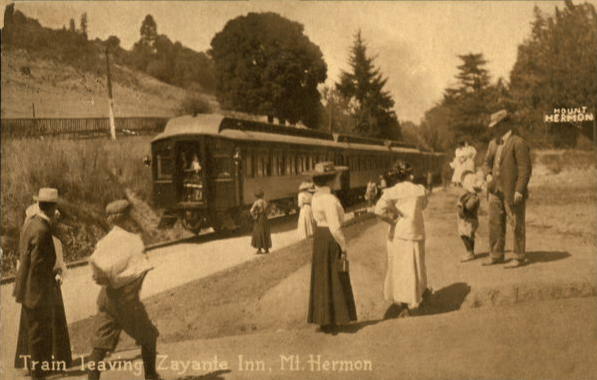
The train station at Zayanta Inn, Mount Hermon, California; 1915.

One hundred years ago, Isabella Alden was a frequent summer visitor at Mount Hermon. She and her husband Ross moved to the Santa Clara area in 1901. When Mount Hermon opened four years later, they were overjoyed to have a nearby place of rest and retreat similar to their beloved Chautauqua Institution.

The Lake at Mount Hermon, 1913.

Isabella Alden loved Mount Hermon, and she had many happy memories connected with it. She wrote:

I wish I could give you a picture of Mount Hermon, a blessed place where I have spent precious weeks living out under the great redwood trees. It was wild and quaint and beautiful.

Bean Creek at Mount Hermon, 1910.

As she had in the old Chautauqua days, Isabella spent as much time in the out of doors as possible at Mount Hermon:

Tent life seemed to belong to it as much as houses belong in most other places. We ate out of doors, and worked out of doors, and practically slept out of doors, with all the curtains of the tent looped high.

Giant California Sequoias.

Nestled among the mammoth California redwoods of Mount Hermon, Isabella rested, read and worshipped.
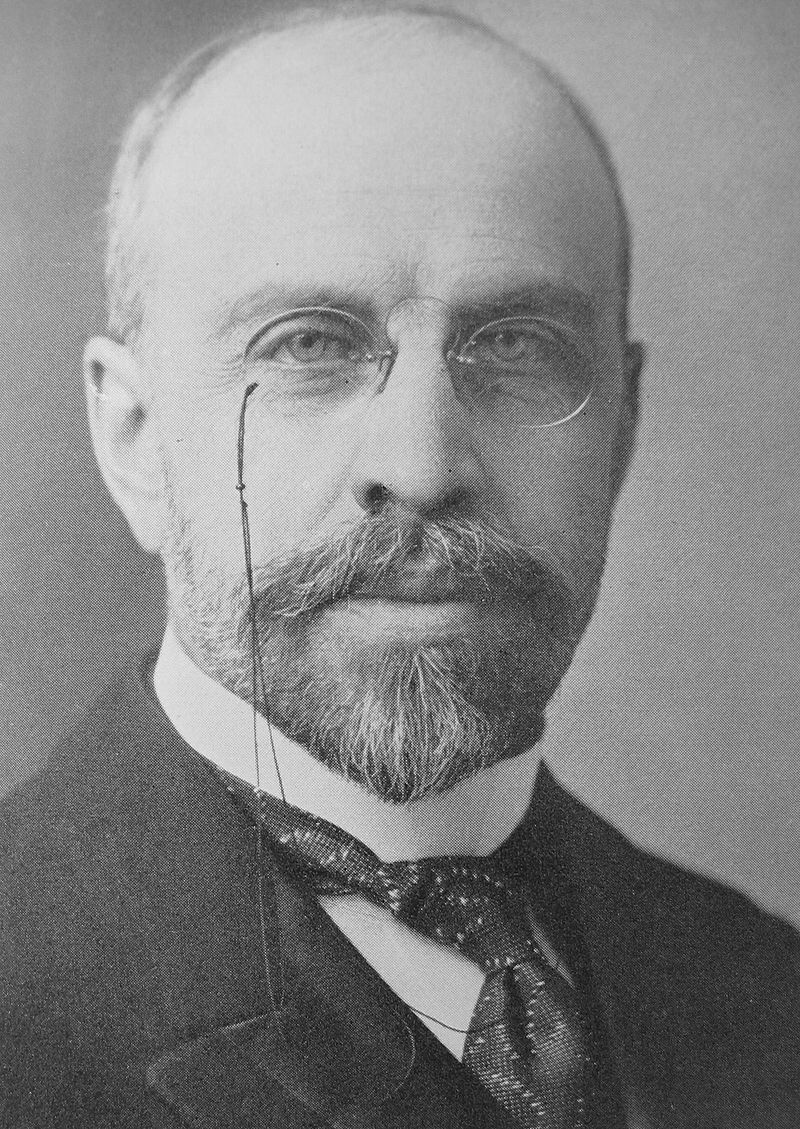
Dr. James Gray, 1910.
Reverend James Gray, D.D., 1910.

Her spirit was fed by some of the world’s most prominent theologians who spoke at the camp: Dr. James Gray, dean of the Moody Bible Institute; evangelist Reuben Archer Torrey; and Reverend A. B. Pritchard of Los Angeles.

Reverend R. A. Torrey, 1907.


Reverend A. B. Pritchard, 1903.

Isabella reveled in Mount Hermon’s program of Bible study. She immersed herself in classes about the Second Coming of Christ, and the Pentecost. She spent a week studying Colossians, and said afterward that she felt “as though I had a new Bible.”
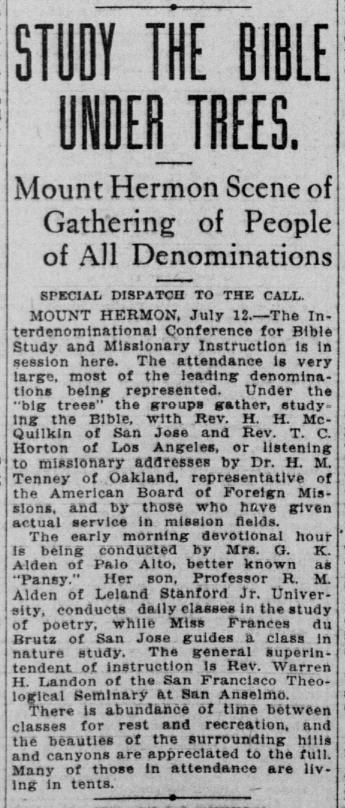
An announcement in the San Francisco Call, July 13, 1906.
An inviting announcement in the San Francisco Call, July 13, 1906.

Amid all the conference meetings, presentations, and Bible studies, she found time for her own writing.

I had a little retreat where I used to take refuge when I wanted quiet for writing or study. It was the burned-out stump of a sequoia tree. The space left was forty feet in diameter with a wall of stump all around. New branches had formed and had climbed till they reached away up toward the sky, and interlaced overhead to form a room of green. The sequoia leaves are odorous and make a lovely soothing atmosphere in which to rest.
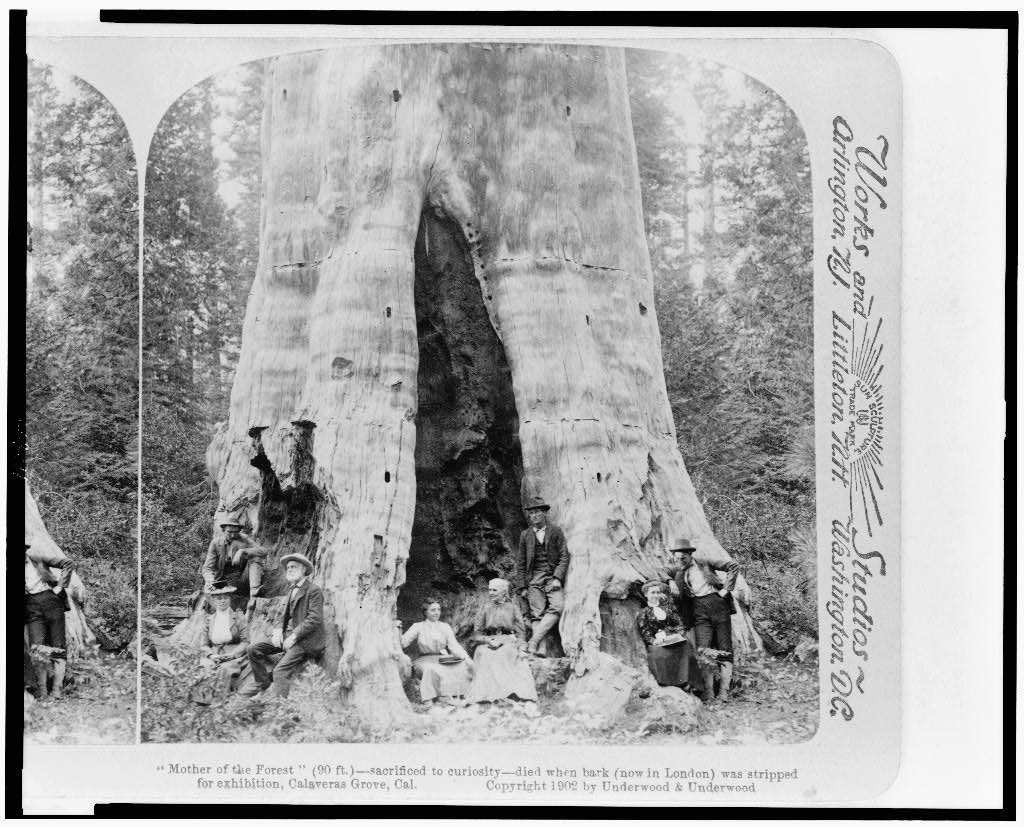
A giant Sequoia in nearby Calaveras Grove, California; 1902.
Giant Sequoia in nearby Calaveras Grove, California; 1902.

It was in this atmosphere that Isabella was inspired to write The Browns at Mount Hermon, which was published in 1907; and her experience at Mount Hermon even inspired her novel’s premise. During one specific summer, over 60 people with the surname Brown attended Mount Hermon; Isabella used that bit of trivia as the catalyst for a merry mix-up of people named Brown in her novel.
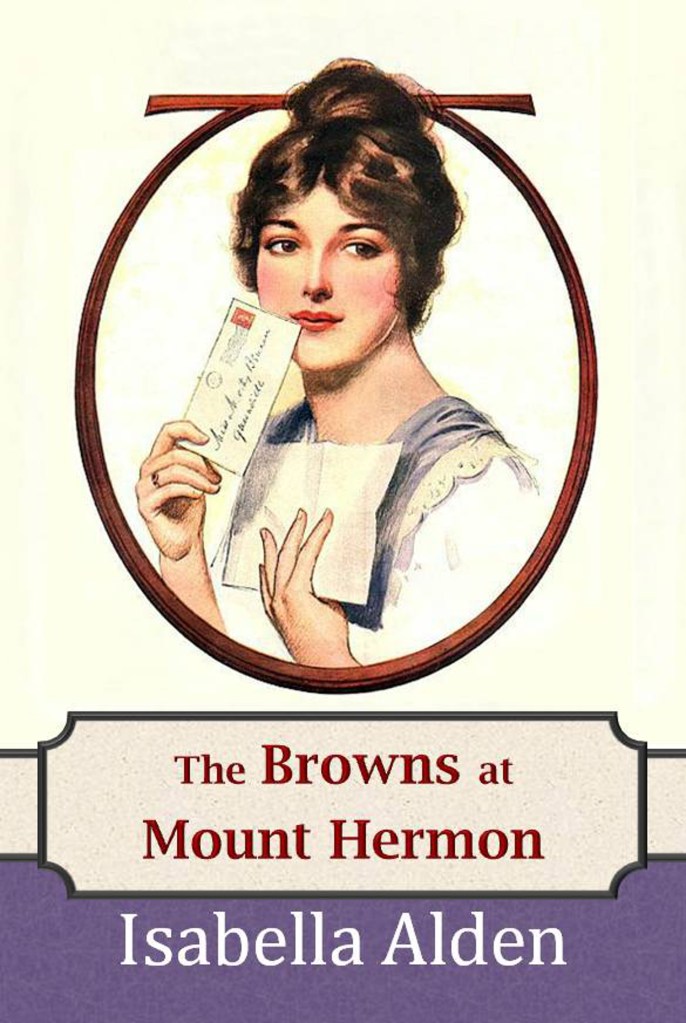
Cover of The Browns at Mount Hermon

Isabella cherished every lesson and every sermon she heard at Mount Hermon. Each summer for the remainder of her life—health permitting—she made the short trip to Mount Hermon, the beautiful place of worship and rest nestled in the mountains of Santa Clara.

Did you know Mount Hermon is still an active Christian camp and retreat? Find out more about Mountain Hermon by visiting their web site:

http://www.mounthermon.org/

Or visit Mount Hermon’s YouTube channel to see the latest videos of what’s going on at the camp:

https://www.youtube.com/user/MountHermon

Remembering Benjamin Franklin

Benjamin Franklin, by artist David Martin, 1772

Benjamin Franklin, renowned scientist, inventor, and raconteur, was the only person to sign all three key documents in the creation of the United States of America:

  • The Declaration of Independence (in 1776),
  • The Treaty of Paris (in 1783),
  • The Constitution (1787).

Fellow patriot John Adams believed Franklin was “second only to George Washington in his importance in securing the victory of the United States” over England.

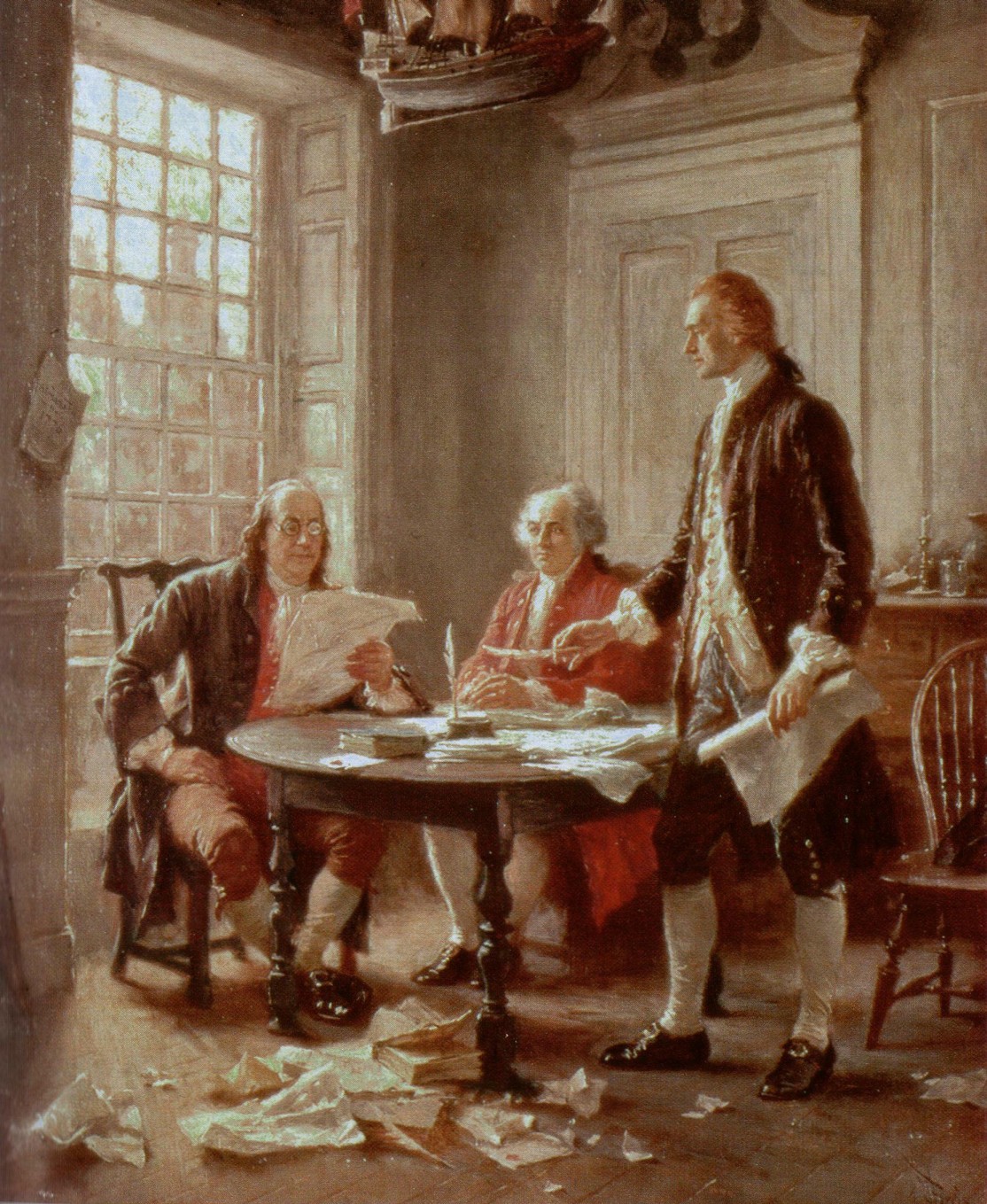
In 1900 artist Jean Leon Gerome Ferris completed his famous painting of Franklin reviewing a draft of the American Declaration of Independence (with John Adams and Thomas Jefferson looking on).

4thof July_Writing the Dec of Indep by Jean Leon Gerome Ferris 1900

There are many books and films that chronicle Franklin’s efforts and tremendous contributions to the birth of the United States. What better way to mark the 240th anniversary of our country’s founding than to learn more about the sacrifice and determination of one of the key figures who created this great nation? Here are some ideas to get you started:

Watch this 90-minute film about Franklin’s efforts to bring about American independence:

Read this best-selling biography of Franklin:

81uW8FYwZaL

Read this short, affordably priced biography that showcases Franklin’s accomplishments:

B01D0S3N52.01.L

.

.


The Bicycle Craze

Today it’s Bike to Work Day in Colorado and people all over the state are dusting off their two-wheelers and heading out to work.

An 1887 newspaper ad.

Bicycles have been around since the mid-1800s, when they were something of a novelty. They were expensive to buy and maintain, and they were sold almost exclusively to men.

Figure 2 from "The Modern Bicycle" by Charles Spencer, 1876.
Figure 2 from “The Modern Bicycle” by Charles Spencer, 1876.

.

Figure 4 from "The Modern Bicycle" by Charles Spencer, 1876.
Figure 4 from “The Modern Bicycle” by Charles Spencer, 1876.

It took exceptional balance and strength to operate an early bicycle and there were inherent dangers in their design.

An 1879 bicycle ad.
An 1879 bicycle ad.

When Isabella published Monteagle in 1886, bicycle riding was an acceptable pastime only for men of means. Her character, Hart Hammond, was a young man caught up in the bicycle craze.

Notice of a bicycle race. From The Advocate (Topeka, Kansas), June 21, 1893.

He belonged to a bicycle club, attended races, and may even have ridden in some races himself.

The starting line for a men's bicycle race.
The starting line for a men’s bicycle race.

Of all the many things which gave Hart’s mother anxiety, Hart’s involvement with a bicycle club “troubled her the most.”

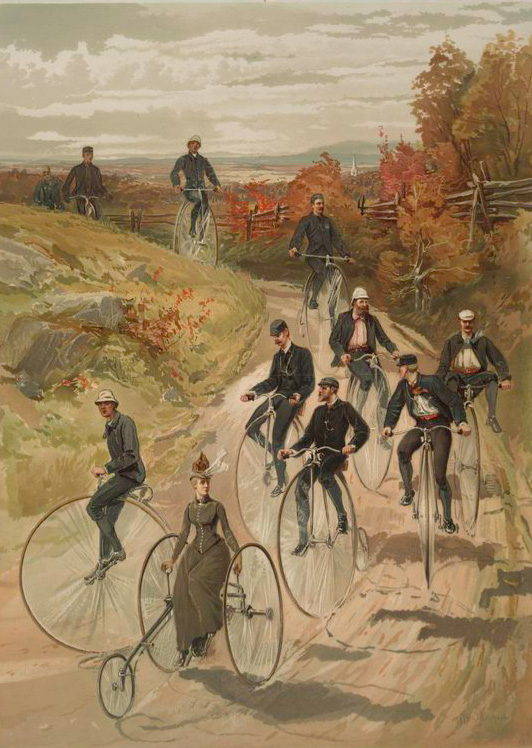
An undated trade card depicting an early bicycle club on the move.

As bicycle design matured, bicycling became safer. By the mid-1890s the early high-perch models had evolved into bicycles very similar in design to our modern bikes.

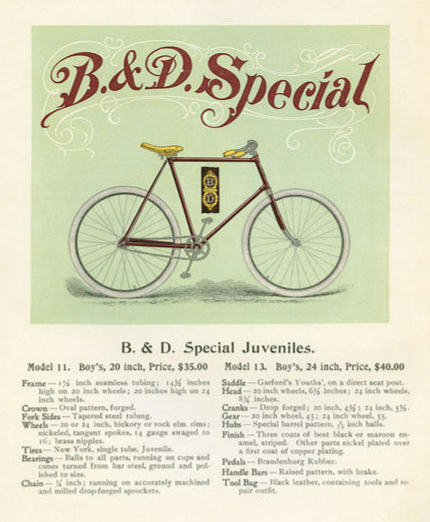
An 1897 magazine ad for boys' bicycles.
An 1897 magazine ad for boys’ bicycles.


An 1893 ad for a cycle.
An 1893 ad for Victor cycles.

With those design changes, it was feasible for women to take up the sport. But there was an inherent danger of ladies’ skirts getting caught in the wheels.

An early trade card targeting women bicycle riders.

And corsets made breathing difficult for women even when they were relaxing; when it came to bicycle riding, women could do little but coast downhill without fainting.

A 1904 ad depicting a corseted female cyclist.

But that soon changed. As cycling became all the rage in America, a host of supporting industries sprang up. Clothing manufacturers produced ladies’ riding costumes.

An 1895 magazine illustration of bicycling outfits for men and women.

And they marketed corsets designed specifically for the active woman.

A 1902 ad for athletic corsets.

Bicycle manufacturers also began to cater to women riders. They designed new models exclusively for ladies; and they held classes on how to correctly mount and ride bicycles.

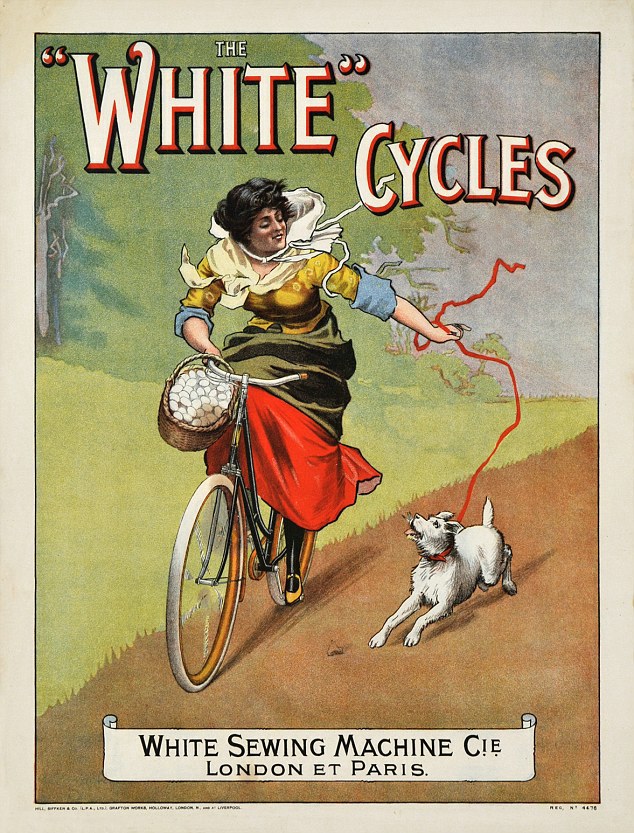
An 1897 ad for a ladies' bike.
An 1897 ad for a ladies’ bike.

Ladies joined previously men-only bicycle clubs or formed their own.

Newspaper coverage of a bicyclist's parade, watched by more than 100,000 San Franciscans.From the San Francisco Call, July 26, 1896.
Newspaper coverage of a bicyclist’s parade, watched by more than 100,000 San Franciscans.From the San Francisco Call, July 26, 1896.

They published member magazines and sold guide books about the best routes for bicycle excursions through cities or into the countryside.

Photograph of a lady cyclist. 1912.

The bicycle opened up a world of new transportation and freedom for women back in the early 1900s; and today we celebrate the important place the humble bicycle still holds in our lives.

Sports_Bicycles ed

Here are some fun videos you can watch about early bicycling:

Restored footage of an 1899 display of bicycle riding by the Catford Ladies’ Cycling Club in London:

The history of bicycling in early Denver, Colorado:

A clip of “The 1900 House” featuring bicycle riding at the turn of the century:

.

Come to Church!

Here’s a scenario that is often played out on Sunday mornings across the country: Imagine you’re in church, waiting for the service to start, and you realize your friend isn’t sitting in his or her regular place. You pick up your phone and type out a text message:

Where are you?

Or after the service ends, you send off a quick email:

You missed a great sermon this morning. Everything okay?

Come to Church card00594_fr

With just those few words, you let that person know that you care. Your words are a subtle encouragement to worship regularly.

Come to Church 01

But during Isabella Alden’s time, there were no electronic text messages or emails. Daily mail service was the fastest way for people to communicate, until the telephone came into wide use around the turn of the century.

Come to Sunday School 1911

In Isabella’s day, the scene described above would have played out using posted mail instead of wireless technology.

Come to Church card00361_fr

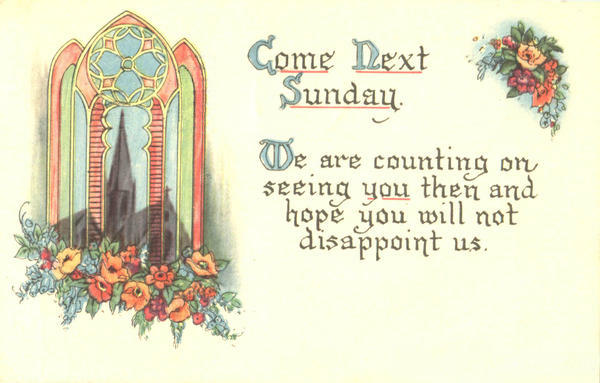
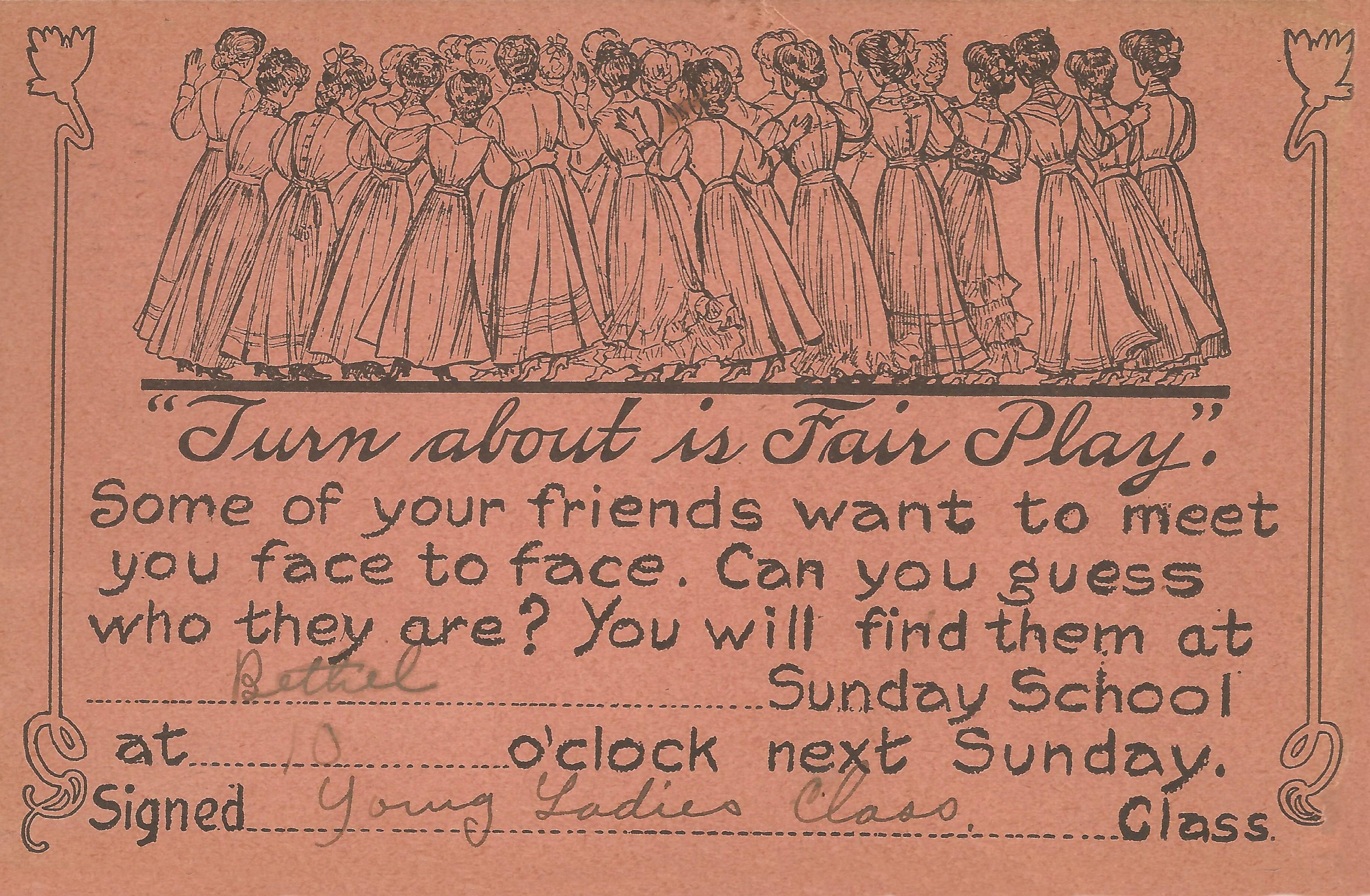
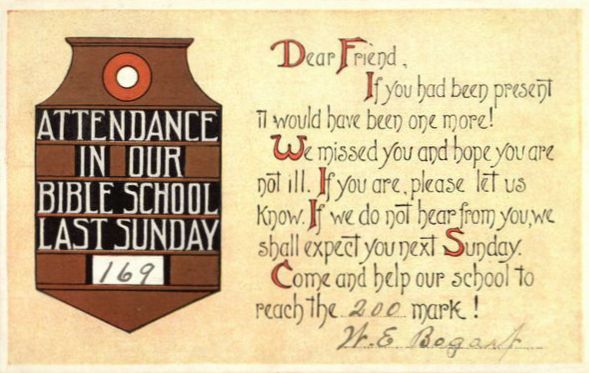
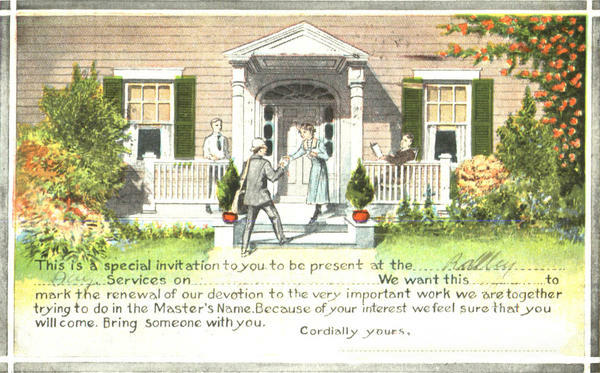
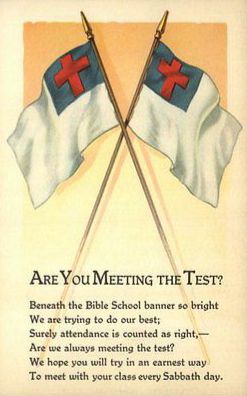
Back then, caring church leaders and Sunday school teachers sent out brief notes and post cards like the ones here.

Come to Church 1914e

Some were signed by the sender, and others were personalized with the time and place for the next service or meeting. On Monday afternoons, the “come to church” cards appeared in mail boxes across the country.

Come to Church 1912e

As a minister’s wife, Isabella probably sent quite a few cards herself over the years, to let someone know he or she was missed at church.

Come to Church

Churches still use similar communications to reach out to people today. A website called Ministry Greetings  is one of many that offers different styles of cards for churches to send through the mail. And for those who prefer to text or email, there are plenty of fun or thought-provoking memes to choose from for encouraging a friend to go to church.

From memegenerator.net

Over ninety years after Isabella’s duties as a minister’s wife came to an end, it’s nice to see a tradition like sending off “come to church” cards still goes on in today’s busy world.

.

.

Rest Rooms: What a Great Idea!

An 1895 issue of Golden Rule magazine included an article about working women that caught Isabella Alden’s attention.

Clerks examining newly-printed money at the U.S. Bureau of Engraving and Printing, 1904.

Here’s what she shared on the Christian Endeavor page of her own magazine later that year:

“REST ROOMS.”

The Golden Rule suggests a beautiful idea. It advocates the renting and furnishing, in large towns and cities, of what it calls Rest Rooms, for the use of working-girls during the noon hour. It proposes pretty furnishings, lounges, easy chairs, books, papers, pleasant games, etc. It also suggests that a small fee might be charged for the use of the room, because most girls would prefer to pay a little each week towards its expenses. The thought is certainly an important one. Let all the Endeavorers talk it up. Why could not a neat plain restaurant or lunch room be added, where coffee, and. sandwiches, and milk, and cookies, and crackers, and fruits might be had at very low prices?

Many working-girls now have such dreary places in which to eat their lunches and such dreary lunches to eat, that it would seem as though improvements were needed here.

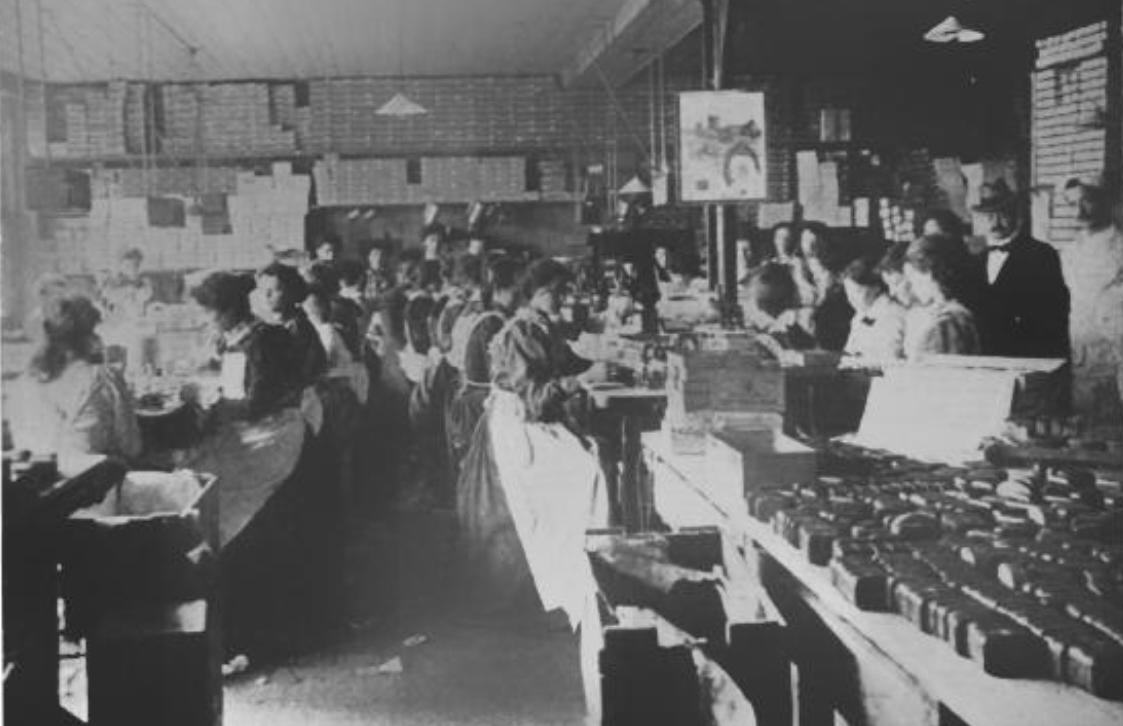
Workers labeling and wrapping perfums and soaps, 1900.

Isabella’s description of a ladies’ rest room doesn’t sound at all like the cold, utilitarian washrooms we know today; but back in 1985, it was an idea whose time had come. Workers had few rights; they worked long hours under sometimes difficult conditions. Employers could give workers as many—or as few—breaks during the work day as they wanted.

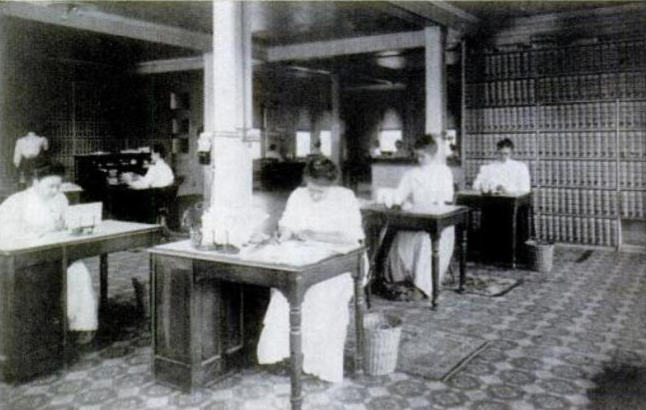
Members of a typing pool with their male supervisor.

So the idea of a rest room for workers was somewhat revolutionary, and it quickly caught on.

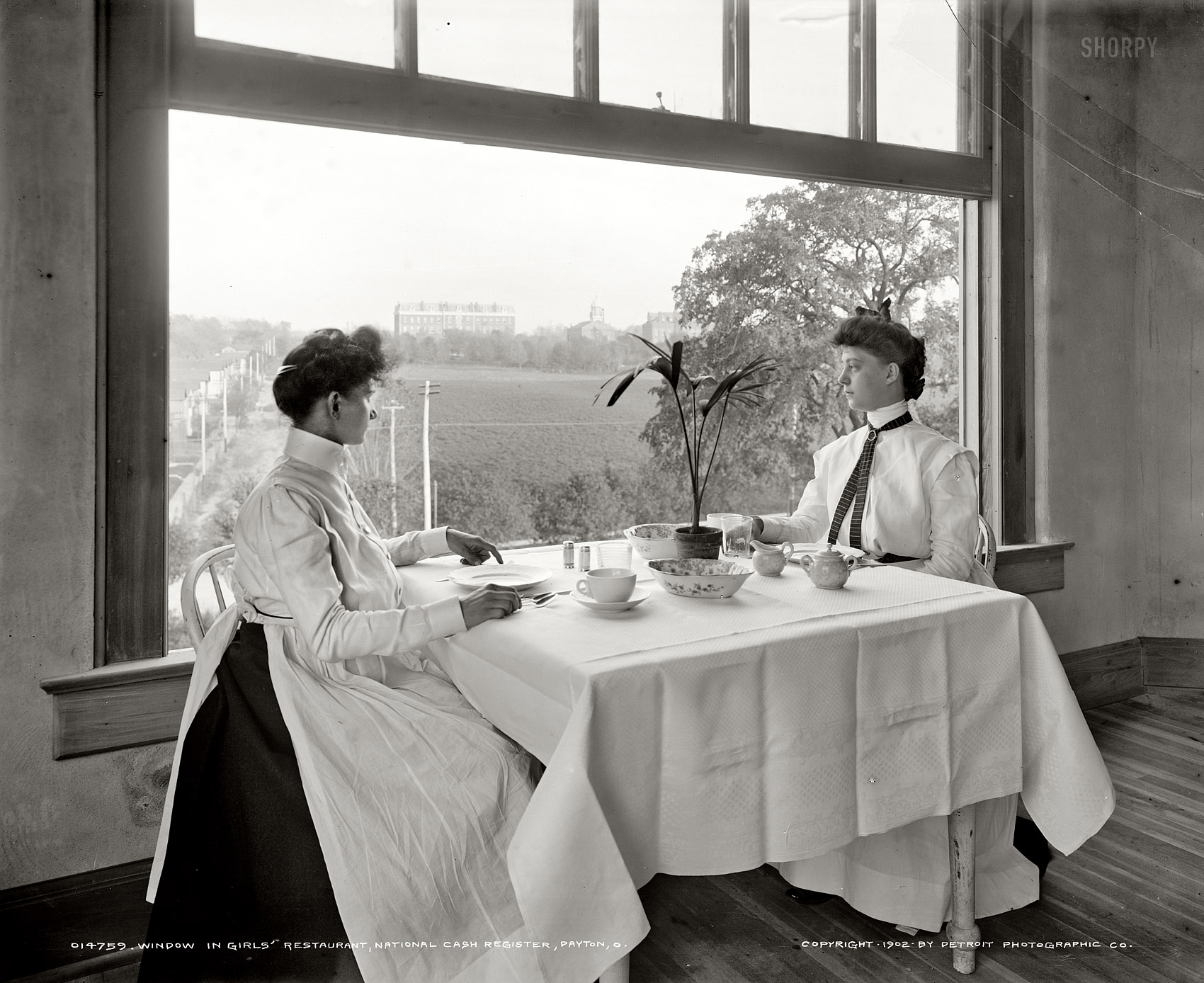
The ladies' lunch room at the National Cash Register Company, 1902.
The ladies’ lunch room at the National Cash Register Company, 1902. From Shorpy Archive.

Progressive and far-thinking employers recognized the benefits of providing a dedicated rest room to their employees:

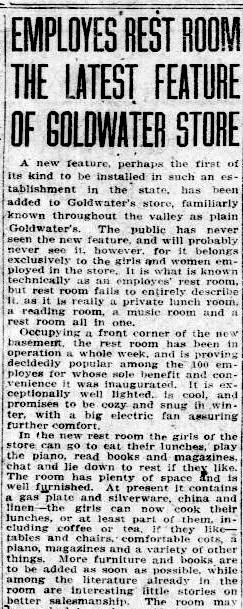
From the Arizona Republican, 1920.

In some towns, Women’s Trade Unions or the YWCA repurposed space to create rest rooms for female workers.

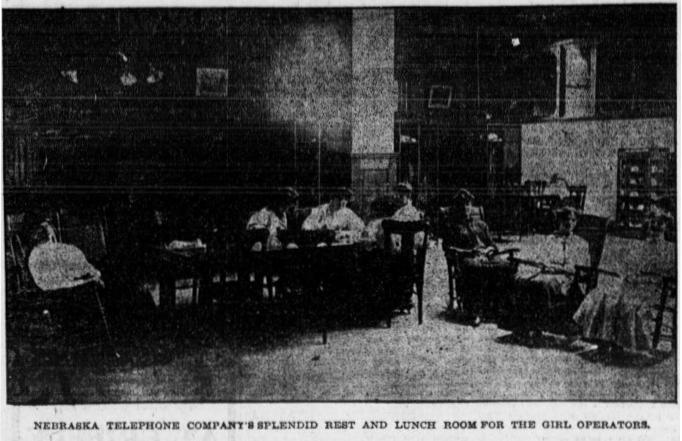
Telephone operators enjoying their rest room, 1906.

And in Tulsa, Oklahoma, the city took the initiative to furnish a dedicated room for the use of “strangers, tired shoppers, and working girls.”

From the Tulsa Daily World, 1915.

The concept of a rest room proved so popular, businesses began offering dedicated ladies’ rest rooms to customers, as well.

Newspaper ad for Lansburgh & Bro. department store in Washington DC, 1918.

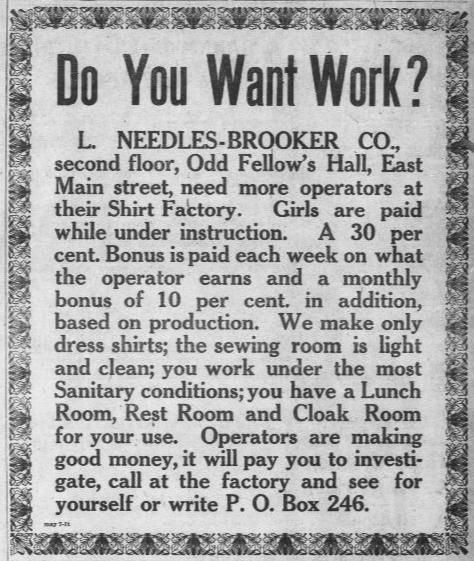
And by the 1920s, companies listed rest rooms for female workers as a benefit when trying to recruit new employees.

Want ad in the Democratic Advocate newspaper, College Park, Maryland, 1920.

What began as a germ of an idea in 1895 became a wide-spread reality in the 20th century as retailers, factories, and municipalities established clean, comfortable restrooms for workers, customers, and visitors.

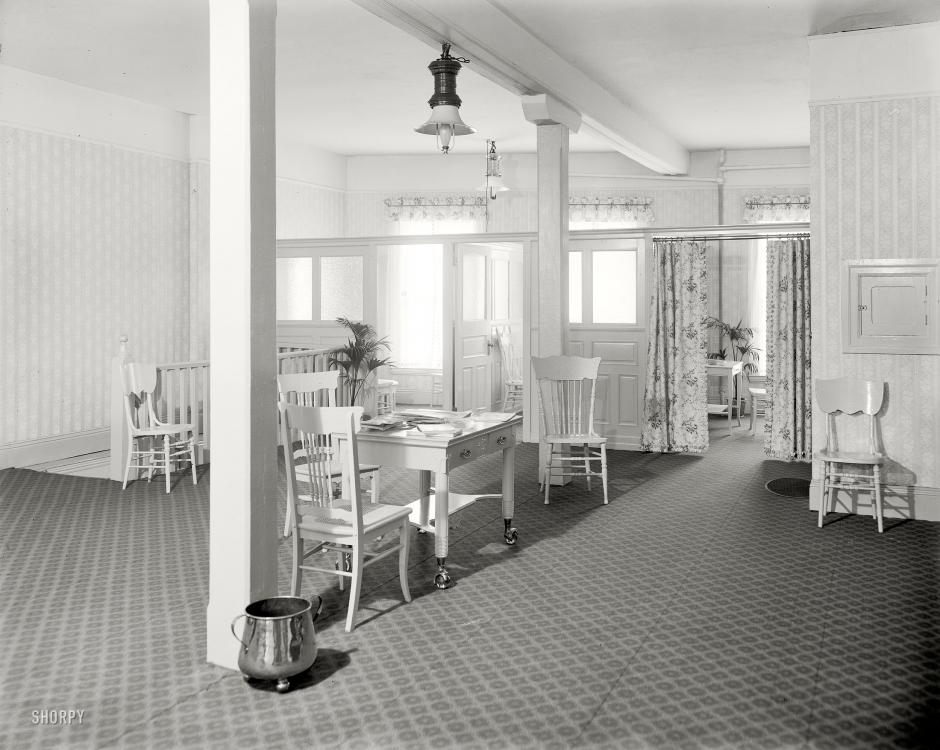
The ladies' lounge at E. M. Bigsby department store, Detroit, Michigan, 1915.
The ladies’ lounge at E. M. Bigsby department store, Detroit, Michigan, 1915.

You can read more about women’s working conditions during Isabella’s lifetime by viewing these previous posts:

Lady Entrepreneurs

This Woman’s Work

.

.


New Free Read: Her Mother’s Bible

Cover_Her Mothers Bible 05“Reading Bible verses doesn’t amount to much, you know, unless you do what they say.”

When Mrs. Selmser inherits her mother’s beloved Bible, she’s overjoyed. All the marked verses—in red and green and blue—are wonderful reminders to her of her mother’s Christian walk; so it seems natural to have her son Ralph read one of those marked verses each day as part of their family worship.

But Ralph knows enough about the Bible to realize it’s sometimes a hard book to live up to. With God’s help, can he learn to apply the teachings of the Bible to his everyday life?
This 1880 story was first published as  a serial in The Pansy magazine. Click on the cover to begin reading Her Mother’s Bible now.

.

.

Happy Anniversary, Isabella!

Bride 05On May 30, 1866, twenty-four-year-old Isabella Macdonald married Ross Alden. Ross (whose full name was Gustavus Rossenberg Alden) was a thirty-four-year-old seminary student.

Six months later, Ross was ordained by the Presbyterian Church, and they embarked on a life together of ministering to congregations and sharing their Christian faith.

You can read more about Isabella and Ross’s early years of courtship and marriage in these posts:

A Special Slice of Pumpkin Pie

When Ross Came Courting

Isabella, the Baby Bride

A Gift for the New Minister’s Wife

/

/


Lydia Pinkham’s Wondrous Vegetable Compound

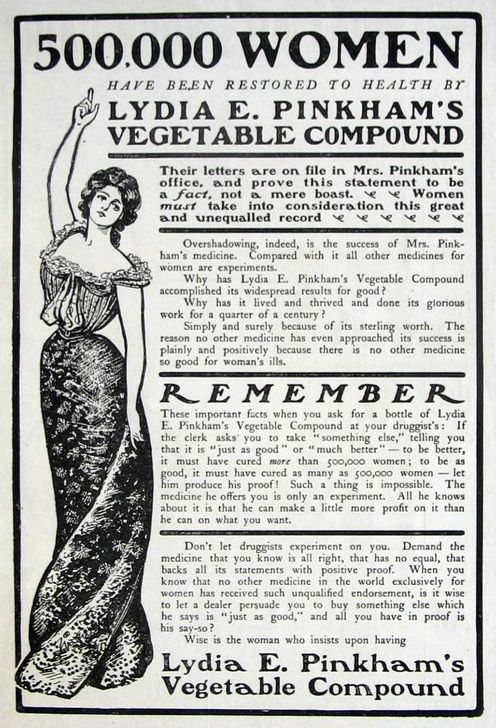
Thumb through the pages of almost any ladies’ magazine printed before 1906 and you’ll undoubtedly find an advertisement for Lydia Pinkham’s Vegetable Compound.

Magazine ad

Lydia Pinkham’s products—in pill and liquid tonic form—were the “go to” cure-alls for generations of women.

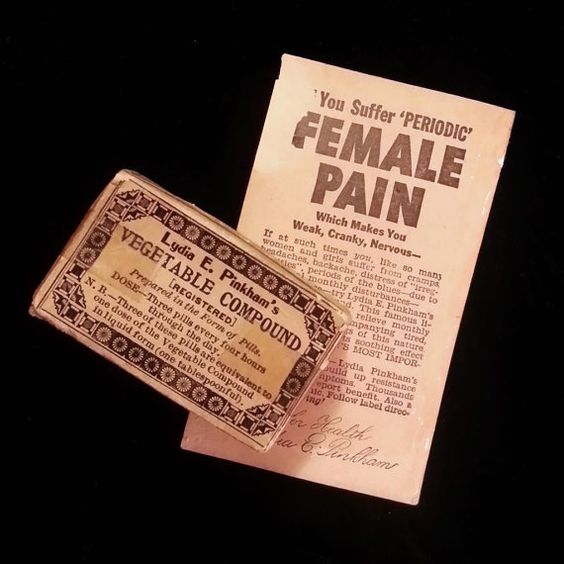
Original early 1900s packaging with insert for Lydia Pinkham's Vegetable Compound pills. From Pinterest.
Original early 1900s packaging with insert for Lydia Pinkham’s Vegetable Compound pills. (From Pinterest.)

The principal ingredients of Lydia Pinkham’s Vegetable Compound were licorice and alcohol (anywhere from 18-20%), so it wasn’t taste that drove women to consume the product in record numbers.

It was, instead, Lydia Pinkham and her incredible marketing skills that turned her home-made tonic into a multi-million dollar business in less than ten years.

A typical Lydia Pinkham trade card.

Timing also played a role in Lydia Pinkham’s success. In the late 1800s mainstream medical science spent little time studying female anatomy; and strict standards of modesty ensured that generations of women were woefully ignorant about their own bodies and how they functioned.

Many Lydia Pinkham's trade cards featured pleasant artwork, a "soft sell" that was pleasing to women.
Many Lydia Pinkham’s trade cards featured pleasant artwork, a “soft sell” that was pleasing to women.

Enter Lydia Pinkham, who established herself as a kindly grandmother who patiently and delicately taught ladies about menstrual cramps, menopause, and everything in between.

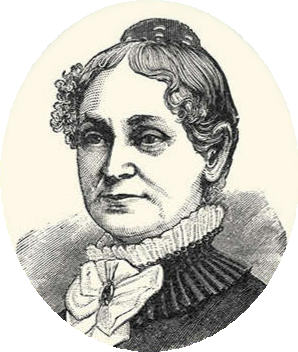
One of the images of Lydia Pinkham that adorned the company's labels over the years.
One of the images of Lydia Pinkham that adorned the company’s labels over the years.

Labels for her products bore her likeness. Her pills and tonics promised to cure menstrual cramps, correct a prolapsed uterus, reverse diseases of the ovaries, and chase the blues away.

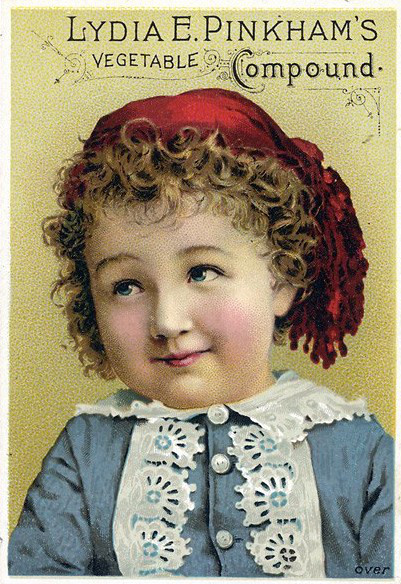
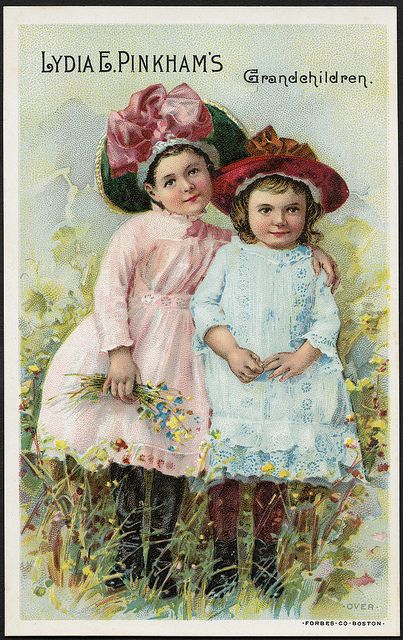
The company's advertising cards encouraged women to think of Lydia Pinkham as a member of the family, as with this trade card which purports to show an image of her grandchildren.
The company’s advertising cards encouraged women to think of Lydia Pinkham as a member of the family, as with this trade card which purports to show an image of her grandchildren.

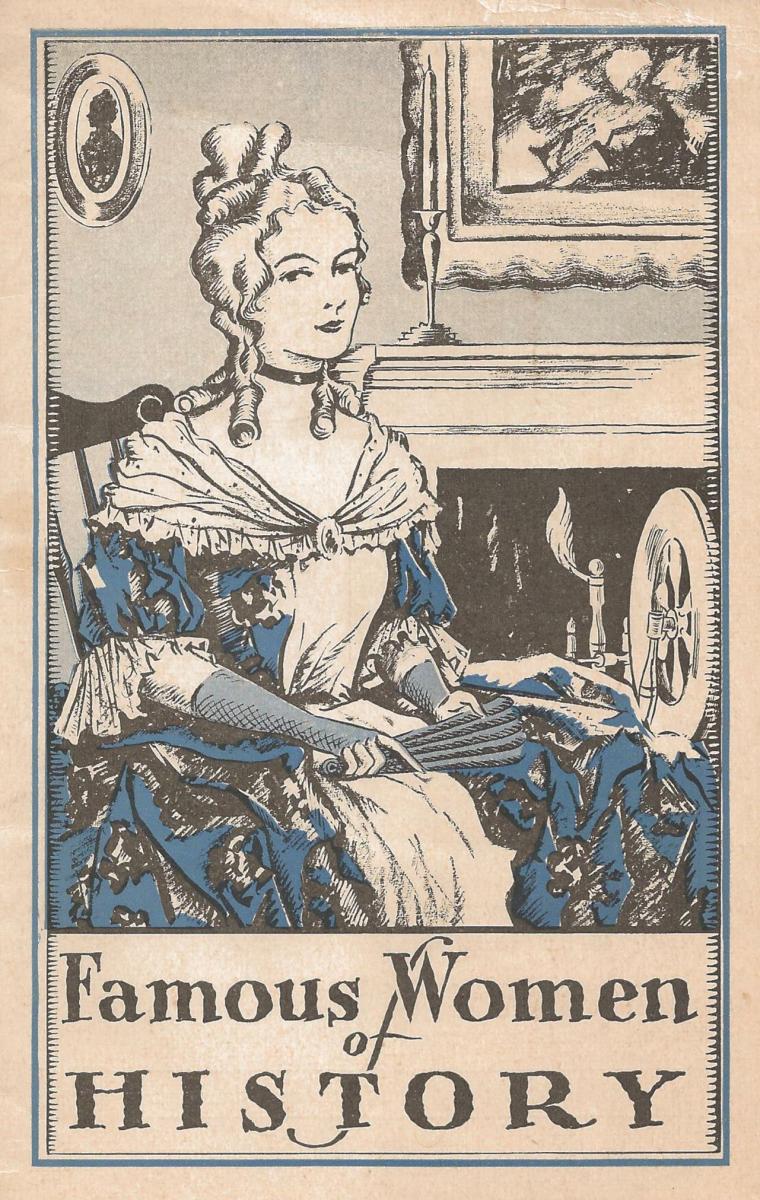
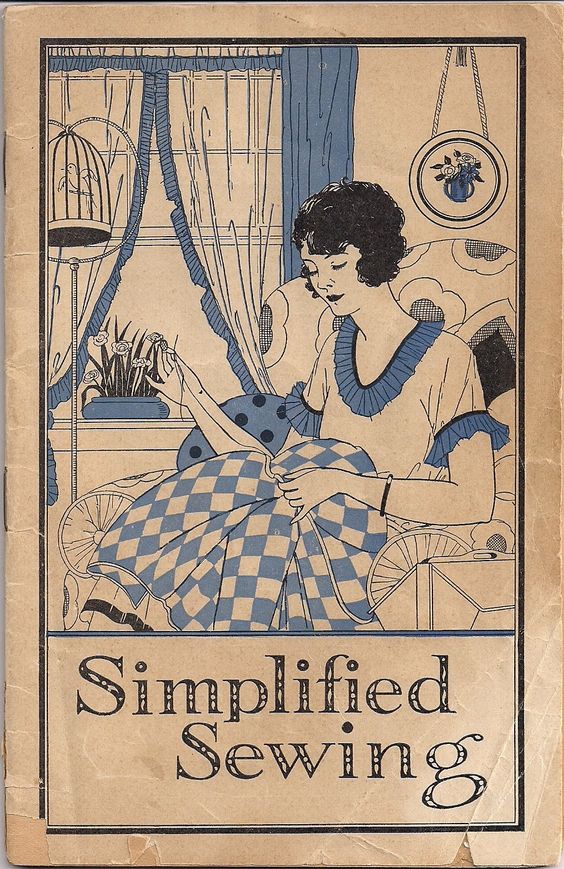
She gave away millions of free “educational” pamphlets, with topics covering sewing, cooking, history, and women’s common health issues; throughout each publication, the benefits of Lydia Pinkham’s products were extolled and promoted.
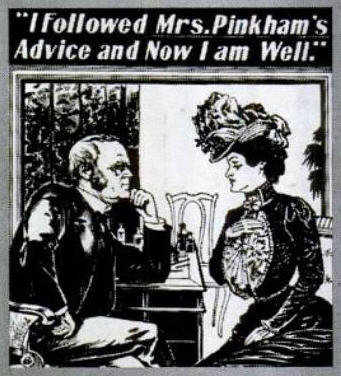
This example of the company’s “Famous Women in History” pamphlet included several typical “testimonials” used in many Lydia Pinkham ads. Click on the cover to view the entire pamphlet.

Lydia Pinkham Famous Women of History Cover
Lydia herself received thousands of letters from women every year, and each letter received a personal answer.

Cover of Lydia Pinkham's pamphlet, "Simplified Sewing."
Cover of Lydia Pinkham’s pamphlet, “Simplified Sewing.”

But there were secrets about Lydia Pinkham and her business empire. The most incredible secret was that by the time Lydia’s products became famous nation-wide, she had been dead for decades.

Magazine ad 2

And those reply letters written to women asking for help with a health problem—they were not written by Lydia Pinkham. Instead, they were written by employees, copied from proscribed templates, and they always included a recommendation to buy more Lydia Pinkham products.

Female employees answering mail. After the company was forced to admit Lydia Pinkham did not personally answer all letters, it used the revelation to its advantage, publishing this and other photos of its team of female employees answering mail. The company advertised: “Every letter opened by a woman, seen only by a woman. No boys around.”

When Congress passed the Pure Food and Drug Act in 1906, the company was forced to disclose the contents of Lydia Pinkham’s Vegetable Compound in clear terms on their labels. For the first time, women—including members of the Women’s Christian Temperance Union—discovered that their favorite tonic contained a high level of alcohol.

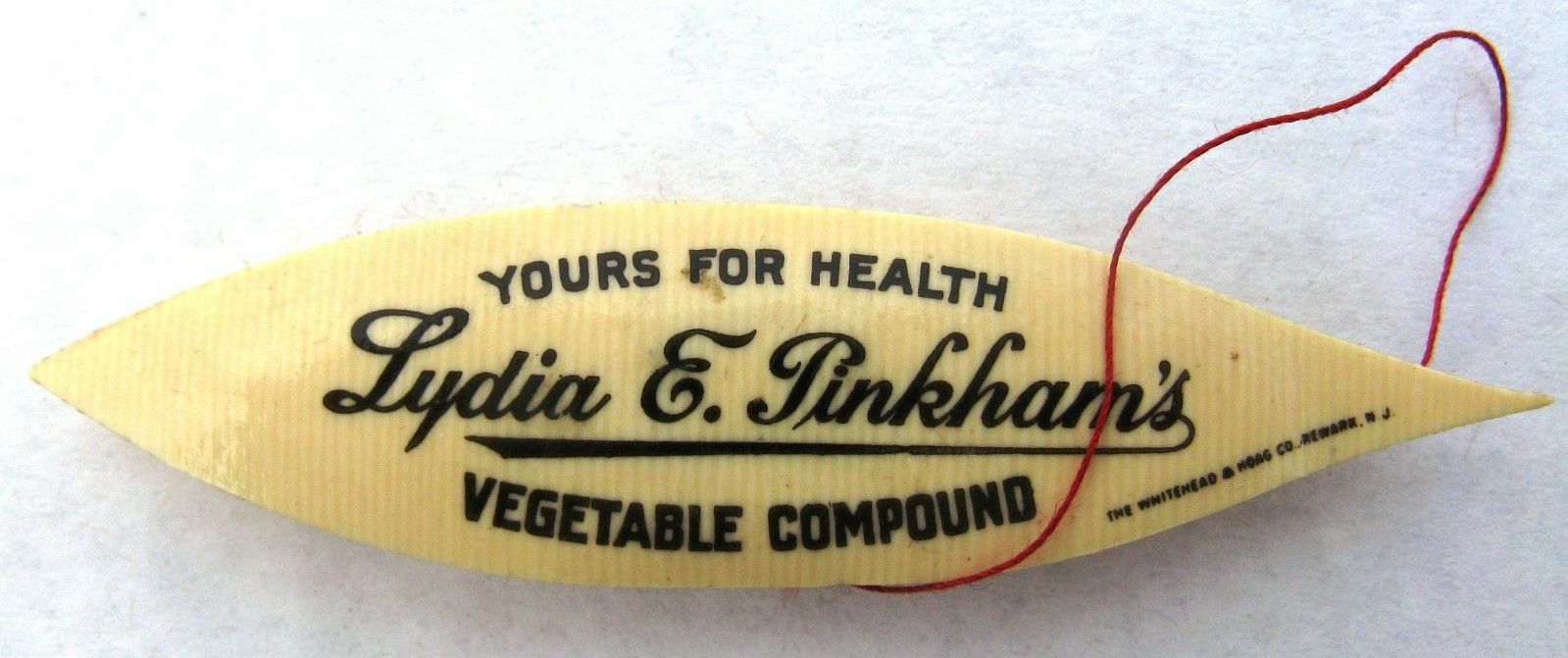
In addition to print ads, the company gave away millions of free promotional items, such as sewing kits, thimbles, tape measures, and this lace tatting shuttle.

The new government requirements also forced the company to curtail its previous advertising claims that it could, among other things, cure “all weaknesses of the generative organs” and that it was “the greatest remedy in the world” for diseases of the kidneys.

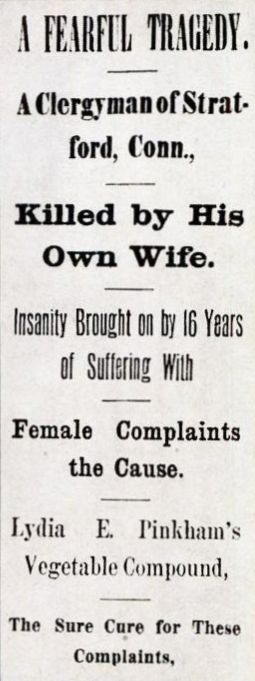
A Lydia Pinkham newspaper ad from the 1920s, cleverly disguised as "real" news.
A Lydia Pinkham newspaper ad from the 1920s, cleverly disguised as “real” news.

Thanks to the company’s inventive advertising, Lydia Pinkham’s products saw strong sales throughout World War I, Prohibition (despite the tonic’s alcohol content),  the 1930s and 1940s. In fact, Lydia Pinkham’s Vegetable Compound is still sold today in major drug stores and online sites like Amazon. And just as previous generations of women used to write letters extolling the virtues of the products, today’s customers post reviews of Lydia Pinkham’s Vegetable Compound on the Internet, demonstrating, once gain, that the company remains as adaptive as ever.


A Mothers’ Day Story

In honor of Mothers’ Day, here is a letter Isabella published in an 1895 issue of The Pansy magazine:

Dear Young People:

I notice that the Juniors all over the country are going to talk about “Troubles” at one of their [Christian Endeavor] meetings this month. Some people think that boys and girls never have troubles. I know better.

I remember distinctly when I was twelve years old, I had a very large trouble one day. I wanted to take a ride with my brother, and mother thought it was too cold for me to go out. I coaxed a good deal, until father told me in a very decided tone to say no more about it; that of course I could not go.

I remember I went upstairs to my room, which was not warmed, and sat down in a dreary little heap in the corner and cried. I told myself that I was a most unfortunate little girl; that I could never go anywhere nor do anything like other girls, because my mother and father were always afraid of my taking cold. I said I wished I was old enough to do as I liked; and I should be too happy to live when the day arrived that I could do as I pleased, and have nobody say, “You cannot go here, or do this, or that.”

Poor silly me! Did you ever know a girl who acted like that? But I honestly thought it was real trouble. Let me tell you something. A good many years have passed since then. Mother and father have long since gone away where I cannot hear their voices. Nobody says to me now, “You cannot go to such a place, or wear such a thing.” I am free to do as I please, so far as words are concerned; but sometimes I sit and think it all over, and it seems to me I would give almost anything I have in the world, just to hear my dear mother’s voice saying, “No, my daughter, you cannot go this morning.”

Do you get my thought? Some of the things which we call troubles, grow in after-years into blessings which we miss and mourn.

Another thing, out of my imaginary trouble I made a real one. I sat in that chilly room brooding over my wrongs until I took cold, and was ill for days. Mother had to watch with me at night, and father had to go more than once over the long cold road for the doctor. I have seen people since who made their troubles for themselves.

All the same, I know that young people have real troubles, sometimes; and whether real or imaginary, they want, every one of them, to be taken to the same great Physician. Pity the boy or girl who does not know Him well enough to call upon Him for help.

—Pansy