BFFs at Oneida Seminary

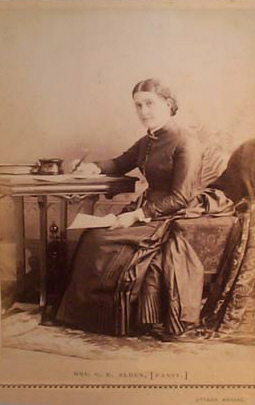
Young Isabella Alden in an undated photo

For most of her young life, Isabella Alden was educated at home by her parents and an occasional tutor. But all that changed when she was about fourteen years old.  That’s when her parents enrolled her in Oneida Seminary in Oneida, New York.

The school was almost 80 miles away from her family’s home in Johnstown, New York; but that didn’t mean Isabella would be at the school alone.

Her older sister Marcia and Marcia’s husband Charles Livingston were also at Oneida Seminary. Marcia and Charles lived in apartments on the campus because Charles was a professor at the school; so Isabella had family close by.
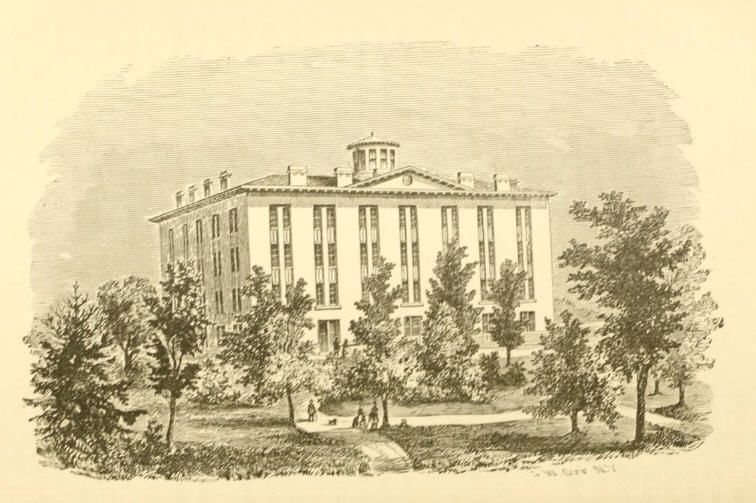
 

Oneida Seminary
Oneida Seminary


At Oneida Seminary the male and female students were separated in their classrooms, study areas and living quarters; so making strong friendships with other female students would have been natural for Isabella. She often crossed paths with Theodosia Toll, who was called Docia. Docia was one of the most popular girls at Oneida Seminary. Her family owned a large farm called Locust Shade about 7 miles away in nearby Verona, New York.

Docia was three years older than Isabella. She was a better scholar, too. She had a reputation for being keen and quick-witted, good-humored and kindly. Everyone thought well of her.

Undated photo of Theodosia Toll


Knowing Isabella was far from her family home, Docia invited her to spend her weekends at Locust Shade but Isabella always refused the invitation. Isabella wrote in “Memories of Yesterdays”:

“I had taken a great dislike to that girl in the earliest days of our acquaintance. . . I avoided her on every occasion possible and declined her invitations for the weekends so haughtily that I wonder she ever asked me again.”

One day Isabella went out of her way to avoid Docia by visiting her sister Marcia in her apartments. She didn’t hold back in complaining to Marcia about “that insufferable girl,” Docia.

Undated photo of Charles Livingston


“If she ever asks me again to go home with her for over Sunday, I’m going to tell her that it takes all the skill I have to invent ways of escaping her society here, and I can’t be expected to follow her home, even though it would be a treat under pleasanter conditions to have a ride.”

Charles had been in the next room and overheard everything Isabella said.

“What a foolish girl you are,” he said almost sadly. “I was saying to Marcia this morning that I could not imagine why you had taken such a dislike to Docia. She is the best scholar in her class, and every teacher in the school speaks highly of her. Certainly her character is above reproach. As for her family, if you knew them you would consider it an honor to be invited to their home. I should.”

After Charles’s scolding—and much prayer and soul searching—Isabella realized why she disliked Docia . . . she was jealous of her!

“My aroused conscience showed me just where I stood. Faint and faulty as were the proofs of it in my life, I knew even then that I belonged to the Lord Jesus Christ; and He came graciously to my help at that hour and showed me plainly not only how offensive in his sight had been my attitude, but also how I had misjudged the other girl.”

The next time Docia invited Isabella to go home with her for the weekend, Isabella accepted. Three weeks later she drove in the Toll family carriage with her new friend Docia to Locust Shade, where she was made a welcome addition to the family. After that first visit, Isabella spent many weekends and school vacations at Locust Shade.
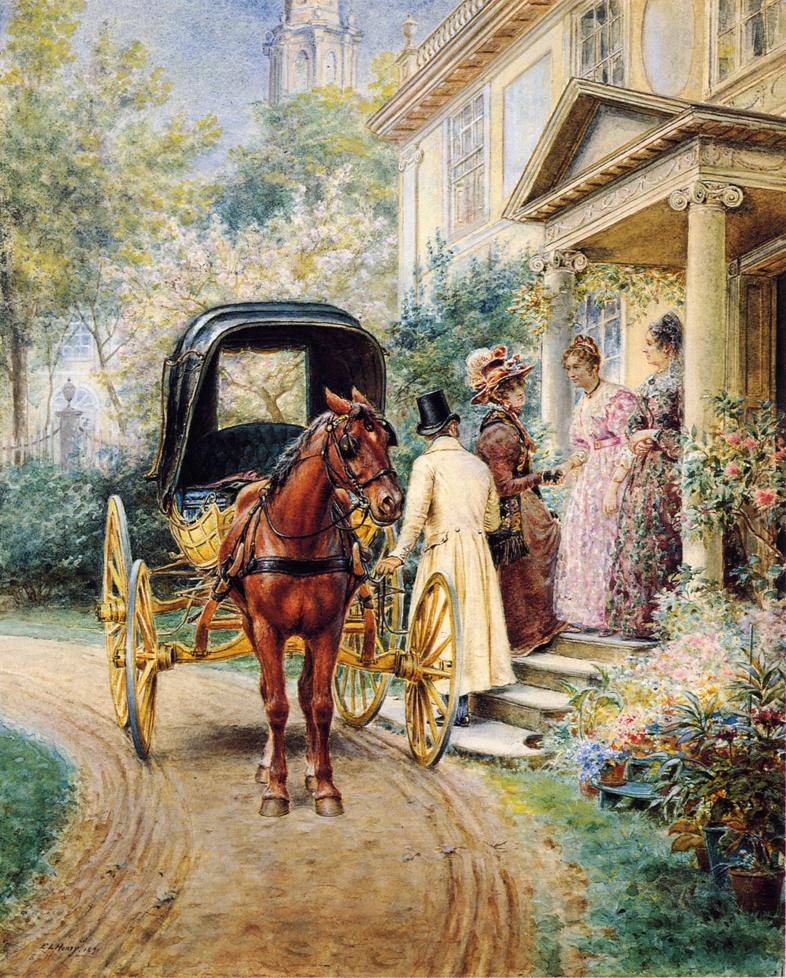
Greeting the Guest by Edward Lamson Henry


That was the beginning of Isabella’s lifelong friendship with Docia Toll. In later years they would both marry, have families of their own, and move away to different parts of the country; but they remained fast friends and confidants who loved each other and collaborated in creating short stories and novels that bore witness to God and their Christian faith.
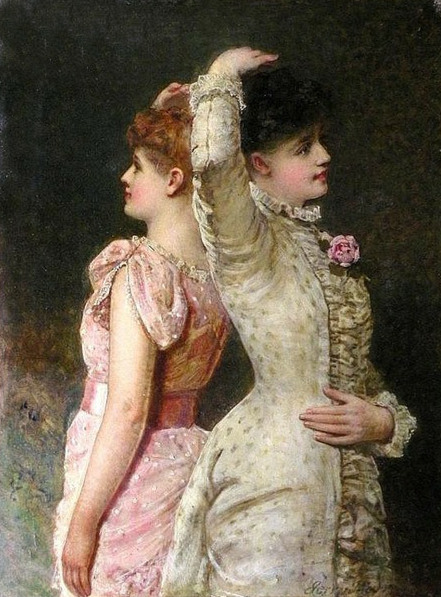
Who is the Tallest? by Jerry Garrett

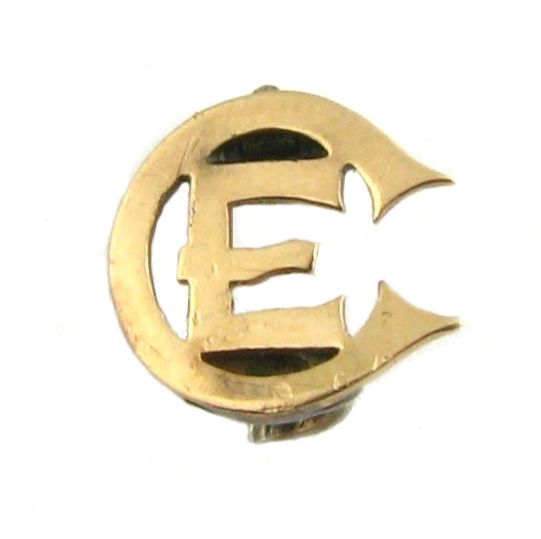
Chrissy’s Endeavor Pin

.  Logo Young Peoples Society of Christian Endeavor

When Chrissy Hollister arrived to spend the summer with her friend Grace, she was shown to a guest room that was decorated in blue and white and was “just as sweet and cool and charming as it can be.”

Presently her eyes rested on the blue satin pincushion, covered with white lace. Across it lay a ribbon—a badge of some sort. Chrissy laughed as she noticed that even the ribbon, which had evidently been dropped there by accident and forgotten, partook of the general character of the room, being of white satin, and bearing on its surface, painted in delicate tints of blue, five mystic letters: “Y. P. S. C. E.”

Victorian pin cushion smallChrissy studied them curiously, admiring the graceful curves of the rustic work, but wondering much what those letters could represent.

As Chrissy would later discover in a rather embarrassing way, those initials stood for Young People’s Society of Christian Endeavor. She would also discover just how important that distinctive pin was.

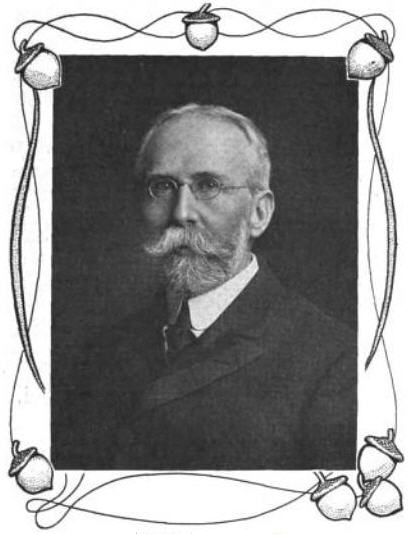
The design of the official Christian Endeavor emblem is attributed to Reverend Howard Benjamin Grose, a Baptist minister and editor of The Home Mission Monthly magazine. As a Christian Endeavor trustee, he felt strongly that the Society needed to adopt an official emblem, but the designs he’d seen were either too elaborate or expensive to produce. He wanted a simple design and felt, given the long name of the organization, the letters C and E should be made prominent.

Reverend H. B. Grose

.

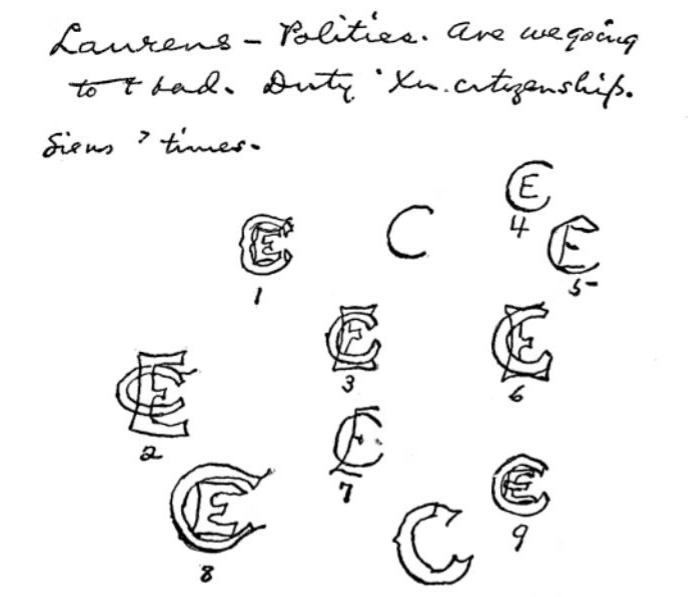
Reverend Grose began to doodle, putting the C and E together in different ways:

Pin sketches

He proposed sketch No. 9 to the trustees, and the monogram pin was unanimously adopted in 1887.

The C embraces the E. The Endeavor is all within the Christ.

Christian Endeavor_PinMany emblems are more showy, more glittering, more ornamental, perhaps; but I see none that satisfies me so well, or that awakens so many feelings of affection, gratitude, consecration, and hope,  as the strong, simple, speaking monogram in which the E that means Endeavor is made sublimely significant by the encompassing C that marks it all as Christian.

—Rev. Francis Bell, Founder, the Society of Christian Endeavor

.

Once adopted, the Christian Endeavor emblem remained unchanged for generations. The distinctive design was enhanced only slightly for pins produced for the children’s society and Christian Endeavor organizations in other countries, such as this pin from Scotland:

Christian Endeavor_Pin Junior    Christian Endeavor_Pin Scotland

The ribbon badge Chrissy saw in the guest room at Grace’s house may have been a local Christian Endeavor badge. Many state and local societies adopted their own unique Christian Endeavor colors, which they wore as ribbons on their lapels. The ribbons were usually printed or embroidered with the state name, as well as the initials Y.P.S.C.E. and the words Christian Endeavor.

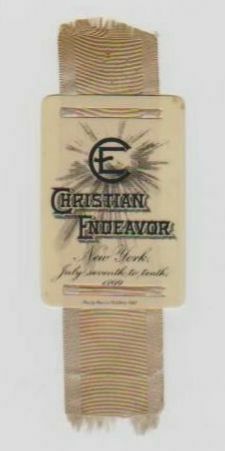
Ribbon badges were also created to commemorate Christian Endeavor annual conferences. Below is an example of the badge worn by attendees at the 1892 annual conference in New York:

Christian Endeavor Badge 1892 New York

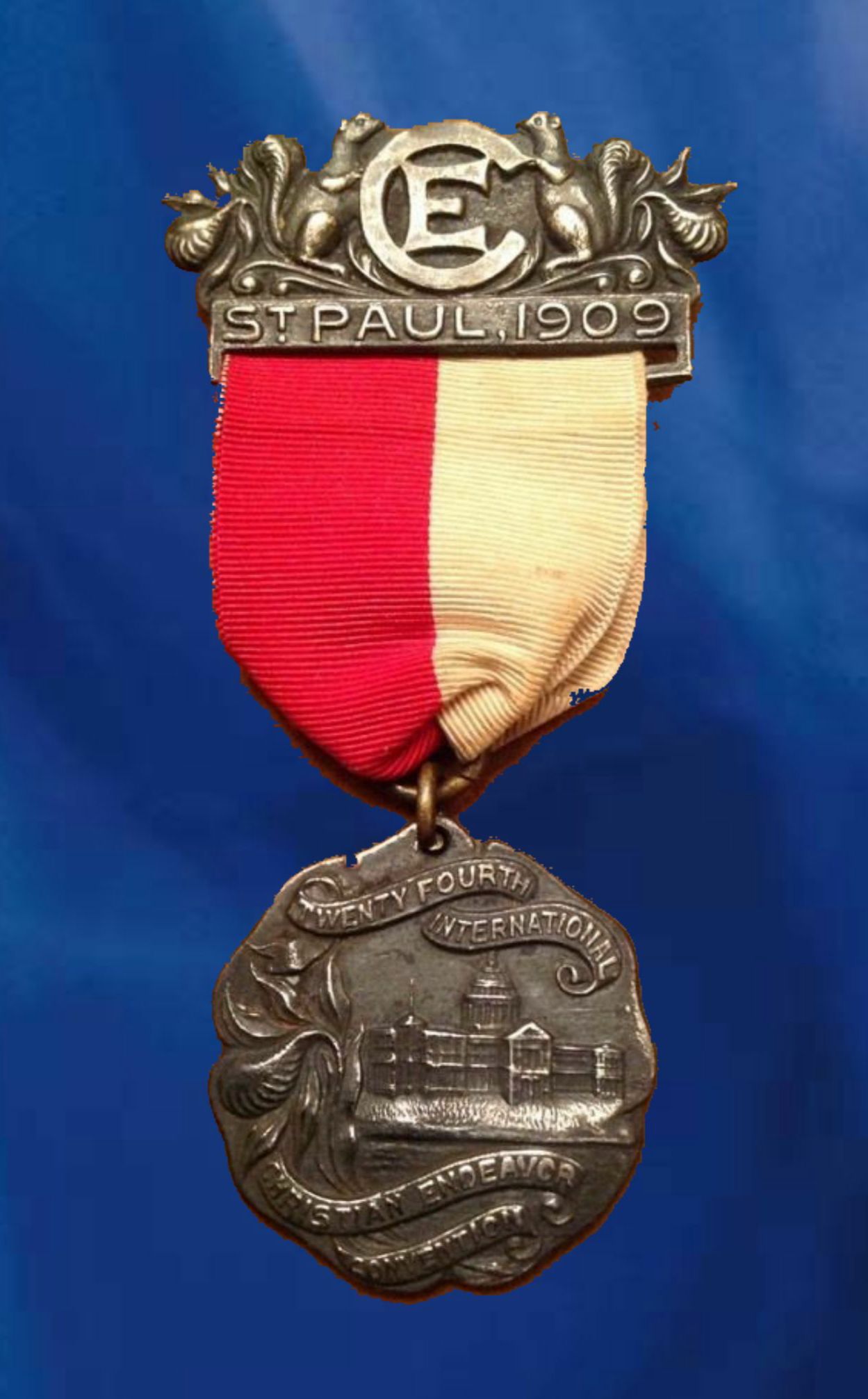
And this badge is from the 1909 national convention in Minnesota:

Christian Endeavor Badge 1909 Convention

After Chrissy became a Christian and organized a Christian Endeavor Society in her own town, she learned the power of the little pin while riding the streetcar one day:

A plainly-dressed girl of about her own age, with a good earnest face, sat opposite her, watching her with an intentness that was only excusable because of the absorbed and almost tender light in the girl’s eyes, which lifted her act far above the commonplace stare. At last, seeming to have gathered courage for a resolve, she arose and took a vacant seat beside Chrissy.

“I beg your pardon,” she said in low, well-bred tones, “may I speak to you? I am a stranger, but I see that we are kindred.” Touching as she spoke, the tiny silver badge she wore, bearing the magic letters “C. E.,” and glancing significantly at the corresponding one of gold, which fastened Chrissy’s linen collar.

There was an instant clasping of hands, and an exchange of cordial smiles.

The plainly-dressed girl explained that a friend of hers had attended a Christian Endeavor meeting—the very Christian Endeavor Chrissy organized in her town.

‘And she liked it all so much, that she came home and told about it, and did not rest until she had started a society out of our class in Sunday school. I joined as an associate member, because I was ready to do whatever the others did, but I got acquainted in that society with Jesus Christ. I signed the pledge, and gave myself to Him forever; and I’ve had a good winter.”

Chrissy was surprised and humbled to know that her efforts resulted in a soul being won for Christ. “Unfaithful, unreliable in every way, yet He had used her in the harvest field!” wrote Isabella Alden.

Posing in the shape of the CE monogram ca 1898
Members of two Christian Endeavor Societies pose on the steps of Antioch College in the shape of the CE monogram, circa 1895.

.

Isabella and her husband, Reverend Alden were tireless workers for Christian Endeavor. Isabella featured the society in her books Chrissy’s Endeavor, Her Associate Members, Pauline, and What They Couldn’t. She also wrote several short stories about Christian Endeavor: One Day’s Endeavoring and A Christian Endeavor Revenge were published in the Christian Endeavor magazine, The Golden Rule. And her book Grace Holbrook was a compilation of several short stories that illustrated the principles of Christian Endeavor for children.


You can learn more about today’s Christian Endeavor by clicking here to visit their site.

Click on the book covers below to find out more about the books mentioned in this post.

Cover_Chrissys Endeavor v3    Cover_Her Associate Members v2 resized

Cover_Pauline    Cover_What They Couldnt 02 resized


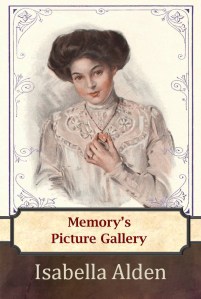
New Free Read: Memory’s Picture Gallery

Cover_Memory's Picture Gallery resized

Just in time for Valentine’s Day, this charming short story chronicles a young couple’s journey of true love and abiding faith.
Click on the book cover to begin reading Isabella Alden’s 1885 short story, “Memory’s Picture Gallery.”

You can find more Isabella Alden free reads by clicking on the Free Reads tab above.

Sally Lunn at Mount Hermon

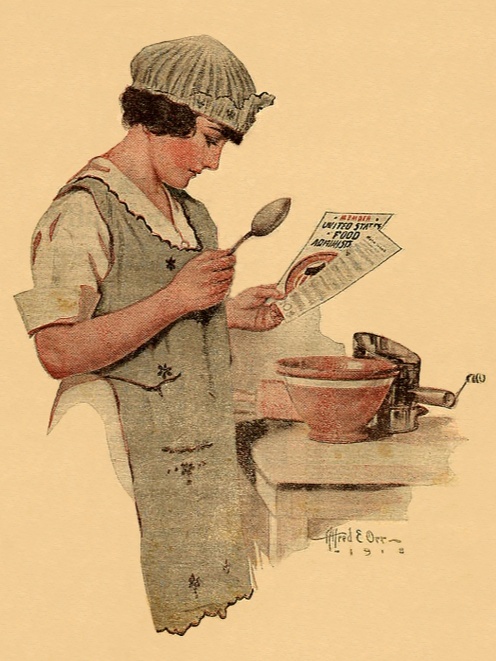
In The Browns at Mount Hermon, Mrs. Roberts was overjoyed when her most fervent prayer was answered—her daughter, Ailene gave herself to the Lord. Mrs. Roberts wanted to celebrate the blessing in the best way she knew how: by preparing a special breakfast for everyone to enjoy.

Illustration of woman reading a recipe.“Oh, well, we won’t mind if we don’t have muffins for breakfast tomorrow morning. What does it matter what we have to eat? Yes, it does, it matters a great deal. We want the best breakfast tomorrow morning that was ever had in this house. I should like to feed everybody on roses! Though after all, I don’t suppose they would like them to eat half so well as they do muffins. Or Sally Lunn; I’ll have Sally Lunn tomorrow, whole sheets of it. Mr. Brown says nothing was ever better to eat than my Sally Lunn; and Ailene likes it better than anything else; I wonder I didn’t think of it the first thing. Oh, Mary Brown! I’m that happy tonight over the child, that it is a wonder I can think of anything to eat! I feel as though I could fly, without wings. Don’t you think she’s settled it! She belongs to the Lord!”

Sally Lunn was a type of cake that originated in England; and there are American versions of the Sally Lunn recipe in cook books dating back to early 1800s. By 1907, when The Browns at Mount Hermon was written, Sally Lunn had become a favorite pastry on American tables, too.

Henry's Cook Book and Household Companion (1883)
Henry’s Cook Book and Household Companion (1883)

There were as many versions of Sally Lunn as there were cooks; but, in general, Sally Lunn was a rather dense cake, much like sponge cake, that could be baked in a variety of ways.

For breakfast, it was usually made up in loaves, then served toasted and spread with butter.

from The Winston Cook Book by Helen Cramp (1913)
A Sally Lunn cake, pictured in The Winston Cook Book by Helen Cramp (1913)

It was also baked in muffin tins and served as tea-cakes with honey, fruit jelly, or sweet sauce.

Black and white photo of three individual cakes arranged on a plate.
Sally Lunn tea cakes. From Good Housekeeping magazine, 1907

If you made several sheets of Sally Lunn, as Mrs. Roberts planned to do, and it happened to go stale because you didn’t eat it fast enough, never fear. A 1903 edition of The Epicure magazine recommended cutting stale Sally Lunn cake into small slices or shapes, soaking then in a thin custard, and frying them in clarified butter. Sprinkle the top with sugar, and “you had very good Beignets.”

Here’s a recipe from 1913 that may have been close to the recipe Mrs. Roberts followed for her Sally Lunn cake:

Recipe Sally Lunn Cake

Click on the image to see a larger version you can print out.

You can learn more about the history of Sally Lunn cake. Click here to read a post at Smithsonian.com about Sally Lunn cake.


Cover_The Browns at Mount HermonClick on the book cover to find out more about The Browns at Mount Hermon.


Quotable

Pansy 03You cannot have lived in this world so long without discovering that pain and disappointment of every sort are not happenings, but have their own wise and most important ends to fulfill, though we may be too childish to see the occasion, or understand the remedy.

Spun from Fact

.


Did you know you can read Spun from Fact for free? Click on the Free Reads tab above to read the book now.

A Woman’s Voice

Colored drawing of a country church displayed above the word Prayer In her memoirs, Isabella Alden wrote about the first time her father and mother visited her after she was married. It happened when Isabella’s minister husband was new to his church and was working hard to make the Wednesday prayer meetings a success. He wanted the prayer meeting attendees to participate, so on Sunday mornings he would announce from the pulpit the topic for the Wednesday meeting. He asked everyone to come on Wednesday with a Bible verse that supported or illustrated the topic.

One Tuesday, Isabella’s mother and father arrived unexpectedly for a visit. The next evening Isabella proudly escorted her parents to the church and sat beside her father as her husband, Reverend Alden, led the prayer meeting. But something happened that forced her to make a terrible choice.

Her father had always strongly opposed women speaking in public and that opposition extended to prayer meetings.

Yet Isabella had prepared a Bible verse to recite aloud if necessary to help and support her husband. None of the other attendees were responding to Reverend Alden’s call to participate and an uncomfortable silence stretched on for several minutes. Isabella wrote:

“I sat in distressed silence for several minutes; so did everybody else. Suddenly I looked at my husband. I had promised him, had even talked with him about some of the thoughts that I wanted to present. What must he think of me now?

“Oh, Christ!” I prayed in my heart. “Tell me what to do!”

And the answer came, she said, as plainly as spoken words. She broke the silence and recited aloud the verse she had prepared:

“Thus saith the Lord who created thee:
 “Fear not, for I have redeemed thee; I have called thee by thy name; thou art mine.”

As soon as she finished, others followed in quick succession, and the prayer meeting continued on.

But Isabella was keenly aware that her father never said a word to her about the meeting or the verse.

“He was kind and tender toward me, but graver than usual; I had a feeling that I had hurt him by showing no respect for his opinions.”

Her mother and father left early the next morning and never visited the Alden home again.

A black and white illustration of a woman in Victorian era dress speaking before an audience of men and women.That was an experience that stayed with Isabella. In fact, it made such an impression on her that she described that scene—in different ways—in many of her books.

In Workers Together: An Endless Chain, Miss Joy Saunders knew that the church she belonged to “believed in woman’s sphere, and desired her to keep strictly within its limits” and “on no account to let her voice be heard” in its religious meetings.

But when Joy followed her conscience and spoke a simple verse in an otherwise very quiet prayer meeting, she “set in motion forces that are pulsing yet” because the verse she recited touched so many hearts.

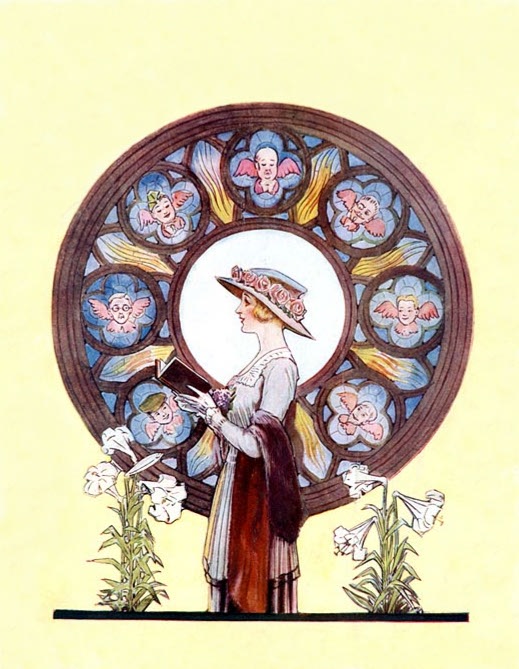
Profile of a young woman standing in church. Behind her is a stained glass window; but instead of Christian icons, the window  features faces of people looking down upon her, some forwning, some laughing.
Scrutiny

.

Rebecca Harlow, the heroine of Links in Rebecca’s Life, was well aware that people in her church thought women and girls should keep silent when they were at prayer meeting. But after one of those long “awful pauses” in which no one at the meeting said a word, Rebecca spoke up and asked the people to pray for a friend who was in temptation.

That was all she said and though she couldn’t see anything wrong in her words, she knew there were some in the room who “thought it was out of taste.”

And when Ester Ried attended her first prayer meeting in New York, she was astonished by the proceedings:

“Now,” said the leader briskly, “before we pray, let us have requests.” And almost before he had concluded the sentence a young man responded.

“Remember, especially, a boy in my class, who seems disposed to turn every serious word into ridicule.”

“What a queer subject for prayer,” Ester thought.

“Remember my little brother, who is thinking earnestly of those things,” another gentleman said, speaking quickly, as if he realized that he must hasten or lose his chance.

“Pray for everyone of my class. I want them all.” And at this Ester actually started, for the petition came from the lips of the blue-ribboned Fanny in the corner. A lady actually taking part in a prayer meeting when gentlemen were present! How very improper. She glanced around her nervously, but no one else seemed in the least surprised or disturbed; and, indeed, another young lady immediately followed her with a similar request.

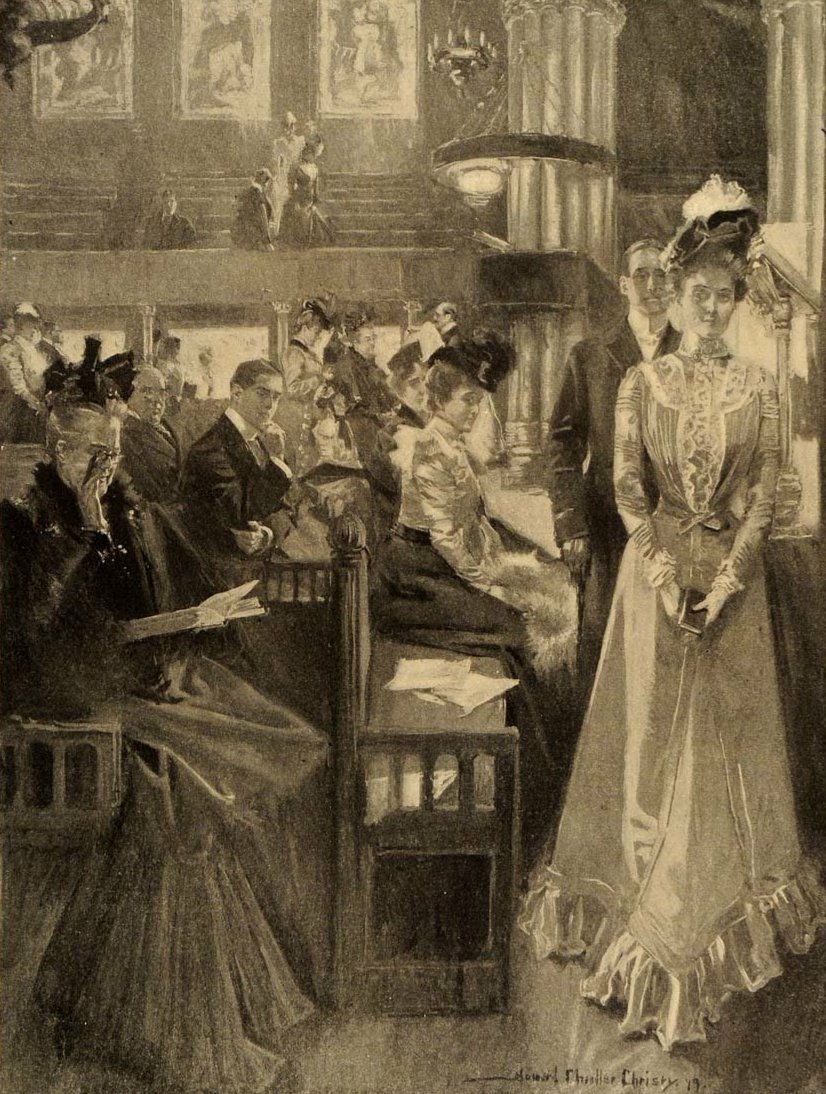
Illustration of a young woman going to her seat in church, with the yes of several members of the congregation following her.
An American Girl in Church
by Howard Chandler Christy

.

In Ruth Erskine’s Crosses, Isabella described the reaction when Ruth’s half-sister spoke up at the weeknight prayer meeting:

The words she uttered were these: “Therefore being justified by faith, we have peace with God, through our Lord Jesus Christ.”

Now, if it is your fortune to be a regular attendant at a prayer-meeting where a woman’s voice is never heard, you can appreciate the fact that the mere recitation of a Bible verse, by a “sister” in the church, was a startling, almost a bewildering innovation. Only a few months before, I am not sure but some of the good people would have been utterly overwhelmed by such a proceeding. But they had received many shocks of late. The Spirit of God coming into their midst had swept away many of their former ideas, and therefore they bore this better.

A Happy Ending:

Not long after that Wednesday night prayer meeting when Isabella spoke out in front of her parents, her father became very ill and she traveled to his home to be with him in his final days. One evening she was alone with her father when he said, unexpectedly:

“Thus saith the Lord who created thee.”

He explained to Isabella that he well remembered that Wednesday night prayer meeting and the verse she recited.

“The first time I ever heard it, your beloved voice gave it to me,” he said. “I can’t begin to tell you what [those words] are to me now, lying here. ‘Fear not; for I have redeemed thee; I have called thee by thy name; thou art mine.’”

That was the last private talk Isabella had with her father and she cherished the memory of it.

“I thank the dear Lord,” she later wrote, “that one night He gave me courage to repeat words which brought joy to Father’s heart.”


Click on the “Isabella’s Books” tab at the top of this page to read more about the books mentioned in this post.