What One Good Library Can Do

When Isabella Alden began writing her beloved “Pansy” books in the 1870s, the literary landscape looked very different than it does today. There were few public libraries like the ones we have now; instead, churches filled that role by establishing their own library systems.

The Sunday-school library was a powerful force in 19th-century America. They didn’t just lend books—they curated collections of books that shaped readers’ moral and spiritual development.

Not all Sunday-school libraries were created equal; some churches seemed to have unlimited resources to maintain a well-stocked library of five-hundred books or more, displayed in neat rows on well-built shelves; while others had only a few titles in their collection.
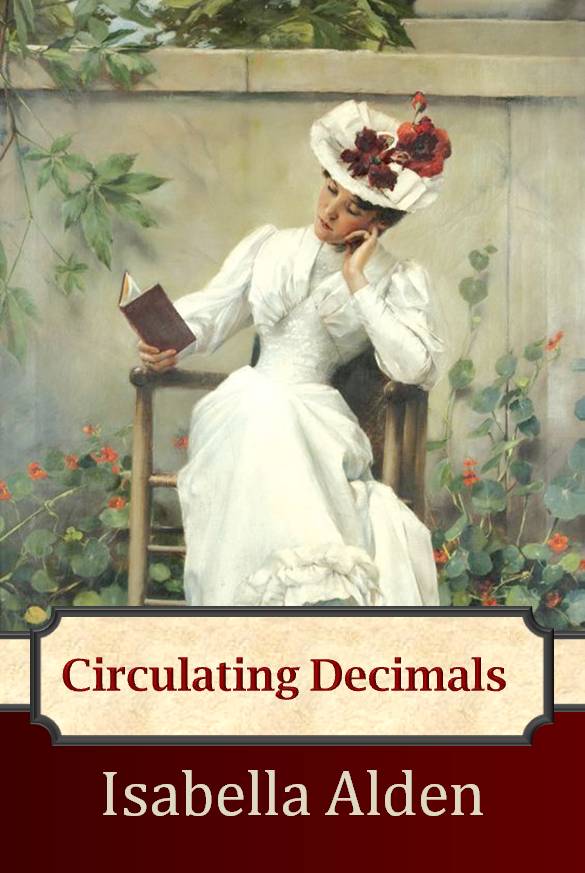
Cover of the story "Circulating Decimals" by Isabella Alden, showing a young woman dressed in the style of about 19095 wearing a white dress with white sleeves and a high color and floor-length skirt. On her head is a white hat with large red poppy flowers. She sits on a rustic wooden chair in a garden, holding a book in one hand, which she is reading, while her head rests on the other hand as her elbow rests on the arm of the chair. Behind her is a stone garden wall with vines and red flowers creeping up the wall.

Isabella’s short story, “Circulating Decimals” is about the efforts of a community to raise money for just such a church library that has fallen into a “disgraceful condition” due to neglect and lack of funds. (You can click here to read the story for free.)

But regardless of size or budget, church libraries had one mission in common: to offer readers books that supported religious instruction, moral development, and the spiritual growth of the congregation.

Churches established committees to evaluate each potential library addition against a set of religious standards. The minister often played a role in recommending or vetoing books, which were also chosen based on their theological soundness and ability to promote standards of Christian living.

The Grace Methodist Episcopal Church of Taunton, Massachusetts had a rather large library of over five-hundred books, and included some of Isabella’s novels, as well as books by Margaret Sangster, E.P. Roe, and other Christian fiction authors.

The church divided their book collection into categories and published a catalog for members of their congregation. The fact that Isabella had ten of her books included in the catalog shows how well the moral messages of her stories aligned with the church’s values and appealed to readers of all ages.

(You can click on the image above to see the entire Grace M.E. Sabbath-school Library catalog of 1904.)

Mainstream publishers like Little, Brown and Company actively marketed their wholesome books to churches. This advertisement in “The Sunday School Library Bulletin” magazine shows their newest offering to churches included a new edition of “Little Men” by Louisa May Alcott:
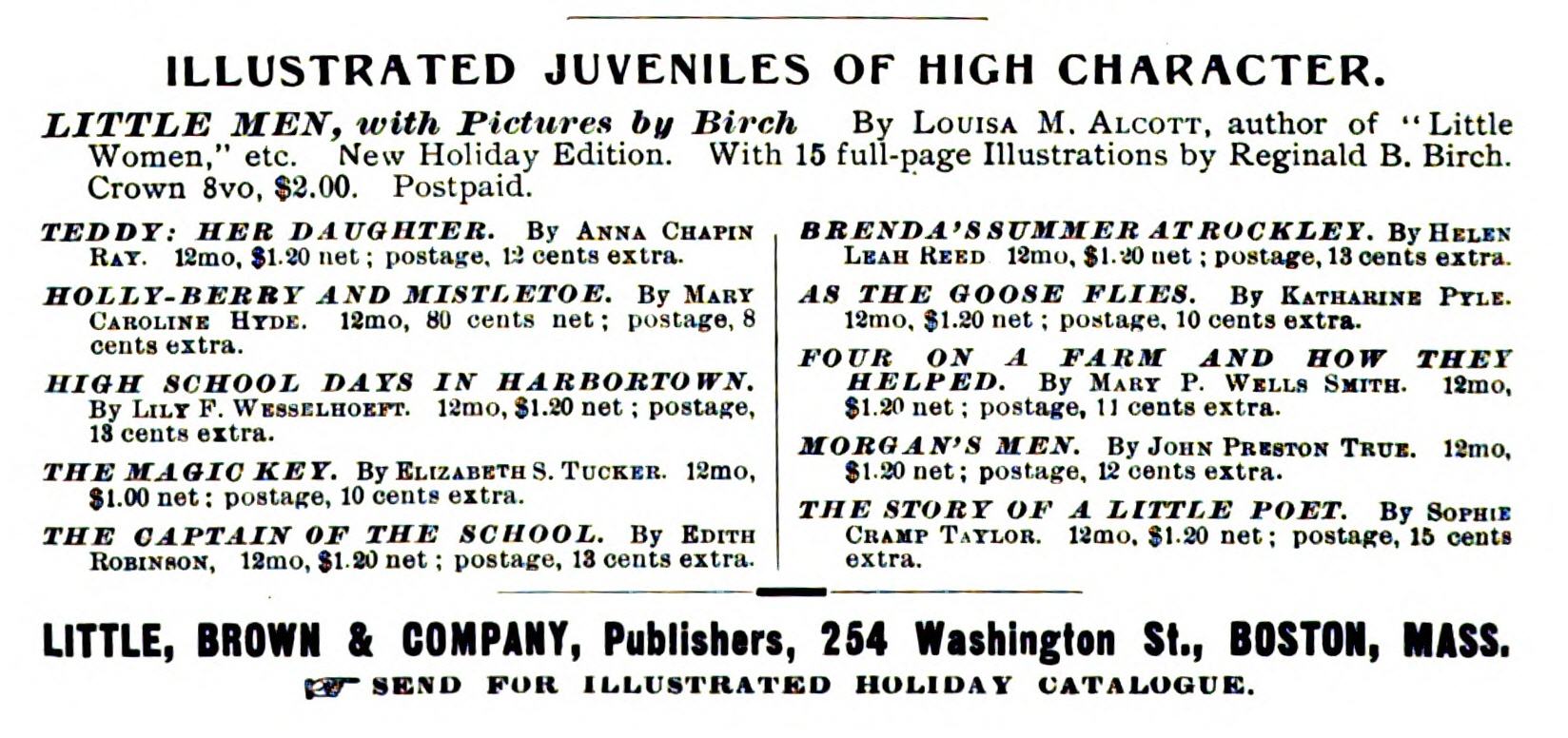
Magazine ad for "ILLUSTRATED JUVENILES OF HIGH CHARACTER," listing "Little Men" by Louisa M. Alcott in large letters, as well as 10 other books. At the bottom is the name of the publisher, Little, Brown & Company of Boston Mass. with an address to write for an "illustrated holiday catalogue."

And organizations like The National Temperance Society also marketed their books directly to churches. Their ad below features a temperance novel by Isabella’s friend Theodosia Foster (who used the pen name of Faye Huntington):
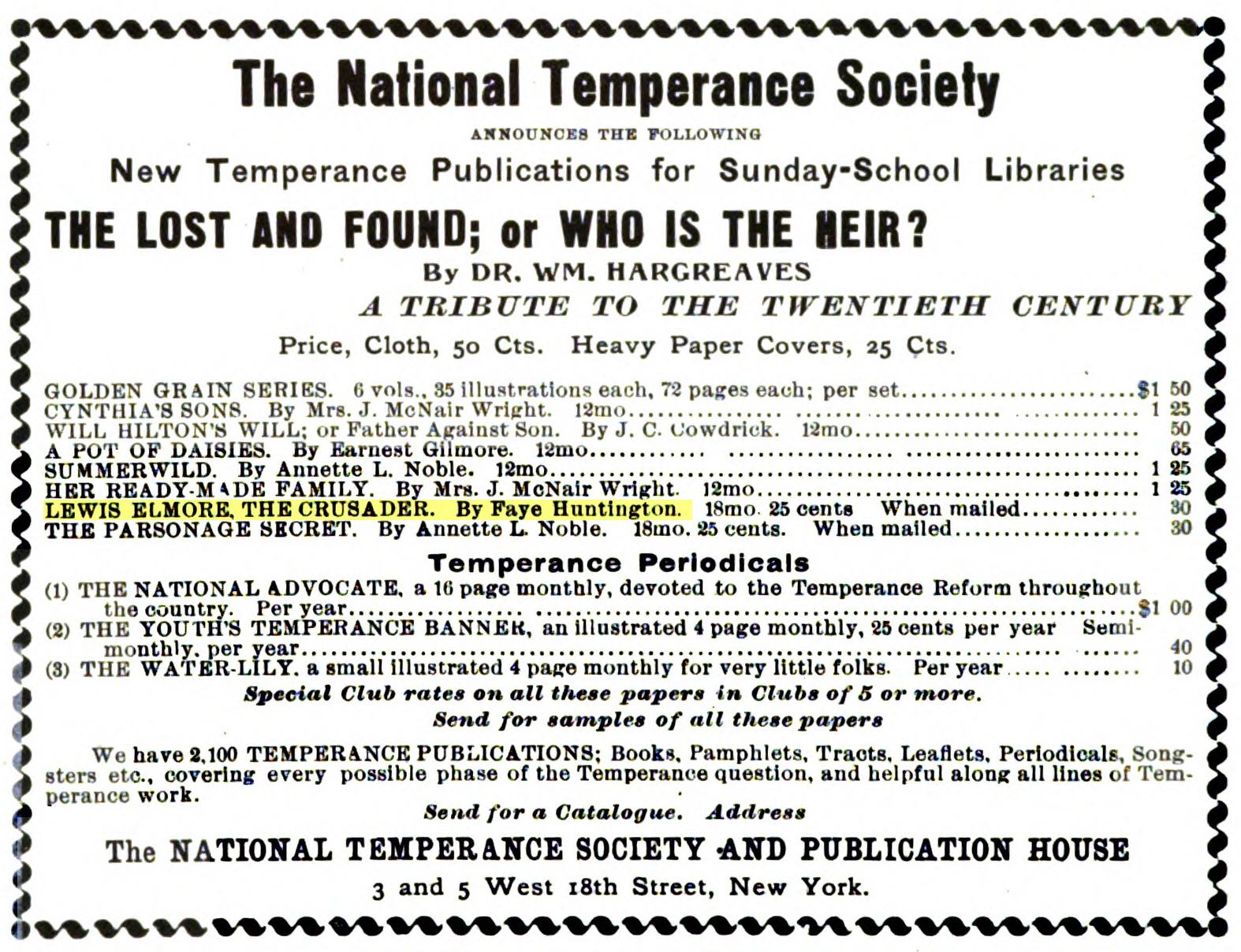
Magazine advertisement for The National Temperance Society new publications for Sunday-School Libraries, listing "The Lost and Found; or Who is the Heir?" by Dr. Wm. Hargreaves. It also lists 8 other books, including Lewis Elmore, The Crusader by Faye Huntington, as well as 3 temperance periodicals. It offers "special club rates" and gives an address to send for a catalog and samples of the periodicals.

Church libraries established systems for inventorying and lending books. They assigned an inventory number to each book, and issued library cards to readers.

A square label affixed to the inside cover of a book. On the first line of the word "NO" with room to write a number; the number 61 was written and crossed out, and the number 77 written beside it. Below are printed "SUNDAY SCHOOL LIBRARY of the Evengelical [sic] Lutheran Church, Springfield, Ill." The text is surrounded by a fancy Victorian-era design of swirls and dots.
The numbered book plate from a book in the Sunday school library of the Evangelical Lutheran Church of Springfield, Illinois.

They also created rules for borrowing:
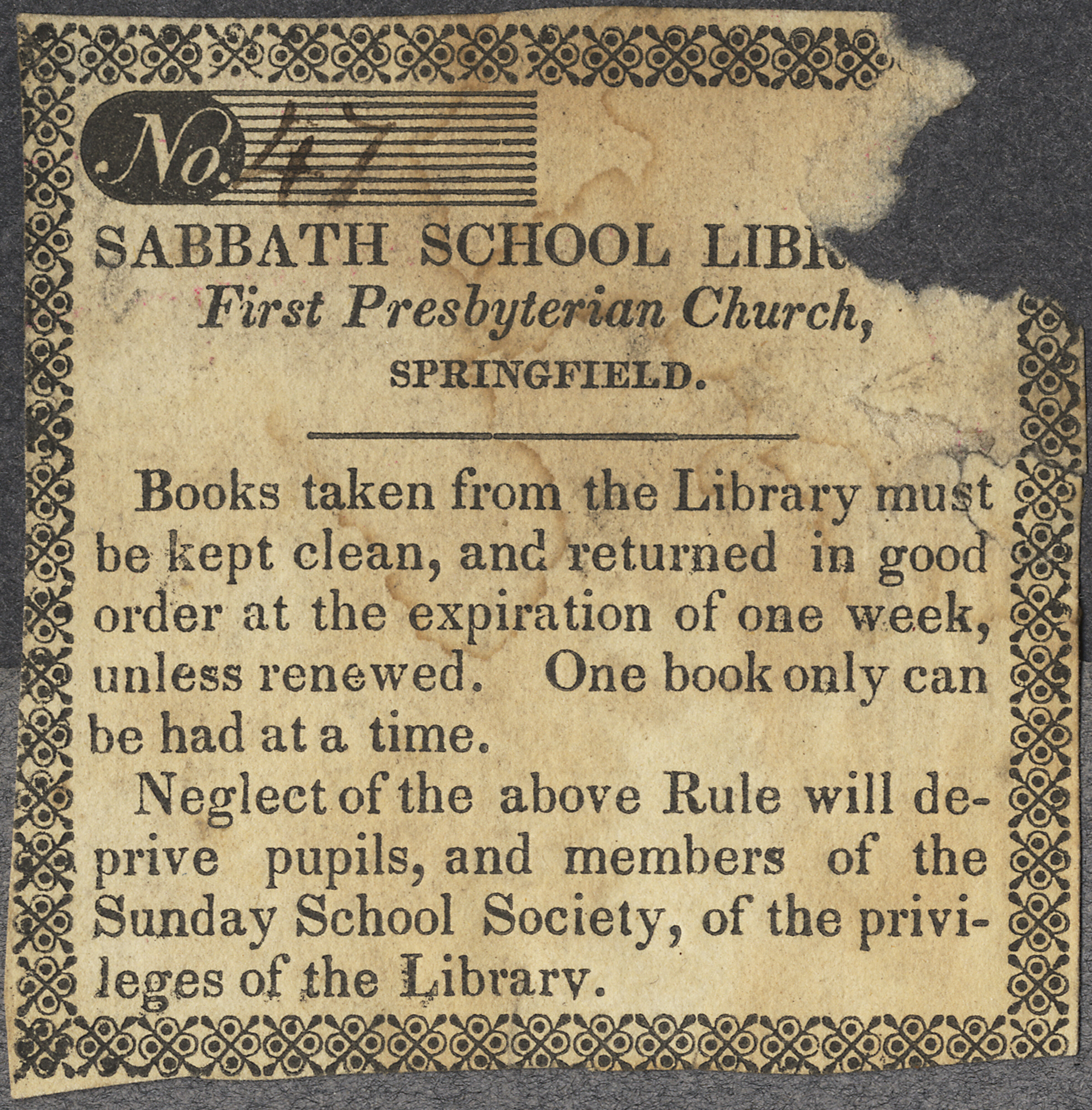
A square label affixed to the inside cover of a book. The top line has the book No. 47, then, "SABBATH SCHOOL LIBRARY, First Presbyterian Church, Springfield." Below is typed: "Books taken from the Library must be kept clean, and returned in good order at the expiration of one week, unless renewed. One book only can be had at a time. Neglect of the above Rule will deprive pupils, and members of the Sunday School Society, of the privileges of the Library."

Church libraries were a lifeline for readers, especially in smaller and frontier communities where there were no free public libraries. But that began to change in 1886 when wealthy steel magnate Andrew Carnegie began funding the building of public libraries across the country. By 1923 he had financed the building of over 1,600 public libraries where borrowers could choose from thousands of book titles, including the most popular books of the day.

Old colorized postcard of the public library in New York City showing a sprawling, multi-story building in classical Georgian style with stone steps leading to the entrance flanked by stone columns. The library is located on the corner of two intersecting streets with the tall buildings of the New York skyline in the background.
The New York City Public Library, opened to the public in 1911.

The “safe” books Isabella wrote went out of print, while modern novels by Ernest Hemingway, Edith Wharton, and F. Scott Fitzgerald filled the shelves at public libraries.

Sunday-school libraries still existed, but their influence waned to such an extent that in 1930 a newspaper in Greensboro, North Carolina published an editorial just after Isabella’s death. The editorial fondly recalled the church libraries of years gone by:

There were no sex novels; no crime novels; no filthy “realism,” which portrays the perversions of human nature as if it were life itself. Romance there was, in glorious gobs. Many of the books seeped sentimentality. And always there were happy endings.

He went on to write that Isabella’s books “made for clean lives and happy homes and good society.” In her stories, “the problems were the problems of everyday people trying to be good. If they were somewhat morbid and over-introspective, so was the era for which they were meant.”

Isabella truly did write for the era in which she lived; but it’s important to remember that her books succeeded in Sunday school libraries not just because they met church requirements, but because Isabella had a particular understanding of literature’s purpose—that stories should help readers have a closer walk with God and become better versions of themselves.

Maybe that’s why her “Pansy” novels, despite going out of print, are still read and loved by new readers today, and remembered fondly by those who discovered them on long-ago Sunday afternoons in church libraries.

Does your church have a library? What are the kinds of books it offers?

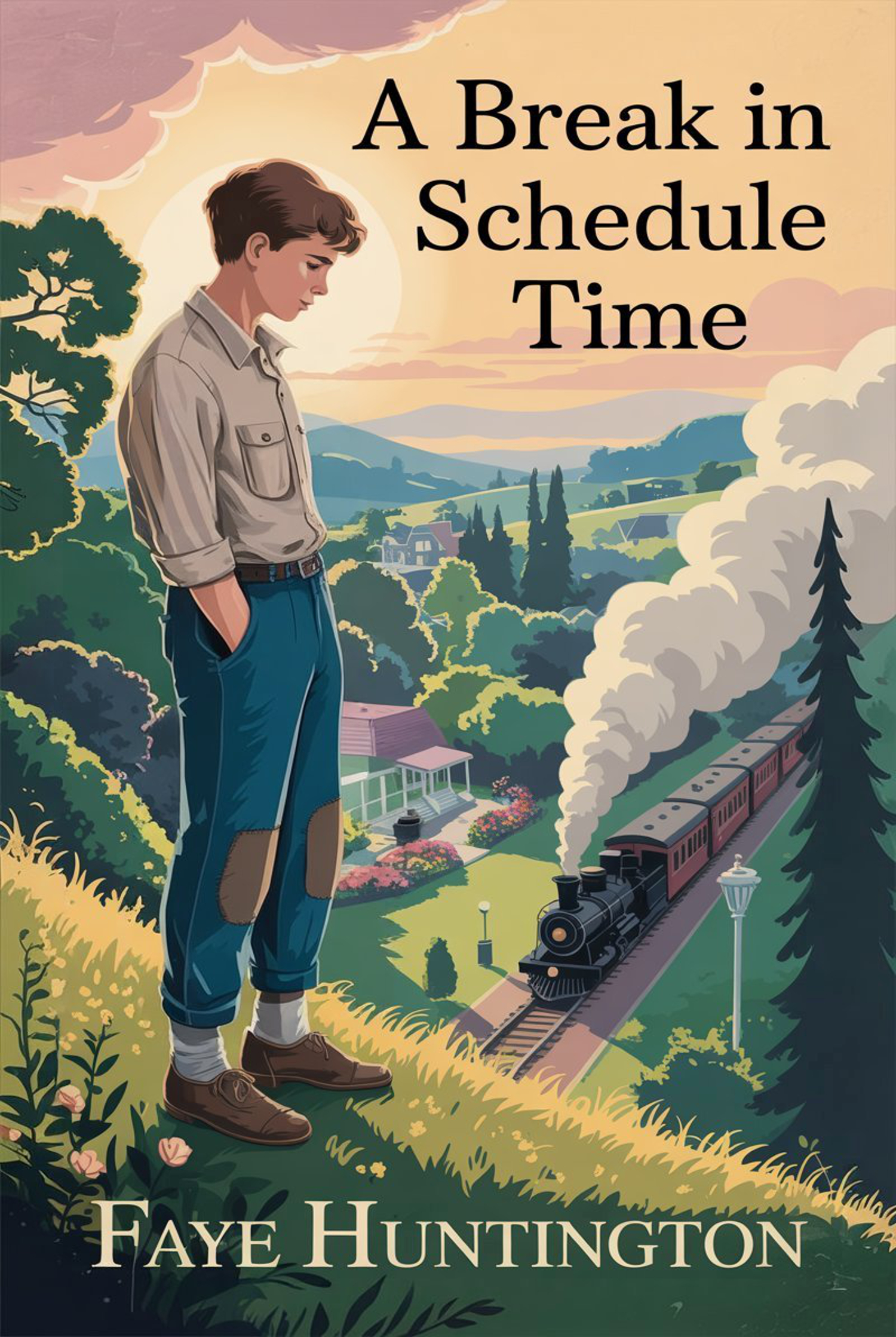
New Free Read: A Break in Schedule Time

Our August free read by Faye Huntington is a delightful story about two topics very close to the author’s heart: the Christian Endeavor movement, and how sowing seeds of good can result in a bountiful harvest of blessings.

Like everyone in impoverished Castle City, twelve-year-old Tom Gates has given up hope of making a better life, until he has a chance encounter with a group of stranded Christian Endeavorers. Their kindness and faith inspire Tom; for the first time in his life he wants something the town has never had before: A Sunday school.

With his sister Lucy and their friends, Tom uses his wits to raise money and secure a building; and along the way, he ignites a fire of change that will shape the town for generations to come.

You can read “A Break in Schedule Time” for free!

Choose the reading option you like best:

You can read the story on your computer, phone, tablet, Kindle, or other electronic reading device. Just click here to download your preferred format from BookFunnel.com.

Or you can select BookFunnel’s “email” option to receive an email with a PDF version you can read, print, and share with friends.

Going West

Isabella Alden and her best friend Theodosia Toll (who wrote novels and stories under the pen name Faye Huntington) were as close as sisters. Although they both lived in New York state—Isabella near Johnstown and Theodosia near Rome—their homes were over seventy miles apart. Despite the distance, they visited each other often, and were well-loved “adopted” members of each other’s family.

Isabella stayed at the Toll family home so often, she came to know the neighbors, and became close and dearly-loved friends with them, as well. From simple family dinners to celebrations of major life events, the Toll family and their neighbors included Isabella among the invitees.

So, when Mr. and Mrs. Hall—one of the Toll neighbors—decided to commemorate their fiftieth wedding anniversary with a party, Isabella received an invitation. At the time, she was a married woman, living with her husband in Indiana, where he was pastor of a Presbyterian church; but Isabella did not want to miss the occasion. She made the journey to New York, and a few years later, she published an account of the family and their remarkable history:

GOING WEST SEVENTY-FIVE YEARS AGO.

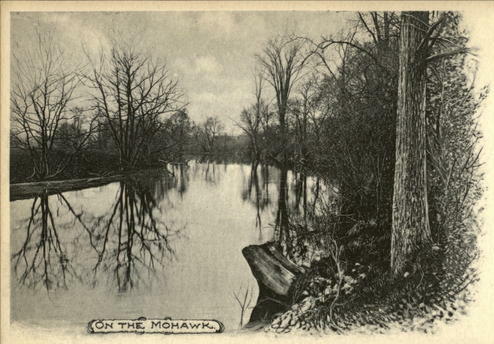
Seventy-five years ago young Samuel Hall left his wife and babies in the old home in the Connecticut Valley and came into what was then “the West” prospecting. If you look on the map, following the Mohawk River along its westward course, to where it seems to turn to the north, you will find its source in that direction.

Old black and white photo of the Mohawk River as it winds through a forest of trees.

Just to the west of this turn you may find the city of Rome set down; not the Rome of ancient and sometimes fabled history, but our quiet little city of Central New York, known before the Revolutionary War as Fort Stanwix, and during the war as Fort Schuyler. It was Fort Schuyler which was besieged by Colonel St. Leger in 1777. He had under his command an army of British soldiers, some Americans who favored the Royal party and were known as tories, and a large number of Indians. About seven miles east of the fort, at Oriskany, a company of American soldiers, on the way to help the people at the fort, fell into an ambush and four hundred of them were killed or taken prisoners by the Indians. General Herkimer was so badly wounded that he died a few days later. I have been upon this old battle-ground and seen what is left of the tree under which they say the brave old general lay after he fell from his horse.

It was here on this historic ground that young Mr. Hall determined to make a home for his little family. Striking out from the then small village of Rome, he passed through, dense and unbroken woods, not only unbroken, but untrodden. A narrow trail led to some small settlements further on. At length his choice was made, the home was located. It was spring, and soon a clearing was made, ground plowed and corn planted. A cabin of logs was built—things made as comfortable as possible. Then he went back for his family, expecting to return in time to harvest his crop of corn and get settled for the winter. With two strong horses and a covered wagon such as was called an “emigrant wagon,” he conveyed his family and all their household goods to the new country.

Pencil and charcoal drawing of a covered wagon pulled by two horses, at a stop beneath a large tree. A man stands at the head of one of the horses, holding its bridal. A woman and a child can be seen riding in the front of the wagon.
Sketch of an “emigrant wagon” Isabella included with her history of the Hall family.

What a sad parting that was which took place as they all left the old home. It was then a long way to Central New York! Farther than half around the world would seems now! Mails were infrequent, so that communication as well as visits must necessarily be rare. Day after day for more than a week they rode until one morning a few hours only after they broke camp, they came out upon a rise of ground where there was a clearing before them, and Mrs. Hall exclaimed, “What a pretty view!”

There was a stream of water winding through the valley, and Mrs. Hall afterwards said:

“I never dreamed it was to be my home, but I thought it was the prettiest spot I had ever seen, and I have never changed my mind about it.”

And it was home. Upon the brow of the hill stood their cabin in which they were soon settled. And after a little the neighbors began to call upon these new-comers. Their nearest neighbor was two miles away! Three miles in another direction was the second! These settlers had helped the young pioneer with his log-rolling and now came with their wives to welcome the family.

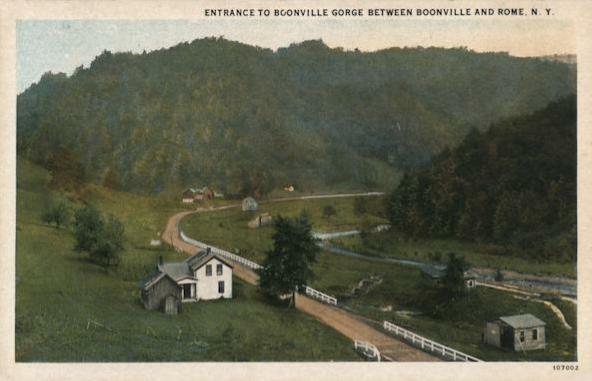
Hand-colored photo (undated) of a farm nestled in a lush green valley between two hills. There is a dirt road bordered by a white picket fence that leads to the white farmhouse. A few outbuildings of different sizes are present.
Undated, hand-colored photo of a farm near Rome, New York.

Soon others came to settle near them, then others, until the whole country was inhabited. A schoolhouse and a church were built, and presently a large frame-house took the place of the little log one, and the children grew up and married, and the old people lived on in the same place till they went to their home above.

Only a few years ago, not many months since, I attended a golden wedding in the old house; one of the little ones who travelled in that emigrant-wagon on that long, slow journey up the valley of the Connecticut, winding through the passes of the range of hills that bounds the New England States on the west, then keeping to the low ground of the Mohawk Valley. One of these had been fifty years married, and relatives and friends came together to celebrate. Some of the guests had likewise travelled in emigrant-wagons and lived in log-cabins, and the younger ones gathered around to listen to their stories of pioneer life, and some way, as we listened to these reminiscences, we seemed to be living in a very tame period.

We said within ourselves, “What wonderful material these people have for story-telling. We shall have nothing like it to tell our grandchildren when we are old.”

We never rode in a great canvas-covered wagon, nor hunted a bear, nor were lost in the woods, nor rode forty miles to mill and the post office. But one old lady summed it all up by saying:

“Marvellous are the ways by which the Lord has led us.” That comforted us; we could say that.

Do you have family stories that have been handed down through generations?

New Free Read: Up in Mrs. Kelsey’s Attic

One of Isabella’s fondest memories was from a time when she was very young and her father taught her about “due bills.” (You can read more about that here.) Isabella’s father used that unremarkable, every-day event to teach Isabella a lesson she would never forget about the power of prayer.

Isabella’s friend, Theodosia Toll Foster (a teacher by profession) also used common incidents to reinforce lessons. Her children’s short story “Up in Mrs. Kelsey’s Attic” (which she wrote under the pen name “Faye Huntington”) is an example of just such a teachable moment.

Book cover with a whimsical illustration of odds and ends tucked under the rafters of an attic, such as books, an old purse/satchel, a spinning wheel, doll, wooden boxes, an old wooden trunk.

When Carrie Kelsey helps her mother clean the attic, she discovers a treasure trove of interesting curiosities, including an old spinning wheel. Little does Carrie know that the history of the long-forgotten spinning wheel will teach her a valuable lesson.

YOU CAN READ “UP IN MRS. KELSEY’S ATTIC” FOR FREE!

Choose the reading option you like best:

You can read the story on your computer, phone, tablet, Kindle, or other electronic reading device. Just click here to download your preferred format from BookFunnel.com.

Or you can select BookFunnel’s “email” option to receive an email with a PDF version you can read, print, and share with friends.

New Free Read: Honor Bound

Isabella Alden and Theodosia Foster were not just best friends—they were writing partners, too.

Like Isabella, Theodosia was a prolific writer, and published her work under the pen name “Faye Huntington.”

When they got together to write a story, their styles were so similar, and they were so in tune with each other’s talents, it’s impossible for us to tell which of them wrote what chapter or scene.

Today’s free read is a novel they wrote together about the love of money and how it can change (or reveal) someone’s true colors.

Book cover showing the exterior front of a large mansion with tall columns supporting a balcony on the second floor and a wide veranda on the first floor.

Lawrence Brenholz always knew he would inherit his grandfather’s millions once he satisfied the provisions of the will. But on the eve of that momentous day, when all the Brenholz millions would be his, Lawrence’s ornery old Uncle Amos—long thought to have died in the wilds of Colorado—makes a shocking appearance that threatens Lawrence’s inheritance.

With Uncle Amos’ unreasonable demands disrupting every area of his life, how can Lawrence ever again find peace for himself and those he loves?

You can read Honor Bound for free!

Choose the reading option you like best:

You can read the story on your computer, phone, tablet, Kindle, or other electronic device. Just click here to download your preferred format from BookFunnel.com.

Or you can select BookFunnel’s “My Computer” option to receive an email with a version you can read, print, and share with friends.


This post is part of our 10-Year Blogiversary Celebration! Join us every weekday in September for a fun drawing, giveaway, or Free Read!

FREE Lecture about Faye Huntington!

Would you like to learn more about the life of Isabella’s best friend, Theodosia Toll Foster? Under the pen name Faye Huntington she wrote dozens of novels and short stories, many of which Isabella published in The Pansy magazine.

On Saturday, April 29 Theodosia’s great-granddaughter Susan Snow Wadley will be giving a free lecture about Theodosia’s life in New York and her influence on the area’s culture.

Topic:“The Life and Times of Theodocia Maria Toll Foster”
Where:Oneida County History Center
1608 Genessee Street
Utica, New York 13502
When:Saturday, April 29, 2023, at 2:00 p.m. Eastern
Presented by:Susan Snow Wadley, Theodosia’s great-granddaughter

If you live near Oneida County you can attend the lecture in person for free.

Or click here to register for the virtual lecture via Zoom.

Susan presented a similar program last year and shared some delightful information about the times in which Isabella and Theodosia lived.

If you’d like to read some of Theodosia’s novels and short stories, click here to read them for free!

The Home-School

The Home-School. Isn’t that a pretty name for a school? Now I want all the Pansies to listen while I tell them where this school is.

When you get to Utica, on the Central Railroad, you want to take the street cars that always stand at the depot waiting, and half an hour’s pleasant ride up Genesee Street—one of the prettiest streets in New York State—will bring you to New Hartford.

Photo of a trolley, drawn by a single horse. A man wearing a conductor's uniform stands at the front of the trolley, holding the reins.
A horse-drawn street-car.

This is a pretty, pleasant village, just far enough away from the noise and bustle of the city, to give you sweet sights and smells, and pleasant country sounds.

Black and white photo of a trolley stopped in the middle of a residential avenue, where several people wait to board. In the background is a wide, tree-lined avenue with large, Victorian-era homes on one side.
A small town trolley (circa 1910).

A pleasant walk up the hill and you reach a home hiding among great old trees. You never saw a prettier yard than belongs to that house! Lovely little evergreen trees just starting into beauty, snuggling under the great giant trees that tower above them on every side. There are mossy banks, and grassy walks, and a lovely mound of grass, in the center of which plays a fountain. There is a winding graveled carriage drive quite up to the door of the house, and there are flowers, and shrubs, and ferns, and lovely grasses everywhere.

Black and white photo of a large, three-story home, with a wide veranda that spans the width of the house. there is an "ell" addition off the right side of the house. A healthy lawn leads up to the steps of the veranda and the home is surrounded by trees.
Photo of a large house in New Hartford, believed to be about the size and in a similar setting to The Home School (about 1910).

Of course the house hiding behind so much beauty is a large pleasant old house, with many unexpected rooms starting out where you thought there was only a door or, at best, a clothes press. In one of the sunniest of these rooms, the home-school gathers every morning at nine o’clock, some of them boarders, some of them day scholars, all of them happy and bright.

One day last week I peeped in on them. Someway, the pretty little tables covered with green spreads, and comfortable looking chairs standing before them, and the large old-fashioned lounge at one end of the room, and the pictures on the walls, and the flowers in vases everywhere, made this look unlike any other schoolroom that I ever saw. “The home-school,” I said to myself. “Yes, it is rightly named; it does look like a home.”

There is another reason why “home” is a particularly good name for it: there is a mother in it. One of those sweet and quiet women, who seem to be voiceless, where the plannings are concerned; who sit often in quiet corners, with knitting or sewing, while the bustle of life goes on; but who are, after all, the planners, the managers, the grand central wheels in the machinery of home life. Just such a mother is there; and to show you how all the scholars feel the influence of home, let me tell you that by tacit consent they have fallen into the habit of using the familiar “papa” and “mamma” to the heads of this household instead of the colder, more dignified names which are used in speaking of them.

Now let me tell you a bit of a secret. You know Faye Huntington? She has written many a story for us, you remember. Well, she is a power in this school; one of the teachers, one of the helpers, the friend to the scholars, the sympathizer in all their schemes, or troubles, or disappointments.

Theodosia Toll Foster (aka Faye Huntington)

The mother there is her own mother, and the young lady teacher who is the principal of this favorite school of mine, is her sister; and they all, from first to last, are among the dearest, and most honored, and most precious friends that Pansy has in this world.

Now, why am I telling you all this? How do I know but you are looking out at this moment a place that just suits you as a school-home? That is, perhaps your mothers and fathers are looking anxiously, and know enough about this matter to have discovered that good, safe, Christian school-homes are very hard to find. I thought you might like to know of one which your friend Pansy knows thoroughly, and endorses with all her heart. The ladies in charge she knew years ago; knew them as scholars, when they were formidable to some of us, because they took all the prizes; knew them as graduates of a seminary which was a power in that region, and which was proud of their scholarship.

If you want, any of you, to know more about that home-school, just address a letter to Miss Nanie Toll, New Hartford, Oneida County, New York, and you will be promptly and carefully answered.

Yours in love,

Pansy


Isabella wrote this sweet article (and glowing recommendation) for an 1876 issue of The Pansy magazine.

Do you like the way Isabella described the school and its surroundings? She was very familiar with the place she described, since she lived in the same small town.

Isabella’s husband was the minister at New Hartford’s Presbyterian church when her best friend Theodosia selected New Hartford, New York as the location for her school.

Can you imagine how wonderful it must have been for Isabella and Theodosia to be able to spend so much time together again, just as they had when they were young girls at boarding school?

You can read more about Isabella and Theodosia’s friendship in these blog posts:

BFFs at Oneida Seminary

Locust Shade … and a New Free Read!

Free Read: The Book that Started it All

I Like Him!

A Real Judge Burnham’s Daughter

Docia’s First Book

I Like Him!

On May 30, 1866 Isabella Macdonald married Gustavus “Ross” Alden.

They met on Thanksgiving day 1863, and their courtship lasted a little more than two years. As their relationship blossomed, Isabella did what any young woman would do under similar circumstances: she told her best friend all about it.

Isabella and Theodosia Toll had been close friends since they met as students at the same boarding school. Through their school years together and after graduation, they remained devoted friends, and often visited each other’s homes.

Theodosia was staying with Isabella during the winter of 1864, when Isabella introduced her to Ross Alden. Luckily for us, Theodosia recorded her impressions of their meeting in her diary:  

January 1, 1864

Yesterday I came to Auburn to visit dear Belle. This has been a gloriously happy New Years day. We had a number of calls. During them one whose name I had heard before—Mr. Alden. I had gotten up considerable curiosity in regard to him. I sat reading, pressing a handkerchief to my aching head when the gentleman entered and was presented. And here I will state briefly my first impressions. Those were pleasant. A tall, grand looking man heavily bearded and mustached, a finely formed head and pleasant face, speaks very deliberately and very low. There you have him. I wonder if I shall be called upon to take him into my circle of friends, for her sake?

Two days later Theodosia got a chance to answer that question:

January 3d Sabbath.

Went with Belle to the Orphan Asylum Sabbath School at nine o’clock. Mr. Alden escorted us on our way to the Asylum and walked to and from that place with us. I like him!! If he and somebody should happen to fall in love with each other, I have not a word of remonstrance to offer. He seems an earnest worker from Christ, and that is worth so much.

Not long after Theodosia’s visit to the orphan asylum with Isabella and Ross, she returned to her home in Verona, New York, which was about sixty miles away. But Isabella promised to visit her friend soon.

Two weeks later, Theodosia recorded this entry in her diary:

Jan 27th

In a few hours she will be here. Only two weeks since we parted, yet I think I have never looked forward to her coming with more eagerness. She says in her letter received last evening, “Queer things have happened.” How I wonder what those queer things are. I shall know soon but I keep wondering. There are some things that ought to happen to her that would make me both glad and sorry. Well, I’ll be patient for a few hours.

Could it be those “queer things” Isabella wanted to tell her were the latest details of her relationship with Ross? Perhaps Ross proposed marriage, and Isabella wanted her dearest friend Theodosia to be among the first to know!

Unfortunately, sudden illness prevented Isabella from traveling to see Theodosia, so discovering those “queer things” had to wait. But several months later, Isabella sent her friend a very thorough accounting of the state of her relationship with Ross. Here is Theodosia’s diary entry:

Thursday, Sept 22d 1864

I have been reading over Belle’s letter. It is a dear good letter, and I am so glad that she is happy at last, that the old restless feeling seems to have left her. I trust that he to whom she has given her heart is worthy of her love. Just go back eight months, Journal, and remember what I told you of my first impressions of the man. Oh, Belle, you have much to make you grateful and happy, and so have I! I thank Thee My God for the blessings that crowd my way, and of the coming joy of a woman’s life that has come to my Darling.

After several months—and many more visits and letters between them—Theodosia made this diary entry:

Jan 30th 1866

What a happy month this has been! But, oh, how lonely I am today! My dear Belle left me this morning. Her “Ross” came last Saturday and spent the Sabbath. He preached on Sabbath evening. I like him very much. I already find myself numbering him among my friends.

At last, Isabella and Ross set the date of their wedding. They planned to be married in Gloversville on May 30, 1866. Of course Theodosia was there. She spent the night with Isabella as she happily—and nervously—made ready for her wedding day.

Two weeks after the big day, Theodosia wrote this in her journal:

I had a letter from Belle this week dated at her new home in Almond [New York]. She is very happy and I do believe that God has given her the strong constant love of a Christian man as the crowning happiness of her life.


Special thanks to Susan Wadley, Theodosia’s great-granddaughter, for sharing her diaries and giving us this delightful glimpse into Theodosia’s friendship with Isabella.

You can read more about how Isabella and Ross met by clicking here.

Read more about Ross and Isabella’s early years of marriage by clicking here.

The Aldens had a long and loving marriage. Read about their Golden Wedding Anniversary by clicking here.

Like her friend Isabella, Theodosia Toll Foster was an author, too! You can read some of her stories for free by clicking here.

Free Lecture about Faye Huntington!

Isabella Alden and her best friend Theodosia Toll Foster shared many things: a strong Christian faith; a belief in the values of honesty, kindness, and honor; and a true desire to make the world a better place for everyone. They also shared a talent for writing.

Old black and white photo of Theodosia Toll Foster dated about 1865.
Theodosia Toll Foster (about 1865)

Under the pen-name “Faye Huntington,” Theodosia published over forty books, as well as pamphlets, short stories, histories, and other articles for magazines and newspapers.

Title page of Dr. Deane's Way, and Other Stories by Faye Huntington and Pansy.

But perhaps her most beloved short stories appeared in The Pansy magazine, which Isabella edited. For over a decade they collaborated on the magazine’s contents.

You can meet Theodosia’s Great-granddaughter!

Susan Snow Wadley, Theodosia’s great-granddaughter, will be giving an on-line Zoom lecture on Theodosia’s life and writings.

Hosted by the Erie Canal Museum of New York, the lecture is scheduled for:

Date:  Thursday, March 24, 2022

Time: 12:00 noon (EST)

Cost: Free! (donations to the museum are welcome)

Click on the link below to register.

This is an excellent way to learn more about the times in which Isabella and Theodosia lived and the events that influenced their young lives.

See you on the 24th on Zoom!

p.s. Click here to read some of Theodosia’s stories for free!

New Free Reads about the Mackenzies

Isabella’s writing career was launched when her best friend Theodosia Toll Foster entered one of Isabella’s stories in a contest, and it won! (Read more about it here).

Theodosia began her own writing career years later. When she was 34 years old her husband died, leaving her with a toddler son and a second baby on the way. Theodosia had to find a means of supporting her family, and writing provided the answer.

Under her pen name, Faye Huntington, Theodosia co-authored novels with Isabella, and regularly contributed to The Pansy and other Christian magazines.

She also wrote full-length novels, some of which can still be found today, but because the majority of her novels were published as pamphlets in the late 1800s, very few have survived over the years. However …

Two of her most popular books were about the Mackenzie family and you can read both books for free!

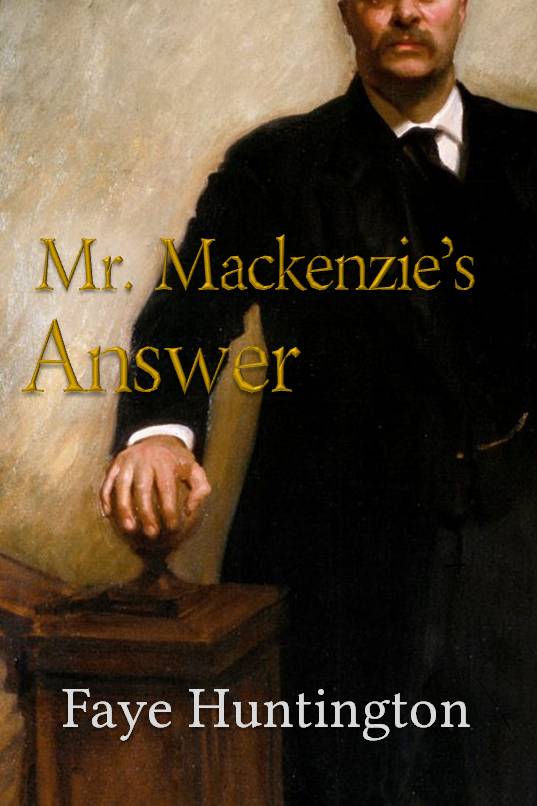
Book 1: Mr. Mackenzie’s Answer

When Miss Marvie Anderson first saw Mr. Mackenzie at a prayer meeting, she thought, “What a saintly man!” But after staying in Mr. Mackenzie’s home as the guest of his daughter Delia, Marvie doesn’t know what to think! How can a man who prays with such fervor and devotion be so inconsistent when it comes setting a Christian example in his daily life?

Raised by her minister father, Marvie thought she knew how to lead a Christian life; but as her visit continues, she finds herself succumbing to Mr. Mackenzie’s influence, and leaving her own Christian upbringing behind.

Click here to go to BookFunnel and read Mr. Mackenzie’s Answer. You can download it to your computer, phone, tablet, Kindle or other electronic device. Or choose “Read on My Computer” to print the story as a PDF to read and share with friends.

Book 2: Ripley Parsonage

At Ripley Parsonage, the Reverend Mr. Anderson works earnestly for his flock and for the town, even as he leads the local temperance cause with unfailing devotion. He has seen first-hand the wreck alcohol can make in the lives of his congregation and community; little wonder, then, that his most constant prayer is that the town elders will come to their senses and vote for prohibition.

But Mr. Anderson has other worries, too, especially for his daughter, Marvie. He’s not certain what the future may hold for her and her two best friends: Delia Mackenzie, the society girl who tries so hard to live a Christian life despite her own father’s disapproval; and Tina Stevens, the quiet infidel who was taught at an early age to disbelieve anything related to the Bible.

In this 1877 sequel to Mr. Mackenzie’s Answer, Mr. Anderson’s faith and devotion are brought to a head that will test one of the very foundations of his religion: the sacred communion service.

Click here to go to BookFunnel to download the book in the format you like best.