In Lesson One Mr. Moody diagnosed the disease (Understanding Sin) and in Lesson Two, named the cure (The Remedy of the Gospel). Now, in Lesson Three, Mr. Moody outlines the five essential steps of genuine repentance:
Conviction Contrition Confession of Sin Conversion Confession of Christ
Using the biblical examples of King Saul’s shallow confession, David’s broken heart, and Joseph of Arimathea’s courageous stand at Calvary, Mr. Moody explains the difference between true and counterfeit repentance.
You can read Lesson Three for free!Click here to download a large-print PDF version you can print or share with friends.
Then, join us again on January 27, 2026 for Lesson Four of Mr. Moody’s Bible Class.
If you missed Lessons One and Two, you can find them by clicking on the Free Reads tab above.
In his first lesson, evangelist D.L. Moody diagnosed humanity’s deepest problem: the universal reality of sin and its separating power. Now, in this second lesson, Mr. Moody presents the remedy: the Gospel of Jesus Christ.
Through scripture and stories, including a powerful account from a Civil War hospital, Mr. Moody shows how Christ came to heal the broken-hearted, deliver captives, restore sight to the blind, and liberate the bruised. As he reminds us, “The Gospel of Jesus Christ is all that we choose to make it.”
Isabella had a special bond with evangelist Rev. D.L. Moody. They were contemporaries who shared a common mission: bringing biblical truths to everyday Americans through accessible, compelling writing.
While Isabella wove Christian principles into her novels and short stories, Mr. Moody taught them directly through his preaching and writing.
In 1896, Mr. Moody published a twelve-part Bible study series in The Ladies’ Home Journal, a magazine that regularly published sermons, essays on religion and faith, and stories with Christian themes. He called his series, “Mr. Moody’s Bible Class.”
Each month for twelve months, Mr. Moody filled the pages of the magazine with lessons on the fundamental doctrines of Christianity, from sin and redemption to prayer and Heaven. His accessible writing style and practical approach made theological truths understandable to every-day readers, while he challenged them to examine their own faith.
From The Ladies’ Home Journal, October 1896.
“Mr. Moody’s Bible Class” is now available for a new generation. Each of his lessons has been carefully formatted for modern readers, with added reflection questions and organized Scripture references.
Whether you’re studying alone, with a small group, or teaching a Sunday school class, Mr. Moody’s lessons offer rich yet practical insights into the foundations of Christian doctrine. Click on the link below to view or download the first lesson:
Isabella often drew on her own life experiences when writing her stories and novels.
For example, Isabella’s husband G. R. “Ross” Alden was a seminary student when he and Isabella were courting. On the very day of their wedding, Isabella and Ross boarded a train to take them to a new town where Ross was assigned his first church as a minister. Isabella used the very same circumstance in her 1890 novel Aunt Hannah and Martha and John. In the story, newly married Martha also left her parents’ home immediately after her wedding to go with her new minister husband to his first church.
And just as Isabella had to learn the best she could to be a good minister’s wife, Martha had to do the same in the novel. One scene in the book tells what happens when Martha attends a ladies’ prayer meeting soon after she and John arrive at the new church. Here’s how Martha described the meeting to John later that day:
It wasn’t pleasant, John. It was, well, dreadfully stiff; I don’t know any other word that will describe it. Almost everyone was late, yet the meeting did not begin; they sat around solemnly and looked at one another. At last someone ventured to ask Mrs. Jones to lead. She said that she was not prepared, and that she didn’t feel competent to lead a meeting, anyway. Of course that made all the others feel as though they ought not to be ‘competent,’ and one and another refused. Then our next neighbor said she thought the minister’s wife was the proper person to lead; but by that time I was so sort of frightened that it seemed to me I couldn’t lead anything, and I said I did not feel competent, either.
Mrs. Green was finally persuaded to lead; she selected a long hymn and read the whole of it. Think of reading a hymn, John, in a little informal prayer-meeting that is to last only an hour! Then they had a time getting someone to start the tune. Mrs. Jones said she was hoarse, and Mrs. Brown did not know any tune that would go with the words. At last I grew ashamed of myself, and started a tune that I thought everybody in the world knew, but hardly anyone sang, and that frightened me. But they all looked as solemn as though they were at a funeral.”
Poor Martha! She felt she disgraced herself as the new minister’s wife. If only she had been trained in how to lead a prayer meeting!
In her real life, Isabella had to learn the same lesson. Fortunately for her, she had expert advice from a close friend of the Alden family: Reverend Dwight Lyman Moody.
Rev. Moody was a world-renowned minister and evangelist. In 1897 he wrote this bit of advice about prayer meetings, which Isabella published in a Christian magazine she edited:
Several important matters must be considered in order to have a good, live prayer meeting. Of course, the all-important thing is the presence of the Spirit of God, without whom no spiritual blessing can come. But there are certain things on the human side that help or hinder success.
First of all, the physical conditions. I do not believe even the angel Gabriel could infuse life into a meeting that is held in a dull, close room. Let there be plenty of fresh air. Make the room bright and cheerful, and there will be little chance of people’s falling asleep.
The meeting should begin and end promptly on time. Announcement should be made on Sunday, and a cordial invitation given to everybody to attend. If the prayer meeting is held in contempt, it is useless to expect a blessing there. I know some churches where they look forward to it more (if anything) than to the Sabbath services.
It is a good plan to allow about a quarter of an hour at the beginning for singing, another quarter for the leader to read Scripture and introduce the subject of the evening, another quarter for prayer and testimony, and the remainder of the hour for special prayer. But I do not suggest this as a permanent division of the time. Avoid falling into ruts of any kind. If some leading minister can attend, let him occupy the whole time; and introduce variety in other ways.
The music should not be neglected. Paul says, “In everything, by prayer and supplication with thanksgiving, let your requests be made known unto God.” I take it that thanksgiving and praise can best find expression in songs in which all can join. It is therefore important to have an active, earnest leader of the singing, who is able to read the pulse of the meeting, and by striking up suitable and familiar hymns, bridge over a pause, if need be.
A GOOD LEADER.
The success of the meeting depends largely on the leader. If he is full of life and of the Spirit, the audience will catch his enthusiasm: but a cold, listless manner throws a wet blanket over the proceedings.
He should be there ten minutes before the meeting begins, in order to see that everything is in good order, and he should come prepared to lead. If there is one thing that will kill a meeting sooner than another, it is to have the leader stand up and state that he has not come prepared. If a subject has been announced, it is his duty to study it so that he can introduce it intelligently. If he is not limited to any special subject, let him introduce one that appeals to the hearts of the people, and that they can speak upon without special preparation. When I was in charge of a work in Chicago, I used to say, “I am going to take up the Good Shepherd (or some such topic) tonight,” and then got friends to quote texts or make remarks on that subject. Let the leader set an example by being short and to the point in his opening remarks.
As at all other services, I believe the best thing to do is to feed the people with Scripture. Why is it we have so much backsliding, so little growth in grace? Because of the lack of food for the soul. If one neglects the Bible, his soul becomes starved and easily stumbles. “As newborn babes desire the sincere milk of the Word, that ye may grow thereby.” The more men love the Scriptures, the firmer will be their faith. And if they feed on the Word, it will be easy for them to speak; for out of the abundance of the heart he mouth speaketh.
Like everything else, the plan of announcing a topic beforehand can be abused. The objection is raised that in many meetings they go together, have one or two prayers, and discuss a topic. There is no need to pervert the meeting in this way. Let there be full liberty to all to tell their joys and sorrows, and give their testimony along any line.
A GOOD FOLLOWING.
The success of the meeting must also depend largely on the audience. The leader is not a Goliath, to go forth alone. Of all church services, the prayer meeting is the one specially intended for church-members to take part in, and the subject should be such as to draw them out. The leader should try to bring in fresh voices, even if he has to hunt them up beforehand.
The members should come to the meeting in the spirit of prayer. It ought to be on their hearts from week to week, so that they are thinking about it and praying about it. If a spirit of unity prevails, such as we read of in the case of those early Christians who “all continued with one accord in prayer and supplication,” blessing will surely follow.
I have no sympathy with the excuse that people have not time to attend. Of course there are certain ones whose circumstances or duties keep them away; but with many the excuse is due to sheer carelessness or indifference. Daniel was a busy man. He was set over the princes of a hundred and twenty provinces. Yet he found time to retire to his chamber three times a day to pray and give thanks before his God.
When the meeting is thrown open, friends should be brief and pointed in their remarks. Bible prayers are nearly all short. Christ’s prayers in public were short. When he was alone with God, it was a different thing, and he could spend whole nights in communion. Solomon’s prayer at the dedication of the temple is one of the longest recorded, and yet it takes only six or eight minutes in delivery.
“Lord, help me.” “Lord, remember me when thou comest into thy kingdom.” “Lord, save us.”
Such are the prayers that never failed to bring an answer. The prayer that our Saviour left his disciples is a model in its brevity, its recognition of God and desire for the glory of his kingdom, its sense of dependence upon him for daily needs and for deliverance from the guilt and power of sin.
BE DEFINITE.
Beware of vagueness. It is a sure sign that the prayer is heartless and formal. Beware of praying about everything that can possibly be touched upon. Leave something for those who follow to pray about. Beware of falling into ruts. Dr. Talmage says that if we were progressing in our Christian life, old prayers would be as inappropriate for us as the hats and shoes and clothes of ten years ago. Mr. Spurgeon said that some men’s prayers are like a restaurant bill of fare—ditto, ditto, ditto.
I believe in definite prayer. Abraham prayed for Sodom. Moses interceded for the children of Israel. How often our prayers go all around the world, without real, definite asking for anything! And often, when we do ask, we don’t expect anything. Many people would be surprised if God did answer their prayers.
As it is the members’ prayer meeting, special prayer should be offered on behalf of the church in all its varied activities, the pastor and all in authority. Other subjects for special prayer are the sick and sorrowing, the unconverted, and the services of the coming Sabbath.
Before the meeting is closed, an opportunity might be given for the unconverted (if there are any present) to make a confession or rise for prayer. I have one church in mind where they have conversations right along at the prayer meeting. Some testimony, some personal experience of God’s grace and blessing, will often convince a man where sermon and argument fail.
The greatest need of the church today is more of the presence and power of the Spirit of God. O that Christians were roused to greater earnestness and importunity in prayer! I believe that the greatest revival the church has ever seen would result. God help us, each one, to be faithful in doing our share.
What do you think of Rev. Moody’s advice about prayer meetings?
What other advice would you give about how to lead a prayer meeting?
Have you ever been to a prayer meeting like the one Martha experienced?
Click here to read more about Rev. Moody’s friendship with Isabella’s family.
Ester Ried owned a Bible—a “nice, proper-looking Bible” that she read from time to time when she remembered to do so.
If her Bible was at hand when Ester was ready to read, she used it. If not, she took her sister Sadie’s, or picked up “the old one on a shelf in the corner, with one cover and part of Revelation missing.
But when Ester traveled to New York to visit her cousin Abbie, she packed in such haste, she forgot to add her Bible to her suitcase—a circumstance Abbie immediately tried to correct.
“Oh, I am sorry—you will miss it so much! Do you have a thousand little private marks in your Bible that nobody else understands? I have a great habit of reading in that way. Well, I’ll bring you one from the library that you may mark just as much as you please.”
Mark in a Bible? That was an entirely new concept for Ester.
She had never learned that happy little habit of having a much-used, much-worn, much-loved Bible for her own personal and private use, full of pencil marks and sacred meanings, grown dear from association, and teeming with memories of precious communings.
Once Abbie delivered the Bible to her, Ester began to think the idea of marking certain verses was an excellent one. The only problem was, she didn’t know how to go about it and had only a pencil to at her disposal.
When Isabella wrote Ester Ried in 1870, there were no Bible journal kits, stickers or markers like the ones we can buy in stores today.
Colorful Bible tabs from Etsy.com
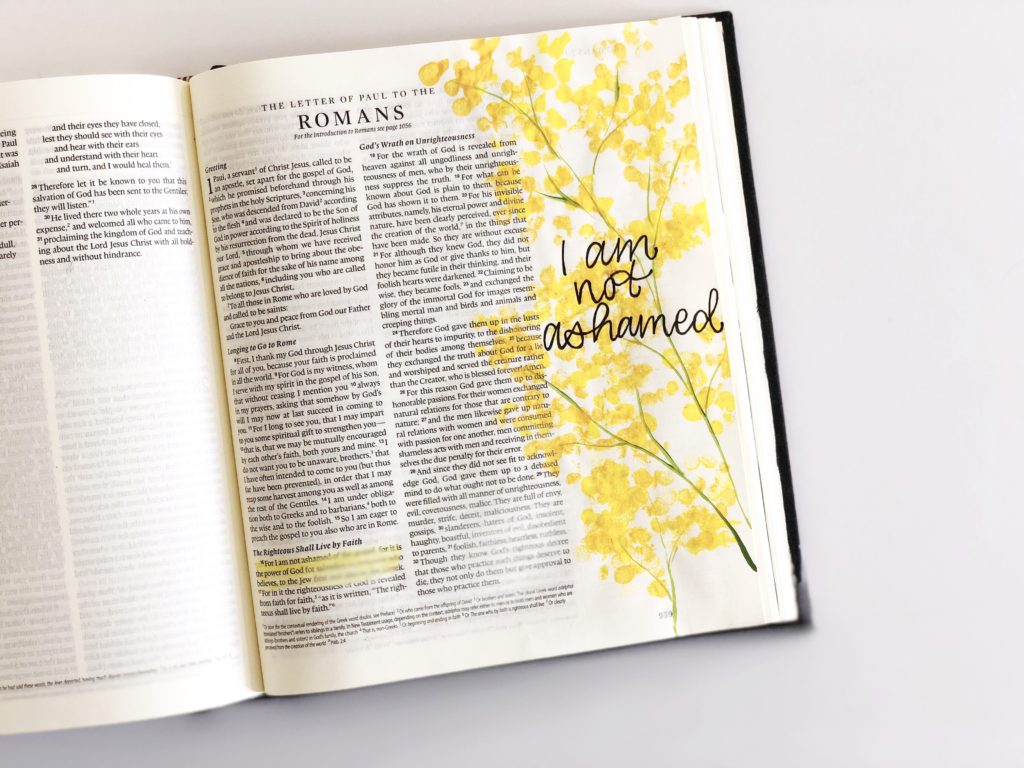
And she probably never imagined there would one day be Bibles specifically designed for readers to create their own artwork inspired by a verse on the page, like the one below:
From ScribblingGrace.com
So when Isabella wrote Ester Ried, she had her title character take a much more simple approach; she had Ester merely underline certain Bible verses that had meaning to her, which was a perfectly sensible method for a young lady who was new to regular Bible study. As Ester progressed in her Christian journey, so, too, did her ability to memorize and mark verses that held special meaning for her.
Reverend Dwight Lyman Moody was a friend of Isabella’s family, and a keen proponent of Christians marking their Bibles.
Dwight Lyman Moody
He rarely went anywhere without his Bible, which he called his “Old Sword.”
After the Great Chicago Fire of 1871—a disaster that caused so much loss for so many people—someone asked Rev. Moody what he had lost in the fire. Rev. Moody focused on what was important:
“I have not lost my Bible, or my reputation.”
Anyone who was lucky enough to catch a glimpse of the pages of his Old Sword would have seen proof of Rev. Moody’s constant study.
“My Bible is worth a good deal to me because I have so many passages marked that, if I am called upon to speak at any time, I am ready.”
He often told people not to buy a Bible they were unwilling to mark up or write in; and he suggested using a Bible that was printed in a way that offered plenty of room for jotting notes and suggestions.
“Bible-marking should be made the servant of memory; a few words will recall a whole sermon. It sharpens the memory, instead of blunting it, if properly done, because it gives prominence to certain things that catch the eye, which by constant reading you get to learn by heart.”
So what method did Rev. Moody use to mark in his Bible? Below is a plate (unfortunately it’s a little fuzzy after being duplicated many times) that shows his Bible, open to the first chapter of Ephesians. (You can click on the image to see a larger version.)
In addition to notes and references to other verses, he utilized a series of underlines and diagonal lines, which he called “railways.” It may look like a jumble of lines and notes, but his system was really very simple.
In the first column in the page on the right you can see how he used railways to connect words of promise that had meaning to him:
Blessed
Chosen
Accepted
Redemption
Together
Inheritance
Sealed
In the second column he underlined words he identified as “together” words. Then, in the blank area on the page on the left, he cited additional “together” verses he found in Galatians, Colossians, Ephesians, Romans, and I Thessalonians.
Although this system worked for him, Rev. Moody encouraged everyone to find their own methods.
“There is a danger, however, of overdoing a system of marking, and of making your marks more prominent than the Scripture itself. If the system is complicated it becomes a burden, and you are liable to get confused. It is easier to remember the texts than the meaning of your marks.”
In 1884 Rev. Moody wrote an introduction to a book titled How to Mark Your Bible, which incorporated many of the methods he used in his own Bible markings.
The book shares many examples of how to mark your Bible with railway connections and word groups in the same way Rev. Moody did.
You can read the book for free. Just click on the cover to get started.
Do you use markings, colors, stickers or tabs in your Bible?
Isabella’s mother Myra Spafford came from a large family. Her father married twice and Myra was one of twelve siblings from both marriages.
Myra was 25 years old and already a wife of four years by the time her youngest brother, Horatio Gates Spafford was born. Like Myra, Horatio was raised in a home where strong faith in God and service to others were qualities valued above all else.
Horatio Gates Spafford
.
Horatio grew up to be an ambitious and energetic young man. A lawyer by trade, he was about 29 years old when he left his family in New York and headed to Chicago to practice law and earn his fortune.
Business card from Horatio Spafford’s law firm
.
Chicago was the perfect place for a man like Horatio. The city was booming—between 1871 and 1880 the population grew by 176,000 people—and Horatio saw opportunity.
While other builders and entrepreneurs concentrated on developing the marshy areas of Chicago close to Lake Michigan, Horatio invested in real estate north of the metropolis. By the time he reached his 42nd birthday, Horatio’s law practice and business investments had made him a very wealthy man.
He was also a husband to his wife Anna, and father to four little girls: Annie, Margaret, Elizabeth, and Tanetta.
Anna Spafford with her daughters Annie, Margaret, and Tanetta.
.
He owned a fine house at Lake View, a north suburb of Chicago. He employed household servants and a French governess for his children.
The Spafford “cottage” at Lake View, Chicago (from the Library of Congress)
.
And though he lived well, Horatio used the majority of his wealth in service to God. He was an active abolitionist prior to and during the Civil War, and he hosted many anti-slavery meetings in his home.
He made evangelical visits to inmates at jails and prisons, helped run prayer and revival meetings, and taught Sunday school at his church.
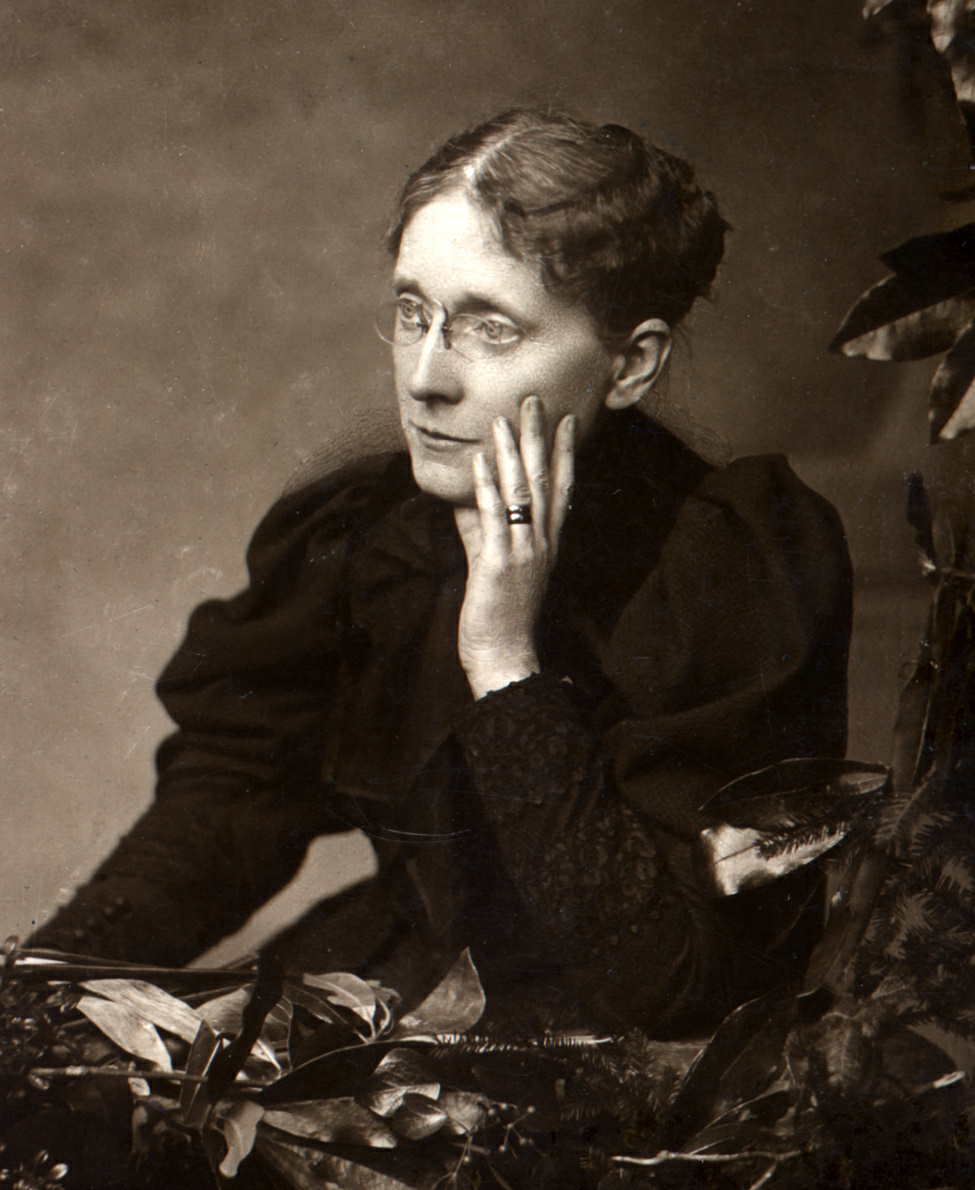
Frances Willard, President of the Women’s Christian Temperance Union.
.
He also supported causes that were dear to his heart, such as the National Women’s Christian Temperance Union. He often welcomed the organization’s president, Frances E. Willard, into his home for extended stays.
The same was true of Horatio’s support for evangelist Dwight L. Moody, who would become a dear and life-long friend.
Dwight Lyman Moody, circa 1900, from the Library of Congress
.
THE TIDE TURNS
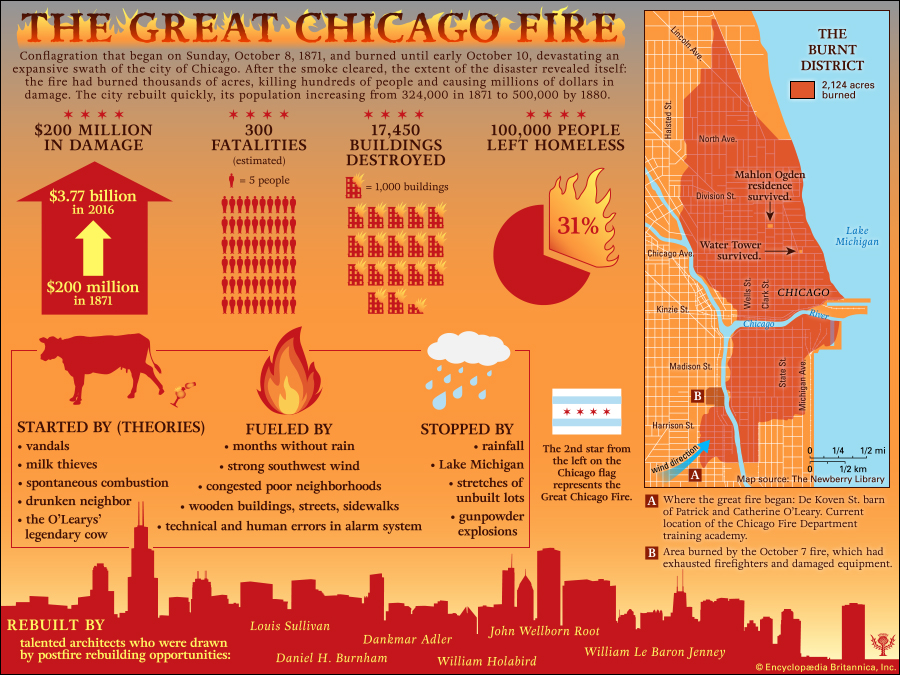
Horatio’s youngest daughter Tanetta was only two months old on October 8, 1871, when fire broke out in the city of Chicago. With a poor alarm system, shabbily constructed buildings, and draught-like conditions due to lack of rain, the fire spread rapidly from one wooden structure to another. It raged for two days and destroyed over one-third of the city.
Chicago, after the great fire (from Library of Congress)
.
Although the Spafford home was somehow spared, the city was devastated.
Over 300 people lost their lives, and over 100,000 people were homeless, many of whom survived with nothing more than the clothes on their backs.
.
Horatio—who had invested in real estate in the area of the city that was hardest hit—suffered serious financial losses.
Still, he and Anna opened their home to many people who no longer had a home of their own, and he worked tirelessly to rebuild the city’s churches, businesses, and housing.
Laying the first cornerstone of a new building, as Chicago rebuilds after the fire.
.
In 1873, while he and his wife were still working to help the needy and displaced citizens of Chicago, Horatio received a letter from his friend, Dwight Moody, who was in Europe, igniting a religious revival. Dwight asked Horatio and Anna to join him in London.
Undated photo of Dwight L. Moody from the Spafford family album (from Library of Congress)
.
The invitation could not have come at a better time. Both Horatio and Anna were weary from the stress of their philanthropic work. To add to their troubles, Horatio’s financial condition had become dire, due to a national economic downturn that occurred in 1873.
Horatio and Anna decided to join Dwight in England and live abroad for a year. They set off for New York, along with their children’s governess. Also in their party was a boy named Willie Culver, the twelve-year-old son of close friends, who was returning to school in Paris.
THE VILLE DU HAVRE
When they arrived in New York, Horatio received word that a business deal was in danger of collapsing, and—given the precarious state of his finances—he decided to return to Chicago to salvage what he could of the venture.
Rather than postpone the trip, Anna and the children—along with their governess and Willie Culver—went on to Europe without him.
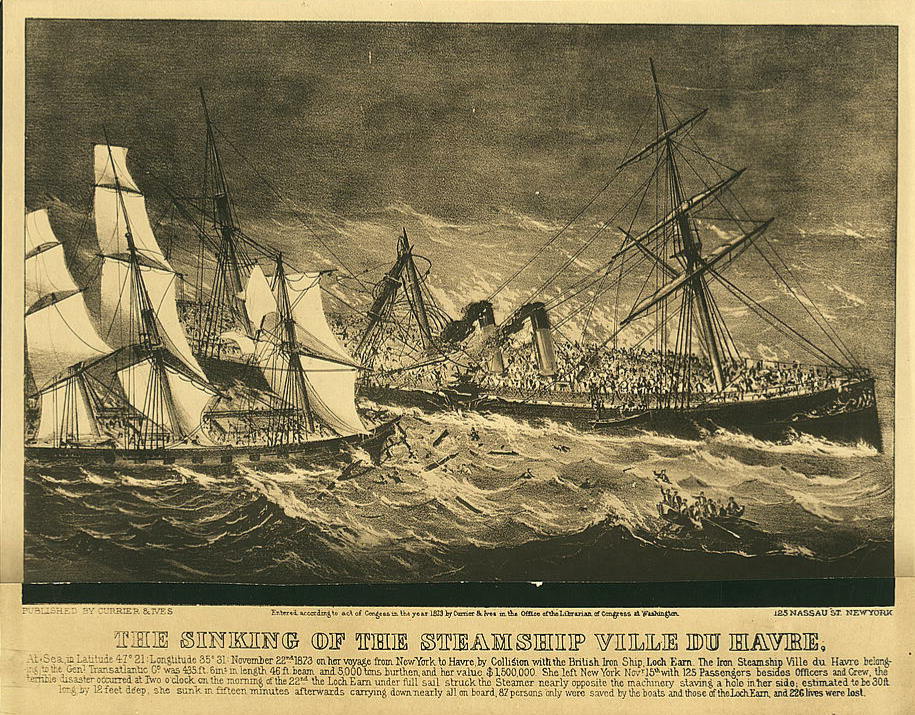
At about 2:00 a.m. the morning of November 21, 1873, in the frigid waters in the middle of the Atlantic Ocean, their ship, the Ville du Havre, collided with an English iron ship, the Loch Erne.
Headline from the Chicago Tribune, December 2, 1873.
.
The impact almost cut the Ville du Havre in two, and it began to sink immediately. Anna led her children, their governess, and Willie, to the deck to evacuate the ship.
.
But only two of the ship’s life boats were deployed, and they were filled primarily with the ship’s captain and crew. Of the roughly 350 people on board, only 87 survived; and of those survivors, 53 were crew members.
Artist’s rendering of the last moments of the Ville du Havre
.
The Loch Erne, badly damaged, turned around and deployed its own boats to find survivors. One of those boats plucked Anna Spafford, unconscious and badly hurt, from the water.
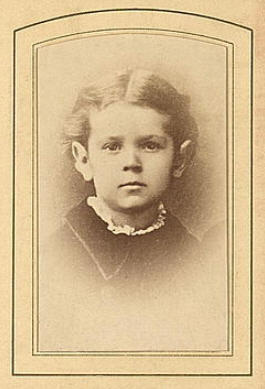
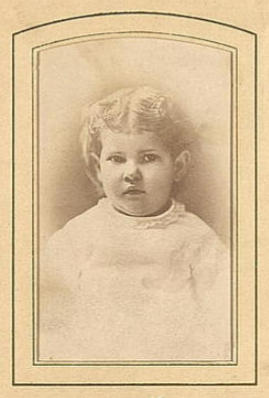
In the darkness of the night, her children Annie (age 11), Margaret (9), Elizabeth (5) and Tanetta (2) were never found.
Annie Spafford, from the Spafford family album.
.
Margaret Lee Spafford, from the Spafford family album
.
Elizabeth Spafford
.
Tanetta Spafford.
.
Also lost were the children’s governess and young Willie Culver.
In Chicago, Horatio received an early morning telegram from Anna that began with the heartbreaking words,
Saved alone.
What shall I do?
The telegram Anna sent Horatio, telling him of the tragedy.
.
Horatio immediately left on the next ship bound for Europe to join Anna. As he crossed the Atlantic, the captain of the ship—knowing of Horatio’s loss—called him to the bridge at one point, and solemnly told him they were about to pass the place where the Ville du Havre went down.
That evening, in his cabin, Horatio took up his pen and wrote the words to “It is Well with My Soul.”
When peace like a river attendeth my way,
When sorrows like sea billows roll;
Whatever my lot, Thou hast taught me to say,
“It is well, it is well with my soul!”
Though Satan should buffet, though trials should come,
Let this blest assurance control,
That Christ hath regarded my helpless estate,
And hath shed His own blood for my soul.
My sin — oh, the bliss of this glorious thought —
My sin, not in part, but the whole,
Is nailed to His Cross, and I bear it no more;
Praise the Lord, praise the Lord, O my soul!
And Lord, haste the day when the faith shall be sight,
The clouds be rolled back as a scroll;
The trump shall resound, and the Lord shall descend;
“Even so, it is well with my soul!”
The original manuscript. written on stationary paper from the Breevoort House, a hotel around the corner from Horatio’s law firm in Chicago. Horatio had some sheets with him while crossing the Atlantic and it was on these that he penned the words to the hymn.
.
In a letter to his sister-in-law a week later he wrote,
“On Thursday last we passed over the spot where she went down, in mid-ocean, the waters three miles deep. But I do not think of our dear ones there. They are safe, folded, the dear lambs.”
In 1876 Horatio’s friend composer Philip P. Bliss took the words Horatio had written and set them to music.
Composer Philip P. Bliss, from the Spafford family album.
.
Philip performed the hymn for the first time in public on November 24, 1876 before a large gathering of ministers, hosted by Dwight Moody.
Since then, “It is Well with My Soul” has become the most widely-used hymn of consolation in modern Christianity.
It has also had a profound impact on those who hear the hymn and learn the story behind it.
Many people have known tragedy and sorrow, reported a North Carolina newspaper in 1908; but even those who have faced hardships think again when they hear Horatio Spafford’s story. As one man told the newspaper reporter:
“I will never again complain of my lot. If Spafford could write such a beautiful resignation hymn when he had lost all his children, and everything else save his wife and character, I ought surely to be thankful that my losses have been so light.”
From The Commonwealth newspaper in North Carolina, February 2, 1908
.
You can read a detailed account of the sinking of the Ville du Havre as it appeared in an Ohio newspaper, the Holmes County Republican, on December 11, 1873. Just click on the image below and read the article in column 7 titled “A Horror at Sea.”
Horatio Spafford’s story doesn’t end here! Despite the many trials and setbacks he suffered, he never lost his faith in God or abandoned his calling to be of service to others.
Reviews and giveaways for Christian fiction and sweet, clean fiction. Bringing readers information on great stories and connecting authors with their readers.























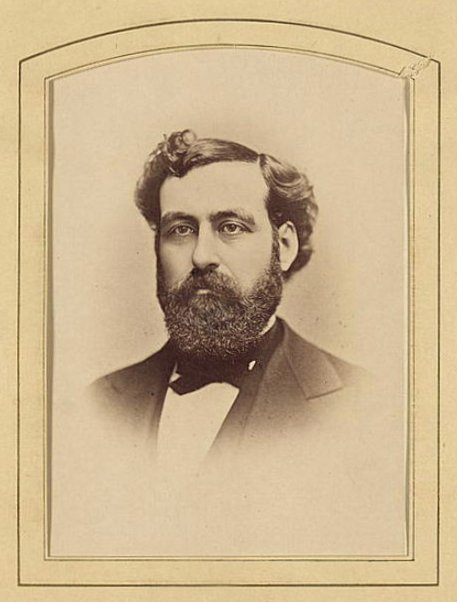


 Isabella Alden