Isabella often drew on her own life experiences when writing her stories and novels.
For example, Isabella’s husband G. R. “Ross” Alden was a seminary student when he and Isabella were courting. On the very day of their wedding, Isabella and Ross boarded a train to take them to a new town where Ross was assigned his first church as a minister. Isabella used the very same circumstance in her 1890 novel Aunt Hannah and Martha and John. In the story, newly married Martha also left her parents’ home immediately after her wedding to go with her new minister husband to his first church.
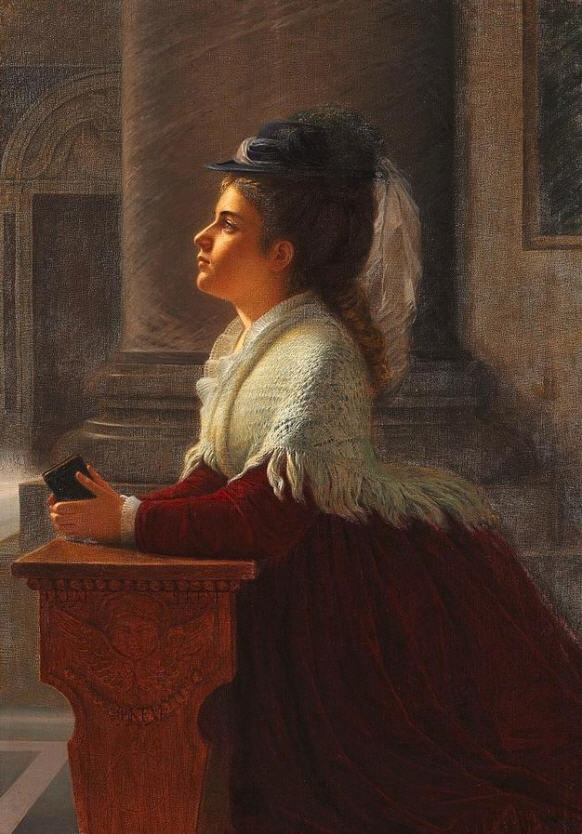
And just as Isabella had to learn the best she could to be a good minister’s wife, Martha had to do the same in the novel. One scene in the book tells what happens when Martha attends a ladies’ prayer meeting soon after she and John arrive at the new church. Here’s how Martha described the meeting to John later that day:
It wasn’t pleasant, John. It was, well, dreadfully stiff; I don’t know any other word that will describe it. Almost everyone was late, yet the meeting did not begin; they sat around solemnly and looked at one another. At last someone ventured to ask Mrs. Jones to lead. She said that she was not prepared, and that she didn’t feel competent to lead a meeting, anyway. Of course that made all the others feel as though they ought not to be ‘competent,’ and one and another refused. Then our next neighbor said she thought the minister’s wife was the proper person to lead; but by that time I was so sort of frightened that it seemed to me I couldn’t lead anything, and I said I did not feel competent, either.
Mrs. Green was finally persuaded to lead; she selected a long hymn and read the whole of it. Think of reading a hymn, John, in a little informal prayer-meeting that is to last only an hour! Then they had a time getting someone to start the tune. Mrs. Jones said she was hoarse, and Mrs. Brown did not know any tune that would go with the words. At last I grew ashamed of myself, and started a tune that I thought everybody in the world knew, but hardly anyone sang, and that frightened me. But they all looked as solemn as though they were at a funeral.”
Poor Martha! She felt she disgraced herself as the new minister’s wife. If only she had been trained in how to lead a prayer meeting!
In her real life, Isabella had to learn the same lesson. Fortunately for her, she had expert advice from a close friend of the Alden family: Reverend Dwight Lyman Moody.
Rev. Moody was a world-renowned minister and evangelist. In 1897 he wrote this bit of advice about prayer meetings, which Isabella published in a Christian magazine she edited:
Several important matters must be considered in order to have a good, live prayer meeting. Of course, the all-important thing is the presence of the Spirit of God, without whom no spiritual blessing can come. But there are certain things on the human side that help or hinder success.
First of all, the physical conditions. I do not believe even the angel Gabriel could infuse life into a meeting that is held in a dull, close room. Let there be plenty of fresh air. Make the room bright and cheerful, and there will be little chance of people’s falling asleep.
The meeting should begin and end promptly on time. Announcement should be made on Sunday, and a cordial invitation given to everybody to attend. If the prayer meeting is held in contempt, it is useless to expect a blessing there. I know some churches where they look forward to it more (if anything) than to the Sabbath services.
It is a good plan to allow about a quarter of an hour at the beginning for singing, another quarter for the leader to read Scripture and introduce the subject of the evening, another quarter for prayer and testimony, and the remainder of the hour for special prayer. But I do not suggest this as a permanent division of the time. Avoid falling into ruts of any kind. If some leading minister can attend, let him occupy the whole time; and introduce variety in other ways.
The music should not be neglected. Paul says, “In everything, by prayer and supplication with thanksgiving, let your requests be made known unto God.” I take it that thanksgiving and praise can best find expression in songs in which all can join. It is therefore important to have an active, earnest leader of the singing, who is able to read the pulse of the meeting, and by striking up suitable and familiar hymns, bridge over a pause, if need be.
A GOOD LEADER.
The success of the meeting depends largely on the leader. If he is full of life and of the Spirit, the audience will catch his enthusiasm: but a cold, listless manner throws a wet blanket over the proceedings.
He should be there ten minutes before the meeting begins, in order to see that everything is in good order, and he should come prepared to lead. If there is one thing that will kill a meeting sooner than another, it is to have the leader stand up and state that he has not come prepared. If a subject has been announced, it is his duty to study it so that he can introduce it intelligently. If he is not limited to any special subject, let him introduce one that appeals to the hearts of the people, and that they can speak upon without special preparation. When I was in charge of a work in Chicago, I used to say, “I am going to take up the Good Shepherd (or some such topic) tonight,” and then got friends to quote texts or make remarks on that subject. Let the leader set an example by being short and to the point in his opening remarks.
As at all other services, I believe the best thing to do is to feed the people with Scripture. Why is it we have so much backsliding, so little growth in grace? Because of the lack of food for the soul. If one neglects the Bible, his soul becomes starved and easily stumbles. “As newborn babes desire the sincere milk of the Word, that ye may grow thereby.” The more men love the Scriptures, the firmer will be their faith. And if they feed on the Word, it will be easy for them to speak; for out of the abundance of the heart he mouth speaketh.
Like everything else, the plan of announcing a topic beforehand can be abused. The objection is raised that in many meetings they go together, have one or two prayers, and discuss a topic. There is no need to pervert the meeting in this way. Let there be full liberty to all to tell their joys and sorrows, and give their testimony along any line.
A GOOD FOLLOWING.
The success of the meeting must also depend largely on the audience. The leader is not a Goliath, to go forth alone. Of all church services, the prayer meeting is the one specially intended for church-members to take part in, and the subject should be such as to draw them out. The leader should try to bring in fresh voices, even if he has to hunt them up beforehand.
The members should come to the meeting in the spirit of prayer. It ought to be on their hearts from week to week, so that they are thinking about it and praying about it. If a spirit of unity prevails, such as we read of in the case of those early Christians who “all continued with one accord in prayer and supplication,” blessing will surely follow.
I have no sympathy with the excuse that people have not time to attend. Of course there are certain ones whose circumstances or duties keep them away; but with many the excuse is due to sheer carelessness or indifference. Daniel was a busy man. He was set over the princes of a hundred and twenty provinces. Yet he found time to retire to his chamber three times a day to pray and give thanks before his God.
When the meeting is thrown open, friends should be brief and pointed in their remarks. Bible prayers are nearly all short. Christ’s prayers in public were short. When he was alone with God, it was a different thing, and he could spend whole nights in communion. Solomon’s prayer at the dedication of the temple is one of the longest recorded, and yet it takes only six or eight minutes in delivery.
“Lord, help me.” “Lord, remember me when thou comest into thy kingdom.” “Lord, save us.”
Such are the prayers that never failed to bring an answer. The prayer that our Saviour left his disciples is a model in its brevity, its recognition of God and desire for the glory of his kingdom, its sense of dependence upon him for daily needs and for deliverance from the guilt and power of sin.
BE DEFINITE.
Beware of vagueness. It is a sure sign that the prayer is heartless and formal. Beware of praying about everything that can possibly be touched upon. Leave something for those who follow to pray about. Beware of falling into ruts. Dr. Talmage says that if we were progressing in our Christian life, old prayers would be as inappropriate for us as the hats and shoes and clothes of ten years ago. Mr. Spurgeon said that some men’s prayers are like a restaurant bill of fare—ditto, ditto, ditto.
I believe in definite prayer. Abraham prayed for Sodom. Moses interceded for the children of Israel. How often our prayers go all around the world, without real, definite asking for anything! And often, when we do ask, we don’t expect anything. Many people would be surprised if God did answer their prayers.
As it is the members’ prayer meeting, special prayer should be offered on behalf of the church in all its varied activities, the pastor and all in authority. Other subjects for special prayer are the sick and sorrowing, the unconverted, and the services of the coming Sabbath.
Before the meeting is closed, an opportunity might be given for the unconverted (if there are any present) to make a confession or rise for prayer. I have one church in mind where they have conversations right along at the prayer meeting. Some testimony, some personal experience of God’s grace and blessing, will often convince a man where sermon and argument fail.
The greatest need of the church today is more of the presence and power of the Spirit of God. O that Christians were roused to greater earnestness and importunity in prayer! I believe that the greatest revival the church has ever seen would result. God help us, each one, to be faithful in doing our share.
What do you think of Rev. Moody’s advice about prayer meetings?
What other advice would you give about how to lead a prayer meeting?
Have you ever been to a prayer meeting like the one Martha experienced?
Click here to read more about Rev. Moody’s friendship with Isabella’s family.
Isabella Macdonald married Gustavus Rossenberg “Ross” Alden on May 30, 1866 in her home town of Gloversville, New York. They were married fifty-seven years. Isabella described her husband as unfailingly courteous, good-natured, patient, and principled. As a minister, those traits must have served him well.
Almost immediately after their marriage ceremony, Ross and Isabella boarded a train bound for the tiny town of Almond, New York, where Ross was given his first church after receiving his ordination.
Isabella had very fond memories of that first church. Not all the parishes to which Ross was assigned, she said, “were as kind and considerate as the choice souls in that first beloved one.”
She had plenty of tales to tell about some of the congregations her husband led over the years, and she often included those tales in her novels. If you’ve read Aunt Hannah and Martha and John, you might remember one of the congregants gave Martha a perfectly ugly bonnet as a gift, leaving poor Martha undecided about whether to wear the bonnet to church. That “bonnet dilemma” was a true story that actually happened to Isabella!
In other novels, Isabella wrote about congregations that did not want to pay their ministers living wages, and decided to make up for the short-falls with fairs and bazaars to raise money for the minister and his family. That, too, was something Isabella and Ross had to deal with far more often that they would have liked.
In one particular parish, the people decided that instead of meeting Reverend Alden’s salary requirements, they would pay him less, but supplement the short-fall with food donations. The only problem was that nearly every woman in the church decided to make her contribution a marble cake.
Isabella wrote about her growing dismay every time another marble cake was delivered.
“Marble cake! I don’t believe some families in this village can have anything else to live on, they make so much of it.”
Before long Isabella’s pantry shelves were filled with cake. She wrote there was …
…enough marble cake to pave a walk from the kitchen door to the barn door.
She and Ross probably did their best to eat as much marble cake as they could, but days later it was becoming quite dry and stale, and Isabella wanted nothing more than to have “that obnoxious marble cake out of our sight!” But there seemed no way to get rid of it without hurting their parishioners’ feelings.
That’s when Ross came up with a plan. In the dark of night, with a spade and a lantern, he went behind the barn, dug a deep hole, and buried the remaining marble cakes. Isabella wrote:
“We have never cared for marble cake since!”
Click here to learn more about Isabella’s novel Aunt Hannah and Martha and John, which included fictionalized accounts of the “ugly bonnet” story, more about marble cake, and other anecdotes from Isabella’s life as the wife of a Presbyterian minister.
Do you remember John Remington? He was the young minister who was the main character in Isabella’s novels Aunt Hannah and Martha and John (1890) and John Remington, Martyr (1892).
In 1893 Isabella wrote a short story in which John made another appearance. Titled “For This,” the story centers around a certain mite-box.
Churches used mite-boxes to encourage people to give offerings. They were named for the “widow’s mite” mentioned in the Gospel of Luke, chapter 21:
And He looked up, and saw the rich men casting their gifts into the treasury.
And He saw also a certain poor widow casting in thither two mites.
And He said, Of a truth I say unto you, that this poor widow hath cast in more than they all;
For all these have of their abundance cast in unto the offerings of God; but she of her penury hath cast in all the living that she had.
(Luke 21:1-4)
Typically, a church distributed mite-boxes on a Sunday to all church goers, including children. Each person was asked to fill their boxes with coins for a specified period of time (such as six months) before the church called for their collection.
Mite-boxes made of paper—like the one featured in the story—could be decorated with the name of the person or family who filled it, or with words or images that had meaning to the church’s cause.
That, in a nutshell, is how mite-boxes were typically managed in the Presbyterian Church; but leave it to Isabella to find a new use for a mite-box in her story!
You can read “For This” for free. Just click here to visit BookFunnel.com. Then, choose whether you want to read the story on your computer, phone, iPad, Kindle, or other electronic device.
Or choose the “My Computer” option to print the story as a PDF document to read and share with friends.
Did you notice that rose-vine at the east end of the front porch putting out new branches all over it? It will be full of roses pretty soon. That vine has been the wonder of the neighborhood for ten years.
Now suppose I never watered it, or fed it with good rich earth from the woods, or dug about it, what a stunted, sickly thing it would have been!
You have to take care of everything that’s worth having in this world. Love will die from neglect and abuse as quick as a rose-bush.
In a newspaper interview, Isabella once confided her method for coping with troubling events that upset her:
Whenever things went wrong, I went home and wrote a book about it.
Many of the trials she weathered in real life ended up as turning points for characters in her books. One such situation occurred when Isabella was a young bride and was working hard to make a good impression on her husband’s new congregation.
About a week after she and her husband arrived at a new church where he was to minister, Isabella received a gift from a member of the congregation. It was a “pitiful little bonnet,” clearly made out of the sleeve of an old brown dress. Whoever fashioned it had not tried to hide the wrinkles and pin holes still visible from the bonnet’s former life as a dress.
“In my ignorance [I supposed] it to be a love-gift from some dear old poverty-stricken soul.”
So Isabella, filled with gratitude, wore the unattractive bonnet to church the very next Sunday. There she discovered the truth: the person who made the hat and gave it to Isabella was the wealthiest woman in town. She’d sent it to Isabella because she deemed Isabella’s own bonnet was “too gay for a minister’s wife!”
It was a stinging insult, and, like she always did, Isabella used her pen to write about it in her novel, Aunt Hannah and Martha and John.
In the book, Martha Remington was, like Isabella, the newly-wed wife of a new minister. And Martha, too, received a gift from a wealthy lady in the congregation.
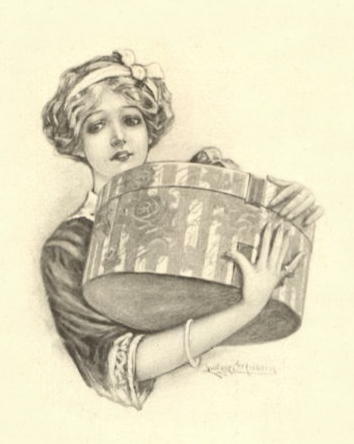
When the bandbox was opened, she struggled with her inward conviction that she ought to feel grateful. Therein lay a bonnet—a very remarkable one. It was made of mixed green and black silk, shirred after the fashion of our grandmothers. Some of the shirrs had been laid in the old creases, and some had not. Between every third row came an obstinate crease, made in the times when the silk did duty as a dress sleeve—a crease that refused to be covered with stitches, or ironed out, but told its tale of “second-hand” as plainly as though it had a tongue.
Poor Martha thought the black and green bonnet was “grotesque,” and she didn’t know whether to laugh or cry when she looked at it. But she did know one thing: she would not wear it to church!
As the story progressed, one of the ladies who created the ugly bonnet confronted Martha on Sunday after church, and added further insult to injury by demanding to know why Martha was still wearing her usual hat, instead of the gift the ladies had sent. Martha’s reply was friendly, but dignified—a response that was much different than Isabella’s reaction had been in real life.
Isabella later said that writing about the bonnet helped heal the woman’s hurtful actions, and, eventually, she was able to look back on it all with humor … possibly because writing about the woman’s insult really did help her see the whole incident in a more forgiving light.
You can read more about Martha and the “grotesque” bonnet in Aunt Hannah and Martha and John. The book also contains a few more examples of awkward situations Isabella encountered in her years as a minister’s wife. Click on the book cover to learn more.
When Isabella Alden wrote Aunt Hannah and Martha and John, she created the character of Martha Remington, a young bride who—through no fault of her own—had never been taught to cook and keep house.
Isabella herself was an excellent homemaker. Her niece, Grace Livingston Hill, wrote that her Aunt Isabella was “a marvelous housekeeper, knowing every dainty detail of her home to perfection; able to cook anything in the world just a little better than anyone else.”
Poor, Martha, however, couldn’t cook at all and her bridegroom, John, suffered through many meals that were overcooked, undercooked, sour, or salty.
Cooking in the late 1800s and early 1900s was truly a skill that was acquired after years of practice. A young woman stood a much better chance of learning to cook from an experienced housekeeper than she did if she tried to learn to cook on her own.
This was especially true because of the stoves and ovens that were available then. They lacked one essential feature we take for granted today: A thermostat.
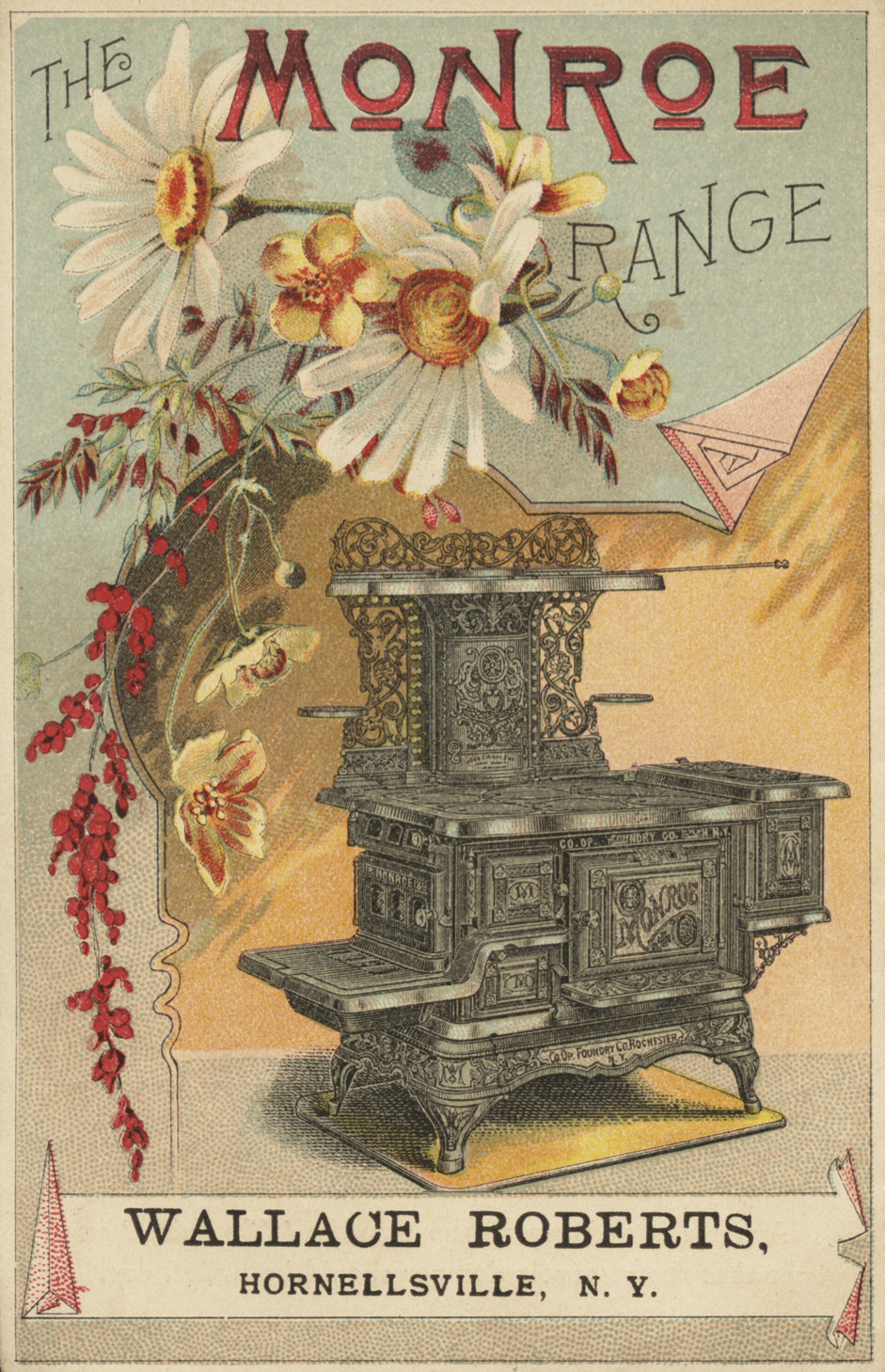
Ranges at the turn of the 20th Century didn’t have any means for accurately detecting the temperature of their ovens or burners, and they had no dials or knobs to turn heat up or down. Cooks controlled the temperature of the oven and burners by the amount and type of fuel they fed the range. They had to rely on their experience and years of trial and error to determine whether an oven was the right temperature for baking a loaf of bread or roasting a shank of beef.
Cookbooks from the time included recipes with very general terms:
“Heat your oven to a satisfactory degree of heat.”
“Bake in a hot oven.”
“Bake in a quick oven for ten minutes.”
With such imprecise instructions, it’s no wonder an inexperienced cook like Martha was so bewildered in the kitchen, and served her husband so many meals that were almost inedible.
Luckily, Aunt Hannah detected the trouble and came to Martha’s rescue, not only as a teacher of the kitchen arts, but as a friend.
Under Aunt Hannah’s gentle tutelage, Martha Remington learned to be a good cook and housekeeper.
And as her confidence in the kitchen grew, so did Martha’s confidence in all areas of her life, as she matured into a caring and capable pastor’s wife.
You can find out more about Isabella’s book, Aunt Hannah and Martha and John by clicking on the book cover.
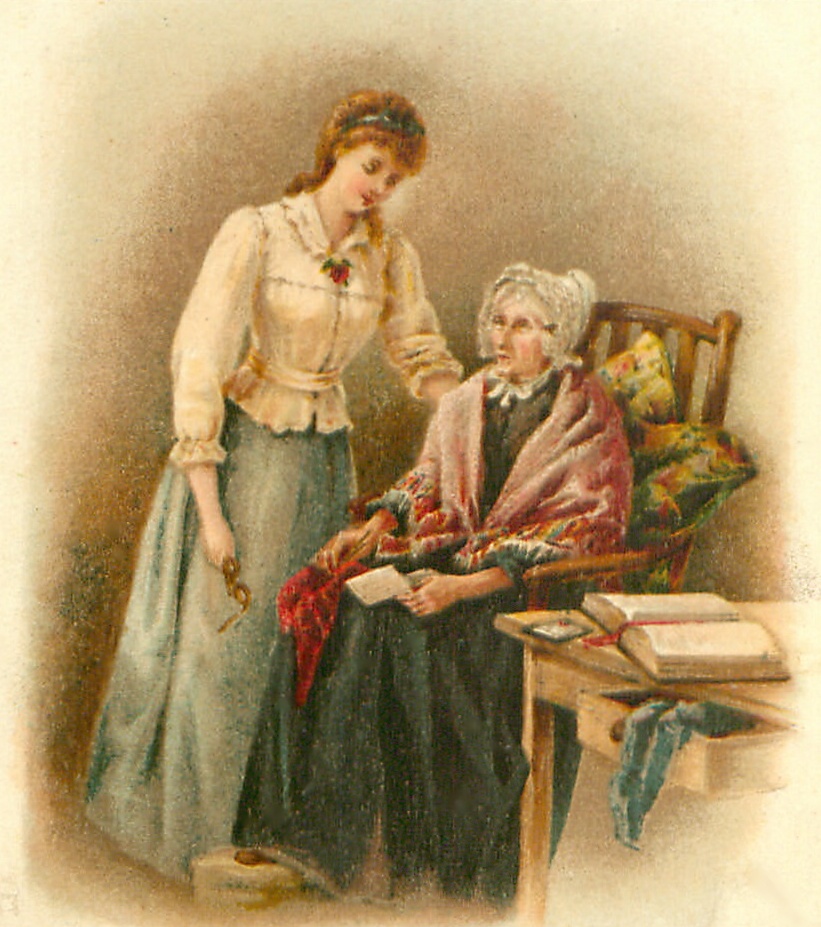
Aunt Hannah Adams is one of Isabella Alden’s most popular fictional characters. Aunt Hannah was a woman who loved the Lord, knew her mind, brooked no nonsense, and appreciated daily blessings. Most importantly, she knew when to give advice to others . . . and when not to. With all her life experiences, she grew wise in her older years; but, like any wise person, she also held her tongue until the time was right to share her own special insight with others.
Here are some of Aunt Hannah’s wise thoughts and marriage advice that she shared with newlyweds John and Martha Remington:
It is best for young ones after they once fly from the home nest to set up independent of the old birds. I tried once to help two young robins. They were building a nest in the old apple tree right under my bedroom window, and they weren’t making it a bit comfortable according to my way of thinking. I watched them until I couldn’t stand it any longer. Then I hung little bunches of ravelings on the limbs in plain sight. The stubborn little things wouldn’t notice them, but kept on weaving in bits of straw and hay, as if, of course, they knew best.
One day they were both gone. I took a soft bit of wool and tucked it nicely into the nest. I thought when they once knew how warm it felt to the feet they would like it. But when that little housekeeper got back she was mad enough! She made angry sort of chirps that sounded for all the world like scolding, and he helped her along in it, like any foolish young husband. They flew around as if they were crazy, and tore that nest to pieces in no time. That taught me a lesson. I shall never meddle with any more nests.
When I married Nathaniel Adams it was because I should have been a most unhappy creature if I hadn’t. I don’t pretend to understand it all, how one year I never had seen him and the next I cared more for him than anybody in the world. It’s a great mystery. I always thought the Lord sent him to me. The Bible says that a good wife is from Him, and so, of course, a good husband must be. I only know that I never got tired of him. To the last day of his life a room was always pleasanter to me if he was in it.
Satan is never more busy with young people than he is the first year or two of their married life. The trouble is, a young couple start out, in spite of anything that is told them, expecting to find each other perfect. Of course, they are not; and so they are both disappointed. Now, if they would be more reasonable, and believe that they will discover some faults in each other, and that they must bear and forbear, and seek the help of the Lord in it, loving each other, faults and all, Satan would not get the hold of them that he does.
If a wife would speak out frankly to her husband when something worries her, it would be far better–not in a fault-finding way–little misunderstandings could be cleared up at once, but instead of that she takes some little thing that has hurt her and broods over it and sheds oceans of tears over it, and it grows and grows, and then she puts on the face of a martyr, and her answers are all in one syllable, and her eyes have a red rim around them. Her husband doesn’t know what is the matter, or he has forgotten if he ever did know. That is oftentimes the history, I dare say, of the beginning of trouble in unhappy marriages.
The right sort of a wife, who has a good husband, will not allow herself to worry about mere trifles–that is, if she has good sense. If she hasn’t, more’s the pity for both of ’em. When she is tempted to go distracted over some little thing about as big as the point of a pin, she will say, “Get thee behind me, Satan. You are not going to pick a quarrel this time. My husband means all right, and I shall trust him, even if he does forget some of the little attentions I’m used to.”
You know marriage is used again and again in the Scriptures as a figure of the union between Christ and the church. The marriage supper stands for the most glorious and joyful day that can ever come to us. And would He have said that a man was to leave everything and go with his wife, and that they should be one, if it was intended to be only a sort of partnership for convenience?
Did you notice that rose-vine at the east end of the front porch putting out new branches all over it? It will be full of roses pretty soon. That vine has been the wonder of the neighborhood for ten years. Now suppose I never watered it, or fed it with good rich earth from the woods, or dug about it, what a stunted, sickly thing it would have been! You have to take care of everything that’s worth having in this world. Love will die from neglect and abuse as quick as a rose-bush.
If there are any two in the world who should be one in principles and aims, it is those who are to spend their lives together. God meant it so. There is no happiness where a husband pulls one way and the wife another. Why should they wish to be together unless they are in harmony on what you might call the keynotes of life? It will only be one long discord. If a man and woman jar each other before marriage, a few words spoken by a minister is not going to change them.
What do you think of Aunt Hannah’s advice? What’s your favorite piece of advice from Aunt Hannah and Martha and John? What special advice has someone given you? Feel free to use the comments section to share your thoughts.
As long as people live careless lives, Satan is not going to trouble his head with them. It is those who are striving to follow closely he is most concerned about.
In this series, a young minister and his family face the blessings and challenges of serving the Lord.
Aunt Hannah and Martha and John
Hannah Adams raised her nephew John to be a good, Christian man; so when newly-ordained John accepts a job ministering to a congregation only a few miles away, Hannah couldn’t be happier—or prouder.
John Remington begins pastoring at the Belleville church with his new bride, Martha at his side. And what John and Martha lack in experience, they make up for with enthusiasm. In the face of nosy neighbors and church gossips, they’re certain their faith and vigilant prayer will carry them through. But when the congregation misunderstands Aunt Hannah’s act of kindness, their faith will be tested in ways none of them could have imagined.
In Book 2, John Remington assumes a new pastorate in a large city, where the congregation welcomes John and his growing family with open arms. But when his deep Christian convictions cause him to run afoul of one of the church leaders, John finds himself the target of dark forces that will stop at nothing to silence his message.
But John isn’t about to back down from a cause he believes to be just. He’s certain God will keep his loved ones safe . . . until his enemies gain an advantage that tests John and Martha’s faith in a way they never imagined.
Reviews and giveaways for Christian fiction and sweet, clean fiction. Bringing readers information on great stories and connecting authors with their readers.


















 Isabella Alden