Have you any unkind thoughts?
Do not write them down;
Write no word that giveth pain—
Written words may long remain.
Have you heard some idle tale?
Do not write it down.
Gossips may repeat it o’er,
Adding to its bitter store.
Have you any careless jest?
Bury it, and let it rest—
It may wound some loving breast.
Words of love and tenderness,
Words of truth and kindliness,
Words of comfort for the sad,
Words of gladness for the glad,
Words of counsel for the bad—
Wisely write them down.
Words, though small, are mighty things,
Pause before you write them.
Little words may grow and bloom
With bitter breath or sweet perfume—
Pray, before you write them.
These words of advice were published in the December 11, 1886 edition of The Pansy magazine. They’re just as wise and relevant today as they were in 1886!
Isabella often received invitations to speak to Christian organizations and she accepted as many as she could. Sometimes she would speak to the group on a topic that was dear to her heart, but often she would read one of her not yet published short stories.
One day she received an invitation to go to a small town and read one of her stories to the “Y.P.S.C.E.”
“It was the first time I had seen those five letters of the alphabet so grouped,” she said, “and I could not decide what they meant.”
She puzzled over those letters for some time and finally decided that the first three initials stood for “Young People’s Society.” But what about the C and E? Why hadn’t the writer explained what the letters meant? How was she supposed to select the right story for her audience when she had no idea of the purpose of the organization?
At last she went to her husband for help and found him reading a newspaper.
“I was just coming to consult you,” Reverend Alden said. He pointed to an article in the newspaper. “I found a splendid name for our young people! This name suggests the very thought we have been struggling for. ‘Young People’s Society of Christian Endeavor.’”
Suddenly Isabella realized the meaning of the initials on that invitation.
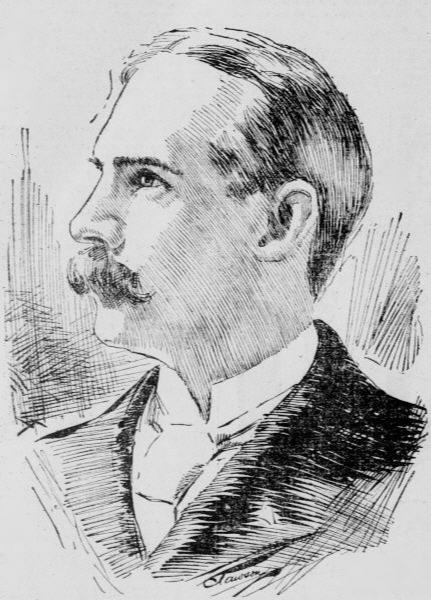
An 1897 artist’s illustration of Reverend Francis E. Clark, founder and president of Christian Endeavor.
The very next day she set out to learn everything she possibly could about the Young People’s Society of Christian Endeavor. She wrote to the Society’s founder, Dr. Francis Clark, or “Father Endeavor Clark,” as he was affectionately called by the young people in the organization. He immediately wrote back with information about the Society, and he invited Isabella attended a Christian Endeavor Convention in Cleveland, Ohio. There she met Dr. Clark in person.
Her first thought as he cordially shook her hand was, “Why, he is just a young man!”
A Christian Endeavor Convention, 1921
But she soon realized, after watching Dr. Clark interact with the young people at the convention, that he was an earnest and deeply spiritual leader who had a special gift for inspiring young people in Christian work.
A 1914 postcard depicting Williston Church, where the first Y.P.S.C.E. meeting was organized on February 2, 1881.
Isabella used her own experiences with the Y.P.S.C.E as the inspiration for her book, Chrissy’s Endeavor. She even incorporated into the story her first encounter with those baffling initials, “Y.P.S.C.E.”
After the book was published, Isabella received an astonishing number of letters praising her book. One such letter read:
“We want to say that we think here that the book ‘Chrissy’s Endeavor’ is doing a work in the world which will be to its author one of the surprises of heaven.”
Isabella remained actively involved in the Y.P.S.C.E, as did her husband and other members of her family. Over the course of many years, she saw the results of the Society’s good works, and she was thankful for having had the chance to know Dr. Clark in person.
In 1897 The San Francisco Call published a full-page article about the Society of Christian Endeavor, with details about how it came to be organized, and it’s growth world wide to over two million members. Click on this link to read the article.
You can find out more about Isabella’s book, Chrissy’s Endeavor. Click on the cover to read reviews and sample chapters.
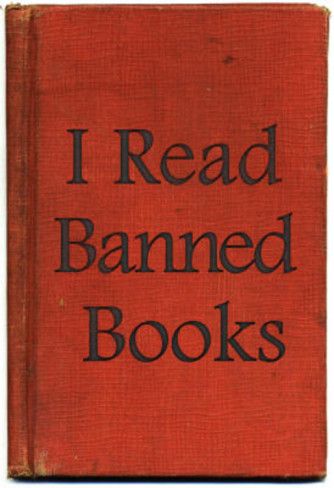
Today begins Banned Book Week, an annual event coordinated by the American Library Association intended to celebrate Americans’ freedom to read.
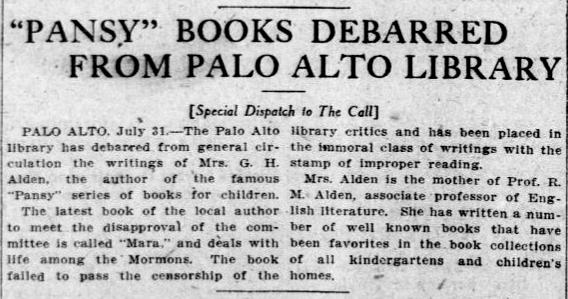
There are all sorts of reasons books are banned by different organizations in different parts of the country. Even Isabella Alden’s books were once banned from a public library for being “immoral” (you can read more about that in a previous post here).
Article in the San Francisco Call on August 1, 1910
.
Here are some other books that suffered the same fate:
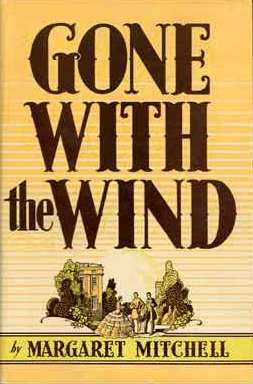
To Kill a Mockingbird, by Harper Lee The Great Gatsby, by F. Scott Fitzgerald Animal Farm, by George Orwell Gone with the Wind, By Margaret Mitchell
The American Library Association has Banned Books Week events planned in many states (click here to find events in your area). Their website contains a lot of interesting information about books that have been banned over the last two decades, who makes the most demands to ban books, as well as the most common reasons given for banning books.
All this talk of banned books begs the question: What would have happened if Isabella Alden hadn’t stood up to the individuals who tried to remove or limit access to her books? What would have happened if she had taken no action and allowed a library to label her novels as “immoral” and “improper”?
Answer: Most people wouldn’t have an opportunity to read her wonderful, inspiring books today.
Thankfully, Isabella Alden knew an injustice when she saw one, and she took action to have her books put back on library shelves for readers to discover and enjoy.
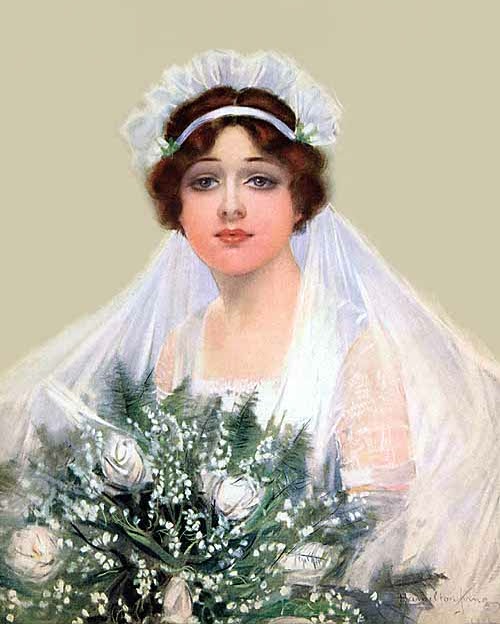
“Child-wife” or “child-bride” was a term used in the late 1800s to describe a young bride in her late teens or early twenties who had little experience in the ways of the world. A child-wife was an innocent, unsure of her footing, and sometimes easily influenced.
Isabella used the term a couple of times in describing some of her characters, but Mrs. Harry Harper is probably her most winning example of a child-wife.
“Mrs. Harry Harper’s Awakening” was a short story Isabella published in 1881. It’s a quick read and on the surface, it’s a simple story of a young woman who blossoms after she unintentionally becomes involved with a ladies’ Christian mission society.
But what makes the story unique is the heroine’s progression from a “child-bride” with no life purpose to a woman who is strong in her faith and determined to live her convictions.
She is introduced to us simply as “Mrs. Harry Harper.” She has no identity of her own outside of her husband’s. In fact, we never learn her Christian name; and even her husband calls her “wife” or “wifey.” Although he says those words with affection, he—like everyone else—doesn’t see her as anything more than an extension of himself.
He leaves her alone every day while he works, and expects her to simply fend for herself in some ladylike way while he takes care of the important business of earning a living. How Mrs. Harry elects to spend her days and how her involvement with a ladies’ mission society impacts all areas of her life illustrates Mrs. Harry’s progression from child-wife to confident worker for Christ.
As with all of Isabella’s stories, “Mrs. Harry Harper’s Awakening” is an allegory that illustrates Christian duty. Mrs. Harry Harper considered herself a Christian and she attended church, but it wasn’t until she began actually working for the Lord that she received the blessings and fulfillment of living the Christian life.
You can read “Mrs. Harry Harper’s Awakening” for free. Just click on the book cover to begin reading now.
Faith and Love is now available in print! This exclusive collection of short stories by Grace Livingston Hill and her mother Marcia Livingston is available from Amazon, Barnes and Noble, and wherever print books are sold.
In Miss Dee Dunmore Bryant, little Daisy Bryant loved beauty. Even at the tender age of eight she recognized that the home she lived in with her mother, brother and sister was far from beautiful.
The walls of the little cottage were not lathed and plastered; were not even painted; their weather-stained unsightliness had been among Daisy’s trials.
Little Daisy dreamed of covering those unattractive walls with pictures.
From Godey’s Lady’s Book, April 1895
Mrs. Bryant laughed. “You dear little dreamer,” she said, “where do you suppose the pictures are to come from, and how much paste and time do you suppose it would take?”
“Oh, but I don’t mean all at once. Be a long, long time, you know; and take just a tiny teaspoonful of flour at a time; we could afford that, couldn’t we? When we found a real pretty picture anywhere, paste it up in a nice place, and in a g-r-e-a-t many months the walls would be covered.”
It was impossible not to laugh at the bright face and dancing eyes, and there was something so funny about it to Line and Ben, that they laughed loud and long.
Mrs. Bryant was the first to recover voice. “It is a pretty thought,” she said, “and I will certainly try to furnish the spoonful of flour for my share; but we have almost no chances for pictures, darling, and I’m afraid you will be old and gray before the walls are covered.”
“Well,” said Daisy cheerily, “then I will put on my spectacles and sit down and enjoy them.”
From Godey’s Lady’s Book, April 1895
The first picture to be pasted to the wall was one Daisy’s brother found in a magazine a friend had given him. Magazines in 1890—the year Miss Dee Dunmore Bryant was published—often printed pictures and photographs that were suitable for framing.
From Munsey’s Magazine, 1905
In fact, many magazines encouraged readers to clip out pictures and frame them even though the images were in black and white.
From Ladies Home Journal, April 1916
Sometimes the images were simply of the latest fashions.
From Harper’s New Monthly Magazine, 1896
Sometimes the images were of famous people or events.
From Harper’s New Monthly Magazine, 1896
And other illustrations gave readers a window onto faraway places and the works of popular artists.
From Woman’s Home Companion, September 1922
From Woman’s Home Companion, 1922
By 1910 some magazines began printing two-color pictures. And by 1920 many magazines featured pictures and advertisements in full color. Copies of the Old Masters or religious paintings were very collectable.
From Ladies Home Journal, February 1916
From Ladies Home Journal, December 1916
While other pictures illustrated places and lifestyles most people could only dream about.
From Woman’s Home Companion, October 1922
Since magazine issues ranged in price from five to fifteen cents, they were an affordable source for pictures. Unfortunately for Daisy, even five cents was an unattainable sum. So she sacrificed her dream of having a beautiful wall of pictures; but by the end of the book, Daisy and the Bryants would find themselves surrounded by beauty and blessings of a very different kind.
You can read more about Daisy and her dreams in Miss Dee Dunmore Bryant. Click on the book cover to find out more.
Reviews and giveaways for Christian fiction and sweet, clean fiction. Bringing readers information on great stories and connecting authors with their readers.















 Isabella Alden