Advice to Readers about Selfishness

Isabella wrote a popular advice column for a Christian magazine. In 1897 she mentioned in her column that she had received “at least a dozen letters lately about selfishness.”

Here is Isabella’s Advice:

It is a curious illustration of human nature that in nearly every instance the writers are sufferers because of this trait in others, and are not themselves guilty of the sin. Of all sins to which the human being is heir, that of selfishness seems to me sometimes the most insidious.

Let me tell you about two lovely young friends of mine, sisters, beautiful girls, who have been carefully trained in a choice Christian home. It was summer, and in their hospitable home were gathered several guests. The mother, who had been an invalid during the winter, and like most mothers was tempted to overtax her strength, was being watched over tenderly, not only by her husband, but by grown-up sons and daughters. The morning which I am especially recalling was that one trying to the nerves of housekeepers generally—wash-day.

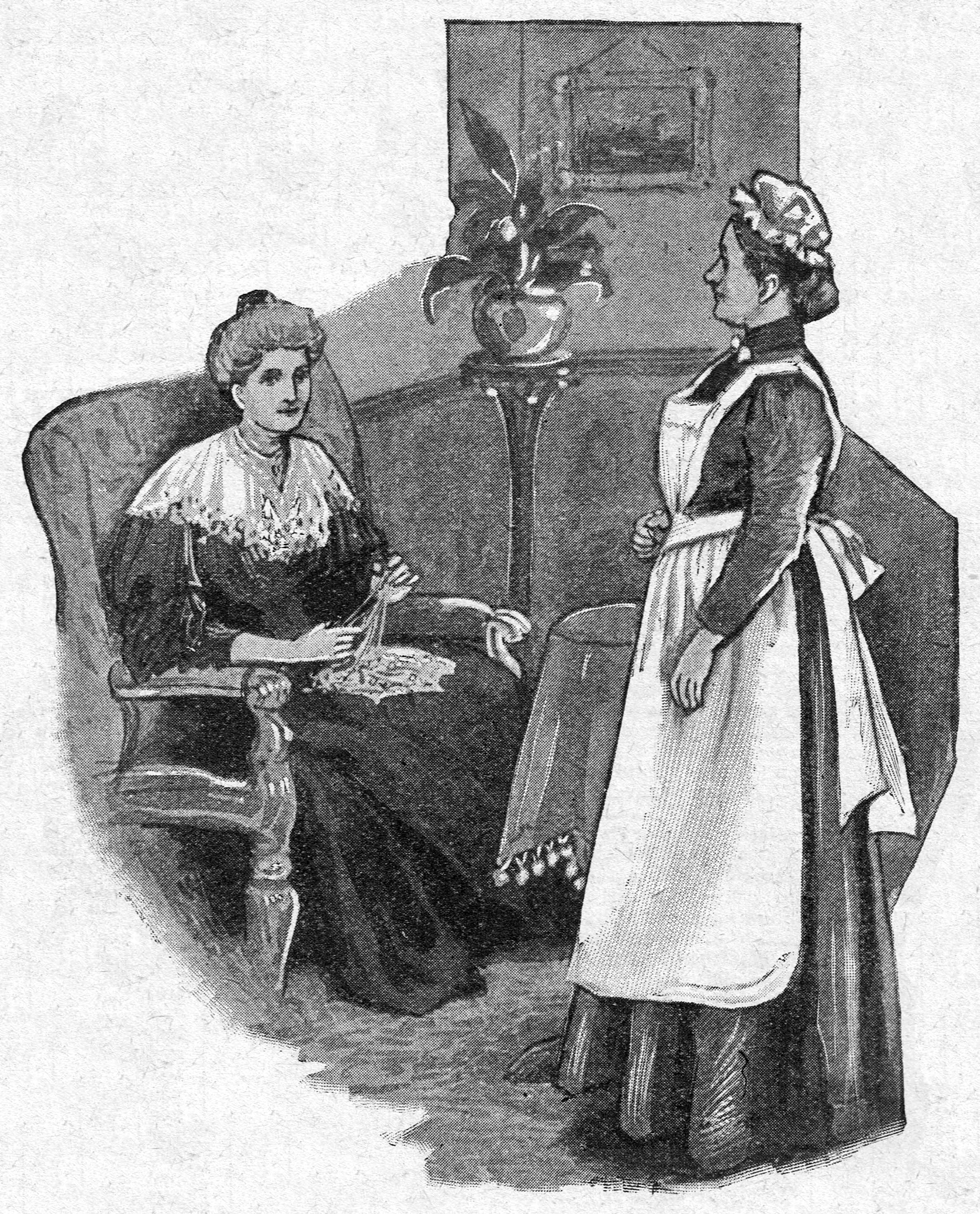
Illustration of two women. An elderly woman sits in a chair. Before her stands a woman dressed in the apron and mob cap of a maid.

It was a country home, and the cook, Jane, was also the maid of all work. There was a second girl, Norah, who served during the influx of company; but on this particular morning, when she was most needed, her aunt’s brother’s cousin had arrived from Ireland, and she must needs go home to welcome her. I came down to the piazza in time to hear and see a bit of family life, after this fashion:

“I’ve kidnapped her,” said Marian, the eldest daughter, gleefully, as she held with gentle force the little mother in the large rocker where she had placed her. “Now, dear mamma, do be persuaded not to go upstairs again. Don’t you know that it is warmer this morning than it has been for several days? And don’t you remember what the doctor said about exerting yourself on warm days?”

Illustration of elderly woman sitting in a chair. A younger woman sits upon the arm of the chair, with one of her arms wrapped around the elderly woman's shoulders.

“But, my dear,” protested the mother, trying to withdraw her arms from the loving clasp, “I was not doing anything to injure myself; and Norah is away, you know.”

“I cannot help it if she is. Your strength is more important than the work of fifty Norahs. Come and help me, Norm. She ought not to bustle around in the heat, ought she?”

“Certainly not,” said the tall brother. He strolled toward them, and drew a chair beside his mother.

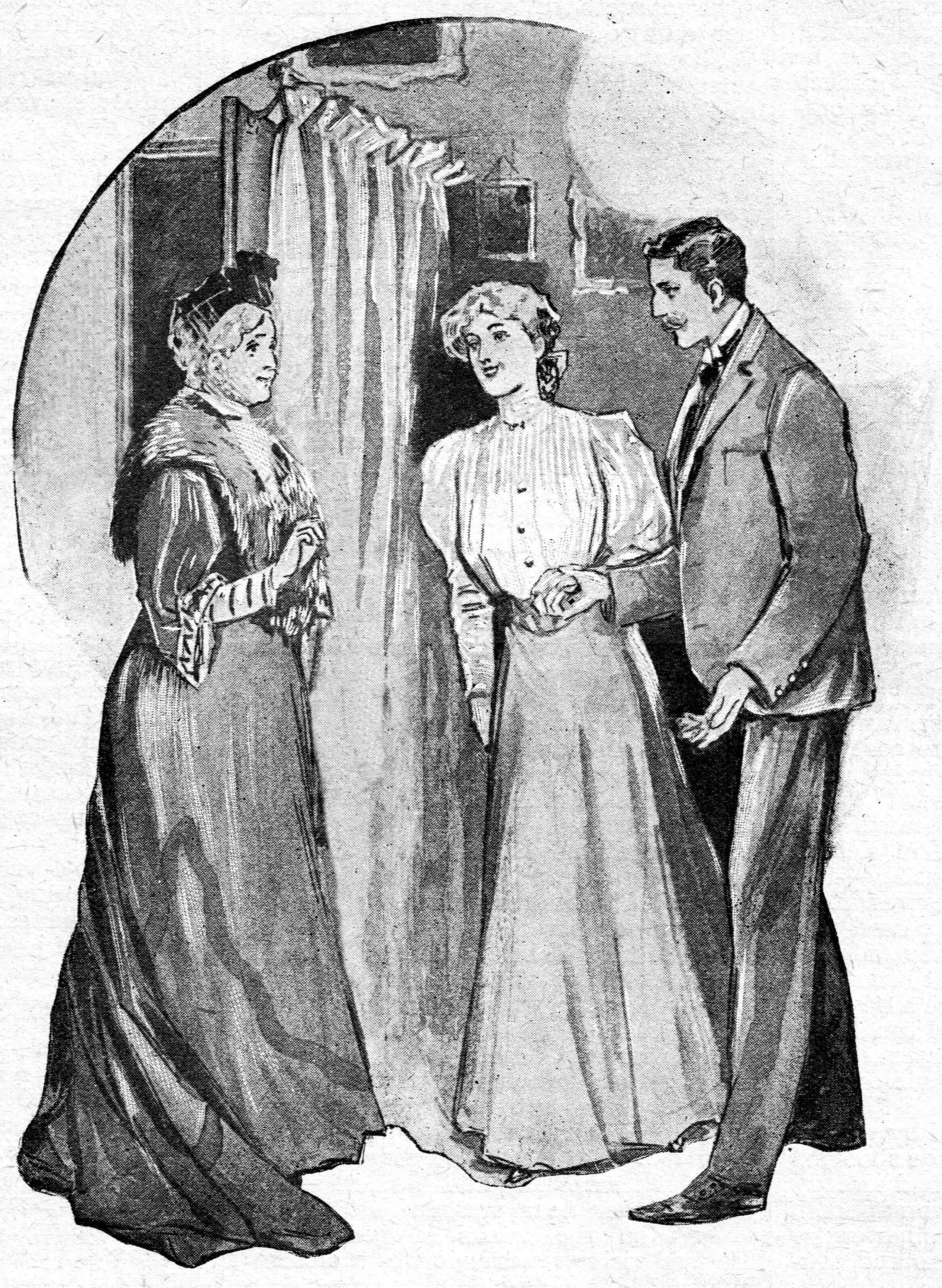
Illustration of a young man and young woman speaking to an elderly woman.

As the morning waned, she made ineffectual appeals to both son and daughter to let her “step out for a few minutes” and see how things were going.

“No, indeed!” said Marian with emphasis. “As if we should let you into that hot kitchen for a minute! We might better go without luncheon than to have it at any such price. Don’t worry, mamma dear; things will come out all right; they always do.”

Yet the mother undoubtedly worried, although the guests were as polite as possible, and protested that it was too warm to think of anybody’s doing anything. People did not need to eat in warm weather. Yet they knew, and the hostess knew, that people do eat in warm weather, and that, moreover, the average man and woman like cool, dainty edibles that do not make themselves.

 After a time the two self-constituted policemen became absorbed, the one in a new embroidery stitch which a guest was teaching her, the other in a volume of Browning. As the other guests were by this time engaged in writing or reading, the hostess slipped away. My thoughts followed her regretfully. If I were only well enough acquainted to beg to be allowed to help, how gladly would I have done so! Later, two or three of us took a stroll about the grounds, and discussed the several members of the family.

“What a lovely girl Marian is!” said one. “So unselfish, and so thoughtful of her mother! It was really charming this morning to see her solicitude. And the eldest son seems very much like her.”

“They are so different from Kate,” chimed in another voice. “One never sees her hovering around her mother, anxious lest she should overtax her strength. I wonder where she is, by the way. I have not seen her since breakfast.”

“Kate is sufficient to herself, I fancy,” said a third. “She seems to have her own pursuits, regardless of family life. But I do not wonder, I am sure, that Marian and her brother are anxious about the mother; she looks miserable this summer. I think they will not have her with them long.”

The mother returned, sooner than I had expected, and her face was serene. Something had happened to lift the burden of care.

“Your children are very solicitous for you,” I said in an aside to her a few minutes afterwards. “It is pleasant to see them.”

“Yes,” she said with a motherly smile, “I am blessed in my children. Marian’s anxiety is sometimes almost burdensome; but the dear girl means it well. This morning, for instance, I felt as if it would have been a real comfort to be able to slip away and attend to a few things. But I need not have worried; I might have known that my dear Kate would manage.”

“That is your second daughter, is it not?”

“Yes, the dear child! You do not know her very well; she gives herself little time for our friends, she is so busy assuming the cares of others. I wanted to arrange the lunch today, for Jane does not like to be interrupted; but I found Kate had planned everything, and executed it, for that matter. She had even been to my room, and made the bed, and put everything in exquisite order. I don’t know how she found time to accomplish so much. It is not any of it her regular work, you understand—just extras that she is doing to save me.”

Illustration of a young woman arranging flowers on a dining table.

I moralized, afterwards, over this bit of revelation. Did any of us think that the daughter Marian was selfish? Did she herself for a moment imagine such a thing? And yet . . .  

Oh, it is the little bits of things that catch us. Why, bless your heart! I know a boy who most cheerfully gave up a cherished plan to make a three days’ visit to a friend, because there were reasons why his mother did not wish him to be absent at the time. There were reasons why it was more than an ordinary sacrifice for the young man, and I admired him for making it. But that very fellow came to breakfast, dinner, and supper a few minutes late every time but one during the five days that I was his mother’s guest, although he knew perfectly well that both his mother and his father were annoyed by it. He did not do it intentionally, mind; but his ease-loving nature found it to his convenience to dawdle just at those moments. I think he would have been surprised and pained had one accused him of selfishness. Yet what was the name of the difficulty?

I am glad I used that word “cheerfully” in speaking of him. It hints at another way of giving up. I have a friend who sacrificed her quarter’s salary to relieve her father of a temporary embarrassment; yet she did it so ungraciously, and he heard about it so continually for the next six months, that I doubt whether he would accept such an offering again no matter how great the stress. That girl considers herself a monument of unselfishness.

What do you think of Isabella’s advice?

Poor, Wretched Peter!

Isabella was deeply involved in the Christian Endeavor movement. Each month the Society of Christian Endeavor published meeting guides and lesson plans for local chapters to use in their meetings. When the May 1894 meeting guide focused on Peter’s actions in the book of Luke, Isabella wrote a special “open letter” to the youngest C.E. members to help them understand the context of the lesson. Here’s what she wrote:


Dear Young People:

Some of you are studying this month about Peter. You are dreadfully shocked over him as you read his story in the twenty-second chapter of Luke. I do not wonder. How terrible it must have been to Jesus to have heard Peter say, “I know him not!”

And in another place it tells how Peter even swore that he did not know him! Poor, wretched Peter!

If we had not heard anything more about him, we should have despised him all our lives. And as it is, we are quite sure that we would never have done such a thing as that, if we had been on earth when Jesus was. I heard a boy say so, once.

“No, ma’am!” he said, his cheeks growing red at the thought. “I tell you, I am very sure I never should have denied him. The idea!”

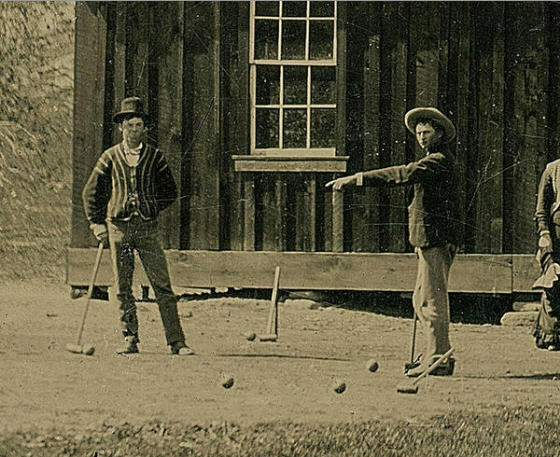
Yet only the next day that boy was playing croquet with some other boys, and two began to swear.

.

“Hush!” said one of them, after a minute. “We mustn’t swear before Tommy; he’s a goody-goody boy and has promised never to use any naughty words. Run away, Tommy, before we hurt you.”

What did Tommy say? Remember, he was the boy who knew he would not have denied Jesus. He laughed, and blushed, and said:

“I’m not afraid of your words; say what you like.”

.

Why did he say that? Why, because he was ashamed to own before those boys that he belonged to Jesus Christ, and had promised to try to please him. Don’t you think he denied him quite as much as Peter did?

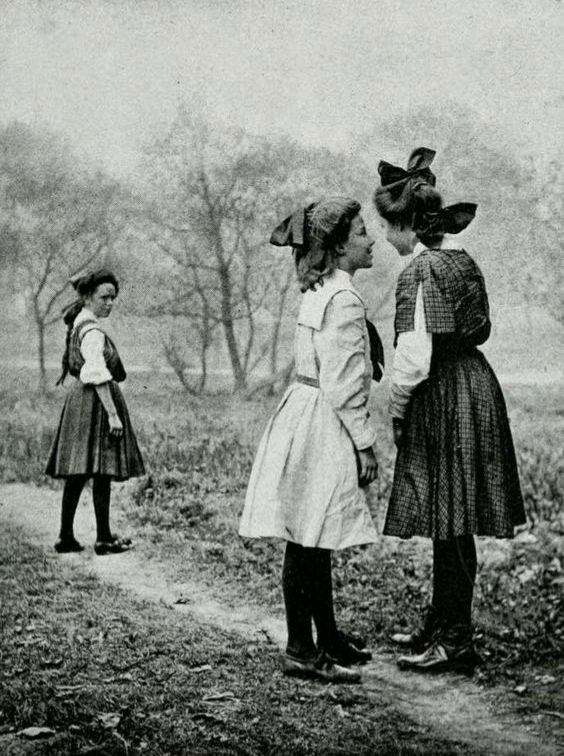
Oh, there are many ways of doing it. I am reminded of a girl I used to know, whose mother did not approve of little girls taking walks on Sunday.

.

On the way home from Sunday-school, her classmates said to her:

“Come on, let’s go down to the river for a walk;” and she answered:

“Oh, I can’t today; I have a little headache.”

She said this, not because of her headache, which was not enough to keep her from going anywhere she pleased, but because she did not like to own that she had been taught it was not the right way to spend Sabbath time, and she was trying to do right. Do you think there was a little bit of denial of Jesus in her heart just then?

.

What do you think of Isabella’s letter?

A Little Word Lost

In The Pansy magazine Isabella used stories, illustrations, and poems to teach young people what it meant to follow Jesus. The following poem was published in an 1893 issue of the magazine, and although it was written for children, it has meaning for adults, too!

I lost a very little word
    Only the other day;
A very naughty little word
    I had not meant to say.
If only it were really lost,
    I should not mind a bit;
I think I should deserve a prize
    For really losing it.
For if no one could ever find
    Again that little word,
So that no more from any lips
    Could it be ever heard,
I'm sure we all of us would say
    That it was something fine
With such completeness to have lost
    That naughty word of mine.
But then it wasn't really lost
    When from my lips it flew;
My little brother picked it up,
    And now he says it, too.
Mamma said that the worst would be
    I could not get it back;
But the worst of it now seems to me,
    I'm always on its track.
If it were only really lost!
    Oh, then I should be glad!
I let it fall so carelessly
    The day that I got mad.
Lose other things, you never seem
    To come upon their track;
But lose a naughty little word,
    It's always coming back.

While no author name was given when the poem was published, Isabella’s husband Ross and son Raymond were both talented poets, as was Isabella.

When she wrote stories about children losing their tempers, she wrote from experience. Isabella shared stories from her own life about how often her anger got her into trouble when she was young.

You can read about some of those instances in these previous posts:

Joy Go with You

BFFs at Oneida Seminary

Locust Shade … and a New Free Read

Quotable

Isabella was a wise woman who had a talent for stating Christian truths in simple, meaningful ways. Here’s one example:

"Extraordinary afflictions are not always the punishment of extraordinary sins, but sometimes trial of extraordinary graces."

You can find more of Isabella’s words of wisdom to read, print, and share. Just enter “quotables” in the search box on the right to see more.

A Hard Text about Swearing

Isabella’s brother-in-law Reverend Charles M. Livingston wrote several articles for The Pansy magazine in which he explained Bible verses that might seem confusing at first. Here’s one he wrote in 1889:


Matthew 5: 33-37:

33. Again, ye have heard that it hath been said of them of old time, Thou shalt not forswear thyself, but shalt perform unto the Lord thine oaths:

34. But I say unto you, Swear not at all; neither by heaven; for it is God’s throne:

35. Nor by the earth; for it is his footstool: neither by Jerusalem; for it is the city of the great King.

36. Neither shalt thou swear by thy head, because thou canst not make one hair white or black.

37. But let your communication be, Yea, yea; Nay, nay; for whatsoever is more than these cometh of evil.

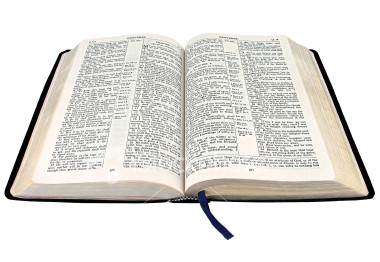
Image of open Bible

With these words in mind, how, then, do good men swear on the witness stand in the court-room?

That is intended to be a solemn, religious thing, for the sake of truth and law and justice. It sets the fear of God before the witness to deter him from falsehood, and the love of God to lead him to tell the truth.

The spirit of prayer is in it.

Our Hard Text refers to profane, wicked, idle swearing. It is taking the name of the Lord, thy God, in vain. It is very common in ordinary conversation among many people. They curse and swear “by” this and “by” that, just for fun, or to make folks believe them, usually when they are telling a lie. At last it becomes a vile, dreadful habit, and in almost every sentence they swear. Many little children do this. It is an awful sin. It leads to destruction.

Shun the first step in that direction. Have a character for truth. Consecrate your tongue to Christ as He died on the cross to redeem your entire body and soul from all sin.

Have you ever wondered if swearing a solemn oath was the same as swearing in ordinary conversation?

What do you think of Rev. Livingston’s explanation?


Click on the links below to read more of Reverend Livingston’s “Hard Text” articles:

A Hard Text

A Hard Text in Matthew

A Hard Text: Matthew, Mark and Luke

Advice to Readers about Marriage Proposals

For many years Isabella edited a Christian magazine for which she wrote a very popular advice column. In 1896 she responded to a letter from an unmarried woman who had just received a proposal of marriage.

Despite his profession of love to her, the woman confessed she did not feel the same way about him. Yet she was tempted to accept his offer because she thought he’d make a fine husband; but her biggest concern was that because she was getting older, she was afraid his proposal may be her last chance for marriage.  

In closing, she asked Isabella: How could she tell if the Lord meant for her to marry such a man?

Image of man and woman about 1910 in an embrace, holding hands.

Here is Isabella’s advice:

My Dear Friend, I can understand the state of bewilderment into which you are thrown, but at my age the light is plainer. As I read your letter, I find myself wishing that all questions were as easily answered as yours.

In the first place, let me beg you never to allow any chain of circumstances or specious reasoning to persuade you that it is right to marry one that you are not sure beyond the shadow of a doubt is the man above all others that you believe your heart would have chosen under any conceivable circumstances. Any other marriage than this I believe to be a mockery in the sight of God. I can conceive of one loving another in this way, and yet not marrying from motives of duty; but I cannot conceive of any duty that would make it right for one not so loving to marry. Do you not see how simple a matter such conviction of right and wrong as this makes your query?

Image of bride and groom holding hands as they kneel in church about 1905. Behind them are three bridesmaids dressed in pink gowns and holding bouquets of pink flowers.

Be sure, dear friend, that what “the Lord means” for you is that you should do right, even if in doing so you are compelled to grieve someone that has given you the best his heart has to offer. It would be but a sorry return to give back to such a man mere dregs of feeling.  

I know it is the fashion in certain circles to talk a great deal about “Platonic affection.” I have often been tempted to think that many people use the term without having a clear idea of what it means; but the fact remains that with honest, earnest, well-trained young men and women exclusive and long-continued companionship means, other things being equal, companionship for life; and when two persons arrange to set aside this rule of nature, it generally means sorrow for one of them.

Image of bride and groom about 1910 in tender embrace.

Let me still further say that it seems to me you are perhaps making the very common mistake of thinking of marriage almost as a necessity to a woman’s life. Does it not occur to you that possibly God may not mean you to marry at all?

In saying this I do not want to be understood to speak lightly of marriage; on the contrary, I believe a true marriage to be the crown of a woman’s life. But there are many honorable exceptions; there is blessed work in the world being done by women with warm affections and motherly hearts, who have no home ties, and so are able to do that which—but for them—would be left undone. Who can estimate how many homeless and motherless ones rise up to call such women blessed? Possibly your work lies in this direction. Whether it does or not, let me repeat the admonition with which I began:

Never mistake friendship for love; never stand before the marriage altar with one of whom you could not say, “My heart chose him alone from all the world.”

Image of a bride and groom outside a church about 1918. Bride is dressed in white gown and veil and carrying a bouquet of white flowers. Groom is dressed in formal black tux with white shirt, tie and waistcoat.

My dear girl, I want to emphasize this as much as possible because I believe in it so thoroughly. The world is full of wrecked homes and ruined hearts that need not have been so if friendship had not been so often mistaken for love, and marriage relations entered into so carelessly.

I wonder whether I have fully answered your thought. I have no doubt that you consider your circumstances peculiar—we all do—but the letters that I have received lead me to believe that a large number of your sisters are thinking along much the same lines.

What do you think of Isabella’s advice?

Do you agree with her that marriage is not always “a necessity to a woman’s life”?

You can read more of Isabella’s advice columns by clicking on the links below:

Advice to Anxious Mothers of Daughters

Advice to Readers on Learning to Cook

Advice to Readers about Keeping Confidences

Isabella’s Advice about Christmas Possibilities

Advice about Righting the Wrong Marriage Proposal

Advice to Readers about Shortcomings

Advice to Readers on Managing the World

Advice to Readers on Memorizing Bible Verses

Advice to Readers on Praying Aloud in Public

Advice to Readers Living Humdrum Lives

Advice to Readers on Bashfulness

Advice to Readers about Boys and Books

Advice to Readers about Forgiveness

Advice to Readers about Ornaments

The Many Names of Jesus

Isabella had a wonderful way of using her own personal experiences to show people how relevant the Bible could be in their everyday lives. In 1895 she wrote this uplifting piece for a Christian magazine:


Have you ever noticed how many beautiful names Jesus has?

One of the pleasantest Sunday afternoons I remember was spent with my dear father, looking up some of them, and trying to find what they meant.

We began with that one in Zechariah 3:8, where it says:

“Behold, I will bring forth my servant the Branch.”

Graphic with Bible verse: I will bring forth my servant the BRANCH. Zechariah 3:8

I suppose I was not old enough at the time to understand much of its meaning, but I liked the sound of the verse; and I like now to think of Jesus as a part of God, a branch from the divine one, broken off from the great tree and sent to earth for us.

Then we looked at Isaiah 9:6, and found that he was not only a branch from God, but that one of his names was “Everlasting Father.”

And Isaiah 7:14 called him “Emmanuel,” which means, God with us.

And Paul, in Romans 11:26 called him the Deliverer; and Peter called him the Corner-Stone, and John, the Good Shepherd, and the Lamb of God, and the Light, and the King, and the Word, and the Why. John has so many names for him!

Graphic with Bible verse: There shall come out of Sion the Deliverer. Romans 11:26

Take your Bible some day, and try and find out all the names of Jesus; if you have not thought about it before, you will be astonished at the number of them. I do not think you can imagine a great or helpful name which has not been given to him.

So many times he is called the Savior! Then he is the Mighty One, the Maker of all things; the Prince of Life, the Prince of Peace, the Morning Star, the Redeemer, the King of Kings.

I wonder if you will have a preference among these names? If some of them will seem to make him come nearer to you than others?

One day I was very much afraid of something which I feared was coming to me; I did not see how I could escape it, and I was glad to remember that Jesus was the Deliverer.

Graphic with Bible verse: The Lord is my rock, and my fortress, and my deliverer. II Samuel 22:2

Then, when my father died, and my heart felt as heavy as lead, and it seemed to me as though I could never be happy again, I found this name for Jesus in Revelation 1:5:

“The first-begotten of the dead.”

Graphic with Bible verse: Jesus Christ, who is the faithful witness, and the first begotten of the dead. Revelation 1:5

Then  I remembered that Jesus died, and was the first one to rise from the dead by his own power, and had promised to raise all others, and that my father would surely live again.

Oh, this is a beautiful thing to study about! Who will try it? See how many names you can find.

What do you think of Isabella’s idea for Bible study?

Do you have a favorite among the different names for Jesus? one that—as Isabella said—makes him feel nearer to you than others?

Advice to Anxious Mothers of Daughters

How often have you thought—or heard someone say—“Our little girls are growing up too fast!”

We tend to think of it as a modern-day problem, but in 1897 mothers were coping with the very same concern. Isabella received so many letters on the topic, she dedicated one of her advice columns to “anxious mothers of daughters.”

Here’s what Isabella wrote:

I have a package of letters from anxious mothers. I hold them tenderly, for there are heart-throbs in every line. I study and pray over them and wish—Oh, so earnestly!—that I knew how to help. Instead, I have resolved to tell our girls what some mothers fear: That their daughters—their young, sweet daughters, whom they would guard with jealous care from every form of the world’s contamination—are having the bloom of their beautiful girlhood brushed away by too early friendships with young men, or, as they frankly put it, with “the boys.”

One mother writes that her fourteen-year-old daughter’s mind is in danger of being taken up with the thought of “beaux.” She lives in the country, and associates almost of necessity with those who talk much about “beaux” and about “keeping company” with this or that boy. Not only this, but she has for associates those who believe in “kissing games” and all such practices.

What can you do?

Ah, dear, I don’t know. Except this—the same thing that I have said before, only I want to say it more emphatically, if I can:

Will you not use every inch of influence you possess to help anxious mothers, and to protect young and oftentimes motherless girls from the sort of harm that comes from playing with ideas that should be held sacred?

Sometimes uncultured guests do harm in this way:

A merry-faced couple—girl and boy aged perhaps ten and twelve—were hurrying down the street side by side, swinging their book-bags and chatting and laughing.

“Hasn’t Alice come yet?” asked the mother in a home.

“Here she comes,” said a guest who was in the doorway. “Here she comes with her little beau. Dear me, Alice, why didn’t you kiss each other? When I was of your age, and had little beaux come home with me, I always kissed them good-by.”

The mother came forward swiftly, a spot of red glowing on each cheek. “Alice does not know even the meaning of the word beau,” she said, “and she keeps her kisses for her father and brothers.”

Oh, the infinite harm that coarse and careless tongues can do to these young buds before their time of blossoming! Remember how much influence older sisters have in these directions. Nor is their influence confined to the young people of their own homes, if they are wise-hearted Christian workers.

What do you think of Isabella’s advice?

Have you ever seen someone tease a child about boyfriends, like the “coarse and careless guest” Isabella described?

You can read more of Isabella’s advice columns. Just type “advice” in the search box on the right.

A Hard Text in Matthew

Isabella’s brother-in-law the Reverend Charles M. Livingston wrote several articles for The Pansy magazine in which he explained some of the Bible’s most challenging verses in terms young people could understand. Here’s one he wrote in 1888:


A Hard Text

Matthew 10:34: I came not to send peace, but a sword.
Photo of open Bible.

In Luke 2:14 the angels sing of Jesus when He was born, “On earth peace.” At first sight these verses in Matthew and Luke seem to contradict each other. They do not. The blessed Book never does that. Remember:

When one thing in one part of the Bible seems to conflict with another part, or say something which seems to be wrong, you are to conclude that a little better understanding will set it all to rights in your mind.

“I come not to send peace” to a sinner if he stay in his sins. “There is no peace to the wicked.” There ought not to be. But as soon as a sinner asks Jesus for forgiveness, he gets peace. That’s the way peace comes on earth; it is the peace of God in the heart; peace and joy in believing.

Now, when one gets this peace, it seems so good that he wants some other one to get it, too. So he speaks to his other one and urges him to confess his sins and seek Jesus; and in most cases this other one gets angry and talks against Jesus or Christians. That often happens in a family where one is a true Christian and the others are not. You see how trouble will come. There will be war in that family. It may not be a war of swords, but it will be a war of words. Jesus does not want the war, and there wouldn’t be any if the sinner would give up. But he does not usually surrender till after a hard battle with Jesus. So Jesus is said to send a sword or war. It simply means, “I am come to fight against the wrong; and people who are on the wrong side and stay there, will fight against me and my soldiers.”

My dear, dear children, I wish you may never be found with a sword in your hand, or mouth, or heart, fighting against the Lord. Let Him put His sweet peace into your heart, and when you draw the sword, draw it against sin.


Did you know? … Reverend Livingston’s daughter was beloved Christian novelist Grace Livingston Hill.

Click on the links below to read more “A Hard Text” columns:

A Hard Text

A Hard Text: Mathew, Mark, and Luke