Isabella had a special bond with evangelist Rev. D.L. Moody. They were contemporaries who shared a common mission: bringing biblical truths to everyday Americans through accessible, compelling writing.
While Isabella wove Christian principles into her novels and short stories, Mr. Moody taught them directly through his preaching and writing.
In 1896, Mr. Moody published a twelve-part Bible study series in The Ladies’ Home Journal, a magazine that regularly published sermons, essays on religion and faith, and stories with Christian themes. He called his series, “Mr. Moody’s Bible Class.”
Each month for twelve months, Mr. Moody filled the pages of the magazine with lessons on the fundamental doctrines of Christianity, from sin and redemption to prayer and Heaven. His accessible writing style and practical approach made theological truths understandable to every-day readers, while he challenged them to examine their own faith.
From The Ladies’ Home Journal, October 1896.
“Mr. Moody’s Bible Class” is now available for a new generation. Each of his lessons has been carefully formatted for modern readers, with added reflection questions and organized Scripture references.
Whether you’re studying alone, with a small group, or teaching a Sunday school class, Mr. Moody’s lessons offer rich yet practical insights into the foundations of Christian doctrine. Click on the link below to view or download the first lesson:
Isabella Alden and her entire family were actively involved in the Young People’s Society of Christian Endeavor, a movement that promoted Christian service and ideals to its teen and young adult members.
Isabella believed in the Endeavor program so much, she founded the Pansy Society for Christian Endeavor, a similar organization specifically designed for children. The Pansy Society focused on teaching children to use Jesus’ life and words as a guide to live by.
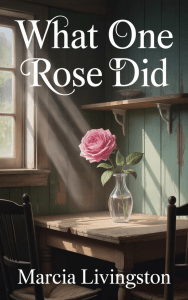
This month’s free read is a story by Marcia Livingston that illustrates some of the values The Pansy Society sought to teach children: forgiveness, patience, and kindness toward others.
It was a simple act of kindness when Lily Haines offered Cindy Barker a rose from her garden; but neither young lady could predict how much of a difference the presence of that single rose could make in the Barker family home.
When it came to writing stories, Isabella sometimes relied on “real” life for inspiration. She’d take an actual occurrence—an overheard conversation, an event she attended, or something as simple as a family gathering—and use it as the basis for her story.
Other times, a story she wrote was inspired by a lesson she wanted to convey, or a kernel of truth around which she fashioned a story. That was the case in 1887 when she published a little story called “Monuments,” about a young girl who visits a cemetery in New York with her Aunt Joanna.
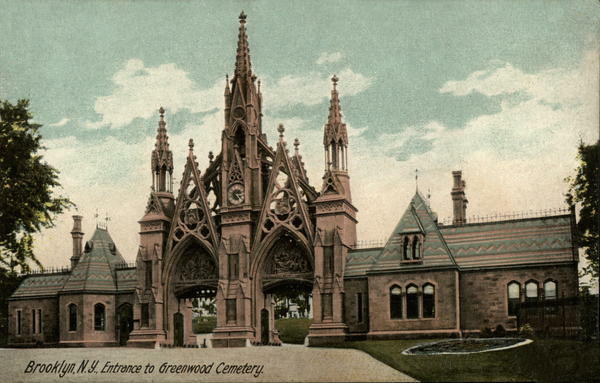
The entrance to Green-Wood Cemetery in Brooklyn, New York.
The story draws on fact: Green-Wood in Brooklyn, New York is a real place that Isabella very likely visited because of its famed monuments.
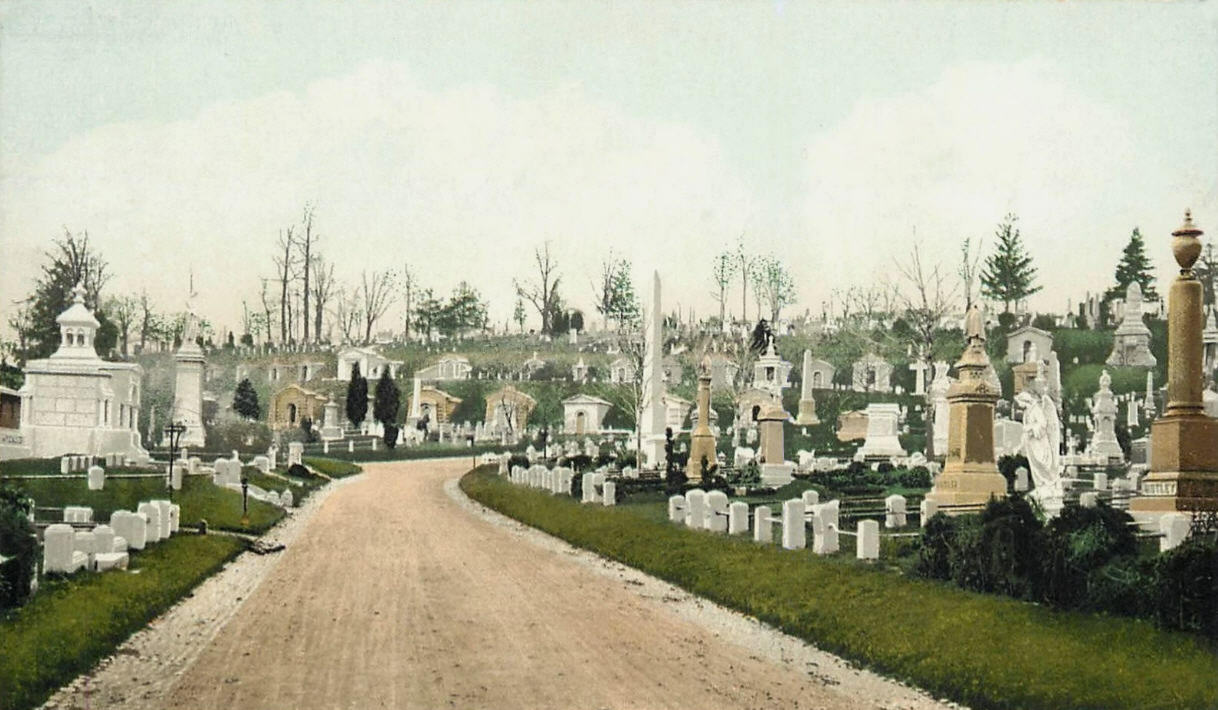
Monuments and headstones at Green-Wood Cemetery, about 1900.
In the 1800s Green-Wood Cemetery, with its extraordinary grave markers and lush, rolling hills, was a popular tourist destination. People came to spend the day with their picnic baskets and marvel over the sculpted monuments.
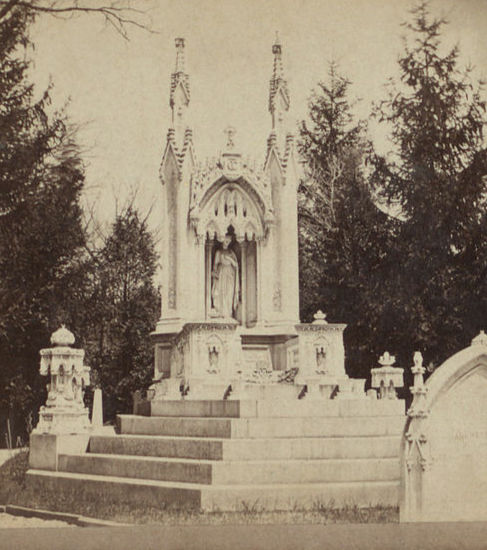
In her story, Isabella mentions one of the most magnificent monuments that marks the grave of Miss Charlotte Canda, a seventeen-year-old bride-to-be who was tragically killed after falling from a run-away carriage.
Charlotte Canda’s tomb, photographed about 1910.
She also mentions a monument dedicated to the brave firefighters of New York City and, in particular, Andrew Schenck, who perished in 1854 while trying to save people and his fellow firefighters from a burning department store.
The Firemen’s Monument mentioned in the story, topped by fireman’s boots and hat.
As a creative storyteller, Isabella took these tales of tragedy and heroism and crafted them into a story about a completely different kind of ‘monument’—one built not of marble and stone, but of transformed lives and acts of service.
Here’s the short story Isabella wrote:
It was my first visit to New York. A few days after my arrival uncle took me to Green-Wood, the most beautiful cemetery I ever saw. We visited the many points of interest. As we stood gazing at the fireman’s monument, uncle told me the story of his heroism; how in one of the fierce fires this brave man lost his life while rescuing a woman from the flames. Then we spent a long time looking at the monument to Miss Canda, the beautiful young heiress who was thrown from a carriage and killed; and her fortune was built up in this wonderful marble.
The next morning aunt said, “You will go with me today to another Green-Wood and see grander monuments than any you saw yesterday.”
I wondered how that could be, but we were soon on our way. At length we turned into narrow, dirty streets, growing worse and worse. I shuddered at such sights and sounds of human beings, never before dreaming that in grand New York there could he so much wretchedness. I drew closer and closer to aunt, fearing one of the human demons that leered at us would seize me and carry me off.
Such people! Such places to live in! Such language! Why, it almost makes my hair stand on end to think of it. Aunt did not seem to mind them. Maybe they knew her, for everyone stood aside for us to pass.
“Here it is,” she said at length. “Here is the other Green-Wood.”
“This?” I answered, looking around for gravestones and monuments, and seeing nothing but dreadful houses and miserable objects. “This is Green-Wood?”
She simply answered, “Yes; come right in and you shall see the monuments.”
I could only follow, wondering all the while if aunt was not losing her mind.
A sweet-faced girl met us with a warm welcome to aunt and an earnest look at me. As she led the way within, aunt whispered:
“One of the monuments, Clara.”
“What? I don’t know what you mean.”
“Her name is Maggie,” she quickly whispered back; “used to be called ‘wild Maggie;’ was one of the worst girls in this region. Never mind now, I will tell you more hereafter. Take a good look at her, you’ll see her again.”
Then I heard singing like the songs of many angels. A door swung open. We entered. It was a great company of children, black and white, some with sweet sad faces; others with evil looks, but all singing. Soon Maggie came in from another door and sat among them and I could hear her voice ring out in joyful strains, leading the rest.
There was prayer and Bible reading, and such a good talk by a gentleman. It seemed like heaven, while many of the children, some partly blind, some lame, some pale and sad-faced, gathered around after meeting was out and seized Aunt Joanna’s hand, and seemed so happy. Another lady was there to whom they all pressed for a smile and a word.
“That lady,” said aunt, “is Sir Christopher Wren.”
“What can you mean?” I asked. “Sir Christopher Wren was a man who died in England more than a hundred years ago.”
Aunt Joanna only laughed and said, “And came to life again, my child. This is he, only greater.”
“What?” said I, more and more bewildered.
But she went on: “Look around here at the monuments. You knew Sir Christopher was the architect of the great Westminster Abbey of London, and that kings and statesmen and poets are buried there, and their names and deeds are written there; but if anyone inquires for Sir Christopher Wren’s monument, he is told to look at the wonderful building of which he was the architect.”
“I see,” said I, “that lady has ‘built up’ Maggie.”
“Exactly,” said Aunt Joanna, “and more than one hundred other miserable, sick and wicked children. See that frail girl over there coming toward her? It would take a book to tell how this lady used to come daily here and bend over her crib, sometimes holding her in her arms for hours fearing each moment would be her last. But come and I will introduce you, and you shall see a monument greater than Christopher Wren.”
After we were on our way home, aunt told me the story of this lady; how one day curiosity led her to go through this worst part of New York. Her heart was so touched at the wretchedness of the people that she resolved to do something for them. Her friends tried to dissuade her. Some said the people would kill her; some said it was no use to try to help them. But she went right forward, and now after years of labor and sorrow there is her monument: saved children.
Before my return home in the country, Aunt Joanna gave a treat to the children of the Home all at her own expense.
Maggie, once “Wild Maggie,” and I served. How many sandwiches I passed around, how many cups of milk Maggie filled, how some of the urchins were dressed, how they laughed, or chattered, or stared, what they all said to aunt Joanna about the “treat,” would fill a book.
You can read more about Green-Wood Cemetery by clicking here.
Click on these links to read the stories behind the monuments for:
Our September free read is a short story Isabella wrote in 1910.
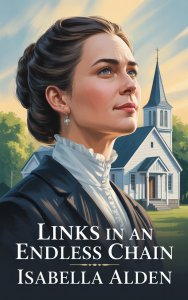
Mrs. Luther Smith-Mosher believes more in hard work than miracles, so when her beloved church faces foreclosure, she’s willing to do just about anything to save it. But as the foreclosure date draws near, Mrs. Mosher finds herself caught between feuding factions and impossible financial realities—until Pastor Powers challenges her to trust God completely, even when human solutions have failed.
YOU CAN READ “LINKS IN AN ENDLESS CHAIN” FOR FREE!
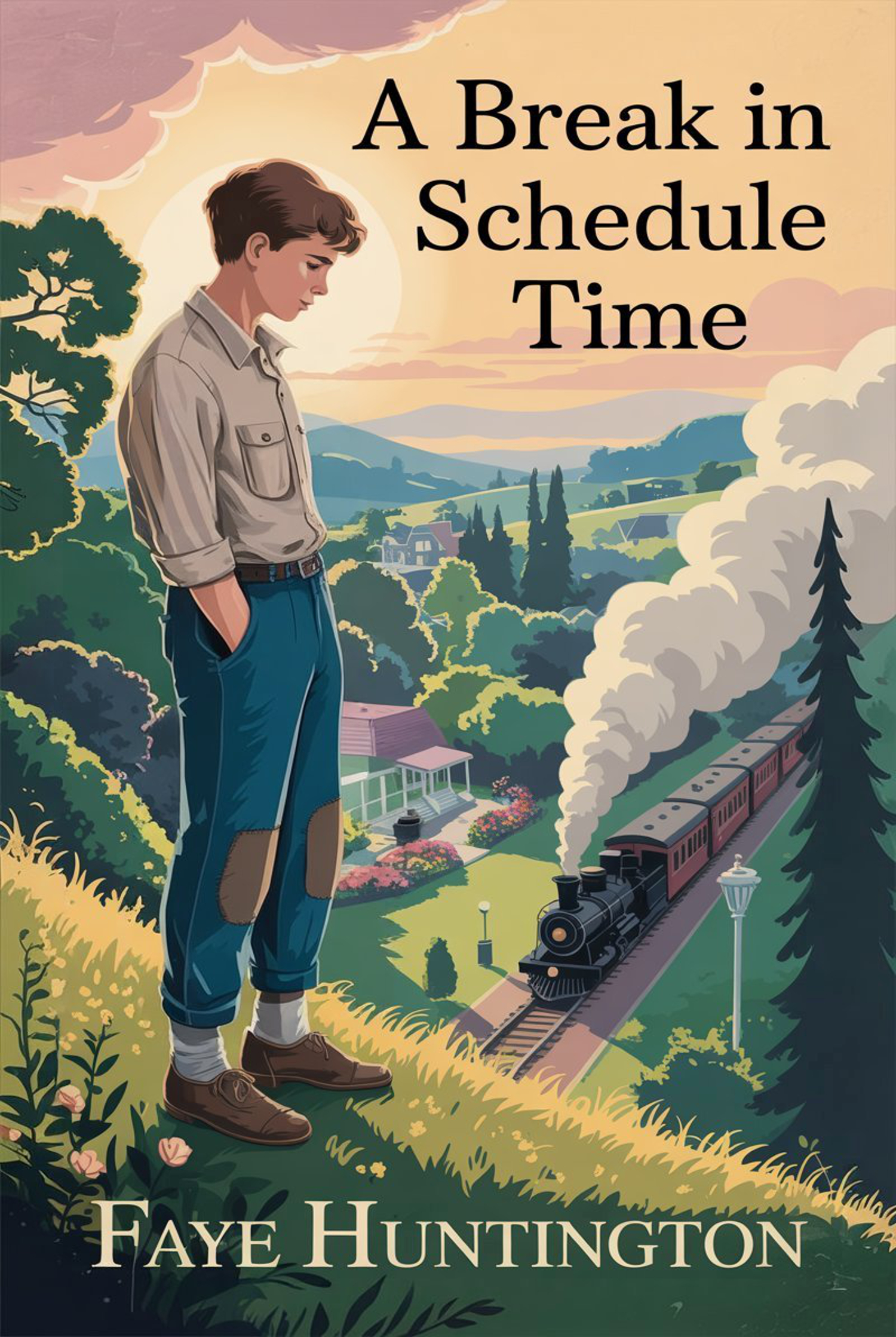
Our August free read by Faye Huntington is a delightful story about two topics very close to the author’s heart: the Christian Endeavor movement, and how sowing seeds of good can result in a bountiful harvest of blessings.
Like everyone in impoverished Castle City, twelve-year-old Tom Gates has given up hope of making a better life, until he has a chance encounter with a group of stranded Christian Endeavorers. Their kindness and faith inspire Tom; for the first time in his life he wants something the town has never had before: A Sunday school.
With his sister Lucy and their friends, Tom uses his wits to raise money and secure a building; and along the way, he ignites a fire of change that will shape the town for generations to come.
This month’s free read is a short story Isabella wrote in 1898 for a popular Christian magazine. It’s the story of the Pemberton family and the difficult year they endured leading up to a 4th of July celebration.
Nettie Pemberton can hardly believe it: the family fortune is gone! Although she finds a job working for a kind family, Nettie watches long-time friends disappear from her life. Even Edward Field—whom Nettie has known and loved since childhood—seems to have forgotten her very existence. Now, as the Independence Day holiday approaches, Nettie must face another disappointment that may turn out to be more than her broken heart can bear.
Have you ever wondered what it would be like to be famous?
Isabella Alden circa 1880
Imagine walking into a room filled with people who burst into applause as soon as you enter. Then imagine that you’ve agreed to speak at an assembly that’s filled to overflowing with people, seated and standing in every available space, who hang on your every word.
That’s a little taste of what life was sometimes like for Isabella Alden. Today it might be hard for us to understand just how famous and beloved she was by people across the country. In a time before social media, television, and radio, Isabella had a nation-wide reputation as both an author and as a respected and knowledgeable public speaker on a variety of topics, including the development of Sunday-school lessons.
In 1886 Isabella and her husband, Rev. G. R. Alden, were living in Cleveland, Ohio, where Rev. Alden was pastor of a Presbyterian church. But when he wasn’t preparing sermons, and she wasn’t writing novels and stories for Christian magazines, the Aldens traveled the country to help churches design and implement well-organized, robust Sunday-school curriculums.
In June of that year they were invited to attend a conference in Wellington, Kansas, where the local churches hoped to find a way to better manage their Sunday-school offerings to children and adults. The Aldens accepted.
From The Conway Springs Star (a Kansas newspaper) on June 11, 1886
As soon as the local newspapers announced that Isabella Alden would be among the featured speakers, the churches were guaranteed to have an excellent turnout for their conference.
from The Monitor-Press (Wellington, Kansas) June 11, 1886
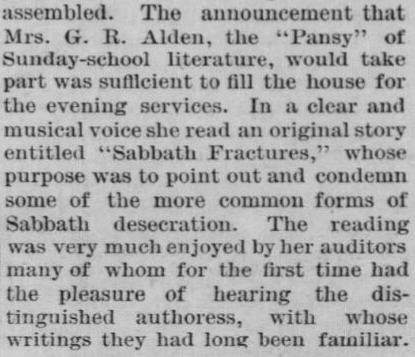
Here’s how the local newspaper described the scene on the first night of the conference when Isabella made her appearance:
from The Wellington Monitor, June 18, 1886.
The meetings began on a Monday afternoon and Isabella took an active role, according to the agenda:
from The Wellington Monitor, June 11, 1886
In one of the sessions she spoke about how to design Sunday-school lessons for children in the Primary Class age range of four to eight years:
from The Wellington Monitor, June 18, 1886
In another session she participated in a discussion on the proper way to prepare teachers for the work of teaching meaningful lessons:
from The Wellington Monitor, June 18, 1886
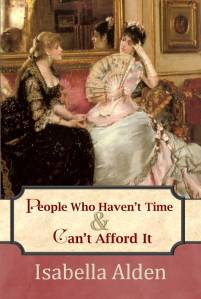
On Monday evening she read one of her short stories, “People Who Haven’t Time and Can’t Afford It,” which, the newspaper reported, “held the close attentions of the audience in spite of the discomforts of the crowded room.”
The rest of the conference was similarly busy for Isabella. The last night of the conference was “attended by an audience larger than the seating capacity of the church.” Isabella closed the evening session by reading a paper she wrote about “the Penn Avenue Church” and the difficulty the church had raising money for Sunday school purposes and for books to stock a small church library.
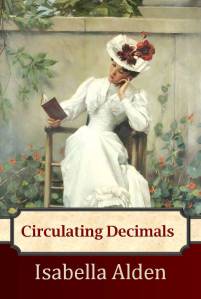
Eventually, Isabella revised that “paper” into a short story called “Circulating Decimals,” which was published two years later.
By every measure, the 1886 Sunday School Institute in Wellington, Kansas was a resounding success.
And with Isabella’s many contributions—from offering practical advice to reading stories with a message—it truly was a “feast of good things.”
One final note:
Isabella may have been a famous celebrity, but when she and Reverend Alden made these trips, they rarely stayed in a hotel. Instead, they were usually invited to stay in the home of one of the local church members. In Wellington, Kansas, they stayed in the home of George and Laura Fultz. Mr. Fultz was a leading businessman in Wellington, and he and his wife were active members of the Presbyterian church.
George Fultz
How lucky were Mr. and Mrs. Fultz! Isabella and her husband stayed with them for five nights. Imagine having your favorite author sit at your dinner table, join you in a morning cup of coffee, or share an evening on your front porch, relaxing and watching the sun set together after a full day of meetings.
If you were fortunate enough to have Isabella as a guest in your home, what kind of questions would you ask her?
All of the short stories mentioned in the post are available for you to read for free. Just click on any of the highlighted titles or cover images to download your copy from Bookfunnel.com.
Although there was a nine year age difference between them, Isabella Alden and her older sister Marcia were as close as two sisters could be. They both married ministers in the Presbyterian church, and they both helped their husbands serve their congregations with kindness and compassion.
The two families often lived together, as well. In Florida they combined their resources to build a large home where both families could live together comfortably while Isabella’s son Raymond and Marcia’s daughter Grace attended college. (You can read more about that here.)
The Alden home in Winter Park, Florida, where the Aldens and Livingstons lived while in Florida.
Marcia wrote stories and novels for all age groups, from very young children to adults; and in her adult stories she often wrote about the challenges of adult relationships. This month’s free read is a short story she wrote about newlyweds finding their way through the early days of their marriage.
Newlyweds Annette and Philip Lyman agree on everything. From the books they read to furnishing their house, their tastes are in perfect harmony. But when Philip criticizes Annette’s choices in the kitchen, their first quarrel quickly escalates until they can barely utter a civil word to each other. Who can help this once loving couple find love and harmony again?
In last week’s post we talked about Isabella’s talent for writing, and how she created characters and dialog that were realistic and relatable.
But Isabella didn’t hesitate to change her writing style from time to time, if it meant she might attract more readers and win more souls for Christ.
In 1884 she published a collection of short stories that were unique for Isabella. Each story took place in either France or Greece and each was written in the style of a fable or old-fashioned fairy tale.
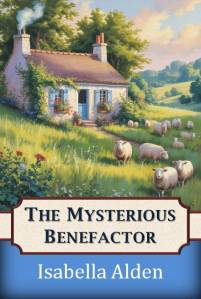
This month’s free read is one of those short stories. “The Mysterious Benefactor” is set in France and tells the story of a wealthy Parisian lady who embarks upon a tour of the French countryside where she comes upon a family in need.
Famous opera singer Madame de G— anonymously embarks upon a tour of the French countryside to find rest and peace from the demands of her notoriety. But when she comes upon a family in need, she feels compelled to help them. Can she do so without revealing her true identity?
You can read “The Mysterious Benefactor” for free!
One of Isabella’s fondest memories was from a time when she was very young and her father taught her about “due bills.” (You can read more about that here.) Isabella’s father used that unremarkable, every-day event to teach Isabella a lesson she would never forget about the power of prayer.
Isabella’s friend, Theodosia Toll Foster (a teacher by profession) also used common incidents to reinforce lessons. Her children’s short story “Up in Mrs. Kelsey’s Attic” (which she wrote under the pen name “Faye Huntington”) is an example of just such a teachable moment.
When Carrie Kelsey helps her mother clean the attic, she discovers a treasure trove of interesting curiosities, including an old spinning wheel. Little does Carrie know that the history of the long-forgotten spinning wheel will teach her a valuable lesson.
YOU CAN READ “UP IN MRS. KELSEY’S ATTIC” FOR FREE!
Reviews and giveaways for Christian fiction and sweet, clean fiction. Bringing readers information on great stories and connecting authors with their readers.












![Newspaper clipping: The committee in charge of the arrangements make this further announcement: “We desire again to call the attention of all parents, Sunday School workers, and especially all young people, to this unlooked for opportunity to meet and greet Mrs. G. R. Allen [sic], “Pansy.” She is known and loved as the author of such helpful and thrillingly interesting books as “Ester Ried,” “Four Girls at Chautauqua,” “The Hall in the Grove,” “One Commonplace Day,” etc. Her engagement with the State Sunday School Assembly at Ottawa, Kansas, brings her west at this time and we trust that a “crowded house” will show our appreciation of the extra effort she is making to come to Wellington. The other speakers from abroad, and those among us who have kindly agreed to assist in these meetings, will give us a feast of good things. Come everybody and enjoy the feast.](https://isabellaalden.com/wp-content/uploads/2025/06/06-11-05.jpg)






 Isabella Alden