Miss Marion’s Thanksgiving Day

This week, as we approach Thanksgiving, we’re sharing a lovely poem Isabella published in The Pansy magazine in 1886. “Miss Marion’s Thanksgiving Day” is about a wealthy but lonely lady who looks across the hills at the local almshouse and finds her purpose.

MISS MARION’S THANKSGIVING DAY

Two big houses broad and high,
Outlined against an autumn sky.
Set on two hills, the houses stand,
One grim and cheerless, one fair and grand;
One teems with life throughout its walls,
One silent in all its stately halls.
One is of wood, and one of stone,
Each set in broad acres all its own.
One is the almshouse, gaunt and gray,
One the beautiful home of Miss Marion Ray.
Black and white drawing of two hills separated by a road. On top of the left hill is a gaunt two-story wooden building with rows of plain windows. On top of the right hill is a beautiful Victorian-era mansion with turrets and porches, and perfectly landscaped trees and shrubs, surrounded by an iron fence with an ornately scrolled iron gate.
Miss Marion Ray—her kith and kin
All to their rest have entered in.
Now she dwells with servants in lonely state,
In the mansion behind the iron gate.
A lady tall, and sad, and fair,
With a quiet face and a gentle air—
A sweet, worn face, and hair of gray,
Was the lonely lady, Marion Ray.
Sometimes in the night, when all is still,
She has looked at the lights on the other hill,
And wondered much if it were sadder fate
To live in the house with the wooden gate.
But something happened, the other day,
That has stirred the heart of Miss Marion Ray:
A mother went out of the almshouse door,
Went out of it to go back no more;
Went out to be buried under the leaves,
While the wind of November moans and grieves,
And left a wee blossom with eyes of brown,
To the tender mercies of all the town.
Miss Marion has thought of the baby's fate
Till love and pity have grown so great
She has opened her Bible there to see:
"As ye did it to Mine, ye did it to Me;"
And so, on the morn of Thanksgiving Day,
In the early morn, when the sky is gray,
At the almshouse door a carriage stands,
With shining horses in gleaming bands;
And into the eyes of the little child,
The sad-eyed lady looked and smiled.
On the silken shoulder the glittering head,
Then —"I love 'oo, lady," the baby said.
Gathered close to the hungry heart,
The child and the lady never to part—
Carried home to the mansion grand,
The proudest and richest in all the land.
Never a pauper, the lovely child
Into whose face the lady smiled.
"Done to the least it is done to Me."
What grander honor on earth could be?
Oh, a sweet and joyous Thanksgiving Day
Has come to the home of Miss Marion Ray.

The heart of this story—and of so much of Isabella’s work—is the quiet call to charity, the simple act of extending kindness to those in deepest need.

What do you think? Does this poem illustrate Christ’s instruction from Matthew 25:40: “Inasmuch as ye have done it unto one of the least of these my brethren, ye have done it unto me”?

Geography Lessons, Pansy Style

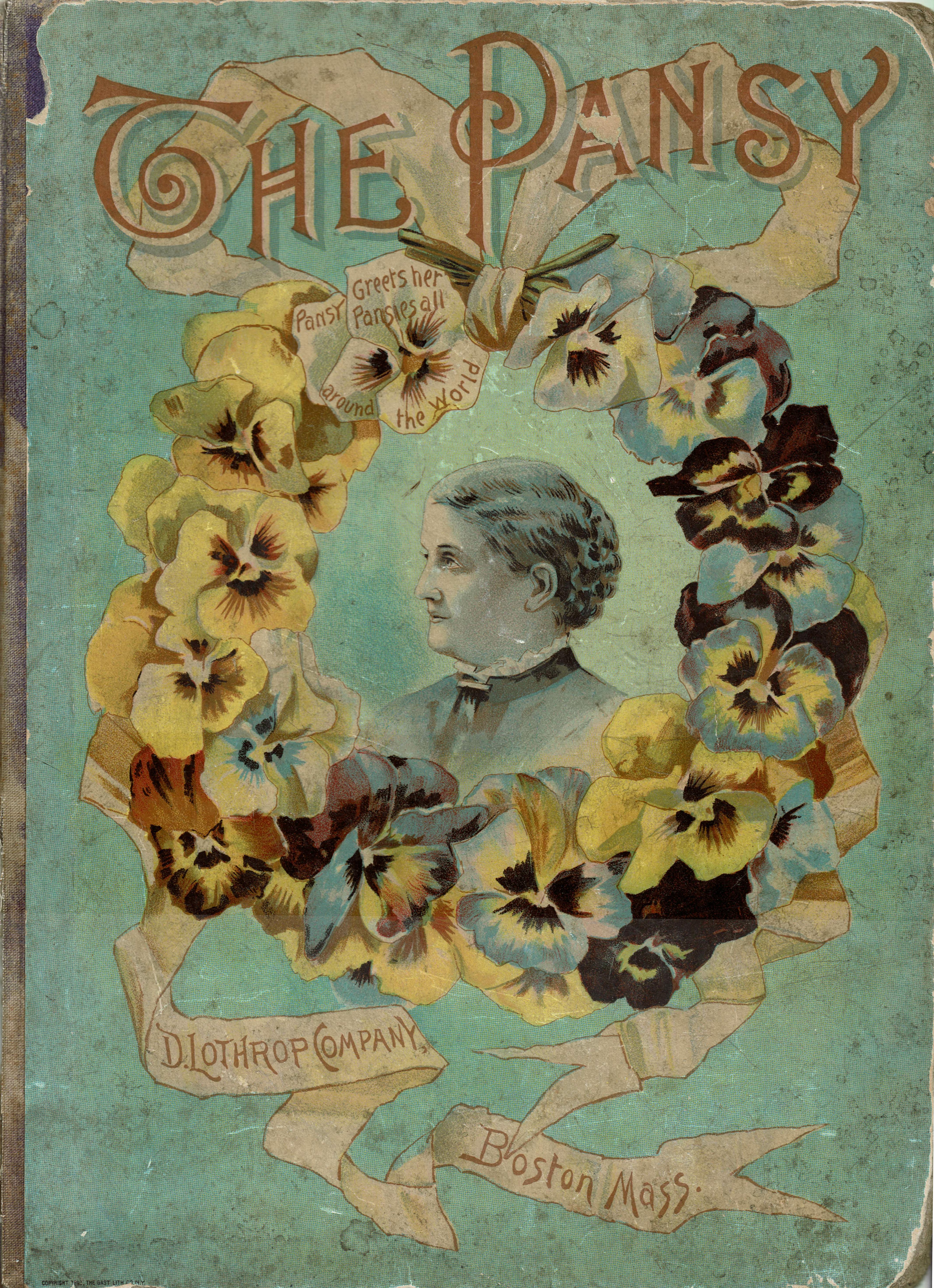
Under Isabella Alden’s tenure as editor, The Pansy magazine went from a monthly children’s magazine to a weekly publication. The content also changed; from the early days of short stories, poems, and Bible lessons, the variety of articles expanded to include lessons in science, nature, and geography.

At the top "The Pansy" is displayed in a classic serif font. Below is a black and white woodcut illustration showing a close up of two birds in a meadow with a caption "A Family Disagreement."
The cover of September 17, 1892 issue of The Pansy magazine

In a regular column devoted to geography, Isabella cleverly turned what could have been a run-of-the-mill travelogue into a fun experience for her readers. Each month she chose a U.S. city as a topic; but instead of writing about the city herself, she invited children who had visited that city to write to her and tell about their trip and the sites they saw. Sometimes the children’s assessments and side-comments were more interesting than their descriptions of the city itself.

For example, when Isabella asked children to write about Minneapolis, Minnesota, she received this response from a boy named Harry Denning:

My uncle is a lawyer and lives in Minneapolis. He says the City Hall is just splendid. It cost three million dollars. Its great tower is three hundred and forty-five feet high, and there are only two others in the United States which can get above that. There isn’t any danger that this building will ever burn up, for it is made fire proof. I wonder why they don’t make all buildings fire proof? Then we would not have to buy engines, and pay firemen, and keep great splendid horses doing nothing all day long but wait for fires. This City Hall which I began to tell you about is three hundred feet square and fills up a great block on four streets. I am going to be a lawyer, and I shall have an office in Minneapolis.

Didn’t Harry have a good idea for building fire-proof buildings? The magazine included this illustration of the Minneapolis City Hall and Court Square:

City Hall and Court Square

Another letter was written by Minnie Andrews:

I have an aunt who is very fond of visiting churches. When she goes to a new place, if it is only a village, she wants to see all the churches and know about them. When she was in Minneapolis first, years ago, it was a little bit of a place, and my aunt is an old lady, and does not read the newspapers much, and did not realize that Minneapolis had grown a great deal. She went there last spring to visit a nephew. She reached there in the night, and was taken in a carriage to her nephew’s house, and did not realize the changes at all. The next morning at breakfast, when her nephew asked her what she would like to see in the city, she said she would like to visit the different churches if she could, and that perhaps as the day was pleasant they could go that morning.

“Very well,” said her nephew; “to which ones shall we go?”

“Oh, to all of them,” answered my aunt; “we can take a few minutes for each and see them all this forenoon, can we not?”

“Certainly,” said her nephew; “just as well as not. There are only about a hundred and sixty, I believe.”

And that was the first time my aunt knew that she was in a big city instead of the little town she had left thirty years or so before. But I don’t think her nephew was very polite to an old lady. She saw a good many of the churches, among them Dr. Wayland Hoyt’s, which she said she liked the best of all. It is the First Baptist Church of Minneapolis, and cost two hundred thousand dollars. It will seat about fifteen hundred people. I thought the Pansies would like to hear about it.

Perhaps the best part of Minnie’s letter is how caring she was in regard to her aunt’s feelings and how quickly she came to her aunt’s defense.  

Another boy named Thomas Bailey Atwood wrote that when he and his sister visited their uncle in Minneapolis, they went to the Public Library:

It is a very handsome building. They say it cost a good deal—over three hundred thousand dollars. We sat in one of the elegant reading-rooms and read books while our uncle was looking up something in books of reference. There are thousands and thousands of volumes there. The street cars in Minneapolis are all electric. My sister did not like to ride on them when there was a thunderstorm, but I was not afraid. I think I like Minneapolis better than any place I was ever in.

The magazine included this illustration of the city’s impressive public library:

Public Library.

These letters give us a delightful peek into the minds of children from the 1890s. Harry’s practical question about fire-proof buildings, Minnie’s fierce defense of her aunt, Thomas’s brave stance on riding electric streetcars during thunderstorms—each letter reveals not just facts about Minneapolis, but the personalities of the children writing them.

Every child who wrote to her about a city shared real experiences. Isabella understood that children learn best when they’re engaged and when their own voices are valued. By inviting her young readers to become contributors, she turned geography lessons into something personal and memorable. It’s just one more example of why The Pansy magazine resonated with so many children during Isabella’s years as editor. And it’s no wonder children loved writing to her.

About Auntie May

Isabella was the youngest of six siblings. She had one brother, James, and four sisters. With her sisters she enjoyed a close bond, even though there was a wide range of ages between them. Her eldest sister Elizabeth was a married woman with a home of her own by the time Isabella was fourteen months old.

Her sister Mary married George Heaton when Isabella was a girl of 17. Mary and George moved into a house of their own—one that was so close to Isabella’s family home, that the two properties shared a garden gate.

Mary’s husband George was editor of the town’s newspaper; and it was he who was so impressed by the first story Isabella wrote, that he begged Isabella’s parents to allow him to publish the story in the newspaper. Reluctant at first, they eventually gave their permission, but only if Isabella’s name was not used. Instead, the story was published with the author’s name listed as “Pansy,” thus beginning Isabella’s writing career that would span the next eighty years. (You can read more about Isabella’s first published story here.)

Isabella was in her early thirties when she began editing and writing for The Pansy magazine. The enterprise quickly became a family affair when her sisters, brothers-in-law and friends also began to write articles and stories for the magazine.

Sisters Marcia, Julia and Mary were among those writers, and Mary often chose pets as the focus of her stories. In one story Mary explained to her young readers how she came to adopt a sweet little kitten:

“I live in a part of the country that is blessed with cats. I never saw so many gathered in one place before in my life — gray cats and yellow cats, cats with tails and cats without tails, and kittens without number. One day I took pity on a poor little hungry kitty, and set her out a basin of milk. In less than five minutes there were nine kittens, all with their heads in that basin. One late comer could not get into the ring, so she climbed on the backs of the others, and reaching down got her little red tongue into the dish. I said last week that I would adopt one of the orphans, so I kept her in the house all day, and fed and played with her; but at night I let her out. When we came downstairs in the morning there she was waiting at the door for admittance, but she had brought four others with her! She has seemed, however, to settle down, and decide that she belongs; she stays in the house with me all the time, and the others scamper in when they can get a chance, and out again.”

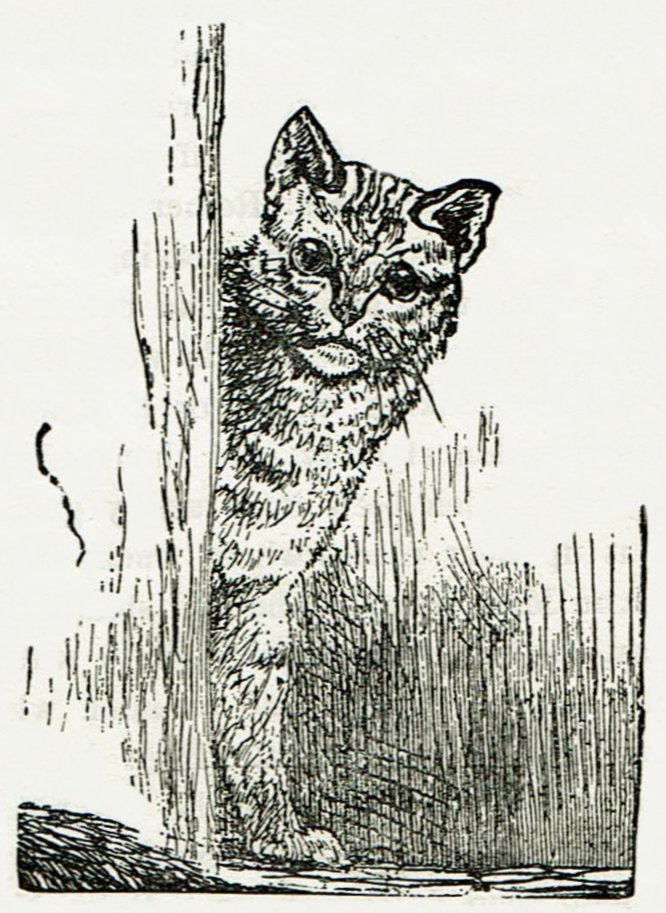
Black and white drawing of a cat outside in the tall grass peeking around the corner of a building.
Illustration from Mary’s story in an 1893 issue of The Pansy magazine.

In another issue of the magazine, she wrote about her new parrots:

“I have named the large one Billy, and the small one Polly. They are very happy together. Every afternoon Billy will spend an hour in petting and dressing Polly. He will oil her feathers, and scratch her head; then he will hold his head down, and try to make her fix him, but she can’t take time. She will just give him two or three little pecks, and then be intent on eating her supper, or playing with a stick, or bit of paper. Whenever she screams, Billy will say, ‘Shut up, Polly; shut up!'”

Black and white drawing of a little girl feeding a morsel to a bird in a cage.
Illustration from Mary’s story in an 1888 issue of The Pansy magazine.

Mary gauged her reading audience to a nicety—don’t all children love to read about friendly kittens and talking birds?

Over the years Mary occasionally wrote more stories for The Pansy under the pen name “Auntie May.”

When Isabella retired from editing the magazine, and her husband retired from the ministry, they moved to Palo Alto, California to be close to their son Raymond and his family. Isabella’s sister Julia, who had never married, also lived with them; so when Mary’s second husband died unexpectedly, Isabella invited her to join them in their spacious California home.

So at the age of 76, Mary packed her belongings and set off across the country to live with Julia, Isabella, and the rest of the Aldens in sunny California. (You can click here to read about the house they all lived in together). She soon found herself happily sharing a home with Isabella’s young grandchildren.

Black and white photo of an elderly woman in her 80s, seated in a chair. On her lap she holds a baby and beside her stands a little girl about 3 years old.
Mary, age 88 in 1914, with two of Isabella’s grandchildren.

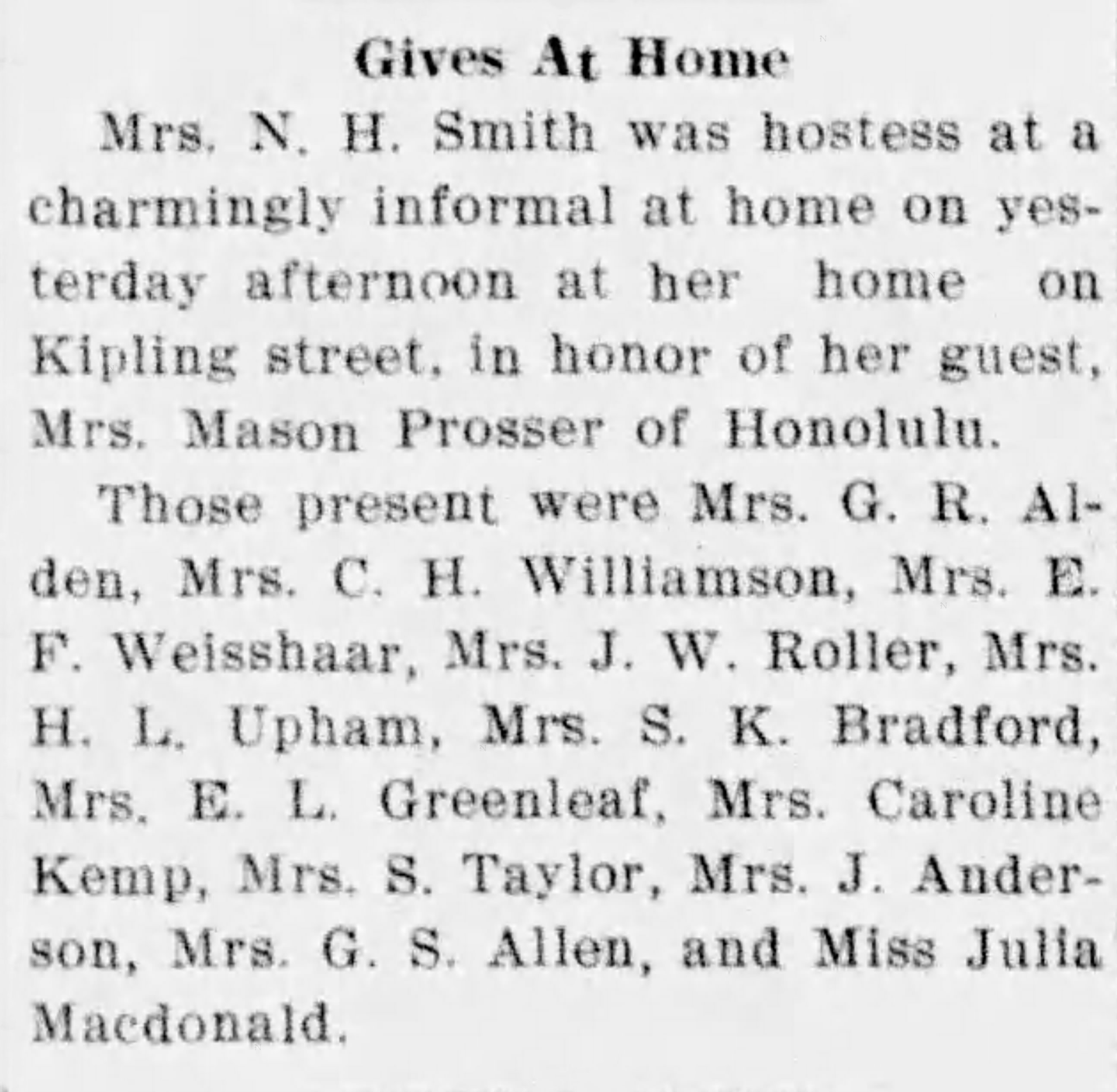
And she quickly joined the Alden’s church and began attending social events with Isabella and Julia. The local newspaper gave this brief account of their attendance at a ladies’ “at home.” (Isabella is listed as Mrs. Alden, Mary as Mrs. Williamson, and Julia as Miss Macdonald.)

Gives At Home. Mrs. N. H. Smith was hostess at a charmingly informal at home on yesterday afternoon at her home on Kipling street, in honor of her guest, Mrs. Mason Prosser of Honolulu. those present were Mrs. G. R. Alden, Mrs. C. H. Williamson, Mrs. E. F. Weisshaar, Mrs. J. W. Roller, Mrs. H. L. Upham, Mrs. S. K. Bradford, Mrs. E. L. Greenleaf, Mrs. Caroline Kemp, Mrs. S. Taylor, Mrs. J. Anderson, Mrs. G. S. Allen, and Miss Julia Macdonald.

No matter their age difference, there seemed to be a close camaraderie and tightly-knit bond between the Macdonald sisters, and Isabella was grateful for the time she had with her sisters in their later years. She wrote:

“I took the very best care I could of my sister Mary for eleven years, and was close beside her when she ceased to breathe. I had the comfort and companionship of my sister Julia for fifty years and knelt beside her bedside when she was called Home.”

It was probably difficult at times for Isabella when she recalled that she was the last member of the family—that her husband and son, brother and sisters, mother and father had all gone on before her to their heavenly home. But as she neared the end of her own life, Isabella wrote to her niece Grace:

“But isn’t it blessed to realize that one by one we shall all gather Home at last to go no more out forever! The hours between me and my call to come Home grow daily less.”

The bond between the Macdonald sisters—Elizabeth, Mary, Julia, Marcia, and Isabella—helped shape Isabella’s entire life. From childhood through old age, through marriages and widowhood, through writing careers and quiet domesticity, the sisters were loving constants in each other’s lives. Their shared faith and genuine affection for one another provided Isabella with both comfort and inspiration. Perhaps the sister relationships that fill Isabella’s novels—tender, loyal, challenging, but always enduring—reflected the very real treasure she found in her own family bonds.

A Letter to the Pansy Society

In previous posts we’ve talked about the great number of letters Isabella received on a regular basis from parents and children. She made a point of answering each of them, and one of the innovative methods Isabella used to keep up with the demand was to print her replies to their letters in The Pansy magazine.

The Pansy was a weekly publication she edited, with stories, poems, Bible verses for children of all ages. In almost every issue of the magazine, Isabella encouraged her young readers to join The Pansy Society, and pledge to overcome their faults, “in Jesus’ name.”

Here’s an example from an 1883 issue of The Pansy where she encouraged Pansy Society members to continue their good deeds, and charmingly replied to children who wrote to tell her of their progress.

DEAR PANSY SOCIETY:

My thoughts toward you this summer day — my good wishes and my hopes. Do you know where the book is that holds them? It is a wide-open book. I did not write it, and yet, the thoughts and pictures it holds just express what I would like to say to you.

Open your eyes and look above, beneath, around, and see if you cannot guess my riddle.

Does not the blue sky bend in blessing over you? the trees rustle out soft, loving words? the little birds sing “cheer up, cheer up?” The clear brook, gurgling over the stones, says “be true.” The buzzing bee says “be busy.” The daisies smile up into your faces, saying “be glad, be glad,” and the white lily bell re-echoes God’s own word, “be pure.” Then the rare fragrance from mountain-top and tree and flower floating all about you this sweet day— could it say anything but, “I love you, I love you, I love you”?

And these are my thoughts toward you; these too are God’s thoughts about you, written clear and plain in the book his own hands have made.

In the springtime just passed I presume many of you have made gardens and now have lovely blossoms as rewards.

Some of our boys and girls have been hard at work sowing pansy seeds; not those royal velvet or creamy white pansies, alone —they may have sown those, too —but I am talking now about our magazine.

Among those who have done faithful work in this way, is Fanny, a little Indiana girl. When those Western girls take hold of a thing they do it with their own souls.

Some new members have come into the Society; let me introduce them. Here are two little city boys, Eddie and Bertie. They both want to be “better boys.” They can, if they go and whisper that wish to Jesus.

Here is Maggie, a little Maryland girl, Maude, too, from Maryland. She writes a plain, clear hand. May her life be as free from faults.

Bessie sends us a pretty letter three inches square, very small, but holding more and better things than we’ve sometimes found in a whole sheet of foolscap. May the dear Lord help Bessie to be a true disciple of his. We are glad to welcome her to the Pansy Society.

Then there are Willie Porter, Claire Colman, Mabel and Lena and Addie; a little Pansy by the name of Lulu in Wisconsin, and Clarence Lathrop.

Minnie is working hard to put her “bonnet and books” in their place. If she keeps on she will someday be an orderly housekeeper, and maybe some of the Pansies will go and take tea with her. Won’t that be nice?

Lillie’s teacher says she is improving. Good news!

“Speaking back” has annoyed a certain little fellow in Philadelphia by the name of Jamie. But he “has made up his mind” to drop it. Stick to that, my dear boy. Remember, too, that if you must speak back, “a soft answer turneth away wrath.”

How many Pansies, I wonder, say to their tired mothers, “wait a minute,” and want their own way every time? Amy thinks them very bad habits and proposes to have no more to do with them; that is good.

But I really must stop, so good-by.

Lovingly,
Pansy.

How exciting it must have been for a child to see their name in print in their favorite magazine! Do you think Isabella’s brief words of encouragement helped the children in their daily struggles to conquer their faults, “for Jesus’ sake”?

You can read more about the letters Isabella received in these posts:

Fan Mail and Ester Ried
Pansy’s Typical Day
A Summer Poem
A Letter from Ida White
Pansy’s Letter-Box
The Pansy Society

Isabella’s Favorite Author: Elizabeth Barrett Browning

Isabella was a great reader and regularly read a variety of magazines, books, and newspapers. She enjoyed fiction, poetry, and biographies, and in the evenings, when her day’s work was done, she often read aloud to her family; she even read aloud in a Scottish brogue or other accents, depending on the characters in the book she was reading!

Being a teacher at heart, it’s not surprising Isabella would want to share her favorite stories and authors with the young subscribers of the magazine she edited, The Pansy. Several times she shared poems by one of her favorite writers, Elizabeth Barrett Browning.

Elizabeth Barrett Browning (Wiki Commons)

She frankly admitted that some people found Mrs. Browning’s poems too difficult for young people to understand or enjoy. “It is true that many, especially of her longer works, require a good deal of study, and were written for older readers” she wrote. But Isabella encouraged her young readers to try, and recommended Mrs. Browning’s “The Poet and The Bird” and “The Cry of the Children,” because they had always been favorites of hers.

In another issue of The Pansy, Isabella printed portions of Barrett’s poem “Aurora Leigh,” along with this illustration of the title character.

In 1892 she published a biography of Elizabeth Barrett Browning in The Pansy for her young readers, and it’s apparent that she admired Mrs. Browning a great deal. In the biography, Isabella tells the story of how Elizabeth was injured in a fall from her horse because she was over-eager “to do the thing she wanted to do, the moment she wanted it, and not wait for anybody.” Perhaps Isabella felt Elizabeth was a bit of a kindred spirit, because in her younger years Isabella was also impatient and had a tendency to want her own way.

She ended her biography by hinting at the admiration she had for Mrs. Browning, saying, “I have told you very little about the sweet, strong poet whose writings I hope you will learn to know and love. All I hoped to do was to introduce her and get you interested.”

You can read Isabella’s biography of Elizabeth Barrett Browning by clicking here. Please note that near the end of the biography, Isabella references an illustration for Browning’s poem “Mother and Poet,” but the illustration did not, in fact, appear in The Pansy magazine.

What do you think of Isabella’s choice of Elizabeth Barrett Browning as one of her favorite poets? Have you ever read any of Mrs. Browning’s poems? Do you share Isabella’s appreciation for her work?

A Summer Poem

As editor of The Pansy magazine, Isabella Alden received a lot of mail. Some of it was business related; some letters were from adults or from parents of children who were influenced by her books. But the majority of correspondence she received was from the children who read The Pansy magazine.

Children wrote to Isabella for all sorts of reasons. They asked her for advice, and told her what they wanted to be when they grew up. They wrote to tell her about the kindnesses they did for others in Jesus’ name, and how well they took care of their pets. Just about anything one friend might tell another friend, they told Isabella.

Some of the things children shared in their letters, wound up in the pages of The Pansy. When Isabella began publishing acrostic puzzles each month in the magazine, her young readers made up acrostics of their own and sent them in, hoping to see them published someday in the magazine. And some of them were!

Others children sent stories, essays about their travels, and poems. Isabella read them all and selected the best to publish.

In 1887 Isabella published this sweet poem that captures the essence of the summer season. It was written by fifteen-year-old Mollie Gerrish.

Wandering in the meadows,
Playing in the woodlands,
Clambering o’er the hilltops
In the summer sun,
With the little squirrels
Chasing one another—
Truly it is summer
That brings the children fun.

Summer at the seaside,
Summer in the mountains,
Summer in the country,
Summer everywhere;
How the people hasten
Soon as summer cometh,
Going far away
From city’s bustling cares.

Yes, it’s truly summer
That brings the happiest pastimes,
Though sometimes dark clouds
O’ercast the lovely sun.
But soon vacation’s ended,
And all return to duties,
For the autumn dawns upon us,
And our pleasant summer’s gone.

Mollie Gerrish

A Kiss at Chautauqua

The 2025 Chautauqua Institution officially opens on June 21. Much has changed at the institution in the last 151 years, but thanks to Isabella Alden and her contemporaries, we can piece together what it was like to spend a summer at Chautauqua in its early days.

Before there were cottages and meeting halls, Isabella and her family spent their summers sitting on rough wooden benches as they listened to lectures in the open air, and sleeping under the stars or in tents.

The photo below was taken about 1876, which was the second year of Chautauqua’s existence. Isabella was only thirty-five years old, but she was already quite famous.

She was the best-selling author of over a dozen novels, including the first four books of her “Ester Ried” series. And The Pansy magazine was in its third year of publication, with Isabella as editor and chief contributor of stories and articles.

In those early years The Pansy magazine was sent every month (it later became a weekly magazine) to thousands of children. Isabella called each of her young subscribers her “Pansies.”

While at Chautauqua one day that summer of 1876, Isabella was walking through the grove, which was one of her favorite spots at Chautauqua. She wrote:

Chautauqua is so beautiful this year. Don’t you know, I met today one of the little Pansies! As I was walking through the grove, there came a sweet-faced little girl to me, and she said in a low, sweet voice:

“If you please, I live in Ohio, and I’m going home today, and I’d like so very much to kiss you, then I could tell all the little girls that I kissed Pansy.”

You may be sure that I gave her the very warmest kiss I had, and told her to tell all her little Pansy friends that part of the kiss was for them.

A ladies’ magazine once printed an article about Isabella and commented that one of the strongest and most attractive elements of her character was her humility in regard to the great good she accomplished through her writing. But in truth, she was keenly aware of the power she had over her readers, and she always used that power to help them come to know and love the Lord Jesus Christ. Just think of the story the little girl in the grove told to her friends back in Ohio! How many of her little friends do you think were influenced to know and love Jesus, all because of Isabella’s kindness to a child and that one little kiss?

Things Some People Regret

In 1891 when Isabella Alden was the editor of The Pansy magazine, she took up a very special project on behalf of her readers.

She wrote to several prominent Christian leaders and asked them to share the one thing they wished they had done, or not done, or managed differently in their lives.

Banner that reads "Things Some People Regret" in an old-fashioned Victorian type. Beside the text is a single pink rose.

Quite a few of the replies she received were from well-respected ministers who had regrets about their early Christian life. Here are a few:

“I regret that in my boyhood I did not read the Bible more, and did not memorize a greater number of its most precious promises.”

E. Hez Swem
Pastor, Second Baptist Church, Washington D. C
.

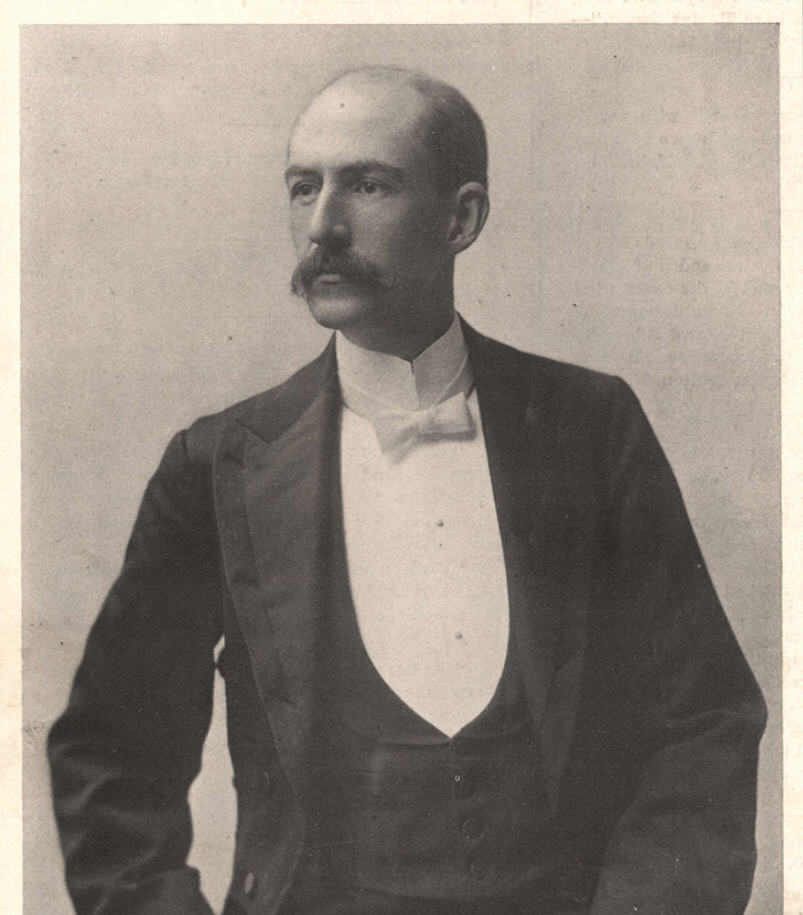
Old black and white portrait photograph from about 1890 of a middle-aged man. He is balding and his hair is closely cut. He wears a dark suit with a vest, white shirt with a high collar, and a white bow-tie.
Pastor E. Hez Swem

“My most painful regret in regard to my early life is, that I did not become a member of the Church before my mother died, that she might have carried into eternity the comfortable knowledge of the fact that her only child was on the Lord’s side, a thing she greatly desired. It was simply postponing my public profession; and she died without the sight!”

Charles F. Deems
Pastor of the Church of the Strangers, New York, New York

“There is nothing in my life that I regret so frequently and so deeply, as that I was not a more earnest and active Christian during the years of my college life. A professed Christian when I entered the institution, though without a thought of the ministry of Christ, my life was largely one of spiritual idleness. It was in the future that I hoped to serve my Master. Present opportunities were neglected.”

Rev. Henry Darling, D. D.
President of Hamilton College

Old black and white portrait photograph from about 1890 of an older man. He is clean shaven and his wavy hair is white or grey and arranged neatly. He wears a dark suit with a white shirt and high collar, and a dark bow-tie.
Rev. Henry Darling

Some of the responses were about not making the most about the time they were given:

“I look back over my life and feel as if I had walked like one with a string of priceless pearls in his hand, and the cord had been carelessly broken, and they had slipped off one by one as I walked, and were forever lost. Only the days are so much more precious than pearls!”

J. H. Ecob, D.D.
Pastor Second Presbyterian Church, Albany, New York

“The great regret of my life is my failure to realize the value of life till the larger part of it has slipped away. I have always been what might be called “a busy man,” but the thing which troubles me is, that I have for the most part been busy with trifles, and have trifled so much with life’s real business.”

P. S. Henson
Pastor, Baptist Church, Chicago, Illinois

A few wrote about not recognizing the value of opportunities they let pass:

“I greatly regret an early want of thoroughness. I was too willing, in my early days, to let a hard thing balk me. Such an enemy of early unthoroughness has been in my late days a miserable and plaguing nuisance.”

Rev. Wayland Hoyt
Pastor, Baptist Church, Minneapolis, Minnesota

 “I regret having failed to understand the value of such accomplishments as may be gained along with a more substantial education. For instance, I do not know music, so useful to a pastor, as well as so important to a father as an aid to making his home pleasant to his children. I might easily have gotten it in spare hours at any time before entering my profession; but now there are no spare hours! This is only one of several things that I once underestimated, but whose value I now see very clearly.”

Dr. Teunis S. Hamlin
Pastor of President William Henry Harrison
Pastor, Church of the Covenant, Washington, D. C
.

Old black and white portrait photograph from about 1890 of a man in his thirties or forties. His hair is closely cut and he wears a neatly trimmed beard and mustache. He wears a dark colored suit with a white shirt and white tie.
Dr. Teunis S. Hamlin

Isabella and her husband were close friends with Rev. George Hays, who wrote the next “regret.” She noted that despite Rev. Hays’ many plans for his life, he was instead “led, as a child, by his Father’s hand.”

“The number of foolish ambitions that entered my head when young was large. The hard work done to fit myself for places from which God’s good providence saved me, is not any part of my regrets. Not one of the positions I wanted did I ever get.”

Rev. George P. Hays, D.D., LL.D.
Pastor Second Presbyterian Church, Kansas City, Missouri

Some “regrets,” like this one, were about showing kindness to others:

“I regret that I have not better acquired the art of pleasantly acknowledging the kindnesses shown me, and of showing my appreciation of people whom I really do appreciate. My influence with many would be greatly increased if I could but make them understand how warmly my heart goes out to them.”

Dr. William J. Beecher
Professor of Hebrew in Auburn Theological Seminary

Old black and white portrait photograph from about 1890 of an older man. His hair is closely cut and he wears a beard, but no mustache. The top button of his suit coat is right below his neck. Beneath it he wears a white shirt with a high collar that covers his neck, and a necktie arranged with a large knot.
Dr. William J. Beecher

Last, but not least, is a letter Isabella received and almost didn’t share, because she didn’t want it to appear she was praising her very own magazine:

“The greatest regret that I have for lost opportunities in my youth is that I did not have the benefit of such magazines as The Pansy. No amount of reading in after years can make up for this serious loss in youth. I feel this so keenly that I seek every opportunity in my lectures and writings to impress upon parents the necessity of feeding the minds as carefully as they are wont to feed the bodies of the young immortals entrusted to their care. So I thank God for The Pansy, which has such a sweet, tender, yet strong way of putting thoughts into the heads and hearts of the young people.”

Helen M. Gougar
Attorney, newspaper journalist, and women’s rights advocate

Old black and white portrait photograph from about 1890 of an older woman. Her hair is white and is styled in a loose arrangement at the top of her head. She wears a dark dress with a high collar that fastens down the front. In between fastenings she has inserted a few flowers.
Helen M. Gougar

There are many adults today who will agree with Mrs. Gougar!

WHAT DO YOU THINK OF THE REGRETS THESE CHRISTIAN LEADERS SHARED?

WHAT REGRETS WOULD YOU ADD TO THIS LIST?

Why?

As a teacher and a parent, Isabella must have often found herself from time to time on the receiving end of a child’s relentless “Why?” questions. She probably understood that asking “Why?” is an important part of a young child’s learning process, and that it’s more than just a question; it’s a peek inside their busy minds, showing their natural drive to understand the world around them.

In many of the articles she wrote for The Pansy magazine, Isabella demonstrated how astute (and patient) she was in answering the many “Why?” questions she received from her young readers.

In 1891 she published this article that addressed children’s “Why?” questions about Easter:


“Why do people use eggs at Easter?”

“Why do they call a certain day in the spring Easter?”

“Why do Easter cards so often have pictures of butterflies on them?”

Let me see if I can answer your questions. Let me begin in the middle: “Why do they call a certain day in the spring ‘Easter’?”

Away back in the days when people had a great deal to do with imaginary “gods” and “goddesses,” there was one named “Ostara,” who was called the goddess of the spring; our fourth month of the year was set apart for her special service, and called “Eostur-monath,” or “Easter month.”

The heathen festivals in honor of Ostara were times of great rejoicing. The people were so glad that the season for the resurrection of flowers and vines and plants had come again, that they built great bonfires, and with wild shouts and many strange customs, showed their joy. They called it the “awaking of nature from the death of winter.”

An old greeting card showing a bird and her nest of four eggs in a cherry blossom tree. The caption reads, "Easter Greeting. May sweet Hope, the hope of Eastertide, In your heart for evermore abide."

After many years it became the custom for Christians to choose the same time of year for their festival in honor of the “awaking of Jesus from the death of sleep.” So that “Easter” today means to Christians the glad day when Jesus Christ arose from the grave.

Illustration of a wooden cross with cherry blossoms twined around it and a butterfly resting on one of the flowers. The caption reads, "He is Risen."

Now for the second question:

“Why do people use eggs at Easter?”

That is an old, old thought handed down to us. When the festival was held entirely in honor of the return of spring, eggs seemed to be used as symbols of life. As from the apparently dead egg life sprang forth, after the mother hen had brooded over it for awhile, so from the apparently dead earth the life of nature started forth anew. This was the thought.

An old greeting card with an illustration of a chick just hatched as it stares down into half of its  former egg shell while the other half is on his back.. Nearby are two brightly dyed pink and red Easter eggs and a small bouquet of blue flowers. A caption reads "Easter Greetings."

The Persians used the brightly-colored eggs as New Year presents in honor of the birth of the solar year, which, you know, is in March!

Illustration of a basket of Easter eggs brightly colored in pink, white, yellow and blue. Behind them is a green glass vase holding an arrangement of white  daisies with bright yellow centers.

Christian people have held to the same symbol to represent their faith in the life after death. And in this connection I can best answer that third question about “butterflies.”

Did you ever watch a slow-crawling caterpillar with his awkward, woolly body and sluggish ways, and wonder how it was possible that such a creature could change into the brilliant butterfly, whose swift, graceful circlings through the air charm all eyes? If you have, I think you have answered your own question. Where could we find in nature a better symbol of the wonderful difference between these slow-moving, easily stopped, rather troublesome bodies of ours, and the glorious bodies promised us some day?

Illustration of a group of four children frolicking on a grassy hill. Three of the children pick wild flowers while a fourth reaches up to touch one of four butterflies hovering near them. Nearby a white rabbit sits beside some colored Easter eggs and in the background white sheep and lambs feed on the grass. A caption reads "Loving Greetings and best wishes for a Happy Easter."

More than that, when the caterpillar weaves a coffin for himself and shuts himself into silence and immovableness, does it not seem as though his life was ended? Haven’t you had some such thought when you stood beside an open grave? How still and cold and utterly lifeless the body is which is being placed therein. Is it possible that it can live again?

Illustration of three butterflies hovering near a vase of white and pink roses. Beside them a poem reads "Fair Days. Joy fill your heart, and gladness your days, with content never part, through life's varied ways."

“Oh, yes!” says the butterfly. “Look at me; I was a worm, and I crawled away and the children thought me dead. See me now! If God so clothe the worms of the dust, shall he not much more clothe you, O, ye of little faith?”

Almost as plainly as though he had a tongue, the bright-winged butterfly speaks to me.

Illustration showing three butterflies with their orange, yellow, and black wings spread. Beside them reads "He hath made every thing beautiful in his time."

A better emblem than the egg, I think it is, of the wonders of resurrection; but the egg is the universal emblem. Nearly all nations, and all classes of people, think a great deal about Easter eggs, and spend much time in making them beautiful. Isn’t it a grand thought that such simple, every-day objects are able to remind us of the glory which is to come to those who “love His appearing.”

Pansy.


What do you think of Isabella’s answers to the children’s “Why?” questions about Easter?

What is the most memorable “Why?” question a child ever asked you, and how did you answer?

Kind Hearts

In 1876 Isabella was firmly established in her new role as editor of The Pansy magazine, although the entire enterprise was a family affair. Isabella’s husband, sister, brother-in-law, and friends all contributed articles and stories to each issue of the magazine.

Isabella’s husband, the Rev. G. R. “Ross” Alden, wrote Bible study lessons, stories, and poems for the magazine. His talent was creating lovely rhymes with messages that were meaningful for both children and adults.

Here’s one of Rev. Alden’s poems that expertly blends a message on kindness with a celebration of the first day of spring:

Image of a basket overflowing with gold, white and purple pansy flowers. Below is a poem titled "Kind Hearts."
Kind hearts are the gardens,
Kind thoughts are the roots,
Kind words are the blossoms,
Kind deeds are the fruits;
Love is the sweet sunshine
That warms into life,
For only in darkness
Grow hatred and strife.


You can read more of Rev. Alden’s poems in these previous posts:

Welcome, April!

September

Two of Us