
Isabella Alden’s novel Ester Ried, Asleep and Awake opens with a memorable scene: Ester Ried—barely eighteen years old—finds herself with much more responsibility than a girl of her age should have. With an ill mother, four younger siblings, and several boarders to care for and feed, she is often pressed for time, thin on patience, and struggling to keep up with a never-ending list of things to do.
Much of her time is spent in the kitchen cooking, washing dishes, and supervising laundry; and on scorching summer days, the heat from the wood stove makes the entire room even hotter, so her cheeks were always in a state of “glowing.”
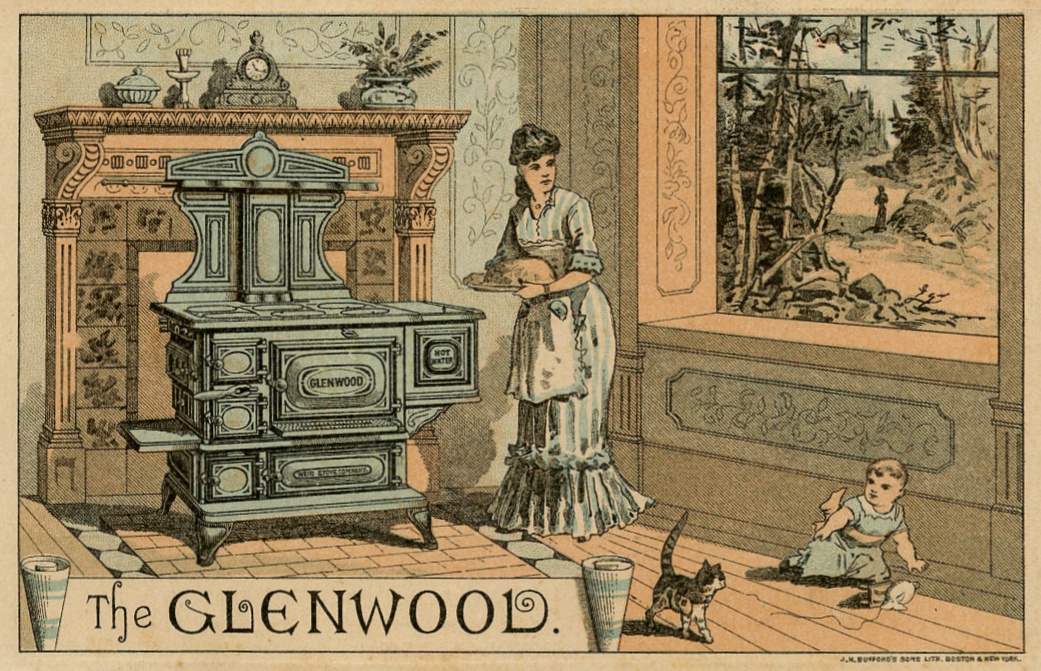
When Ester Ried was published in 1870, kitchen stoves were large, cast-iron pieces of furniture; and while their primary function was for cooking, stoves also served as essential elements of a home’s heating system. In winter a wood-burning stove helped keep the house warm and cozy. In summer, the same stove could make a kitchen unbearably hot.
Isabella’s readers could identify with Ester Ried’s plight. Isabella, too, must have had more than her share of summer days spent “glowing” in an overheated kitchen while she cooked her family’s meals, heated water for bathing, and tended to a litany of household tasks.

So in 1880, when a new type of cooking stove—the gasoline stove—appeared on the market, Isabella took notice.
Unlike traditional wood-burning stoves that required constant monitoring of logs, flues, and dampers to manage the temperature, gasoline stoves offered a revolutionary level of control. They worked much like a kerosene lamp: a cloth wick pulled the gasoline up to the burner where it turned into a gas, creating a steady, hot blue flame.

By simply turning a knob to adjust the wick, a woman could make her cooking and baking incredibly precise. Best of all, because they didn’t radiate intense ambient heat like massive cast-iron wood stoves, they spared homemakers from suffering in a sweltering kitchen.
In 1880 Isabella wrote about a young wife and mother who learned about the advantages of a gasoline stove in a short story titled, “Faith and Gasoline.”

Summer heat and money troubles force Faith Vincent to face the heartbreaking prospect of being separated from her husband for the entire summer—until a neighbor’s wisdom, a clever “gasoline stove,” and a good amount of prayer help Faith secretly transform her despair into a promising future for herself and her family.
YOU CAN READ “FAITH AND GASOLINE” FOR FREE!
Click here to download “Faith and Gasoline” from BookFunnel.com, then read it on your computer, phone, tablet, Kindle, or other electronic reading device.
Or you can select BookFunnel’s “email” option to receive an email with a PDF version you can read, print, and share with friends.

 Isabella Alden