Blog

Daisy Bryant’s New Doll

In Miss Dee Dunmore Bryant, little Daisy Bryant knows she won’t receive any Christmas gifts because her family is too poor. As much as Daisy would love to have a new doll of her own, she knows she won’t get one. But certainly, there are more fortunate little girls in the world who will get a new doll for Christmas and, perhaps, if one of those little girls names her new doll after Daisy, it just might take the sting out of a Christmas with no presents.

So Daisy writes a letter to the newspaper, and humbly asks that little girls who receive new dolls on Christmas morning consider naming their new doll Daisy Isabelle Bryant. When the newspaper prints Daisy’s letter, wonderful things begin to happen and soon Daisy has more beautiful new dolls than she knows what to do with.

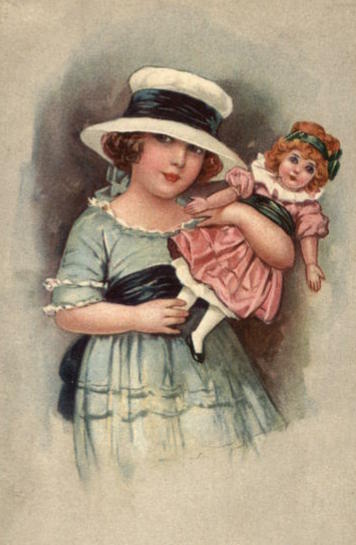
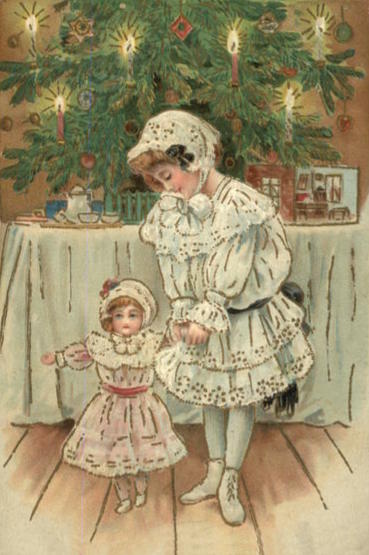
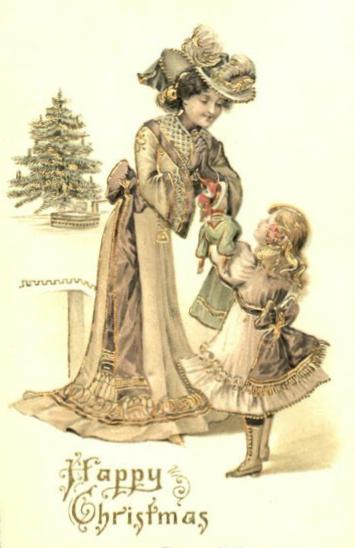
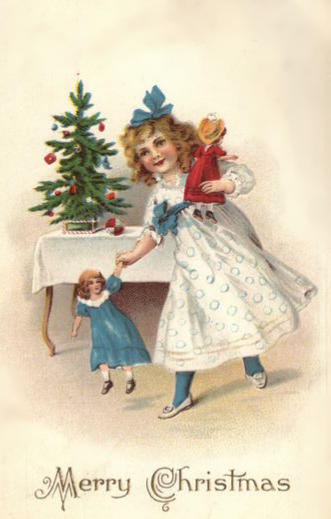
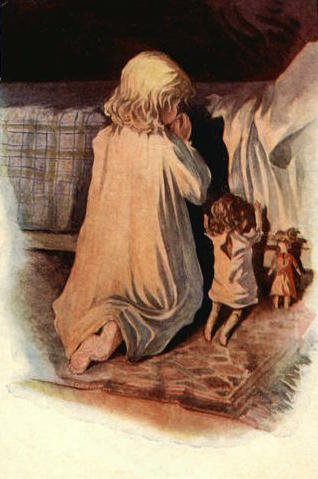
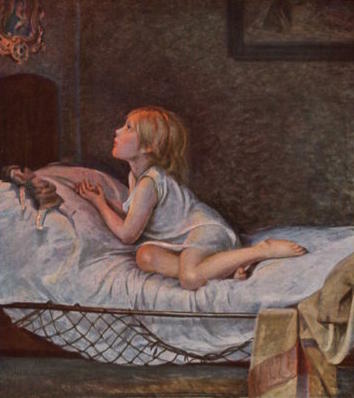
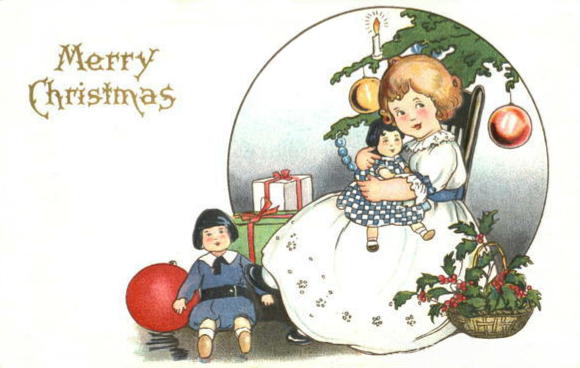
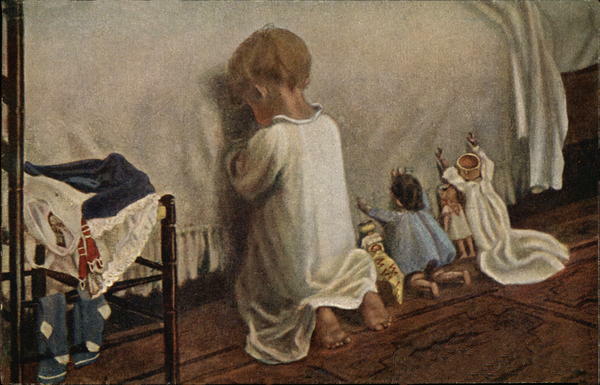
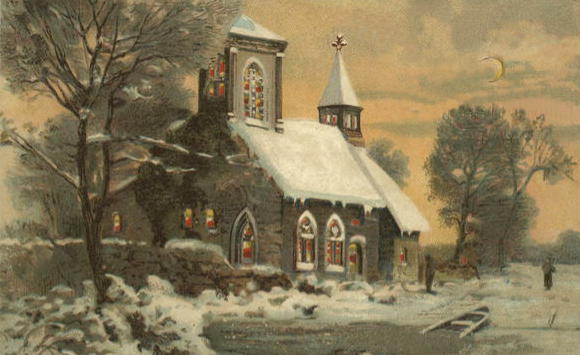
Here is a collection of Victorian-era Christmas cards featuring little girls and their dolls. Perhaps one of these little girls could have been Daisy Bryant.

Dee Dunmore Bryant_Girl and Doll 2 Edited   Dee Dunmore Bryant_Girl and Doll 3 Edited Dee Dunmore Bryant_Girl and Doll 4 Edited   Dee Dunmore Bryant_Girl and Doll 7 Edited  Dee Dunmore Bryant_Girl and Doll 8 Edited  Dee Dunmore Bryant_Girl and Doll 10 Edited Dee Dunmore Bryant_Girl and Doll 12 Edited    Dee Dunmore Bryant_Girl and Doll 13 Edited Dee Dunmore Bryant_Girl and Doll 14 Edited   Dee Dunmore Bryant_Girl and Doll 15 Edited Dee Dunmore Bryant_Girl and Doll Edited  Dee Dunmore Bryant_Girl and Doll 9 EditedDee Dunmore Bryant_Girl and Doll 5 EditedDee Dunmore Bryant_Girl and Doll 11 Edited Dee Dunmore Bryant_Girl and Doll 6 EditedDee Dunmore Bryant_Mending Day Edited

Glyde’s Sack

In Making Fate, Uncle Anthony whisked Glyde Douglass off to New York for a whirlwind visit. As the youngest of three sisters, Glydes clothes were hand-me-downs and she had to borrow one of her sister’s sacks to wear on the trip.

Although it was clear in the book that a sack was some kind of garment, “sack” is not a fashion term most 21st Century readers recognize. For a good description of a lady’s sack, there’s no better authority than Godey’s Lady’s Book and Magazine, which was a popular women’s publication in the late 1800s.

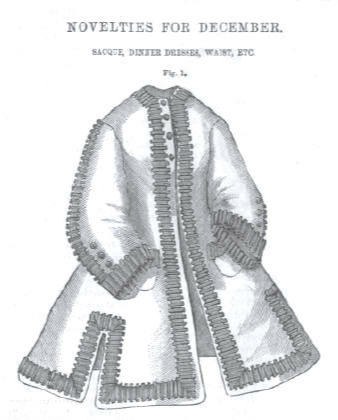
According to Godey’s, a sack (or sacque) was a lady’s overcoat that was in fashion for several decades. Of varying lengths, it was usually hip length or reached to about a woman’s knees. It was sometimes styled to match a specific dress or it was made up in a neutral color so it could be worn over a variety of dresses.

The December 1853 issue of Godey’s Lady’s Book and Magazine featured this stylish sack:

Sack 3 Godeys December 1853 edited

Fall or winter sacque. This style of wrap is very pretty for misses.
It can be made of silk, or of any kind of cloth. It is trimmed with
a ruching of velvet, silk, or cloth, either of the same shade as the
material or darker. The latter has the more stylish appearance.
 

The June, 1863 issue of Godey’s included this drawing and description under the banner, “The Latest Style”:

Sack 2 Godeys June 1863 edited

Another pretty robe dress, with sack to match, very
suitable for traveling. This style of dress is to be had in
percales of neutral tints, and in wool goods, such
as taffetas and alpacas.
 

The May 1863 issue featured this description for a new sack design:

Sack Godeys May 1863 Detail edited

A very stylish morning costume for a watering-place. It is
made of white alpaca with one box-plaited flounce bound
with black on the edge of the skirt. Above the flounce is a 
lace-like embroidery, and three rows of black velvet. A
short sack is cut to the figure, but not fitting closely,
is worn over a white muslin waist. 
 

During their stay in New York, Uncle Anthony took Glyde on a wonderful shopping spree, purchasing many things for her, including a new sack in the latest style:

It was one of the newest styles, fine and heavy, and beautifully trimmed, yet simple enough for a girl of the most refined tastes. The quick eye of the saleswoman had caught the right size, and the garment fitted as though made to order.

“It suits me exactly,” Uncle Anthony announced, in his most complacent tone. “Your Aunt Estelle used to wear one very much like it. Go over to the mirror, little girl, and see what you think. If it pleases you as much as it does me, we will call it a bargain.”

No girl could have looked at herself in a full length mirror and caught such a reflection as Glyde did, without being pleased. Her face spoke for her.

“You like it?” said Uncle Anthony. “Glad of it. You may as well keep it on and have the other sent home. It is warmer than that; and this is a pretty cold morning.”

“But, Uncle Anthony,” she said, moving toward him and speaking low. Her appalled eyes had caught sight of the figure marked on the sleeve-card, and she did not know how to make her protest strong enough. “I truly do not need it; my sack which I have at home is warm; warmer than Estelle’s, and I do not mind its being a little old-fashioned; and indeed I cannot think that you know how very expensive this one is.”

“Yes, I do; I know exactly what it costs. You don’t suppose I am foolish enough to buy an article without finding that out the first thing, do you? I call it very reasonable for a garment gotten up in that style; it is well lined, you see, and will outlast three or four like that one you had on. The question is does it suit you as well as anything you see around here?”

“Oh, it could not be lovelier, but—”

“Then we won’t waste time over conjunctions, disjunctive ones at that. Just let the young lady wear it home, will you? And send the other to my hotel with the handkerchief, you know, and other things?”

The sympathetic saleswoman laughed; she had not had such an enjoyable customer in many a day. Her heart was in the entire enterprise. She led the way for Uncle Anthony with such promptness and success that several more bewildering purchases were made by him before he announced himself ready for luncheon.

Doris Farrand’s Vocation

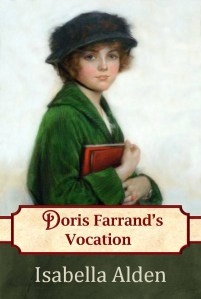
Cover_Doris Farrands Vocation resizedDoris Farrand’s Vocation is now available on Amazon!

How can two walk together except they be agreed?

College student Doris Farrand has her life all planned: She’ll earn her living as a schoolteacher until her boyfriend Richard graduates from seminary school as an ordained minister; then they’ll be married. Their future is so well planned, nothing can go wrong … until Doris receives news that turns her life upside down. Suddenly, she and Richard can’t agree on anything, including the future she once thought was set in stone. The only person who understands Doris’s predicament is fellow student Garrett Randall. As Garrett’s acquaintance with Doris turns to friendship, and she relies more and more on his wise Christian counsel, Doris realizes she has an important choice to make about her future and about the man she will marry.

This edition includes discussion questions, a biography of the author, and an introduction to Isabella Alden’s books by Christian author Jenny Berlin.

Click on the cover to read the first two chapters of Doris Farrand’s Vocation.

“I’m as chirk as can be.”

Dictionary1

Isabella’s books contain some words and terms that are no longer in use. One word she regularly used in her books is chirk. For example:

“I’m as chirk as can be,” says Garrett Randall in Doris Farrand’s Vocation.

In Lost on the Trail, Dr. Evarts visits a sick student to “chirk Templeton up a little.”

And in Overruled, Mrs. Bramlett has a long talk with Marjorie and declares, “I feel quite chirked up; it does beat all how you manage to comfort a body!”

In the late 19th and early 20th Centuries, chirk was an informal word for cheer and was mostly commonly followed by the word, up.

Early Writings

Grandfather Clock 01 EditedIsabella kept a daily diary from the time she was seven years old. In it she faithfully recorded the day’s events, so she developed her writing skills at an early age.

Her first published story appeared in the newspaper when she was still a child. Her tale concerned the family’s “grand old clock.” Isabella had grown up hearing the steady tick-tock of the clock; but it suddenly stopped one morning without warning. Since the clock was a family heirloom and one hundred years old at the time, her parents took the problem in stride.

But Isabella’s imagination wove a tale around the powers of the old clock. The day was cloudy and she attributed it to the fact that the sun didn’t know when to rise, simply because the old clock had stopped keeping time. She continued the story with dire predictions that the earth would be plunged into darkness and other terrible things would happen.

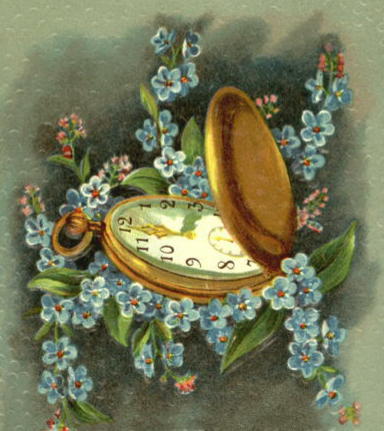
She ended the tale with her father pulling out his faithful pocket watch—still ticking—thus saving the world!Pocket Watch Edited

Isabella’s older sister, Mary, was married to the editor of the local newspaper. He suggested that the story appear in the next issue of the paper. Isabella’s father agreed, provided the story was published anonymously to protect Isabella’s privacy.

Thus, Isabella Alden’s first published story appeared in the newspaper with the title and byline:

Our Old Clock
by
Pansy

Many years later, Isabella proudly recounted the story as her very first appearance in public.