Blog

Rebecca’s Thread

When Rebecca Harlow married Frank Edwards in the book Links in Rebecca’s Life, she moved from the home of a loving, patient mother, into the home of a critical and resentful mother-in-law. From the moment of their acquaintance, Rebecca and her mother-in-law did not get along.
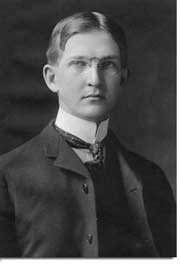
Woman embroidering 1909

Even before the wedding took place, Rebecca found herself dwelling “on each particular little slight, or what had looked like a slight, that she could call to mind. There were many of them, and she had treasured them well; so, long before she had reached the end, she felt as if she were doomed to be a martyr to the petty persecutions of Mrs. Edwards.”

Links in Rebeccas Life - Thread 04

Rebecca had a choice: she could respond to Mrs. Edwards with indignation and show “that she had a will and ways of her own, and that they must not be interfered with.”

Links in Rebeccas Life - Thread 06

Or she could take another path and pray for her mother-in-law, who was a “nominal Christian, at best,” and be a loving daughter-in-law and Christian witness.

“She dropped on her knees; and in the prayer that came from her heart’s innermost hiding-place she gave herself again to the Lord Jesus who had called her, and chosen her, and she entreated that she might feel the hand, the powerful hand with her always.”

Links in Rebeccas Life - Thread 05

Later in the book, when Mrs. Edwards became ill and had to remain in bed, Rebecca surprised her with a visit to her bedroom. Rebecca brought along her sewing, and managed to bite her tongue when her mother-in-law criticized her stitches.

Hearing her mother’s teaching pronounced wrong, and her handiwork awkward in the extreme, she made the healthful discovery that with a sufficient end to be gained, she could bridle her tongue. She even essayed to change her manner of putting the thread over the needle, and brought the result for inspection, which so mollified Mrs. Edwards that she agreed that as the work was so nearly done it would be a pity to change now, especially as she did the other so wretchedly. She even added that it certainly looked better made in that way than she should suppose it could.

So Rebecca stitched on in peace, putting the thread serenely in the way she had always put it, and heroically refrained from saying, “I think it is the only right way, and the other always looks horrid.”

Links in Rebeccas Life - Thread 09 strength

After that they had a pleasant talk, but the good mood was “decidedly periled once by a spool of thread.”

Links in Rebeccas Life - Thread 01 front v2Mrs. Edwards had brought out her sewing, and was taking very small stitches in a bit of cambric, when she said: “This is miserable thread. I thought I would try Clark’s once, as I heard you say that you always used it, but I shall never be so foolish again. It was very rough, and it costs a cent more a spool than Coates’.”

Now, neither of these ladies cared a pin’s worth whether thread was six or seven cents a spool, and yet Rebecca instantly said:

“Oh, no, you are mistaken in that. Clark’s can be had for half a cent less on a spool than the other kind, and I think it is much less likely to be rough. I never had a bit of rough thread of Clark’s in my life.”

Links in Rebeccas Life - Thread 02 v2“Your life is not a very long one and I dare say you have not used a very large quantity of thread. Young ladies situated as you were are not apt to. I suppose your mother did your little sewing while you did housework. But as to the price, of course, I convinced myself that I was correct before I said anything about it. Clark’s costs one cent more a spool than Coates’ does. I always get Coates’ for six cents, and this was seven.”

How exasperated Rebecca felt! She not use much thread! Had she not sewed by the hour, swift, even stitched many a time when Mrs. Edwards was sleeping or riding in her carriage? And didn’t she buy all the thread that was used in the family; and didn’t she know perfectly well that Clark’s thread was but six cents a spool? How was it possible for her to sit quietly by and endure such dreadful provocation as this! Talk about Jonah! His trials were nothing to hers.

Links in Rebeccas Life - Thread 12 strengthBut this very reference to Jonah calmed her. What sort of weakness was it that could not keep one’s temper with that mother over a spool of thread! Instantly she resolved to ignore the whole subject of thread, and with rare tact asked, suddenly:

“Oh, did you know how to make that lace-work that they used to have on French embroidery? Then will you show me how to do it some time? I always thought it was so pretty, and I never had a chance to be with anyone who knew how to do it before.”

Links in Rebeccas Life - Thread 13In short, with constant care, and many references to Jonah and his trials, Rebecca got through with that afternoon, and heard the dinner-bell ring, and heard her husband’s step on the stair, and rolled up her embroidery, which she began to hate, with a little sigh of satisfaction.

She was just a little nearer to feeling as if she might, sometime, feel at home in her mother’s presence. She had a little bit of comfort, too, in that lady’s exclamation:

“Is it possible that it is dinner time? I hadn’t an idea that it was so late.”


Links in Rebeccas Life - Thread 11

So, as a result of a spool of thread, a tentative truce was struck between Rebecca and Mrs. Edwards.

Links in Rebeccas Life - Thread 15 ClarksAs Rebecca went down to dinner, she realized a deeper insight into the depth of their own heart than she ever had before. She realized she was stronger because she had recognized her own weakness; and because she had not relied on herself to keep her temper with her Mrs. Edwards, but had relied the Rock of Strength.

And Rebecca continued to rely on that Rock of Strength as she built a relationship with her mother-in-law throughout the story.

.

.

Click here to read a post by Victoriana Magazine about ladies’ sewing baskets.

Click here to visit the Coats & Clark website to read the history of their companies.

Pansy’s now on Pinterest!

Click this link to see more vintage sewing and thread advertisements on Pansy’s Pinterest board.

Cover_Links in Rebecca's LifeClick here to learn more about Links in Rebecca’s Life by Isabella Alden.

.

.

.

I’m No Infidel

Cover_InterruptedIn the book Interrupted, Claire Benedict asked Louis Ansted if he was a Christian. When he said he was not (in a round-about way), Claire asked if he believed Christ “once lived in person on this earth, and died on a cross, and went back to heaven, and is to come again at some future time?”

Louis replied:

“Oh, yes; I have no particular reason for doubting prophecy or history on those points. I’m rather inclined to think the whole story is true.”

“Do you think his character worthy of admiration?”

“Oh, yes, of course; it is a remarkable character. Even infidels concede that, you know; and I am no infidel. Bob Ingersoll and his follies have no charm for me. I have had that disease, Miss Benedict. Like the measles and whooping-cough, it belongs to a certain period of life, you know, and I am past that. I had it in a very mild form, however, and it left no trace. The fellow’s logic has nothing to stand on.”

She ignored the entire sentence, save the first two words. She had not the slightest desire to talk about Bob Ingersoll, or to let this gay young man explain some of Bob’s weak mistakes, and laugh with her over his want of historic knowledge. She went straight to the center of the subject.

“Then, Mr. Ansted, won’t you join His army, and come over and help us?”

Undated photo of Robert G. Ingersoll

Bob Ingersoll wasn’t just a character in Isabella’s book. He was a living, breathing person and a very well-known figure of the time. Born in 1833 in New York, he had a reputation for being extremely intelligent. He educated himself and was admitted to the bar at the age of 21; his gift of oratory earned him a reputation as a brilliant lawyer.

But it was his talent for speech-making that gained him fame. He lectured across the country on free speech, women’s rights and, most notably, Christian doctrine. At a time when there were laws in some States that made it a crime to deny Christianity, Bob Ingersoll openly argued for a separation of church and state. He expounded on what he considered to be inaccuracies and fallacies of the Bible, and published several books that outlined his agnostic position. He had political aspirations, but his stance on religion made both the Republican and Democratic parties leery of nominating him for any elected office; however, at the age of 33 he was appointed Attorney General of Illinois.

Cover Some Mistakes of MosesWhen Interrupted was published in 1885, Ingersoll’s book The Mistakes of Moses was very popular. In the book, he collected passages from the Pentateuch that contradicted scientific thinking of the time, and even contradicted each other. He used those passages to build a case against the Pentateuch, which Ingersoll called “a record of a barbarous people, in which are found a great number of the ceremonies of savagery, many absurd and unjust laws, and thousands of ideas inconsistent with known and demonstrated facts.”

So when Louis Ansted mentioned Bob Ingersoll, Claire knew exactly who he was talking about. He was known as The Great Agnostic and one newspaper characterized his growing school of followers as “light minded [people] whom brilliant oratory can persuade to most anything while the voice lasts and who are as easily dissuaded by the next fluent speaker.”

When Robert Ingersoll died in 1899, an obituary in The Courier (Lincoln, Nebraska) described him as:

neither better nor worse than the ordinary man. In his youth he became convinced that the Bible was a lie and he hated … the God whose existence he denied.

He was not a saint, neither was he an incorrigible sinner, but just an ordinary man who had lost his bearings in the relations of God to man and overestimated the significance of his own opinion of God and man.

Robert Ingersoll’s writings have found new life on the Internet; several sites make electronic versions of his lectures and books available for free. You can follow this link to The Huffington Post to read more about Robert Ingersoll’s life.

This YouTube link provides an audio recording of Ingersoll’s book, Why I am an Agnostic:


Pansy’s Public Readings

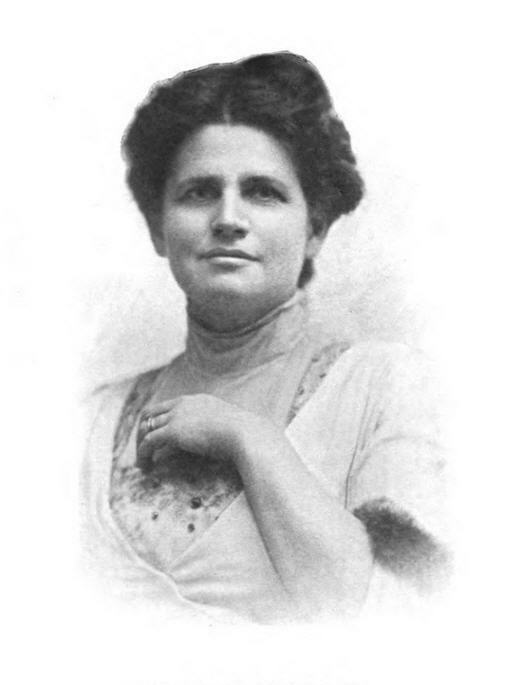
Photo of Isabella Alden about 1880 (age 39)

Isabella Alden was a busy woman. She had full-time duties as a minister’s wife, visiting members of the congregation, leading ladies’ prayer meetings, organizing mission bands, and teaching Sunday school classes. She wrote stories for and edited The Pansy magazine every month—all this at a time when she was producing an average of two books a year!

Somehow, she also found the time and energy to lecture before large audiences at Sunday School conventions, Chautauqua Assemblies, and women’s groups. She regularly addressed members of local CLSC chapters and traveled the country to meet with devoted readers of her books and The Pansy magazine.

This notice of one of Isabella’s lectures appeared in the Brooklyn Daily Eagle (New York) on January 14, 1882:

Notice in the Brooklyn (New York) Daily Eagle, January 14, 1882

.

And this announcement for one of Isabella’s addresses before a Sabbath-school convention appeared in The Bloomfield Record (New Jersey) on March 11, 1882:

The Bloomfield NJ Record_March 11 1882

.

When she could, Isabella combined her speaking engagements with visits to family and friends. That was the case in 1878 when she visited her home town of Gloversville, New York.

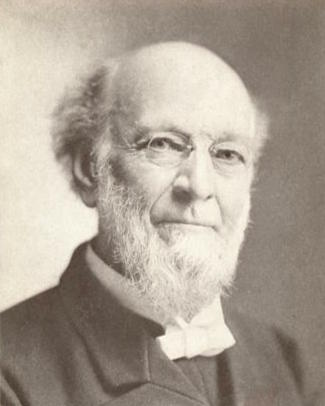
Reverend Gustavus Rossenberg Alden

Years before (in 1866) Isabella married Reverend Gustavus “Gus” Alden and moved away from Gloversville; but her family remained in the area and she visited them as often as possible. In that late summer of 1878, she was able to visit her family in combination with an author speaking tour.

Isabella had just finished writing a short story she called, “People Who Haven’t Time.” The story was not yet published but she was ready to share it with her fans.

On Friday, September 20, 1878, she appeared at the Gloversville Baptist Church to give a public reading of the story.

The Baptist Church in Gloversville, New York
Undated photo of the Baptist Church in Gloversville, New York

.

The local paper, The Gloversville Intelligencer, announced the event and encouraged attendance:

Gloversville NY Intelligencer-Sept 26 1878

.

In the next edition, the newspaper gave a full account of the evening and proudly listed the many accomplishments of Gloversville’s favorite home-town girl. Here’s the full 1878 article from  The Gloversville Intelligencer:

Gloversville NY Intelligencer 1878 detail

The story Isabella read at the church that night would eventually be given a final edit and named “People Who Haven’t Time and Can’t Afford It.” In 1880 the story was published in a volume that included another Pansy short story, “What She Said … and What She Meant.”

Cover_What She Said
Original cover of Isabella’s book What She Said, published in 1880

.

There are other accounts of Isabella reading her stories before audiences. For example, in 1879 she appeared before a Sunday-School convention in New York to read an original story:

Auburn NY Daily Bulletin Aug 15 1879


And in 1895 she read her story “Miss Priscilla Hunter” to an audience at the Presbyterian church to help raise funds for the Young Ladies’ Missionary society:

From the Gloversville, New York "Daily Leader," September 18, 1895
From the Gloversville, New York “Daily Leader,” September 18, 1895

.


If you haven’t yet read Isabella’s story, “What She Said . . . and What She Meant,” you can read it for free. Click here to begin reading the stories mentioned in this blog post.


Quotable

James Montgomery Flagg 1916 from Judge magazineThey had been created each for the other; and God—who watches over human lives—had kept them apart and sacred in their loneliness until the hour when they should recognize their oneness. He believed this and yielded to the joy of it, and was as absorbed and as far from wise as any man of his acquaintance had ever been in like circumstances.

—From Pauline

.

.

.

Quotable

Pansy cutoutHe will not come into a divided heart; a heart which says, “In some things I will obey; but in this, and this, and this, I must have my own way.”

You would not expect even a human friend who had the right to direct you, to accept such a position as that, would you? How much less the Lord?

—from Eighty-Seven

.

.

.

Deerville, My Home Town

Isabella Alden called Gloversville, New York her home town. And Gloversville, in turn, proudly published Isabella’s accomplishments in the local newspaper and ensured her books were prominently displayed in the town library.

Gloversville Library 1908
The Gloversville Free Library, 1908

.

Gloversville is a small community nestled in the foot of the Adirondack Mountains. It was settled soon after the American Revolution in 1783. Originally, it was called Stump City because the early settlers felled so many of the surrounding hickory trees, leaving just their stumps behind. In those days, Stump City had about 100 residents and only 14 houses.

An undated postcard of Gloversville

.

But in the early 1800s a change took place. An enterprising citizen began a leather tannery, which quickly expanded to add a leather mitten manufacturing business. By 1830 there were about 100 people living in Stump City, most of them involved in the leather business. Residents began calling the place Gloversville, as a tribute to the merchandise that was proving to be very profitable for them.

A 1922 magazine ad for buckskin gloves made in Gloversville.

.

By 1857 the village of Gloversville had over 3,000 residents and was the leading supplier of gloves in the country. The village mills were responsible for 80% of the leather gloves sold and worn in the U.S. The village’s prosperity attracted more residents and new businesses.

Glove Illustration

Isaac Macdonald, Isabella’s father, earned his living as a supplier to the leather mills. He owned a paper box factory that sold the containers used by leather mills to ship their finished goods to stores and wholesalers across the country.

Entry from an 1870 county directory listing Isaac Macdonald's business
Entry from an 1870 county directory listing Isaac Macdonald’s business

.

In the mid-1880s residents cast their ballots on the question of whether the thriving village should incorporate as a city. At the same time, a few residents began a campaign to change the name from Gloversville to Kingsborough.

1903 photo of Gloversville Fire Station No. 3

.

Kingsborough is a name that runs consistently through the community. There’s a Kingsborough church and tree-shaded Kingsborough Avenue, a pretty thoroughfare that spans the length of Gloversville.

Kingsborough Avenue, about 1905

.

And the Kingsborough Hotel was a grand building that any town would be proud of. In fact, many residents thought the name Kingsborough would fit the town like, well, a glove.

Kingsborough Hotel as it appeared in 1913

.

Isabella Alden had her own opinion about the name the newly-chartered city should adopt. Here’s an article she wrote for an 1888 local magazine that explained her recommendation:

A City Founded by a Deer

Now, I am going to tell you how this deer, or one that looked like it, founded a city. Of course, you’ll believe what I tell you because I was there and saw it done, having been born there.

Rome, you know, was founded by Romulus; that is to say, he was the “chief spoke in the wheel” when it began to be. Maybe there would never have been built so much as a hut, but for the wide-awake Romulus.

Some years ago, and 150 miles north of New York and about 50 miles west of Albany, there lived a few families in a placed called “Stump City.” It was wild and cold in the winter, almost as Greenland. I have often seen the snow there six feet deep!

Oh, the long and dreary winter! Most of the land was as poor as the snow was deep.

Now this was the very spot where our city was “builded together.” And it was done by the deer, as was said. And it was on this wise: one of those neighbors came home with a deer skin and another neighbor happened in at the time and they said, “What’s the use of a deer skin unless it is tanned and dressed?” So they dressed it after a fashion.

The next thing was to make mittens out of it. And they did that after a fashion, too.

But no sooner were the mittens made than everyone in the neighborhood wanted a pair.

So other skins were bought and they were soon turned into mittens and gloves and moccasins, after a better fashion. And distant neighbors heard of the wonderful wares for the hands and feet in the winter and they came miles to get them.

Then poor cold “Stump City” with its three or four families began to look up. Every man, woman and child went into the business. Even then they could not supply the demand.

Distant towns sent word. “We want some.” Then peddlers started out with horse and sleigh in mid-winter, often with a great load of the precious wares tied with buckskin strings in dozens, and all packed nicely in a big box, so neither snow nor thieves could harm them. Away they would dash, east, west, north, south.

A real city now occupies the place of “Stump City” and its name is Gloversville. It is one of the finest towns in all the great State of New York.

Go through the streets and you’ll be surprised to see how busy every man, woman and child still is. It’s one of the last places to go if you want to . . . rust.

There are machines and machines—often many in the same house, and from early morn till long after sunset they hum and buzz till you’d think everybody and the very air would go crazy. No one goes crazy, however; the hum has become sweetest music to Gloversvillians. It annually makes money for them to the tune of millions, and I am glad to say they pour thousands of it into the Lord’s treasury.

So much for what the deer did. The place should be called Deerville. Go and see it.

As entertaining as it was, Isabella’s story didn’t convince voters to change the town’s name to Deerville . . . but the people who pushed for naming it Kingsborough were disappointed, as well. The citizens voted to keep the name of Gloversville and Isabella’s home town continues to thrive to this day.

A busy intersection: West Fulton Street and Main Street, about 1900
A busy Gloversville intersection: West Fulton Street and Main Street, about 1900


Lady Entrepreneurs

Woman in BonnetThe heroine in an Isabella Alden book was a strong woman. She may not have known how strong she really was; but when trouble struck, it was the heroine of the story who stepped up and took action in order to save the family.

That’s what Claire Benedict did in Interrupted. She bravely took on the responsibility of supporting her mother and sister by taking a job as a music teacher in a far-away city.

.

Ad in The Daily Pioneer, Bermidji, MN, December 4, 1903

.

In Four Mothers at Chautauqua, Isabel Bradford also decided to teach. She opened a School of Expression where she taught physical exercise techniques and grace of movement to women in New York City.

Borax ad 1915 cleaning laces

And in Pauline, Constance Curtiss supported herself (after rashly running away from her husband) by offering a variety of homemaking services, from laundering cuffs and collars to canning fruits and vegetables for busy housewives.

At the time Isabella’s books were written, women, as a rule, weren’t trained to take their place in the business world. They couldn’t vote and in many states they couldn’t own property. It was unusual for a woman to own her own business and even more unusual for her business to  succeed.

Buffalo NY Courier 1892
A news item in an 1892 edition of the Buffalo Courier, expressing surprise that a woman could 1) own a business, and 2) be successful at it

.

Starting a business that involved working in other people’s homes—as Constance Curtiss did—or opening an exercise studio—which was Isabel Bradford’s plan—may have been viable for some women; but for a few Alden heroines, working outside the home posed a problem. For starters, opening a shop or renting studio space required investment capital, as this ad in a 1908 edition of The Delineator magazine shows:

The Delineator ad Jan 1903

In other instances the heroines lacked marketable skills or they had unique family responsibilities that demanded they remain at home.

That was the case with Joy Saunders in Workers Together. Her very protective mother didn’t want to see her lovely daughter toil for wages out in the world; but with hard work and clever management, Joy and her mother ran a flourishing boarding house.

In Household Puzzles and its sequel, The Randolphs, Maria Randolph supported her entire family by running a laundry business out of her kitchen.

1864 ad for a clothes wringer

.

Constance Stuart did laundry, too. In the book Pauline, Constance specialized in laundering women’s delicate lace collars and cuffs, and she had a knack for laundering worn curtains and old linens so they looked almost brand new.

Illustration of Ladies' Collar and Cuff. From Myra's Threepenny Journal, March 1882
Illustration of a ladies’ collar and cuff. From Myra’s Threepenny Journal, March 1882


And in Her Associate Members, Mrs. Carpenter earned a living by ironing other peoples’ clothes in her sparse little kitchen.

Sad Irons

Doing laundry and ironing as a way to earn money was fairly common for women in Isabella Alden’s time. That’s because doing the laundry was such time-consuming work, even for small families, that homemakers across the country struggled to accomplish the task on their own. Modern conveniences, like wringers and ironing machines did little to ease the load.

Trade card from the 1880s

.

“Monday is the washing day of all good housekeepers,” declared The Household, A Cyclopaedia of Practical Hints for Modern Homes. This book, published in 1886, promised to make washing day easier by setting out step-by-step instructions for accomplishing every phase of the task: from making starch to eradicating fruit stains and bleaching white goods.

The Household pg 229 ed

.

The volume of laundry to be done was often staggering. In Victorian-age America people wore layers of clothing, beginning with long drawers and undershirts for men; corset covers, chemises, drawers and petticoats for women. Often these items were made of wool, which made them extremely heavy once they were wet.

.

1882 magazine ad showing the detail and trimmings on underclothing. Click on the image to see a larger version.

.

Over these layers they wore shirts and shirtwaists, trousers and skirts, jackets and coats. Collars and cuffs gave the finishing touch to every outfit, but because collars and cuffs were easily soiled, they were changed a minimum of two or three times a day. Collars and cuffs also required the most care and skill in laundering.

An 1882 ladies' magazine Illustration
Illustration of a ladies’ collar in an 1882 fashion magazine.

.

Men’s collars and cuffs were heavily starched until they could stand on their own. This paragraph from The Household instructed homemakers on how to make and apply the starch:

The Household starch ed

.

With such heavy starch, the best laundresses knew that men’s collars and cuffs had to be ironed over a rounded form; otherwise, if ironed flat, they were likely to crack when they were fitted around the throat or wrist.

A 1905 Street Car advertisement

.

Women’s collars and cuffs were just as challenging to launder and finish. Fluted fabric was a popular detail in ladies’ fashion, and it was difficult to keep the flutes crisp and well-shaped after washing.

A Chemisette with Lace and Fluting, ca. 1882
Illustration of a Chemisette with lace and fluting, from a 1882 ladies’ magazine.

.

Laces were easily scorched if an iron was too hot and they were just as easily discolored if they were pressed with an iron that wasn’t perfectly clean.

An 1882 illustration of a linen and lace collar

.

With so much preparation required and a good deal of heavy lifting, it usually took two women working all day to get the laundry done in an average household. And if the lady of the house didn’t have a family member or neighbor to help her, she often hired a portion of the work out.

Borax ad 1915

But finding a good laundress was a challenge. Isabella Alden commented on that fact in The Randolphs:

While the world seems to be full of people who are willing to teach our children to strum on the piano, to draw impossible-looking trees and people, to jabber in a dozen different tongues, the lamentable fact remains that in every town and city it is really a difficult matter to get one’s collars and cuffs starched and ironed decently without paying a fabulous price for it.

Ironing-Three Ladies

The need for an extra pair of hands on laundry day opened the door for talented and hard-working women like Constance and Maria to earn a living.

To promote her new business, Constance Curtiss washed and mended the curtains that were “just falling to pieces before our eyes” in her landlady’s house, much to the landlady’s amazement:

“The girl darned them and washed them and rinsed them in starch water and stretched them till they looked as though I had put my hand in my pocket and paid for them out of the store, as I expected to. She does beat all!”

The landlady was so impressed she told her friends and neighbors of Constance’s skill. In very short order, Constance had more work than she could handle and had to write polite notes every evening to decline any new engagements.

Ironing

In Household Puzzles, Maria Randolph started her laundry business after her brother Tom told her that his co-workers admired his clothes:

Tom needed assistance in the matter of a button and was glad to find Maria at liberty for a minute to sew it on. During the operation he laughed outright at his own thoughts, and then proceeded to explain.

“One of my brother drivers came to me last night for a confidential chat. I wish you could have seen his puzzled and important face. He is that Jerry that you think is so good-natured. What do you think he wanted?”

“I’m sure I don’t know. This button has split in two, Tom.”

“Well, here’s another. I couldn’t imagine what he was coming at. He called me aside and looked so important. He begged my pardon for troubling me—they are all remarkably polite to me—and he said that four or five of them had been having a time with their washerwoman because she didn’t use starch enough. They’re wonderfully particular fellows on Sunday. She ironed in wrinkles, too, he said; and then, after considerable stammering, he managed to get out that a number of them had been talking over the immaculateness of my linen, and had decided to get me to negotiate with my washerwoman, whoever she was, to see if she would do their work. The poor fellow was utterly crestfallen when I told him that my laundress was my sister.”

Industrious Maria saw an opportunity to earn money to pay for the medicine and medical care her father needed.

So she washed and ironed for the street-car drivers exactly as she had planned to do. They had few clothes to spare for the wash, but it must have been a delight to them to see the smoothness and whiteness of those few. Maria took great pains with them for two reasons: one, because she liked to hear Tom tell of their exclamations of delight, and the other, that she had a habit of doing well what she did at all. This new way of earning money was very helpful, and added not a little to the comfort of the invalid who was slipping away from them in such a quiet fashion. Sometimes it took all her resolution and a fond remembrance of how much her father enjoyed the oranges and strawberries to keep her heart in the work.

Doing a family’s laundry alone was a strenuous task and in Maria Randolph’s case, the hard, physical labor of the work took a toll on her health. But the work also had its rewards.

As Maria had a great deal of pride of execution, and an indomitable determination, and a secret plan to make herself and her father independent thereby, she worked with a will.

Before long, Maria’s business expanded enough so she could hire several “hard-working girls who were glad to be taught that which she had worked out by her own wits and the help of her eyes when she visited certain famous laundries.”

A 1910 Laundry Class for Girls
A 1910 laundry class for girls

.

As part of their laundry duties, Maria probably taught her employees the proper way to fold clothes for customers. These plates from a laundry manual published in 1900 illustrate the correct procedure for folding drawers, shirts, and night clothes:

Laundry Manual 1900 Plate No 3

.

Laundry Manual 1900 Plate No 6

.

Laundry Manual 1900 Plate No 2

.

And though her family and friends were appalled when Maria decided to advertise her business, she was proud to hang a small sign outside her home, “tacked in a conspicuous spot, and the letters on it were unmistakably clear and plain:

Marias Sign 2


Would you like to know more about sad irons and how they were used? Click here to view an article at Collectors Weekly.

Read our previous post about The School of Expression that inspired Isabel Bradford in Four Mothers at Chautauqua.

Click here or return find out more about Isabella’s Books mentioned in this post.

Quotable

Woman_s World 1915-09God had not left her without witnesses to the worth of the life she was living. She had early found what some Christian workers have yet to learn—that the road to hearts lies oftentimes by way of the most commonplace of domestic duties.

She earned her living by sweeping and dusting and fruit-canning, and a dozen other homely back-door occupations; but she lived in order to show forth the strength and the beauty of a life “hid with Christ in God.”

—from Pauline

.

.

.