Blog

The Older Brother … Illustrated!

Have you read Isabella’s novel, The Older Brother?

It’s the story of a young man named Lawrence Hammond. Just before his father died, Lawrence promised he would always care for his mother and younger brother and sister, just as his father did before him.

“My dear children,” it began.

But Lawrence had a dream. More than anything, he wanted a college education, but in the days following his father’s death, he put that dream on hold because his family needed him.

As time passed, Lawrence’s skill and hard work began pay off. The family farm began to prosper and it finally looked as though Lawrence’s dream of going to college just might become a reality.

Just then, though, the family’s needs called for another sacrifice.

Suddenly, Lawrence was forced to ask himself a difficult question:

Did he have the strength to once again postpone his own heart’s desire for the sake of the people he loves?

“How would you like to change places with me, Port?” He had tried to make his voice sound careless.

The Older Brother is a touching story of faith and family duty. An 1898 version of the novel is available on Amazon and other e-book retailers.

But we recently found an earlier version of the book, which included the lovely illustrations shared here.

“Engaged!” exclaimed Mamie. “How delightful! Now we shall have a wedding.”

The artist was George T. Tobin, who often worked in pencil and ink in his younger years.

His wonderful illustrations capture the essence of some of the key scenes in Isabella’s novel.

Have you read The Older Brother? What did you think of the story?

Did you think Lawrence was right to sacrifice his own aspirations for his family?

You can click on the Amazon stamp below to learn more about The Older Brother by Isabella Alden.

Pansy and the Orphans

As the wife of a Presbyterian minister, Isabella moved houses fairly regularly, depending on when and where the church assigned her husband.

In the early 1890s Isabella, Ross, and their son Raymond were living in Washington D.C., where Ross was assistant pastor at Eastern Presbyterian Church.

Church listing in an 1892 issue of the Washington, D.C. Evening Star newspaper

While living in Washington D.C., Isabella became involved with the Washington Hospital for Foundlings, which, at the time, had been in operation for about five years.

The Washington Hospital for Foundlings

Knowing how much Isabella loved children, it’s not surprising she would work diligently on behalf of the foundling hospital; but Isabella didn’t stop there. She went one step further and got her “Blossoms” involved, too.

The foundling hospital playroom in 1905

“Blossoms” was the name Isabella called the children who subscribed to The Pansy Magazine, a weekly magazine Isabella edited for children. Children from around the world subscribed to the magazine, and when Isabella mentioned in an issue of the magazine that the foundling hospital was in need of funds, her little Blossoms went into action.

An illustration from The Pansy magazine, 1885.

For a period of about four years, children from around the world sent contributions to the hospital.

Their individual contributions were as large as a 25 cent-piece and as small as a 2-cent postage stamp. That doesn’t sound like a lot, but over time their total contributions amounted to $440.88.

That’s the equivalent of $13,783.00 in today’s money!

In return, Isabella wrote regular descriptions of her visits to the foundling hospital, which were published in the magazine. You can click on the following image to read one of Isabella’s accounts.

Click on this image to read one of Isabella’s reports from 1892.

When you stop to think how hard a child had to work to earn so much as a penny in the late 1800s, the children’s total contribution is astonishing; but they were such devoted readers of Isabella’s magazine, they never failed to answer her call for help.

Interestingly, around this time, Isabella and Ross adopted a baby girl, whom they named Frances. From Federal Census records we know Frances was born in Washington D.C. around 1892, the same time period in which Isabella was regularly involved with the foundling hospital. It’s possible Isabella came across Frances during the course of one of her visits and fell in love with the infant Frances to such a degree she decided to take her home.

You can read more about Frances’ life in a previous post by clicking here.

And you can read a 1906 newspaper article about the Washington Hospital for Foundlings by clicking on the image below:

From The Washington Post, Sunday, April 22, 1906.


New Free Read: The Systematic Givers

Isabella Alden never bought into the excuse, “But I’m only one person. What difference can one person make?”

Her answer to that question was always, “Plenty!”

How do we know? Because one of the most common themes in Isabella’s stories is the difference a single person can make in the lives of other people.

Flossy Shipley, one of the Chautauqua Girls, was a prime example.

So was Nettie Beldon in Only Ten Cents.

In today’s free read, Alice Vincent and Laura Keats, students at a seminary for young ladies, learn that small efforts can have big results.

The Systematic Givers was first published in 1887 as a short story in Isabella’s anthology, Harry’s Invention and Other Stories, and you can read it here for free!


The Systematic Givers

Slowly Alice Vincent and Laura Keats walked down the slope until they came to the rustic bridge that spanned the stream that ran through the seminary grounds; here in one of the pavilions that jutted out over the water they seated themselves for a talk.

“I know,” said Alice, taking up the thread of their conversation where it had been broken off a little way back when they met a party of girls bound for the butternut grove. These two had been urged to join the others, but they evidently preferred each other’s company, though they were not rude enough to say just that. “I know it does seem as though we might do something, but how to begin?”

“I do not know of any way but just to begin,” replied Laura.

“But who will start it?”

“Why, you for one, and I for another. Here you have been saying ever since we heard Mrs. Van Benshoten speak, that it seems as though we might do something; but saying that will never do anything. We must just do it.”

“What?” asked Alice.

“Call a meeting of the girls and organize for work.”

“The girls won’t come.”

“You and I will be there, and Minnie Crawford, and there are only three sides to a triangle, and that is all we had to begin geometry with.”

“But we shall have more than that,” replied Alice, laughing. “Annie Clark will join us and make a quadrilateral.”

“Well,” said Laura, “that will be a good beginning, and you know how we progress from polygons to circles—we may have a mission circle before we know it.”

That evening when, after tea, the students gathered for evening worship, the principal said:

“Immediately after this service, all who are interested in the forming of a mission band are requested to meet in the small room adjoining the library.”

Accordingly, instead of three or four, as the originators of the scheme had looked for, twenty-five girls filled the little room to overflowing.

Alice Vincent called the meeting to order, saying, “Miss Keats will state to us the object of this call.”

And Miss Keats stepped forward with a dignity which may have been assumed at first, but which gave place to something that was real, as she lost herself in her subject.

“We have lately heard,” she said, “some very astounding facts. Some of us knew a part of the truth before; at least we might have known it, but I dare say very few of us have been interested in knowing. But I think that in the course of the very able address to which we were privileged to listen last Sabbath, it was brought home to us very forcibly that there are millions upon millions of men and women sitting today in the darkness of heathenism. Many of them know that they are in the dark, and they are crying out to us to send them the light of the Gospel. You remember that we were told that people used to think that there were two points only to be looked at in this matter of sending the Gospel to the heathen: Were the people ready to receive it? and, Were the messengers ready to go? These two things Christians have been praying for, and now it would seem that ‘all things are ready.’ The heathen world has opened its doors to the Gospel; men and women well fitted for the work are ready and waiting to go; yet there is a halt in the work. Instead of two links there are three, and the middle one is missing. It is literally a golden link that is wanting. Now, girls, fellow students, does it not seem a burning shame that when so many are willing to take up the self-denying work—now that the very thing which the Church has been praying for has come to pass—I say, is it not a shame that the money should be wanting? I think we will all agree to that, and if so, we must own that a part of the disgrace is ours. The most of us are Christians; some part of the work belongs to us. Shall we take it up, and begin now? We have been called together to talk over the matter of organizing a mission circle; I would put it, a giving circle, for that is exactly what we propose to do, give! It is not quite time to propose a name for the organization, but when it comes to that, I want to propose, ‘The Systematic Givers.’”

Now I do not intent to give you in this sketch a lesson upon organization, so I shall not give a full report of the proceedings, or tell you how closely they followed Parliamentary usage. It is enough to tell you that “The Band of Systematic Givers” was duly organized, and properly officered. This motto was adopted:

“Upon the first day of the week let every one of you lay by in store as God hath prospered him.”

Each member of the band pledges herself to give one tenth of her spending money, or the money which she calls her own. Considerable discussion has arisen among the girls as to what moneys they have a right to tithe.

“What would you do about taking a tenth out of the money your father sent to you for a new dress?” asked Lily Case.

“Well,” replied Laura, “I will tell you what I did. Papa sent me thirty dollars for a dress, hat, etc., and I decided to take out a tenth, and got a new dress of a little cheaper materials, or a plainer hat. But I tell you, Lily, I never made even thirty dollars go so far as the twenty-seven did. Bess says my dress is prettier than hers that cost twenty-five dollars, and I know it will be more durable than hers.”

“With those of us who have an allowance which must cover all personal expenses there can be no question about the matter,” said Alice Vincent. “If we choose to deny ourselves of some luxuries, we have the right to do so, I suppose, but some of our fathers will say, ‘get what you need and have the bill sent home.’”

“I know,” replied Laura, “there is difficulty in some cases of knowing just what we may do; but all of us have something that we may call our very own, and that is all we are responsible for, after all. I know the girls pretty well, and with one or two exceptions, a tithe of what we spend for confectionery, creams and ices in the course of the term would buy a good many Bibles. We girls might almost support a missionary; certainly we can take a scholarship in some of the schools.”

And this is what they did: pledged themselves to support a pupil in a mission school. After several months had passed Lily Case remarked one day:

“Is it not wonderful how much we can do by following out a regular system? Why, I do not miss the money I give, and I actually give dollars where I used to give cents!”

“I am sorry you lose the blessing of self-denial,” said Laura, smiling. “You ought to give enough to miss it.”

“Oh, you need not imagine I do not feel it. Every time I take out the tenth it hurts, for I am naturally stingy. And I say to myself, ‘You old miser! You have got to deny yourself even if it does pinch.’ But after I put the money in the little gilt box, I find that I get along just as well without it to spend. And I love to hand it over to the treasurer. That is what I meant when I said I did not miss it.”

It was only a little while ago that Laura said, one evening, “Girls, I want to tell you something. I am going to India.”

And it was then and there decided that when Laura Keats goes to India “The Systematic Givers” will have a missionary of their own.


In this story, Isabella’s characters were inspired by a speech given by “Mrs. Van Benschoten,” who was a real person in Isabella’s life.

Mary Crowell Van Benschoten was an author and a leader in the Temperance Movement, but her greatest talent was in public speaking. She traveled the country, speaking in churches and at events where she inspired audiences to aid charities, fund churches, and contribute to women’s clubs and girls’ schools.

We can’t know how well Isabella knew Mary Van Benschoten, but Mary’s skill as an orator clearly made such an impression on Isabella, she felt compelled to mention her in the story as the inspiration behind the The Systematic Givers.

The Spirit of Steel and a GLH Quiz

Like her aunt Isabella Alden, Grace Livingston Hill often shared her novels with the public by publishing them in magazines prior to finalizing them in book form.

In 1929 one of her stories appeared as a serial in Good Stories magazine under the title “The Spirit of Steel.” You can see it listed on the magazine’s cover below:

One of the great advantages of having her stories published in magazines first, is that the magazines often employed artists to illustrate scenes from the story. Here’s one of the illustrations from Grace’s story “The Spirit of Steel,” depicting the two main characters meeting for lunch:

But when Grace published the story as a book, she changed the name of the story from “The Spirit of Steel” to something else.

Using the hints below, see if you can guess the name Grace gave the story when it was published as a hardback book in 1929.

Hint #1

Carol, the heroine of the story, works as a secretary in a construction firm.

Hint #2

When her boss falls ill on the eve of an important business trip to a construction site, Carol takes his place.

Hint #3

The story takes a suspenseful turn when Carol realizes she’s being followed by two men as she travels by train to the construction site.

Hint #4

Upon arriving at the construction site, Carol decides that her first order of business is to fire the handsome and attractive job foreman. There’s just one problem: he refuses to be fired!

Can you guess the name of the beloved Grace Livingston Hill novel that was originally called “The Spirit of Steel”?

Answer:

Grace renamed the book Duskin when it was published as a hardback book in 1929.

If you guessed the right novel from these few hints, congratulations! You’re a GLH expert!

If you haven’t read Duskin yet, you can read it for free on your computer or Kindle reader. Just click here to begin reading!

A Bicycle Ride with You

With less than thirty days left of summer, it’s natural for Americans to try to spend as much time out of doors as possible before the weather begins to change.

And one popular way to do that is on a bicycle.

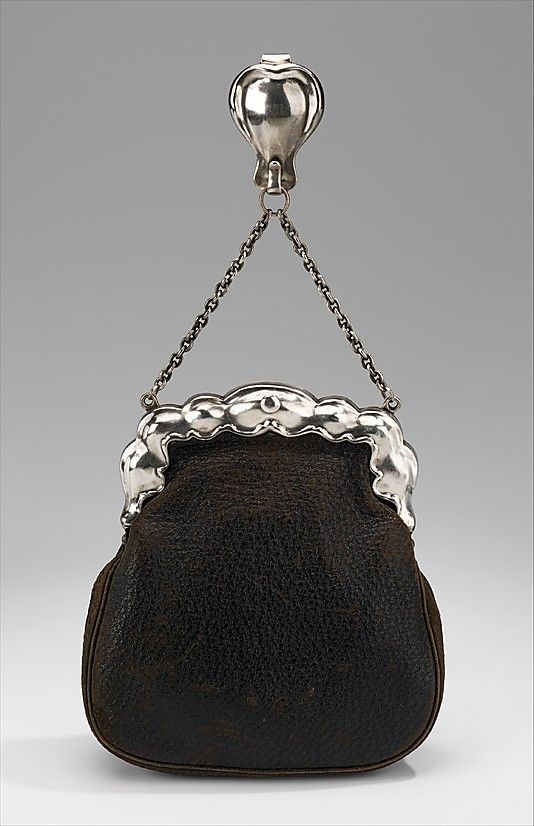
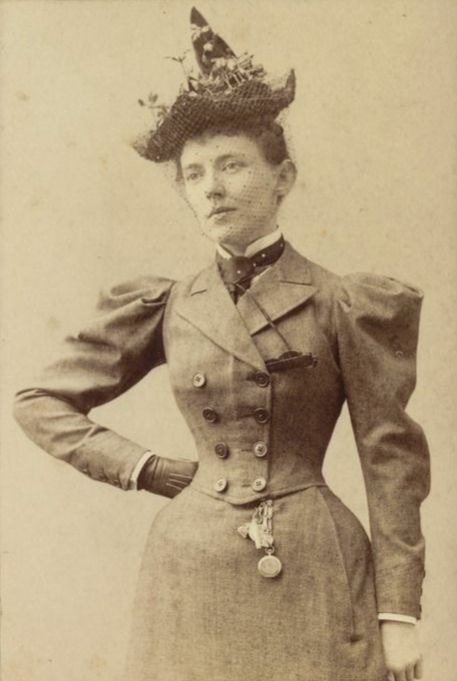
Lady cyclists in 1898. Their outfits include jaunty hats, puffed sleeves, and purses hung from clips attached to their belts.

Bicycle riding was extremely popular during Isabella Alden’s lifetime, especially for women. It gave them instant mobility, and a way to escape the homes they had been confined to for generations.

With a bicycle women could travel to see new sights or tour new towns—and they could do it without being dependent on a man.

Suffragist Susan B. Anthony said bicycling “has done more to emancipate women than anything else in the world.”

The cover of Lippincott’s Magazine, July 1896.

Author and cycling advocate Lillias Campbell Davidson wrote that bicycle riding helped women escape their homes:

The lives of women have been unnaturally cramped and contracted within doors.

She encouraged housewives to take up cycling. She believed a good, healthy ride would help them return to their work “cheered, refreshed and braced to take up the burden of daily commonplace life once more.”

Another advantage cycling had for women was the change it made in their wardrobes. By 1900 women cyclists were wearing split skirts when riding, and many cycling women shed their corsets and petticoats for more practical attire.

From the December 1896 issue of The Lady Cyclist magazine

Not everyone liked the changes. When one Baltimore woman was criticized for wearing “bloomers” (as the divided skirts were called) while riding her bike, she replied:

“I can ride faster than people can talk.”

A ladies’ bicycle suit with divided skirt, 1898.

By 1898 bicycle sales to women were booming, thanks in large part to Sears, Roebuck & Company.

They began marketing affordable bicycles to ladies, and even printed a specialty catalog to market the many different models they offered.

Sears, Roebuck & Co. Bicycles specialty catalog of 1901.

Before long, women across the country were riding Sears bicycles, and discovering for themselves the thrill of healthy exercise and the freedom of traveling under their own power.

Are you a bicycle rider? What do you like most about the sport?

Visit Chautauqua in 1890

In the summer of 1890 Isabella Alden and her family were once again at her beloved Chautauqua Institution.

That year, attendance at Chautauqua was remarkable. The Evening Journal—a newspaper in nearby Jamestown, New York—reported on the size of the crowd in an article printed August 20, 1890:

Another Sunday at Chautauqua has come and gone, and yet the big crowd and its interest in everything continues.

A crowd gathered in an open area of Chautauqua, about 1915.

There was plenty to be interested in. Chautauqua’s daily schedule included Bible lectures, practical daily living classes, entertainment, nature hikes, and plenty of opportunities for exercise.

An added attraction: that weekend Mr. Leland Powers, known as the “Dramatic wonder of America” presented a three-act comedy based on a story by Frances Hodgson-Burnett, in which he played all the parts!

A publicity photo of Mr. Leland Powers


The newspaper explained one major reason for the crowd size that weekend: more people were making longer stays at Chautauqua:

The outgoing stream has been large during the past week, and yet not enough to keep pace with the one pouring in. The outlet does not equal the inlet, and so the crowd grows larger. It will probably reach its culmination on Recognition Day, which will be Wednesday of this week.

“Recognition Day” is Chautauqua’s version of graduation for members of the Chautauqua Literary and Scientific Circle. In 1890, all the C.L.S.C. members who successfully completed their four-year study course gathered at Chautauqua. Together they made a stately procession through the symbolic Golden Gate that stood near the Hall of Philosophy, and then they received their Chautauqua diplomas.

The Golden Gate at Chautauqua Institution

The same newspaper article reported:

Enthusiastic C.L.S.C’ers are coming in daily by droves, by swarms, by multitudes. Meetings of the various classes are held almost every day, and excitement is fast reaching its height. It seems scarcely possible that in another week the Chautauqua season of 1890 will be closed and the exodus will be begun.

A Chautauqua Recognition Day class procession in 1895. Each class carried their own distinctive banner.

Also on that Sunday morning, Isabella’s husband, the Reverend G. R. Alden, led a memorial service in honor of prominent Chautauquans who died during the preceding year.

Reverend Gustavus Rossenberg Alden

What a very busy weekend at Chautauqua! That Sunday evening brought rain, which reduced the crowd size at the remaining events. After so much activity, the newspaper report describes for us a peaceful Sunday night:

A ramble about the grounds just after the sermon, even if it did rain, well repaid the discomfort. Every cottage, every tent, every room in every cottage and tent, gleaming with lights through the dismal mist, presented a scene unprecedented and well worth seeing. The chimes rung out another Sunday at Chautauqua.

You can read the full article that contains many more descriptions of that busy Chautauqua weekend in 1890. Just click here; you’ll find the article in columns four and five.

New Free Read: Through the Woods

This month’s free read is “Through the Woods,” a short story that first appeared in The Pansy magazine in 1889.

When Helen and Winnie set out for an overnight visit with a beloved aunt, they anticipate a fun time and a safe journey. But it only takes one wrong turn to change their fun to fright, and one act of kindness to teach them a valuable lesson.

Choose the way you’d like to read the story:

You can read “Through the Woods” on your smart phone, iPad, Kindle, computer, or other electronic device.

You can also read it as an Adobe PDF document and print a copy to share with others!

Just click on the book cover above to choose your preferred e-book format from BookFunnel.com and download the story for free!

Or simply scroll down to read the story here on the blog:

PART I.

IT was the gray pony that Helen wanted to take. He was such a wise horse that there was no need in thinking about the trains all the time. Besides, he could follow those bewildering windings through the woods as well as though he had laid out the roads himself, if indeed they had been laid out at all. But just as she was thinking of asking Phillip to harness for her she heard Mary’s voice saying in a tone of authority, “Stand over!” and looking from the window saw she was harnessing the gray pony to the high carriage.

“Where are you going?” she called, and Mary answered promptly that she was going to Lake Minnow to call on the Allen girls.

“Oh, dear!” said Helen, “I promised mamma to take those rose-cuttings to Aunt Hattie this afternoon, and I wanted Gray myself.”

Mary was harnessing Gray.

“Why can’t you take Brownie?” said Mary. “There’s Phillip driving into the yard with him now; he will be ready to go as soon as he has had his dinner.”

“Well,” said Helen after a minute, “I s’pose I’ll have to do that. I hate to drive Brownie because he doesn’t know the roads; and he thinks he does and keeps turning where he ought not. You have to watch him every minute.”

Mary laughed, and said that was good discipline for Helen; that she was too much inclined to dream in the daytime. And then she climbed into her carriage and drove away.

Half an hour afterward Helen drove out in the phaeton. She was going to call for her dear friend Winnie Chester who was boarding at the hotel. Under the seat was her little hand bag with all needed articles for the night, because she often stayed at Aunt Hattie’s all night, and Winnie had promised the very next time she went with her to stay and enjoy the new milk from Aunt Hattie’s cow and the cream muffins she was sure to make.

It was a lovely afternoon. The ride was thoroughly enjoyed by both girls. Brownie trotted along briskly, although the roads were sandy, and made just the right turnings, as if he had heard and resented Helen’s complaint about him.

Aunt Hattie’s was reached in good time and in safety, but alas! for the plans about new milk and cream muffins. Aunt Hattie and Uncle Henry were both away from home. They had gone to town for the day. The rose-cuttings had to be consigned to Jake, and the two girls stayed only long enough for Brownie to get a drink of water; for the roads were heavy, and twilight fell early in this part of the country. They rode along in a leisurely manner, chatting pleasantly, stopping every little while for ferns and mosses. Suddenly Helen said:

“It is growing dark. The sun has set; did you know it? I never thought of such a thing, and we are not near home; where are we, anyway? I don’t remember this pond, do you?”

“I don’t remember any of them,” said Winnie. “The roads look alike to me in this country. Doesn’t Brownie know the way home?”

“Brownie is not to be depended upon,” said Helen gravely. “He thinks he knows everything, but he makes dreadful mistakes. That is the reason I wanted to take Gray. I do get so mixed up on these roads. This doesn’t look natural to me, but we will drive on a little farther and see what we come to.”

What they came to was a rough narrow path which Helen felt certain she had never seen before. She drove slowly, with a troubled face, uncertain whether it was best to go on or to turn around and try to find the way back. To add to their perplexity the short twilight had disappeared and it was unmistakably dark. No moon, and the trees so thick that the stars gave very little light. They had almost entirely ceased talking and were occupied, the one in trying to drive, the other in the vain hope of seeing something familiar.

“I can’t see at all.” she said at last. “What shall we do? I don’t know the way home.”

“Won’t your people come to find you when they see how dark it is?” asked Winnie.

“They think we are going to stay at Aunt Hattie’s,” said Helen, trying to speak bravely, but feeling her heart beat so hard that it seemed to her Winnie must hear it. Silence again for a few minutes, then Winnie exclaimed:

“There’s a dog barking. Somebody must be coming. Helen, aren’t you afraid?”

“I see a light,” said Helen, in a cheerful voice. “We are coming to a house. I am so glad.”

Was she? In a few minutes more she knew that she was sorry. A little old log cabin set down in the woods, no sign of civilization anywhere, unless that tumbled-down cabin stood for it, and half a dozen growling dogs. In the doorway stood the worst-looking woman the girls had ever seen, or rather had ever been able to imagine. Tall, gaunt, with a long thin chin, peaked nose, and strong red arms bare to the elbows. She was speaking to an uncouth man or boy around whom the dogs frolicked as though they knew him. The only relief to the picture was the sight of a very little girl who seemed not at all afraid of the dogs, and who welcomed the ragged, silly-looking man with a gurgle of laughter. At sight of the carriage the whole company, dogs included, turned and gave undivided attention.

What the girls saw.

“Lost your way, eh?” said the woman. “That’s bad such a dark night as this. I reckon the old man himself couldn’t find the road to Pine Loch tonight, and he knows most roads in this country. You’ll just have to stay all night. I reckon we can put you somewhere; you need daylight for getting home, that’s certain. You’re much as three mile out o’ your way.”

In a silence that was very near despair, the two girls stepped down from the phaeton, shrinking from the dogs in a tremble of terror, despite the woman’s loud assurance that they wouldn’t “hurt a hair of their heads.” No sooner were they inside the cabin than, but for the dogs, they would have rushed out again. Never had they dreamed of such a place for human beings to live; rough logs for walls, rough boards for floors; an open fireplace for a stove, over which a pot hung at this minute filled with a mixture so vile-smelling that the two frightened girls had almost to hold their breaths to keep from fainting. At least, that was the way it appeared to them; though really it was nothing worse than the smell of lard that was scorching. Utterly refusing to eat a mouthful of the black-looking bread that was urged upon them, and too frightened to do much besides looking at one another, they were thankful when the woman told them they looked “tuckered out” and she “reckoned they had better turn in for the night.” To this end she lighted what was really a pine torch, though the girls did not know it, and prepared to climb the staircase which was nothing but a ladder.

Meantime, the one she called her “old man” had come in and the situation had been explained to him, he nodding wisely at intervals and saying, “Just so, just so.”

Poor Helen thought he looked worse than his wife, and she followed the woman up the ladder stairs in haste to get away from the shaggy man. Oh, what would their mothers have thought if they had seen the room into which their cherished daughters were shown for the night! The bedstead was made of two boxes with slats across, and a tick filled with dried moss and leaves. There was a broken chair, and a box that served for a table. These were the only attempts at furniture. The one little window had no sash, nothing but a window shutter through whose half-open mouth the baying of those awful dogs could be distinctly heard.

“I reckon you dunno’ how to manage a torch,” said the woman, “so I won’t leave it for you, but the light will come up through the chinks in the logs enough for you to get into bed by. I reckon there’s covers enough. The nights are mighty cold nowadays.”

Not a word had the frightened girls to answer, but the moment the woman and her torch had disappeared down the ladder they flew into each other’s arms and sobbed as though their hearts would break.

“I’m afraid to go to bed,” murmured Winnie, “and I’m afraid to sit up. We can’t stay here, Helen. Let’s slip out and run away.”

“We can’t,” whispered Helen. “Those awful dogs—just hear them!” and she shook like a leaf. “Only think, Winnie, mamma supposes we are safe in bed in Aunt Hattie’s pretty room.”

PART II

“We will never be there again,” said Winnie, “nor at home either. These are robbers. I know they are by their looks. They have got us in here to steal our clothes, and my chain and your pin with a real diamond in it. They will take all we have and then they will kill us and our people will never know what became of us.”

“Oh, don’t!” said Helen in a whisper so loud that it was almost a shriek. “You are horrid and dreadful, Winnie Chester, to say such things.”

“Oh, dear! How cold I am. Let us lie down. We can’t be any worse off than we are now. We will keep all our clothes on and just lie down in each other’s arms, and we won’t sleep a wink, only just watch, and if we hear them coming we will jump up and yell with all our might; maybe somebody will hear us and come.”

The first part of this plan was at once carried into effect. Shuddering so that they could hardly stand they yet contrived to stumble over to the bed. Crawling between the covers that the woman had turned down and covering their heads, they gave themselves up to the most hearty crying they had done for years. Hark! There were sounds of persons moving about in the room below. The two girls hushed their sobs the better to hear and be ready for the screams they were resolved to give. It was not reasonable to suppose that anyone could hear them away out in the woods save the family of whom they stood in fear, still they meant to try it.

“Hush!” said Helen, in a warning whisper, though Winnie was as still as possible. The moving about had ceased and all was still for a moment. Then the gruff voice of the dreadful-looking old man could be distinctly heard through the wide cracks in the log house. This was what he said:

“Oh, Lord, here we are again at the end of another day, asking for the same things. Thou knowest we are in trouble, and that we have tried hard and made a failure of it. What we need now is help to be willing to fail. We’ve done our level best and we want to be willing to have Thee do just what ought to be done even if it does seem hard to us. Take care of us tonight and the young ones who lost their way, and give us strength to get through tomorrow, for Christ’s sake. Amen.”

The listeners upstairs were very still. The nervous tremblings and sobs had ceased. Presently Winnie whispered:

“I’m not a bit afraid, are you?”

“Not a speck,” said Helen bravely “I don’t think he’s such a very bad-looking old man, do you? And this bed is real clean if it is hard. I say, Winnie, let’s go to sleep.”

And they went.

Very early in the morning the baying of the dogs and the shouting of the little girl, to say nothing of the gruff voice of the man and the shrill voice of the woman, awakened our two travelers. The first thing they did was to look at one another and laugh.

“Isn’t it funny?” said Helen. “I’m glad mamma thinks we are safe at Aunt Hattie’s. What a dreadful night they would have had if they had expected us home. Winnie, what silly creatures we were to be so scared last night. Won’t we have a story to tell when we get home?”

Elated with this, they sprang up and set about making their toilets with all speed.

“Here you be as bright as roses,” was the greeting they received from the woman downstairs. She was frying pork, and the cabin was full of a greasy, smoky smell.

“Want some breakfast, I dare say,” she added, as the girls stood in doubt as to where to go or what to do. “Well, your pony has had his and feels all ready for another tramp, an’ Dick, he’s waiting to take you to the forks of the road and put you on the right trail; I reckon you will know your way from there. Dick is my boy. He ain’t as bright as some boys. He had a fall when he was a little fellow and hurt his head. He was the cutest young one up to that time that you ever see; since that he never could learn much. But he’s good, Dick is, an’ he knows the way to the forks of the road as well as the next one, and can be depended on. Now you just set by and get your breakfast. The rest of us eat a good while ago. You were so tuckered out last night I thought I’d let you sleep. I’m sorry we ain’t no milk to offer you, but we have to sell every drop of milk we have nowdays to make out the bill we owe for doctoring. Dick was dreadful sick, you know, and ran up a large bill, and we won’t have milk to pay for it after today either.” Whereupon she drew a heavy sigh.

“Why not?” ventured Helen. “Aren’t you going to keep your cow?”

“I reckon not, Miss. Our cow’s got to go to pay another debt. That’s what the man says. You see, we had sickness for a spell and got dreadful behind. He’s waited a good spell for his money and he says it’s no kind of use waiting any longer, and he’ll have to take the cow. The critter’s worth more money than that, but then, what can poor folks do?” The sentence closed with another sigh. “It’s forty dollars we owe, and my man has scoured the woods to raise it and he can’t, so old Brindle will have to go, an’ she’s worth sixty dollars, easy.”

The girls looked at one another with almost bewildered faces and said not a word. It was the first time it had ever dawned upon their mind that forty dollars or the want of it could make so much trouble. To these children of rich fathers it seemed a very small sum indeed.

The crisp fried pork and corn bread were really not so bad eating, after all, and the girls did the meal full justice. In less than an hour afterwards they were driving briskly along the road. Brownie pricked up his ears and discovered that his driver was in haste and there was no use in trying to mope. At the forks of the road Helen dismissed her guide, assuring him that she knew every step of the way now.

What a story they had to tell. It seemed as though they would never have done describing the road and the darkness, the cabin, the dogs, the torches, the fright, and the breakfast.

“Papa,” said Winnie, “they are in such trouble just for the want of forty dollars. Only think what a little bit of money to make so much unhappiness! Papa, can’t we help them in some way? They were so good to us.”

“I should think we might,” said papa heartily. “I am sure we ought never to forget the poor man’s kindness to our little girl.”

By afternoon it was all arranged. The two fathers had met and talked and planned, and Helen and Winnie were on the road to the cabin with a carefully sealed envelope in charge. This time Job, the coachman, mounted guard and kept a careful eye to the road. There was not the slightest danger that Job would lose his way, and the girls were very willing to have his company. Kind as the people in the cabin had been they had no wish to repeat the experiment of the night before.

Great was the astonishment of the woman (and the dogs) when the little pony carriage drove into the yard, and coming out to see what was wanted she saw the faces of her two guests.

“For pity’s sake!” she said. “Ain’t you two got home yet? But that ain’t the same critter you had this morning.”

“No, ma’am,” laughed Helen; “this is Gray. Oh, yes’m, we’ve been home. We just came to bring you this from our fathers. They say it is their ‘thank you’ for being so kind to us last night.”

“This” was the envelope in which were enclosed forty dollars in shining gold.


You’ll find more free stories by clicking on the “Free Reads” tab!

Grace Livingston Hill at 116 (Books)

Isabella Alden was a prolific writer. Her last book, An Interrupted Night, was published in 1929, just a year before Isabella died at the age of 88.

It’s no wonder, then, that her niece, author Grace Livingston Hill, also wrote well into her “golden years.”

In 1945 Grace celebrated a milestone: 116 books published! And at the age of 80, she began work on book number 117!

Grace at the age of 80 in 1945.

To celebrate her accomplishments, Grace gave an interview with the Associated Press.

On August 5, 1945 newspapers across America published the interview, in which she talked about her writing process.

Perhaps most importantly, Grace related one of the reasons she was drawn to writing:

It’s a delightful article that gives readers a glimpse into Grace’s personality and strong work ethic.

You can read the entire article; just click here to open it as a PDF document.

Have you seen our daily posts?

Every weekday we post a fun fact on social media about Isabella and the world in which she lived.

Good news! You don’t have to be on Facebook or Twitter to see our daily posts!

They now appear every day on this blog’s sidebar, right below the “Search” box.

You can scroll through recent posts to see any you might have missed.

And you can click on any image to see a larger version.

Now you never have to miss a daily Isabella post! 

Announcing the Winners of the Journal Giveaway!

Thank you to everyone who entered the drawing for two Journal Prize Packages!

We’re happy to announce the winners are:

sallieborrink

Kayla James

Kayla and sallieborrink, please leave a comment on this blog post and tell us your full name and address. We’ll send your Journal Prize Package out right away!