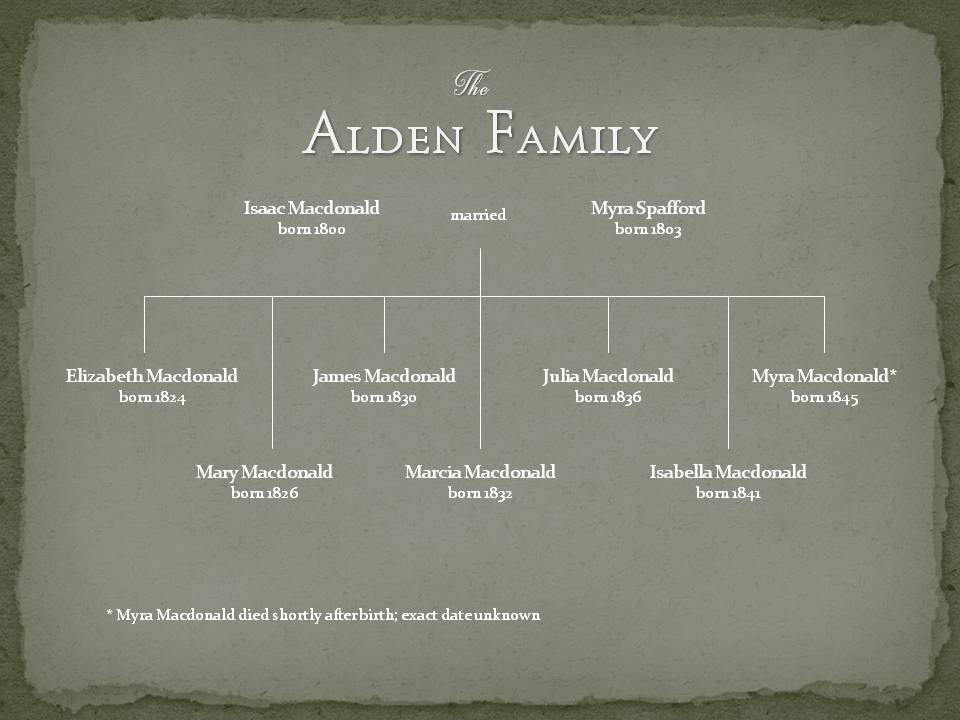
Being the youngest child in a family isn’t always easy. Isabella’s siblings were quite a bit older than she. Closest in age to Isabella was her sister Julia, who was five years older. (Click on the image below to see Isabella’s brother and sisters.)
In her memoirs, Isabella described herself as possessed of a temper “that was easily set aflame,” and that temper was often directed at Julia.
Once during an argument, Isabella hotly declared:
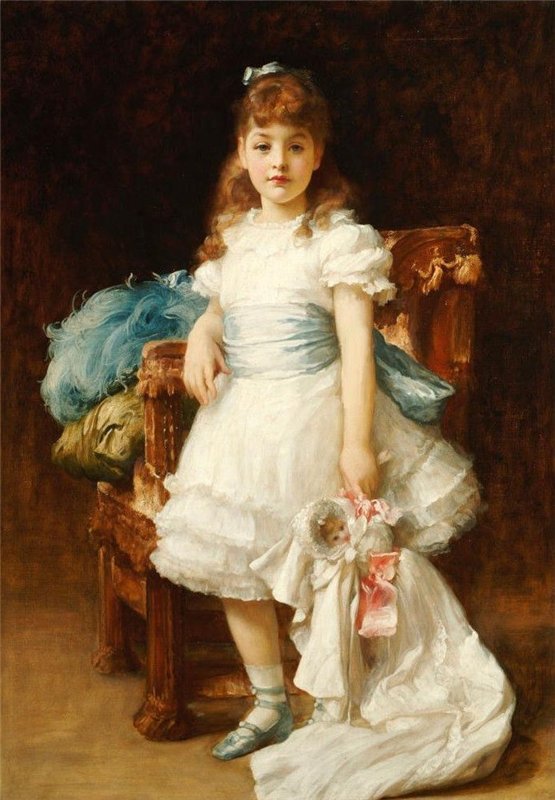
“I don’t love you a bit! And I won’t live here with you anymore. I’ll go to Aunt Ibbie’s house and live there until you go to bed!”
“Well, joy go with you,” Julia calmly replied, which only increased Isabella’s temper.
“Joy shall not! I’ll go alone!”
Her mother heard the argument from the next room and said, “Poor child! I’m afraid you are right. Joy never goes with people who are naughty.”
Isabella writes that the tone of her mother’s voice—sadness mixed with tenderness—touched her deeply. She also realized that Joy—whoever he or she was—never went anywhere with naughty people.
It was one of the first lessons she remembered from her childhood about controlling her temper, but it wouldn’t be her last. Isabella wrote lovingly about her mother and the careful way she helped Isabella learn to manage her willfulness. And after the incident with Julia, Isabella resolved to never again hear the sadness in her mother’s voice over her naughty behavior.
You can read previous posts about Isabella’s childhood:
Isabella Alden was born on this date, November 3, 1841, in Rochester, New York.
She was the sixth child born to Isaac Macdonald and Myra Spafford Macdonald.
There was quite an age difference between Isabella and her older siblings; only fourteen months after Isabella was born, her eldest sister Elizabeth married at the age of 19.
Besides being the year of Isabella Alden’s birth, 1841 was important for a number of reasons. Here’s a brief list of other momentous events that occurred in 1841:
Hong Kong was proclaimed a sovereign territory of Britain
US Supreme Court ruled the kidnapped slaves from the Spanish schooner the Amistad were free
Orlando Jones patented cornstarch
The first steam-powered fire engine was tested in New York City
Vice President John Tyler became the 10th President of the United States after the death of President William Henry Harrison
Horace Greeley began publishing the New York Tribune
Edgar Allen Poe’s book Murders in the Rue Morgue was published, America’s first detective novel
The first wagon train left Independence Missouri for California on May 1st and arrived in California six months later on November 4
Thomas Cook opened his first travel agency
John Hampton patented the venetian blind
Alabama became the first state to license dental surgeons
There’s no limit, so stock up on eBooks while you can! Just use the promo code below, based on where you live and date of purchase:
Canada
October 28th – October 31st
Promo Code: CA50SALE
United States/Australia/New Zealand
October 27th – October 30th
Promo Code: GET50SALE
United Kingdom
October 30th – November 2nd
Promo Code: UK50SALE
Now’s your chance to save on Isabella Alden and Grace Livingston Hill titles, as well as many other Kobo e-books. Click on the Kobo link to go directly to their site. Happy shopping!
Some of Isabella Alden’s most memorable heroines were single, strong-willed, and determined to make their own way in the world. Miss Sarah Stafford was one such heroine. In Missent; the Story of a Letter, Miss Stafford decided to buy and furnish her own home, a remarkable and unusual plan for a young woman at a time when women couldn’t vote, and were legally barred in many states from owning property.
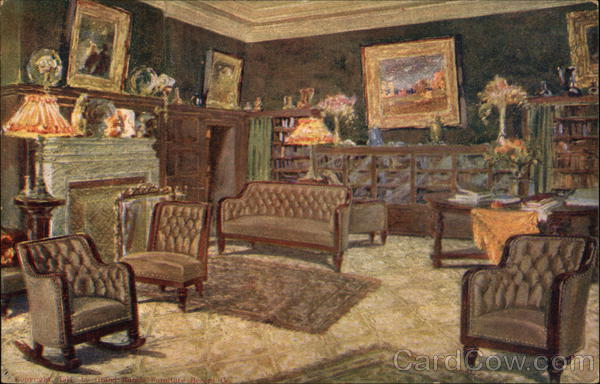
A 1906 Jordan Marsh advertisement for library furnishings
But Miss Sarah Stafford was looking for her dream home. She was alone in the world and though she’d found some happiness boarding in the homes of others, what she really wanted was a place to belong. And so she decided to buy her own house.
A 1907 Jordan Marsh ad for furnishing a reception hall
Once she made her decision, Miss Stafford turned to her friend David Durand for help. With his expertise, she was able to find a house to buy and negotiate a fair price with the seller. But Mr. Durand’s help didn’t stop there. Isabella wrote:
Then began the delightful task of furnishing. In this, as in the matter of selecting and buying, Mr. Durand was an invaluable assistant.
Parlor illustration from a 1911 furniture store trade card
Day after day, Miss Stafford met Mr. Durand at furniture stores, or carpet warehouses or any of a number of establishments as he helped her select the furnishings for her new house. Together they chose items for every room, even for a little section of the house she had named her very own “cozy corner.”
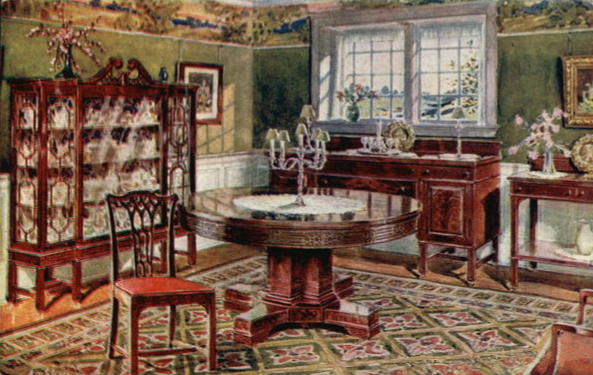
Dining room illustration from a 1912 furniture store advertisement
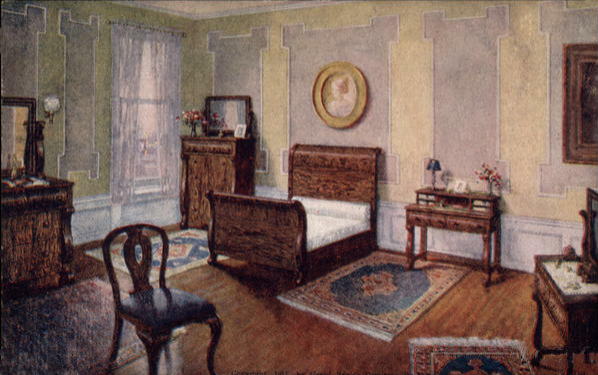
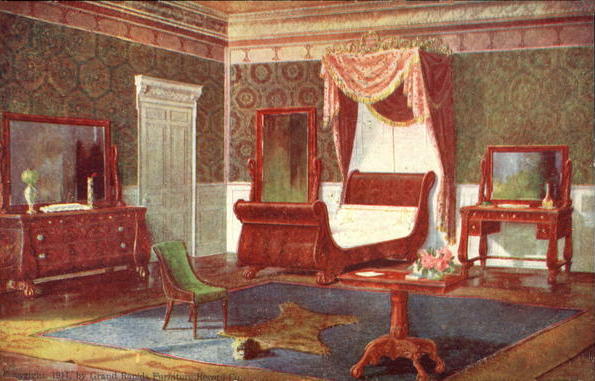
We know from Isabella’s story that both Miss Stafford and Mr. Durand had exquisite taste and chose lovely items for the house. But what did the furnishings look like? The illustrations in this post give some clues. They illustrate what the fashions in home furnishings were like around the time Missent was published in 1900.
Illustration from a 1912 furniture store advertisement
After several weeks of shopping together, Miss Stafford realized something rather important:
It was nearing completion, and was as nearly perfect as taste and skill and care could make it; but it was growing daily more lonely to her. … She had done her utmost for it, and Mr. Durand had been most kind and patient, and had hunted through many shops in search of certain old-fashioned things for which she had expressed a wish; yet, as often as she thought of herself there, a sense of loneliness and dreariness stole over her.
1912 advertisement from Flagg and Willis House Furnisher
Sarah Stafford came to realize that “rooms and furniture did not make a home.” Suddenly, the prospect of being alone again—even in a house she owned—was not at all what she wanted. Little did she suspect that Mr. Durand understood exactly what she was feeling.
1912 advertisement for bedroom furniture from Flagg and Willis House Furnisher
Very soon, Mr. Durand had a plan of his own that would both help and surprise Sarah Stafford … and ensure that she would never know a lonely day again.
You can find out more about Missent; the Story of a Letter by clicking on the book cover.
In her novels, Isabella Alden often described a character’s hair style as an indicator of the character’s personality and lot in life.
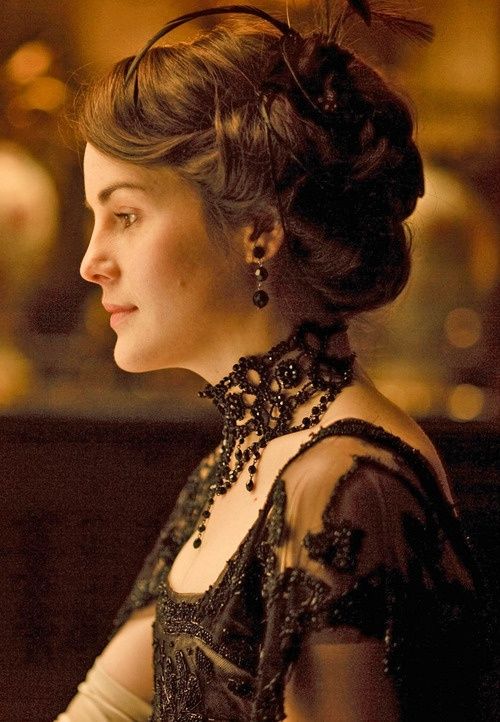
Lady Sybil Crawley’s hair; Downton Abbey
For instance, Mrs. Carpenter, who took in laundry to support herself and her husband in Her Associate Members, dressed very plainly, “her hair stretched back as straight and as firmly as comb and hairpins will accomplish.”
By contrast, this is how Isabella described wealthy Elsie Chilton in John Remington, Martyr: “Elsie Chilton, dressed in brown, her gold hair in a knot below a jaunty little brown cap, escaping here and there in waves and rings about her forehead.”
There was quite a difference between the two women’s hairstyles. Elsie wore her hair in a fashion that proclaimed her to be a lady of leisure. As a general rule, the more elaborate the hairstyle, the higher the probability someone dressed the lady’s hair for her.
Lavinia Swire, Downton Abbey
If you’ve watched the TV shows Downton Abbey, Selfridges, or The Paradise—all set in the early 1900s—you may have marveled over the elaborate hairstyles worn by the female characters.
Cora, Countess Grantham, Downton Abbey
Ladies of rank—like Downton’s fictional Countess of Grantham and her daughters, Mary, Edith and Sybil—employed maids to dress their hair for them every morning; but the heroines of Isabella Alden’s books lacked such privileges. They had to dress their hair themselves, and it was not an easy task to achieve the fashionable hair styles of the early 1900s.
Lady Mary Crawley, Downton Abbey
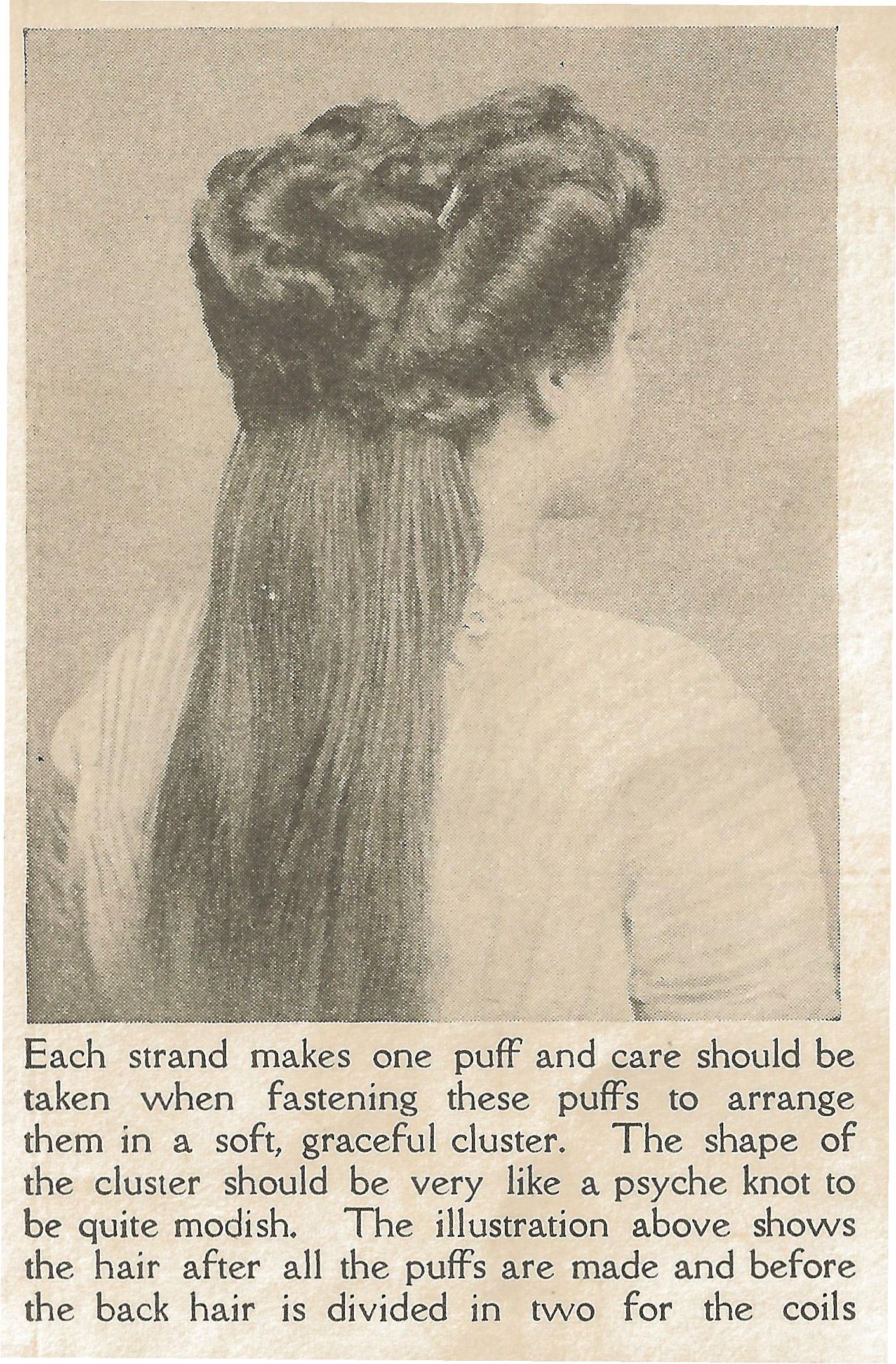
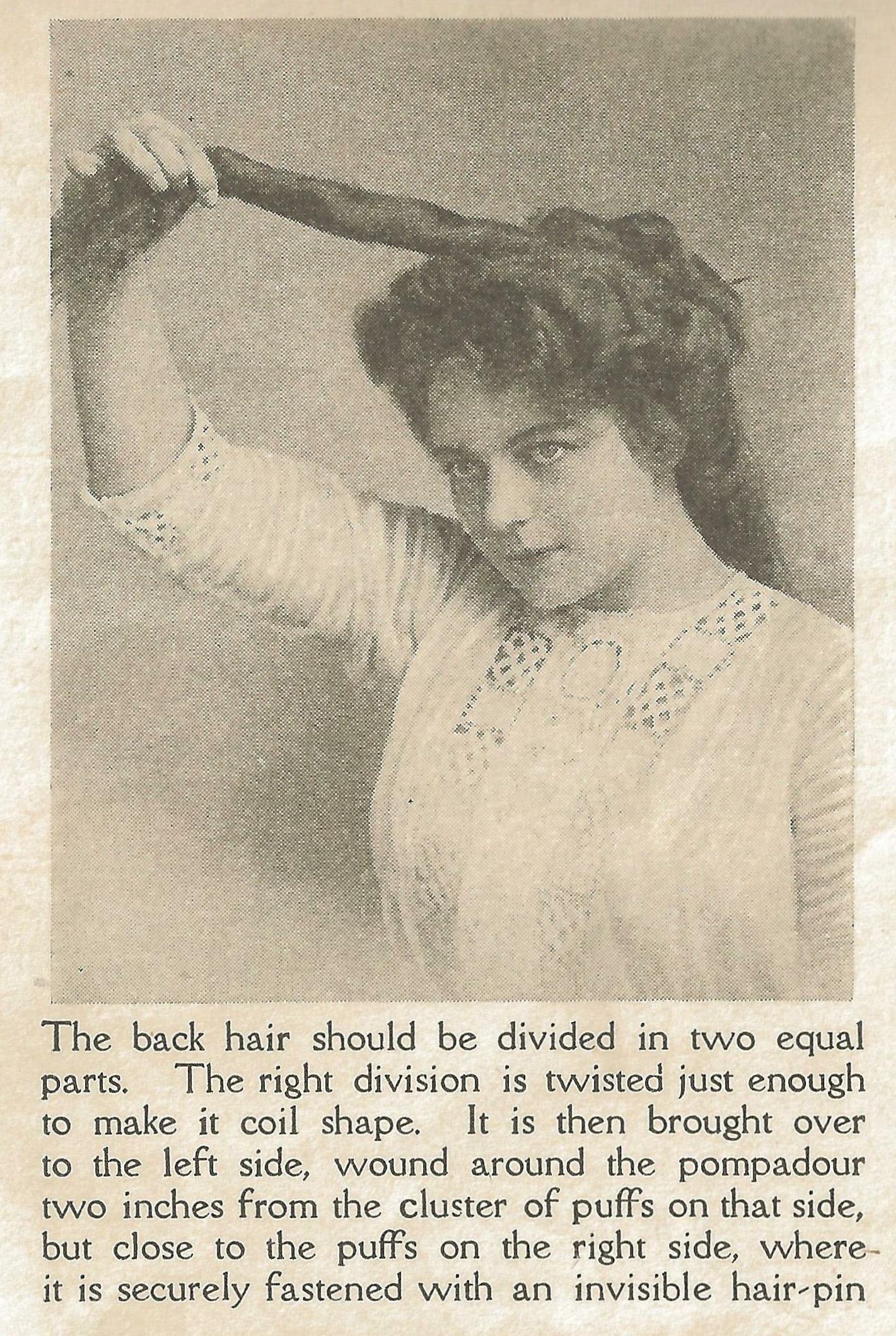
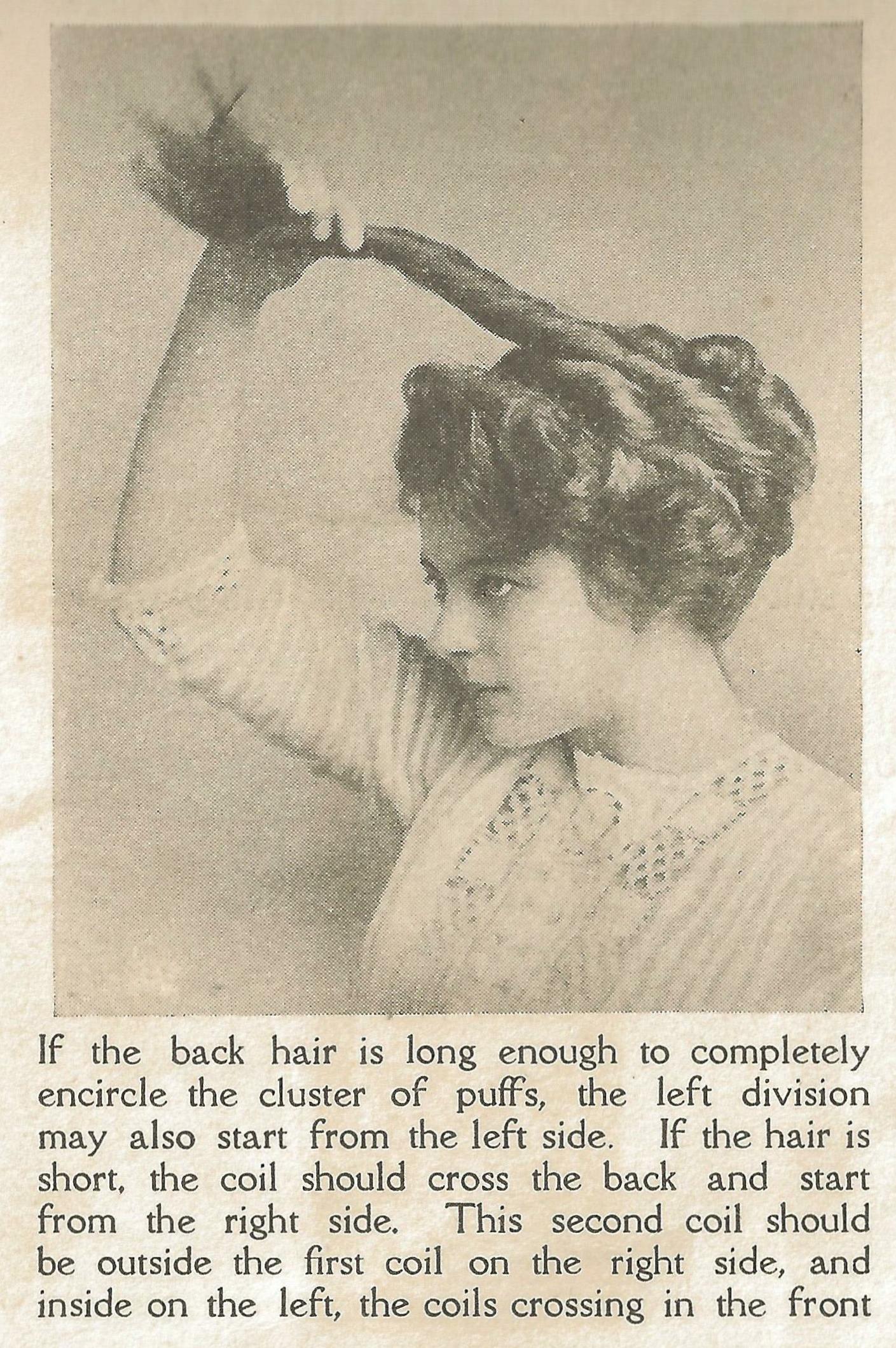
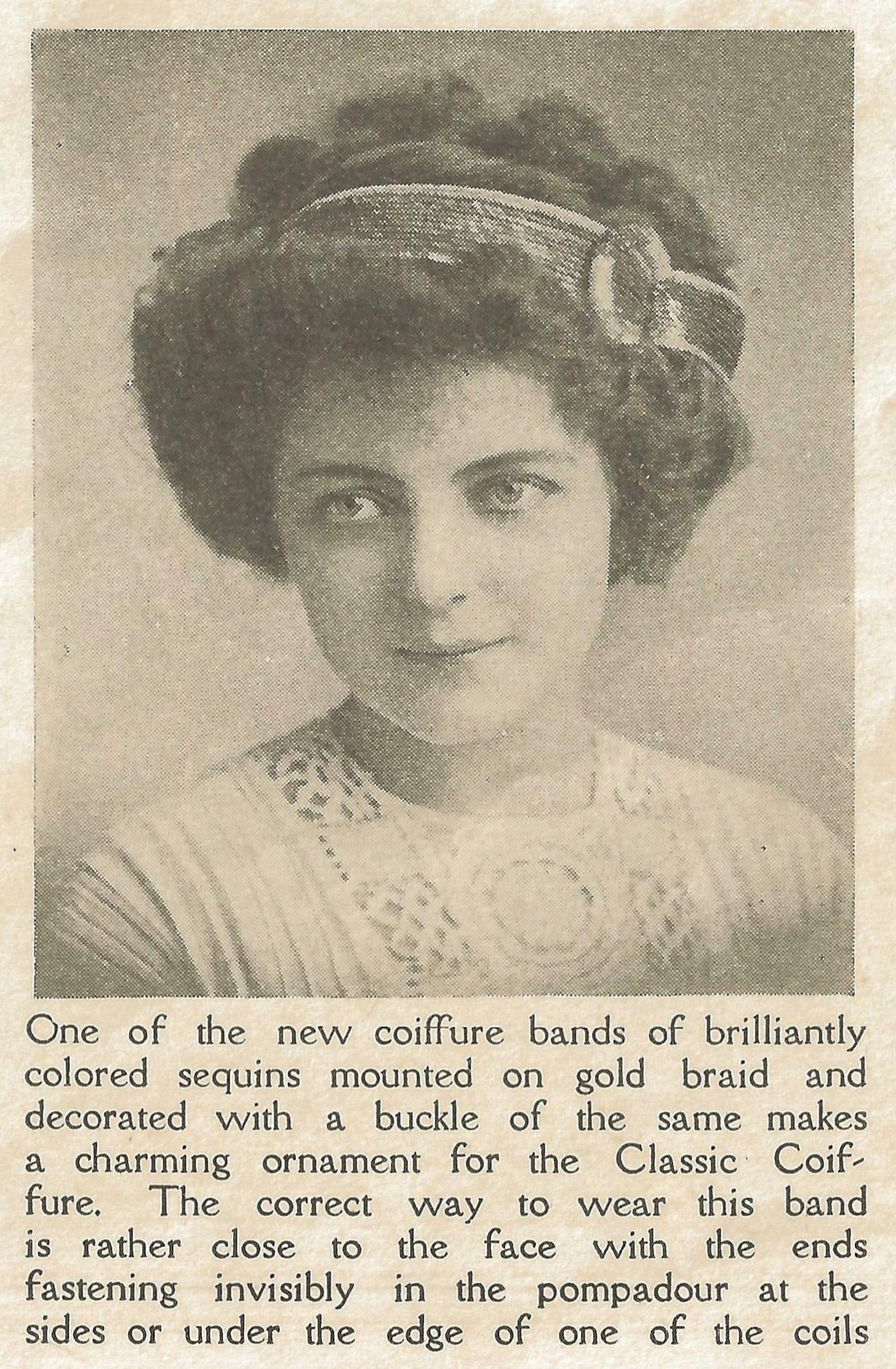
Ladies’ magazines often published pictorials instructing women on how to create the latest hairstyles. Below are step-by-step instructions for assembling intricate coils and puffs, as featured in a 1911 edition of The Woman’s Home Companion magazine:
Not every woman had thick, lush hair like the model in the instructions. Ladies with hair of a finer texture often augmented their own hair with purchased hair pieces.
Hair on Approval
Ladies could purchase hair pieces in different lengths they could style along with their own hair. This ad, from the same 1911 magazine, offered to ship high class hair “on approval” to women.
And this ad proclaimed, “Send no money” to order human hair, either in different lengths or clusters of puffs:
Have you any unkind thoughts?
Do not write them down;
Write no word that giveth pain—
Written words may long remain.
Have you heard some idle tale?
Do not write it down.
Gossips may repeat it o’er,
Adding to its bitter store.
Have you any careless jest?
Bury it, and let it rest—
It may wound some loving breast.
Words of love and tenderness,
Words of truth and kindliness,
Words of comfort for the sad,
Words of gladness for the glad,
Words of counsel for the bad—
Wisely write them down.
Words, though small, are mighty things,
Pause before you write them.
Little words may grow and bloom
With bitter breath or sweet perfume—
Pray, before you write them.
These words of advice were published in the December 11, 1886 edition of The Pansy magazine. They’re just as wise and relevant today as they were in 1886!
Reviews and giveaways for Christian fiction and sweet, clean fiction. Bringing readers information on great stories and connecting authors with their readers.

 “I don’t love you a bit! And I won’t live here with you anymore. I’ll go to Aunt Ibbie’s house and live there until you go to bed!”