What One Good Library Can Do

When Isabella Alden began writing her beloved “Pansy” books in the 1870s, the literary landscape looked very different than it does today. There were few public libraries like the ones we have now; instead, churches filled that role by establishing their own library systems.

The Sunday-school library was a powerful force in 19th-century America. They didn’t just lend books—they curated collections of books that shaped readers’ moral and spiritual development.

Not all Sunday-school libraries were created equal; some churches seemed to have unlimited resources to maintain a well-stocked library of five-hundred books or more, displayed in neat rows on well-built shelves; while others had only a few titles in their collection.
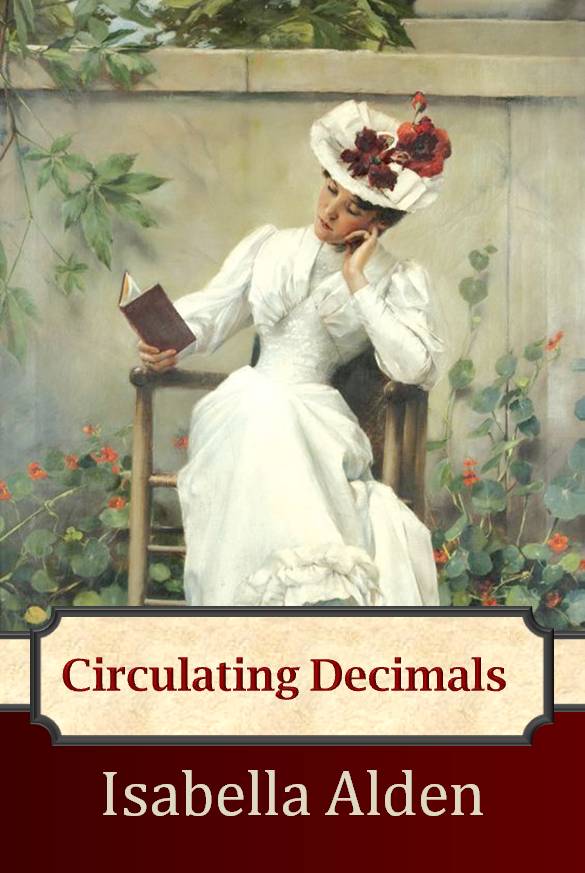
Cover of the story "Circulating Decimals" by Isabella Alden, showing a young woman dressed in the style of about 19095 wearing a white dress with white sleeves and a high color and floor-length skirt. On her head is a white hat with large red poppy flowers. She sits on a rustic wooden chair in a garden, holding a book in one hand, which she is reading, while her head rests on the other hand as her elbow rests on the arm of the chair. Behind her is a stone garden wall with vines and red flowers creeping up the wall.

Isabella’s short story, “Circulating Decimals” is about the efforts of a community to raise money for just such a church library that has fallen into a “disgraceful condition” due to neglect and lack of funds. (You can click here to read the story for free.)

But regardless of size or budget, church libraries had one mission in common: to offer readers books that supported religious instruction, moral development, and the spiritual growth of the congregation.

Churches established committees to evaluate each potential library addition against a set of religious standards. The minister often played a role in recommending or vetoing books, which were also chosen based on their theological soundness and ability to promote standards of Christian living.

The Grace Methodist Episcopal Church of Taunton, Massachusetts had a rather large library of over five-hundred books, and included some of Isabella’s novels, as well as books by Margaret Sangster, E.P. Roe, and other Christian fiction authors.

The church divided their book collection into categories and published a catalog for members of their congregation. The fact that Isabella had ten of her books included in the catalog shows how well the moral messages of her stories aligned with the church’s values and appealed to readers of all ages.

(You can click on the image above to see the entire Grace M.E. Sabbath-school Library catalog of 1904.)

Mainstream publishers like Little, Brown and Company actively marketed their wholesome books to churches. This advertisement in “The Sunday School Library Bulletin” magazine shows their newest offering to churches included a new edition of “Little Men” by Louisa May Alcott:
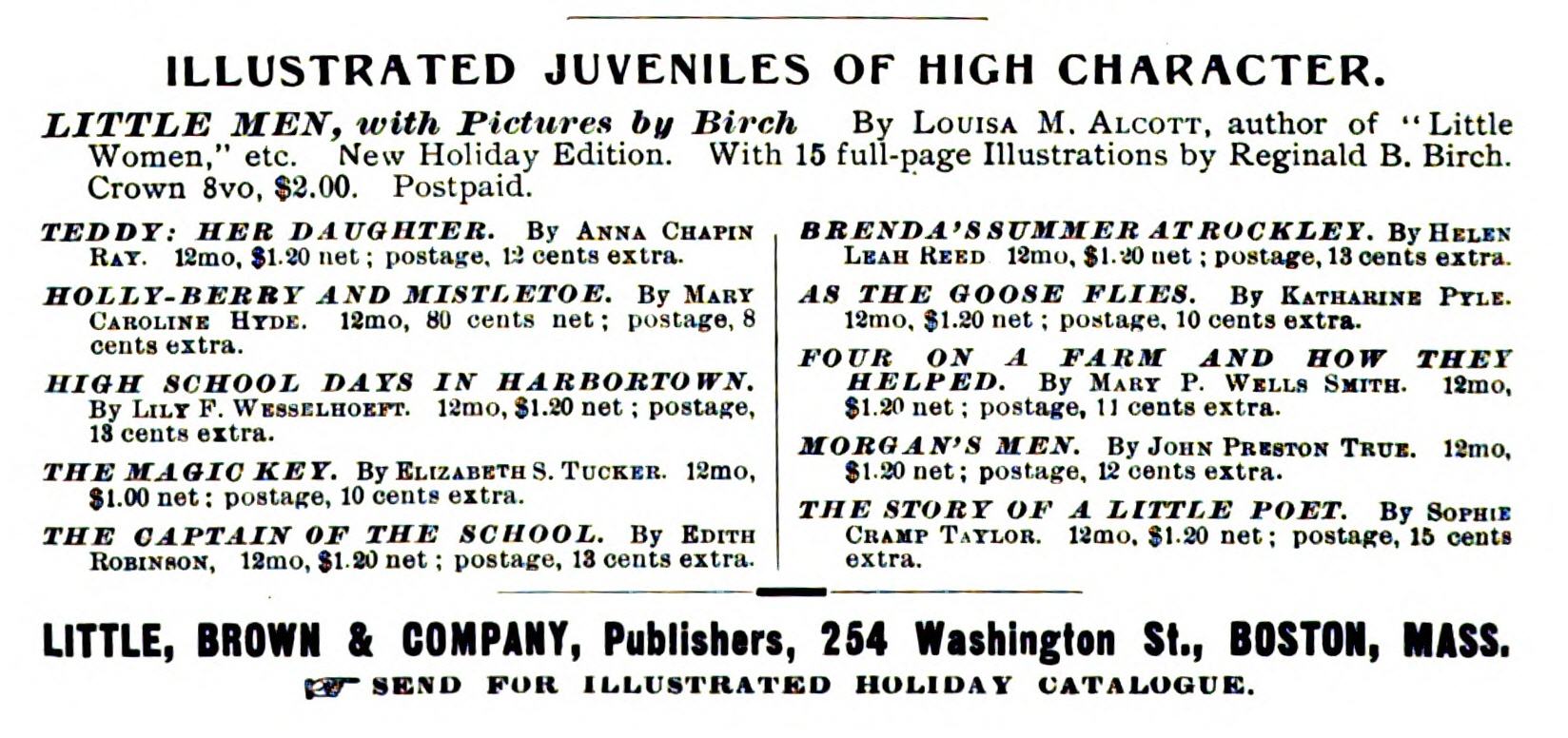
Magazine ad for "ILLUSTRATED JUVENILES OF HIGH CHARACTER," listing "Little Men" by Louisa M. Alcott in large letters, as well as 10 other books. At the bottom is the name of the publisher, Little, Brown & Company of Boston Mass. with an address to write for an "illustrated holiday catalogue."

And organizations like The National Temperance Society also marketed their books directly to churches. Their ad below features a temperance novel by Isabella’s friend Theodosia Foster (who used the pen name of Faye Huntington):
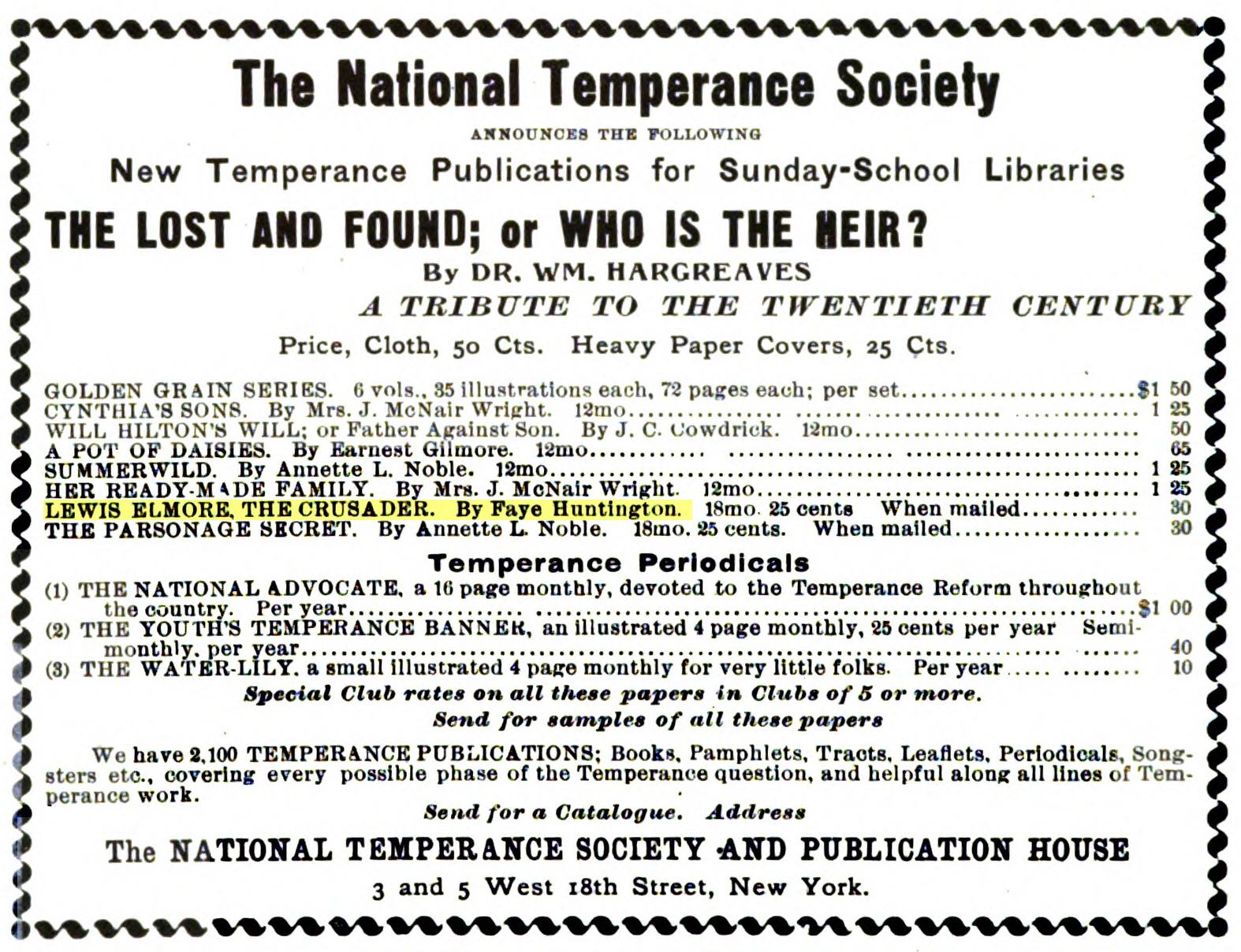
Magazine advertisement for The National Temperance Society new publications for Sunday-School Libraries, listing "The Lost and Found; or Who is the Heir?" by Dr. Wm. Hargreaves. It also lists 8 other books, including Lewis Elmore, The Crusader by Faye Huntington, as well as 3 temperance periodicals. It offers "special club rates" and gives an address to send for a catalog and samples of the periodicals.

Church libraries established systems for inventorying and lending books. They assigned an inventory number to each book, and issued library cards to readers.

A square label affixed to the inside cover of a book. On the first line of the word "NO" with room to write a number; the number 61 was written and crossed out, and the number 77 written beside it. Below are printed "SUNDAY SCHOOL LIBRARY of the Evengelical [sic] Lutheran Church, Springfield, Ill." The text is surrounded by a fancy Victorian-era design of swirls and dots.
The numbered book plate from a book in the Sunday school library of the Evangelical Lutheran Church of Springfield, Illinois.

They also created rules for borrowing:
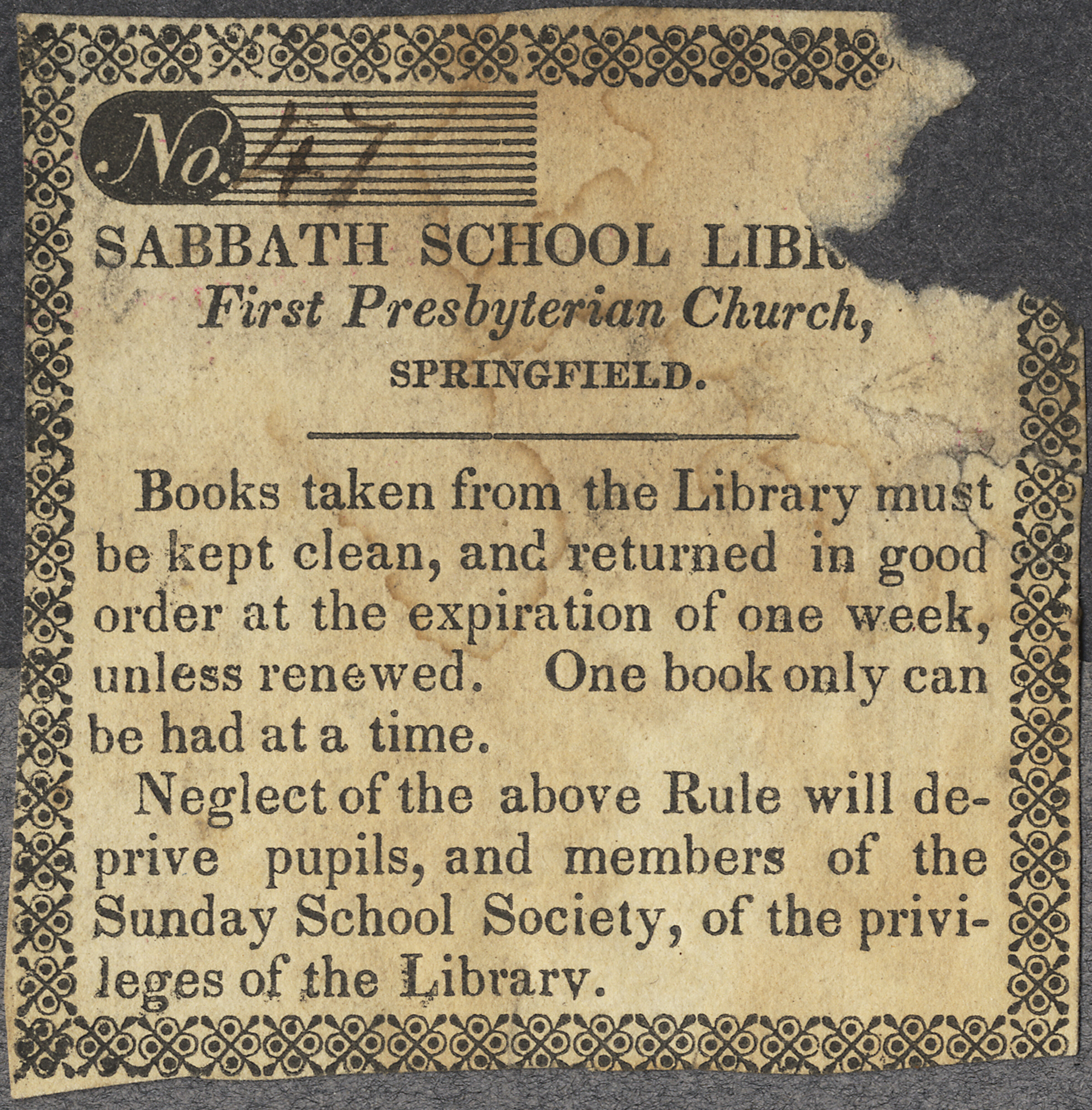
A square label affixed to the inside cover of a book. The top line has the book No. 47, then, "SABBATH SCHOOL LIBRARY, First Presbyterian Church, Springfield." Below is typed: "Books taken from the Library must be kept clean, and returned in good order at the expiration of one week, unless renewed. One book only can be had at a time. Neglect of the above Rule will deprive pupils, and members of the Sunday School Society, of the privileges of the Library."

Church libraries were a lifeline for readers, especially in smaller and frontier communities where there were no free public libraries. But that began to change in 1886 when wealthy steel magnate Andrew Carnegie began funding the building of public libraries across the country. By 1923 he had financed the building of over 1,600 public libraries where borrowers could choose from thousands of book titles, including the most popular books of the day.

Old colorized postcard of the public library in New York City showing a sprawling, multi-story building in classical Georgian style with stone steps leading to the entrance flanked by stone columns. The library is located on the corner of two intersecting streets with the tall buildings of the New York skyline in the background.
The New York City Public Library, opened to the public in 1911.

The “safe” books Isabella wrote went out of print, while modern novels by Ernest Hemingway, Edith Wharton, and F. Scott Fitzgerald filled the shelves at public libraries.

Sunday-school libraries still existed, but their influence waned to such an extent that in 1930 a newspaper in Greensboro, North Carolina published an editorial just after Isabella’s death. The editorial fondly recalled the church libraries of years gone by:

There were no sex novels; no crime novels; no filthy “realism,” which portrays the perversions of human nature as if it were life itself. Romance there was, in glorious gobs. Many of the books seeped sentimentality. And always there were happy endings.

He went on to write that Isabella’s books “made for clean lives and happy homes and good society.” In her stories, “the problems were the problems of everyday people trying to be good. If they were somewhat morbid and over-introspective, so was the era for which they were meant.”

Isabella truly did write for the era in which she lived; but it’s important to remember that her books succeeded in Sunday school libraries not just because they met church requirements, but because Isabella had a particular understanding of literature’s purpose—that stories should help readers have a closer walk with God and become better versions of themselves.

Maybe that’s why her “Pansy” novels, despite going out of print, are still read and loved by new readers today, and remembered fondly by those who discovered them on long-ago Sunday afternoons in church libraries.

Does your church have a library? What are the kinds of books it offers?

Fan Mail and Ester Ried

At the height of her popularity, Isabella Alden was one of the most widely-read authors in the world. One of the things that made her so popular—and unique—was the varying ages of her readers: she had just as many children who were dedicated fans of her books as she had adult fans. And they all wrote letters to her.

She received letters by the thousands, addressed to her publisher, to her home, and to the offices of her magazine, The Pansy. And she answered them all!

Isabella Alden in an undated photograph.

Some fans wrote to request her autograph and a photo. Others asked for advice on how to become a great author or they sent their own manuscripts and asked for her opinion.

Some asked for advice on other topics, from how to get a good husband to the best way to stop fingernail biting. One fan even asked for pieces of her best dress so they could be sewn into a patchwork quilt the fan was sewing!

An early cover for Ester Ried

But the fan mail Isabella received most often was about her book Ester RiedEster Ried was incredibly popular and prompted scores of readers to send Isabella letters thanking her for the book’s message.

New cover for the 2016 release of Ester Ried

Fans wrote to Isabella about how they saw themselves in Ester’s struggles and her impatience with life’s daily annoyances. But mostly, readers identified with the lessons Ester learned; they took to heart the promise that God would bring peace and happiness to their lives, if only they trusted in Him.

What started as a single book soon blossomed into an ongoing series. The Ester Ried series gave fans of the original book glimpses into the lives of the characters they loved. Readers grabbed up each new story about the Ried family members and their trials as they grew up, married, and learned to trust God to help them through a sometimes difficult world.

Cover_Julia Ried

Two years after Ester Ried was published came Julia Ried, a sequel that focused on Ester’s younger sister Julia and the lessons she learns about faith in times of temptation. It also brought readers up to date on Abbie Ried’s story after the tragic turn her life took in Ester Ried.

Cover_The King's Daughter

The following year Isabella published the third book in the series, The King’s Daughter. In this book Isabella introduced the character of Miss Dell Bronson. Unlike Ester or Julia, Dell was rock solid in her faith and trusted God in her daily life, but she still had challenges to face. And she still had lessons to learn in Wise and Otherwise, the next book in the series.

Cover_Wise and Otherwise

Isabella commissioned her best friend Theodosia Foster to write book five. Echoing and Re-Echoing (written under Theodosia’s pen name Faye Huntington) centers around Ralph Ried, Abbie’s brother, who, as a new minister, struggles to reach his flock through his Sunday sermons.

Cover_Echoing and Re-echoing

Isabella’s fans particularly loved the sixth book in the series, Ester Ried Yet Speaking, because it included the character of Flossy Shipley. Flossy was originally introduced to readers in Four Girls at Chautauqua. In Ester Ried Yet Speaking readers got to find out what happened to Flossy after her marriage to Evan Roberts. They also met Dr. Everett, Hester Mason, and Joy Saunders, who were the main characters in Isabella’s later book, Workers Together; An Endless Chain.

Cover_Ester Ried Yet Speaking

Isabella waited nine years before she published Ester Ried’s Namesake. It was intended to be the last book in the series, but fans wrote to beg for more.

Cover_Ester Rieds Namesake

Even Isabella’s niece, Grace Livingston Hill, encouraged her to write “one more long story.” Grace suggested she write about Ester Ried’s granddaughter or great-granddaughter, and thereby reach an entirely new generation of readers with the original book’s message.

But by that time, Isabella was 86 years old and in failing health. One more “long story” was beyond her abilities, she told Grace. “You have altogether too high an opinion of me.”

Many fans of the series think the Ester Ried books are perfect, just as they are; the only difference is that today’s readers have the option to read the books electronically. A new generation of Ester Ried e-books is available on Amazon and other e-book retail sites.

Boxed set e-book cover for Ester Ried, the Complete Series.

Have you read the books in the Ester Ried Series? Which book is your favorite?

You can click on any of the book covers in this post to find out more about each title.

BFFs at Oneida Seminary

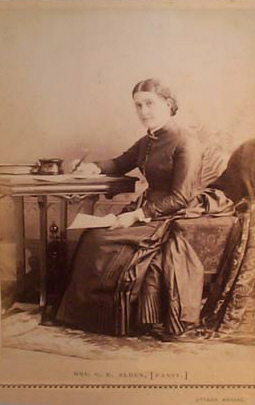
Young Isabella Alden in an undated photo

For most of her young life, Isabella Alden was educated at home by her parents and an occasional tutor. But all that changed when she was about fourteen years old.  That’s when her parents enrolled her in Oneida Seminary in Oneida, New York.

The school was almost 80 miles away from her family’s home in Johnstown, New York; but that didn’t mean Isabella would be at the school alone.

Her older sister Marcia and Marcia’s husband Charles Livingston were also at Oneida Seminary. Marcia and Charles lived in apartments on the campus because Charles was a professor at the school; so Isabella had family close by.


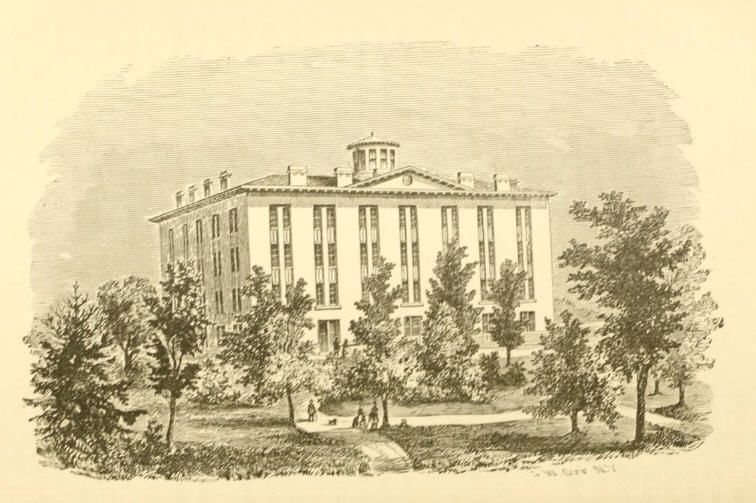
Oneida Seminary
Oneida Seminary


At Oneida Seminary the male and female students were separated in their classrooms, study areas and living quarters; so making strong friendships with other female students would have been natural for Isabella. She often crossed paths with Theodosia Toll, who was called Docia. Docia was one of the most popular girls at Oneida Seminary. Her family owned a large farm called Locust Shade about 7 miles away in nearby Verona, New York.

Docia was three years older than Isabella. She was a better scholar, too. She had a reputation for being keen and quick-witted, good-humored and kindly. Everyone thought well of her.

Undated photo of Theodosia Toll


Knowing Isabella was far from her family home, Docia invited her to spend her weekends at Locust Shade but Isabella always refused the invitation. Isabella wrote in “Memories of Yesterdays”:

“I had taken a great dislike to that girl in the earliest days of our acquaintance. . . I avoided her on every occasion possible and declined her invitations for the weekends so haughtily that I wonder she ever asked me again.”

One day Isabella went out of her way to avoid Docia by visiting her sister Marcia in her apartments. She didn’t hold back in complaining to Marcia about “that insufferable girl,” Docia.

Undated photo of Charles Livingston


“If she ever asks me again to go home with her for over Sunday, I’m going to tell her that it takes all the skill I have to invent ways of escaping her society here, and I can’t be expected to follow her home, even though it would be a treat under pleasanter conditions to have a ride.”

Charles had been in the next room and overheard everything Isabella said.

“What a foolish girl you are,” he said almost sadly. “I was saying to Marcia this morning that I could not imagine why you had taken such a dislike to Docia. She is the best scholar in her class, and every teacher in the school speaks highly of her. Certainly her character is above reproach. As for her family, if you knew them you would consider it an honor to be invited to their home. I should.”

After Charles’s scolding—and much prayer and soul searching—Isabella realized why she disliked Docia . . . she was jealous of her!

“My aroused conscience showed me just where I stood. Faint and faulty as were the proofs of it in my life, I knew even then that I belonged to the Lord Jesus Christ; and He came graciously to my help at that hour and showed me plainly not only how offensive in his sight had been my attitude, but also how I had misjudged the other girl.”

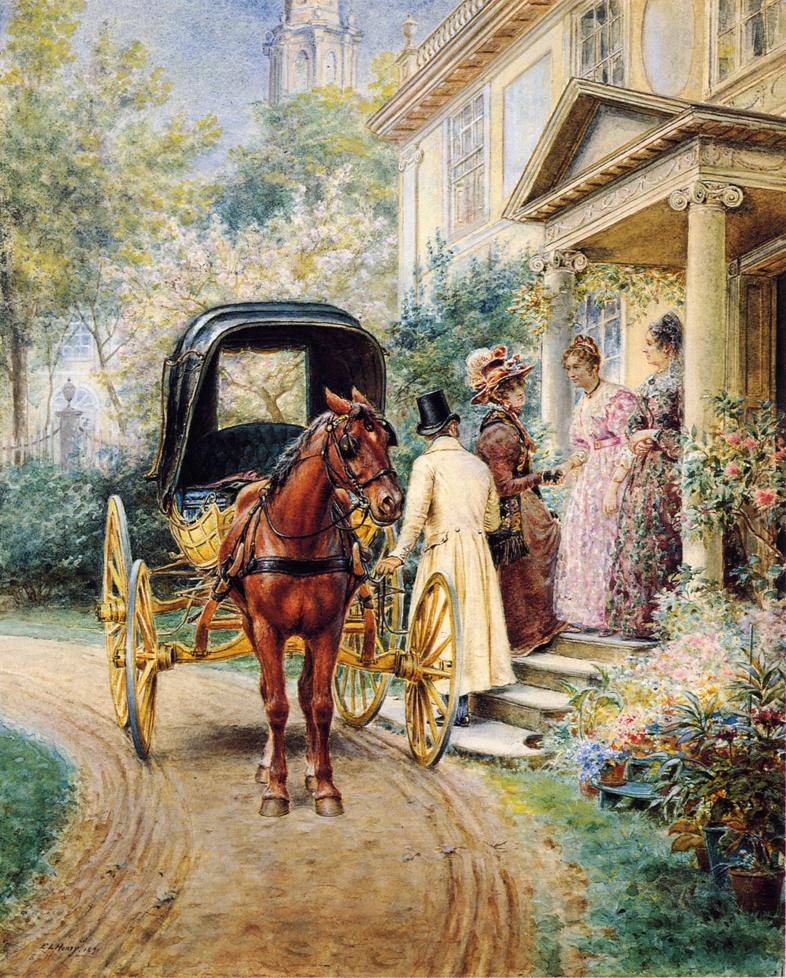
The next time Docia invited Isabella to go home with her for the weekend, Isabella accepted. Three weeks later she drove in the Toll family carriage with her new friend Docia to Locust Shade, where she was made a welcome addition to the family. After that first visit, Isabella spent many weekends and school vacations at Locust Shade.

Greeting the Guest by Edward Lamson Henry


That was the beginning of Isabella’s lifelong friendship with Docia Toll. In later years they would both marry, have families of their own, and move away to different parts of the country; but they remained fast friends and confidants who loved each other and collaborated in creating short stories and novels that bore witness to God and their Christian faith.

Who is the Tallest? by Jerry Garrett