Isabella and the Interrupted Night

For more than a quarter of a century, Isabella edited newspapers (like The Pansy), wrote innumerable novels and short stories, taught classes on homemaking and child rearing, served congregations as a pastor’s wife, and designed Sunday school lessons for children. In between all that, she somehow managed to travel extensively.

Sometimes she was called upon to deliver an address at a conference. Other times she was the guest of a ladies’ missionary society or Bible study, where she often read chapters from one of the stories or novels she was working on at the time. (You can read more about that here.)

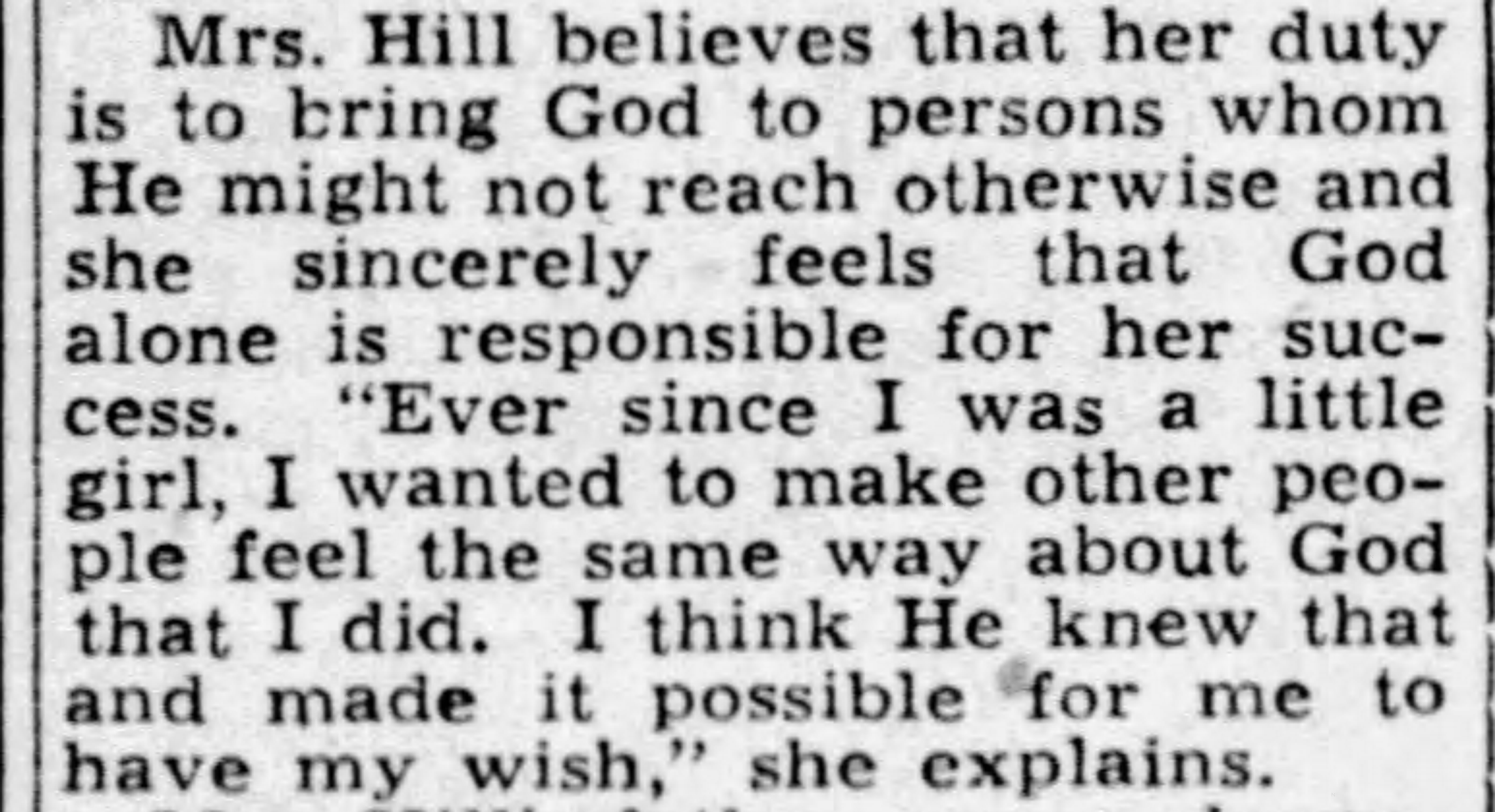
Newspaper clipping of an article titled "W.C.T.U. Day." Monday, Aug. 22, will be W.C.T.U. day at the Central New York Assembly, Summit Park. The program follows: 10:30 Crusade Psalm, crusade hymn and prayer; music; conference, Department Work, led by county president; Woman and Temperance, Mrs. G. R. Alden (Pansy); 12, noontide prayer; music. Afternoon - Music; The Saloon a National Problem Rev. Stanley B. Roberts; 2:45, music; medal contest; music; report of judges. Mrs T. M. Foster is county president of the W. C. T. U. and Mrs. L. T. Sherrill musical director.
From the Rome, New York “Daily Sentinel,” August 18, 1898.

When she returned home from one of her many trips, her family gathered around her so she could tell them all about the places she went and the people she met. Her niece, Grace Livingston Hill wrote:

“She saw everything, and she knew how to tell, with glowing words, about the days she had been away so that she lived them over again for us. It was almost better than if we had been along, because she knew how to bring out the touch of pathos or beauty or fun, and her characters were all portraits. It listened like a book.”

One time in particular, Isabella returned home with an extraordinary story. Speaking at the same event had been a woman who was active in many of the same efforts that were of interest to Isabella, such as woman’s suffrage, and the temperance movement. Like Isabella, the woman was well known across the country as a writer and as a much-in-demand public speaker. It was this woman who recounted to Isabella an incident that happened to her.

With the woman’s permission (and with a promise to keep the woman’s identity a secret), Isabella wrote a short story based on the woman’s experience.

The premise of the story is this: A woman traveling by train to a speaking engagement notices an older man and younger woman traveling together on the same train. She quickly realizes she had come upon a couple in the middle of an elopement—and that the young would-be bride is having second thoughts!

How Isabella’s friend intervened (and what happened after) were recounted in Isabella’s story. When it was finished, Isabella sent the story off to a Christian newspaper that was pledged to publish a certain number of her stories each year.

To her surprise, the editor wrote back to ask Isabella if she had considered that the story might suggest to young people “evil ways of which they had never read.”

Can you imagine that? The editor actually worried that Isabella’s story about an elopement might have a negative or “evil” influence on the young people who read it!

In the end, Isabella withdrew the story, locked it away, and forgot all about it. Then, in the late 1920s, she came across the old manuscript and decided to expand the story into a novel.

The result was An Interrupted Night, and the story’s lead character of Mrs. Mary Dunlap was based on Isabella’s friend and the unusual events she told Isabella about decades before.

An Associated Press newspaper photo of Isabella in her later years.

By the time she finished writing the book and submitted it to a publisher, Isabella was in frail health. When the publisher asked her to make some edits to her manuscript, Isabella’s niece, Grace Livingston Hill, stepped in to help her “put it into final shape.”

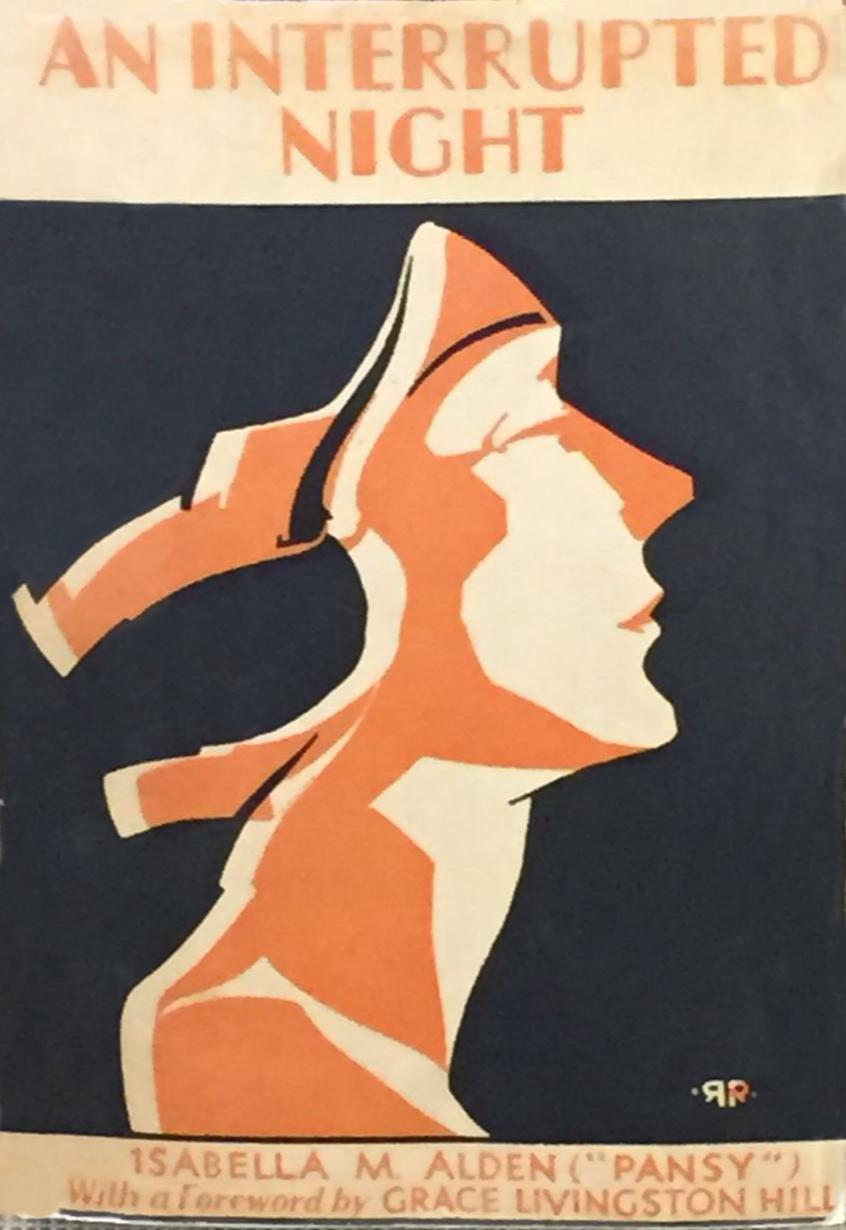
The book was released in the fall of 1929 with a decidedly modern-looking cover:
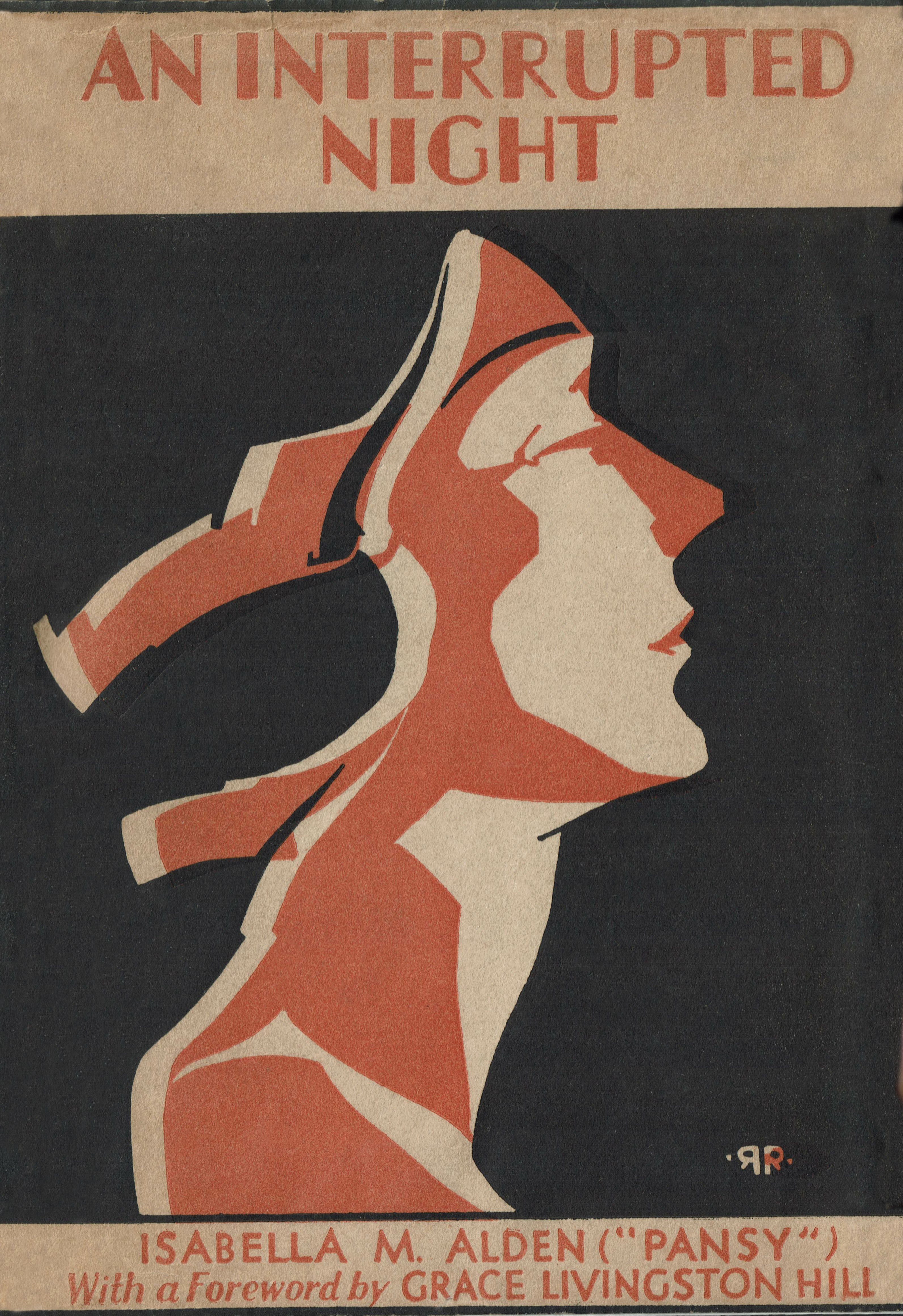
Book cover illustrated in the art deco style of the 1920s with a highly stylized profile of a woman's face drawn in tan and orange set against a plain black background. Set in orange type at the top the title "An Interrupted Night." The same orange type is at the bottom with the author's name.

And it was received by a decidedly modern audience that took the story’s premise of an eloping couple in stride. Isabella later wrote that she “exploded with laughter” when she thought about how much the world had changed in the years since she first wrote the story.

Now An Interrupted Night is available for twenty-first century readers to enjoy with a brand new cover:

Book cover showing a young woman carrying a suitcase striding purposefully down the boarding platform of a train station while other people enter and exit nearby train cars.

Mary Dunlap is on her way to a speaking engagement when the train on which she travels experiences engine trouble and must make an unexpected stop for the night. While frustrated by the delay, Mrs. Dunlap quickly realizes a couple on the train is in the middle of an elopement—and the would-be bride is having second thoughts! Drawing on God’s strength, Mrs. Dunlap intervenes; but can she convince the young woman to abandon her plan and return home to her mother before it’s too late?

An Interrupted Night is now available from The Pansy Shop, along with novels by Rev. Charles M. Sheldon, Mary McCrae Culter, and other Christian authors in Isabella’s circle of family and friends. Click on the tab in the menu above, or click here to check out The Pansy Shop!

BY THE WAY …

Who do you think was the “real” Mrs. Mary Dunlap? Frances Willard or Emily Huntington Miller Perhaps Harriett Lothrop (who wrote as “Margaret Sidney”)? Leave your guess in the comments below!

Grace Livingston Hill at 116 (Books)

Isabella Alden was a prolific writer. Her last book, An Interrupted Night, was published in 1929, just a year before Isabella died at the age of 88.

It’s no wonder, then, that her niece, author Grace Livingston Hill, also wrote well into her “golden years.”

In 1945 Grace celebrated a milestone: 116 books published! And at the age of 80, she began work on book number 117!

Grace at the age of 80 in 1945.

To celebrate her accomplishments, Grace gave an interview with the Associated Press.

On August 5, 1945 newspapers across America published the interview, in which she talked about her writing process.

Perhaps most importantly, Grace related one of the reasons she was drawn to writing:

It’s a delightful article that gives readers a glimpse into Grace’s personality and strong work ethic.

You can read the entire article; just click here to open it as a PDF document.

Happy Birthday, Isabella!

Isabella was born on November 3, 1841 in Rochester, New York.

When she celebrated her 87th birthday in 1928 she was living in Palo Alto, California. A few days later, on November 6, a San Francisco newspaper ran a short article, describing Isabella’s birthday celebrations.

Mrs. Alden is confined to her room, which was filled today with flowers, gifts and birthday messages.

It’s nice to know Isabella received so many expressions of love on her special day!

Amazingly, Isabella was still writing, and the article mentions the last three books she worked on: Memories of Yesterday, The Fortunate Calamity, and An Interrupted Night.

You can read the entire news article below. Just click on this headline to see a large version.


You can read more about Isabella’s home in Palo Alto by clicking here.

Click here to read more about Isabella’s last book, An Interrupted Night.


Isabella’s Last Novel

Much has been written about Isabella’s first book, Helen Lester, and how it came to be published.

Less has been written about her last novel, An Interrupted Night. Here’s an interesting fact about the book: in the same way her first novel Helen Lester was published with the help of her best friend, Theodosia Toll Foster, Isabella’s last novel was published with the help of her beloved niece, Grace Livingston Hill.

Isabella Alden

Here’s how it happened. In 1924 Isabella was 82 years old. During that year she suffered great loss: her dear sister Marcia, her husband Ross, and her son Raymond all died within months of each other. Isabella’s writing took a back seat as she made her way through that difficult time.

Ross and Isabella Alden with their son Raymond in 1916

Two years later, in 1926, Isabella was seriously injured in an automobile accident in Palo Alto, California, where she was residing. She lived with the pain of her injuries for years afterward.

Then, in 1929, due in part to those old automobile accident injuries, Isabella fell and broke several bones including her hip. From that point on, Isabella was confined to a wheelchair and in constant pain.

Still, despite everything she had been through, at the age of eighty-seven she had one more story to tell.

Between intervals of constant pain and visits from friends and well-wishers, Isabella began writing her last novel. But even with her best efforts, she struggled to complete the story because, as she said, her body . . .

. . . was unfit for the work that needed to be accomplished.

Finally, determined to get her promised manuscript into the hands of the publisher, Isabella called upon her niece Grace Livingston Hill for help.

Grace Livingston Hill, 1915.

By that time, Grace was a successful novelist in her own right. Still, Grace said of her aunt’s request:

I approach the work with a kind of awe upon me that I should be working on her story! If, long ago in my childhood, it had been told to me that I should ever be counted worthy to do this, I would not have believed it. Before her I shall always feel like the little worshipful child I used to be.

But Grace took up the task, and helped her Aunt Isabella — by then confined to her bed — finish the book.

The novel was titled An Interrupted Night. Isabella said the story was based on actual facts, told to her by one of the people characterized in the story as “Mrs. Dunlap.”

The cover for Isabella’s 1929 novel, An Interrupted Night.

The novel was published by J. B. Lippincott Company in 1929 and received very favorable reviews.

One particular review, found in the Fort Lauderdale News on July 12, 1929, begins with this this sentence:

Old readers must have gaped with surprise and thought that their glasses were at fault when they read that a new book by Pansy, Mrs. G. R Alden, will be published soon by Lippincott’s. Shades of sainted grandmothers and all the dear old ladies of the Presbyterian fold, who reveled and doted upon Pansy when they were little girls!

That’s quite a beginning to a book review, isn’t it? Although the review begins with a rather sarcastic tone, it ends on a more respectful note. You can read the entire review by clicking here or on the image below.

Because it’s still protected by copyright, we can’t make An Interrupted Night available to you, but copies of the book do surface in libraries and book stores on a fairly regular basis.

If you find a copy of An Interrupted Night, you’ll be treated to a marvelous story about Mrs. Dunlap and her efforts to convince a young woman to abandon her plans to elope with a man who seems, on the surface, to be her ideal mate.

It’s a Pansy story in the truest sense, with a wonderfully sweet ending, engaging dialog throughout, and important life lessons for her characters —and readers! — to learn along the way.


This is the last post in our Blogiversary Celebration! Leave a comment below or on Isabella’s Facebook page to be entered in a drawing for a $25 Amazon gift card! We’ll announce the winner tomorrow.


Isabella and the “It” Girls

Toward the end of Isabella’s life, her niece, Grace Livingston Hill, encouraged her to write “just one more book.” Grace suggested that it be about Ester Ried’s grand-daughter or great-grand-daughter, in order to bring the great message of the original Ester Ried novel to a whole new generation of readers.

Isabella Alden in an undated photograph.

Isabella’s fertile imagination still had plenty of stories waiting to be told. She recognized that there were some loose ends from the Ester Ried series that needed to be tied up, as Grace suggested.

She also knew, based on the letters she received, that fans of her books wanted to know more about some of the other characters she had created.

But Isabella chose not to write those sequels. In 1927 she told Grace:

I am not capable of writing a story suited to the tastes of present day young people. They would smoke a cigarette over the first chapter, and toss it aside as a back number. I haven’t faith in them, nor in my ability to help them.

Cover of a 1925 edition of Life magazine.

It’s unfortunate that Isabella was so disillusioned with the “present day young people” of the 1920s. She didn’t understand the new generation of young people, and she strongly believed she had nothing in common with them.

While Isabella still dressed modestly in long gowns with high collars and full sleeves, young women of the 1920s wore short, sleeveless dresses.

A 1920s dress, from Pinterest.com

They rouged their knees and polished their shoulders.

A 1920s advertising flier for the Bassett's Ice Cream stand located in the Reading Terminal Market, Pennsylvania.
A 1920s advertising flier for the Bassett’s Ice Cream stand located in the Reading Terminal Market, Pennsylvania.

They plucked their eyebrows, painted their lips, and lacquered their fingernails.

Actress Clara Bow on the cover of a 1920s magazine.

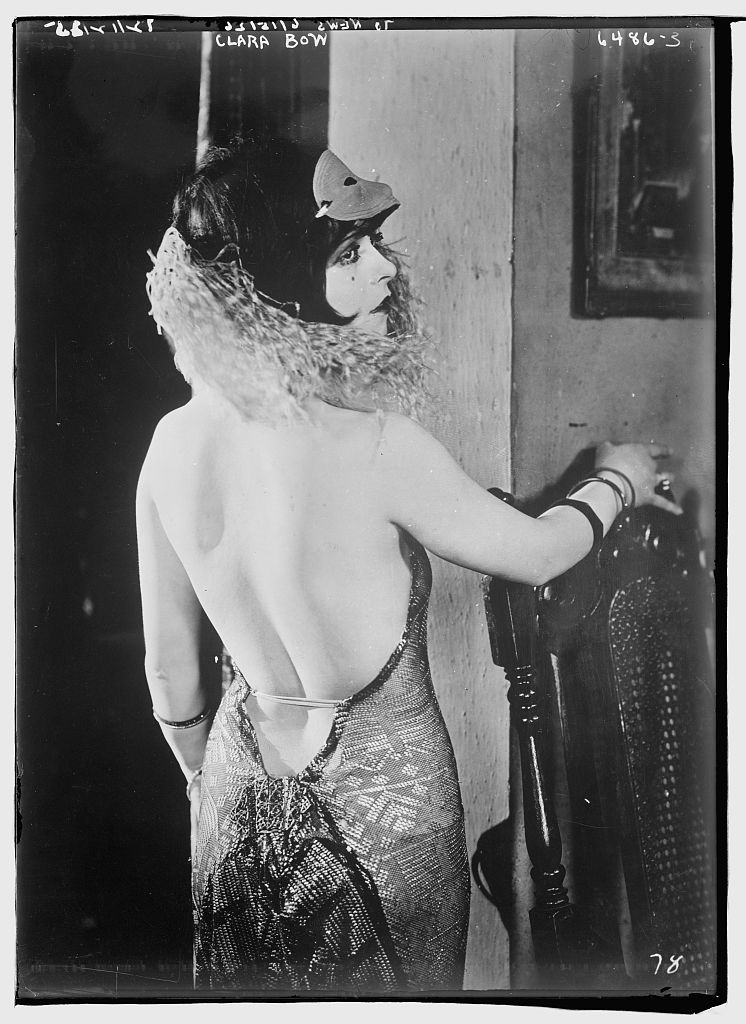
Hollywood star Clara Bow set the trends. She was nicknamed the “It Girl” for playing the role of a plucky shop girl who made good. She was the first Hollywood sex symbol, and Americans couldn’t get enough of her.

A 1922 photograph of actress Clara Bow in a daring backless dress. From the U.S. Library of Congress.

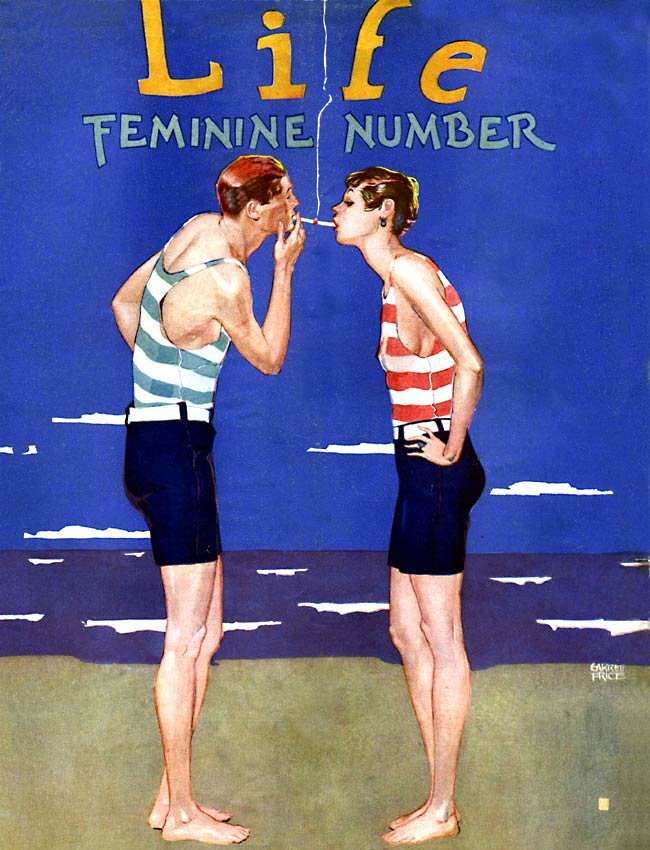
Teenaged girls and grown women copied her make-up and clothes. If Clara Bow smoked cigarettes in a movie, they smoked, too.

Life magazine cover from the 1920s.

Like Clara, they challenged social mores by drinking alcohol and driving fast cars, just like men did.

A 1920s flapper and her flask of alcohol. From the U.S. Library of Congress.

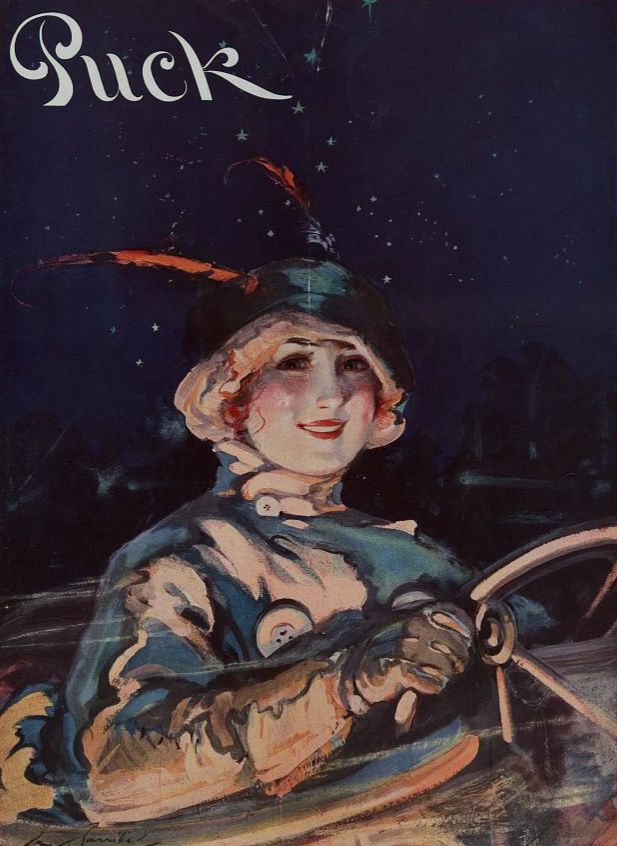
And like many of the characters Clara Bow played on screen, they were headstrong and modern and fond of nightlife.

A cover of Puck magazine.

Isabella couldn’t understand it. She wrote:

I saw the trend away from Christ long ago. I recognized the downward trend not only in girls and boys, but in their mothers and teachers and pastors. I came by degrees to understand that the class of young people to whom I had dedicated my life had made a distinct descent, and that for me to do the same in my writing would be to dishonor Jesus Christ.

So Isabella watched with sadness as a new generation of readers turned to the novels of F. Scott Fitzgerald, Warner Fabian, and Virginia Woolf, while her own novels gradually fell out of favor.

Original cover of Unforbidden Fruit by Warner Fabian. The 1928 novel was shocking in its day for depicting single women's sexuality.
Original cover of Unforbidden Fruit by Warner Fabian. The 1928 novel was shocking in its day for depicting single women’s sexuality.

Grace and others urged her not to give up her life work, but Isabella was adamant: she would not write except to try to win souls for Christ.

I think we all realize in these days that even Jesus Christ is not popular. Therefore we who want to follow Him closely must not try to be.

In 1929 Isabella published An Interrupted Night. Like her novel, Unto the End, An Interrupted Night was written for adults and dealt with issues of love, marriage, infidelity, and sacred vows. The book received good reviews, but it would be Isabella’s final novel.

The cover for Isabella's 1929 novel, An Interrupted Night.
The cover for Isabella’s 1929 novel, An Interrupted Night.

Unfortunately, Isabella Alden passed away the following year, in 1930, never knowing that—almost one hundred years later—an entirely new generation of “present day young people” would love and cherish her books.