Blog

Helen’s Alexandre Gloves

Helen Randolph loved the finer things in life. She measured almost every important life event—from her mother’s funeral, to the eligibility of the suitors who courted her—by the cost of the clothes she wore at the time. Throughout the book Household Puzzles, Helen’s material-girl-grade spending habits played a major part in her family’s descent into poverty.

For example, at her mother’s funeral, Helen’s eye for fashion detail required that she and her sisters dress in a way that was “very neat and plain and appropriate.” Isabella Alden believed that to be very neat and plain and appropriate at funerals means to pay somebody a good deal of money. She wrote that Helen and her three sisters “were shrouded in long crape veils, and about the details of their dress everything was appropriate also, from the perfect-fitting Alexandre kids to the wide black bordered cambric handkerchiefs.”

Advertisement for Traver Kid Gloves

The only problem was the family couldn’t afford the veils or the gloves. Helen’s insistence that they buy the items on credit anyway—knowing they could never repay the debt—reveals a lot about her character. And the fact that Helen got her way also shows the weakness of her family in standing up to her, because, in the end, Helen and her sisters wore the Alexandre Kid Gloves.

Panels of a folding trade card for Foster’s Kid Gloves

Alexandre Kid Gloves were no ordinary gloves. They were manufactured in the Grenoble region of France, an area that was home to the world’s finest glove-makers. Yet above all its competition, Alexandre Kid Gloves enjoyed a reputation for exceptional quality and fit.

Alexandre Kid Gloves ad

Alexandre kids were celebrated as the finest French-made gloves available, and they were hard to come by. In the late eighteenth century, only one American importing firm had exclusive rights to sell Alexandre gloves in America, which added to the merchandise’s cache.

Lady’s beaded Alexandre gloves, circa 1890

By nineteenth century standards, Alexandre gloves were quite expensive. While the average pair of American-made ladies’ kid gloves cost about $1.00 (as illustrated by this retailer’s price list), Alexandre gloves cost three or four times that amount.

Glove retailer’s price card. The number of buttons (2-button, 4-button, 6-button, etc.) denoted the length of the glove.

At the time Household Puzzles was published in 1875, the average urban family income was about $700 a year (or $58 a month); of that amount, two-thirds was spent on food and heating, leaving just $19 a month for housing, clothing, medical care, entertainment, and saving for old age.

The Randolph family’s income was far below that of the average family. Yet Helen schemed and planned in order to buy the gloves. She even reasoned that if three pairs of American-made gloves cost $6.75, it was still a better deal to buy one pair of Alexandre gloves for $3.75. It just made sense to her.

She may have learned about the cost of Alexandre gloves from her suitor, Horace Munroe, who was a merchant of “highly cultivated taste” who stocked gloves and ribbons and merinos and muslins in endless variety.

Horace himself wore Alexandre kids, “of a pale stone color” on the day he proposed marriage to Helen. Colored gloves were quite fashionable (except for evening wear). Fashion magazines like The Delineator, Metropolitan, The Muncy, and Holland’s kept ladies and gentlemen abreast of the newest colors and styles of gloves to be worn in the coming months.

Gloves weren’t just an accessory for men and women; they were essential articles of clothing. Ladies never left their homes during the day without their gloves. They wore them constantly while in public and didn’t remove them until they returned to the privacy of their own homes. Even while drinking tea or eating a meal, ladies kept their gloves on; they simply unfastened some buttons at their wrists in order to slip the fingers of their gloves off.

Drinking tea while wearing gloves.

Gloves were also essential for evening and at the end of the nineteenth century, white kids were absolutely required for evening occasions for both men and women.

Gloved young ladies enjoying a performance in George Elgar Hicks’ painting, “Fair Critics,” 1886

It’s not surprising, then, that white kid-skin gloves were often bought by the dozens, rather than by the individual pair, in order to ensure a supply of clean and pristine gloves for all occasions. With those quantities in mind, only wealthy individuals could afford to wear exceptional glove brands on a daily basis.

Many style-conscious women tried to pass their American-made kid gloves off as French-made Alexandres. And some unscrupulous retailers marketed lesser-quality kid gloves using the name “Alexandre.”

Advertisement from The Milwaukee Journal, December 1890

In fact, the exclusive importer for Alexandre gloves (A. T. Stewart) was constantly battling look-alike and knock-off merchandisers; and on several occasions, took out ads warning the public about imposters:

Notice published in The Roundtable Magazine, Nov. 30, 1867

All Alexandre merchandise was marked with the company’s distinctive logo. On gloves, the mark was stamped on the inside of the glove near the wrist:


Gentlemen and ladies who owned Alexandre gloves took care to ensure the label was visible when they unfastened their gloves at the wrist. And if the weather allowed, some women were known to carry one of their Alexandre gloves (in a way that the brand logo was visible, of course) while hiding their gloveless hand in a muff.
In the end, Helen got her pair of Alexandre Kid Gloves and she accepted Horace’s marriage proposal; but whether she found happiness with either remained to be seen.


Tidies in Every Home

An essential accessory in every well-managed home in the late 19th Century was the tidy. A tidy was a piece of cloth used to protect furniture. Tidies were draped over the backs of chairs or placed on the flat tops of tables, dressers, or chests of drawers.

Tassled tidy in a Victorian sitting room

Today we’d call them doilies or antimacassars. Depending on the household and a family’s means, tidies could be very simple and plain or elaborately decorated creations of silk, velvet, or other costly materials.

1890 photo of a Scottish sitting room with a tidy draped over pillow on the front center chair

Tidies weren’t just decorative; they served a very useful purpose. Without tidies, upholstered furniture would have been ruined at an alarming rate by the grooming products people used.

Image of Ayers Hair Vigor trade card with young woman

At the time, men, women and children used hair dressings of various kinds on a daily basis. Unfortunately, hygiene habits were different then and people didn’t wash the dressings from their hair with the same frequency. Housekeepers draped tidies over the backs of chairs and sofas to keep all that hair oil and cream from rubbing off on the furniture.

Like today, there were hair products for every need. For ladies, Ayers Hair Vigor offered delicately perfumed hair dressings.


Front side of an Ayers Hair Vigor trade card     Back of the trade card detailing manufacturer's claims

Rowlands’ Macassar Oil (from which we get the word, antimacassar) advertised its product as a pure oil that prevented grey hair.

Macasar Oil ad 1895

There was Mellier’s Hair Dressing, made with quinine, which the manufacturer claimed relieved dandruff, itching or irritated scalp.

Melliers Hair Dressing with quinine

There were even hair products that claimed to cure baldness, such as Barry’s Tricopherous preparation, which guaranteed that it would restore hair to bald heads.


And Halls Hair Renewer also promised to “stimulate hair growth,” as well as cleanse and beautify hair.


Perhaps one of the most popular products was Seven Sutherland Sisters’ Hair Grower, which hit the market in 1883. The product was named for the seven daughters of the Sutherland family, who bottled a foul-smelling concoction developed by their mother, which they claimed gave them healthy hair that reached almost to the floor.

Seven Sutherland Sisters advertising card

The Sutherland sisters used their own images to advertise their hair grower and toured the country promoting their product.
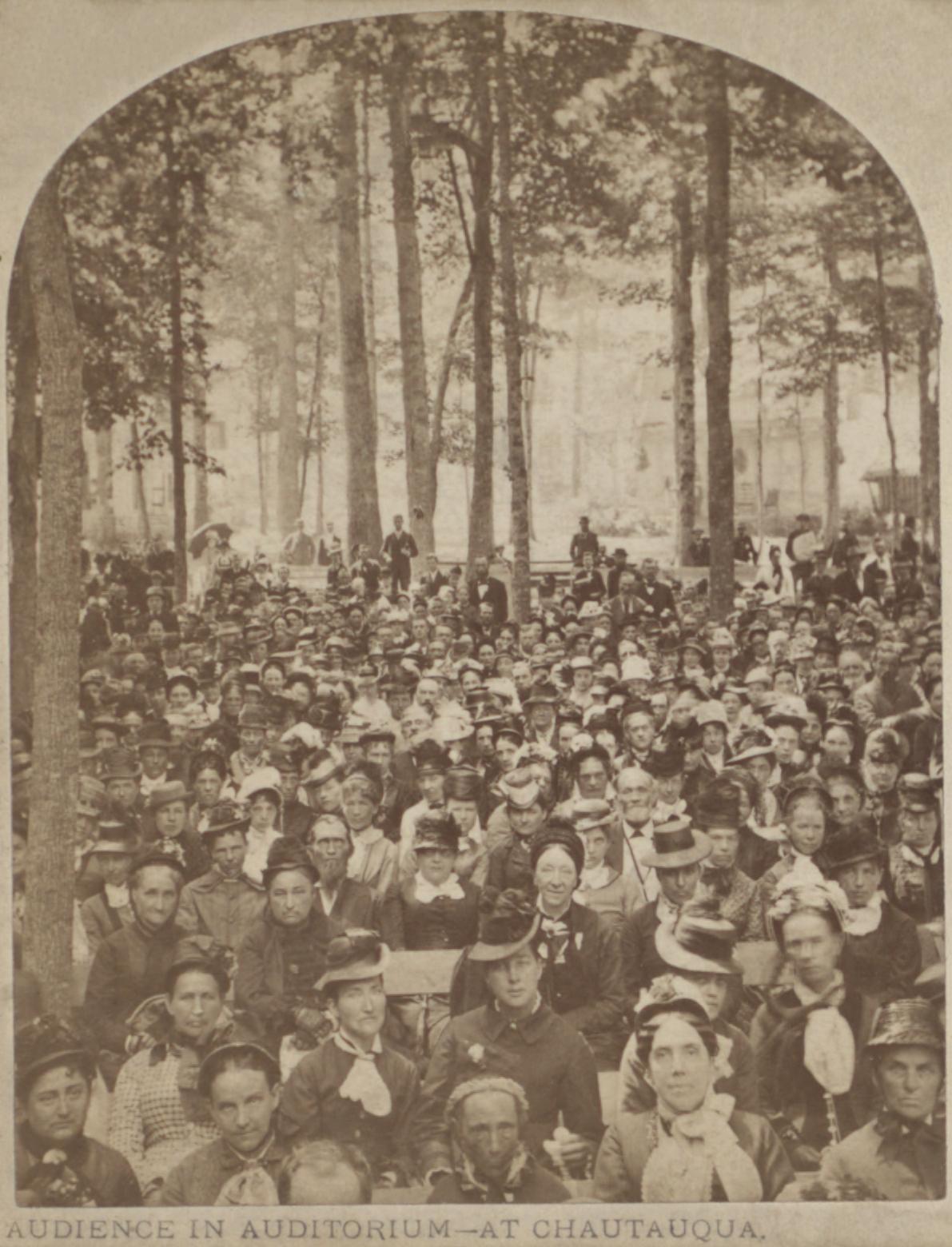
Photo of Victoria Sutherland

With so much hair dressing in use, efficient housekeepers relied on tidies to protect their furniture from staining and damage. Tidies had to be laundered and changed frequently, and women kept a good stock of them in the house at all times.

Tidy from Godeys Ladys Book 1880
Tidy pattern from Godey’s Lady’s Book 1880

Instructions for making tidies filled the pages of women’s magazines and manuals. Whether crocheted, embroidered, or adorned with ribbons and lace, new designs were as varied as they were plentiful.

In many of Isabella Alden’s books, the heroines engaged in sewing tidies for their homes. They also made tidies to give as gifts or sell in order to raise funds for the church or to support missions.


Tidy pattern from Peterson’s Magazine, June 1888

In Household Puzzles, Carrie Hartley crocheted a tidy, “a pretty thing of wreaths and leaves.”

“Isn’t it lovely?” she said, holding it up to view. “I am perfectly wild over fancy work.”

And in A New Graft on the Family Tree, Louise received so many new tidies as wedding gifts, her sister Estelle didn’t think she could ever use them all. By Christmas, however, Louise had made use of a good number of the tidies:

Perhaps no one little thing contributed to the holiday air which the room had taken on more than did the tidies of bright wools and clear white, over which Estelle had wondered when they were being packed.

Louise thought of her and smiled, and wished she could have had a glimpse of them as they adorned the two rounding pillow-like ends of the sofa, hung in graceful folds from the small table that held the blossoming pinks, adorned the back and cushioned seat and arms of the wooden rocking-chair in the fireplace corner, and even lay smooth and white over the back of Father Morgan’s old chair, which Louise had begged for the other chimney-corner, and which Mrs. Morgan, with a mixture of indifference and dimly-veiled pride, had allowed to be taken thither. Little things were these, everyone, yet what a transformation they made!


Tidy pattern Peterson Mag Jan 1888
Tidy pattern from Peterson’s Magazine, January 1888


Tidy pattern from Petersons Magazine Oct 1888
Tidy pattern from Peterson’s Magazine, October 1888

Some tidies required extraordinary skill and patience to accomplish. Creating them often involved long hours of painstaking effort; but sewing tidies (and other needlework projects that fell into the category of “fancywork”) was a way for ladies to express their creativity and imaginative vision, while beautifying their homes.

Drawing-room at Sevenoaks by Charles Essenhigh Corke, 1905

Would you like to read more about the seven Sutherland Sisters and their remarkable hair that made them a fortune? Click on the following links to read articles in Yankee Magazine and Collectors’ Weekly:

Yankee Magazine: http://www.yankeemagazine.com/article/history/seven-sutherland-sisters

Collectors Weekly: http://www.collectorsweekly.com/articles/the-seven-sutherland-sisters-and-their-37-feet-of-hair/

You can click on any of the images in this post to view a larger version.

A Tour of Chautauqua: Palestine Park

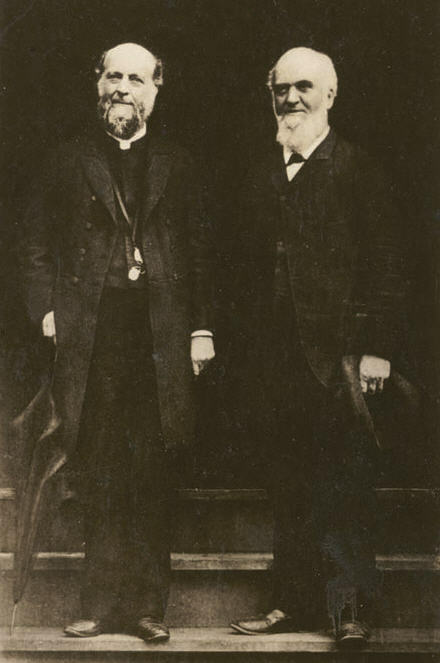
At Chautauqua, opportunities for learning weren’t confined to classrooms and lecture halls. Dr. John Vincent, a Methodist minister and co-founder of the Chautauqua Institute, was a great proponent of learning in the out-of-doors. He embraced the forest setting and set out to make Chautauqua the standard for open air summer schools throughout the country and the world.

Chautauqua Model of Palestine One notable example of Dr. Vincent’s vision of a fresh-air classroom was Palestine Park. He came up with the concept of making a miniature model of the Holy Land so students could get a visual sense of the settings they learned about in their Bible classes.

Sign describing Palestine Park
Text of the sign posted at the entrance to Palestine Park. Click on the image to see a larger version.

Palestine Park was constructed near the pier on the shore of Lake Chautauqua. The lake itself represented the Mediterranean Sea. Nearby were representations of the cities of the Philistines, Joppa and Caesarea, Tyre and Sidon.

The Mountain Region showed the famous places of Israelite history from Beersheba to Dan. The sacred mountains Olivet and Zion, Ebal and Gerizem were built. And there were also the River Jordan, the Sea of Galilee, and the Dead Sea.

Guide Book to Palestine ParkSmall plaques identified each place of interest and included Bible verses that mentioned the site. In 1920 Dr. Jesse Lyman Hurlbut published a guide to Chautauqua’s Palestine Park. Click on this cover image to read Dr. Hurlbut’s guide.


Old postcard of Chautauquans enjoying Palestine Park.

The model of Palestine was one of the most popular sites at Chautauqua. Theology students regularly walked the area of Palestine Park, notebooks in hands. And Sunday school teachers held classes there, sometimes on the hills around Nazareth to illustrate a lesson on the boyhood of Jesus.

A Lecture on the Model of Palestine 1895
A Lecture on the Model of Palestine, 1895

Isabella Alden was very familiar with Palestine Park, and described it in Four Girls at Chautauqua. In the book, Eurie Mitchell and Flossy Shipley decide to walk to Palestine together one evening:

“Come,” Eurie said, “you have been to meetings enough, and you haven’t taken a single walk with me since we have been here, and think of the promises we made to entertain each other.”

Flossy laughed cheerfully.

“We have been entertained, without any effort on our part,” she said. Nevertheless she suffered herself to be persuaded to go for a walk, provided Eurie would go to Palestine.

“What nonsense!” Eurie said, disdainfully, when Flossy had explained to her that she had a consuming desire to wander along the banks of the Jordan, and view those ancient cities, historic now. “However, I would just as soon walk in that direction as any other.”

There was one other person who, it transpired, would as soon take a walk as do anything else just then. He joined the girls as they turned toward the Palestine road. That was Mr. Evan Roberts.

“Are you going to visit the Holy Land this morning, and may I be of your party?” he asked.

“Yes,” Flossy answered, whether to the first question, or to both in one, she did not say. Then she introduced Eurie, and the three walked on together, discussing the morning and the meetings with zest.

“Here we are, on ‘Jordan’s stormy banks,’” Mr. Roberts said, at last, halting beside the grassy bank. “I suppose there was never a more perfect geographical representation than this.”

“Do you really think it has any practical value?” Eurie asked, skeptically. Mr. Roberts looked at her curiously.

“Hasn’t it to you?” he said. “Now, to me, it is just brimful of interest and value; that is, as much value as geographical knowledge ever is. I take two views of it. If I never have an actual sight of the sacred land, by studying this miniature of it, I have as full a knowledge as it is possible to get without the actual view, and if I at some future day am permitted to travel there, why—well, you know, of course, how pleasant it is to be thoroughly posted in regard to the places of interest that you are about to visit; every European traveler understands that.”

“But do you suppose it is really an accurate outline?” Eurie said, again, quoting opinions that she had read until she fancied they were her own.

Again Mr. Roberts favored her with that peculiar look from under heavy eyebrows—a look half satirical, half amused.

“Some of the most skilled surveyors and traveled scholars have so reported,” he said, carelessly. “And when you add to that the fact that they are Christian men, who have no special reason for getting up a wholesale deception for us, and are supposed to be tolerably reliable on all other subjects, I see no reason to doubt the statement.”

On the whole, Eurie had the satisfaction of realizing that she had appeared like a simpleton.

Flossy, meantime, was wandering delightedly along the banks, stopping here and there to read the words on the little white tablets that marked the places of special interest.

“Do you see,” she said, turning eagerly, “that these are Bible references on each tablet? Wouldn’t it be interesting to know what they selected as the scene to especially mark this place?”

Mr. Roberta swung a camp-chair from his arm, planted it firmly in the ground, and drew a Bible from his pocket.

“Miss Mitchell,” he said, “suppose you sit down here in this road, leading from Jerusalem to Bethany, and tell us what is going on just now in Bethany, while Miss Shipley and I supply you with chapter and verse.”

“I am not very familiar with the text-book,” Eurie said. “If you are really in the village yourselves you might possibly inquire of the inhabitants before I could find the account.” But she took the chair and the Bible.

“Look at Matthew xxi. 17, Eurie,” Flossy said, stooping over the tablet, and Eurie read:

“‘And he left them, and went out of the city into Bethany; and he lodged there.’”

“That was Jesus, wasn’t it? Then he went this way, this very road, Eurie, where you are sitting!” It was certainly very fascinating.

“And stopped at the house on which you have your hand, perhaps,” Mr. Roberts said, smiling at her eager face.

“That might have been Simon’s house, for instance.”

“Did he live in Bethany? I don’t know anything about these things.”

“Eurie, look if you can find anything about him. The next reference is Matthew xxvi.”

And again Eurie read:

“‘Now when Jesus was in Bethany, in the house of Simon the leper.’”

“The very place!” Flossy said, again. “Oh, I want so much to know what happened then!”

Eurie, Flossy, and Mr. Roberts spent the better part of the day at Palestine Park, following the plaques from one location to the next and reading verses out of Mr. Roberts’s Bible.

Model of Palestine with Miller Park and Bell Tower in the background

Palestine Park was among the great attractions at Chautauqua and, as Isabella mentioned in her book, it received accolades from Biblical scholars of the time because of its accuracy and geographical precision.

But Palestine Park did have one major flaw, which was alluded to in the sign that marked the entrance to the model. In order to use Chautauqua Lake to represent the Mediterranean Sea, the geography of the Holy Land had to be flipped; north had to be south, and east was made the west.

Jesse Lyman Hurlbut, D.D.

Jesse Lyman Hurlbut, who regularly used the park as part of his theology lectures and children’s Sunday school classes, explained:

“Chautauqua has always been under a despotic though paternal government and its visitors easily accommodate themselves to its decrees. But the sun persists in its independence, rises over Chautauqua’s Mediterranean Sea where it should set, and continues its sunset over the mountains of Gilean, where it should rise. Dr. Vincent and Lewis Miller [the founders of the Chautauqua Institute] could bring to pass some remarkable, even seemingly impossible achievements, but they were not able to outdo Joshua and not only make the sun stand still, but set it moving in a direction opposite to its natural course.”

Over the years, Palestine Park was repaired, rebuilt and expanded to add a model of Jerusalem and its surrounding hills, as well as Bethlehem, Jericho, and other places of interest until, ultimately, it almost doubled in size.


Palestine Park as it looked in 1908


Palestine Park in 1914

Click on the map below to see where Palestine Park was located on the Chautauqua Institution grounds. You’ll find it on the shore of Lake Chautauqua near the steamboat landing at The Point.

Map of Chautauqua 1874

Next on our Tour of Chautauqua: A Healthy Body

Now Available: The Pocket Measure

Cover_The Pocket Measure resizedThe Pocket Measure is now available!

There are three new brides in town, each embarking upon married life in a different way. While Callie and her husband are quite poor, they faithfully tithe a portion of their income for God and make the best of living within their limited means.

Happy-go-lucky Jenny envisions her married life as a round of parties and trips to the theater. After all, what good is money if you don’t spend it?

And Eva has more money than both her friendsso why are she and her husband slowly sinking beneath the weight of their debt? Even worse, her home is far from the restful haven she wants it to be, and Eva can already feel her new husband slipping away from her.

This edition of the 1881 classic Christian novel includes a biography of the author and additional bonus content.

Click here to read sample chapters on your Kindle, tablet or PC.


Off to See the Circus

At the time Isabella Alden wrote her books, there were no movie theaters, telephones, radios or televisions. Few had the means to attend the theater and the concept of “entertainment” was usually confined to people finding ways to amuse themselves within the drawing-rooms and parlors of individual homes.

Circus Poster - Parade through town

But quiet American life changed the moment the traveling circus came into town (click on any of the images in this post to see a larger version). When a circus company arrived in a new place, the acts and animals paraded through the town, firing people’s imaginations and enticing them to follow the parade back to the performance tent.

Circus Poster - Equestrians Riders and Horses

The mainstay of the circus was the equestrian acts. Trick riders atop well-trained horses performed remarkable feats and thrilled audiences with their precision. Clowns, jungle animals, and rare, exotic people rounded out the bill. The circus was the only entertainment of its kind, thrilling audiences with new experiences and feats they’d never seen before. The atmosphere under the tent was electric, with real performers and real animals executing larger-than-life tricks right in front of the audience.

Circus Poster - Amazing Sideshow

It was heady stuff at the time, and circuses owned an exclusive corner of the entertainment market. It was natural, then that Isabella Alden would have mentioned circuses in her novels.

In Stephen Mitchell’s Journey, Stephen’s sister Sara Jane sighed over the family’s poverty and her dream of being able to do things other people could afford to do:

Circus Poster - Charles 1st Chimpanzee


“I wish we knew about things. I am dreadful sick of sticking here on this stony old farm and not knowing what is going on. I wish I could go to the circus. There is going to be one next week, and I would give most anything to go to it; but there! I don’t suppose it is of any use.”

.

Sarah Jane may have longed to go to the circus, but Isabella Alden didn’t believe the circus was an appropriate venue for Christians.

Circus Poster - Cleopatra Spectacle

In Chrissy’s Endeavor, Chess Gardner explained to Joe the stable boy why Christians should not attend the circus:

Circus Poster - Jupiter the Balloon Horse“It is said that there are at these places, exhibitions more or less offensive to good taste and good manners; women who dress in a manner not agreeable to refined people, and who ride in a way that would not be pleasant to us if they were our sisters, for instance. This being the case, the latter part of the other statement applies, that to attend, and to pay money for doing so, helps to sustain such entertainments.”

After more discussion, new Christian Joe decided to skip going to the circus, saying:

“Well, I don’t believe Jesus Christ would go to a circus if he were here; I don’t, honest.”

Circus Poster - Lady Equestrians

The explanation Chess Gardner gave reflected a popular view of the time about people who performed in circus shows, especially women. While some, like the equestrians in the above poster, were conventionally attired, others wore costumes that were more daring and much more provocative, like these scandalously-clad acrobats.

Circus Poster - Acrobats

But costumes and lady-like riding aside, Isabella had a more important reason for believing the circus was the wrong place for Christians to be. Her belief was founded in a verse from Corinthians that she used as her guide for daily living:

 Whether, therefore, ye eat or drink, or whatsoever ye do, do all to the glory of God.

1 Corinthians 10:31

The verse was the yardstick against which she measured her behavior. When she was faced with a dilemma—such as whether to attend a circus or theater production—she asked herself whether doing so would glorify God.

And it wasn’t just in big decisions that she applied the verse. She took it literally, believing that even in small things, such as eating and drinking, Christians should strive to do all things in ways that glorified God.

She wove the verse into many of her books as a touchstone for her characters whenever they were faced with a decision about what to do. In the case of going to the circus, Isabella’s characters asked themselves whether going to see a performance would add to the glory of God.

Circus Poster - Equestrian Maypole

While some of her characters made conscious decisions to stay away, Sarah Jane Mitchell continued to dream of someday going to the circus and the marvelous things she would see there.

Circus Poster - Grand Ethnological Congress

You can click on these links to read more about Stephen Mitchell’s Journey and Chrissy’s Endeavor.

A Dose of Beef Tea

In the latter half of the 18th Century and the early 19th Century, illness of any kind was not to be taken lightly. A simple head cold or case of influenza, if not properly cared for, could easily prove fatal.

Isabella Alden illustrated the point in her novel Jessie Wells, when Jessie’s friend Mate came down with a cold and died within days of complications from a fever.

Nurse with medicine bottles

Illness, disease and death were topics Isabella Alden regularly dealt with in her books; but she also gave insight into the remedies of the time. Patent medicines were widely available but home cures were even more popular. (You can read a previous post about the Molasses Cure by clicking here.)

By far the most popular cure Isabella mentioned in her books was beef tea, and for good reason. Beef tea was more frequently prepared for invalids and patients than any other curative. In 1863 The New York Times published an article about care Union soldiers received during the Civil War, citing their “beef-tea diet” as part of “their daily fare in hospital, its excellence and variety, and the admirable arrangements for their comfort.”

Illustration of invalid cookery from The Book of Household Management.

 An 1886 article in Arthur’s Home Magazine called it “the food which is perhaps more valuable and more frequently prepared for invalids than any other.”

“When first supplied in cases of weakness, beef-tea is usually taken with great relish. It seems to give strength and to supply just what is wanted, and a patient will look for it and enjoy it heartily.”

Woman holding tea cup and saucer

.That was certainly the case in Workers Together: an Endless Chain. In the story Mrs. Saunders took a sick young man named Robert into her boarding house. Following doctor’s orders, she immediately began nursing Robert with doses of beef-tea:

The new nurse was ready-handed and cheerfully authoritative. She tucked a fine damask napkin under her patient’s chin, and skillfully fed him with spoonfuls of beef-tea from a solid silver teaspoon. When she decided that he had taken nourishment enough, she whisked away spoon and cup without question, straightened the bed-clothes, beat up another pillow and arranged it dexterously under his head, telling him, meantime, that he looked better already, and that he must keep up good courage, which was always half the battle in everything. Then she drew down the shades, and told him to mind the doctor and go to sleep; and assuring him that Tommy, the bell-boy, should sit just outside the door and would hear if he but just touched the little silver bell by his side, she disappeared before Robert had time to reflect on the questions that he wanted to ask her.

Tea Cup Vine-GraphicsFairy

In Her Associate Members, Chrissy Holmes served her husband a cup of beef tea every night to help him recuperate from an illness. When she found out her neighbor Mrs. Carpenter was ill, too, Chrissy took some of the beef tea to her:

“I should recommend some beef broth for a change, and fortunately I put into my basket a bottle of some which I made fresh today for my husband. I brought my little spirit-lamp along also, to heat it on, for the day is so warm I thought you might not have any fire.”

While she spoke she busied herself in getting out the bottle and  lamp, and a delicate china cup, tinted in pale blue. Mrs. Carpenter watched her with severe eyes.

“Mrs. Holmes,” she said, at last, “there isn’t the slightest need for that, and I wish you wouldn’t. If you think you make me more comfortable doing it, you don’t. I would much rather be let alone; I’m not used to being taken care of. I have had no care since I was a young girl, and I never expect any again. I don’t want it. All I ask of this world is a chance to work and be let alone.”

Tea cup floral


Chrissy did not react to Mrs. Carpenter’s ungrateful comments.

In silence she poured out and administered the beef tea once more, standing silently by while the contents of the cup were being drained again and pronounced very good.

“I can feel that it is giving me strength,” said Mrs. Carpenter, as she returned the cup; “and I am obliged to you, though I’ve almost forgotten how to express such feelings.”

Armour & Company advertisement, 1900.

Beef tea was widely believed to give strength to the ill, but by the 1880s the medical community began to frown on it as a cure.

“Beef tea is a stimulant rather than a food. A person may be hungered to death on it,” declared J. Milner Fothergill, M.D., in an 1880 paper to the Royal College of Physicians in London.

But by that time, belief in the healing powers of beef tea was deeply entrenched in public lore, helped in large part by the manufacturers of beef extracts. The products were a boon to homemakers, since making beef tea in the kitchen was time consuming and wasteful (a pound of beef yielded barely a pint of tea.)

Recipe Beef Tea


This 1896 trade card for Armour’s Extract of Beef promotes the product’s use in making soups.

Armours Extract trade card 1896 front    Armours Extract trade card 1896 back

But in other ads, the same company also promised health benefits to people who used their product, as this 1895 magazine ad shows:

Armour's print ad 1895

In the 1860s a whiskey distiller in Cincinnati, Ohio began producing a “tonic elixir and liquid extract of beef” they claimed could cure “female diseases,” indigestion, and weaknesses of all kinds.

R&T Tonic Elixir ad, 1870

American companies like Cudahy Packing Company and Armour & Company—which originally manufactured beef products to make broths, soups, and gravies—boosted their sales by claiming healing properties in their products.

Cudahy's Rex Brand Fluid Beef trade card front      Cudahy's Rex Brand Fluid Beef trade card interior

Johnston’s Fluid Beef, which originated in Scotland, took great care to publish testimonials in America that strengthened their health claims:

Johnstons Fluid Beef testimonial

Soon other companies like Liebig Company followed suit. They promised good health, strength and vitality to individuals who consumed their product.

Liebig Trade Card 1885      Liebig ad 1899

Bovril, a British product developed by Johnston’s Fluid Beef of Scotland, didn’t promise simply to cure American consumers of disease. They went one step further and promised to prevent disease.

Bovril benefits ad undated

Bovril’s advertising to Americans typically featured images that reinforced their claims of strength, vitality and energy. Strong, charging bulls, healthy, masculine men and beautiful, energetic women graced Bovril’s advertisements.

Bovril Steer undated    Bovril Steer ad card

Bovril trade card 1903    Bovril Swimmers

Bovril British Navy ad 1903     Bovril Sailor ad 1903

And this ad conveyed a subliminal message that if Bovril was used in hospitals throughout the world, the product’s health claims must be true.

Bovril ad hospitals

Today Bovril is still marketed around the world, although the company no longer makes inflated health claims based on dubious scientific testimony. The product has a loyal following, particularly among fans of football (that’s soccer to us in America), who take it along as a hot drink to sip while cheering on their favorite team on chilly mornings.

Bovril Today
The distinctive Bovril pot.


A Tour of Chautauqua: Lectures and Classes

(Note: You can click on any of the images in this post to view a larger version.)

The Chautauqua Assembly had a modest beginning in 1874. It was originally conceived as a summer training program for Bible teachers; but from the start, the Chautauqua Assembly differed greatly from accepted Bible training of the time. At Chautauqua, Sunday school teachers gathered not in convention halls to hear reports and listen to speeches. Instead, they spent two or more weeks in the out-of-doors studying the Bible, attending classes, and collaborating together to create Sunday school lesson plans for use in churches across the country. From that modest beginning, the Chautauqua Institution grew and its mission expanded, as did its fame.

Report of a summer class on Robert’s Rules of Order, 1901

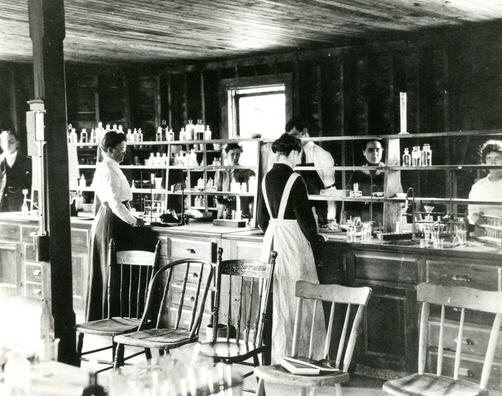
By 1885, when the twelfth annual Chautauqua Assembly was held, over seventy-five thousand people gathered—some for a day, some for a week and several thousand for the entire eight-week term of the Summer Assembly. While many still came to be trained and inspired as Sunday school teachers, others came to hear lectures and attend classes on the Bible, ancient history, science, and philosophy. They participated in experiments in chemistry, and studied the stars through telescopes. They learned languages of the world, including Hebrew, Latin or Greek; and received instruction in music and vocals.

Report of a Harvard Professor’s Lecture; 1901.

A remarkable element of the Chautauqua Summer Assembly was the level of course instruction. The best lecturers and teachers in the world came to Chautauqua. Renowned clergymen, famous statesmen, and college presidents lectured at the Assembly, as did Nobel Peace Prize winners and military heroes. Students with grade-school educations sat beside college graduates at lectures given by professors from Yale, Harvard, Cornell, Wellesley, Johns Hopkins and other prominent universities from the U.S. and Canada.

Chautauqua’s democratic culture extended beyond the classroom. The Reverend Jessie Lyman Hurlbut told of a woman who once said:

“Chautauqua cured me of being a snob, for I found that my waitress was a senior in a college, the chambermaid had specialized in Greek, the porter taught languages in a high school, and the bell-boy, to whom I had been giving nickel tips, was the son of a wealthy family in my own State who wanted a job to prove his prowess.”

1901 announcement of classes offered by a Princeton professor.

But not everyone was as open minded. Reverend Hurlbut also recalled chatting with a highly respected clergyman from England as they sat together at a hotel table. When he explained to the clergyman that their waiter was a college-student, working to earn money to continue his college coursework, the clergyman was offended. “I don’t like it, and it would not be allowed in my country. I don’t enjoy being waited on by a man who considers himself my social equal!”

Theodore Roosevelt
Theodore Roosevelt


The names of guest lecturers read like a Who’s Who of the time: G. K. Chesterton, H. G. Wells and George Bernard Shaw. Theodore Roosevelt attended four different years and when William Jennings Bryan took the podium, Chautauquans packed the Amphitheater to its utmost corners to hear him speak.

Lectures and classes were designed to educate and stimulate, to encourage Chautauquans to think globally and broaden their views. Students were urged to discuss lecture contents and ask questions so they had a full understanding of the issue or topic at hand.

06Chautauqua College
The Chautauqua College building.

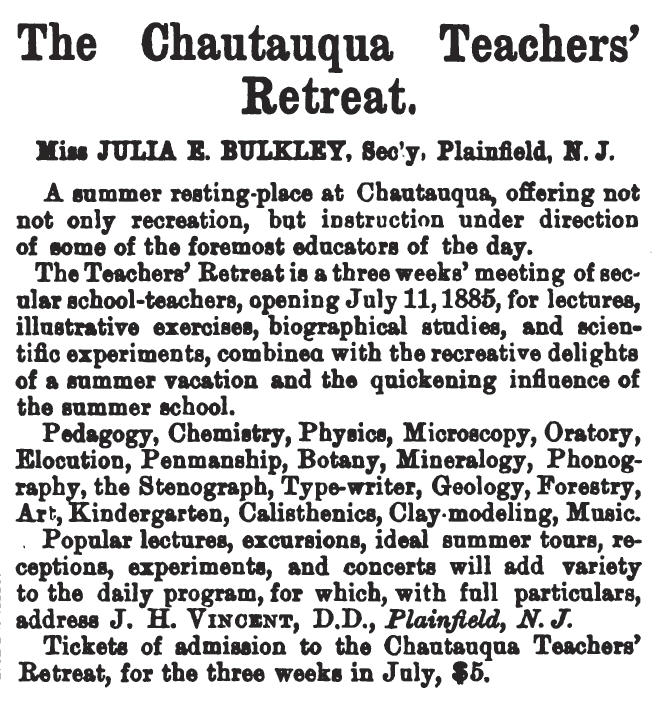
The Chautauqua Summer Assembly was part of a wider Chautauqua system of education that included as many as eight different departments. Each department offered classes and lectures throughout the summer months of July and August.In July 1884 an individual could purchase a one-day admission to the Summer Assembly for 25¢. That admission cost gave them access to all lectures, classes and meetings except those conducted by the School of Languages and the Teachers Retreat. In August the cost of a one-day admission rose to 40¢.

Chautauqua Ticket, 1919

If you planned to stay longer, you could purchase admission for a week in July for $1.00, or $2.00 for a week in August. Or you could stay the entire summer term for $4.00.

Courses offered by the School of Business, 1901

Some special classes required a separate ticket. For example, 15 lessons in penmanship (including stationery) cost $2.50; a course in bookkeeping cost $3.00; 10 lessons in elocution cost $4.00; and 4 weeks of instruction in Hebrew cost $10.00.

Newsboys of the Chautauqua Assembly Herald

With so many available classes and so many activities to attend, Chautauquans had to schedule their days with precision. They mapped out their daily classes, lectures and activities by reading The Chautauqua Assembly Herald. This newspaper, published on-site every day but Sunday, listed the weeks’s offerings. It also gave an account of the speakers, meetings, and activities from the previous day. Eager Chautauquans took advantage of as many offerings as they could, often running from one event to another from 8:00 a.m. until 10:00 p.m.

Click on this link to view the July 29 and July 30, 1901 editions of  The Chautauqua Assembly Herald. On page 4 of each edition you’ll find a list of the week’s programs, meetings, lectures and classes.

11 Chautauqua Chimes 1924The Chautauqua Institution kept things running in a timely manner. Five minutes before the hour a bell rang, giving notice that the next event or class would begin promptly at the top of the hour. The sound of the bell usually resulted in a throng of people streaming out the door of one class in order to get to the next class on time. Bells marked the hour until 10:00 p.m. when the last night bell rang signaling quiet.

In Four Girls at Chautauqua, Flossy Shipley overheard a man say, as he ran past her, “Confound it all! Talk about getting away from these meetings! It’s no use; it can’t be done. A fellow might just as well stay here and run every time the bell rings. I heard more preaching today on this excursion than I did yesterday; and a good deal more astonishing preaching, too.”

An afternoon class in German, circa 1895.

With each passing year, the number of people attending the Summer Assembly increased, as did the number of schools and courses offered. For instance, in 1901 the School of Languages added Arabic and Assyrian to their offerings of French, German, Spanish, Latin, Hebrew and Greek. Students took classes in mathematics, oratory and expression, mineralogy and geology.

Art Lessons

There were classes in clay modeling and china painting, as well as classes in music and singing. Small cottages were erected in a far-away corner of the grounds where music students could practice their scales and exercises without disturbing their neighbors. One instructor wrote, “I am told that forty-eight pianos may be heard there all sending out music at once, and each a different tune.”

Cooking Class.

The School of Domestic Science attracted great attention. One instructor, Mrs. Emma Ewing, erected a model kitchen and taught ladies from all walks of life to make bread, prepare meals, and serve tables with refinement.

A class in Library Science, 1904

The Summer Assembly offered career training, as well. Students learned shorthand and typing, grammar and composition, library sciences and bookkeeping.

15 School for Library Training
Announcement of the School of Library Training, 1901.


Standing room only at an open air lecture. About 1896.

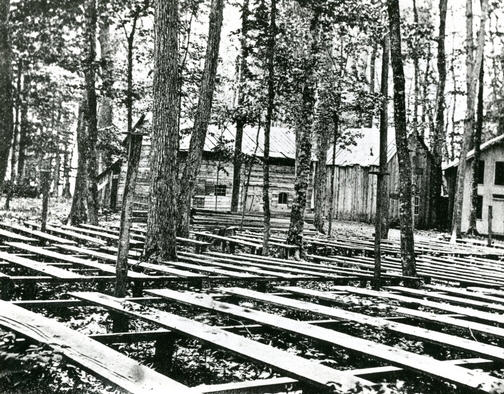
In the early years of the summer Assemblies, classes were held in tents but as Chautauqua grew, buildings were erected to accommodate students.

The majority of the lectures were held in the Amphitheater. Erected in 1897, it could hold 5,500 to 5,600 people; but some lectures proved so popular that the Amphitheater overflowed.

Chautauqua crowds listen to a speaker in an open area.

Other lectures were held in the park, or anywhere else that could accommodate large numbers of attendees. The subjects were widely diverse, covering a broad array of topics:

  • The Last Days of the Confederacy
  • Going Fishing with Peter
  • The Women of Turkey
  • The Physiological Effects of Alcohol
  • Ideals of Modern Education
  • Christian Life in the Modern World
  • Shakespeare as a Moral Teacher
  • America’s Leadership in World Politics
  • The Knights of King Arthur
  • Does Death End All?
  • A Study of the Lynch Law
  • The Juvenile Court
  • The Drama and the Present Day Theater
  • Beyond the Grave
  • The Artisan and the Artist
  • The Ideal of Culture
  • French Literary Celebrities
  • The One-Hundred Worst Books
  • A Dozen Masterpieces of Painting
  • Mountain Peaks in Russian History
  • Growth and Influence of Labor Organizations

 Click on this link to read the text of a lecture presented July 26, 1901 by Dr. P. S. Henson of Chicago on the topic of grumbling. (Yes, grumbling!) You’ll find it on page 3 of The Chautauqua Assembly Herald.

Isabella Alden was arguably the best chronicler of the Chautauqua Summer Assembly experience. The characters she created in her books represented the diverse people who attended the Assembly and their different social and economic walks of life. She also captured the varied topics and inspirational nature of the many classes and lectures the Summer Assembly offered.

Next Stop of our Tour of Chautauqua: Palestine Park