Fantastic Cures for What Ails You

Isabella Alden was no stranger to illness. In her personal life she suffered from chronic health issues. In her novels, her characters fought a variety of ailments, from head colds and sore throats, to broken bones and crippling back injuries.

In her novel Jessie Wells Isabella wrote about a “molasses and ginger cure” to ward off cough and fever. It was suggested to Jessie by her father, a physician. (You can read more about it here.)
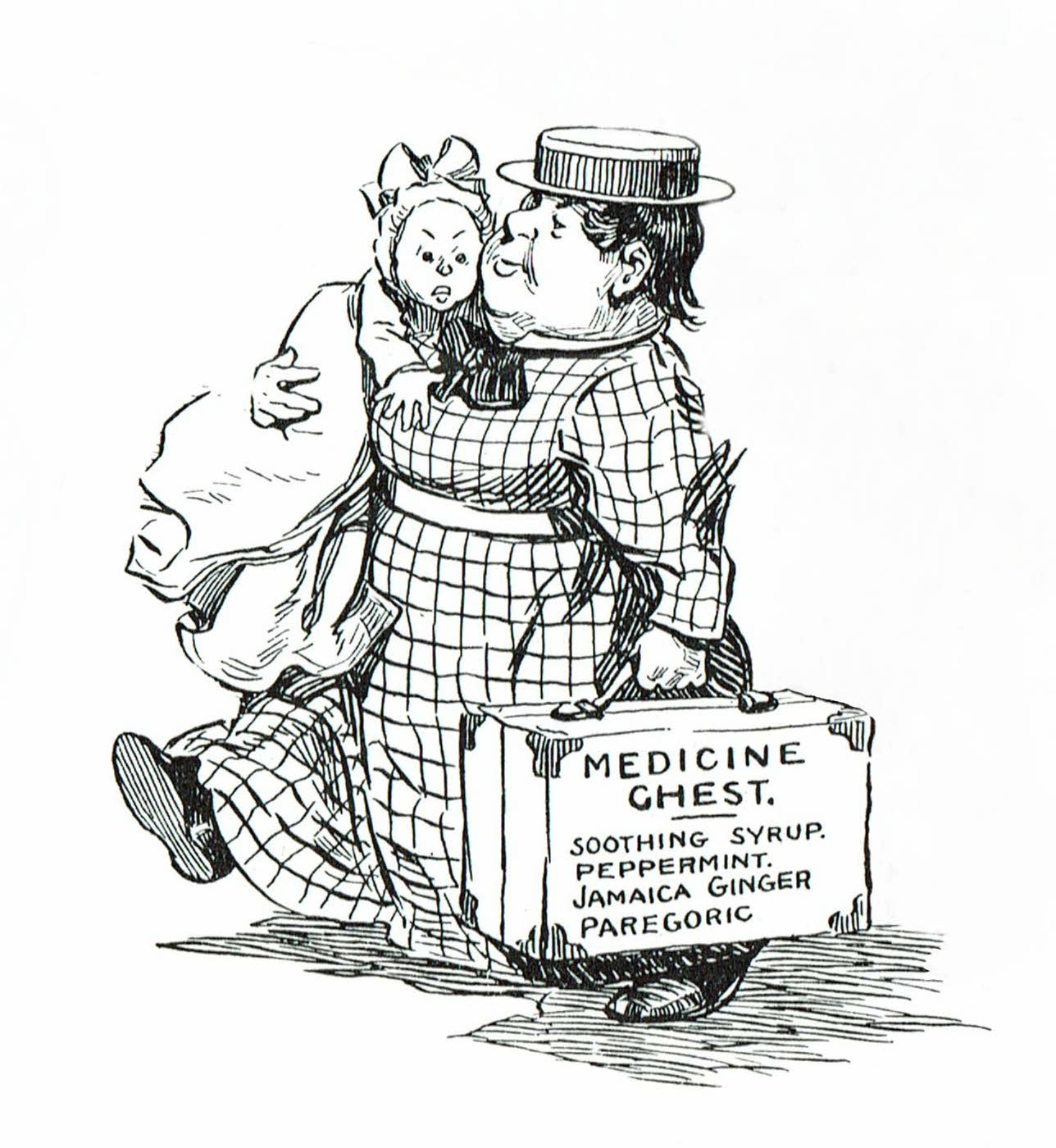
Vintage cartoon of a woman about 1910 carrying a baby in one arm and a large suitcase in her other hand. The suitcase is labeled "Medicine Chest. Soothing Syrup. Peppermint. Jamaica Ginger. Paregoric."

Although the molasses cure was based on an old folk medicine recipe, it was actually beneficial; the ginger helped suppress a cough and the molasses soothed the throat.

Like Dr. Wells, many physicians in those days treated patients with folk medicine cures for ailments ranging from the common cold to the universal finger wart.

Vintage illustration of a doctor visiting a little girl sick in bed. He holds her hand and speaks kindly to her.

Isabella availed herself of some of those folk remedies in her personal life. To cure her chronic headaches she underwent a “water cure.” Physicians wrapped her body in wet blankets and allowed them to dry in place. They believed the process would draw harmful toxins from her body, thereby curing her headaches. (You can read more about it here.)

Vintage illustration of man in bed. a woman in nursing cap and apron stands beside him, combing his hair from his forehead while holding a mirror out for him to see.

There were folk remedies for every possible ailment, including dry lips, rattlesnake bites, poison ivy, measles, diphtheria and sties.  Here are a few:

The lining of a chicken gizzard is good for stomach trouble.

A drop of skunk’s oil will cure a cold.

To treat a wart, squeeze the red juice from a freshly picked beet leaf on it every day.

A drop of turpentine on the tongue every day will keep all disease away.
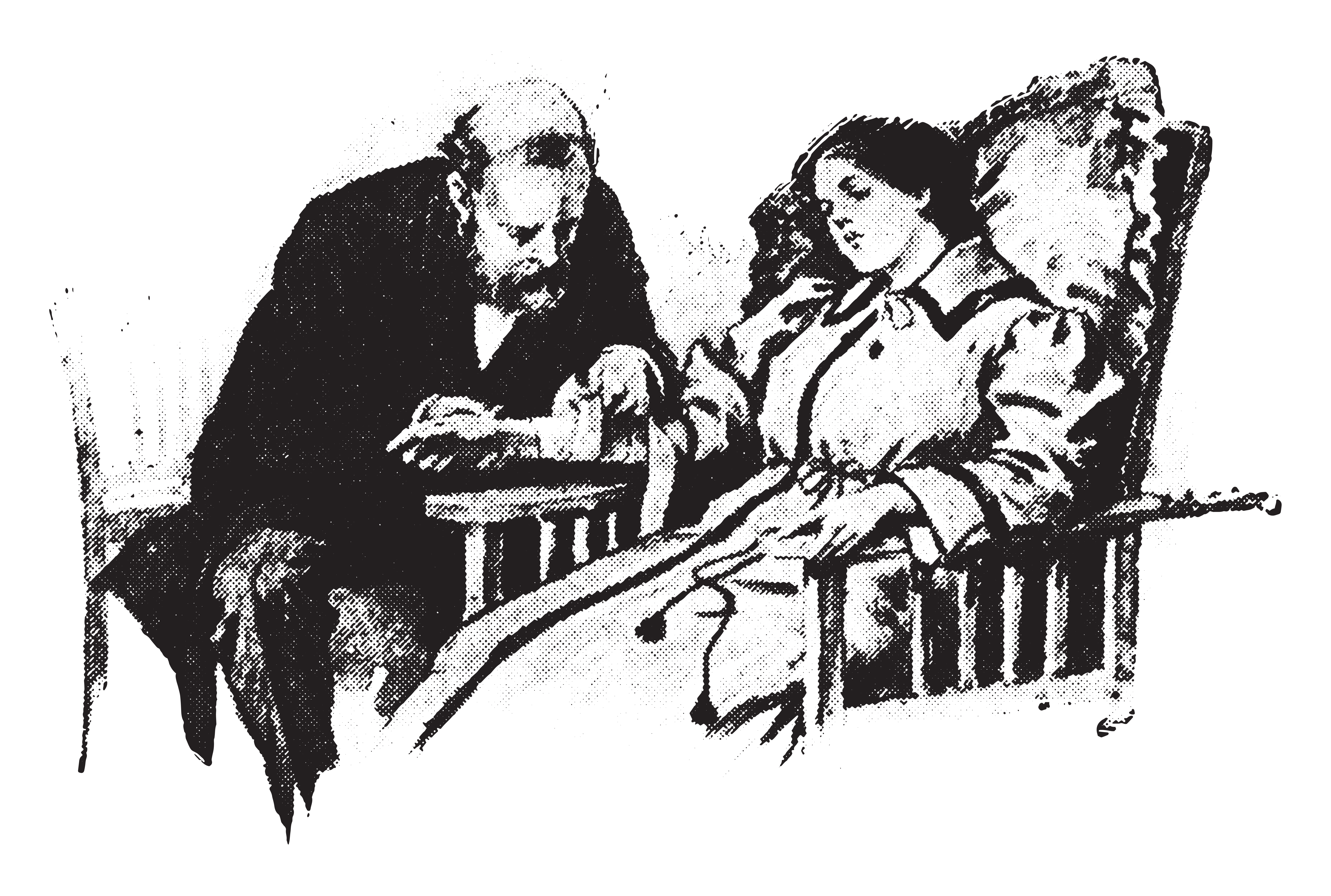
Vintage illustration of a doctor wrapping a bandage around a woman's arm as she rests in a chair with a pillow behind her.

The remedies were handed down from mother to daughter, from doctor to patient. Some old-time cures persisted until the Twentieth Century; generations of American children wore a piece of flannel (usually red) around their throats after drinking home-made cough syrups. In some areas of the U.S. it was a common practice well into the 1950s.  

Some folk remedies had no legitimacy, yet they worked because the patients believed they would work.
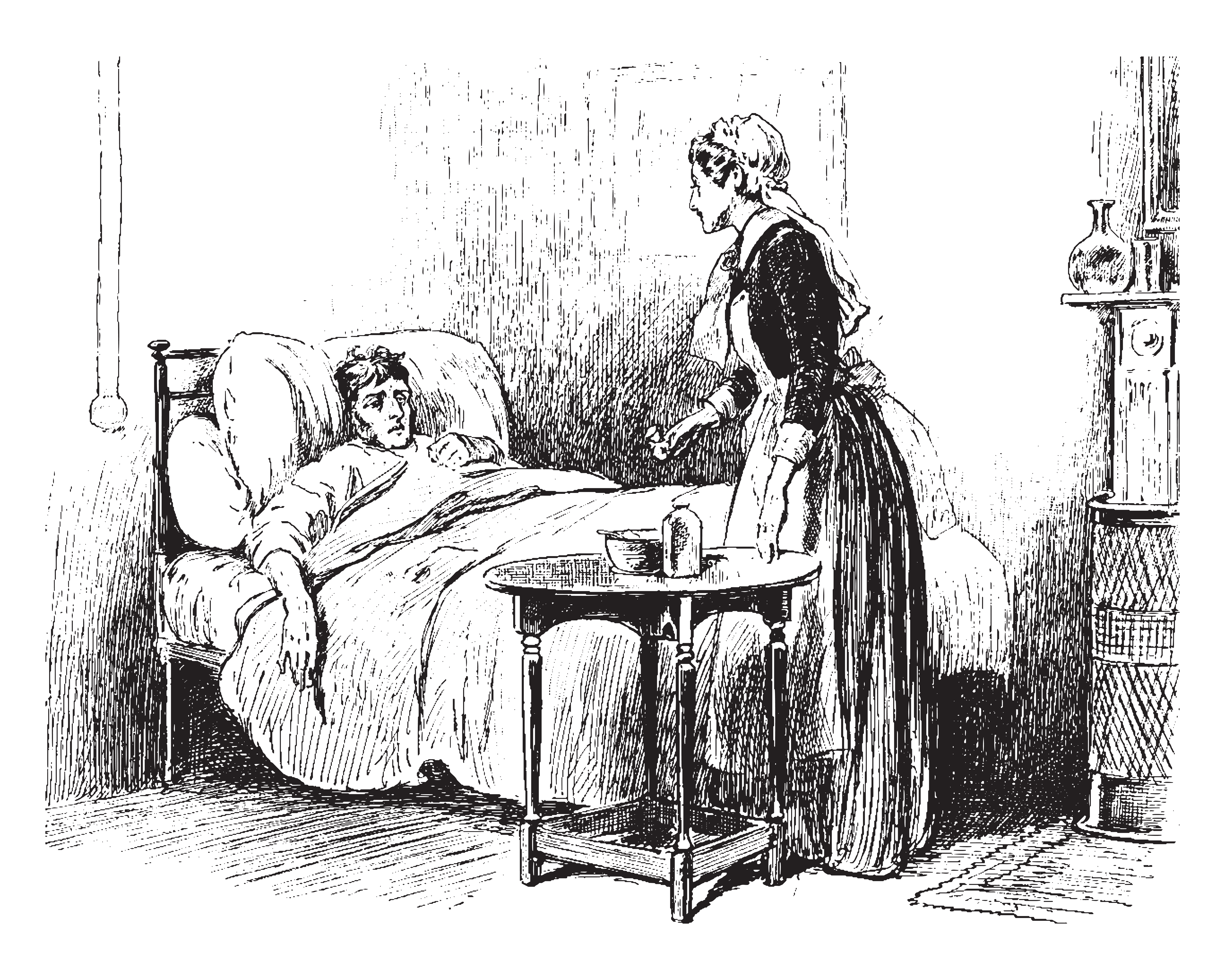
Victorian era illustration of a sick man in bed. A woman wearing nursing cap and apron stands at the foot of the bed hear a table on which is a bowl and a medicine bottle.

Other cures sounded strange, but had a scientific basis, like this one:

To cure an abscess or infected cut, apply a poultice of moldy bread and water twice each day.

In this instance, the poultice probably worked because the moldy bread essentially served as a home-grown form of penicillin.

Victorian era illustration of a seated woman holding a little girl in her lap. Before them kneels a doctor who holds a cup to the child's lips. In the background stand worried family members.

In our twenty-first century America, many of the old home-grown medicines have gone by the wayside. Luckily, the Library of Congress in Washington, D.C. has a large collection of stories, letters, research essays, photos, and voice recordings about American folk medicine that helps us understand how Isabella, her family, neighbors and friends dealt with illness and injuries. You can visit the LOC’s website by clicking here.

Does your family have a story about folk medicine cures that did (or didn’t) work?

Do you have a favorite home remedy that has been handed down from generation to generation in your family?

Love’s Garden

Isabella was an avid reader, and often read aloud to her family. She enjoyed biographies, histories, and fiction; but she particularly enjoyed reading poetry. In fact, her husband Ross and her son Raymond were both published poets.

Isabella often shared poems she enjoyed with readers of The Pansy magazine. In an 1893 issue she printed this lovely poem:

Love’s Garden

There is a quiet garden
From the rude world set apart,
Where seeds for Christ are growing;
This is the loving heart.
The tiny roots are loving thoughts,
Sweet words, the fragrant flowers
Which blossom into loving deeds—
Ripe fruit for harvest hours.
Thus in our hearts the seeds of love
Are growing, year by year;
And we show our love for the Saviour,
By loving his children here.

Author Unknown

The Many Names of Jesus

Isabella had a wonderful way of using her own personal experiences to show people how relevant the Bible could be in their everyday lives. In 1895 she wrote this uplifting piece for a Christian magazine:


Have you ever noticed how many beautiful names Jesus has?

One of the pleasantest Sunday afternoons I remember was spent with my dear father, looking up some of them, and trying to find what they meant.

We began with that one in Zechariah 3:8, where it says:

“Behold, I will bring forth my servant the Branch.”

Graphic with Bible verse: I will bring forth my servant the BRANCH. Zechariah 3:8

I suppose I was not old enough at the time to understand much of its meaning, but I liked the sound of the verse; and I like now to think of Jesus as a part of God, a branch from the divine one, broken off from the great tree and sent to earth for us.

Then we looked at Isaiah 9:6, and found that he was not only a branch from God, but that one of his names was “Everlasting Father.”

And Isaiah 7:14 called him “Emmanuel,” which means, God with us.

And Paul, in Romans 11:26 called him the Deliverer; and Peter called him the Corner-Stone, and John, the Good Shepherd, and the Lamb of God, and the Light, and the King, and the Word, and the Why. John has so many names for him!

Graphic with Bible verse: There shall come out of Sion the Deliverer. Romans 11:26

Take your Bible some day, and try and find out all the names of Jesus; if you have not thought about it before, you will be astonished at the number of them. I do not think you can imagine a great or helpful name which has not been given to him.

So many times he is called the Savior! Then he is the Mighty One, the Maker of all things; the Prince of Life, the Prince of Peace, the Morning Star, the Redeemer, the King of Kings.

I wonder if you will have a preference among these names? If some of them will seem to make him come nearer to you than others?

One day I was very much afraid of something which I feared was coming to me; I did not see how I could escape it, and I was glad to remember that Jesus was the Deliverer.

Graphic with Bible verse: The Lord is my rock, and my fortress, and my deliverer. II Samuel 22:2

Then, when my father died, and my heart felt as heavy as lead, and it seemed to me as though I could never be happy again, I found this name for Jesus in Revelation 1:5:

“The first-begotten of the dead.”

Graphic with Bible verse: Jesus Christ, who is the faithful witness, and the first begotten of the dead. Revelation 1:5

Then  I remembered that Jesus died, and was the first one to rise from the dead by his own power, and had promised to raise all others, and that my father would surely live again.

Oh, this is a beautiful thing to study about! Who will try it? See how many names you can find.

What do you think of Isabella’s idea for Bible study?

Do you have a favorite among the different names for Jesus? one that—as Isabella said—makes him feel nearer to you than others?

Summer at Monteagle

Now that summer is here and the temperatures are climbing, do you ever find yourself wondering what people did before air conditioning? Isabella hints at the answer in some of her stories, when a few of her lucky fictional characters got to leave their hot, humid city homes for cooler locations, such as beaches or mountains.

Isabella knew of which she wrote. She frequently spent her summers at Chautauqua Institution in New York, where she could enjoy the lake and cool breezes; and in Florida, where she had a large family home in Winter Park, and a smaller cottage in Defuniak Springs.

Then, in the summer of 1883 Isabella traveled to Tennessee, where she was one of the first visitors to the newly-opened Monteagle Sunday-school Assembly.

The cover of an 1893 pamphlet about Monteagle. Click on the image to see the entire pamphlet.

Monteagle was situated on 100 acres of land atop a mountain in Tennessee’s Cumberland range. Its location quickly made it a favorite resort for people from all over the American south.

Antique postcard showing the view looking west from atop the Cumberland Mountains

Bishop John Heyl Vincent, one of the co-founders of the original Chautauqua Institution of New York, visited Monteagle, too. He hailed it for supplying “recreation for tired men, women and children by gathering them on the mountain top where pure air and good music and earnest lectures would rest and entertain them.”

A portion from Bishop Vincent’s interview with The Tennessean about Monteagle, published May 10, 1883.

In many ways Monteagle Assembly was very similar to its northern cousin. Like Chautauqua it initially began as a training convention for Sunday-school teachers. In its early days Monteagle was just as rustic as Isabella described the early days of the New York assembly in Four Girls at Chautauqua. Tents provided the only sleeping accommodations, the dining hall had few dishes and cutlery, and lectures and sermons were held out of doors at the whim of Mother Nature.

Even the offices of the Monteagle Chautuaqua Literary and Scientific Circle were first housed in a modest tent until a permanent building for the C.L.S.C. could be erected.

An artist’s rendering of the proposed C.L.S.C. office building at Monteagle Assembly.

But Monteagle did not stay rustic for long. The assembly planned to erect an amphitheatre, a hotel, a dining hall, a library, meeting halls and classrooms.

In 1883 the organizers published their ambitious plan for the property in the local newspaper. (You can click on the map to see a larger version.)

An 1883 drawing of the proposed layout for the Monteagle Sunday-School Assembly Grounds, published in The Tenneseean on May 10, 1883.

..

The amphitheatre that was ultimately built was modeled after the Grand Opera House of Paris and could hold 2,000 people.

Early photograph of the Monteagle Assembly amphitheatre.

The designers also included plenty of room for charming cottages, colorful gardens, and rambling walking paths.

Photo of a gazebo set under the trees near a walking path.
A pretty gazebo at Monteagle

There’s no record to tell us how many times Isabella visited Monteagle; but we do know she enjoyed the place so much, she published a novel about it in 1886, titled simply, Monteagle.

Image of the cover of Monteagle by Isabella Alden

In her story, city girl Dilly West—whose health suffered terribly because of hot summer tenement living conditions in the city—blossomed when she had the chance to go to Monteagle.

When asked what she liked most about Monteagle Assembly, Dilly immediately credited the fresh mountain air:

“Why, I fancy everything; the trees, and the flowers, and the birds, and the lovely breeze. There wasn’t ever any breeze in the city; at least, there never came any down where we lived. It was just like an oven all the time; it makes me feel faint to think how hot it must be there this morning; and only see how the curtains blow here!”

Through Dilly’s story Isabella was able to describe the beauty of Monteagle’s location. Dilly wrote home to her father to describe her hike up to the top of Table Mountain to see the sunset:

Father, I do just wish I could tell you about it! All gold, and crimson, and purple mountains all around, and red streaks away up into the sky, and castles in the sky made of glory color, and angels hurrying around to get ready for the sun to come home; that is the way it seemed, you know.

Dilly described other experiences in her letters home, including the things she learned on nature walks, at lectures in the amphitheater, and—most importantly—during Sunday-school classes:

Dear father, something very wonderful has come to me; I decided yesterday that I would belong to the Lord Jesus Christ.

When Isabella wrote those words she knew Dilly’s fictional experience was similar to the real-life experiences many visitors had at Monteagle.

In fact, Monteagle Sunday School Assembly was so successful, it remains a thriving Chautauqua community today!

You can find out more about Monteagle, their programs and events by clicking here.

Or click here to take a look at their latest newsletter that describes the many activities, lectures, Bible studies and sermons they have to offer.

You can find out more about Isabella’s novel Monteagle by clicking here.

Have you ever visited Monteagle or a similar summer assembly? Please share your experience!

Advice to Anxious Mothers of Daughters

How often have you thought—or heard someone say—“Our little girls are growing up too fast!”

We tend to think of it as a modern-day problem, but in 1897 mothers were coping with the very same concern. Isabella received so many letters on the topic, she dedicated one of her advice columns to “anxious mothers of daughters.”

Here’s what Isabella wrote:

I have a package of letters from anxious mothers. I hold them tenderly, for there are heart-throbs in every line. I study and pray over them and wish—Oh, so earnestly!—that I knew how to help. Instead, I have resolved to tell our girls what some mothers fear: That their daughters—their young, sweet daughters, whom they would guard with jealous care from every form of the world’s contamination—are having the bloom of their beautiful girlhood brushed away by too early friendships with young men, or, as they frankly put it, with “the boys.”

One mother writes that her fourteen-year-old daughter’s mind is in danger of being taken up with the thought of “beaux.” She lives in the country, and associates almost of necessity with those who talk much about “beaux” and about “keeping company” with this or that boy. Not only this, but she has for associates those who believe in “kissing games” and all such practices.

What can you do?

Ah, dear, I don’t know. Except this—the same thing that I have said before, only I want to say it more emphatically, if I can:

Will you not use every inch of influence you possess to help anxious mothers, and to protect young and oftentimes motherless girls from the sort of harm that comes from playing with ideas that should be held sacred?

Sometimes uncultured guests do harm in this way:

A merry-faced couple—girl and boy aged perhaps ten and twelve—were hurrying down the street side by side, swinging their book-bags and chatting and laughing.

“Hasn’t Alice come yet?” asked the mother in a home.

“Here she comes,” said a guest who was in the doorway. “Here she comes with her little beau. Dear me, Alice, why didn’t you kiss each other? When I was of your age, and had little beaux come home with me, I always kissed them good-by.”

The mother came forward swiftly, a spot of red glowing on each cheek. “Alice does not know even the meaning of the word beau,” she said, “and she keeps her kisses for her father and brothers.”

Oh, the infinite harm that coarse and careless tongues can do to these young buds before their time of blossoming! Remember how much influence older sisters have in these directions. Nor is their influence confined to the young people of their own homes, if they are wise-hearted Christian workers.

What do you think of Isabella’s advice?

Have you ever seen someone tease a child about boyfriends, like the “coarse and careless guest” Isabella described?

You can read more of Isabella’s advice columns. Just type “advice” in the search box on the right.

I Like Him!

On May 30, 1866 Isabella Macdonald married Gustavus “Ross” Alden.

They met on Thanksgiving day 1863, and their courtship lasted a little more than two years. As their relationship blossomed, Isabella did what any young woman would do under similar circumstances: she told her best friend all about it.

Isabella and Theodosia Toll had been close friends since they met as students at the same boarding school. Through their school years together and after graduation, they remained devoted friends, and often visited each other’s homes.

Theodosia was staying with Isabella during the winter of 1864, when Isabella introduced her to Ross Alden. Luckily for us, Theodosia recorded her impressions of their meeting in her diary:  

January 1, 1864

Yesterday I came to Auburn to visit dear Belle. This has been a gloriously happy New Years day. We had a number of calls. During them one whose name I had heard before—Mr. Alden. I had gotten up considerable curiosity in regard to him. I sat reading, pressing a handkerchief to my aching head when the gentleman entered and was presented. And here I will state briefly my first impressions. Those were pleasant. A tall, grand looking man heavily bearded and mustached, a finely formed head and pleasant face, speaks very deliberately and very low. There you have him. I wonder if I shall be called upon to take him into my circle of friends, for her sake?

Two days later Theodosia got a chance to answer that question:

January 3d Sabbath.

Went with Belle to the Orphan Asylum Sabbath School at nine o’clock. Mr. Alden escorted us on our way to the Asylum and walked to and from that place with us. I like him!! If he and somebody should happen to fall in love with each other, I have not a word of remonstrance to offer. He seems an earnest worker from Christ, and that is worth so much.

Not long after Theodosia’s visit to the orphan asylum with Isabella and Ross, she returned to her home in Verona, New York, which was about sixty miles away. But Isabella promised to visit her friend soon.

Two weeks later, Theodosia recorded this entry in her diary:

Jan 27th

In a few hours she will be here. Only two weeks since we parted, yet I think I have never looked forward to her coming with more eagerness. She says in her letter received last evening, “Queer things have happened.” How I wonder what those queer things are. I shall know soon but I keep wondering. There are some things that ought to happen to her that would make me both glad and sorry. Well, I’ll be patient for a few hours.

Could it be those “queer things” Isabella wanted to tell her were the latest details of her relationship with Ross? Perhaps Ross proposed marriage, and Isabella wanted her dearest friend Theodosia to be among the first to know!

Unfortunately, sudden illness prevented Isabella from traveling to see Theodosia, so discovering those “queer things” had to wait. But several months later, Isabella sent her friend a very thorough accounting of the state of her relationship with Ross. Here is Theodosia’s diary entry:

Thursday, Sept 22d 1864

I have been reading over Belle’s letter. It is a dear good letter, and I am so glad that she is happy at last, that the old restless feeling seems to have left her. I trust that he to whom she has given her heart is worthy of her love. Just go back eight months, Journal, and remember what I told you of my first impressions of the man. Oh, Belle, you have much to make you grateful and happy, and so have I! I thank Thee My God for the blessings that crowd my way, and of the coming joy of a woman’s life that has come to my Darling.

After several months—and many more visits and letters between them—Theodosia made this diary entry:

Jan 30th 1866

What a happy month this has been! But, oh, how lonely I am today! My dear Belle left me this morning. Her “Ross” came last Saturday and spent the Sabbath. He preached on Sabbath evening. I like him very much. I already find myself numbering him among my friends.

At last, Isabella and Ross set the date of their wedding. They planned to be married in Gloversville on May 30, 1866. Of course Theodosia was there. She spent the night with Isabella as she happily—and nervously—made ready for her wedding day.

Two weeks after the big day, Theodosia wrote this in her journal:

I had a letter from Belle this week dated at her new home in Almond [New York]. She is very happy and I do believe that God has given her the strong constant love of a Christian man as the crowning happiness of her life.


Special thanks to Susan Wadley, Theodosia’s great-granddaughter, for sharing her diaries and giving us this delightful glimpse into Theodosia’s friendship with Isabella.

You can read more about how Isabella and Ross met by clicking here.

Read more about Ross and Isabella’s early years of marriage by clicking here.

The Aldens had a long and loving marriage. Read about their Golden Wedding Anniversary by clicking here.
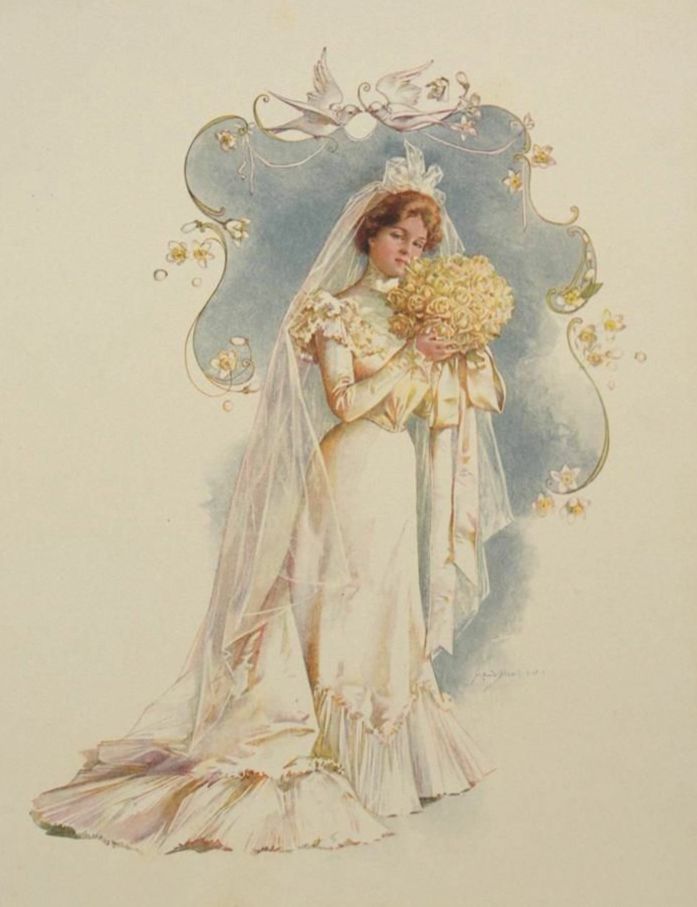
Like her friend Isabella, Theodosia Toll Foster was an author, too! You can read some of her stories for free by clicking here.

What is Love?

Isabella Alden’s son Raymond was fifteen years old when he wrote this sweet poem. It was published in The Pansy magazine in 1888.

(Written in answer to a child who asked what love was.)

Love is—well, what can anyone say?
Love is—Why, darling, think all day
Of all the words that we can say;
And think, and think, and tell me
What love is. Ah! I knew you could not.

Well, love is Jesus; and He is love.
Love is a message, so sweet, from above.
God is love, so the good Book says,
And true love is great and high, always.

What is the best definition given?
Love is a message, a breath from Heaven.
God’s message to lost ones—our Light, our Life.
Love makes all peace where once was strife.
Oh! Let me show you what love can do.

For God so loved the world that he gave
His only begotten Son to save—
Whom do you think? Why, sinners, whom
Justice for justice’s sake would doom!

But then, you look very wise, and say,
Why, God is love, you know, anyway!
Aye, my darling, that is true.
Now let me ask you—What cannot love do?

Lanterns to Light the Summer Night

Many of the characters in Isabella’s books looked forward to spring, when days got longer and temperatures warmed. They planned their days around being outdoors as much as possible, taking their meals outside and even taking long “tramps” through fields and parks.

When the sun went down, they remained outdoors, and lit their lawns and gardens with “oriental lanterns.”

Asian goods began to make their way into American homes as far back as the Civil War, but only in relatively exclusive areas, such as Boston and New York.

But in the 1880s, more common Japanese goods, such as paper parasols, fans, and lanterns became readily available in American markets.

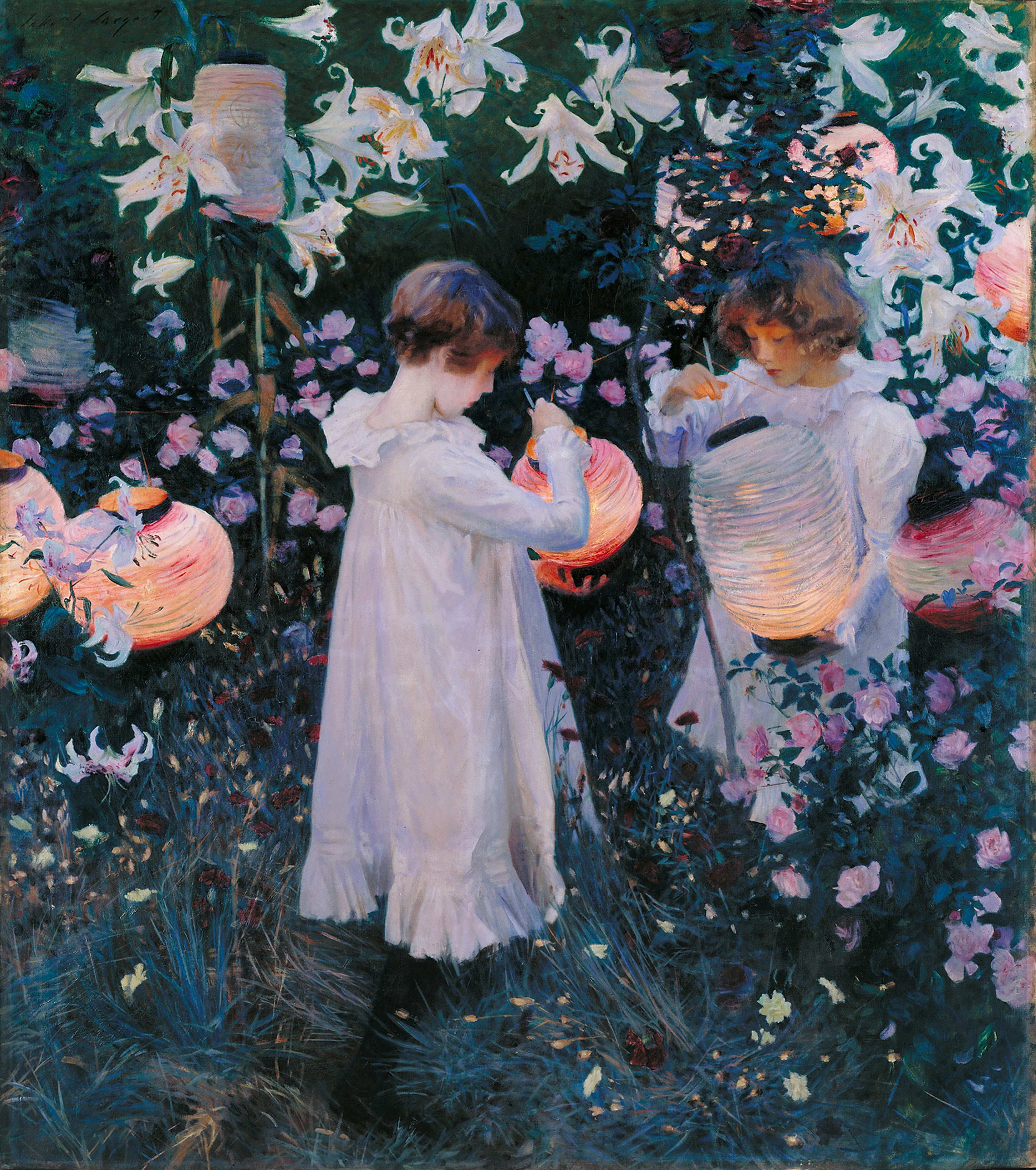
Two young girls stand in a field of grasses, roses, and tall lillies. Each girl holds a paper lantern they are lighting. Around them hang lanterns that are already lit.
John Singer Sargent’s famous 1886 painting, “Carnation Lily, Lily Rose.”

One import firm, Vantine’s, offered a fairyland of Japanese items in their New York showroom.

A corner of the store displaying wicker chairs and tables, ceramic vases, framed Japanese prints, pagodas and colorful lanterns.
A partial display of summer home furnishings at Vantine’s New York showroom.

You could see paper lanterns hanging from the ceiling on every floor of  A.A. Vantine’s multi-story establishment. It wasn’t long before Vantine’s was shipping paper lanterns to stores all over the eastern states.

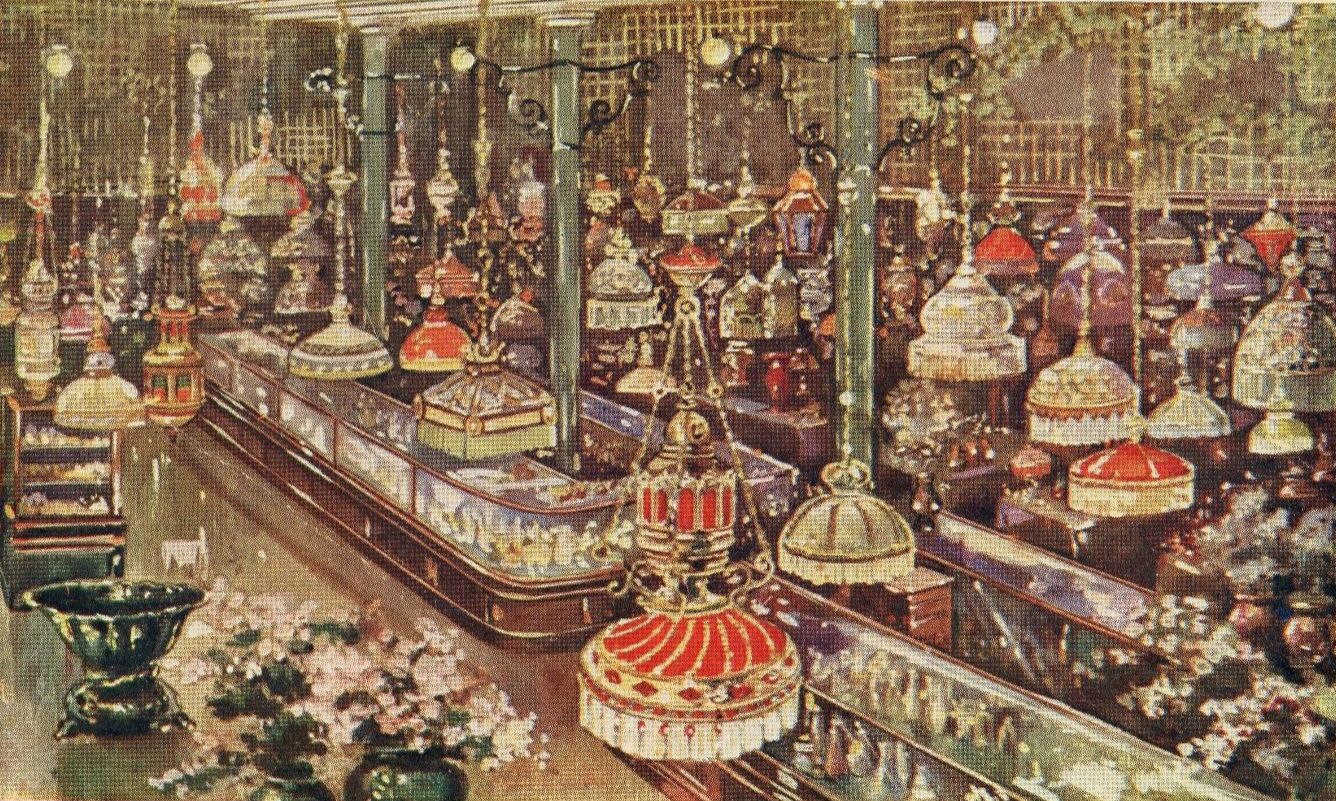
Postcard showing a variety of lanterns, lamps, and chandeliers hanging from the ceiling. Beneath are display cases with smaller items for sale.
Vantine’s of New York. A View of the main floor showroom from the balcony.

That’s about the time that Isabella began mentioning paper lanterns in her books.

In Making Fate (published in 1895) Marjorie Edmonds visited the Schuyler Farm and spent a lovely evening with friends:

She was out with many others on the lawn, which was brilliantly and fantastically lighted with many Chinese lanterns. It formed a place of special attraction on this lovely May evening, which was almost as warm as an evening in midsummer.

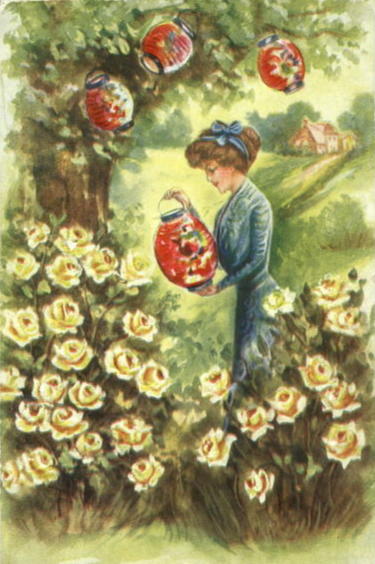
Illustration from about 1900 showing a young woman outside near several rose bushes, hanging red paper lanters on a tree. Behind is a field with a house on the horizon.

In The Browns at Mount Hermon (1908), several characters where concerned about a group of boys who planned to sneak off into the countryside to light a bonfire and spend the night gambling and smoking. Then, John Brown offered this suggestion:  

What if we could give up this evening to pure fun? Have a gathering on the Zayante lawn, which is far more attractive than the redwood grove across the way; decorate the trees and the porches and all other available places with Chinese lanterns, plan for the finest bonfire that our splendid brush heaps suggest, and serve unlimited sandwiches, cake, coffee, and anything else that could be gathered in haste, and is calculated to tempt the appetite of the average boy. Then we could send a deputation to meet the train and kidnap the crowd as our honored guests, meeting their spirit of frolic and good time at least half-way.

Old photograph of a woman about 1910 on a balcony. Overhead she has strung some string and is hanging lanterns of different shapes and colors. On the balcony railing are a bunch of roses and more lanterns to be hung.

One of Isabella’s most charming descriptions of paper lanterns was in The Hall in the Grove (1882), when Mr. Masters escorted Caroline Raynor and the Fentons to the opening assembly at Chautauqua:

On they hurried, striking at last into Simpson Avenue. Caroline came to a sudden halt, and gave an exclamation of delight. Away down the avenue as far as her eye could reach, on either side was one blaze of light; illuminated mottoes, flags, Chinese lanterns, flowers, ribbons—anything that could lend a glow of color to the bright scene had been displayed, and the whole effect was such as she will remember all her life.

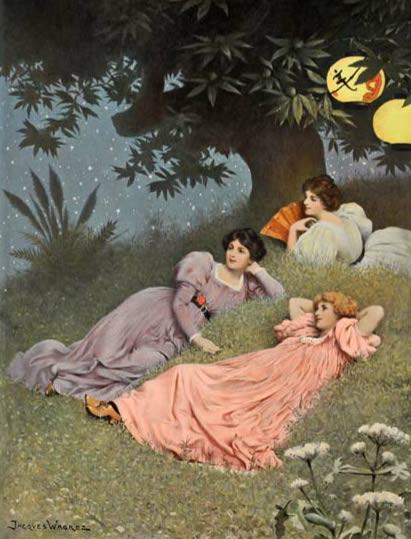
Painting of three young women laying on the grass of a sloping hill. One woman holds a paper fan. Behind them two lighted paper lanters hang from the branches of a tree. Beyond, the night sky is filled with stars.
Daydreaming Under the Stars by Jacques Wagrez.

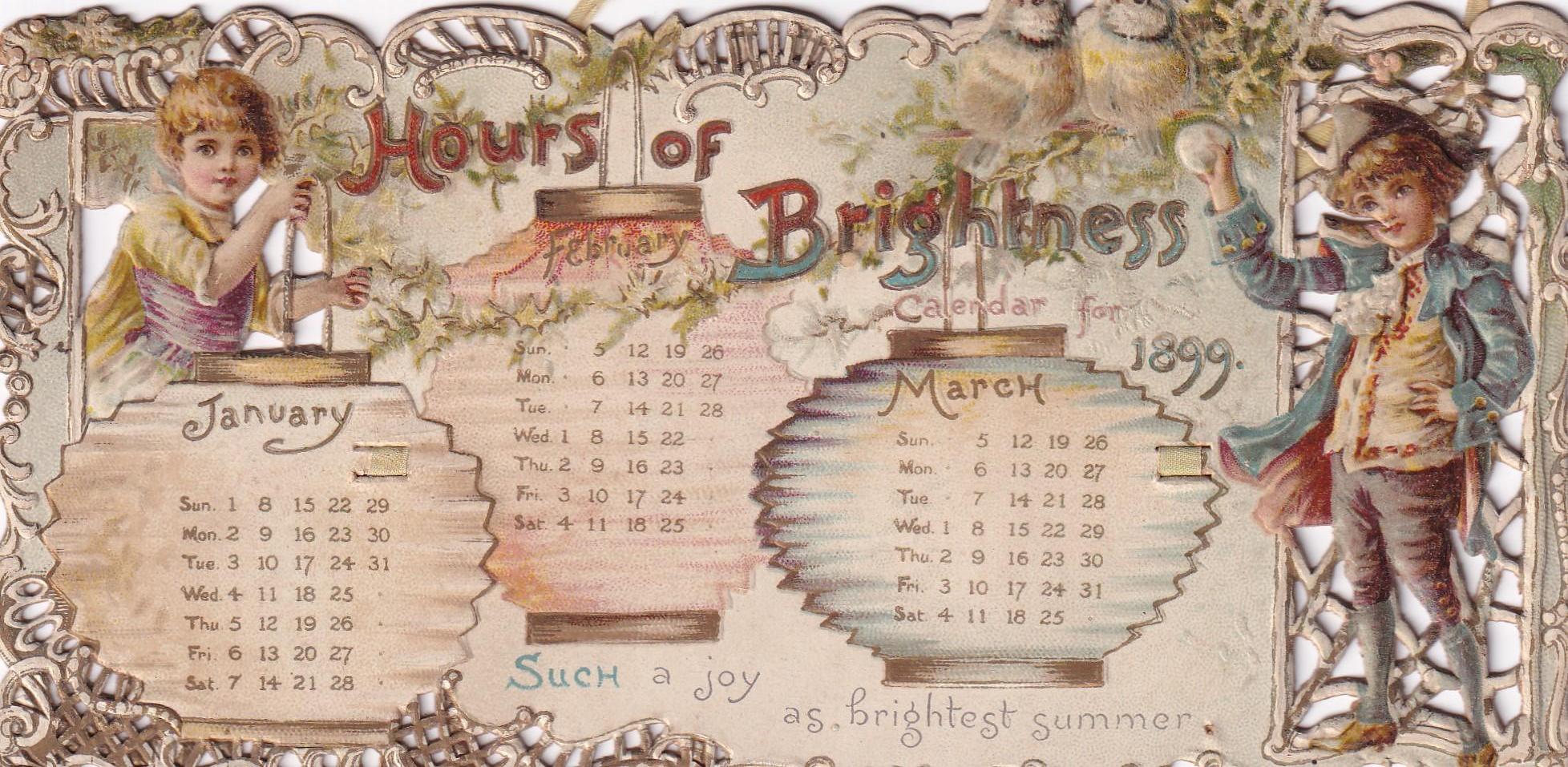
Paper lanterns became so popular, they were regularly incorporated into greeting card design like this one:

Greeting card with illustration of woman gathering pink roses from a bush while a pink paper lantern hangs from a branch of the tree behind her.

And in illustrated calendars:

Portion of an 1899 calendar showing January through March; each month is printed against a backdrop of a paper lantern. "Hours of Brightness" is printed across the top.

When you read Isabella’s books, you can tell she enjoyed the beauty of a light-filled summer night, and her descriptions of paper lanterns still have the power to warm our imaginations.

What do you think of Isabella’s descriptions?

Have you ever been to an outdoor event that was lit with candles or paper lanterns?

The Wayside Game

It’s the time of year when families begin planning their summer vacations. If you’ve ever taken a driving trip with children, you know the first rule is to keep children occupied.

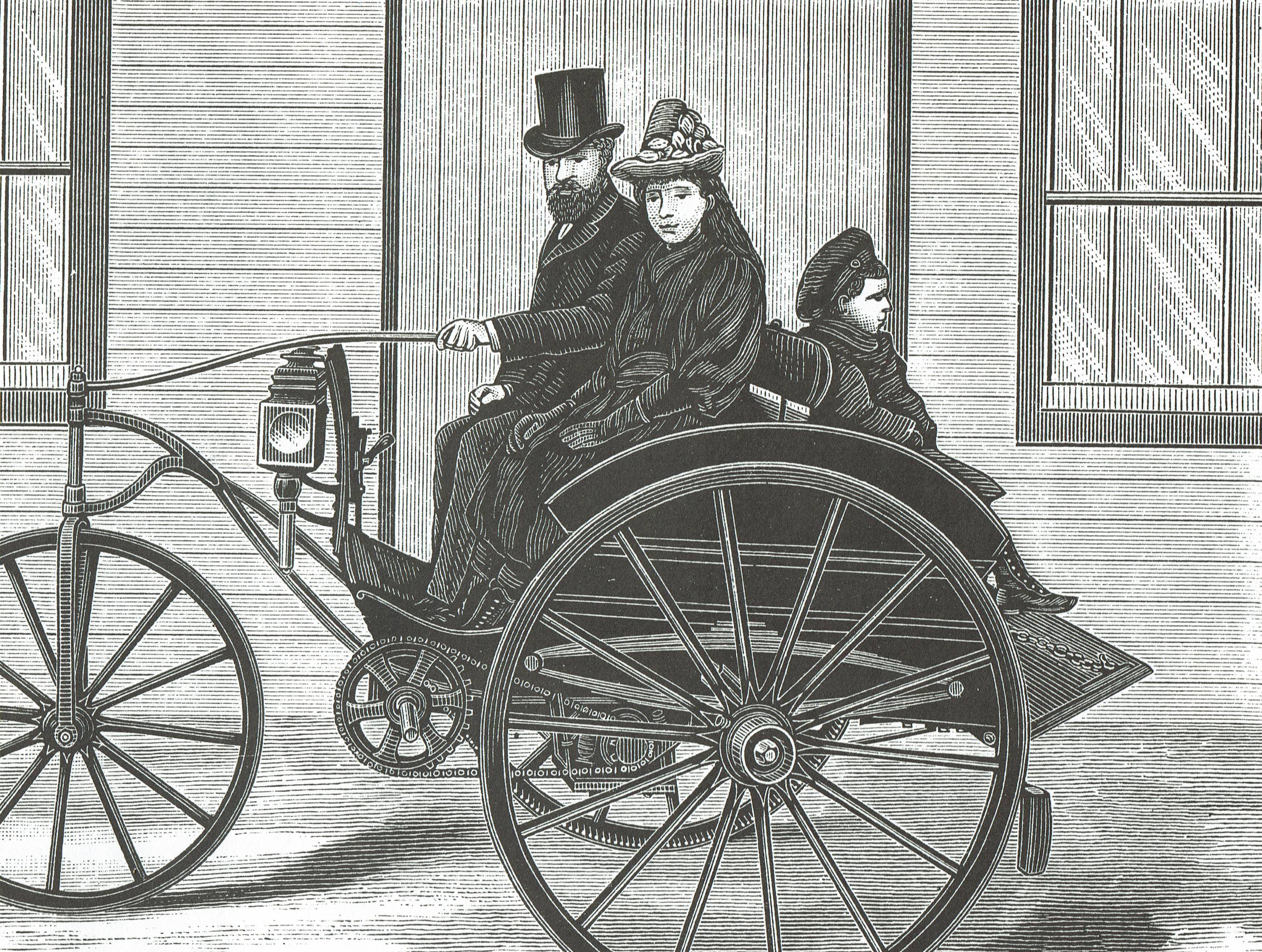
Isabella most certainly had experience in taking children on long trips, by automobile and by train. Her son Raymond and daughter Frances frequently accompanied her when she traveled to speaking engagements all over the country.

In 1883 Isabella published a brief article in The Pansy magazine about a new game for traveling with children.

The next time any of you Pansies go travelling, try the new funny little “Wayside Game” that has just been invented for children on a journey. They are to look out for four-footed animals, each of which counts 1. A white quadruped counts 5, a squirrel 25, and a cat sitting in the window of a house, 50.
Two little girls were thus relieving the tedium of a long trip the other day, and the elder was getting ahead, when the younger happened to spy fifteen little pigs, as white as snow, which gave her 75 at once. And soon after, she was lucky enough to see a cat in the window, which gave her 50, so that the little one made a score of 365 against 189 for her sister. Try it, all who want a gay little travelling time.

Does this game sound familiar to you?

When you take driving trips, do you play a similar game?

Hello, April!

Few people know that Isabella’s husband, the Reverend G. R. Alden, was an accomplished poet. He wrote several poems for The Pansy magazine, including this one that celebrates the coming of spring:

April

O, Spring is coming now, don’t you see?

The birds will be followed by the humble bee.

The frogs are singing their evening song,

The lambs are skipping with their dams along,

The buds are out on the pussy-willow tree,

On the bough of the birch sings the chickadee.

Drawing of a little girl and boy barefoot, standing on the bank of a pond. He is fishing while she watches.

The cows come lowing along the lane,

With suppers all ready for us again;

Old Speckle scratches for her chickens ten,

New piggies are squealing in their pen.

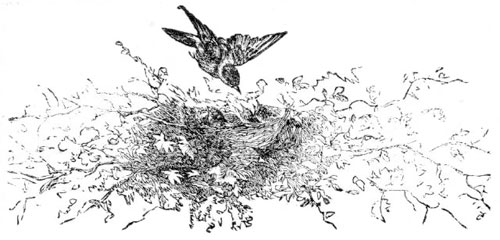
Drawing of a birth feeding her chicks in their nest.

From the top of the tree the robin calls,

From the top of the dam the water falls,

And everything to the eye or ear,

Tells to old and young that April is here.

G. R. Alden