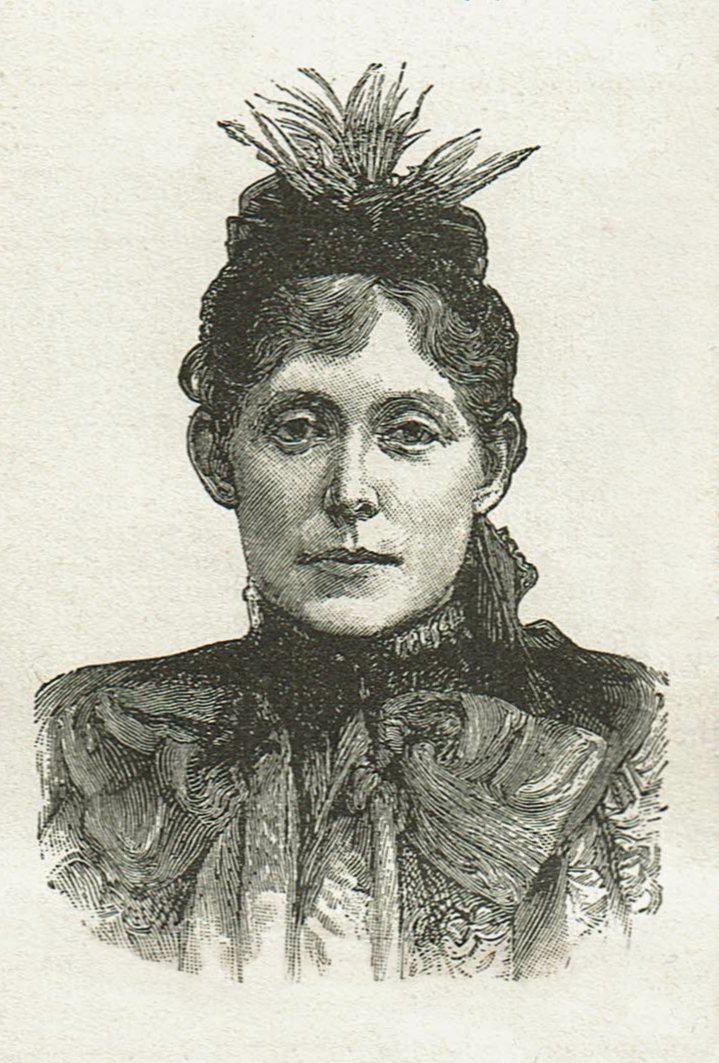
Isabella Alden was an esteemed teacher, a successful author, and a beloved minister’s wife. During her life she was widely admired by those who knew her, and she was an inspiration to women across the country. But who inspired Isabella?
She gave us a hint to the answer in 1894 when she wrote an essay about a beloved friend she greatly admired. Here’s how she described “Mrs. V”:
Something—a chance sentence of one who lingered for a moment in my room—has sent my mind back over the past, and recalled a vivid picture of one friend for whom the gates opened heavenward years ago; yet she lives so distinctly in my memory that it seems but yesterday that I saw her quiet, pleasant face, and heard her low, kind voice.
Today I have set myself to earnestly studying why she influenced me so steadily, and why her memory lives so plainly, not only with me, but with many others who were not bound to her by any closer tie than that of friendship.
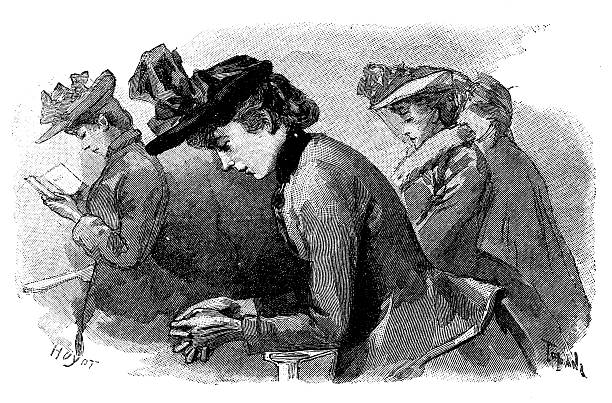
I remember her as one who was always at our women’s prayer-meeting. There were a dozen or twenty of us who were more or less regular in attendance. Several women we could count upon if the day was reasonably pleasant; others would be there if there had not been something exhaustive the day before, like a church sociable, or festival; but Mrs. V established such a reputation for regularity, that in the few times she was absent during the years of my intimate acquaintance I distinctly remember seeing anxious faces and hearing questionings like this:
“Did any of you know that Mrs. V was ill?”
“Oh, no; I haven’t heard from her, but she isn’t here.”
She was not a woman gifted with a great command of language. She had no startlingly original ideas of any sort to offer. A superficial listener might have called her commonplace. Perhaps she was. When one stops to think of it, many things which we prize the most are really commonplace. I suppose love is. And mothers are very common, and homes.
Mrs. V was a low-voiced, quiet woman. She shrank from notoriety; she was not made president of any of the church societies.
“Oh, no,” she would say, when someone mentioned her name; “choose Mrs. Jones, or Mrs. Smith; either of those will fill the office better; they know how; and I will work just the same in any way that I can.” She meant these negatives, and pressed them until she was taken at her word.
“Mrs. V shrinks from office,” we said. “She is timid.” But she did not shrink from work. No matter what the scheme—whether it included baking, or frying, or broiling, or one’s self and one’s nice things—Mrs. V could be counted on.
“I will try to do my share,” she would say, cheerfully, and we were always anxious to let her decide for herself what her share was. No one thought of apportioning to her all the things which she quietly took upon herself. Neither did we ever say to her, “Mrs. V, will you do this or that?” singling out the pleasant places or the pretty part of the work. It was not hopeless selfishness upon our part which made us never select these places for her, but because she would be too quick for us.
“I will see that the dishes are in order, and attend to spoons and forks and all that sort of thing,” she would say when we were planning a campaign; or “I will get the church parlors ready for evening.” This would be long before we had reached dishes or parlors. In the course of time we learned to depend on her for all such things.
“Mrs. V will look after that,” was a sentence often upon our lips, and I do not think it was until afterwards that some of us realized how often the sentence referred to drudgery; though one of our ladies had said once, significantly:
“Mrs. V will dust and arrange the parlors, and put everything in perfect homelike order, and Mrs. W will entertain the guests; we believe in division of labor.”
But while Mrs. V. shrank from office, and was always proposing the names of others, there was one duty from which she never drew back. Always, even at very short notice indeed, we could depend on her to lead the woman’s prayer-meeting.
“I am not gifted in that direction,” she would say, meekly, “but I will do the best I can.” And the meetings which she led proved the truth of her pledge; moreover, her “best” was something to remember.
She may not have been “gifted”; I do not think we ever talked about her as one who was, nor said to one another: “Wasn’t that a beautiful talk she gave today?”
One good woman voiced the thought of our hearts when she said as we went quietly out from a meeting which Mrs. V had managed:
“We ought to be better women all the week after such a meeting as that. The Lord led it, didn’t he?’ Perhaps that is the feeling which Mrs. V’s work gave us as much as words can express it: she was taught of God.”
I recall so many quiet, pleasant things about her; things which were not much thought of at the time, but which have left their impression.
She had a little grandson, a sweet, shy boy, who shrank painfully from any contact with strangers, and was long in making acquaintances. She was very anxious to have him become a member of our primary department in the Sabbath-school, and tried in various ways to win him to go with some of the children, without success. Finally she said to me:
“I think if I may come with him a few times, he will overcome his timidity.”
Of course she was invited to do so; we gave her a seat in the visitors’ corner, and used all our skill to win the timid little fellow by her side into our youngest class. All in vain. He was contented and happy beside grandmother, but his fair, pale face would grow red, and his lip quiver pitifully, at the mention of a separation.
After weeks had passed, and he made no progress, the dear grandmother said, “I think I will have to become one of your teachers with my boy for a pupil. May I not come every Sunday and keep him beside me, and teach him what you teach the others as far as I can, until he learns to come without me? I want him to form the habit of coming here, and to be happy in coming.”
We joyfully welcomed her and her one lambkin, and all summer, not only, but through the long, cold, stormy winter, not a Sabbath afternoon passed but grandmother and little one were in their corner, and, so far as I could judge, a more interested pupil did we have than the fair-faced little fellow, who bent earnest eyes on card, or picture, or whatever his teacher used to hold his thoughts.
In the course of time he learned to rise and join with the children in reciting the golden text, or in singing their motion songs, his grandmother always rising with him, and going gravely through the motions, as if she were a child. I remember nothing sweeter, in its way, than the gravity with which she would repeat with the children the verse:
"I've two eyes to look to God,
I've two ears to hear his word;
I've two feet to walk his ways
Two hands to work for him all my days."
She would touch her fingers to her eyes and ears, and bow her head to look at her feet, and spread out her hands, exactly as the hundred or more children were doing all about her; and seemed able to forget that she was not five, instead of quite past fifty. Also, it was a curious thing that the children seemed to forget it; they accepted her as one with them. I do not recall so much as a smile on the faces of the little ones, growing out of the fact that dear Grandmother V said the verses just as they did.
“My little fellow is a mixture,” said the grandmother to me. “He is too shy to do many of the things which others do, but he is also too large. He confides to me the fact that he is only going to do what fathers and mothers and grandmothers do, and not be like little specks of children! And I want him to understand that eyes are never too old to ‘look to God,’ nor hands too old to work for Him. And as example seems to do so much more for little people than precept, I join in all the exercises to prove to him that Grandmother is not too old for any of them; then I try to explain to him afterwards in what ways he and I can use our eyes and ears and hands and feet for God; the ways are different, I tell him, but the heart is the same.”
Sweet, wise grandmother! Happy little grandson to live in the daily atmosphere of such careful, tender precept and example.
When I heard that she had left them and gone to heaven, I think my tears fell first for the grandson bereft of so much, even before he was old enough to fully realize its worth.
In the woman’s prayer-meeting of which I have already spoken, and which was an altogether social gathering where topics of general interest were discussed in as informal a manner as we would have discussed them had we met in one another’s parlor by accident for a social call, Mrs. V used often to let drop quiet little words, generally in answer to some question, which would illuminate the topic before us as nothing else had done.
At one time we were talking about women taking part in the general prayer meeting of our church; a matter in which the pastor was deeply interested, and which he urged persistently.
One lady said she had not the slightest objection to it; indeed, she liked to hear other ladies. She thought it made the meeting seem more social; but for herself she could never do it; she might think over a sentence at home, even commit it to memory, but the moment she tried to give it in prayer meeting it would stick in her throat, and choke her, she knew it would!
Then she turned to Mrs. V and said, “I am always surprised to see how quietly you recite a verse, or say a few words, exactly as though you were in your own home with your intimate friends. Your voice does not tremble, and you never look confused. Why, I believe I should faint if I should attempt it! And you are a very timid woman; how do you manage?
“I don’t believe I manage,” said Mrs. V, with a quiet smile. “I have nothing of any particular consequence to say, so it never takes any managing. I just remember that we are all brothers and sisters gathered for an hour to talk about things which have to do with our journey Home, and I think it would be very strange if I, who am in the midst of the journey, farther along than many of the others, could not have a friendly word of cheer for them, or a promise to remind them of. It is just a family gathering for conversation with one another, and with the Elder Brother, you know. I always take my part in our family gatherings at home; not a very large part, perhaps—I am not much of a talker, you know, anywhere—but still I always have a word to say; and I try to make the prayer meeting feel just like that, and not think about what words I am using, or anything of that kind.”
Her questioner stared, as one bewildered. I do not know that to this day she realizes anything of the sweetness and fullness of her answer, nor dreams how much of spiritual fellowship was embodied in it; but some of us felt its power.
“It is just a family gathering for conversation with one another and the Elder Brother,” repeated a dear friend to me, as we passed out. “I shall always think of that after this, when I am in a prayer meeting. What she says in the meetings fits that thought, doesn’t it?”
Yes, it was true that while some of those who could manage an oyster supper or a carnival, from its first inception through to the distracting and oftentimes bitter end, could not open their lips in the general prayer meeting, would have “fainted at the thought,” she, the timid woman of our number, always responded to the pastor’s invitation; often among the first. Never saying much; rarely saying anything which could have been quoted and commented on, yet forever leaving her impress on the gathering, so that on one of the rare occasions when she was absent from her accustomed seat, I recall the fact that the pastor said, “I feel as though we have lost a benediction tonight; Mrs. V is not here.”
At another time, in the woman’s meeting, we were talking about regularity in attending the Sabbath services, and some were bemoaning the fact that they had a great deal of company during the summer, and were often detained at home.
One lady said, “It does seem to me that I have more company, who have a habit of staying home from church on the slightest pretext, than any other people do. If it is a trifle warmer than usual, or cloudy, and looks as though there might possibly be a shower some time or other, it is seized upon as a pretext for lounging at home. I always dread to ask the question, when my house is full of company, lest I may be doomed to stay with some indolent guest who simply does not want to take the trouble to get ready. Mrs. V, you always seem to have company, and I notice that they are always in church with you; how do you manage? When you ask if they are going out that morning, and they say they believe they won’t go until evening, they have a little headache, do you say they must?” The question closed with a half laugh, for so informal were our meetings that even a laugh did not frighten anybody; but we listened with interest for Mrs. V’s answer.
She considered the lady thoughtfully for a moment, with retrospective air, as though she might be looking back over her past for illustration, then said, “I do not believe I ever ask that question. I cannot recall an instance when I did. I am in the habit of saying at the breakfast table that our church services commence at half-past ten, and that we try to start from the house promptly at twenty minutes past ten, which will give us ample time to walk leisurely; and that we are in the habit of meeting in the parlor and all going together. I think I take it for granted that everybody is going, children and all, and they never disappoint me. I have always found that there was so much gained in taking some things for granted. You know we have to do that way with children. I had a little fellow once to whom it would have been fatal to have said, ‘Are you going to church this morning?’ When I saw the spirit of insubordination creeping over him I had to say, ‘You may wear your new collar to church today,’ or something like that, forestalling any objections to going. Perhaps I have fallen into that habit with company.”
“I’m sure it is a very good habit to fall into,” said one. “I’m afraid I should not have the courage to carry it out.”
For certain reasons I wanted to draw her out more fully, and I said, “Suppose, for purposes of illustration, Mrs. V, that you have a friend who, although not ill, is yet not inclined for church, and she says to you that she thinks she will not go this morning, do you remain with her?”
“By no means,” said Mrs. V, quickly. “I furnish her with as comfortable surroundings and as good a book to read as I can and excuse myself.”
“That will do for Sunday,” said one, “but suppose it is prayer meeting evening; I have a great many callers on Thursday evenings, just at church-time. Do you ever, Mrs. V? And if so, what do you do with them?”
“Plead an engagement and invite them to join me,” said Mrs. V, smiling.
“No! Do you really?”
“Why, certainly,” said Mrs. V, looking almost bewildered. “What else could I do? I am under covenant obligations to be at prayer meeting when I can; and I should not consider callers a sufficient excuse for my pastor’s absence; why should it be for mine?”
There is a bit of personal experience which comes to me so tenderly that, even after the lapse of years, I can scarce keep back the tears at the thought of it. Just one of those little things—commonplace, so called—a thing which one had to receive simply as a matter of course, and yet it was far from being that.
The occasion was an evening wedding in our church—a wedding where everything was expected to be arranged according to approved ideas. In some way I had gotten the impression that no bonnets were to be worn by the guests, and I therefore appeared late, in the vestibule, with no other covering for my head than an old veil which I had hastily snatched to protect my hair, to discover that I was the only bonnet-less one of that large company. There was no time to return home and make the necessary changes, and I certainly would be unpleasantly conspicuous as I was.
While I stood there in doubt and annoyance, Mrs. V and her party entered. She was faultlessly dressed, and wore a handsome new bonnet which exactly fitted her. In a moment I had told her my trouble, because she was one to whom people naturally told troubles, great and small, not because there was supposed to be anything that she could do.
I looked to hear her say, “I’m sorry you did not understand; they ought to have told you,” or “I wouldn’t mind; just go in as you are; there is such a large company people will not notice you much,” or some other equally comforting commonplace which people say in the face of the annoyances of others. She did differently.
“Oh, we can arrange that.” she said. “The immediate family are to be bonnet-less, and they will be here in a moment. I am an immediate friend, and you are the pastor’s wife; nothing could be more appropriate than that we should be exceptions to the others. I’ll whisk off my bonnet in a twinkling; my hair isn’t exactly arranged to appear without it, but that’s no matter, and we’ll go in together and pose as guests of honor.”
It had all been done so quickly, there was no time for protest. The handsome new bonnet was hastily consigned to the care of an attendant, and in a moment we were moving down the aisle, being recognized by the usher as special guests, and being shown into the be-ribboned pew which, it seemed, had been set apart for the wife of the pastor. Nobody stared; the quick-witted woman had made everything look reasonable and in order, and the family party followed almost immediately.
A very trifle? Yes, I told you so, but not one woman in twenty would have done it. Half of them would not have thought of it at all, and the other half would not have sacrificed their new bonnet, and worn their hair in an unbecoming fashion, merely to save another from a moment’s annoyance.
“Don’t speak of it,” she said, laughing, when I tried to murmur my thanks. “I am the one to be grateful; don’t you see, I secured a place of honor by the means, and a little of the reflex glory fell on me, I am sure.”
It is ten years since that time, yet I have never forgotten the little kindly, unselfish act, but laid it away with dozens of others connected with this sweet, inconspicuous, quiet woman who never for a moment imagined that she was doing or saying anything worth mentioning or remembering. Yet so many remember her. They crowded about her quiet grave and paid their tribute of tears. People whom her family did not know at all; people to whom she had given some kindly word or look, that had lived and borne fruit in their hearts.
Heaven must be full of sweet surprises to Mrs. V. Sometimes I try to fancy what it is to hear one and another, as they gather up there, tell her of the flowers she planted unawares. Someday I mean to tell her myself certain things which I know will surprise her to hear.
Why am I paying this tardy tribute to a friend who has been so long gone from us? Because, as I grow older, I realize more and more how rare she was, and recognize more fully that it was her Christ-like self-forgetfulness and her Christ-like interest in others which made much of the charm of her life. Long ago, the Master must have spoken to her—her face full of surprise and wonder the while—his blessed “inasmuch.”
What do you think of Isabella’s essay?
Have you ever known someone like “Mrs. V”?