Isabella Alden’s first published book Helen Lester was written as an entry to a contest . . . which she won! Isabella’s prize was a check for $50 and publication of her book Helen Lester in 1865.
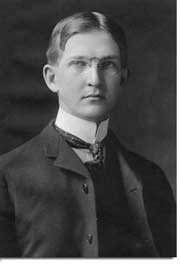
Raymond Alden in an undated photo
Her son, Raymond, was also a writer. Like his mother, he began writing at a young age. As an associate professor at Stanford University in California he authored several text books. He also contributed stories to The Pansy magazine, which his mother edited; and in 1909 his Christmas book for children, Why the Chimes Rang, was published.
The 1909 cover of Why the Chimes Rang by Raymond Alden
Forty years after his mother took her first writing prize, Raymond entered a writing contest. In 1905 he submitted a short story titled “In the Promised Land” to a writing contest sponsored by Collier’s Weekly magazine. His short story took third prize in the national contest and Raymond was awarded $1,000. That was a substantial prize—the equivalent of $26,000 in today’s economy.
Article in The Los Angeles Herald, February 13, 1905
Isabella Alden often drew on her own life experiences when she crafted her short-stories and novels. The incidents she wrote about weren’t necessarily historic or even life-changing, but she had a talent for sharing her own memories in a way her readers could identify with.
One of Isabella’s school experiences ended up as a short story titled “When I Was a Girl.” It happened when Isabella was a young student at Oneida Seminary in New York.
Gathered in the school assembly hall one day were all the teachers and pupils, as well as friends and parents of many of the students. Isabella was one of six young students chosen to read their own compositions at the assembly, and the audience was to vote by ballot for the best essay.
Being a talented writer from a young age, Isabella won the prize; but soon after she received her award, a rumor began to spread through school that the composition she read was not her own—that she had copied the words from a printed book!
Soon Isabella was in the office of Dr. Branner, the school principal. He confronted Isabella with the allegation, which she hotly denied.
Moments later, another student named Ophelia entered the office. Ophelia had been one of the five other students who read before the assembly, and she had been bitterly disappointed at not winning the prize awarded to Isabella—and it was Ophelia who was the source of that horrible rumor.
In her memoirs, Isabella described what happened next:
Dr. Branner’s manner was coldly dignified as he asked Ophelia:
“Am I to understand that you still insist that there is a book in your father’s library which has in it every word of the essay that took the prize in our school last week?”
Ophelia’s face as she answered the question was almost smiling, and she answered briskly:
“Of course, word for word. I didn’t suppose you were accusing me of telling lies!”
“Very well,” said the principal quietly. “Then you may go home at once and bring that book to me. We will wait here till you come.”
A high school in Hoosick Falls, New York, 1907
Isabella spent many anxious minutes waiting for Ophelia to come back with the book. In her story, “When I Was a Girl,” she described the moment when Ophelia returned. She made a few minor changes to some of the details in the story. For example, she changed the names of the school principal and the other student involved; she also added additional description she didn’t mention in her memoirs; but the finale—the truth of what happened when Ophelia returned to the principal’s office that day—is straight from Isabella’s childhood memory.
Click on the cover to the read Isabella’s short story, “When I Was a Girl” and find out how the story ended.
Isabella Alden was a busy woman. She had full-time duties as a minister’s wife, visiting members of the congregation, leading ladies’ prayer meetings, organizing mission bands, and teaching Sunday school classes. She wrote stories for and edited The Pansy magazine every month—all this at a time when she was producing an average of two books a year!
Somehow, she also found the time and energy to lecture before large audiences at Sunday School conventions, Chautauqua Assemblies, and women’s groups. She regularly addressed members of local CLSC chapters and traveled the country to meet with devoted readers of her books and The Pansy magazine.
This notice of one of Isabella’s lectures appeared in the Brooklyn Daily Eagle (New York) on January 14, 1882:
.
And this announcement for one of Isabella’s addresses before a Sabbath-school convention appeared in The Bloomfield Record (New Jersey) on March 11, 1882:
.
When she could, Isabella combined her speaking engagements with visits to family and friends. That was the case in 1878 when she visited her home town of Gloversville, New York.
Reverend Gustavus Rossenberg Alden
Years before (in 1866) Isabella married Reverend Gustavus “Gus” Alden and moved away from Gloversville; but her family remained in the area and she visited them as often as possible. In that late summer of 1878, she was able to visit her family in combination with an author speaking tour.
Isabella had just finished writing a short story she called, “People Who Haven’t Time.” The story was not yet published but she was ready to share it with her fans.
On Friday, September 20, 1878, she appeared at the Gloversville Baptist Church to give a public reading of the story.
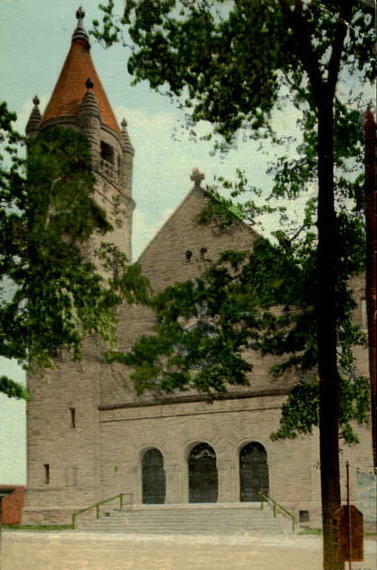
Undated photo of the Baptist Church in Gloversville, New York
.
The local paper, The Gloversville Intelligencer, announced the event and encouraged attendance:
.
In the next edition, the newspaper gave a full account of the evening and proudly listed the many accomplishments of Gloversville’s favorite home-town girl. Here’s the full 1878 article from The Gloversville Intelligencer:
The story Isabella read at the church that night would eventually be given a final edit and named “People Who Haven’t Time and Can’t Afford It.” In 1880 the story was published in a volume that included another Pansy short story, “What She Said … and What She Meant.”
Original cover of Isabella’s book What She Said, published in 1880
.
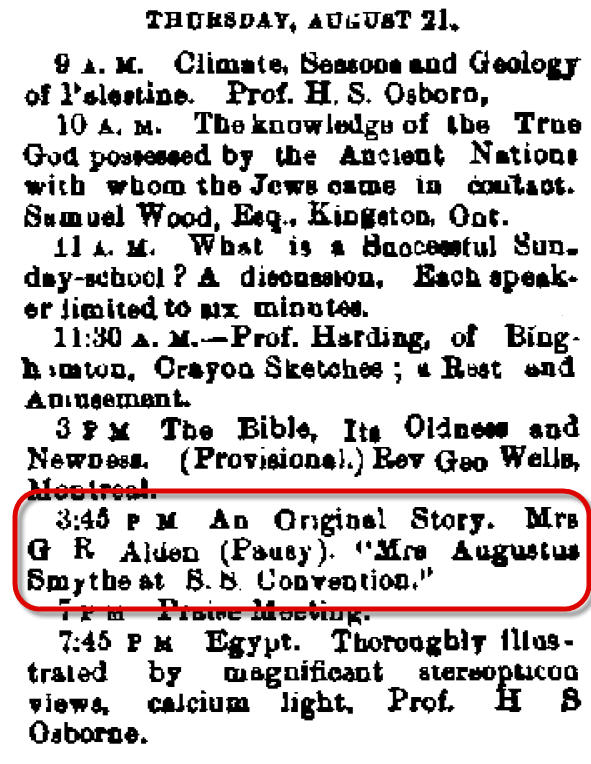
There are other accounts of Isabella reading her stories before audiences. For example, in 1879 she appeared before a Sunday-School convention in New York to read an original story:
And in 1895 she read her story “Miss Priscilla Hunter” to an audience at the Presbyterian church to help raise funds for the Young Ladies’ Missionary society:
From the Gloversville, New York “Daily Leader,” September 18, 1895
.
If you haven’t yet read Isabella’s story, “What She Said . . . and What She Meant,” you can read it for free. Click here to begin reading the stories mentioned in this blog post.
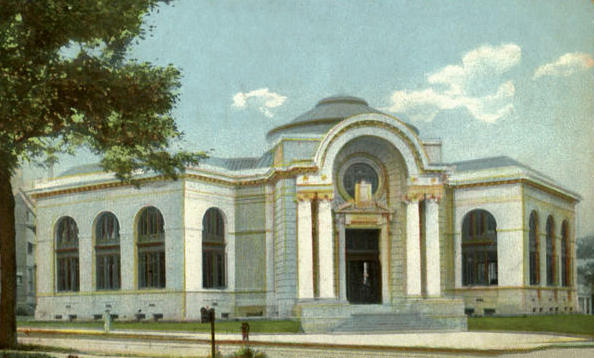
Isabella Alden called Gloversville, New York her home town. And Gloversville, in turn, proudly published Isabella’s accomplishments in the local newspaper and ensured her books were prominently displayed in the town library.
The Gloversville Free Library, 1908
.
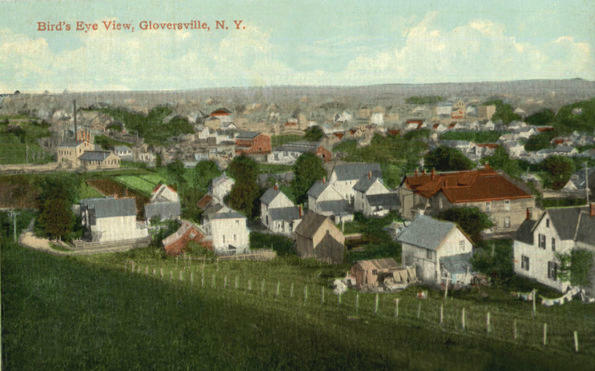
Gloversville is a small community nestled in the foot of the Adirondack Mountains. It was settled soon after the American Revolution in 1783. Originally, it was called Stump City because the early settlers felled so many of the surrounding hickory trees, leaving just their stumps behind. In those days, Stump City had about 100 residents and only 14 houses.
An undated postcard of Gloversville
.
But in the early 1800s a change took place. An enterprising citizen began a leather tannery, which quickly expanded to add a leather mitten manufacturing business. By 1830 there were about 100 people living in Stump City, most of them involved in the leather business. Residents began calling the place Gloversville, as a tribute to the merchandise that was proving to be very profitable for them.
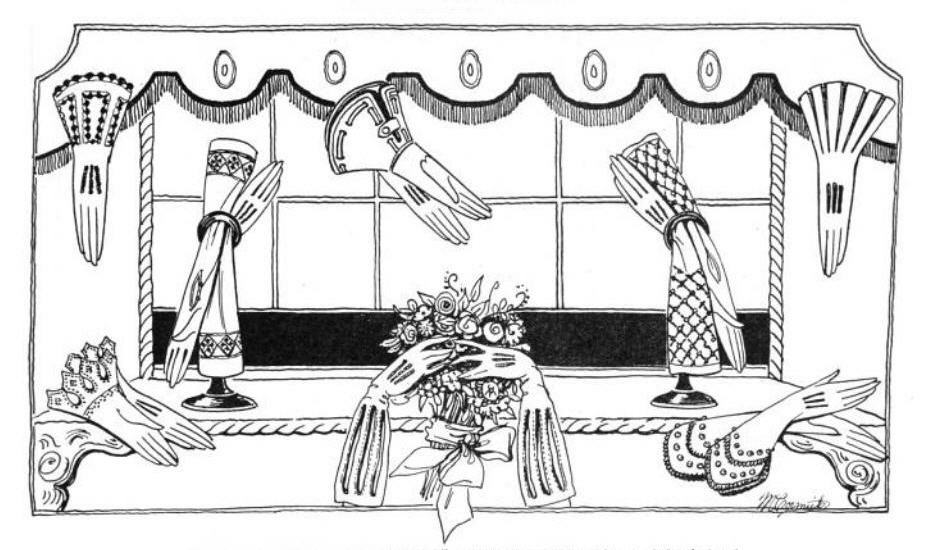
A 1922 magazine ad for buckskin gloves made in Gloversville.
.
By 1857 the village of Gloversville had over 3,000 residents and was the leading supplier of gloves in the country. The village mills were responsible for 80% of the leather gloves sold and worn in the U.S. The village’s prosperity attracted more residents and new businesses.
Isaac Macdonald, Isabella’s father, earned his living as a supplier to the leather mills. He owned a paper box factory that sold the containers used by leather mills to ship their finished goods to stores and wholesalers across the country.
Entry from an 1870 county directory listing Isaac Macdonald’s business
.
In the mid-1880s residents cast their ballots on the question of whether the thriving village should incorporate as a city. At the same time, a few residents began a campaign to change the name from Gloversville to Kingsborough.
1903 photo of Gloversville Fire Station No. 3
.
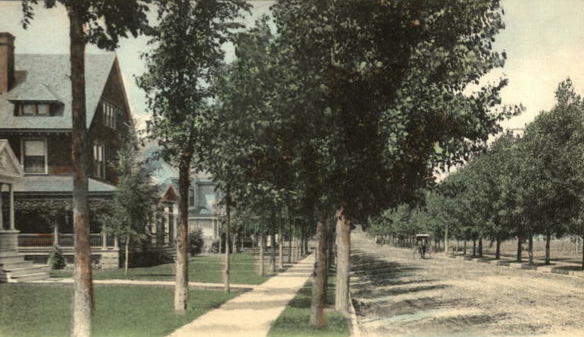
Kingsborough is a name that runs consistently through the community. There’s a Kingsborough church and tree-shaded Kingsborough Avenue, a pretty thoroughfare that spans the length of Gloversville.
Kingsborough Avenue, about 1905
.
And the Kingsborough Hotel was a grand building that any town would be proud of. In fact, many residents thought the name Kingsborough would fit the town like, well, a glove.
Kingsborough Hotel as it appeared in 1913
.
Isabella Alden had her own opinion about the name the newly-chartered city should adopt. Here’s an article she wrote for an 1888 local magazine that explained her recommendation:
A City Founded by a Deer
Now, I am going to tell you how this deer, or one that looked like it, founded a city. Of course, you’ll believe what I tell you because I was there and saw it done, having been born there.
Rome, you know, was founded by Romulus; that is to say, he was the “chief spoke in the wheel” when it began to be. Maybe there would never have been built so much as a hut, but for the wide-awake Romulus.
Some years ago, and 150 miles north of New York and about 50 miles west of Albany, there lived a few families in a placed called “Stump City.” It was wild and cold in the winter, almost as Greenland. I have often seen the snow there six feet deep!
Oh, the long and dreary winter! Most of the land was as poor as the snow was deep.
Now this was the very spot where our city was “builded together.” And it was done by the deer, as was said. And it was on this wise: one of those neighbors came home with a deer skin and another neighbor happened in at the time and they said, “What’s the use of a deer skin unless it is tanned and dressed?” So they dressed it after a fashion.
The next thing was to make mittens out of it. And they did that after a fashion, too.
But no sooner were the mittens made than everyone in the neighborhood wanted a pair.
So other skins were bought and they were soon turned into mittens and gloves and moccasins, after a better fashion. And distant neighbors heard of the wonderful wares for the hands and feet in the winter and they came miles to get them.
Then poor cold “Stump City” with its three or four families began to look up. Every man, woman and child went into the business. Even then they could not supply the demand.
Distant towns sent word. “We want some.” Then peddlers started out with horse and sleigh in mid-winter, often with a great load of the precious wares tied with buckskin strings in dozens, and all packed nicely in a big box, so neither snow nor thieves could harm them. Away they would dash, east, west, north, south.
A real city now occupies the place of “Stump City” and its name is Gloversville. It is one of the finest towns in all the great State of New York.
Go through the streets and you’ll be surprised to see how busy every man, woman and child still is. It’s one of the last places to go if you want to . . . rust.
There are machines and machines—often many in the same house, and from early morn till long after sunset they hum and buzz till you’d think everybody and the very air would go crazy. No one goes crazy, however; the hum has become sweetest music to Gloversvillians. It annually makes money for them to the tune of millions, and I am glad to say they pour thousands of it into the Lord’s treasury.
So much for what the deer did. The place should be called Deerville. Go and see it.
As entertaining as it was, Isabella’s story didn’t convince voters to change the town’s name to Deerville . . . but the people who pushed for naming it Kingsborough were disappointed, as well. The citizens voted to keep the name of Gloversville and Isabella’s home town continues to thrive to this day.
A busy Gloversville intersection: West Fulton Street and Main Street, about 1900
For most of her young life, Isabella Alden was educated at home by her parents and an occasional tutor. But all that changed when she was about fourteen years old. That’s when her parents enrolled her in Oneida Seminary in Oneida, New York.
The school was almost 80 miles away from her family’s home in Johnstown, New York; but that didn’t mean Isabella would be at the school alone.
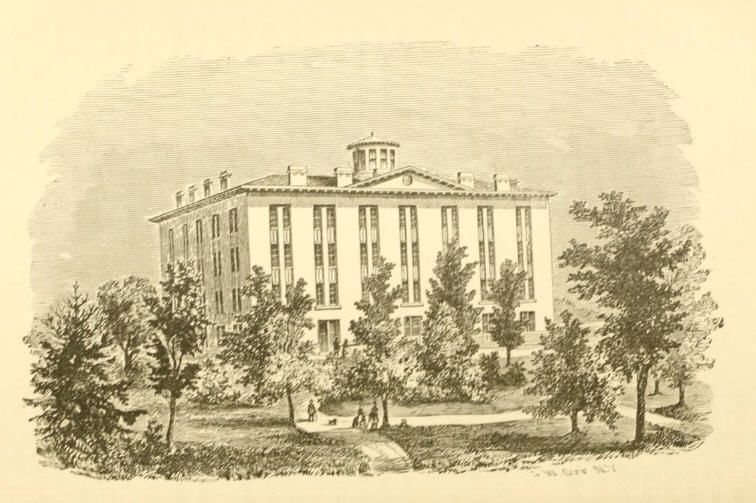
Her older sister Marcia and Marcia’s husband Charles Livingston were also at Oneida Seminary. Marcia and Charles lived in apartments on the campus because Charles was a professor at the school; so Isabella had family close by.
Oneida Seminary
At Oneida Seminary the male and female students were separated in their classrooms, study areas and living quarters; so making strong friendships with other female students would have been natural for Isabella. She often crossed paths with Theodosia Toll, who was called Docia. Docia was one of the most popular girls at Oneida Seminary. Her family owned a large farm called Locust Shade about 7 miles away in nearby Verona, New York.
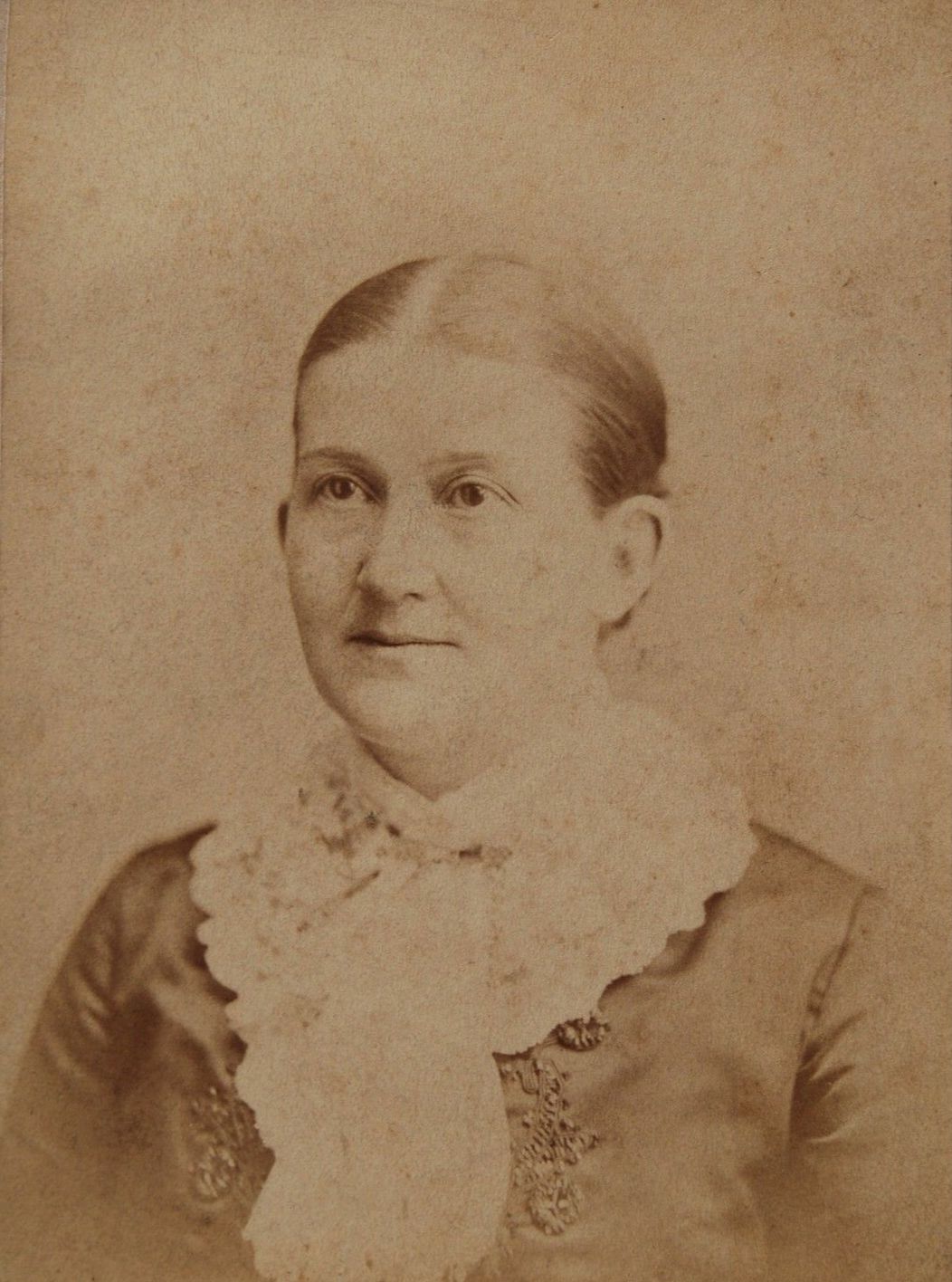
Docia was three years older than Isabella. She was a better scholar, too. She had a reputation for being keen and quick-witted, good-humored and kindly. Everyone thought well of her.
Undated photo of Theodosia Toll
Knowing Isabella was far from her family home, Docia invited her to spend her weekends at Locust Shade but Isabella always refused the invitation. Isabella wrote in “Memories of Yesterdays”:
“I had taken a great dislike to that girl in the earliest days of our acquaintance. . . I avoided her on every occasion possible and declined her invitations for the weekends so haughtily that I wonder she ever asked me again.”
One day Isabella went out of her way to avoid Docia by visiting her sister Marcia in her apartments. She didn’t hold back in complaining to Marcia about “that insufferable girl,” Docia.
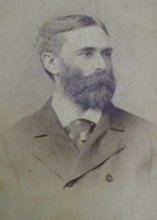
Undated photo of Charles Livingston
“If she ever asks me again to go home with her for over Sunday, I’m going to tell her that it takes all the skill I have to invent ways of escaping her society here, and I can’t be expected to follow her home, even though it would be a treat under pleasanter conditions to have a ride.”
Charles had been in the next room and overheard everything Isabella said.
“What a foolish girl you are,” he said almost sadly. “I was saying to Marcia this morning that I could not imagine why you had taken such a dislike to Docia. She is the best scholar in her class, and every teacher in the school speaks highly of her. Certainly her character is above reproach. As for her family, if you knew them you would consider it an honor to be invited to their home. I should.”
After Charles’s scolding—and much prayer and soul searching—Isabella realized why she disliked Docia . . . she was jealous of her!
“My aroused conscience showed me just where I stood. Faint and faulty as were the proofs of it in my life, I knew even then that I belonged to the Lord Jesus Christ; and He came graciously to my help at that hour and showed me plainly not only how offensive in his sight had been my attitude, but also how I had misjudged the other girl.”
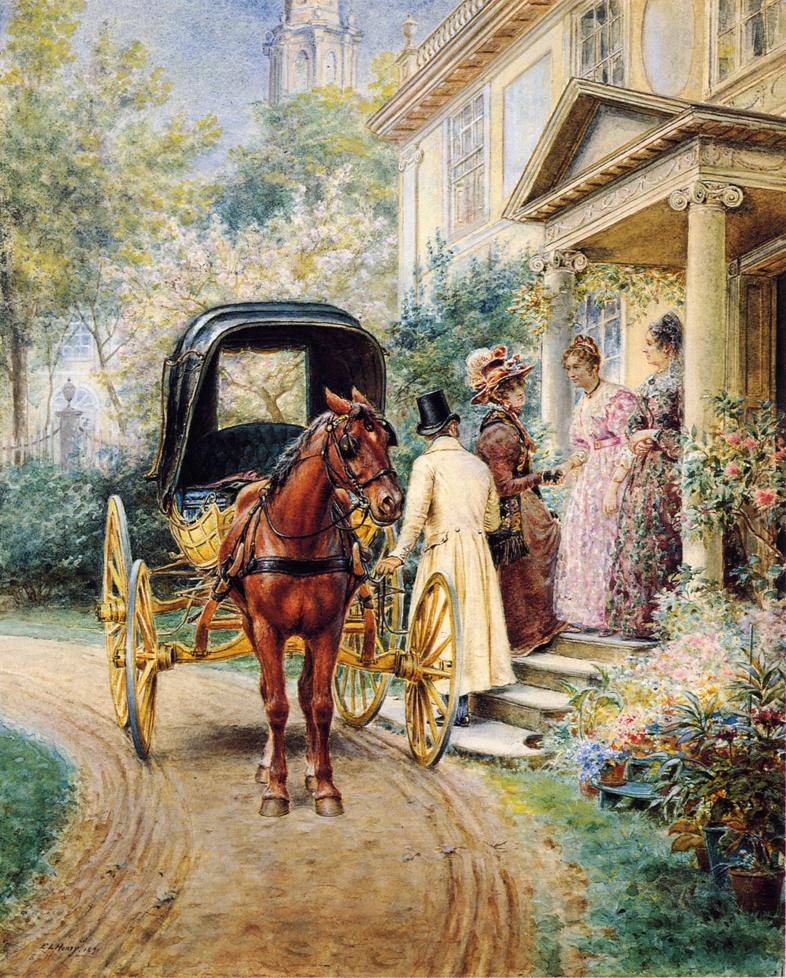
The next time Docia invited Isabella to go home with her for the weekend, Isabella accepted. Three weeks later she drove in the Toll family carriage with her new friend Docia to Locust Shade, where she was made a welcome addition to the family. After that first visit, Isabella spent many weekends and school vacations at Locust Shade.
Greeting the Guest by Edward Lamson Henry
That was the beginning of Isabella’s lifelong friendship with Docia Toll. In later years they would both marry, have families of their own, and move away to different parts of the country; but they remained fast friends and confidants who loved each other and collaborated in creating short stories and novels that bore witness to God and their Christian faith.
In her memoirs, Isabella Alden wrote about the first time her father and mother visited her after she was married. It happened when Isabella’s minister husband was new to his church and was working hard to make the Wednesday prayer meetings a success. He wanted the prayer meeting attendees to participate, so on Sunday mornings he would announce from the pulpit the topic for the Wednesday meeting. He asked everyone to come on Wednesday with a Bible verse that supported or illustrated the topic.
One Tuesday, Isabella’s mother and father arrived unexpectedly for a visit. The next evening Isabella proudly escorted her parents to the church and sat beside her father as her husband, Reverend Alden, led the prayer meeting. But something happened that forced her to make a terrible choice.
Her father had always strongly opposed women speaking in public and that opposition extended to prayer meetings.
Yet Isabella had prepared a Bible verse to recite aloud if necessary to help and support her husband. None of the other attendees were responding to Reverend Alden’s call to participate and an uncomfortable silence stretched on for several minutes. Isabella wrote:
“I sat in distressed silence for several minutes; so did everybody else. Suddenly I looked at my husband. I had promised him, had even talked with him about some of the thoughts that I wanted to present. What must he think of me now?
“Oh, Christ!” I prayed in my heart. “Tell me what to do!”
And the answer came, she said, as plainly as spoken words. She broke the silence and recited aloud the verse she had prepared:
“Thus saith the Lord who created thee: “Fear not, for I have redeemed thee; I have called thee by thy name; thou art mine.”
As soon as she finished, others followed in quick succession, and the prayer meeting continued on.
But Isabella was keenly aware that her father never said a word to her about the meeting or the verse.
“He was kind and tender toward me, but graver than usual; I had a feeling that I had hurt him by showing no respect for his opinions.”
Her mother and father left early the next morning and never visited the Alden home again.
That was an experience that stayed with Isabella. In fact, it made such an impression on her that she described that scene—in different ways—in many of her books.
In Workers Together: An Endless Chain, Miss Joy Saunders knew that the church she belonged to “believed in woman’s sphere, and desired her to keep strictly within its limits” and “on no account to let her voice be heard” in its religious meetings.
But when Joy followed her conscience and spoke a simple verse in an otherwise very quiet prayer meeting, she “set in motion forces that are pulsing yet” because the verse she recited touched so many hearts.
Scrutiny
.
Rebecca Harlow, the heroine of Links in Rebecca’s Life, was well aware that people in her church thought women and girls should keep silent when they were at prayer meeting. But after one of those long “awful pauses” in which no one at the meeting said a word, Rebecca spoke up and asked the people to pray for a friend who was in temptation.
That was all she said and though she couldn’t see anything wrong in her words, she knew there were some in the room who “thought it was out of taste.”
And when Ester Ried attended her first prayer meeting in New York, she was astonished by the proceedings:
“Now,” said the leader briskly, “before we pray, let us have requests.” And almost before he had concluded the sentence a young man responded.
“Remember, especially, a boy in my class, who seems disposed to turn every serious word into ridicule.”
“What a queer subject for prayer,” Ester thought.
“Remember my little brother, who is thinking earnestly of those things,” another gentleman said, speaking quickly, as if he realized that he must hasten or lose his chance.
“Pray for everyone of my class. I want them all.” And at this Ester actually started, for the petition came from the lips of the blue-ribboned Fanny in the corner. A lady actually taking part in a prayer meeting when gentlemen were present! How very improper. She glanced around her nervously, but no one else seemed in the least surprised or disturbed; and, indeed, another young lady immediately followed her with a similar request.
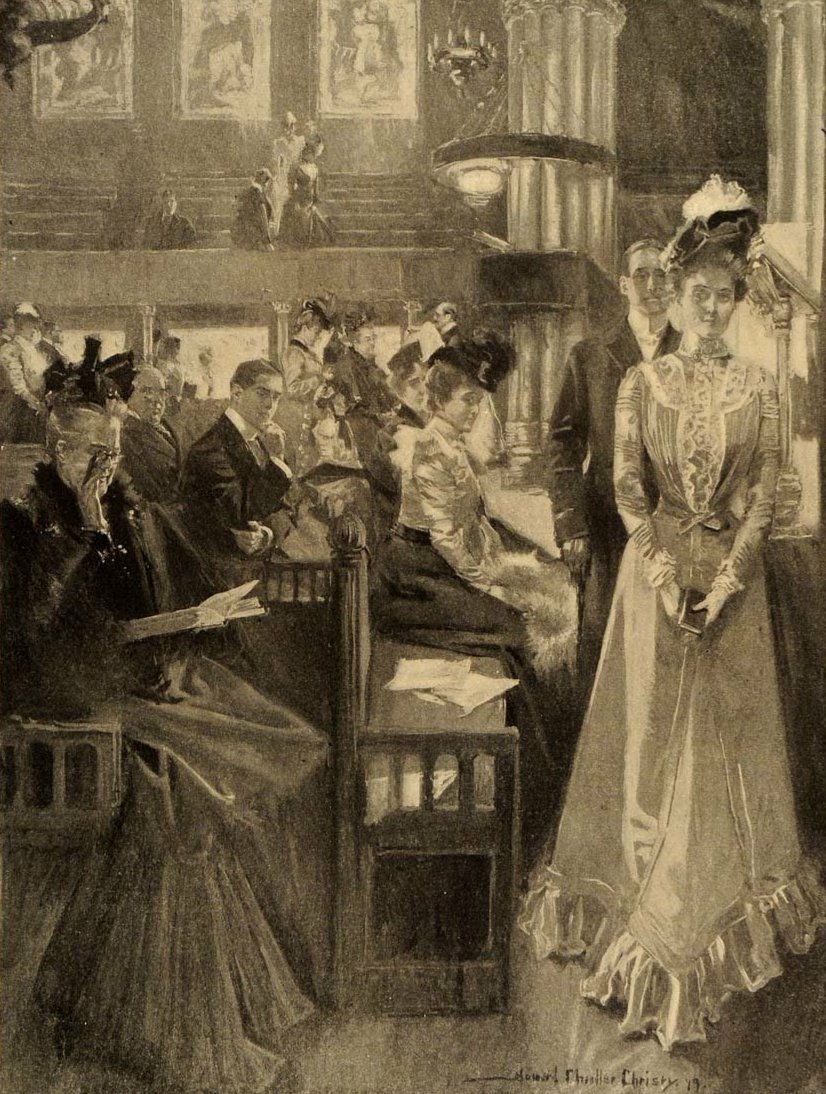
An American Girl in Church by Howard Chandler Christy
.
In Ruth Erskine’s Crosses, Isabella described the reaction when Ruth’s half-sister spoke up at the weeknight prayer meeting:
The words she uttered were these: “Therefore being justified by faith, we have peace with God, through our Lord Jesus Christ.”
Now, if it is your fortune to be a regular attendant at a prayer-meeting where a woman’s voice is never heard, you can appreciate the fact that the mere recitation of a Bible verse, by a “sister” in the church, was a startling, almost a bewildering innovation. Only a few months before, I am not sure but some of the good people would have been utterly overwhelmed by such a proceeding. But they had received many shocks of late. The Spirit of God coming into their midst had swept away many of their former ideas, and therefore they bore this better.
A Happy Ending:
Not long after that Wednesday night prayer meeting when Isabella spoke out in front of her parents, her father became very ill and she traveled to his home to be with him in his final days. One evening she was alone with her father when he said, unexpectedly:
“Thus saith the Lord who created thee.”
He explained to Isabella that he well remembered that Wednesday night prayer meeting and the verse she recited.
“The first time I ever heard it, your beloved voice gave it to me,” he said. “I can’t begin to tell you what [those words] are to me now, lying here. ‘Fear not; for I have redeemed thee; I have called thee by thy name; thou art mine.’”
That was the last private talk Isabella had with her father and she cherished the memory of it.
“I thank the dear Lord,” she later wrote, “that one night He gave me courage to repeat words which brought joy to Father’s heart.”
Click on the “Isabella’s Books” tab at the top of this page to read more about the books mentioned in this post.
Isabella kept a daily diary from the time she was seven years old. In it she faithfully recorded the day’s events, so she developed her writing skills at an early age.
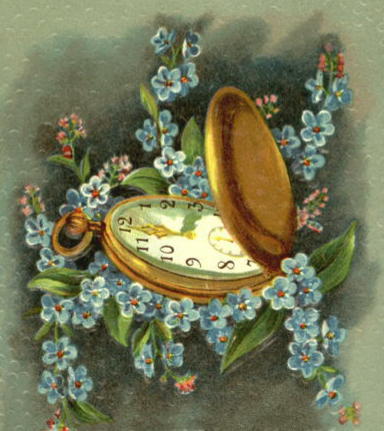
Her first published story appeared in the newspaper when she was still a child. Her tale concerned the family’s “grand old clock.” Isabella had grown up hearing the steady tick-tock of the clock; but it suddenly stopped one morning without warning. Since the clock was a family heirloom and one hundred years old at the time, her parents took the problem in stride.
But Isabella’s imagination wove a tale around the powers of the old clock. The day was cloudy and she attributed it to the fact that the sun didn’t know when to rise, simply because the old clock had stopped keeping time. She continued the story with dire predictions that the earth would be plunged into darkness and other terrible things would happen.
She ended the tale with her father pulling out his faithful pocket watch—still ticking—thus saving the world!
Isabella’s older sister, Mary, was married to the editor of the local newspaper. He suggested that the story appear in the next issue of the paper. Isabella’s father agreed, provided the story was published anonymously to protect Isabella’s privacy.
Thus, Isabella Alden’s first published story appeared in the newspaper with the title and byline:
Our Old Clock
by
Pansy
Many years later, Isabella proudly recounted the story as her very first appearance in public.
Isabella Alden told a story about her childhood that shows not only the love within her home, but the skill of her father in capturing everyday moments to teach Isabella character-forming lessons.
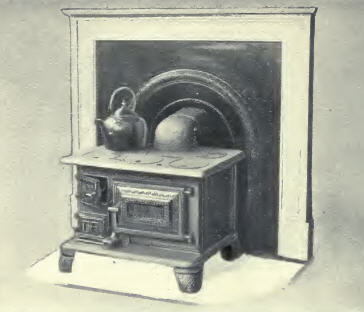
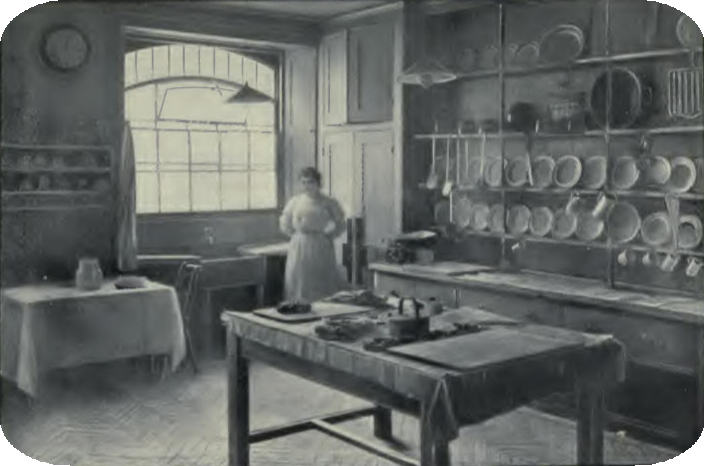
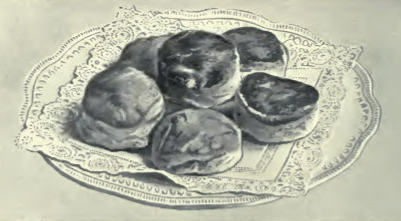
“I recall a certain rainy day, when I hovered aimlessly from sitting-room to kitchen, alternately watching my father at his writing, and my mother at her cake-making. She was baking, I remember, a certain sort known among us as ‘patty-cakes,’ with scalloped edges, and raisins peeping out all over their puffy sides. I put in an earnest plea for one of the ‘patties’ as it came from the oven, and was refused. Disconsolately I wandered back to father’s side. He was busy with his annual accounts.
“Our home was in a manufacturing town, where the system of exchange, known as ‘due-bills,’ was in vogue. Something caught my eye which suggested the term to me, and I asked an explanation.
“Father gave it briefly. Then I wanted to know whether people always earned the amount mentioned in the due-bill, and my father replied that of course one had the right to issue a due-bill to a man who had earned nothing, if for any reason he desire to favor him, and that then the sum would become that man’s due, because of the name signed.
“I remember the doleful tone in which I said, ‘I wish I had a due-bill.’ My father laughed, tore a bit of paper from his note-book, and printed on it in letters which his six-year-old daughter could read, the words:
Dear Mother:
Please give our little girl a patty-cake for my sake.
Father.
“I carried my due-bill in some doubt to my mother, for she was not given to changing her mind, but I can seem to see the smile on her face as she read the note, and feel again the pressure of the plump warm cake which was promptly placed in my hand.
“The incident took on special significance from the fact that I gave it another application, as children are so apt to do. As I knelt that evening, repeating my usual prayer: ‘Now I lay me down to sleep,’ and closed it with the familiar words: ‘And this I ask for Jesus’ sake,’ there flashed over my mind the conviction that this petition was like the ‘due-bill’ which my father had made me—to be claimed because of the mighty name signed. I do not know that any teaching of my life gave me a stronger sense of assurance in prayer than this apparently trivial incident.”
Reviews and giveaways for Christian fiction and sweet, clean fiction. Bringing readers information on great stories and connecting authors with their readers.























 Isabella Alden