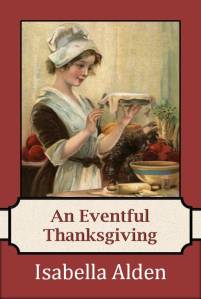
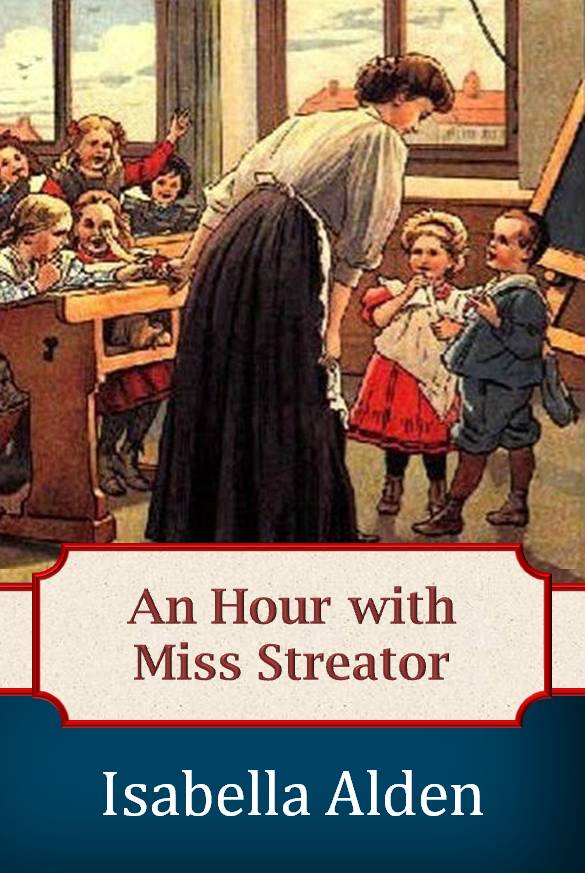
This month’s Free Read is a short story Isabella wrote about the Christian Endeavor movement and the opportunities its members had to influence others for Christ.
While on vacation, Dorothea Conklin is determined to invite the local teens to her Christian Endeavor prayer meeting, even if her friends oppose her plan. Somehow she must find a way to convince her friends—and the local teens—that there’s room for everyone at an Endeavor prayer meeting.
Sharp-eyed readers might recognize the name of one of the characters in the story: Eurie Shipley. Why does it sound familiar?
Because Isabella introduced Eurie Harrison and Flossie Shipley in her 1875 novel, Four Girls at Chautauqua.
Perhaps when she wrote “A Christian Endeavor Picnic” in 1896, she meant to imply that Eurie Shipley was somehow a relative of those two beloved characters from twenty years before. What do you think?
You can read “A Christian Endeavor Picnic” for free!
On May 30, 1866 Isabella Macdonald married Gustavus “Ross” Alden.
They met on Thanksgiving day 1863, and their courtship lasted a little more than two years. As their relationship blossomed, Isabella did what any young woman would do under similar circumstances: she told her best friend all about it.
Isabella and Theodosia Toll had been close friends since they met as students at the same boarding school. Through their school years together and after graduation, they remained devoted friends, and often visited each other’s homes.
Theodosia was staying with Isabella during the winter of 1864, when Isabella introduced her to Ross Alden. Luckily for us, Theodosia recorded her impressions of their meeting in her diary:
January 1, 1864
Yesterday I came to Auburn to visit dear Belle. This has been a gloriously happy New Years day. We had a number of calls. During them one whose name I had heard before—Mr. Alden. I had gotten up considerable curiosity in regard to him. I sat reading, pressing a handkerchief to my aching head when the gentleman entered and was presented. And here I will state briefly my first impressions. Those were pleasant. A tall, grand looking man heavily bearded and mustached, a finely formed head and pleasant face, speaks very deliberately and very low. There you have him. I wonder if I shall be called upon to take him into my circle of friends, for her sake?
Two days later Theodosia got a chance to answer that question:
January 3d Sabbath.
Went with Belle to the Orphan Asylum Sabbath School at nine o’clock. Mr. Alden escorted us on our way to the Asylum and walked to and from that place with us. I like him!! If he and somebody should happen to fall in love with each other, I have not a word of remonstrance to offer. He seems an earnest worker from Christ, and that is worth so much.
Not long after Theodosia’s visit to the orphan asylum with Isabella and Ross, she returned to her home in Verona, New York, which was about sixty miles away. But Isabella promised to visit her friend soon.
Two weeks later, Theodosia recorded this entry in her diary:
Jan 27th
In a few hours she will be here. Only two weeks since we parted, yet I think I have never looked forward to her coming with more eagerness. She says in her letter received last evening, “Queer things have happened.” How I wonder what those queer things are. I shall know soon but I keep wondering. There are some things that ought to happen to her that would make me both glad and sorry. Well, I’ll be patient for a few hours.
Could it be those “queer things” Isabella wanted to tell her were the latest details of her relationship with Ross? Perhaps Ross proposed marriage, and Isabella wanted her dearest friend Theodosia to be among the first to know!
Unfortunately, sudden illness prevented Isabella from traveling to see Theodosia, so discovering those “queer things” had to wait. But several months later, Isabella sent her friend a very thorough accounting of the state of her relationship with Ross. Here is Theodosia’s diary entry:
Thursday, Sept 22d 1864
I have been reading over Belle’s letter. It is a dear good letter, and I am so glad that she is happy at last, that the old restless feeling seems to have left her. I trust that he to whom she has given her heart is worthy of her love. Just go back eight months, Journal, and remember what I told you of my first impressions of the man. Oh, Belle, you have much to make you grateful and happy, and so have I! I thank Thee My God for the blessings that crowd my way, and of the coming joy of a woman’s life that has come to my Darling.
After several months—and many more visits and letters between them—Theodosia made this diary entry:
Jan 30th 1866
What a happy month this has been! But, oh, how lonely I am today! My dear Belle left me this morning. Her “Ross” came last Saturday and spent the Sabbath. He preached on Sabbath evening. I like him very much. I already find myself numbering him among my friends.
At last, Isabella and Ross set the date of their wedding. They planned to be married in Gloversville on May 30, 1866. Of course Theodosia was there. She spent the night with Isabella as she happily—and nervously—made ready for her wedding day.
Two weeks after the big day, Theodosia wrote this in her journal:
I had a letter from Belle this week dated at her new home in Almond [New York]. She is very happy and I do believe that God has given her the strong constant love of a Christian man as the crowning happiness of her life.
Special thanks to Susan Wadley, Theodosia’s great-granddaughter, for sharing her diaries and giving us this delightful glimpse into Theodosia’s friendship with Isabella.
You can read more about how Isabella and Ross met by clicking here.
Read more about Ross and Isabella’s early years of marriage by clicking here.
Isabella’s brother-in-law the Reverend Charles M. Livingston wrote several articles for The Pansy magazine in which he explained some of the Bible’s most challenging verses in terms young people could understand. Here’s one he wrote in 1888:
A Hard Text
Matthew 10:34: I came not to send peace, but a sword.
In Luke 2:14 the angels sing of Jesus when He was born, “On earth peace.” At first sight these verses in Matthew and Luke seem to contradict each other. They do not. The blessed Book never does that. Remember:
When one thing in one part of the Bible seems to conflict with another part, or say something which seems to be wrong, you are to conclude that a little better understanding will set it all to rights in your mind.
“I come not to send peace” to a sinner if he stay in his sins. “There is no peace to the wicked.” There ought not to be. But as soon as a sinner asks Jesus for forgiveness, he gets peace. That’s the way peace comes on earth; it is the peace of God in the heart; peace and joy in believing.
Now, when one gets this peace, it seems so good that he wants some other one to get it, too. So he speaks to his other one and urges him to confess his sins and seek Jesus; and in most cases this other one gets angry and talks against Jesus or Christians. That often happens in a family where one is a true Christian and the others are not. You see how trouble will come. There will be war in that family. It may not be a war of swords, but it will be a war of words. Jesus does not want the war, and there wouldn’t be any if the sinner would give up. But he does not usually surrender till after a hard battle with Jesus. So Jesus is said to send a sword or war. It simply means, “I am come to fight against the wrong; and people who are on the wrong side and stay there, will fight against me and my soldiers.”
My dear, dear children, I wish you may never be found with a sword in your hand, or mouth, or heart, fighting against the Lord. Let Him put His sweet peace into your heart, and when you draw the sword, draw it against sin.
Did you know? … Reverend Livingston’s daughter was beloved Christian novelist Grace Livingston Hill.
Click on the links below to read more “A Hard Text” columns:
Isabella Alden’s son Raymond was fifteen years old when he wrote this sweet poem. It was published in The Pansy magazine in 1888.
(Written in answer to a child who asked what lovewas.)
Love is—well, what can anyone say? Love is—Why, darling, think all day Of all the words that we can say; And think, and think, and tell me What love is. Ah! I knew you could not.
Well, love is Jesus; and He is love. Love is a message, so sweet, from above. God is love, so the good Book says, And true love is great and high, always.
What is the best definition given? Love is a message, a breath from Heaven. God’s message to lost ones—our Light, our Life. Love makes all peace where once was strife. Oh! Let me show you what love can do.
For God so loved the world that he gave His only begotten Son to save— Whom do you think? Why, sinners, whom Justice for justice’s sake would doom!
But then, you look very wise, and say, Why, God is love, you know, anyway! Aye, my darling, that is true. Now let me ask you—What cannot love do?
Many of the characters in Isabella’s books looked forward to spring, when days got longer and temperatures warmed. They planned their days around being outdoors as much as possible, taking their meals outside and even taking long “tramps” through fields and parks.
When the sun went down, they remained outdoors, and lit their lawns and gardens with “oriental lanterns.”
Asian goods began to make their way into American homes as far back as the Civil War, but only in relatively exclusive areas, such as Boston and New York.
But in the 1880s, more common Japanese goods, such as paper parasols, fans, and lanterns became readily available in American markets.
John Singer Sargent’s famous 1886 painting, “Carnation Lily, Lily Rose.”
One import firm, Vantine’s, offered a fairyland of Japanese items in their New York showroom.
A partial display of summer home furnishings at Vantine’s New York showroom.
You could see paper lanterns hanging from the ceiling on every floor of A.A. Vantine’s multi-story establishment. It wasn’t long before Vantine’s was shipping paper lanterns to stores all over the eastern states.
Vantine’s of New York. A View of the main floor showroom from the balcony.
That’s about the time that Isabella began mentioning paper lanterns in her books.
In Making Fate (published in 1895) Marjorie Edmonds visited the Schuyler Farm and spent a lovely evening with friends:
She was out with many others on the lawn, which was brilliantly and fantastically lighted with many Chinese lanterns. It formed a place of special attraction on this lovely May evening, which was almost as warm as an evening in midsummer.
In The Browns at Mount Hermon (1908), several characters where concerned about a group of boys who planned to sneak off into the countryside to light a bonfire and spend the night gambling and smoking. Then, John Brown offered this suggestion:
What if we could give up this evening to pure fun? Have a gathering on the Zayante lawn, which is far more attractive than the redwood grove across the way; decorate the trees and the porches and all other available places with Chinese lanterns, plan for the finest bonfire that our splendid brush heaps suggest, and serve unlimited sandwiches, cake, coffee, and anything else that could be gathered in haste, and is calculated to tempt the appetite of the average boy. Then we could send a deputation to meet the train and kidnap the crowd as our honored guests, meeting their spirit of frolic and good time at least half-way.
One of Isabella’s most charming descriptions of paper lanterns was in The Hall in the Grove (1882), when Mr. Masters escorted Caroline Raynor and the Fentons to the opening assembly at Chautauqua:
On they hurried, striking at last into Simpson Avenue. Caroline came to a sudden halt, and gave an exclamation of delight. Away down the avenue as far as her eye could reach, on either side was one blaze of light; illuminated mottoes, flags, Chinese lanterns, flowers, ribbons—anything that could lend a glow of color to the bright scene had been displayed, and the whole effect was such as she will remember all her life.
Daydreaming Under the Stars by Jacques Wagrez.
Paper lanterns became so popular, they were regularly incorporated into greeting card design like this one:
And in illustrated calendars:
When you read Isabella’s books, you can tell she enjoyed the beauty of a light-filled summer night, and her descriptions of paper lanterns still have the power to warm our imaginations.
What do you think of Isabella’s descriptions?
Have you ever been to an outdoor event that was lit with candles or paper lanterns?
Isabella was very involved in the Christian Endeavor movement and often mentioned the organization in her stores. She strongly believed Christians were called to serve others—even in small ways—as Christ would.
She illustrated the point in “The Spool-Cotton Girl,” a short story she wrote in 1892 about a young girl who labors long and thankless hours in a department store selling the store’s cheapest cotton threads.
Young Marion Wilkes takes her Christian Endeavor pledge very seriously. She always looks for ways to witness for Christ through service to others, even though her job selling cotton threads at the local department store can sometimes test her commitment and her patience.
You can read “The Spool-Cotton Girl” for free!
Choose the reading option you like best:
You can read the story on your computer, phone, tablet, Kindle, or other electronic device. Just click here to download your preferred format from BookFunnel.com.
Or you can select BookFunnel’s “My Computer” option to receive an email with a version you can read, print, and share with friends.
It’s the time of year when families begin planning their summer vacations. If you’ve ever taken a driving trip with children, you know the first rule is to keep children occupied.
Isabella most certainly had experience in taking children on long trips, by automobile and by train. Her son Raymond and daughter Frances frequently accompanied her when she traveled to speaking engagements all over the country.
In 1883 Isabella published a brief article in The Pansy magazine about a new game for traveling with children.
Does this game sound familiar to you?
When you take driving trips, do you play a similar game?
For many years Isabella had an advice column in a popular Christian magazine. In the column she answered readers’ questions—from a Christian perspective—on a variety of topics.
In 1910 she received this letter from a young woman:
Can you tell some of us girls—who never had a chance to learn much about real, practical, beautiful housekeeping—some way of learning? Are there not schools in cities for this purpose? Or are there not books from which we can learn what we need to know?
We want to understand all kinds or planning and arranging and beautifying and economizing.
We want to be excellent cooks, and to learn much that people whose time is largely spent in school or shop know very little about.
Can you help us with this practical need of ours?”
Here is Isabella’s reply:
It shall be my delight to do so.
Let me first express what a pleasure it is to find that one who can write so charming a letter as accompanied these questions is able to turn her thoughts to this practical subject, and to feel the “need” of knowledge.
Also, I rejoice in the thought that a large number of the letters awaiting attention deal with the same subject. Our lovely, cultured girls, who have had “advantages,” are beginning to feel the importance of understanding the art of home-making.
From The Fort Scott Daily Tribune, October 31, 1913
Schools? Certainly there are. Every city of reasonable size now sends out its circulars announcing a “cooking-school” in regular session through the school year, or in extra session during vacation, or for the winter months.
A cooking school at the Indiana State Fair, about 1917
Better than these opportunities, especially for schoolgirls and those employed in regular work of any kind during the winter, are the cooking-schools that have sprung up in connection with the larger summer “assemblies.”
I am told that every well-established summer resort organized under the peculiar rules that belong to the word “assembly” now has its own fairly well-appointed cooking class or classes. I am, however, most familiar with the one at Chautauqua, N. Y., which is, of course, the mother of all the Chautauquas, and is and must always be the first in all ways.
A cooking school at the Battle Creek, Michigan resort and sanitarium.
Mrs. Emma P. Ewing, who, as everyone knows, has no superior in her department, conducts regularly at Chautauqua, N. Y., during the eight weeks’ season, a thoroughly equipped cooking-school, with its normal department, its “practice class,” its lecture course, and its final examination.
Emma P. Ewing, from Wikipedia.org
Nothing more fascinating than the way in which Mrs. Ewing manages the entire matter can well be imagined. It has been my pleasure to be often in her classroom, to admire the white table set out with all the belongings for the day, sometimes arranged for the purpose of making delicious soups and white sauces and delicate desserts, sometimes planned for the purpose of showing what a study in refinement and beauty and excellence a breakfast of lamb chop and creamed potatoes and corn puffs may become.
The Muncie Daily Times, October 5, 1896.
Every conceivable branch of the culinary art is taught here. Pies, puddings, cakes, sauces, gravies, roasts, fries, stews, each come in for a full share of careful consideration.
Let me confess just here that a very fascinating part of the daily class exercise is the careful “tasting” of whatever article of food has been prepared before our eyes. For this purpose scholars go to the class armed each with a silver spoon, or fork, as occasion may require, and a napkin.
Delicious beyond description are the spoonfuls of broth or “white soup” or bouillon that one thus enjoys, to say nothing of the marvellous concoctions made with a spoonful or two of cream, a cup of fruit-juice, a dash of sugar, and a little gelatine; to say nothing, moreover, of the delicious creams and ices and “foams” and innumerable other forms to delight the palate.
Not only can the making and cooking of all these dishes be thoroughly learned at this summer school, but there are classes formed for the special purpose of training the pupils in the art of setting the table neatly and gracefully, of clearing away skillfully, of selecting dishes that harmonize with others, of explaining the difference between a refined abundance and a sinful waste.
A proper Victorian-era table set for dinner.
There are bills of fare arranged for summer, for winter, for the trying springs and falls. There is careful attention paid to the novice who does not know whether to buy steak “by the yard” or piece, or whether to try to have strawberries and green peas in February, or to wait until they are less flavored with money.
In short, anything that one needs to learn about housekeeping, as connected with the kitchen and storeroom, may be acquired at this summer cooking-school. Moreover, the teacher is so gentle voiced and sympathetic, and so thoroughly ladylike, that it is simply a pleasure to watch her and listen to her. It would be difficult to imagine anyone farther removed from the “fussy” or the hurried and nervous stage of housekeeping than Mrs. Ewing.
No matter how much it may sound like it, my dear girls, this is not an advertisement of the Chautauqua cooking-school. The truth is, that favored spot needs no advertising; its classes are always full, and application has to be made some time in advance. It is simply an honest effort to answer an honest and often repeated question about learning how.
Meantime, do you know, dear girls, what delightful institutions home cooking-clubs are? Why not organize one in your own circle?
Members of a cooking club in their aprons.
Select one evening or afternoon a week out of your busy lives. Meet around at one another’s homes; find out the specialty of each mother or grandma or auntie; and petition for a lesson in her line—a “normal” lesson, where you can have the privilege of furnishing your own materials, and doing exactly what the teacher does, and carry home the result in triumph. Some of the most fascinating evenings I have ever known were spent in this way.
From The Muncie Morning News, September 22, 1892.
Try it, and see how much, at the end of a year, you will have added to your stock of practical knowledge.
What do you think of Isabella’s advice?

Where and when did you learn to cook? Have you ever taken a cooking class or joined a cooking club?
You can read some of Emma P. Ewing’s cookbooks for free! Just click on any of the titles below to view them on Archive.org.
Many of Isabella Alden’s stories were about resourceful women who, seeing a problem, immediately set their minds to finding ways to solve it. For these ladies, no obstacle was too big or too small.
One such heroine was Dell Bronson in The King’s Daughter. After living most of her life in the lap of luxury with a loving aunt and uncle, Dell was suddenly called home to live with her father, who ran a run-down saloon and kept an equally run-down home.
Beauty-loving Dell was dismayed when she first saw the bedroom her father had set aside for her:
In one corner stood a single bedstead, on which was mounted a feather bed, suggestive of a sweltering night, and the finishing touch was a blue and green patchwork quilt put on crooked.
There was … a queer, old-fashioned, twisted-legged table, a square wooden washstand with the paint worn off, and with one leg shorter than the others, so that it tottled whenever it was touched, making a racket over the nicked washbowl and dingy pitcher; three chairs, one a dingy rocker, with a pitiful green and purple cushion on the seat. These completed the furnishing of the room, except, indeed, a faded red and green and yellow carpet, which in its best and brightest days could not have been pretty.
But Dell didn’t spend time dwelling on the shabbiness of her surroundings. Instead, she reminded herself:
“Oh, Dell Bronson, you must not forget that your Father’s house is a palace, and that you are a King’s daughter; never mind the place in which you may have to stay for a little while, just to make your preparations, you know.”
So Dell immediately began making changes in the house that would benefit (and hopefully influence) her father. But at the same time, she began to make a few changes in her own bedroom.
When The King’s Daughter was first published, ladies’ magazines regularly published do-it-yourself articles about decorating on a budget.
One magazine provided a sample layout for a bedroom, including the best position for a washbowl and pitcher, like the one in Dell’s room:
Dell might have had a fireplace in her room to provide warmth in the winter months. One magazine published this design for “an artistic fireplace,” with screen made of cardboard and covered in an embroidered fabric, which could be made for about five cents.
Another magazine suggested making a “writing cabinet” from two small bookcases:
The shaped insert on the bookcases is cut from sturdy cardboard and covered with paper. The magazine also suggests using short pieces of muslin left over from making the curtains to cover the bottom shelves where less-than-dainty items may be stored.
Another magazine reminded young ladies they should not ignore the corners of their rooms, and gave simple instructions for making of a corner closet for storing clothes and shoes:
Resourceful Dell Bronson set about making changes to her plain and somewhat shabby bedroom. Within two weeks:
The blue paper curtains had given place to full white muslin ones, the bed was spread in white, as also was the little toilet table, and many little feminine graceful touches had softened its hard corners, and given it a look of home.
By the end of the story, Dell’s decorating efforts resulted in more than just a pleasant place to live; the lovely rooms she created helped influence her father and several townspeople to make positive changes in their lives.
This month’s Free Read is “Celia’s Easter Offering,” a short story Isabella wrote in 1892.
For months Celia Foster has been planning the decorations that will grace her church on Easter morning. It’s important work, but as Easter Sunday approaches, Celia begins to wonder what’s more important: embellishing the church or helping someone in need?
You can read “Celia’s Easter Offering” for free!
Choose the reading option you like best:
You can read the story on your computer, phone, tablet, Kindle, or other electronic device. Just click here to download your preferred format from BookFunnel.com.
Or you can select BookFunnel’s “My Computer” option to receive an email with a version you can read, print, and share with friends.
Reviews and giveaways for Christian fiction and sweet, clean fiction. Bringing readers information on great stories and connecting authors with their readers.