
In her novel Wise and Otherwise, Isabella wrote about a group of people who lived at a boarding house and the influences they had on each other. One of the residents, Mrs. Sayles, invited her dearest friend Dell Bronson to visit and take a room at the same boarding house. Isabella describes their reunion this way:
Mrs. Sayles went about during the rest of that day with very shining eyes, and very happy, expectant face, which was not shaded in the least when on the morrow she had been sitting for half an hour close beside her friend, and was now with her in her dressing-room, waiting while the rich masses of brown hair were being smoothed and braided into shape.
Isabella knew whereof she wrote. Like Dell Bronson, Isabella also had rich masses of brown hair that she wore in a braid, arranged at the back of her head.
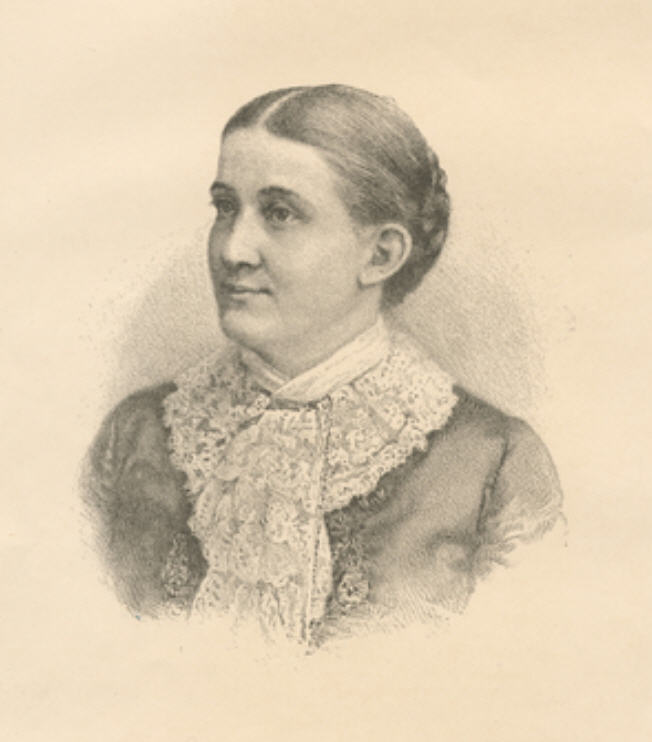
Her niece, Grace Livingston Hill, admired Isabella’s hair, and described it this way:
Her eyes were dark and had interesting twinkles in them that children loved; her hair was long and dark and very heavy, dressed in two wide braids that were wound round and round her lovely head in smooth coils, fitting close like a cap.
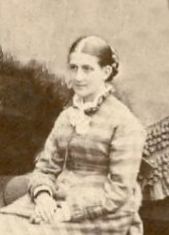
But that wasn’t all Grace admired about her aunt’s hair. She wrote:
When [her hair] was unbraided and brushed out, it fell far below her knees and was like a garment folding her about.

Grace went on to confess:
How I adored that hair and longed to have hair just like it! How I even used in secret to tie an old brown veil about my head and let it fall down my back, and try to see how it would feel to have hair like that. Nobody else in the world looked just as lovely as did she.

Isabella kept the same simple yet becoming hairstyle throughout her adult life.
Are you surprised to learn how long Isabella’s hair was? What is the longest length you’ve ever grown your hair?

 Isabella Alden
I don’t know what Isabella’s church believed, but some churches taught that women must not cut their hair because it is their “hlory” in scripture. Today only conservatives Mennonites, Old German Baptists, Amish and Hutterites practice not cutting hair and covering the head. In Isabella’s day, women always covered their heads in church and when going out. I wish we had pictures of Isabella in one of her bonnets or hats.
I wish we had more photos of her, too! I’d love to see what she looked like in a bonnet or hat. I also agree with your comments about how women were taught to not cut their hair because of I Corinthians 11:15. Isabella was a member of a progressive branch of the Presbyterian church, that advocated for women’s education and voting rights. But the branch was less progressive in other areas. For example, while church leaders allowed Isabella (and other women, like Emily Huntington Miller and Frances Willard) to teach and lecture at Chautauqua, church leaders would not allow them to speak from the main stage, for fear they might be seen as “preaching.” I also think she was influenced by the fashion at the time. Women grew their hair long as a symbol of their femininity, and men grew beards and mutton-chops because they believed it was a sign of their masculinity. Thanks so much for sharing your insights and thoughts with us! —Jenny
Wow, too bad they didn’t have a picture of her with her hair down, that would have been such a beautiful sight!
I agree, Micah! —Jenny