
It’s the time of year when many people make resolutions—to study their Bible more often, lose weight, or spend more time with family and friends. But how many people resolve to change their life in order to benefit a stranger? That’s the premise of our January free read.
Grace Livingston Hill wrote “The Weak Brother for Whom Christ Died” in 1897, and it was based on true events. At that time, French actress Sarah Bernhardt was a theatrical titan, who enjoyed world-wide fame.

She toured the globe in plays she produced and starred in. She was a master of self-promotion and cultivated a larger-than-life persona that the newspapers and magazines of the time eagerly reported to their readers. She was, arguably, the world’s first true international superstar.

Bernhardt first performed in America in 1880, when Grace was fifteen years old. Bernhardt’s American tour lasted several months. She performed in cities across the country, and each performance was met with thunderous applause and critical acclaim.
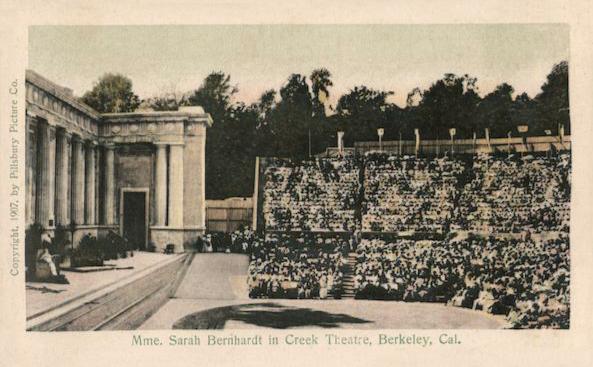
In 1897 Bernhardt toured England, where she was so much in demand that she sometimes appeared in multiple plays at once, performing a matinee in one theater, then playing the lead in an entirely different play in a different theater that same evening!

But not everyone embraced Sarah Bernhardt with open arms. Despite her talent and riveting performances, conservative members of society and many religious groups viewed the theater as a morally corrupting influence, especially for women.

Female actors were frequently stigmatized as immoral or promiscuous. Sarah Bernhardt—with her unconventional lifestyle, her bold stage performances, and numerous love affairs both within and outside of her marriage—scandalized a good portion of the population.

Grace Livingston Hill knew about Sarah Bernhardt and probably read many of the newspaper articles about her. She also had strong opinions about Bernhardt and theater entertainments, which she used as the theme of her story, “The Weak Brother for Whom Christ Died.”

“Did you go out to see Bernhardt last evening, Murray?”
When three young men meet to pass a Sunday afternoon together, they never imagine that such a simple question can spark a very complicated discussion! But Frank Murray has read his Bible, and he is willing to forego some of the world’s pleasures if it means he will never be a stumbling-block to fall in another Christian brother’s way. Will Frank be able to explain his position to his new friends so they, too, will strive to help a weak brother in Christ?
You can read “The Weak Brother for Whom Christ Died” for free!
Choose the reading option you like best:
You can read the story on your computer, phone, tablet, Kindle, or other electronic device. Just click here to download your preferred format from BookFunnel.com.
Or you can select BookFunnel’s “email” option to receive an email with a version you can read, print, and share with friends.

 Isabella Alden
It’s ironic that churches stopped banning secular entertainment at the same time it was becoming more corrupt and suggestive. Whether the entertainment is family oriented or not, the performers are overwhelmingly involved in immorality and substance abuse. Entertainment attracts vain people, while commercial interests favor prurient interests. It seems impossible to keep famous entertainers from being more immoral than most people, whether they are in the secular or religious world. Thus, it’s very hard to use drama or commercial music as a positive influence because the performers usually undermine positive messages with their behavior. Ordinary people have occupational, economic and societal restraints that constrain bad behavior. However, performers can get away with outrageous behavior and lack of self-discipline and still manage to perform successfully, unlike the general public. Instead of inspiring high ideals, audiences focus on and want to imitate their excesses
You raise some very interesting points, Barbara! I often think that successful people—no matter what business they’re in—can become victims of their own egos. Sometimes they surround themselves with so many people who flatter them in order to own a piece of their spotlight, that they stop listening to criticism. They tell themselves that doubters are haters; and that anyone who tries to guide them toward a more ethical or moral path is just trying to hold them back. I think a well-fed ego makes it really hard to discern good advice from bad advice or truth from fiction. When performers behave badly, we know about it because their actions are widely publicized; but I think what you mentioned is something that often happens to CEOs, entrepreneurs, politicians, and other professions, too. And as you said, there are plenty of people who will see a powerful or successful person’s bad actions and think it’s okay to imitate them. You’ve really given me a lot to think about on this topic! Thanks so much for sharing your thoughts, Barbara. Happy New Year to you! —Jenny