
Isabella wrote a popular advice column for a Christian magazine. In 1897 she mentioned in her column that she had received “at least a dozen letters lately about selfishness.”
Here is Isabella’s Advice:
It is a curious illustration of human nature that in nearly every instance the writers are sufferers because of this trait in others, and are not themselves guilty of the sin. Of all sins to which the human being is heir, that of selfishness seems to me sometimes the most insidious.
Let me tell you about two lovely young friends of mine, sisters, beautiful girls, who have been carefully trained in a choice Christian home. It was summer, and in their hospitable home were gathered several guests. The mother, who had been an invalid during the winter, and like most mothers was tempted to overtax her strength, was being watched over tenderly, not only by her husband, but by grown-up sons and daughters. The morning which I am especially recalling was that one trying to the nerves of housekeepers generally—wash-day.
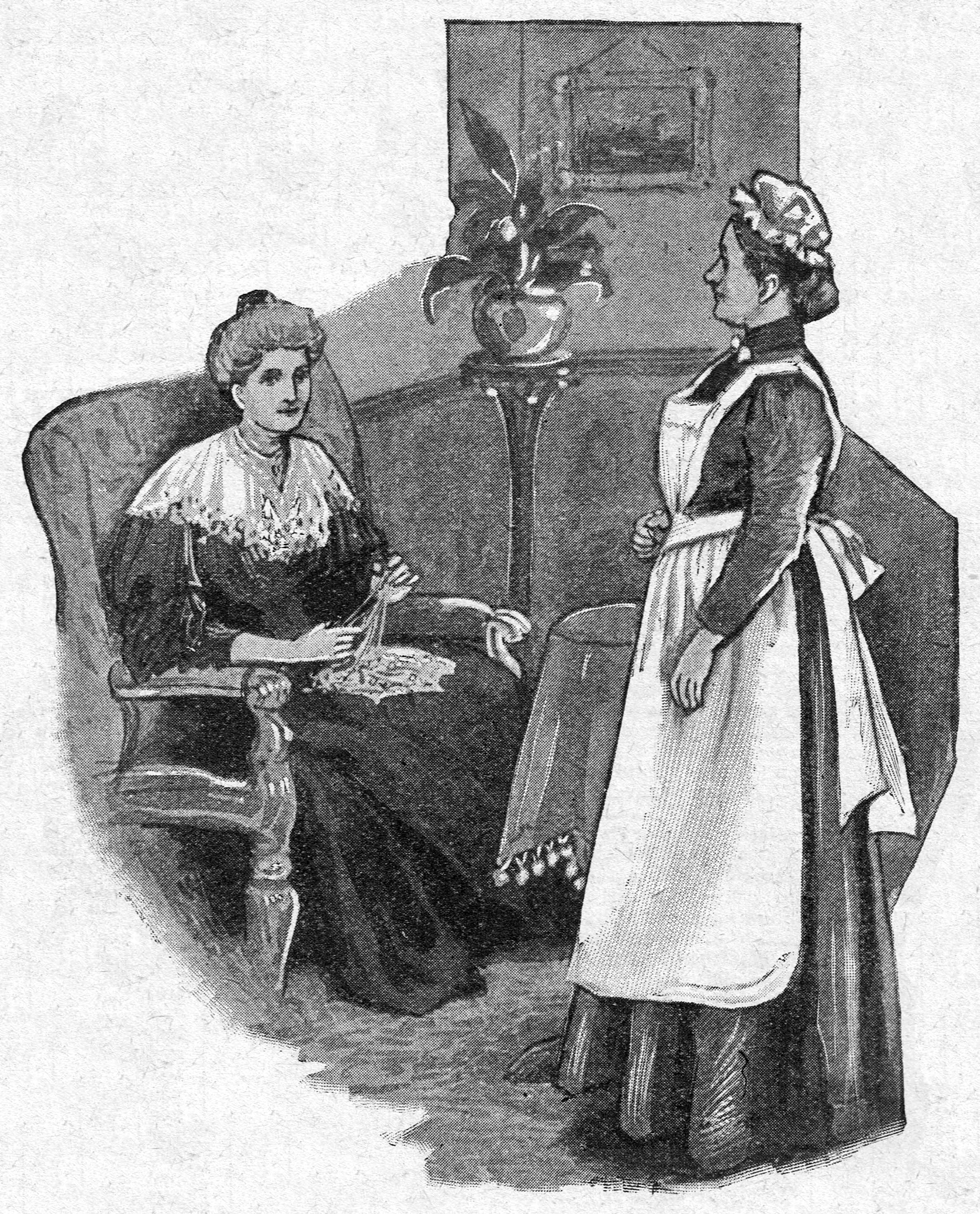
It was a country home, and the cook, Jane, was also the maid of all work. There was a second girl, Norah, who served during the influx of company; but on this particular morning, when she was most needed, her aunt’s brother’s cousin had arrived from Ireland, and she must needs go home to welcome her. I came down to the piazza in time to hear and see a bit of family life, after this fashion:
“I’ve kidnapped her,” said Marian, the eldest daughter, gleefully, as she held with gentle force the little mother in the large rocker where she had placed her. “Now, dear mamma, do be persuaded not to go upstairs again. Don’t you know that it is warmer this morning than it has been for several days? And don’t you remember what the doctor said about exerting yourself on warm days?”

“But, my dear,” protested the mother, trying to withdraw her arms from the loving clasp, “I was not doing anything to injure myself; and Norah is away, you know.”
“I cannot help it if she is. Your strength is more important than the work of fifty Norahs. Come and help me, Norm. She ought not to bustle around in the heat, ought she?”
“Certainly not,” said the tall brother. He strolled toward them, and drew a chair beside his mother.
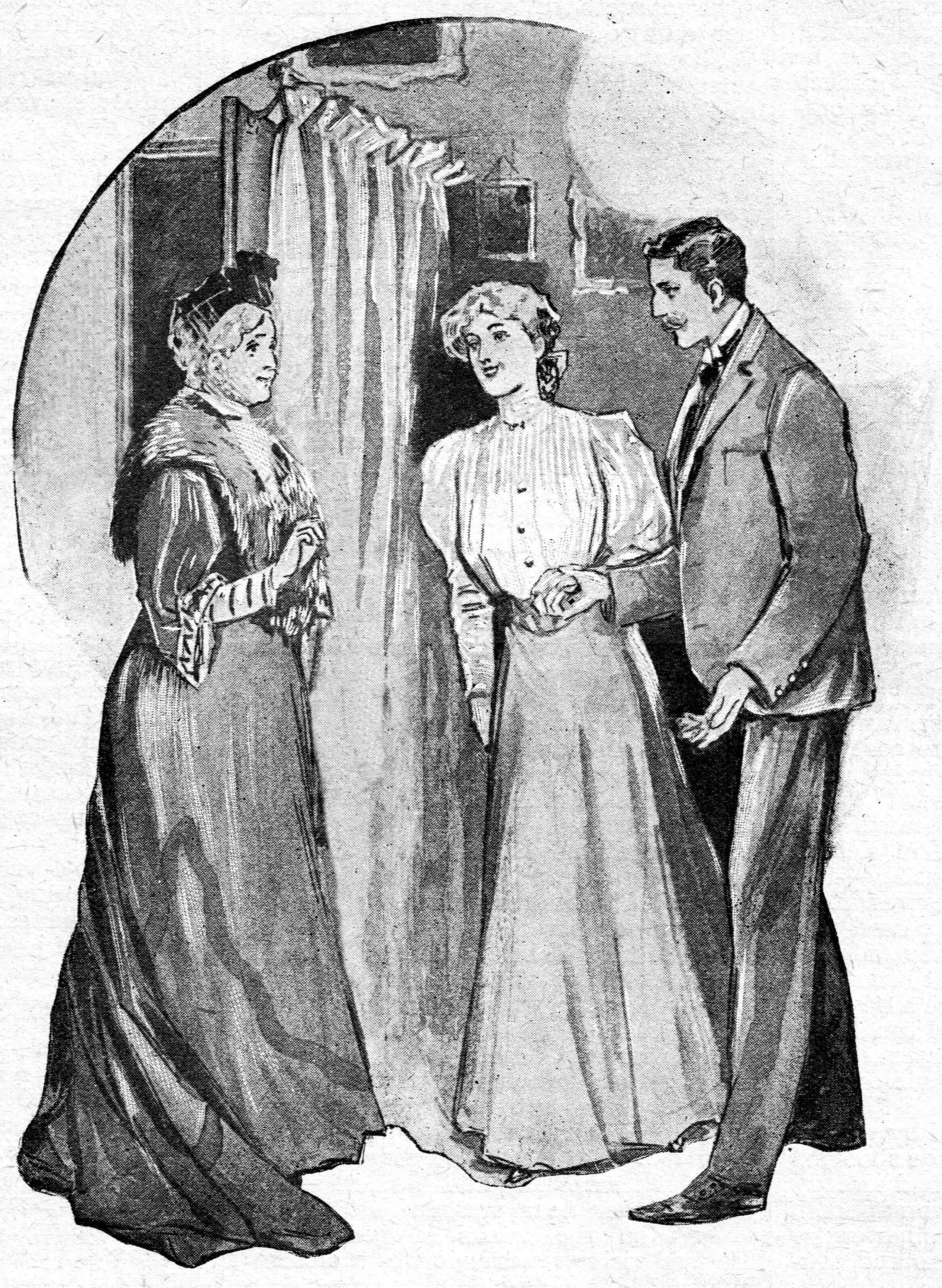
As the morning waned, she made ineffectual appeals to both son and daughter to let her “step out for a few minutes” and see how things were going.
“No, indeed!” said Marian with emphasis. “As if we should let you into that hot kitchen for a minute! We might better go without luncheon than to have it at any such price. Don’t worry, mamma dear; things will come out all right; they always do.”
Yet the mother undoubtedly worried, although the guests were as polite as possible, and protested that it was too warm to think of anybody’s doing anything. People did not need to eat in warm weather. Yet they knew, and the hostess knew, that people do eat in warm weather, and that, moreover, the average man and woman like cool, dainty edibles that do not make themselves.
After a time the two self-constituted policemen became absorbed, the one in a new embroidery stitch which a guest was teaching her, the other in a volume of Browning. As the other guests were by this time engaged in writing or reading, the hostess slipped away. My thoughts followed her regretfully. If I were only well enough acquainted to beg to be allowed to help, how gladly would I have done so! Later, two or three of us took a stroll about the grounds, and discussed the several members of the family.
“What a lovely girl Marian is!” said one. “So unselfish, and so thoughtful of her mother! It was really charming this morning to see her solicitude. And the eldest son seems very much like her.”
“They are so different from Kate,” chimed in another voice. “One never sees her hovering around her mother, anxious lest she should overtax her strength. I wonder where she is, by the way. I have not seen her since breakfast.”
“Kate is sufficient to herself, I fancy,” said a third. “She seems to have her own pursuits, regardless of family life. But I do not wonder, I am sure, that Marian and her brother are anxious about the mother; she looks miserable this summer. I think they will not have her with them long.”
The mother returned, sooner than I had expected, and her face was serene. Something had happened to lift the burden of care.
“Your children are very solicitous for you,” I said in an aside to her a few minutes afterwards. “It is pleasant to see them.”
“Yes,” she said with a motherly smile, “I am blessed in my children. Marian’s anxiety is sometimes almost burdensome; but the dear girl means it well. This morning, for instance, I felt as if it would have been a real comfort to be able to slip away and attend to a few things. But I need not have worried; I might have known that my dear Kate would manage.”
“That is your second daughter, is it not?”
“Yes, the dear child! You do not know her very well; she gives herself little time for our friends, she is so busy assuming the cares of others. I wanted to arrange the lunch today, for Jane does not like to be interrupted; but I found Kate had planned everything, and executed it, for that matter. She had even been to my room, and made the bed, and put everything in exquisite order. I don’t know how she found time to accomplish so much. It is not any of it her regular work, you understand—just extras that she is doing to save me.”

I moralized, afterwards, over this bit of revelation. Did any of us think that the daughter Marian was selfish? Did she herself for a moment imagine such a thing? And yet . . .
Oh, it is the little bits of things that catch us. Why, bless your heart! I know a boy who most cheerfully gave up a cherished plan to make a three days’ visit to a friend, because there were reasons why his mother did not wish him to be absent at the time. There were reasons why it was more than an ordinary sacrifice for the young man, and I admired him for making it. But that very fellow came to breakfast, dinner, and supper a few minutes late every time but one during the five days that I was his mother’s guest, although he knew perfectly well that both his mother and his father were annoyed by it. He did not do it intentionally, mind; but his ease-loving nature found it to his convenience to dawdle just at those moments. I think he would have been surprised and pained had one accused him of selfishness. Yet what was the name of the difficulty?
I am glad I used that word “cheerfully” in speaking of him. It hints at another way of giving up. I have a friend who sacrificed her quarter’s salary to relieve her father of a temporary embarrassment; yet she did it so ungraciously, and he heard about it so continually for the next six months, that I doubt whether he would accept such an offering again no matter how great the stress. That girl considers herself a monument of unselfishness.






 Isabella Alden