The Bicycle Craze

Today it’s Bike to Work Day in Colorado and people all over the state are dusting off their two-wheelers and heading out to work.

An 1887 newspaper ad.

Bicycles have been around since the mid-1800s, when they were something of a novelty. They were expensive to buy and maintain, and they were sold almost exclusively to men.

Figure 2 from "The Modern Bicycle" by Charles Spencer, 1876.
Figure 2 from “The Modern Bicycle” by Charles Spencer, 1876.

.

Figure 4 from "The Modern Bicycle" by Charles Spencer, 1876.
Figure 4 from “The Modern Bicycle” by Charles Spencer, 1876.

It took exceptional balance and strength to operate an early bicycle and there were inherent dangers in their design.

An 1879 bicycle ad.
An 1879 bicycle ad.

When Isabella published Monteagle in 1886, bicycle riding was an acceptable pastime only for men of means. Her character, Hart Hammond, was a young man caught up in the bicycle craze.

Notice of a bicycle race. From The Advocate (Topeka, Kansas), June 21, 1893.

He belonged to a bicycle club, attended races, and may even have ridden in some races himself.

The starting line for a men's bicycle race.
The starting line for a men’s bicycle race.

Of all the many things which gave Hart’s mother anxiety, Hart’s involvement with a bicycle club “troubled her the most.”
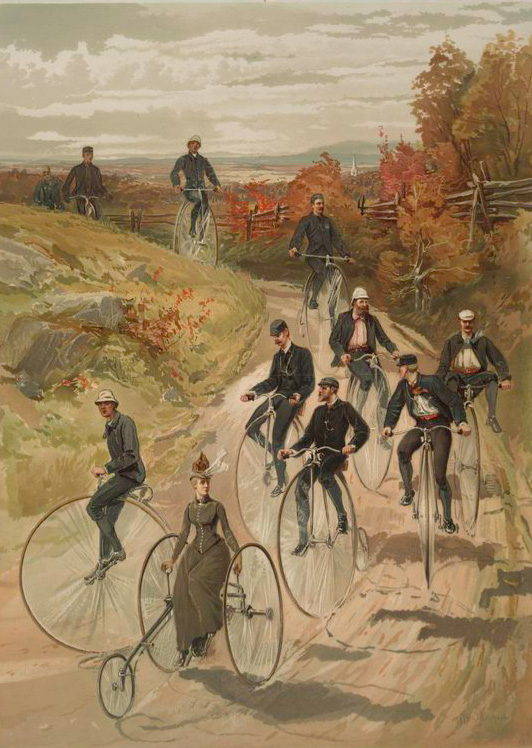
An undated trade card depicting an early bicycle club on the move.

As bicycle design matured, bicycling became safer. By the mid-1890s the early high-perch models had evolved into bicycles very similar in design to our modern bikes.
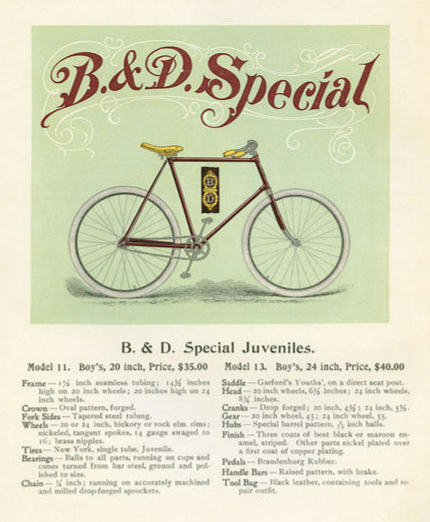
An 1897 magazine ad for boys' bicycles.
An 1897 magazine ad for boys’ bicycles.


An 1893 ad for a cycle.
An 1893 ad for Victor cycles.

With those design changes, it was feasible for women to take up the sport. But there was an inherent danger of ladies’ skirts getting caught in the wheels.
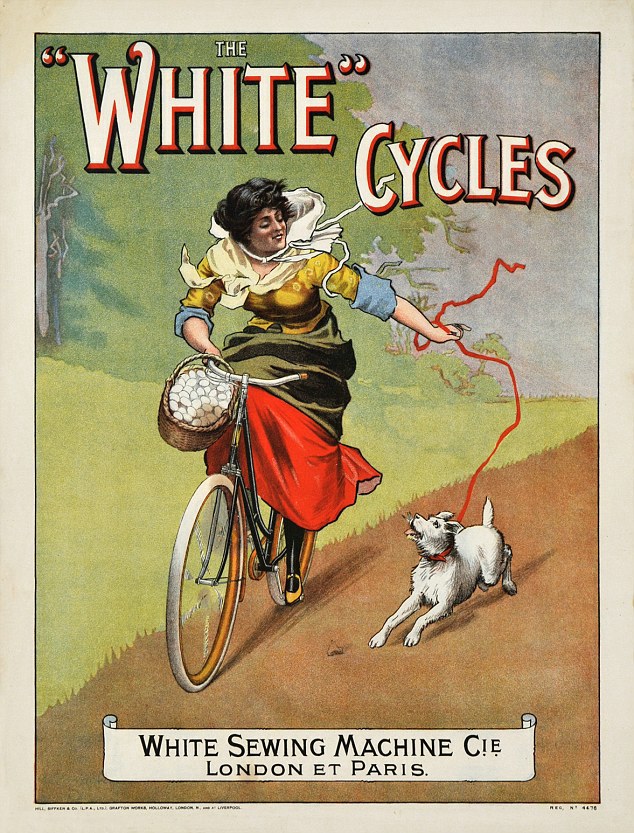
An early trade card targeting women bicycle riders.

And corsets made breathing difficult for women even when they were relaxing; when it came to bicycle riding, women could do little but coast downhill without fainting.

A 1904 ad depicting a corseted female cyclist.

But that soon changed. As cycling became all the rage in America, a host of supporting industries sprang up. Clothing manufacturers produced ladies’ riding costumes.

An 1895 magazine illustration of bicycling outfits for men and women.

And they marketed corsets designed specifically for the active woman.

A 1902 ad for athletic corsets.

Bicycle manufacturers also began to cater to women riders. They designed new models exclusively for ladies; and they held classes on how to correctly mount and ride bicycles.

An 1897 ad for a ladies' bike.
An 1897 ad for a ladies’ bike.

Ladies joined previously men-only bicycle clubs or formed their own.

Newspaper coverage of a bicyclist's parade, watched by more than 100,000 San Franciscans.From the San Francisco Call, July 26, 1896.
Newspaper coverage of a bicyclist’s parade, watched by more than 100,000 San Franciscans.From the San Francisco Call, July 26, 1896.

They published member magazines and sold guide books about the best routes for bicycle excursions through cities or into the countryside.

Photograph of a lady cyclist. 1912.

The bicycle opened up a world of new transportation and freedom for women back in the early 1900s; and today we celebrate the important place the humble bicycle still holds in our lives.

Sports_Bicycles ed

Here are some fun videos you can watch about early bicycling:

Restored footage of an 1899 display of bicycle riding by the Catford Ladies’ Cycling Club in London:

The history of bicycling in early Denver, Colorado:

A clip of “The 1900 House” featuring bicycle riding at the turn of the century:

.

Come to Church!

Here’s a scenario that is often played out on Sunday mornings across the country: Imagine you’re in church, waiting for the service to start, and you realize your friend isn’t sitting in his or her regular place. You pick up your phone and type out a text message:

Where are you?

Or after the service ends, you send off a quick email:

You missed a great sermon this morning. Everything okay?

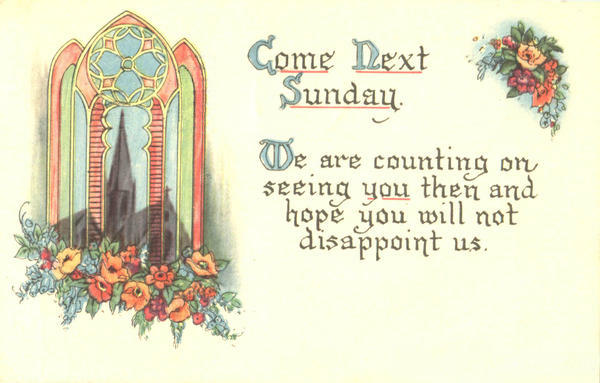
Come to Church card00594_fr

With just those few words, you let that person know that you care. Your words are a subtle encouragement to worship regularly.

Come to Church 01

But during Isabella Alden’s time, there were no electronic text messages or emails. Daily mail service was the fastest way for people to communicate, until the telephone came into wide use around the turn of the century.

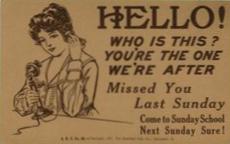
Come to Sunday School 1911

In Isabella’s day, the scene described above would have played out using posted mail instead of wireless technology.

Come to Church card00361_fr

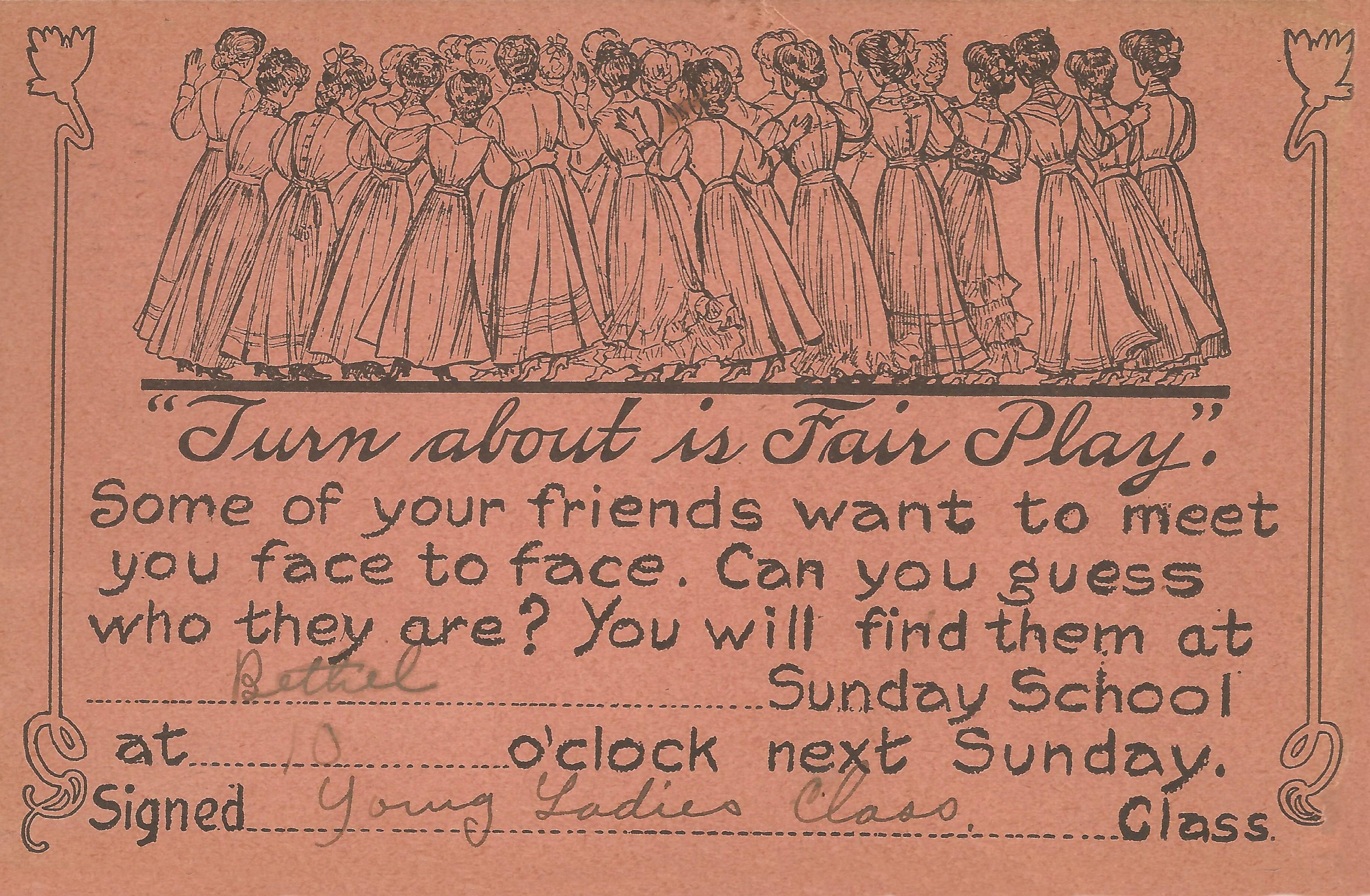
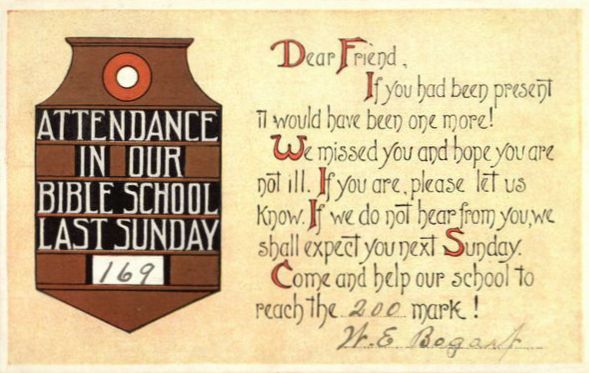
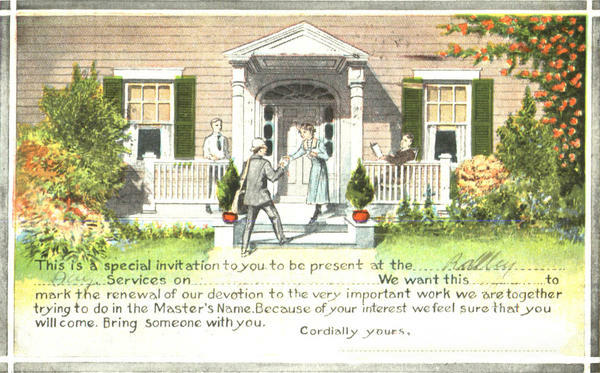
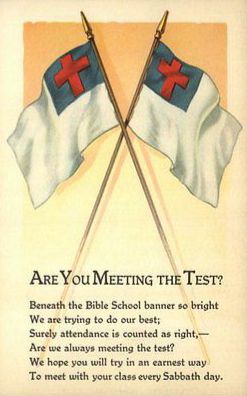
Back then, caring church leaders and Sunday school teachers sent out brief notes and post cards like the ones here.

Come to Church 1914e

Some were signed by the sender, and others were personalized with the time and place for the next service or meeting. On Monday afternoons, the “come to church” cards appeared in mail boxes across the country.

Come to Church 1912e

As a minister’s wife, Isabella probably sent quite a few cards herself over the years, to let someone know he or she was missed at church.

Come to Church

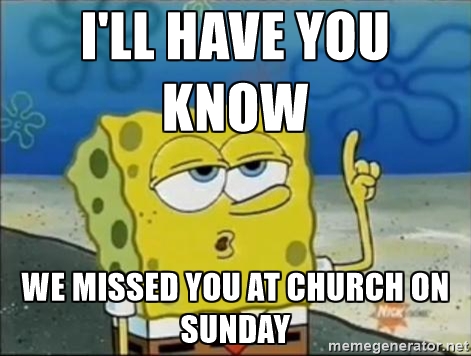
Churches still use similar communications to reach out to people today. A website called Ministry Greetings  is one of many that offers different styles of cards for churches to send through the mail. And for those who prefer to text or email, there are plenty of fun or thought-provoking memes to choose from for encouraging a friend to go to church.

From memegenerator.net

Over ninety years after Isabella’s duties as a minister’s wife came to an end, it’s nice to see a tradition like sending off “come to church” cards still goes on in today’s busy world.

.

.

Rest Rooms: What a Great Idea!

An 1895 issue of Golden Rule magazine included an article about working women that caught Isabella Alden’s attention.

Clerks examining newly-printed money at the U.S. Bureau of Engraving and Printing, 1904.

Here’s what she shared on the Christian Endeavor page of her own magazine later that year:

“REST ROOMS.”

The Golden Rule suggests a beautiful idea. It advocates the renting and furnishing, in large towns and cities, of what it calls Rest Rooms, for the use of working-girls during the noon hour. It proposes pretty furnishings, lounges, easy chairs, books, papers, pleasant games, etc. It also suggests that a small fee might be charged for the use of the room, because most girls would prefer to pay a little each week towards its expenses. The thought is certainly an important one. Let all the Endeavorers talk it up. Why could not a neat plain restaurant or lunch room be added, where coffee, and. sandwiches, and milk, and cookies, and crackers, and fruits might be had at very low prices?

Many working-girls now have such dreary places in which to eat their lunches and such dreary lunches to eat, that it would seem as though improvements were needed here.

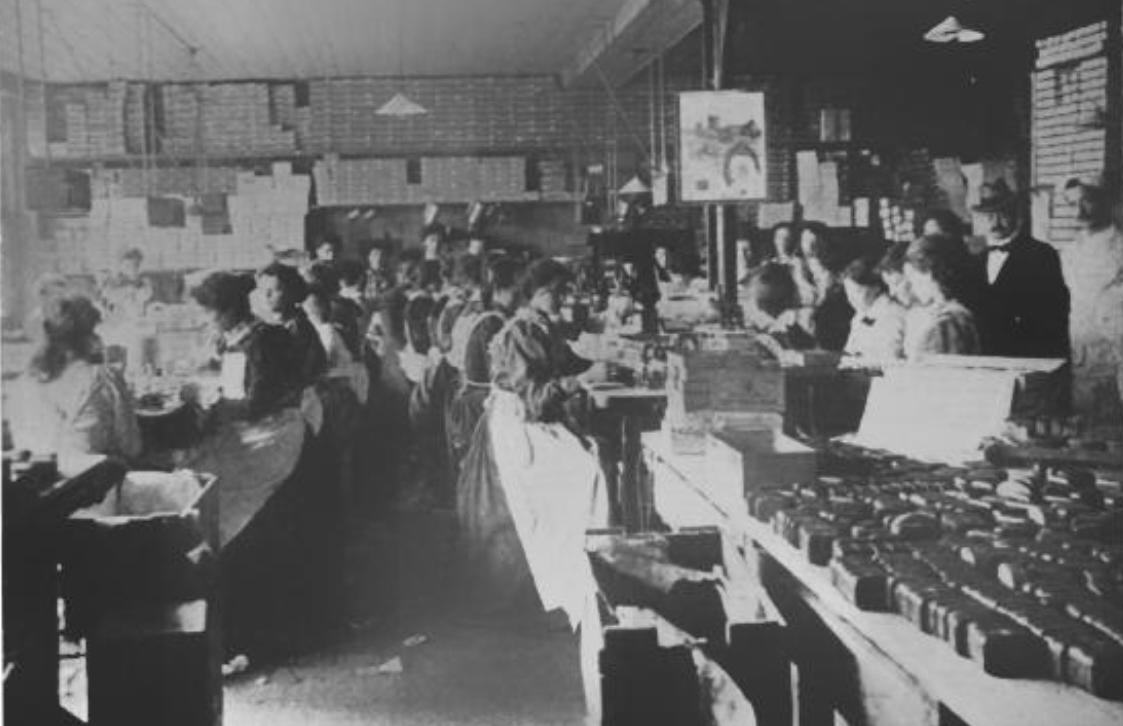
Workers labeling and wrapping perfums and soaps, 1900.

Isabella’s description of a ladies’ rest room doesn’t sound at all like the cold, utilitarian washrooms we know today; but back in 1985, it was an idea whose time had come. Workers had few rights; they worked long hours under sometimes difficult conditions. Employers could give workers as many—or as few—breaks during the work day as they wanted.

Members of a typing pool with their male supervisor.

So the idea of a rest room for workers was somewhat revolutionary, and it quickly caught on.

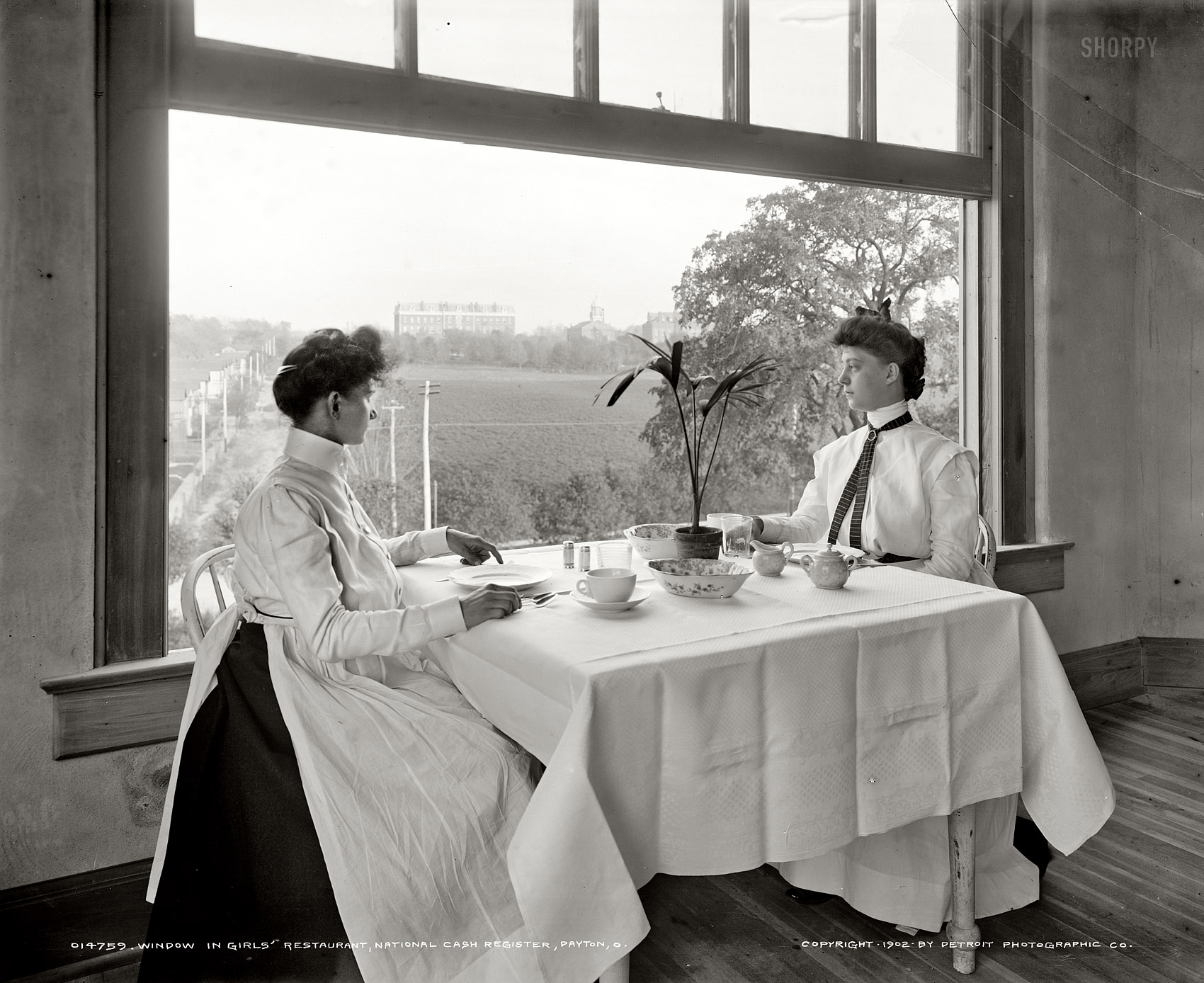
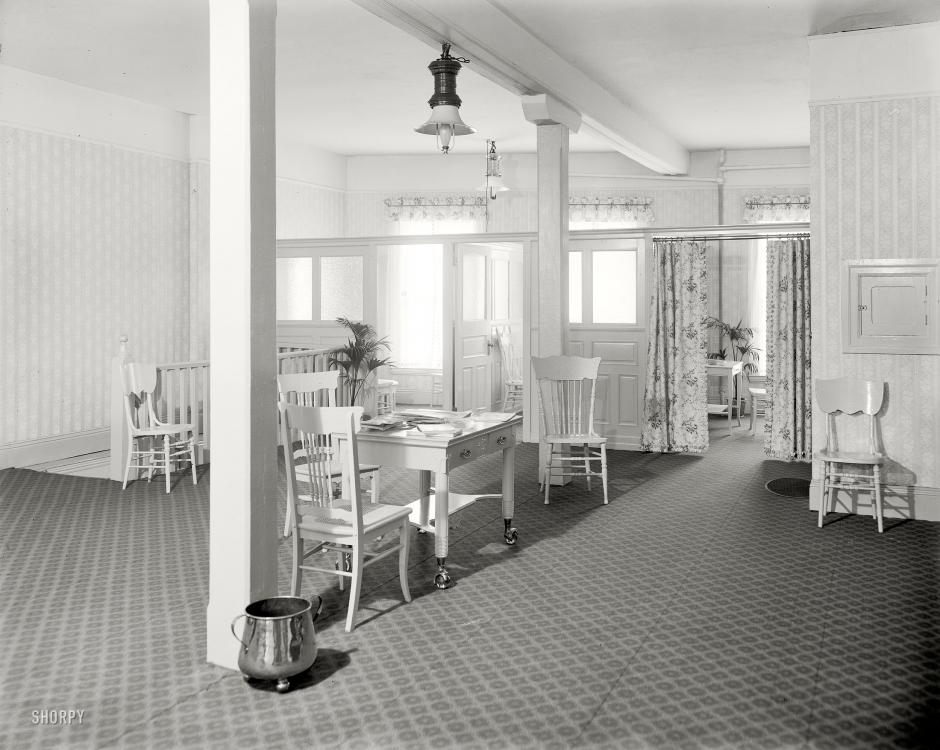
The ladies' lunch room at the National Cash Register Company, 1902.
The ladies’ lunch room at the National Cash Register Company, 1902. From Shorpy Archive.

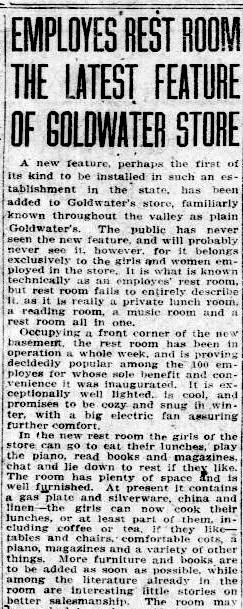
Progressive and far-thinking employers recognized the benefits of providing a dedicated rest room to their employees:

From the Arizona Republican, 1920.

In some towns, Women’s Trade Unions or the YWCA repurposed space to create rest rooms for female workers.

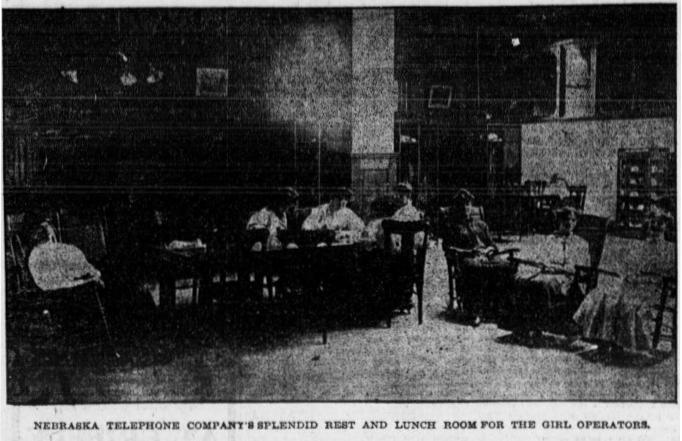
Telephone operators enjoying their rest room, 1906.

And in Tulsa, Oklahoma, the city took the initiative to furnish a dedicated room for the use of “strangers, tired shoppers, and working girls.”

From the Tulsa Daily World, 1915.

The concept of a rest room proved so popular, businesses began offering dedicated ladies’ rest rooms to customers, as well.

Newspaper ad for Lansburgh & Bro. department store in Washington DC, 1918.

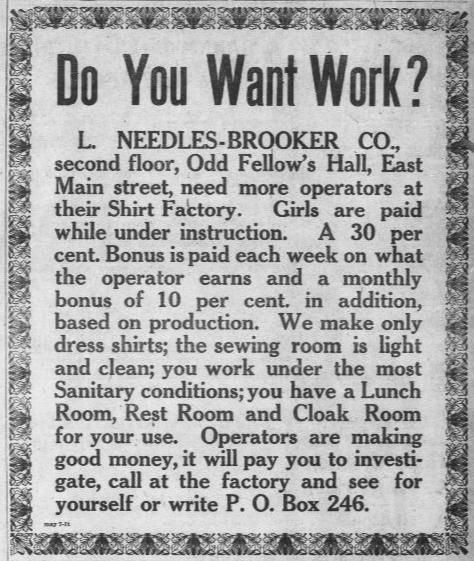
And by the 1920s, companies listed rest rooms for female workers as a benefit when trying to recruit new employees.

Want ad in the Democratic Advocate newspaper, College Park, Maryland, 1920.

What began as a germ of an idea in 1895 became a wide-spread reality in the 20th century as retailers, factories, and municipalities established clean, comfortable restrooms for workers, customers, and visitors.

The ladies' lounge at E. M. Bigsby department store, Detroit, Michigan, 1915.
The ladies’ lounge at E. M. Bigsby department store, Detroit, Michigan, 1915.

You can read more about women’s working conditions during Isabella’s lifetime by viewing these previous posts:

Lady Entrepreneurs

This Woman’s Work

.

.


New Free Read: Her Mother’s Bible

Cover_Her Mothers Bible 05“Reading Bible verses doesn’t amount to much, you know, unless you do what they say.”

When Mrs. Selmser inherits her mother’s beloved Bible, she’s overjoyed. All the marked verses—in red and green and blue—are wonderful reminders to her of her mother’s Christian walk; so it seems natural to have her son Ralph read one of those marked verses each day as part of their family worship.

But Ralph knows enough about the Bible to realize it’s sometimes a hard book to live up to. With God’s help, can he learn to apply the teachings of the Bible to his everyday life?
This 1880 story was first published as  a serial in The Pansy magazine. Click on the cover to begin reading Her Mother’s Bible now.

.

.