For many years Isabella served as an editor and contributor to a Christian magazine in which she had a very popular advice column. She used the column to answer readers’ concerns—from a Christian perspective—on a variety of topics.
This letter came from a teen named Betsy:
Do you think there is any harm in girls of, say, fifteen to seventeen or eighteen, giving parties and inviting their boy friends? Some people seem to think so; what do you think?
I wish you would name a list of books for girl to read. Father doesn’t like me to read “Little Women” and such stories, and I’m sure I don’t know what is good if they are not.
Betsy.
Here is Isabella’s reply:
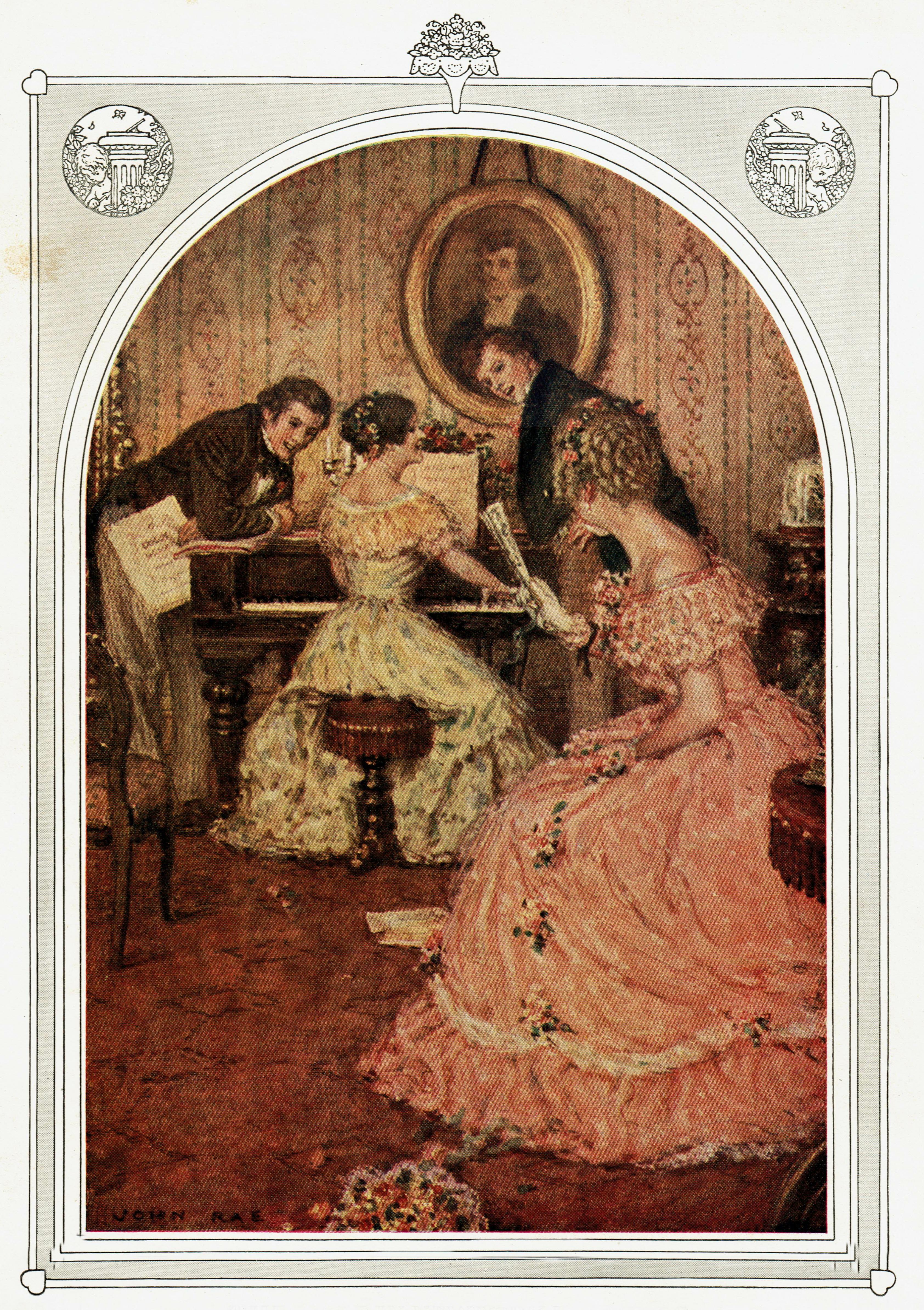
About the parties, Betsy, they belong to the class that the logicians call an “open question.” There are parties, and “parties.” A girl of fifteen, or sixteen, or seventeen, whose mother heartily approves the plan and joins with her daughter in making ready and in preparing the list of invitations—giving careful consideration to the names of the boys— and whose father and mother are to act as host and hostess, may safely give a party such as all her friends will approve and enjoy. In short, a party thoroughly mothered and fathered is, as a rule, a safe and pleasant place for young people to gather occasionally.

Note the use of that word “occasionally.” Even under the most favorable circumstances, with fathers and mothers as wise as serpents, parties are like rich cake; as an occasional luxury it is delicious and comparatively harmless; but used as a steady diet, interfering with substantial food, the normal appetite soon turns from it with dislike; and for the abnormal one, it works mischief.

Do you know, Betsy, I don’t more than half believe in the party that your question is planning. I more than half believe that either mother or father, or both, have been trying to convince you that you have not time, or, perhaps, strength, for such functions; perhaps, that there have already been too many parties in your circle this season; perhaps, that they cannot afford to indulge you in this matter; perhaps, that some of the boys, and even, possibly, certain of the girls, whom you wish to invite, are not such as they like to welcome as your friends; and you have not been convinced by them; hence your question.

If I am wrong in reading between the lines of your letter, forgive me; I may be wrongly judging you by others. I know such girls; indeed, I am answering their letters at this moment. through yours. I want to say to them that nothing is safer in this world than for girls of sixteen or seventeen, or any age that marks them as girls, to be guided by the judgment, by the fears, by the notions, even, of good mothers and fathers; and that just as surely as they break away from such advice and guidance, whether in the matter of parties or anything else, just as surely the day is coming when they will regret it. I am an old woman, and I am saying what I know is true. I have seen it bitterly regretted when it was too late.
About books. Lists, when they come from strangers, are doubtful helps. Personal tastes and acquirements, as well as the environment of the readers, must be taken into consideration to make them helpful.

I do not know your father’s reason for objecting to Little Women, but my personal objection to that and other volumes by the same gifted author is that, while charmingly written, they present views of life that are fascinating and false. Many of the characters described live beautifully, unselfishly, sacrificially, not for the sake of love, but for the sake of duty; and they do it steadily, climbing to the heights of self-abnegation, growing day by day in all the graces of the Christian religion, but they do it without a Savior. Jesus Christ is to them a friend, a guide, a beautiful pattern, but never a Redeemer. Such living is impossible. For this reason I deplore the charms of that class of books.

Betsy, dear, why not get that good father of yours to make a list of books that he would like you to read? I’m nearly certain that he would do it if you asked him, and equally certain that he would be gratified at the request.
When you get your list, let me beg you to begin at the beginning and read the books through carefully, conscientiously; not skimming a page, not skipping a line; even though they be as dry as chips baked in a summer’s sun and you fall asleep over them a dozen times. If he is the father that I think he is, I can predict the result with the certainty of a prophet.

I can even imagine a typical scene; a day when you will stand with one of the time-worn volumes in your hand, a dreamy look on your face, a tenderness in your voice, and an undertone of pathos, as you say:
I can never be grateful enough to my dear father for persuading me when I was a girl of sixteen to read this old book, and the others that were on the list he gave me. Some of them have had an abiding influence over my life. I truly believe that my taste for real literature of the best kind began to be formed while I was struggling through this first volume, for father’s sake. Dear father! He did a great deal more for me than he knew.
Believe me, Betsy, now is the time to plant seeds that may bloom, some day, over father’s grave. It will be blessed for you if you do such gardening now that if, in the faraway future, you stand one day beside the resting places of father and mother, there will be flowers of memory in your heart, instead of that thorny plant: “Oh, I wish I hadn’t!”
What do you think of Isabella’s advice to Betsy?






 Isabella Alden