In Isabella’s book Ester Ried, Ester’s youngest sister Julia found herself in trouble, all because of paper dolls.
Ester had charged Julia with taking an important letter to the post-office. Julia obediently started out, immaculate in white apron and white stockings, but then she met temptation in the form of a little girl playing with her paper dolls.
While Julia was admiring them, the letter “had the meanness to slip out of her hand into the mud!”
Horrified, Julia and the little girl put their wise young heads together, and decided to give the muddy letter a thorough washing in the creek. But no sooner were they standing ankle deep in the mud, vigorously carrying their idea into effect, than “the vicious little letter hopped out of Julia’s hand, and sailed merrily away, downstream!”
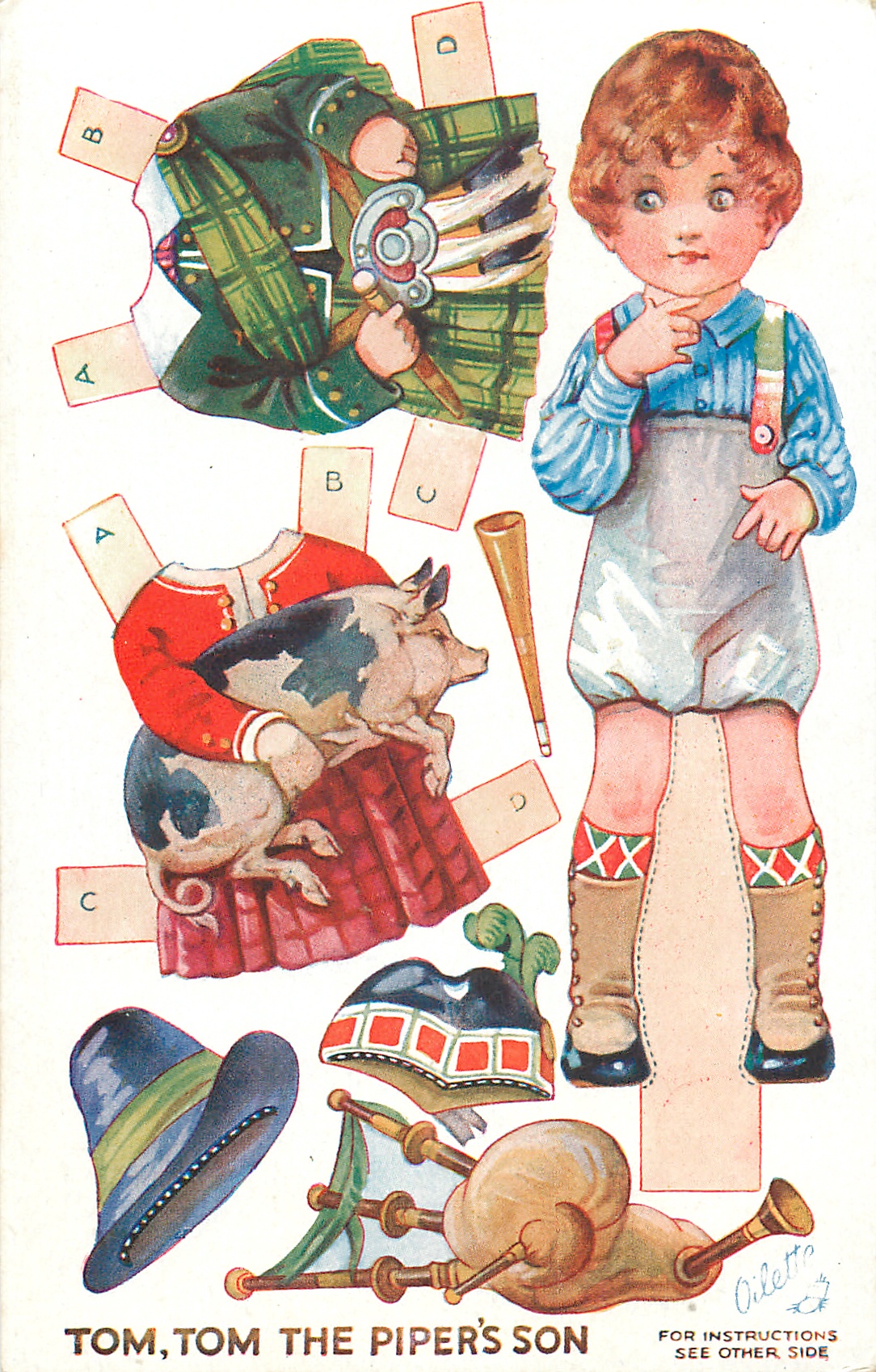
It’s understandable that Julia was a little bewitched by her friend’s paper dolls. Paper dolls were colorful and beautifully detailed little works of art, usually depicting handsome men, beautiful women, and charming children. Paper dolls of fairy tale characters were popular, too, like this set of Tom the Piper’s Son:
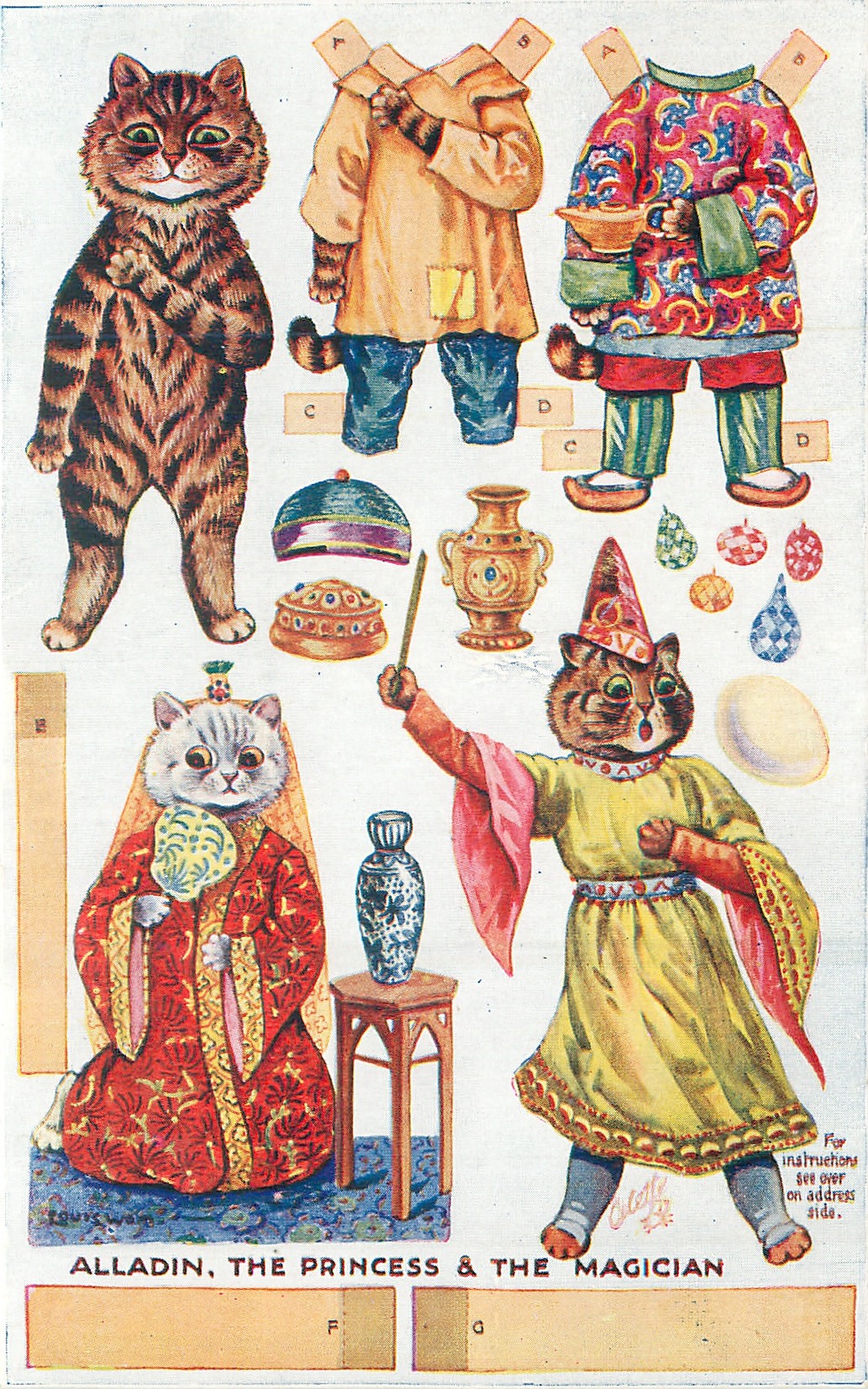
And this fanciful set from 1912 depicts characters from the story of Aladdin.
Because every respectable paper doll needed a suitable paper home in which to live, children could collect paper doll furniture pieces, too. Here’s a cabinet suitable for a paper doll’s fashionable drawing room:
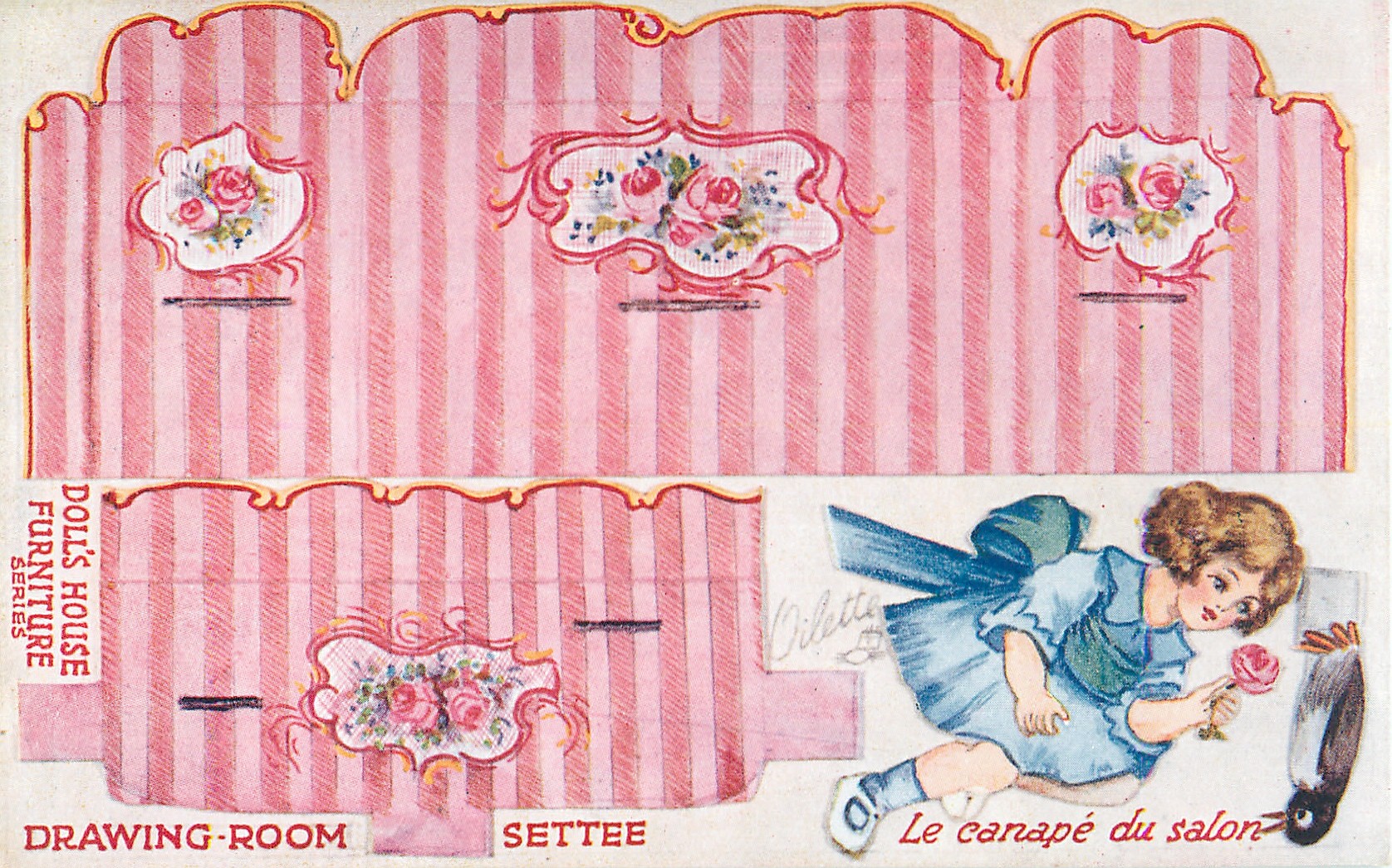
Paper dolls even had lovely chairs and settees on which to sit.
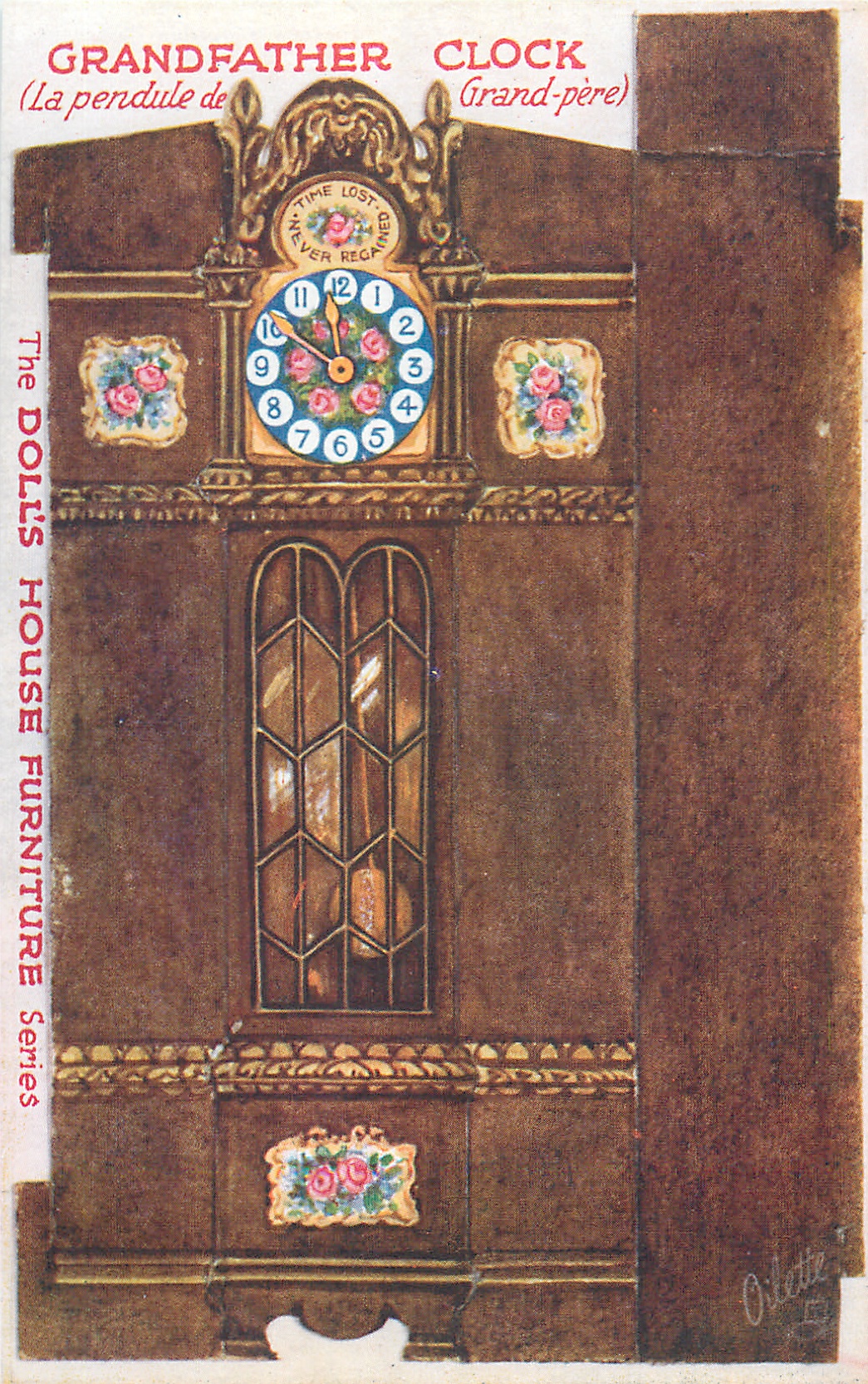
No paper doll drawing room would be complete without a grandfather clock and a decorative screen to block out cold drafts.
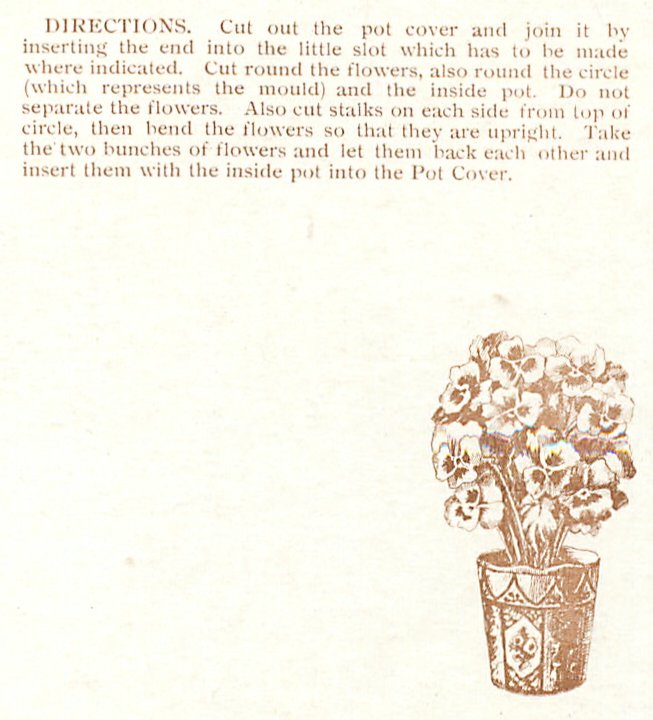
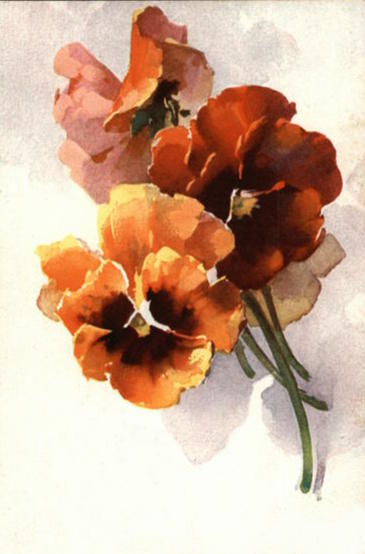
Here’s a paper doll house accessory that Isabella might have liked for herself: a pot of colorful pansies.
You can click on any of the paper doll images in this post to open a larger version to print and assemble for yourself.
And click here to see a previous post about paper dolls
At the height of her popularity, Isabella Alden was one of the most widely-read authors in the world. One of the things that made her so popular—and unique—was the varying ages of her readers: she had just as many children who were dedicated fans of her books as she had adult fans. And they all wrote letters to her.
She received letters by the thousands, addressed to her publisher, to her home, and to the offices of her magazine, The Pansy. And she answered them all!
Isabella Alden in an undated photograph.
Some fans wrote to request her autograph and a photo. Others asked for advice on how to become a great author or they sent their own manuscripts and asked for her opinion.
Some asked for advice on other topics, from how to get a good husband to the best way to stop fingernail biting. One fan even asked for pieces of her best dress so they could be sewn into a patchwork quilt the fan was sewing!
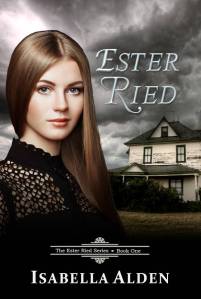
An early cover for Ester Ried
But the fan mail Isabella received most often was about her book Ester Ried. Ester Ried was incredibly popular and prompted scores of readers to send Isabella letters thanking her for the book’s message.
New cover for the 2016 release of Ester Ried
Fans wrote to Isabella about how they saw themselves in Ester’s struggles and her impatience with life’s daily annoyances. But mostly, readers identified with the lessons Ester learned; they took to heart the promise that God would bring peace and happiness to their lives, if only they trusted in Him.
What started as a single book soon blossomed into an ongoing series. The Ester Ried series gave fans of the original book glimpses into the lives of the characters they loved. Readers grabbed up each new story about the Ried family members and their trials as they grew up, married, and learned to trust God to help them through a sometimes difficult world.
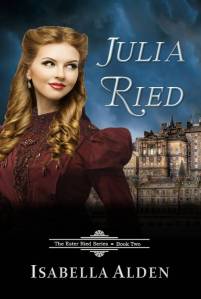
Two years after Ester Ried was published came Julia Ried, a sequel that focused on Ester’s younger sister Julia and the lessons she learns about faith in times of temptation. It also brought readers up to date on Abbie Ried’s story after the tragic turn her life took in Ester Ried.
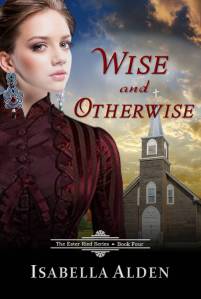
The following year Isabella published the third book in the series, The King’s Daughter. In this book Isabella introduced the character of Miss Dell Bronson. Unlike Ester or Julia, Dell was rock solid in her faith and trusted God in her daily life, but she still had challenges to face. And she still had lessons to learn in Wise and Otherwise, the next book in the series.
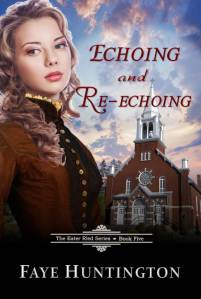
Isabella commissioned her best friend Theodosia Foster to write book five. Echoing and Re-Echoing (written under Theodosia’s pen name Faye Huntington) centers around Ralph Ried, Abbie’s brother, who, as a new minister, struggles to reach his flock through his Sunday sermons.
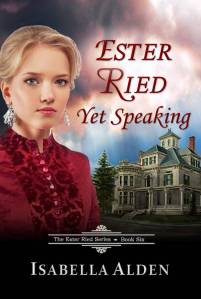
Isabella’s fans particularly loved the sixth book in the series, Ester Ried Yet Speaking, because it included the character of Flossy Shipley. Flossy was originally introduced to readers in Four Girls at Chautauqua. In Ester Ried Yet Speaking readers got to find out what happened to Flossy after her marriage to Evan Roberts. They also met Dr. Everett, Hester Mason, and Joy Saunders, who were the main characters in Isabella’s later book, Workers Together; An Endless Chain.
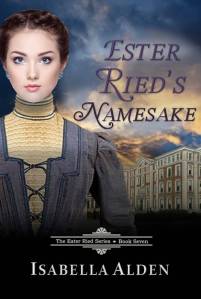
Isabella waited nine years before she published Ester Ried’s Namesake. It was intended to be the last book in the series, but fans wrote to beg for more.
Even Isabella’s niece, Grace Livingston Hill, encouraged her to write “one more long story.” Grace suggested she write about Ester Ried’s granddaughter or great-granddaughter, and thereby reach an entirely new generation of readers with the original book’s message.
But by that time, Isabella was 86 years old and in failing health. One more “long story” was beyond her abilities, she told Grace. “You have altogether too high an opinion of me.”
Many fans of the series think the Ester Ried books are perfect, just as they are; the only difference is that today’s readers have the option to read the books electronically. A new generation of Ester Ried e-books is available on Amazon and other e-book retail sites.
Boxed set e-book cover for Ester Ried, the Complete Series.
Have you read the books in the Ester Ried Series? Which book is your favorite?
You can click on any of the book covers in this post to find out more about each title.
Women toiled long hours in kitchens to make meals, preserve food for future use, launder clothing and linens, and heat water for baths and house-cleaning tasks.
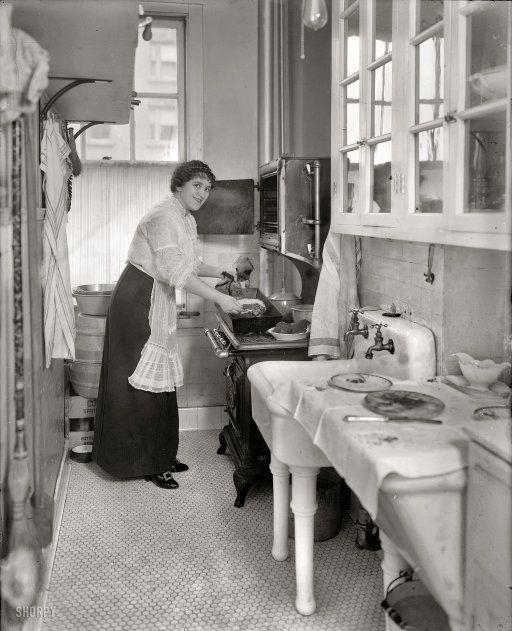
A modern kitchen in 1914
Even when the lady of the house had help in the kitchen—a live-in maid or a local “girl” who came for the day—they still spent the majority of their time in the kitchen, where conditions could be extreme.
An American kitchen, circa 1900
In many households the kitchen stove burned 24 hours a day. The stove was stoked early in the morning to raise the heat so water could be boiled and breakfast could be cooked. It then burned throughout the remainder of the day until bedtime. In winter the kitchen was the warmest room in the house. In summer the kitchen was sweltering, with inadequate ventilation and no escape from the heat.
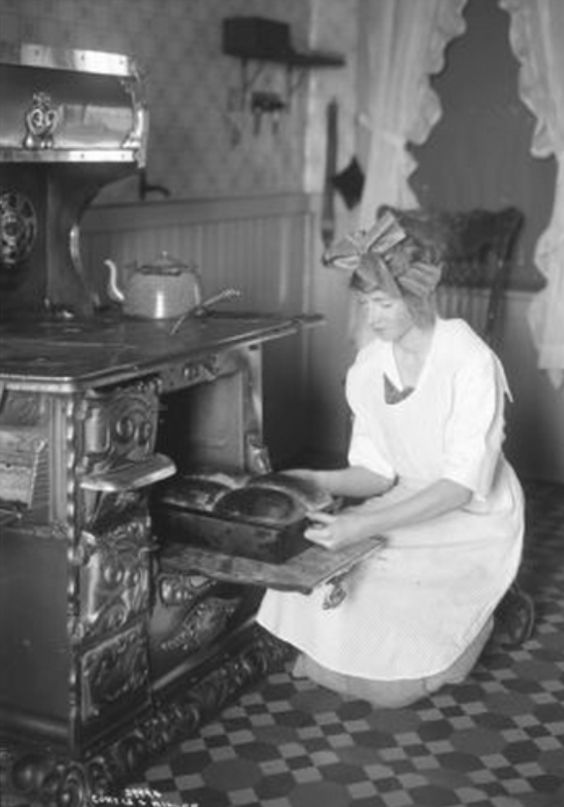
Baking Bread in 1914
Isabella’s book Ester Ried opens with a scene in the Ried kitchen, with Ester toiling in the kitchen on a hot day:
It was a very bright and very busy Saturday morning.
“Sadie!” Mrs. Ried called, “can’t you come and wash up these baking dishes? Maggie is mopping, and Ester has her hands full with the cake.”
“Yes, ma’am,” said Sadie, appearing promptly from the dining-room, with Minnie perched triumphantly on her shoulder. “Here I am, at your service. Where are they?”
Ester glanced up. “I’d go and put on my white dress first, if I were you,” she said significantly.
And Sadie looked down on her pink gingham, ruffled apron, shining cuffs, and laughed.
“Oh, I’ll take off my cuffs, and put on this distressingly big apron of yours, which hangs behind the door; then I’ll do.”
“That’s my clean apron; I don’t wash dishes in it.”
“Oh, bless your careful heart! I won’t hurt it the least speck in the world. Will I, Birdie?”
And she proceeded to wrap her tiny self in the long, wide apron.
Later in the book, when Ester returned home after a lengthy visit with her cousin:
Ester was in the kitchen trimming off the puffy crusts of endless pies—the old brown calico morning dress, the same huge bib apron which had been through endless similar scrapes with her.
Not all aprons were as large as the kitchen apron Ester wore. In fact, ladies often had different aprons for different tasks.
Work aprons were large and covered the entire front of a woman’s dress. They had plenty of pockets for thimbles, spools of thread, needles and pins, or any other household item the lady of the house wanted to have immediately at hand as she went about her daily housekeeping chores.
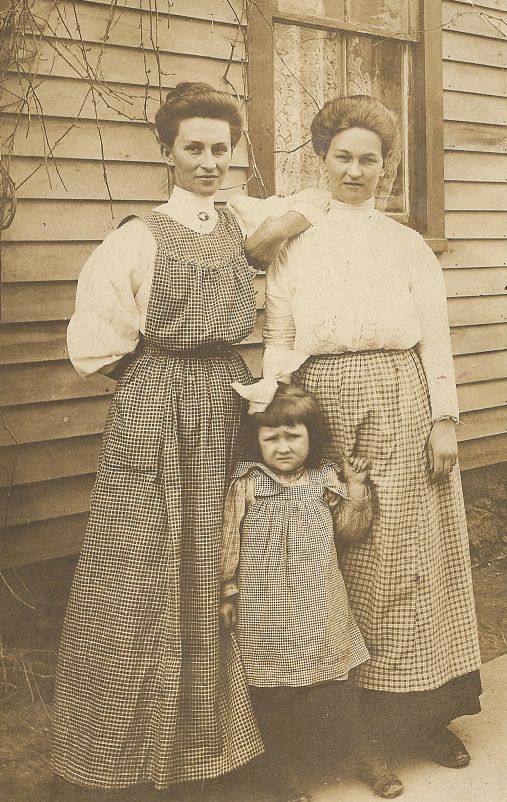
A 1910 photograph with the women of the family wearing three different styles of apron.
At the other end of the spectrum, tea aprons were feminine half-aprons that tied around a lady’s waist and covered her lap as she entertained family and guests at tea or luncheon.
Aprons were relatively simple to make; popular ladies’ magazines often featured apron patterns or embroidery and trim designs to customize a home-made apron. In 1922 the Woman’s Institute of Domestic Arts and Sciences published a pamphlet of instructions for making a variety of different aprons. You can download a copy of here.
A 1904 magazine ad for Green Brand aprons.
Now, as in Isabella’s time, aprons come in many styles. And though they are no longer a staple in a woman’s wardrobe, there are many women today who love to make and wear aprons.
A 1914 ad for Dutch Cleanser
Want to see what’s hot in aprons today? Here are two sites that sell aprons:
In her memoirs, Isabella Alden wrote about the first time her father and mother visited her after she was married. It happened when Isabella’s minister husband was new to his church and was working hard to make the Wednesday prayer meetings a success. He wanted the prayer meeting attendees to participate, so on Sunday mornings he would announce from the pulpit the topic for the Wednesday meeting. He asked everyone to come on Wednesday with a Bible verse that supported or illustrated the topic.
One Tuesday, Isabella’s mother and father arrived unexpectedly for a visit. The next evening Isabella proudly escorted her parents to the church and sat beside her father as her husband, Reverend Alden, led the prayer meeting. But something happened that forced her to make a terrible choice.
Her father had always strongly opposed women speaking in public and that opposition extended to prayer meetings.
Yet Isabella had prepared a Bible verse to recite aloud if necessary to help and support her husband. None of the other attendees were responding to Reverend Alden’s call to participate and an uncomfortable silence stretched on for several minutes. Isabella wrote:
“I sat in distressed silence for several minutes; so did everybody else. Suddenly I looked at my husband. I had promised him, had even talked with him about some of the thoughts that I wanted to present. What must he think of me now?
“Oh, Christ!” I prayed in my heart. “Tell me what to do!”
And the answer came, she said, as plainly as spoken words. She broke the silence and recited aloud the verse she had prepared:
“Thus saith the Lord who created thee: “Fear not, for I have redeemed thee; I have called thee by thy name; thou art mine.”
As soon as she finished, others followed in quick succession, and the prayer meeting continued on.
But Isabella was keenly aware that her father never said a word to her about the meeting or the verse.
“He was kind and tender toward me, but graver than usual; I had a feeling that I had hurt him by showing no respect for his opinions.”
Her mother and father left early the next morning and never visited the Alden home again.
That was an experience that stayed with Isabella. In fact, it made such an impression on her that she described that scene—in different ways—in many of her books.
In Workers Together: An Endless Chain, Miss Joy Saunders knew that the church she belonged to “believed in woman’s sphere, and desired her to keep strictly within its limits” and “on no account to let her voice be heard” in its religious meetings.
But when Joy followed her conscience and spoke a simple verse in an otherwise very quiet prayer meeting, she “set in motion forces that are pulsing yet” because the verse she recited touched so many hearts.
Scrutiny
.
Rebecca Harlow, the heroine of Links in Rebecca’s Life, was well aware that people in her church thought women and girls should keep silent when they were at prayer meeting. But after one of those long “awful pauses” in which no one at the meeting said a word, Rebecca spoke up and asked the people to pray for a friend who was in temptation.
That was all she said and though she couldn’t see anything wrong in her words, she knew there were some in the room who “thought it was out of taste.”
And when Ester Ried attended her first prayer meeting in New York, she was astonished by the proceedings:
“Now,” said the leader briskly, “before we pray, let us have requests.” And almost before he had concluded the sentence a young man responded.
“Remember, especially, a boy in my class, who seems disposed to turn every serious word into ridicule.”
“What a queer subject for prayer,” Ester thought.
“Remember my little brother, who is thinking earnestly of those things,” another gentleman said, speaking quickly, as if he realized that he must hasten or lose his chance.
“Pray for everyone of my class. I want them all.” And at this Ester actually started, for the petition came from the lips of the blue-ribboned Fanny in the corner. A lady actually taking part in a prayer meeting when gentlemen were present! How very improper. She glanced around her nervously, but no one else seemed in the least surprised or disturbed; and, indeed, another young lady immediately followed her with a similar request.
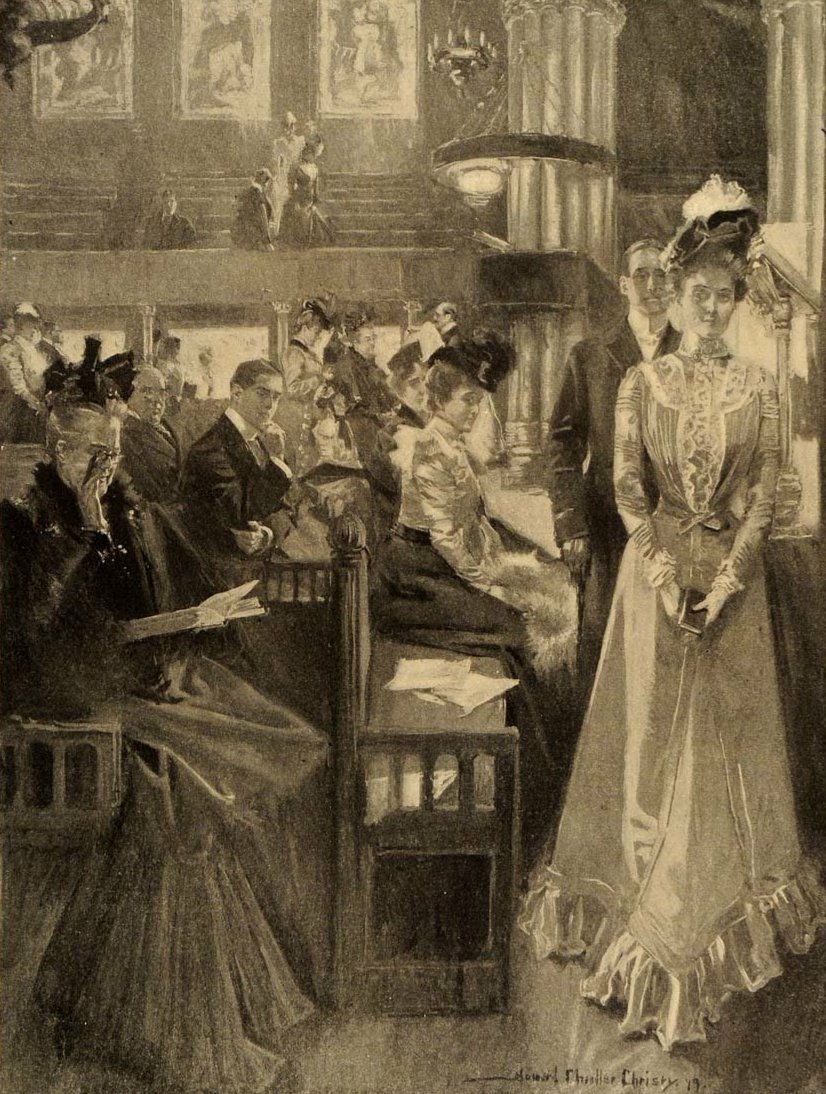
An American Girl in Church by Howard Chandler Christy
.
In Ruth Erskine’s Crosses, Isabella described the reaction when Ruth’s half-sister spoke up at the weeknight prayer meeting:
The words she uttered were these: “Therefore being justified by faith, we have peace with God, through our Lord Jesus Christ.”
Now, if it is your fortune to be a regular attendant at a prayer-meeting where a woman’s voice is never heard, you can appreciate the fact that the mere recitation of a Bible verse, by a “sister” in the church, was a startling, almost a bewildering innovation. Only a few months before, I am not sure but some of the good people would have been utterly overwhelmed by such a proceeding. But they had received many shocks of late. The Spirit of God coming into their midst had swept away many of their former ideas, and therefore they bore this better.
A Happy Ending:
Not long after that Wednesday night prayer meeting when Isabella spoke out in front of her parents, her father became very ill and she traveled to his home to be with him in his final days. One evening she was alone with her father when he said, unexpectedly:
“Thus saith the Lord who created thee.”
He explained to Isabella that he well remembered that Wednesday night prayer meeting and the verse she recited.
“The first time I ever heard it, your beloved voice gave it to me,” he said. “I can’t begin to tell you what [those words] are to me now, lying here. ‘Fear not; for I have redeemed thee; I have called thee by thy name; thou art mine.’”
That was the last private talk Isabella had with her father and she cherished the memory of it.
“I thank the dear Lord,” she later wrote, “that one night He gave me courage to repeat words which brought joy to Father’s heart.”
Click on the “Isabella’s Books” tab at the top of this page to read more about the books mentioned in this post.
Reviews and giveaways for Christian fiction and sweet, clean fiction. Bringing readers information on great stories and connecting authors with their readers.