The Gift of Music

It’s Christmas time, and shopping for the holiday is now in full swing. During Isabella’s lifetime, Christmas ads filled the issues of newspapers and magazines, tempting shoppers with bargains and gift ideas.

Among the many advertisements for books, handkerchiefs, slippers, and gloves were ads for a gift the whole family could enjoy: a piano.

The idea wasn’t as extravagant as it might sound; by the late 1890s pianos were quite affordable. Dealers and manufacturers offered consumers credit or payment plans that made purchasing a piano within the reach of families with more modest incomes.

A newspaper ad for Fischer Pianos with the headline "Standard of Highest Merit." In smaller type: "By our new method of Easy Payments every home is enabled at once to possess and enjoy a High-Grade Piano."

Families weren’t the only ones who took advantage of these arrangements. In Pansy’s Advice to Readers, Isabella wrote about a group of school girls who bought a piano for their gymnasium by raising the money themselves and making regular payments to the dealer.

Newspaper ad showing a young woman and her parents in a parlor with an upright piano. The headline reads "The Piano Problem Solved" and "Sold on Easy Payments."

Such arrangements meant pianos were no longer an article of luxury available only to the wealthy. As more families were able to purchase pianos, American social life began to change. Previously, people gathered at churches, concert halls, and other public places to enjoy music; but affordable pianos allowed people to enjoy music at home and within their own family circle.
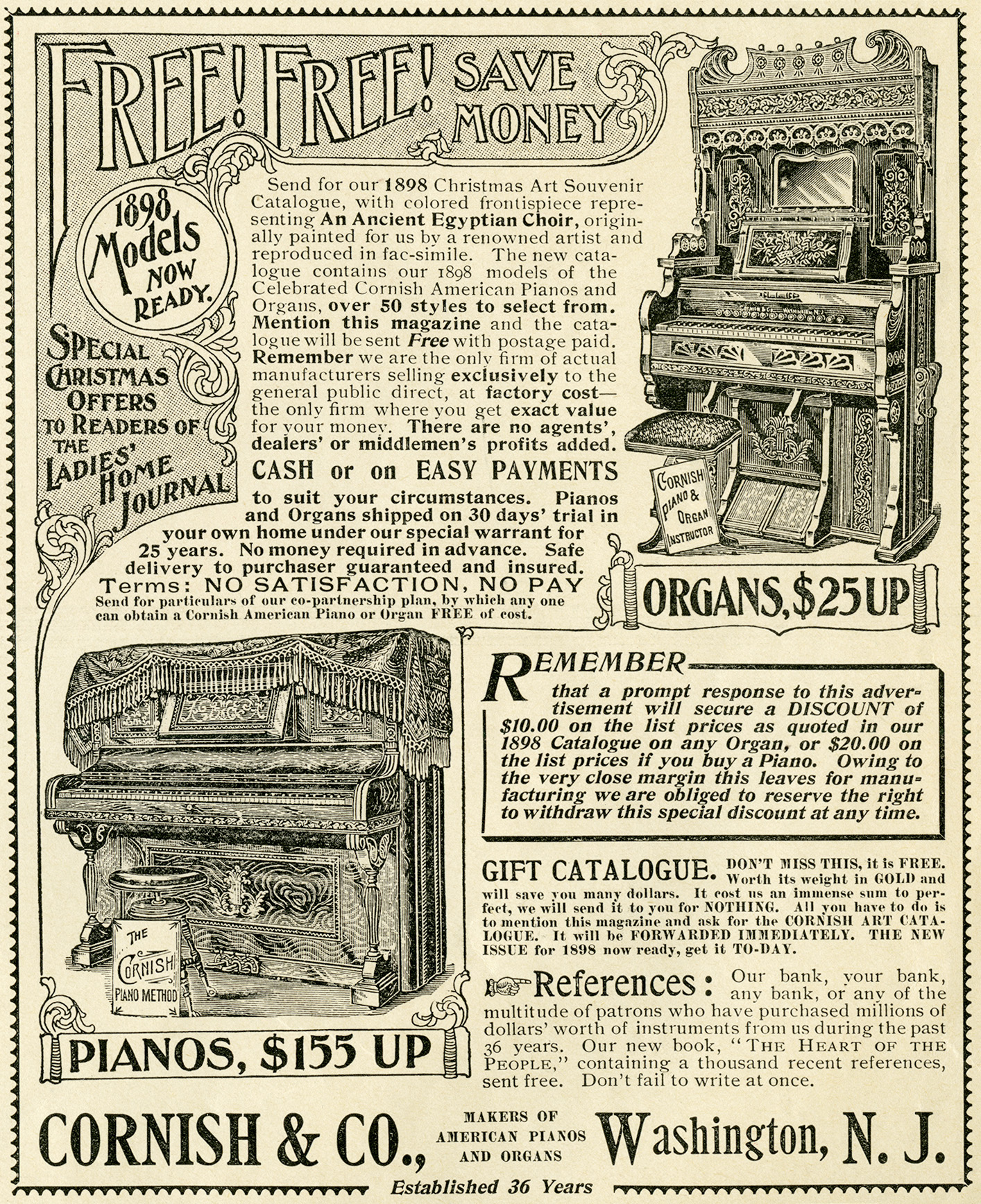
An 1898 magazine ad for organs ($25 up) and pianos ($155 up). The headline reads "Free! Free! Save Money" and "Special Christmas Offers to Readers of The Ladies' Home Journal."

But even affordable pianos presented a challenge: someone had to learn how to play them.

Once a piano was installed in a home, there were lessons to be had and endless hours of practice in order for a player to become proficient. But in the 1890s self-playing devices came on the market that again changed how families brought music into their homes.

There were two kinds of self-playing devices: those that attached to pianos, and those that were placed inside them.

Invented in America, the pianola was a cabinet-type device that was pushed up against a piano keyboard. It depressed the piano keys with protruding felt-covered levers controlled by a perforated paper roll. A person had to be seated at the device to work the pumping pedals so air pressure created suction to rotate the roll. 
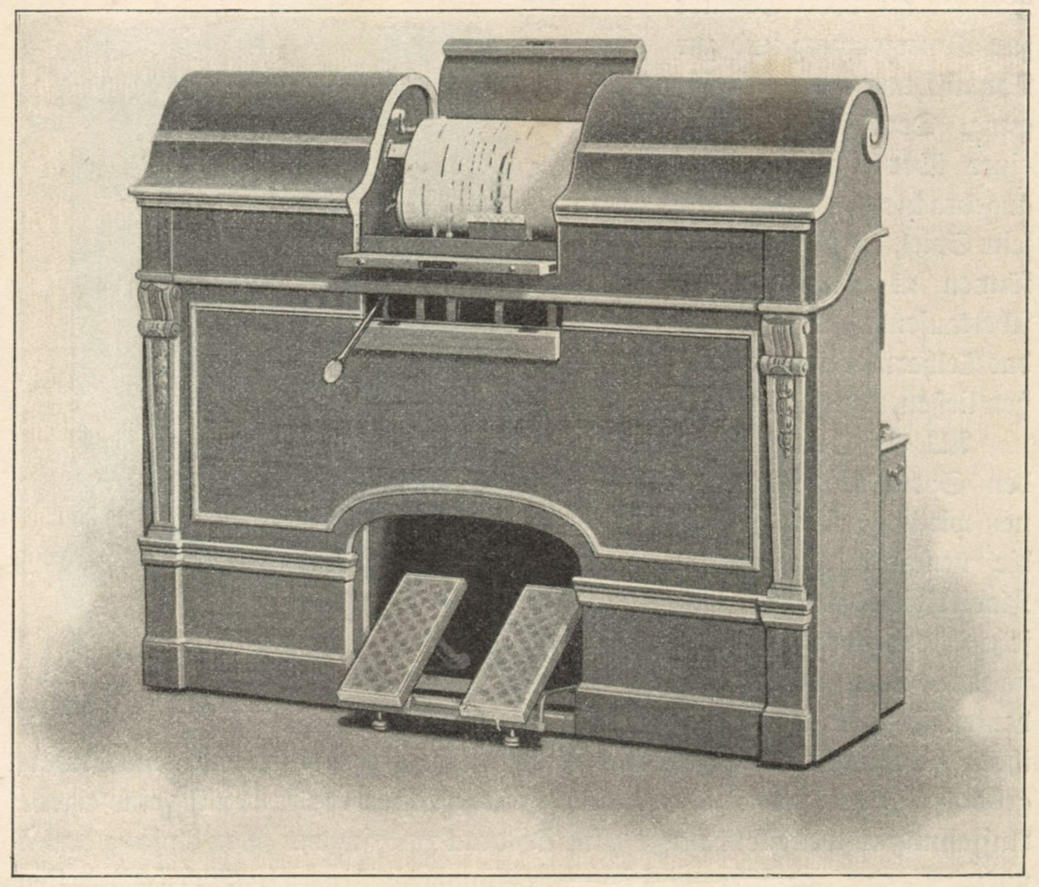
A pianola cabinet. A lid on top is open to show the perforated paper music roll. At the bottom are two foot pedals.
Pianola cabinet style in 1890.

The other type—the player-piano—operated in the same manner with a rotating perforated roll, but the device was installed within the piano itself.

Ad for a player piano with the instrument in the center of the ad, surrounded by holly. Above it is the brand name Krell. Below is "Auto-Grand, the Holiday Spirit."

According to the editor of The Piano and Organ Purchaser’s Guide for 1908, these devices “made tens of thousands of pianos eloquent with good and popular music”—pianos that formerly were silent, except when there was a dance at home, or on a Sunday, when a few hymns were played.

Illustration of a woman seated in front of a player piano with her feet on the pedals. Seated beside her is a young child. A little girl dances beside the piano.

“The present of a pianola is a present to every member of the family.” So declared a magazine advertisement in 1904 that urged consumers to consider buying a mechanical piano player for Christmas.

Photo of a Pianola cabinet with the caption "The present of a pianola is a present to every member of the family."

It wasn’t just families that could now listen to beautiful music in their homes. This ad in a 1904 issue of Booklover’s Magazine suggested a pianola cabinet player was the ideal gift for a bachelor’s home.

Illustration of a young man seated in a chair holding a pipe in his apartment. Beside him is a piano with a pianola cabinet attached. The caption reads "The Bachelor's Idea. The one finishing touch to a bachelor's apartment is furnished by a piano to be played with a Chase & Baker Piano Player."

Those self-playing piano devices opened up whole new musical worlds for people. Many who never visited the opera or a concert before became thoroughly acquainted with world-class musical and orchestral compositions.

Black and white drawing of a young woman seated at a player piano with a perforated music roll visible. A woman stands nearby who appears to be performing a song. A group of elegantly dressed people are seated listening to her.

Sales of pianolas and player pianos peaked in the mid-1920s when gramophone recordings and the arrival of radio caused their popularity to wane.

Illustration of a young woman seated at a player piano, with her feet resting on the pedal. A young man stands beside the piano, looking down at the young woman.

But while in their heyday, pianos, pianolas, and player pianos made an important mark on American culture, bringing music and joy to thousands of families. Isn’t that a wonderful gift to receive?

You can learn more about pianolas and player pianos by clicking here.

You can read Pansy’s Advice to Readers for free!

Choose the reading option you like best:

You can read the e-book on your computer, phone, tablet, Kindle, or other electronic device. Just click here to download your preferred format from BookFunnel.com.

Or you can select BookFunnel’s “My Computer” option to receive an email with a version you can read, print, and share with friends

Christmas Shopping with Isabella

Julia Ried (in Isabella’s novel of the same name) had ten dollars with which to purchase Christmas gifts for her family and friends.

She knew exactly what she wanted to give her mother, sister Sadie and brother Alfred for Christmas; and since this would be her first Christmas away from home, she even thought out how she would ship the gifts to her family:

I had packed them in imagination in a neat little box, and written the accompanying letter scores of times.

In our modern world, ten dollars doesn’t seem like a lot of money, but in 1873, when Julia Ried was published, those ten dollars went much further than they do today.

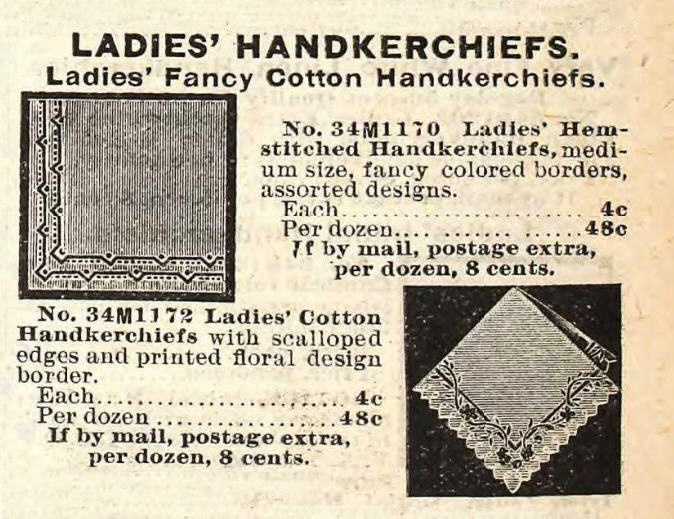
For example, Julia could purchase a set of six handkerchiefs to give to Sadie at a cost of only thirty cents:

And since a lady could never have enough handkerchiefs, Julia might instead have opted to give Sadie a dozen of them (with fancy colored borders) at a cost of just 48 cents:

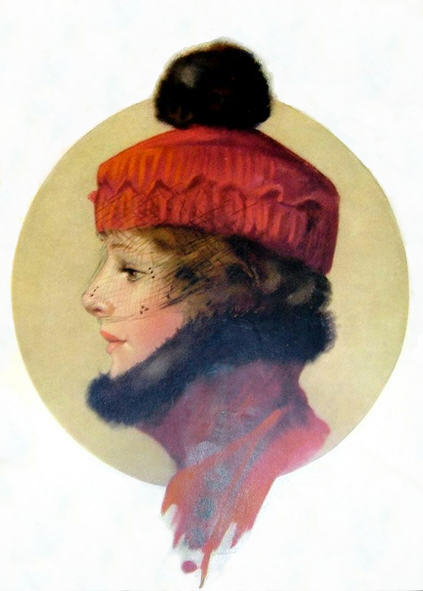
Or, Julia might have purchased for Sadie a knitted cap and scarf set, since such sets were just as popular in the late 1800s and early 1900s as they are now.

For Alfred, Julia might have purchased a new shirt to wear to his job as a store clerk (or even two shirts at these prices):

This full-page newspaper ad from 1912 illustrates other affordable gifts Julia might have chosen for Alfred, from a sturdy pair of gloves to a warm sweater to a new cap (click on the image to see a larger version):

When it came to selecting a gift for her mother, Julia knew no ordinary gift would do. She wrote:

Dear mother, she seemed to think that her first and greatest duty in life was to toil for and spare her children. Patient, faithful, tender mother! Tonight, as I recall her sweet, pale, tired face, I can think of no frown of impatience or anger that ever marred its sweetness. I can think of nothing left undone, that she could do, to smooth the path in which her children trod.

Clearly a special gift was in order for Mrs. Ried. A very pretty sewing box, covered in a sturdy but lovely patterned fabric (called “cretonne”) might have been the perfect gift:

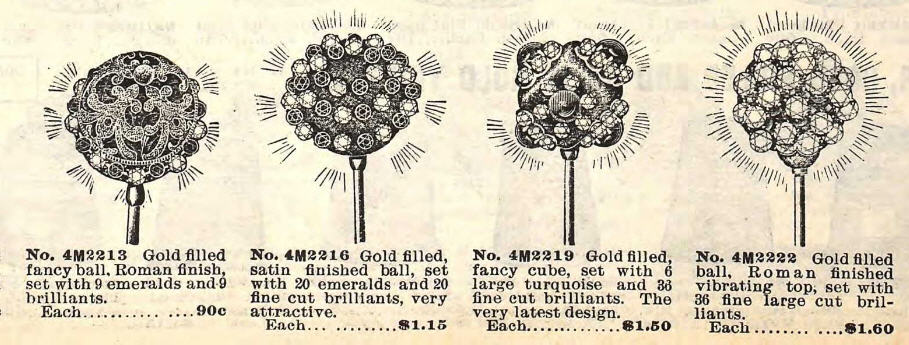
Or she might have chosen for her mother a lovely ladies’ hat pin to add some sparkle to her life:

All of these would have been thoughtful gifts for Julia to send home to her family; but …

If you have read the book, you know that that Julia succumbed to an entirely different temptation when it came to spending her ten dollars—a temptation that left her with no money to buy gifts she wanted to give her family!

As the characters in Isabella’s novels so often did, Julia Ried had to learn many lessons about the dangers of peer pressure and placing trust in the wrong person—lessons that are just as relevant today as they were in 1873.

What do you think of the Christmas gifts in these ads from the late 1800s/early 1900s?

Which gifts would you purchase to give loved ones?