A Woman’s Voice

Colored drawing of a country church displayed above the word Prayer In her memoirs, Isabella Alden wrote about the first time her father and mother visited her after she was married. It happened when Isabella’s minister husband was new to his church and was working hard to make the Wednesday prayer meetings a success. He wanted the prayer meeting attendees to participate, so on Sunday mornings he would announce from the pulpit the topic for the Wednesday meeting. He asked everyone to come on Wednesday with a Bible verse that supported or illustrated the topic.

One Tuesday, Isabella’s mother and father arrived unexpectedly for a visit. The next evening Isabella proudly escorted her parents to the church and sat beside her father as her husband, Reverend Alden, led the prayer meeting. But something happened that forced her to make a terrible choice.

Her father had always strongly opposed women speaking in public and that opposition extended to prayer meetings.

Yet Isabella had prepared a Bible verse to recite aloud if necessary to help and support her husband. None of the other attendees were responding to Reverend Alden’s call to participate and an uncomfortable silence stretched on for several minutes. Isabella wrote:

“I sat in distressed silence for several minutes; so did everybody else. Suddenly I looked at my husband. I had promised him, had even talked with him about some of the thoughts that I wanted to present. What must he think of me now?

“Oh, Christ!” I prayed in my heart. “Tell me what to do!”

And the answer came, she said, as plainly as spoken words. She broke the silence and recited aloud the verse she had prepared:

“Thus saith the Lord who created thee:
 “Fear not, for I have redeemed thee; I have called thee by thy name; thou art mine.”

As soon as she finished, others followed in quick succession, and the prayer meeting continued on.

But Isabella was keenly aware that her father never said a word to her about the meeting or the verse.

“He was kind and tender toward me, but graver than usual; I had a feeling that I had hurt him by showing no respect for his opinions.”

Her mother and father left early the next morning and never visited the Alden home again.

A black and white illustration of a woman in Victorian era dress speaking before an audience of men and women.That was an experience that stayed with Isabella. In fact, it made such an impression on her that she described that scene—in different ways—in many of her books.

In Workers Together: An Endless Chain, Miss Joy Saunders knew that the church she belonged to “believed in woman’s sphere, and desired her to keep strictly within its limits” and “on no account to let her voice be heard” in its religious meetings.

But when Joy followed her conscience and spoke a simple verse in an otherwise very quiet prayer meeting, she “set in motion forces that are pulsing yet” because the verse she recited touched so many hearts.

Profile of a young woman standing in church. Behind her is a stained glass window; but instead of Christian icons, the window  features faces of people looking down upon her, some forwning, some laughing.
Scrutiny

.

Rebecca Harlow, the heroine of Links in Rebecca’s Life, was well aware that people in her church thought women and girls should keep silent when they were at prayer meeting. But after one of those long “awful pauses” in which no one at the meeting said a word, Rebecca spoke up and asked the people to pray for a friend who was in temptation.

That was all she said and though she couldn’t see anything wrong in her words, she knew there were some in the room who “thought it was out of taste.”

And when Ester Ried attended her first prayer meeting in New York, she was astonished by the proceedings:

“Now,” said the leader briskly, “before we pray, let us have requests.” And almost before he had concluded the sentence a young man responded.

“Remember, especially, a boy in my class, who seems disposed to turn every serious word into ridicule.”

“What a queer subject for prayer,” Ester thought.

“Remember my little brother, who is thinking earnestly of those things,” another gentleman said, speaking quickly, as if he realized that he must hasten or lose his chance.

“Pray for everyone of my class. I want them all.” And at this Ester actually started, for the petition came from the lips of the blue-ribboned Fanny in the corner. A lady actually taking part in a prayer meeting when gentlemen were present! How very improper. She glanced around her nervously, but no one else seemed in the least surprised or disturbed; and, indeed, another young lady immediately followed her with a similar request.

Illustration of a young woman going to her seat in church, with the yes of several members of the congregation following her.
An American Girl in Church
by Howard Chandler Christy

.

In Ruth Erskine’s Crosses, Isabella described the reaction when Ruth’s half-sister spoke up at the weeknight prayer meeting:

The words she uttered were these: “Therefore being justified by faith, we have peace with God, through our Lord Jesus Christ.”

Now, if it is your fortune to be a regular attendant at a prayer-meeting where a woman’s voice is never heard, you can appreciate the fact that the mere recitation of a Bible verse, by a “sister” in the church, was a startling, almost a bewildering innovation. Only a few months before, I am not sure but some of the good people would have been utterly overwhelmed by such a proceeding. But they had received many shocks of late. The Spirit of God coming into their midst had swept away many of their former ideas, and therefore they bore this better.

A Happy Ending:

Not long after that Wednesday night prayer meeting when Isabella spoke out in front of her parents, her father became very ill and she traveled to his home to be with him in his final days. One evening she was alone with her father when he said, unexpectedly:

“Thus saith the Lord who created thee.”

He explained to Isabella that he well remembered that Wednesday night prayer meeting and the verse she recited.

“The first time I ever heard it, your beloved voice gave it to me,” he said. “I can’t begin to tell you what [those words] are to me now, lying here. ‘Fear not; for I have redeemed thee; I have called thee by thy name; thou art mine.’”

That was the last private talk Isabella had with her father and she cherished the memory of it.

“I thank the dear Lord,” she later wrote, “that one night He gave me courage to repeat words which brought joy to Father’s heart.”


Click on the “Isabella’s Books” tab at the top of this page to read more about the books mentioned in this post.

Early Writings

Grandfather Clock 01 EditedIsabella kept a daily diary from the time she was seven years old. In it she faithfully recorded the day’s events, so she developed her writing skills at an early age.

Her first published story appeared in the newspaper when she was still a child. Her tale concerned the family’s “grand old clock.” Isabella had grown up hearing the steady tick-tock of the clock; but it suddenly stopped one morning without warning. Since the clock was a family heirloom and one hundred years old at the time, her parents took the problem in stride.

But Isabella’s imagination wove a tale around the powers of the old clock. The day was cloudy and she attributed it to the fact that the sun didn’t know when to rise, simply because the old clock had stopped keeping time. She continued the story with dire predictions that the earth would be plunged into darkness and other terrible things would happen.

She ended the tale with her father pulling out his faithful pocket watch—still ticking—thus saving the world!Pocket Watch Edited

Isabella’s older sister, Mary, was married to the editor of the local newspaper. He suggested that the story appear in the next issue of the paper. Isabella’s father agreed, provided the story was published anonymously to protect Isabella’s privacy.

Thus, Isabella Alden’s first published story appeared in the newspaper with the title and byline:

Our Old Clock
by
Pansy

Many years later, Isabella proudly recounted the story as her very first appearance in public.

A Teachable Moment

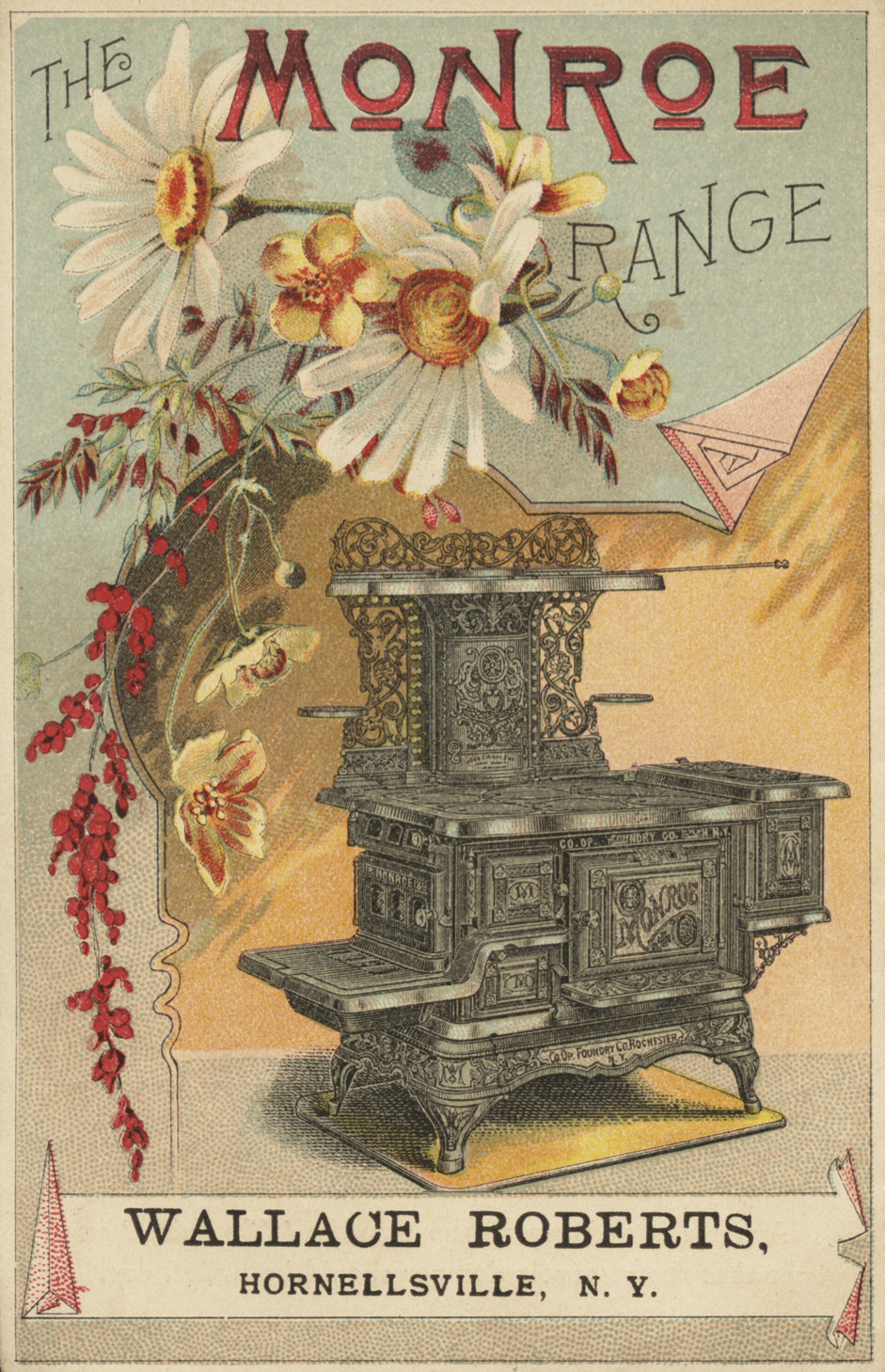
Mrs Beeton_Range Detail

Isabella Alden told a story about her childhood that shows not only the love within her home, but the skill of her father in capturing everyday moments to teach Isabella character-forming lessons.

“I recall a certain rainy day, when I hovered aimlessly from sitting-room to kitchen, alternately watching my father at his writing, and my mother at her cake-making. She was baking, I remember, a certain sort known among us as ‘patty-cakes,’ with scalloped eMrs. Beeton_Victorian Kitchen editeddges, and raisins peeping out all over their puffy sides. I put in an earnest plea for one of the ‘patties’ as it came from the oven, and was refused. Disconsolately I wandered back to father’s side. He was busy with his annual accounts.
“Our home was in a manufacturing town, where the system of exchange, known as ‘due-bills,’ was in vogue. Something caught my eye which suggested the term to me, and I asked an explanation.

“Father gave it briefly. Then I wanted to know whether people always earned the amount mentioned in the due-bill, and my father replied that of course one had the right to issue a due-bill to a man who had earned nothing, if for any reason he desire to favor him, and that then the sum would become that man’s due, because of the name signed.

“I remember the doleful tone in which I said, ‘I wish I had a due-bill.’ My father laughed, tore a bit of paper from his note-book, and printed on it in letters which his six-year-old daughter could read, the words:

Dear Mother:
Please give our little girl a patty-cake for my sake.
Father.

“I carried my due-bill in some doubt to my mother, for she was not given to changing her mind, but I can seem to see the smile on her face as she read the note, and feel again the pressure of the plump warm cake which was promptly placed in my hand.Mrs Beeton_Rolls and Cakes edited square

“The incident took on special significance from the fact that I gave it another application, as children are so apt to do. As I knelt that evening, repeating my usual prayer: ‘Now I lay me down to sleep,’ and closed it with the familiar words: ‘And this I ask for Jesus’ sake,’ there flashed over my mind the conviction that this petition was like the ‘due-bill’ which my father had made me—to be claimed because of the mighty name signed. I do not know that any teaching of my life gave me a stronger sense of assurance in prayer than this apparently trivial incident.”

—Excerpt from Successful Women by Sarah K. Bolton

Follow this link to a 19th Century recipe for raisin cakes.