When Isabella Alden began writing her beloved “Pansy” books in the 1870s, the literary landscape looked very different than it does today. There were few public libraries like the ones we have now; instead, churches filled that role by establishing their own library systems.
The Sunday-school library was a powerful force in 19th-century America. They didn’t just lend books—they curated collections of books that shaped readers’ moral and spiritual development.
Not all Sunday-school libraries were created equal; some churches seemed to have unlimited resources to maintain a well-stocked library of five-hundred books or more, displayed in neat rows on well-built shelves; while others had only a few titles in their collection.
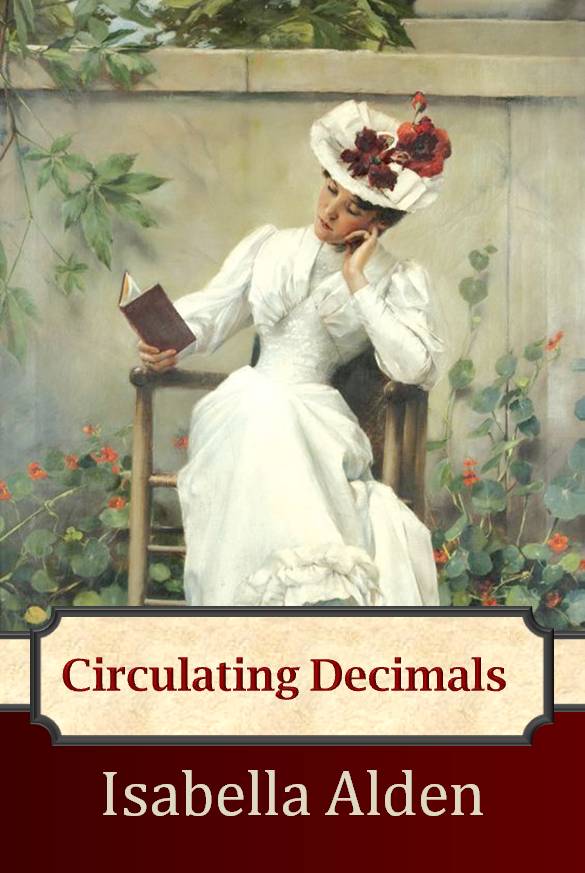
Isabella’s short story, “Circulating Decimals” is about the efforts of a community to raise money for just such a church library that has fallen into a “disgraceful condition” due to neglect and lack of funds. (You can click here to read the story for free.)
But regardless of size or budget, church libraries had one mission in common: to offer readers books that supported religious instruction, moral development, and the spiritual growth of the congregation.
Churches established committees to evaluate each potential library addition against a set of religious standards. The minister often played a role in recommending or vetoing books, which were also chosen based on their theological soundness and ability to promote standards of Christian living.
The Grace Methodist Episcopal Church of Taunton, Massachusetts had a rather large library of over five-hundred books, and included some of Isabella’s novels, as well as books by Margaret Sangster, E.P. Roe, and other Christian fiction authors.
The church divided their book collection into categories and published a catalog for members of their congregation. The fact that Isabella had ten of her books included in the catalog shows how well the moral messages of her stories aligned with the church’s values and appealed to readers of all ages.

(You can click on the image above to see the entire Grace M.E. Sabbath-school Library catalog of 1904.)
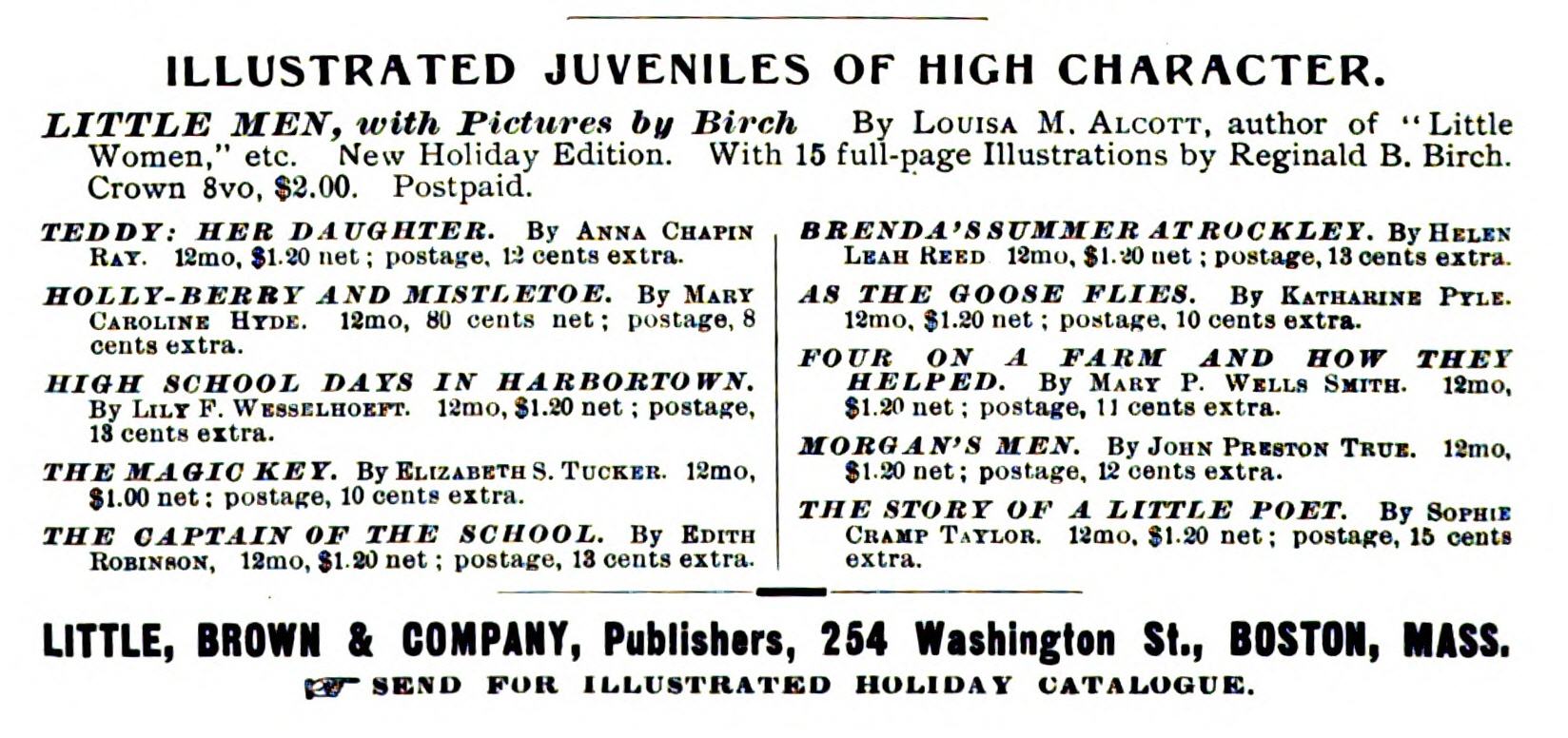
Mainstream publishers like Little, Brown and Company actively marketed their wholesome books to churches. This advertisement in “The Sunday School Library Bulletin” magazine shows their newest offering to churches included a new edition of “Little Men” by Louisa May Alcott:
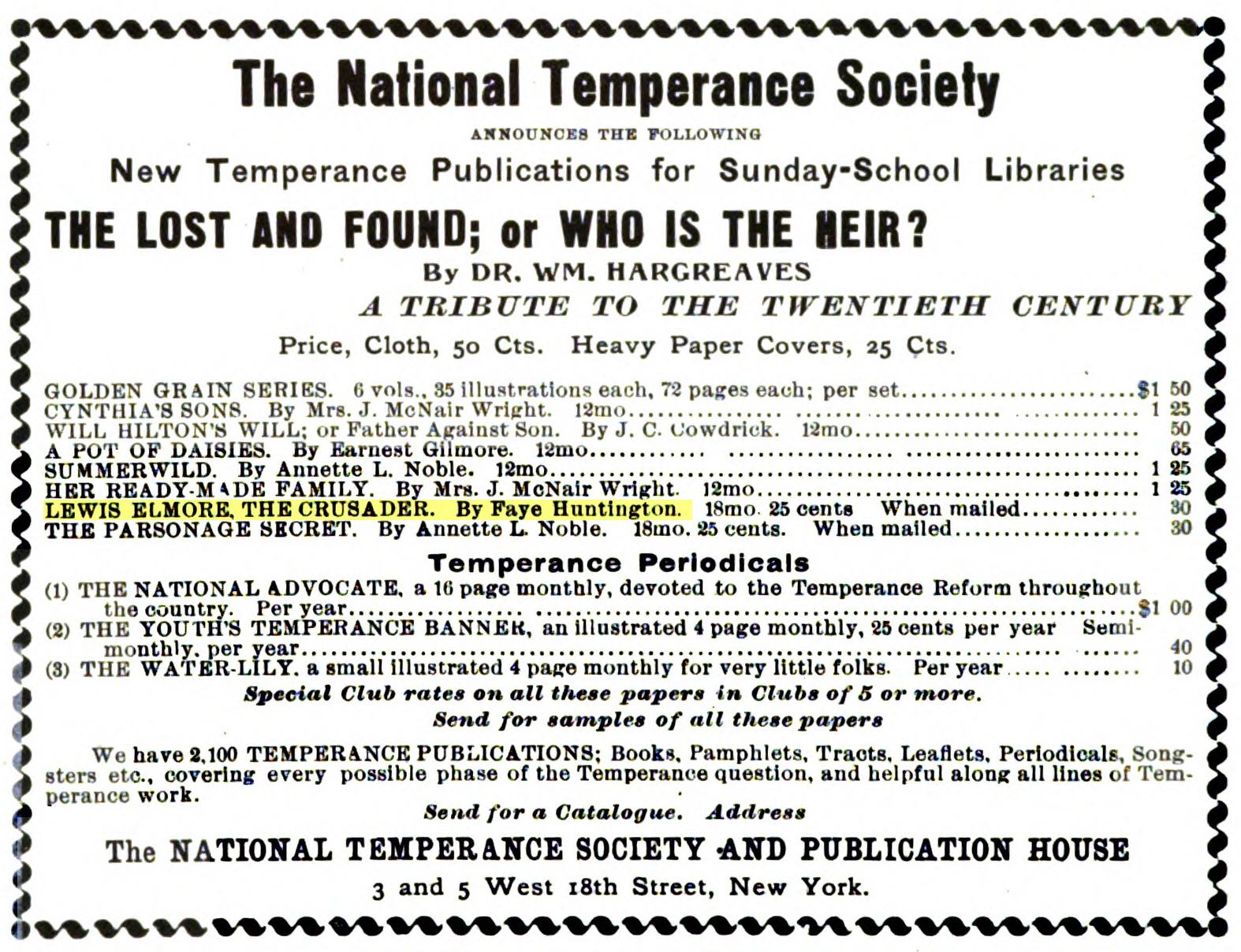
And organizations like The National Temperance Society also marketed their books directly to churches. Their ad below features a temperance novel by Isabella’s friend Theodosia Foster (who used the pen name of Faye Huntington):
Church libraries established systems for inventorying and lending books. They assigned an inventory number to each book, and issued library cards to readers.
![A square label affixed to the inside cover of a book. On the first line of the word "NO" with room to write a number; the number 61 was written and crossed out, and the number 77 written beside it. Below are printed "SUNDAY SCHOOL LIBRARY of the Evengelical [sic] Lutheran Church, Springfield, Ill." The text is surrounded by a fancy Victorian-era design of swirls and dots.](https://isabellaalden.com/wp-content/uploads/2025/09/evangelical-lutheran-church-book-plate.jpg)
They also created rules for borrowing:
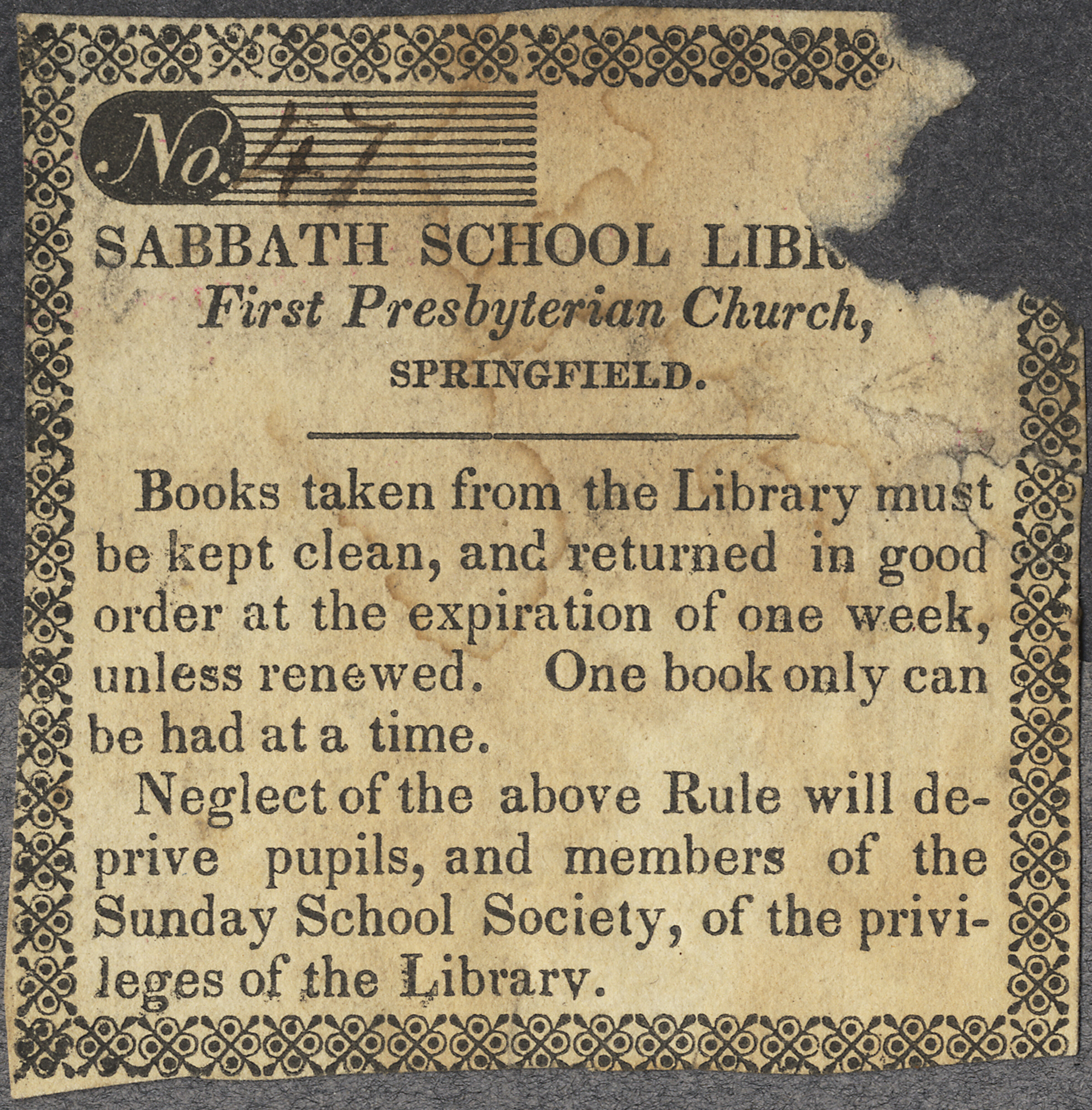
Church libraries were a lifeline for readers, especially in smaller and frontier communities where there were no free public libraries. But that began to change in 1886 when wealthy steel magnate Andrew Carnegie began funding the building of public libraries across the country. By 1923 he had financed the building of over 1,600 public libraries where borrowers could choose from thousands of book titles, including the most popular books of the day.

The “safe” books Isabella wrote went out of print, while modern novels by Ernest Hemingway, Edith Wharton, and F. Scott Fitzgerald filled the shelves at public libraries.
Sunday-school libraries still existed, but their influence waned to such an extent that in 1930 a newspaper in Greensboro, North Carolina published an editorial just after Isabella’s death. The editorial fondly recalled the church libraries of years gone by:
There were no sex novels; no crime novels; no filthy “realism,” which portrays the perversions of human nature as if it were life itself. Romance there was, in glorious gobs. Many of the books seeped sentimentality. And always there were happy endings.
He went on to write that Isabella’s books “made for clean lives and happy homes and good society.” In her stories, “the problems were the problems of everyday people trying to be good. If they were somewhat morbid and over-introspective, so was the era for which they were meant.”
Isabella truly did write for the era in which she lived; but it’s important to remember that her books succeeded in Sunday school libraries not just because they met church requirements, but because Isabella had a particular understanding of literature’s purpose—that stories should help readers have a closer walk with God and become better versions of themselves.
Maybe that’s why her “Pansy” novels, despite going out of print, are still read and loved by new readers today, and remembered fondly by those who discovered them on long-ago Sunday afternoons in church libraries.

 Isabella Alden
I was a bookworm from earliest childhood. My mother kept a library of 300 Reader’s Digest magazines, and I blazed through the fiction sections of both my school and town library – although I focused entirely on adventure and fantasy, graduating to science fiction and fantasy. I was never into “classic literature”. In fact, I credit the Narnia series as being one of the things that kept me firmly in the fantasy genre. I couldn’t “see Christ” in it at all. Over time, I built my own fantastic world, and was preparing some of my made up stories to submit to a publisher. ~~ When I became a Christian in 1998 the Lord took firm steps to throw fantasy out of my life. It was an astonishing battle, and some aspects of it continue today. I won’t take space here with it. ~~ But as an avid reader (yes, even cereal packets!) I needed something. I can’t now remember exactly what I was looking for, but I think it was the Bible verse in Psalms about a king’s daughter for a funeral of a dear Church sister. My search result included a “King’s Daughter” at archive.org or Librivox, and thus I made my first acquaintance with Pansy. ~~ I was amazed at the simple yet profound story and truth in straightforward narrative, and haven’t stopped following her work since. I downloaded all the Librivox readings I could find (so I can “read” whilst my hands are occupied). Just last week that was all 73 books available, as I loaded up an old mobile phone as an mp3 player. I cross-check them to your own list of her published works, and they have greatly helped me grow in grace. I will get print versions when I can for my grandchildren to be able to read. ~~ I’m very grateful to you, Jenny, and Bookfunnel, to TriciaG and all her colleagues at Librivox, all the unknown volunteers and workers who scanned books as part of the digitisation of library assets project which assimilated into archive.org, and most especially to the Lord for providing His people with a talented and devoted sister whose works do indeed follow her even more than a century later. ~~ I wonder if she thought they would follow her so far.
Thank you so much for sharing how you came to read and love Pansy’s books! I, too, am grateful to everyone who helps make her books available in different formats for today’s readers to enjoy. When I first found Isabella’s books, no one in my church had ever heard of her before, and I knew I had to correct that and share her stories with as many people as possible. I doubt she would have thought that there would be an audience for her books almost one hundred years after her death, but I have to say that I’m not at all surprised. Her books are very special, and I pray they will be read and appreciated for many more years to come! Thanks again for sharing your thoughts! —Jenny
I didn’t think to add that a special reason, a very great need, for having really good quality Christian books is that the characters seem to me to count as “companions”, in the meaning that the Book of Proverbs has it.
Modern media, far more than the novels and penny sheets and newspapers of Pansy’s day, is so intrusive, pervasive, and subtle in its arts, that the need for good companions is far greater than ever before, and far more unrealised than before, too.
It’s another reason why audio versions of Pansy’s books are so useful 🙂
That’s a great way to think of Isabella’s books, Mrs. Chew! They really do serve as friends/companions who encourage us in our spiritual growth in so many ways. —Jenny