October 1901 marked a milestone in Isabella’s life.
For decades she and her husband Ross and other members of their family had been deeply involved with Chautauqua Institution. Isabella strongly believed in its core principles, and she immersed herself in furthering Chautauqua’s mission.
Isabella, Ross, Raymond, and family on the steps of their Chautauqua cottage (1875).
Every summer for decades she taught classes at Chautauqua, and encouraged friends and acquaintances to attend the summer session. She helped extend Chautauqua’s outreach by quietly encouraging people she met in all walks of life to embrace the CLSC and its educational offerings.
And more than any other ambassador, she inspired an entire generation of readers to experience the place for themselves after reading about it in Isabella’s many novels about Chautauqua.
During the course of their marriage Isabella and Ross lived in many places; his occupation as a minister often required them to move from one church to another. But almost without fail their summers took them back to Chautauqua. For Isabella, who was born and raised in New York, her annual trips to Chautauqua must have felt very much like a homecoming.
Over the years Isabella and Ross rented different cottages on Chautauqua’s grounds. Many of them have since been demolished and replaced by newer buildings.
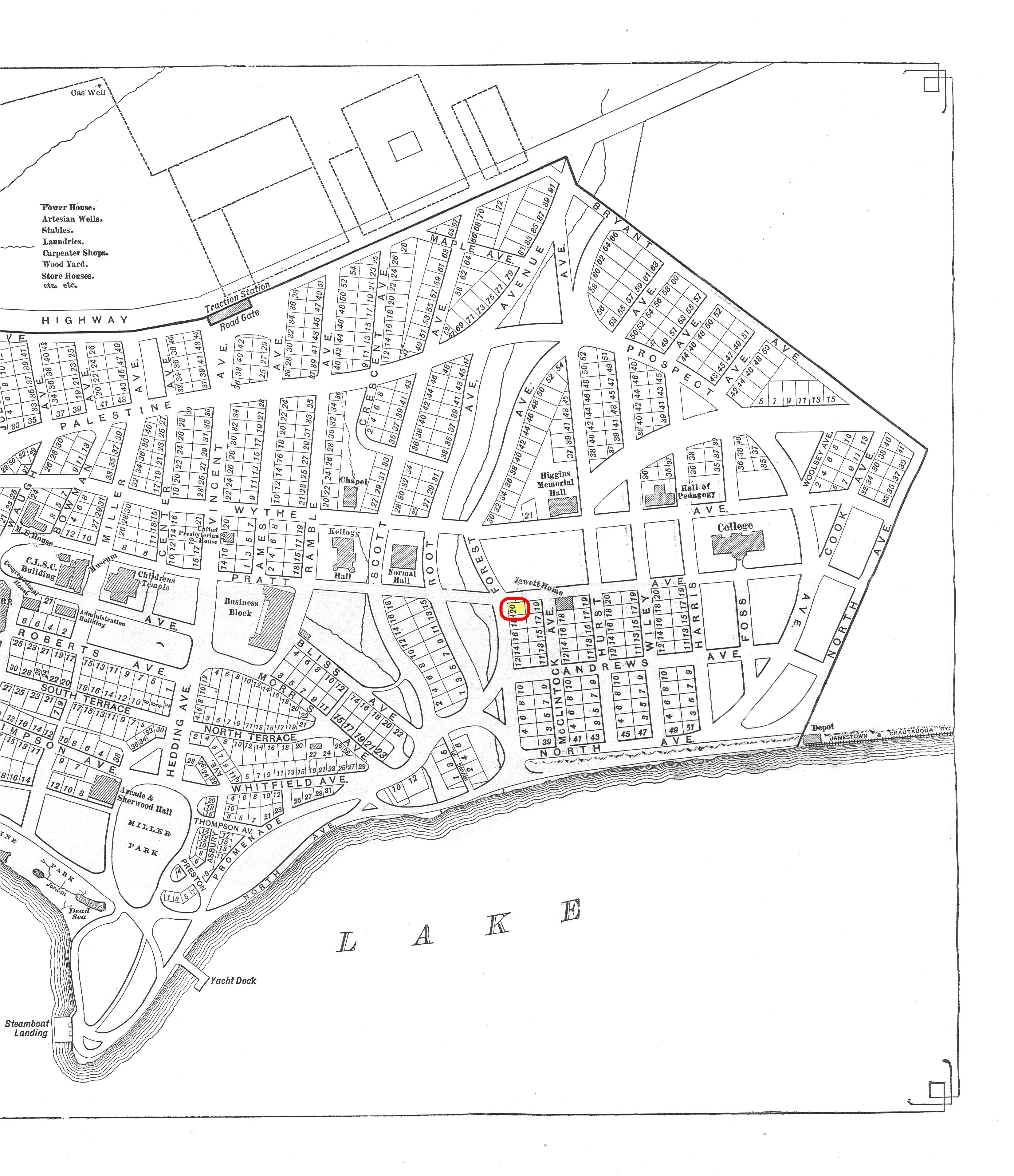
One of the last cottages they occupied was at 20 Forest Avenue, bounded to the north by the shore of Lake Chautauqua and to the east by normal Hall.
Excerpt from a map of Chautauqua with the Alden’s corner lot on Forest Avenue marked in red. Click on the map to see a larger version.
The house was built in 1890 and still stands today dressed in sunny yellow with white trim.
The house at 20 Forest Avenue, Chautauqua as it appears today (from Google Maps 2012).
Isabella and her family spent a few summers in that cottage, including the summer of 1901. And when the Chautauqua season ended in early September they, like all the other summer residents, made their way to the railroad depot and returned to their “regular” home.
Few people know, however, that just a few weeks later Isabella and Ross quietly returned to Chautauqua to pack up their belongings and leave Chautauqua for the last time.
How different Chautauqua must have seemed to them in October; and how quiet it must have been, with its closed cottages, empty meeting halls, and deserted dining rooms!
The empty park in front of the Administration building in January 1902.
Frances Hawley knew what Chautauqua was like off season. She was a year-round Chautauqua resident and Isabella’s friend. She was on hand when Isabella and Ross, along with their little daughter Francis, arrived at Chautauqua to pack up their possessions.
The Aldens intended to stay with Frances only a day or two, but their stay soon lengthened into a week, for there was much to do. Frances wrote:
They were very busy packing books and sorting papers and manuscripts. [Ross] would come in at night utterly weary, but with a big basketful to be looked over during the evening. They were obliged to stop and eat, and were tired enough at meal time to be glad of a little rest; and so three times a day our food was spiced with anecdotes and stories, wise and pithy sayings, and with the jokes that had been perpetrated upon old Chautauquans by the inimitable Frank Beard.
Wouldn’t it have been wonderful to be in that room and hear those stories about Frank Beard and his practical jokes?
Frank Beard giving an impromptu Chalk Talk to a group of young Chautauquans.
Frances said this about her friend Isabella:
The bright and sparkling style that has made Mrs. Alden’s books so attractive is hers outside of book covers, and her sweet and winning ways won all the hearts of the household.
Frances also described the moment when she realized the Alden’s visit was quickly coming to an end:
When at the close of their visit we parted with them and realize that it might be long before we could again have her kindly sympathy or feel the warm pressure of his hand and see the merry twinkle of his eye, the delight that the pleasure of this visit had given us was tinged with sadness and we were loath to let them go.
It’s sad to think that when Isabella and her family left Chautauqua that October day, they did so knowing they might never again see the place they had loved so much for so many years.
Their departure marked the end of an era for Chautauqua Institution. But Isabella and Ross were ready to move on to the next chapter of their life together.
Many of Isabella’s characters played musical instruments, the most common of which was the piano.
Sadie Ried was a talented pianist in Ester Ried, as was Dell Bronson in The King’s Daughter.
Dell’s beloved piano was located “in the little summer parlor,” and she often turned to “her dear piano” for company.
She touched the keys with a sort of tremulous eagerness, and soft, sweet plaintive sounds filled the room.
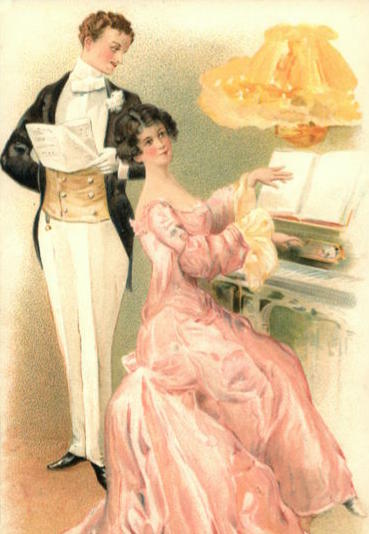
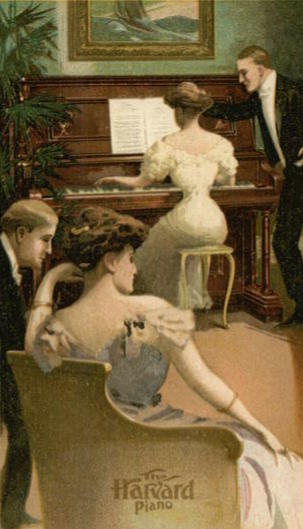
But a piano was an expensive luxury the majority of Americans could ill afford, despite ads like this one that invited buyers to purchase a piano (or organ) on credit.
For those who could not afford to have a piano in their home, there were plenty of other musical instruments to be had.
“Leisure Hours” by Hugo Breul.
Many ladies strummed guitars (Louise Morgan played one in A New Graft on the Family Tree), and some even learned to play banjo.
But one of the most popular musical instruments during Isabella’s lifetime was the autoharp.
Autoharps were extremely affordable—some styles were priced as low at $5.00.
Even better, they were easily portable. They went from home to school, from church to social functions—anywhere musical accompaniment was needed.
Autoharps were relatively easy to learn to play, and thanks to some astute publishing houses, sheet music for the autoharp—from hymns to operas to college songs—was plentiful and affordable.
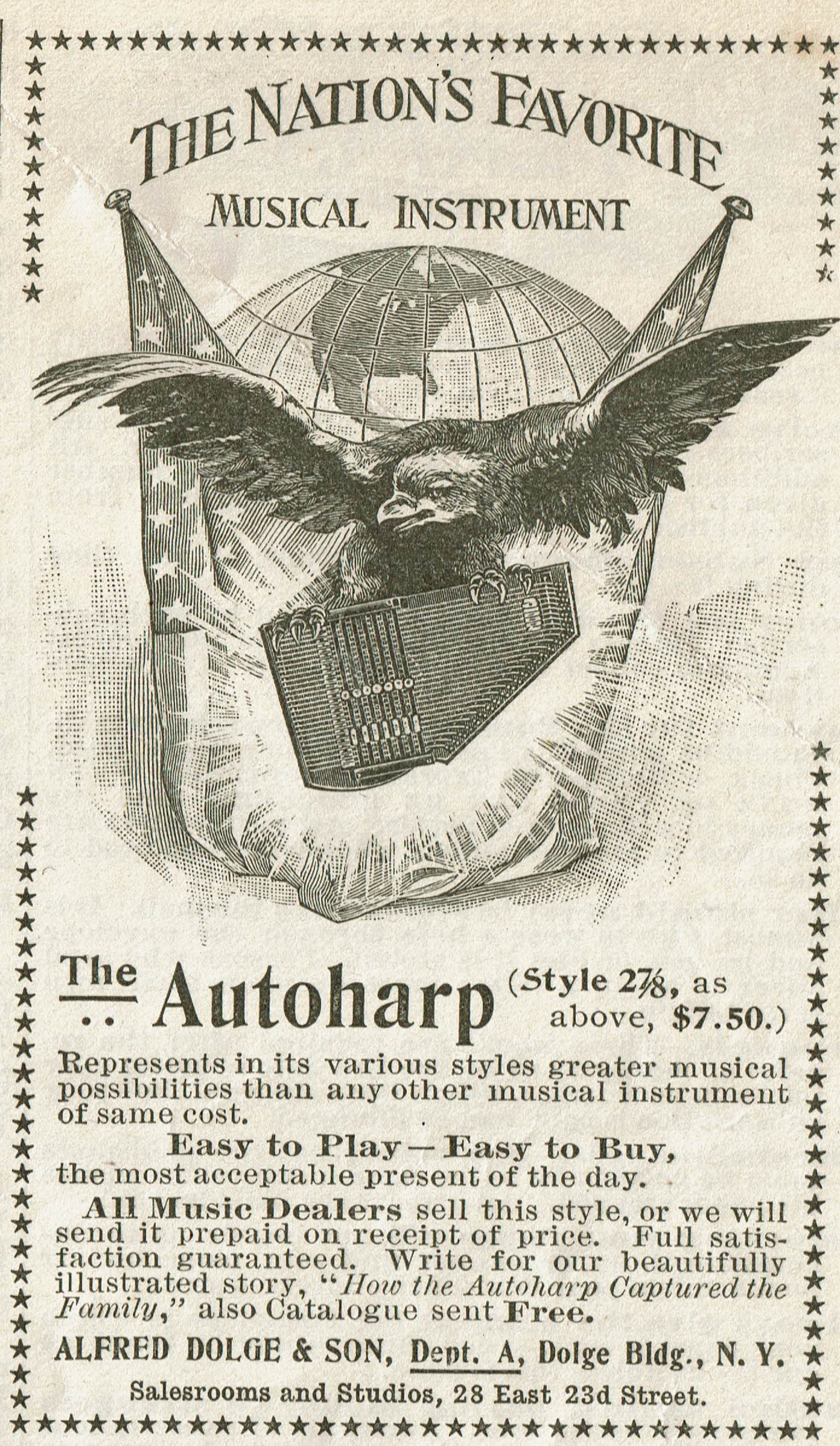
An 1896 newspaper ad for the Dolge Autoharp.
By 1899 manufacturers began advertising the autoharp as “America’s favorite instrument.”
Brothers making music on a banjolele and an autoharp (about 1910).
Autoharps remained popular for decades into the twentieth century. School teachers across the country used autoharps to introduce children to the basic principles of music and singing. And their distinctive sound became a mainstay in early country music recordings.
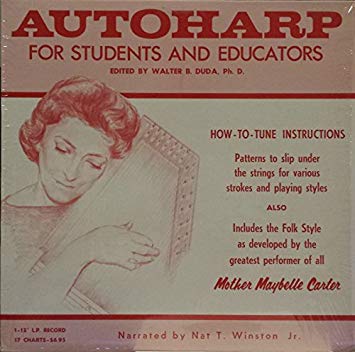
Autoharp for educators booklet, featuring an image of country artist Maybelle Carter on the cover.
Have you ever heard an autoharp played before? Have you ever played one yourself? Tell us about it!
Some of Isabella’s stories contain obvious themes or lessons she wanted to impart to readers.
The lesson in this month’s Pansy story is much more subtle. “Sadie’s Journey” first appeared in The Pansy magazine in 1893, and probably inspired many mothers to have earnest conversations with their children about the dangers of the outside world.
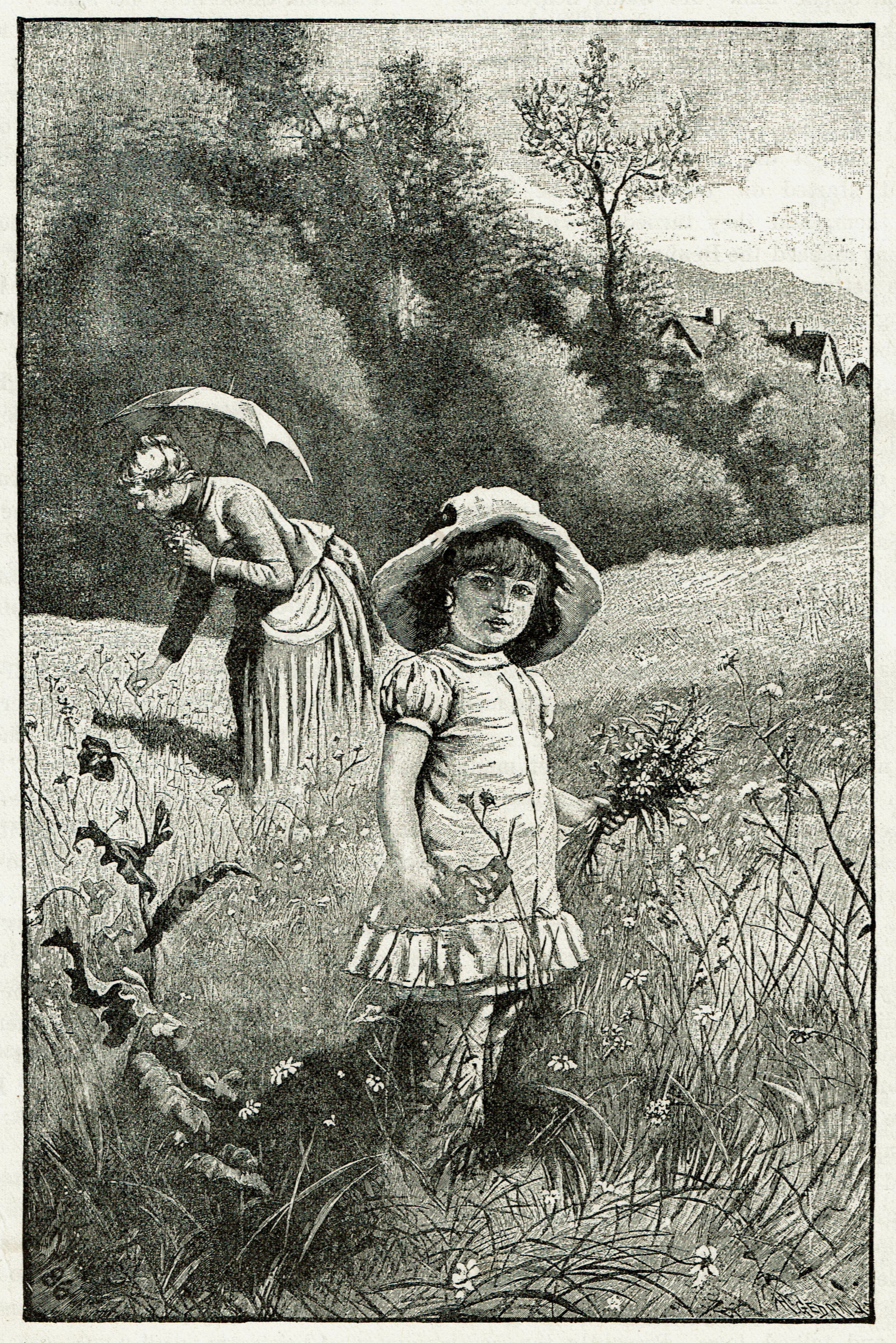
An added bonus: The story included a charming wood-cut illustration of Sadie, which you’ll see below at the end of Part I.
Part I
“It is so very warm,” said Aunt Sarah, stopping in her work of buttoning Sadie’s skirt to wipe the perspiration from her face. “Cannot Sadie have just this short-sleeved apron on, instead of a dress?”
“Why, it is very short, dear,” said Sadie’s mamma. “Think how she would look if anybody but ourselves saw her.”
“Nobody will,” returned Aunt Sarah. “It is too warm for people to come out here this afternoon, and she will stay this side of the gate, won’t you, Sadie?”
Sadie promptly promised, and the little muslin slip which now did duty as an apron was fastened to hide her pretty neck from the sun, leaving her arms bare; then she set her little old sun-hat on the back of her head, and proceeded to coaxing Aunt Louise to go out with her after “f’owers.”
“Louise is Sadie’s slave,” the other aunties said, laughing, as Sadie led her off in triumph; but they every one knew that they were slaves in the same way. Aunt Louise wandered on and on, beguiled by Sadie’s wishes. Several times she proposed going back to the house to wait until the sun dropped lower, but Sadie always wanted to go “just a weenie teeny bit further.” At last Aunt Louise said, with decision in her voice, “Now, pet, I really must go back. I cannot endure this heat any longer; I’m sure I wish I were only five, if it would give me as much energy as you have. You may stay out here by yourself, and pick all the ‘f’owers’ you want, only you won’t go out of the gate, will you? Remember you are not dressed to see people.”
“I’ll ’member,” said Sadie, and in a few minutes she was alone in the great lovely glen. No prettier spot within miles and miles could be found than the McMartins had chosen for their summer home. The house, a wide, old-fashioned rambling affair, although it was set on a hill, was almost hidden from view by great old trees; and before and behind it, and on either side, stretched the beautiful hills, and valleys, and trees, and flowers, and vines, and grasses, and all lovely things. People envied the McMartins this beautiful old-fashioned home. “So quiet,” they said, “and beautiful; it is like being in the depths of the country, yet they are only an hour’s ride from town.”
Left to herself, Sadie roved from flower to flower, going deeper into the glen every moment, until suddenly she turned and followed a winding path which she knew led in a round-about fashion to the lower gate. She had heard the sound of a hand-organ in the distance. The road from town was too hilly to tempt hand-organs in that direction very often, and Sadie felt that she could not afford to lose the treat. She thought of going for Aunt Louise to keep her company, but decided that she was too far from the house for that; the hand-organ might move on before she could get to it. She made all the speed she could over the winding path, and presently reached the lower gate, only to see the “music man” disappearing around the corner.
“He must be going to play for the Benhams,” said Sadie to herself. The Benhams were the McMartins’ nearest neighbors. They lived in the large house where the roads forked, about a quarter of a mile away. Sadie paused at the gate. She “’membered” her promise, but it was really going to be very hard to keep it. She peeped through the bars of the gate, and argued it out with herself.
“The reason Auntie did not want me to go outside the gate was because I wasn’t dressed to see people, but she wouldn’t mind a music man; music men never care how folks are dressed, and there isn’t a single anybody else to be seen on the road. I wouldn’t go all the way to the Benhams, ’course not! I’ll keep away back where folks can’t see me at all, and only listen to the music. That won’t be not keeping my pwomise, ’cause if peoples don’t see me they won’t care.”
Having reached this conclusion Sadie stood on tiptoe to unfasten the gate, and slipping through it walked briskly along the road toward the “music man.” He had seated himself by the side of the road to rest, and also to have a talk with a friend who appeared just then and sat down beside him. As Sadie neared the two she kept going slower, and wondering why the “music man” did not play his music. What if he should play a time just for her? Wouldn’t that be a wonderful thing to have happen?
But it did not happen. The two men had started on together before Sadie reached them, and they turned down a lane before they reached the Benhams’ grounds. So much the better; she could hear the music without seeing any people, for Sadie felt sure that no neighbors lived down this lane. On and on she trudged until her little feet were tired, and until she did not know where she was. The lane had led into a meadow, which the two men had crossed, she following; then from the meadow they slipped through a break in the fence, Sadie following, and crossed a long, sunny field, then struck into a wood which was cool and inviting, but there was no music. At last they stopped to rest again, and Sadie came very close to them, then stopped with a long-drawn sigh. If she only dared to ask the man to make some music just for her.
Some movement which the little feet made just then among the rustling twigs startled the men; they turned quickly and stared at her, then at each other.
“Halloo!” said the music man. “What is all this?”
“More than I know,” said the other. “She ain’t a spirit, is she, from t’other world?” Then they laughed in a way which half-frightened Sadie; she could not have told why, for she was not easily frightened.
“Halloo!” said the man again. “Where did you come from, little Miss?” Sadie had been brought up to answer questions politely, so she explained matters as well as she could.
“Here’s a lark,” said the music man; “she must belong to that big house on the hill.” And while Sadie looked up into the sky to see the “lark” the two men put their heads close together and talked low. Presently the man who had no music said to her, “Look here, young one, do you know your way home?”
“Not quite,” said Sadie timidly; for not finding the lark, she had looked about her and discovered that she was in a strange world, and did not know which way to turn.
“I should think not,” he said. “You’re a long ways from home, an awful long ways, and a dangerous ways. There’s bears in these woods, and snakes, and I don’t know what all. You needn’t be scared, though; if you’ll keep close to me, and don’t make no noise, I’ll see that you get home safe and sound.”
* * * *
In the wide old-fashioned hall of the McMartin home Aunt Louise fanned herself and told how warm it was out of doors, and how wonderful it was that little Sadie did not seem to feel it. Presently she roused from a ten minutes’ nap to say, “I wonder if I ought not to go for Sadie? She won’t wander beyond the grounds, will she?”
“Oh, no!” answered mamma and Aunt Sarah in the same breath. “She promised she wouldn’t go outside the gates.”
“Besides, the child isn’t dressed, you know,” added Aunt Annie. “She would know better than to go on the street in that rig.”
Ten, twenty minutes passed, a half-hour, an hour. Then mamma said, “I wonder at Sadie for staying out alone all this time. She is generally too fond of company for that.”
Then up rose Aunt Louise. “I am going in search of her,” she said. “Why, it is after five o’clock; I did not think it was so late.”
Up and down the winding paths she wandered, calling “Sadie,” “Baby,” “Pet,” all the sweet names which belonged to the child, and receiving no reply. Then came mamma and joined in the search, then the other aunties, and finally Uncle Wells himself; but no Sadie was to be found.
Picking f’owers.
.
Part II
Young Dr. Tremayne swung himself on to the train as it halted at Riverton. The hot day was over, and the air was quite chill. The doctor shivered a little as he took his seat, and told himself that a light overcoat would not be unpleasant. Then he wondered if he would find orders at his office which would take him out for the night, and decided to get a little nap while the train was running into the city. But he didn’t get it. Instead, he sat up straight and looked at a curious couple who were but two seats in front of him.
The man was a young fellow, hardly old enough to be called a man, and perhaps too ugly and shabby-looking to deserve that name; but on the seat beside him, sitting bolt upright and looking about her with half-frightened, half-defiant eyes, was a mouse of a girl, not dressed for the chilly evening; not dressed at all as one would expect a child to be who was in such company. She had on a little white slip, and a white sun hat. Her bare arms looked cold and uncomfortable, and her entire face expressed misery if ever a child’s did. The fellow tried to draw her toward him, and the child resisted. She was crying quietly, and once when the man bent over her and tried to say something, she shook herself, and said, “Let me be.” Then Dr. Tremayne, who had meantime quietly slipped into the next seat, heard him say distinctly:
“Look a-here, little Missy, if you behave yourself and do as I tell you, you won’t come to no harm; but if you make a fuss and get me into trouble, I’ll wallop you within an inch of your life, and you’ll be sorry for it as long as you live. Do you understand that?”
Whether she understood all the words or not, she was evidently frightened. She drew farther away from him, and shuddered, and choked back her sobs.
Dr. Tremayne leaned forward and touched the fellow’s arm. “Who have you there, my man?” he asked, nodding his head toward the child.
“It’s my sister’s girl,” he said quickly. “I found her out in the country; ran away from home, you see, and I’m taking her back.”
The little girl listened intently; she turned her head around so she could see the doctor’s face, then she spoke with eager haste:
“It isn’t true; I just went out of the lower gate to hear the music man, and I didn’t know just which road to go home; and he said he would take me home, and he isn’t. I don’t live on the cars.”
The man nodded his head in response to this story. “She followed a hand-organ, you see,” he said, “and got lost. Now she thinks she knows the way home better than I do; and she doesn’t want to get there, any way, ’cause she knows she will get whipped for running away.”
“I shan’t!” said the child, in a passion of grief and rage. “My mamma doesn’t whip me, and I didn’t run away. I just went down the road where nobody need see me, because I wasn’t dressed up, and you tooked me the wrong way. If I had only kept my pwomise!” With this the little girl’s heart utterly failed her, and she cried aloud.
“Shut up!” said the man sharply. “You needn’t bellow and get all the folks looking at you, just because you have been a bad girl, and run away, Your folks will tend to you when I get you home.”
“Do you live in town?” asked Dr. Tremayne, and a few minutes afterward he went to the rear end of the car and motioned the conductor to him. “There is something wrong up there, I fear,” he said, nodding toward the place where the man and child sat. “The fellow says she is his sister’s child, but I don’t believe it. It is hardly possible for a child with such a face to belong to a man of that stamp. The little one is evidently afraid of him; she says she went out of the gate to hear the ‘music man,’ and did not know the way back, and this man promised to take her home, and didn’t do it.”
“Is that so?” said the conductor. “There was a report of a child lost brought into the station just above Riverton. The country was in an uproar, the man said, but they seemed to think she was lost in the woods. She belonged to the people who have taken the old Singleton place. Do you know the spot?”
“Perfectly,” said Dr. Tremayne. “I believe this is the lost child, and the fellow has made off with her in the hope of securing a large reward.”
All right,” said the conductor; “pity to have him disappointed. We’ll help him to secure his reward, if that proves to be the case. Keep an eye on him, and if he undertakes to leave the train at the next station we’ll stop him; meantime I’ll send a message to Policeman Burns to be on hand when we get in town.”
Dr. Tremayne went back and seated himself behind the rough-looking man, who now began to watch him suspiciously.
“What is your name, my little girl?” he asked.
“Sadie,” said the child promptly.
“And whose little girl are you?”
“Mamma’s and papa’s, only now papa is away across the ocean, and I’m Uncle Wells’ little girl until he gets back. Oh, and I’m Aunt Sarah’s little girl, too, and Aunt Louise’s most of all, ’cause she’s the best auntie.”
“And do you live in the big city?”
“When the snow comes I do,” said Sadie; “but I live away out in the country now, where the glen is, you know, and the wiver. Don’t you know where our house is?” she asked, with a sudden pleading sound in her voice, “and couldn’t you take me home ’stead of this man, ’cause I like you best?”
The man laughed a coarse, hateful-sounding laugh. “I call that cool,” he said. “She’s the greatest young one to go on that you ever heard of; plays she’s Queen Victoria sometimes, you know, and she lives in all sorts of places, according to her notion. Here we are, young one,” he added, as the train whistled for the station. “Now you’ll know pretty soon what your mother thinks of your notions.”
“I thought you said she lived in the city?” said Dr. Tremayne. “This is Brierwood, two miles out.”
“I know, but we branch off here and wait for the accommodation that goes in at the other depot. Come on, quick! The train won’t wait for you more than a week.”
“No,” said Sadie firmly, resisting his attempts to pull her from the seat. “I don’t want to go with you; that isn’t the way home; I didn’t go on the cars to the music man’s. It is just through the woods; you don’t know the way, and you are a bad, naughty man. Won’t you take me home?”
This last sentence was spoken to Dr. Tremayne, who had risen and bent over the child, putting a protecting arm about her.
“You would better not wait for the accommodation tonight,” he said to the man, who was angrily pulling at Sadie’s dress. “It will not be along in more than an hour; you might better take an across-town omnibus than to keep a child waiting in this dress at the station. The evening is chilly.”
And at that moment the train, which had barely halted, sped on.
“There!” said the man, throwing himself back in his seat in great ill-humor. “Now we can’t get off. If I don’t make you pay for this night’s work I’ll know the reason.” This with a threatening shake of his head to Sadie; then to the doctor he said: “Seems to me you meddle with my business a good deal more than is necessary. Let the young one alone.”
“Oh, I’m keeping her warm,” said the doctor, as he wrapped his arms about her, Sadie clinging with all her strength. “The night is very chilly after such a warm day. Little people always take to me.”
“It’s precious little attention I ever pay to them,” said the man sullenly; “but I thought my sister would be howling if I didn’t bring this little plague back; and I’ve gone miles out of my way to do it.”
As the train steamed into the city depot he sprang to his feet again and reached out his arms for Sadie, who had dropped her head on Dr. Tremayne’s shoulder, and was lying perfectly still.
“Come along now,” he said, “and be quick about it.” But he felt at that moment a tap on his shoulder, and turned to meet the keen eyes of Policeman Burns, who had been for some seconds standing on the platform of the rear car, listening to the conductor’s story.
“Halloo, Jack!” he said to the man, who cowed before him. “I didn’t expect to meet you here. When did you adopt a sister? Just come with me, and I’ll give you a bed tonight.”
“Now, Doctor,” said the conductor, as they watched the ill-looking man go off with Policeman Burns, “you have a baby on your hands if she doesn’t prove to be the right one.”
“I’ll take my chances,” said the doctor, smiling, “and I thank you heartily for your help. Let me see, when is the next train for the Glen due? Shall I have time to get some sort of wrap for this little one?”
* * * *
It was Aunt Louise who was leaning over the garden fence two hours later when Dr. Tremayne came with swift strides down the road, Sadie carefully wrapped in a great woolly shawl sleeping peacefully in his arms. All the family, and all the neighbors for miles around, were scouring the country in search of the lost darling. As for Aunt Louise, she haunted the garden, though certainly there could be no hope of finding the child there; but it was there she had last been seen, and it seemed to the half-crazed auntie that if she hovered about the spot where she left the child, she would be more likely to see her again. What she said as Dr. Tremayne halted before her with his burden; how he told his story in few words; how she snatched the sleeping baby from him, almost smothering it with kisses, though Sadie clung sleepily to the doctor, and murmured: “I don’t want to;” how they sent the news far and wide, and had the doctor in the house to tell the wonderful and frightful and blessed story in detail; how they sat up until nearly morning listening, and talking, and crying, and laughing, and rejoicing, you must imagine, as there is not room to tell.
One queer question of Sadie’s you ought to hear. It was several weeks after it all happened. The family were gathered in the large, cheery parlor, and Dr. Tremayne, who had some way come to think of himself as one of the family, sat near Aunt Louise talking eagerly.
Suddenly Sadie turned from the young cousins with whom she was visiting, and ran over to her favorite auntie with her question.
“Aunt Louise, Willie says he guesses you are glad I got lost and stoled. You aren’t, are you?”
A perfect chorus of laughter greeted her, in the midst of which Sadie, wondering, begged for her answer; and Aunt Louise, hiding her blushing face with the child’s curls, said:
“I am glad you were found and brought back, darling.”
What did you think of “Sadie’s Journey”? Do you think Isabella was using the story to convey a specific lesson? Or do you think she wrote it simply to entertain children (and their mothers and aunts)?
Have you read Isabella’s novel, The Older Brother?
It’s the story of a young man named Lawrence Hammond. Just before his father died, Lawrence promised he would always care for his mother and younger brother and sister, just as his father did before him.
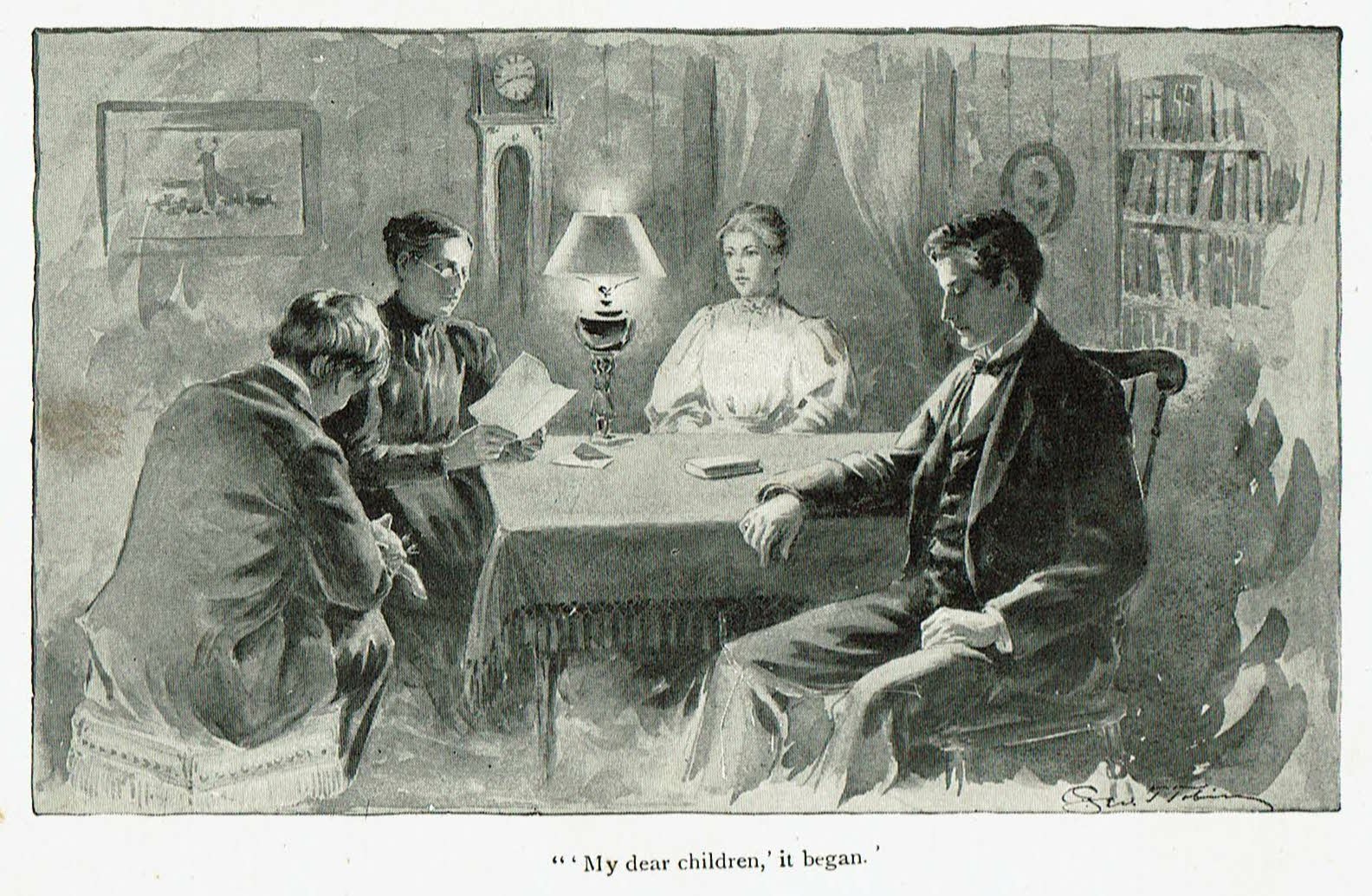
“My dear children,” it began.
But Lawrence had a dream. More than anything, he wanted a college education, but in the days following his father’s death, he put that dream on hold because his family needed him.
As time passed, Lawrence’s skill and hard work began pay off. The family farm began to prosper and it finally looked as though Lawrence’s dream of going to college just might become a reality.
Just then, though, the family’s needs called for another sacrifice.
Suddenly, Lawrence was forced to ask himself a difficult question:
Did he have the strength to once again postpone his own heart’s desire for the sake of the people he loves?
“How would you like to change places with me, Port?” He had tried to make his voice sound careless.
The Older Brother is a touching story of faith and family duty. An 1898 version of the novel is available on Amazon and other e-book retailers.
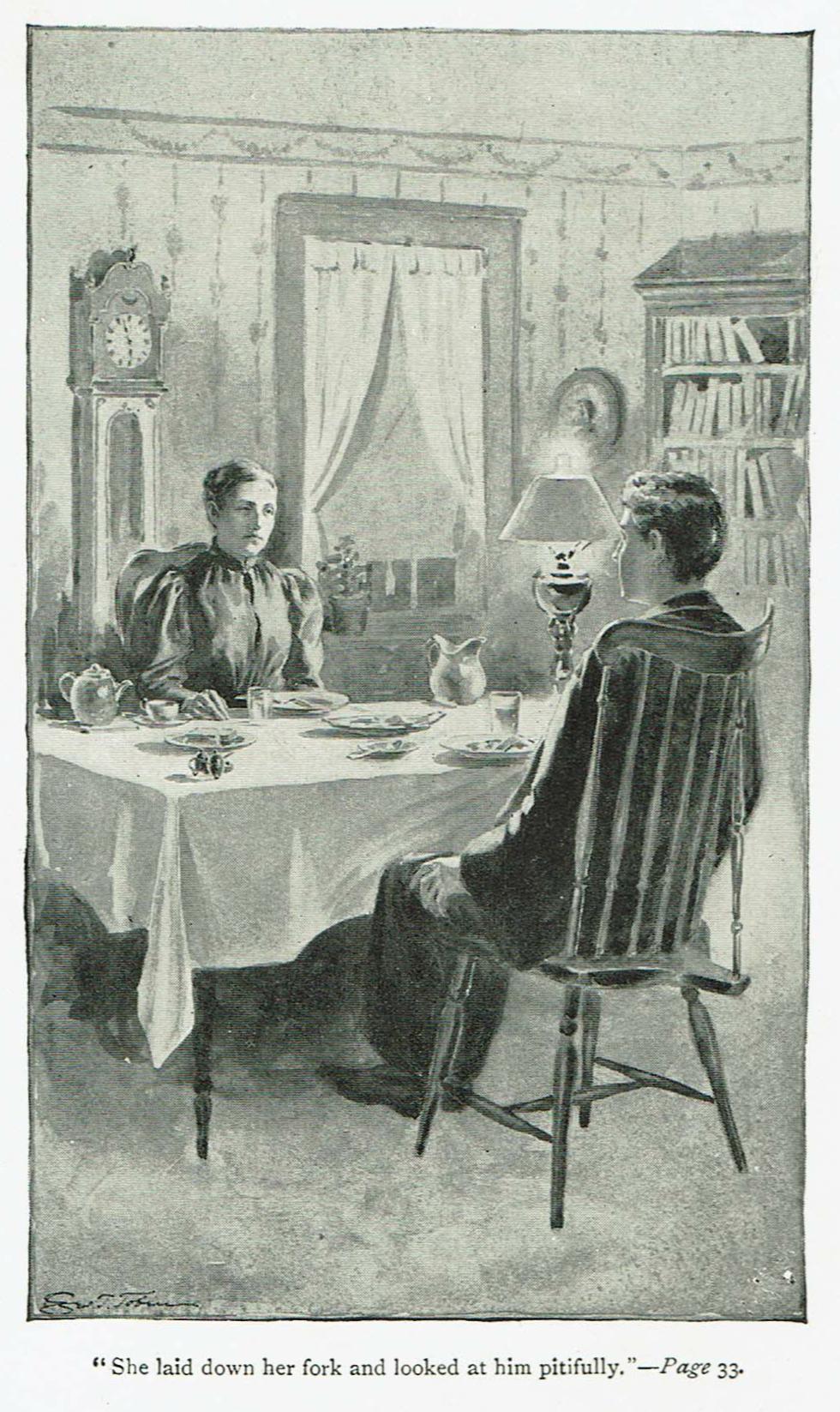
But we recently found an earlier version of the book, which included the lovely illustrations shared here.
“Engaged!” exclaimed Mamie. “How delightful! Now we shall have a wedding.”
The artist was George T. Tobin, who often worked in pencil and ink in his younger years.
His wonderful illustrations capture the essence of some of the key scenes in Isabella’s novel.
Have you read The Older Brother? What did you think of the story?
Did you think Lawrence was right to sacrifice his own aspirations for his family?
You can click on the Amazon stamp below to learn more about The Older Brother by Isabella Alden.
As the wife of a Presbyterian minister, Isabella moved houses fairly regularly, depending on when and where the church assigned her husband.
In the early 1890s Isabella, Ross, and their son Raymond were living in Washington D.C., where Ross was assistant pastor at Eastern Presbyterian Church.
Church listing in an 1892 issue of the Washington, D.C. Evening Star newspaper
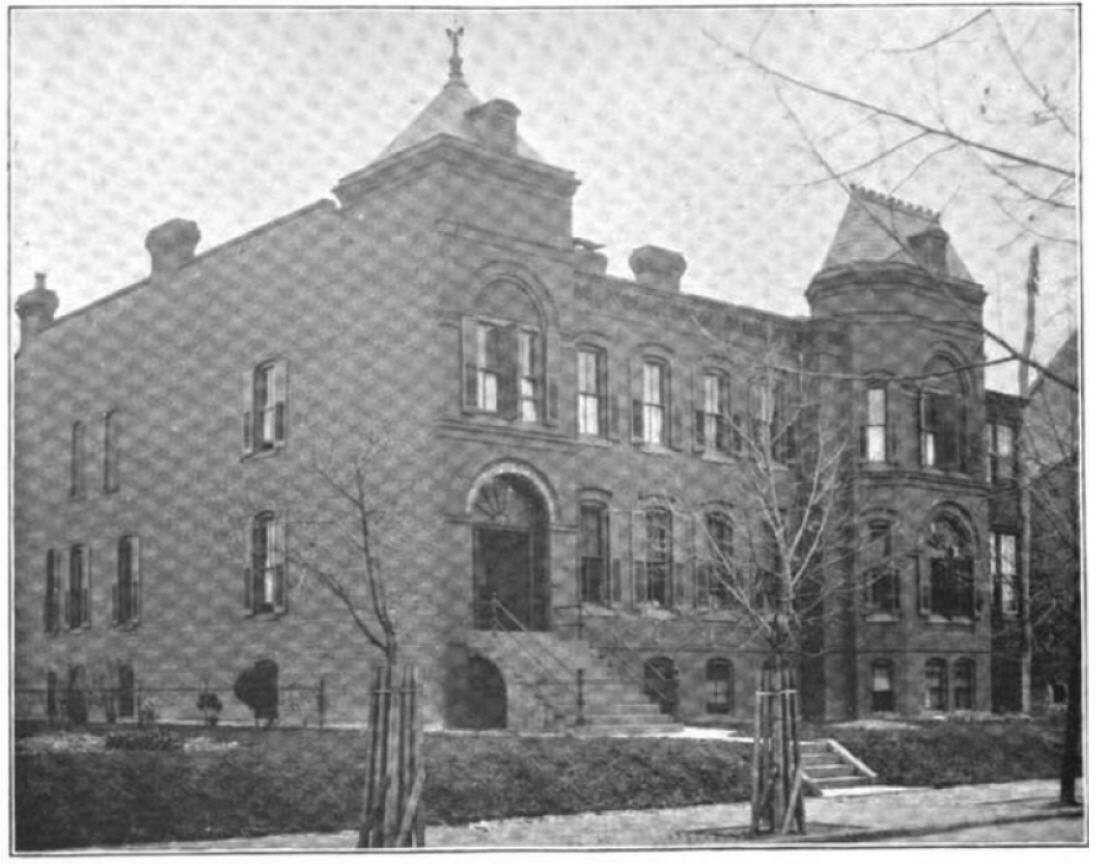
While living in Washington D.C., Isabella became involved with the Washington Hospital for Foundlings, which, at the time, had been in operation for about five years.
The Washington Hospital for Foundlings
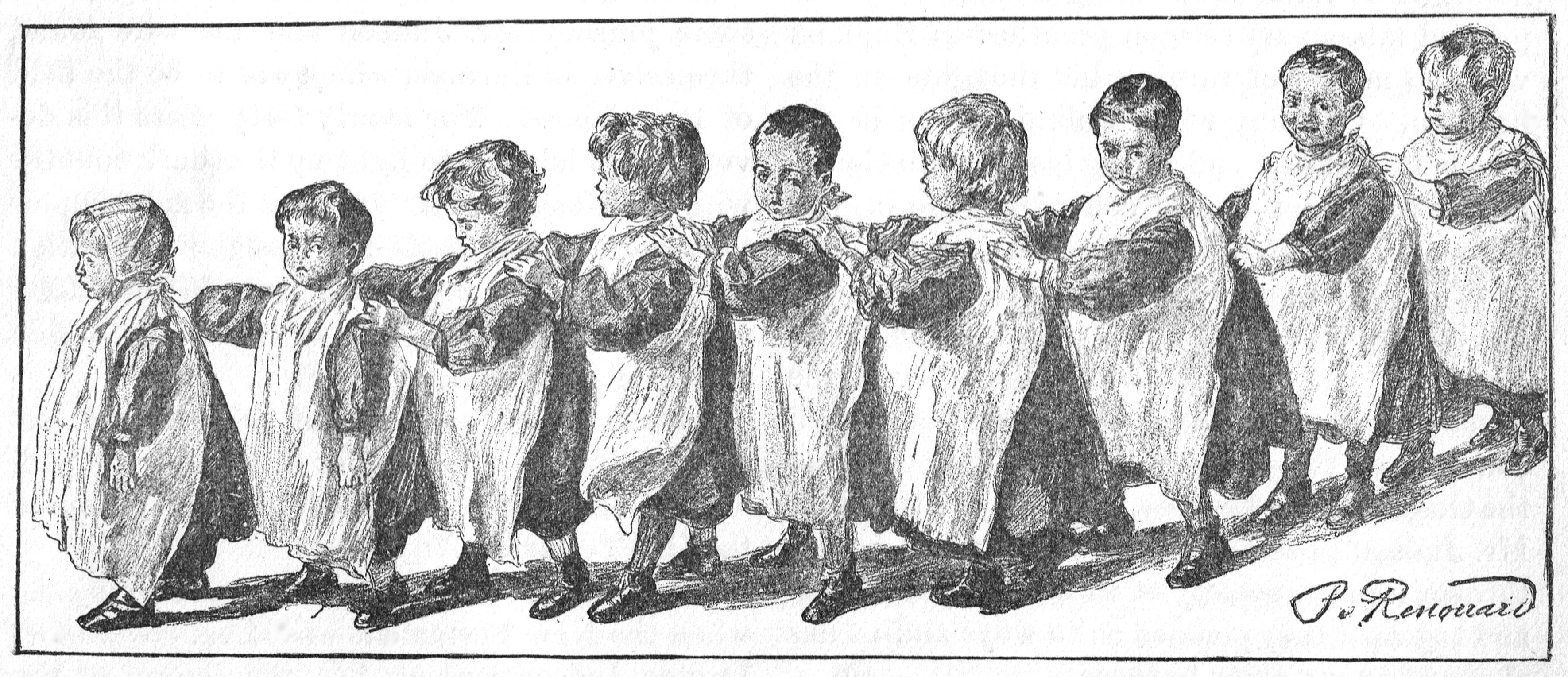
Knowing how much Isabella loved children, it’s not surprising she would work diligently on behalf of the foundling hospital; but Isabella didn’t stop there. She went one step further and got her “Blossoms” involved, too.
The foundling hospital playroom in 1905
“Blossoms” was the name Isabella called the children who subscribed to The Pansy Magazine, a weekly magazine Isabella edited for children. Children from around the world subscribed to the magazine, and when Isabella mentioned in an issue of the magazine that the foundling hospital was in need of funds, her little Blossoms went into action.
An illustration from The Pansy magazine, 1885.
For a period of about four years, children from around the world sent contributions to the hospital.
Their individual contributions were as large as a 25 cent-piece and as small as a 2-cent postage stamp. That doesn’t sound like a lot, but over time their total contributions amounted to $440.88.
That’s the equivalent of $13,783.00 in today’s money!
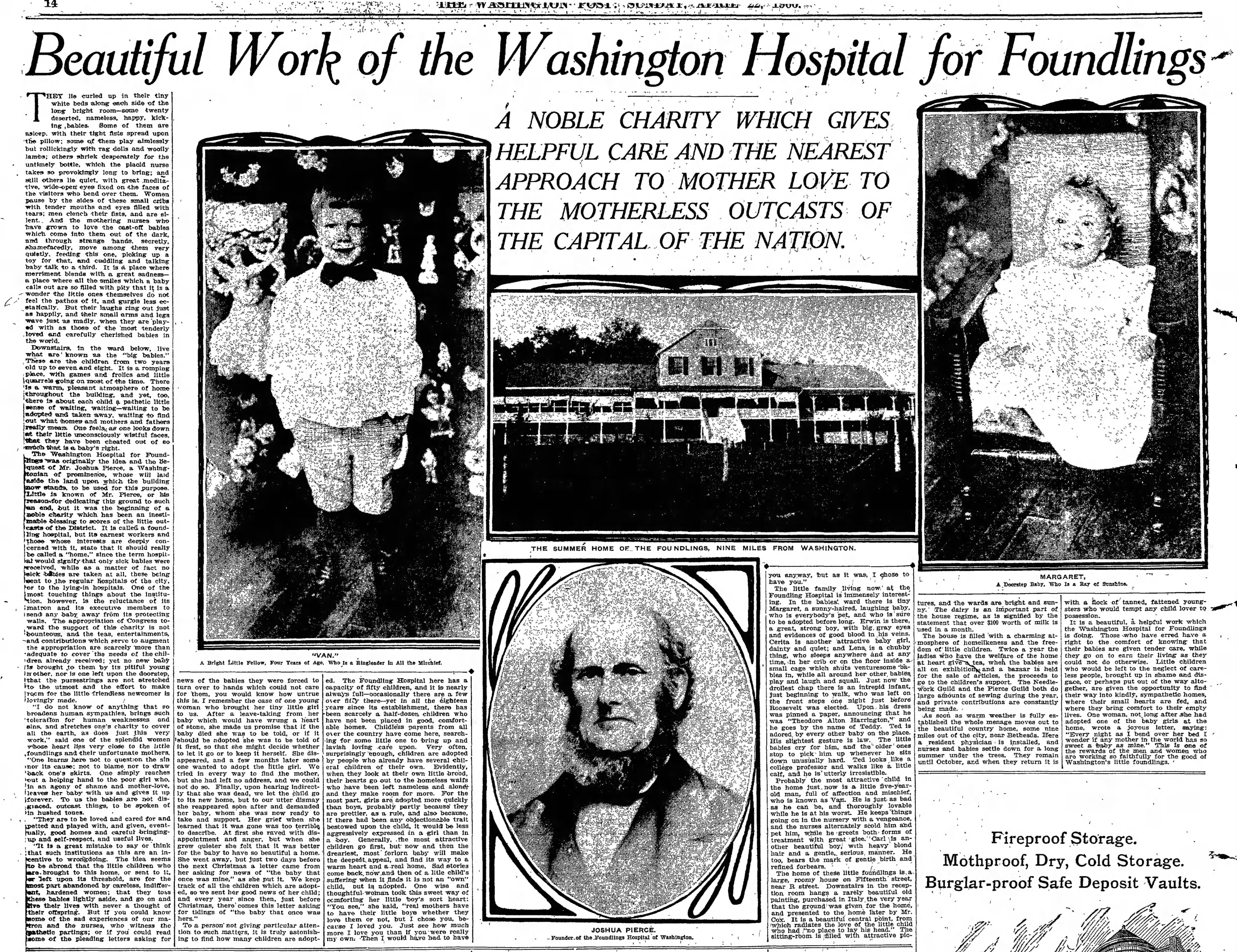
In return, Isabella wrote regular descriptions of her visits to the foundling hospital, which were published in the magazine. You can click on the following image to read one of Isabella’s accounts.
Click on this image to read one of Isabella’s reports from 1892.
When you stop to think how hard a child had to work to earn so much as a penny in the late 1800s, the children’s total contribution is astonishing; but they were such devoted readers of Isabella’s magazine, they never failed to answer her call for help.
Interestingly, around this time, Isabella and Ross adopted a baby girl, whom they named Frances. From Federal Census records we know Frances was born in Washington D.C. around 1892, the same time period in which Isabella was regularly involved with the foundling hospital. It’s possible Isabella came across Frances during the course of one of her visits and fell in love with the infant Frances to such a degree she decided to take her home.
Reviews and giveaways for Christian fiction and sweet, clean fiction. Bringing readers information on great stories and connecting authors with their readers.


















 Isabella Alden