Isabella’s Critic, Friend, and Helper

Isabella had a special bond with her father, Isaac Macdonald. She might even have been what we would call in today’s world a “daddy’s girl.” But the truth was that her father was undoubtedly the single most influential person in her life when she was growing up.

In his younger years Isaac Macdonald earned his living as a farmer, but with a wife and six children to support, he left farming and established a box-making business in Gloversville, New York.

Many years later, after Isabella became a best-selling author, a Gloversville newspaper wrote a brief article about her early years in that town. The writer of the article briefly mentioned her father:

Isaac was a box maker, and if his boxes are any index to his character, he was staunch and worthy. He lies in our pleasant cemetery, but there are boxes still in use made by his faithful hands.

It’s a brief paragraph, but with its use of the words character, worthy, and faithful, we get a glimpse of Isaac Macdonald’s reputation among his neighbors and friends.

In the many stories and anecdotes Isabella shared about her father, she paints a picture of a loving man of immense faith.

In his home circle, he ably fulfilled his role as provider, protector, leader and teacher. He was eternally patient with his children and grandchildren; and he instilled in them an unbreakable faith in God and His Word.

Most of all, Isaac valued honesty, a fact Isabella illustrated in a story that took place when she was an adult and her young niece Minie was staying at the family home.

Isabella’s sister Julia teasingly told little Minie that she was going to serve butterflies and caterpillars for tea, which greatly shocked and upset the little girl. Julia, however, thought Minie’s reaction was funny; she told the story to the family later that day “with many descriptions of Minie’s shocked tones and looks, and much laughter.”

Only Isaac looked grave. When the laughter was over he said to Julia:

“How many years do you suppose it will be before Minie will discover that you haven’t told her the truth?”

“The truth!” said Julia, in surprise. “Why, of course it wasn’t truth. It was only in fun, you know. Whoever supposed that the absurd little monkey would believe it?” and she laughed again at the thought.

“But, you see, she did believe it,” Isaac said. “She believed it because you told it to her. She has great faith in your word, you see. I would be very careful not to give that faith a shock if I were you.”

“Why, dear me!” Julia said, with puzzled face; “I never thought about its being anything serious. Don’t you think it is right to say anything in fun to a child?”

“I don’t think it is right to say anything but the truth to anyone,” Isaac said, emphatically; “least of all to a child.”

Isabella never forgot the lesson.

Isaac’s teachings with Isabella extended beyond those that would shape her character. In an interview with The Ladies Home Journal, Isabella said that it was her father who taught her to write at an early age.

He was the first to encourage her to keep a diary; and he also taught her to take notes during their minister’s sermons on Sunday morning. Together they would review her notes, and he encouraged her to use her own imagination to expand on them and weave stories from the lessons and bits of wisdom she had recorded.

That early discipline soon bore fruit. When she was about seven or eight years old Isabella wrote a story about the family clock (read more about her story here).

Her story was published in the local newspaper (coincidentally, the newspaper was owned by her sister Mary’s husband and little Minie’s father). Isaac insisted that the story be published under a pseudonym, saying:

“We don’t wish anyone to know that you wrote it, and so we will sign it, Pansy, for pansy means tender and pleasant thoughts, and you have given me some thoughts that are tender and pleasant.”

This incident, too, offers a glimpse into Isaac Macdonald’s character, and his desire to protect his daughter from public scrutiny and the hazards of fame.

Thereafter, Isabella was often writing or telling a story. Her books Four Girls at Chautauqua and Ester Ried made “Pansy” a household name around the world. It was while she was writing Ester Ried that her father became ill.

Isabella mentioned that when she was young, she always hoped she would never have to tend to anyone who was sick; she thought it would be “so dreadful to look at anybody knowing that he was soon to die.”

But she found it made a difference who the sick person was, and how he felt about death himself. Her father, she knew, wasn’t afraid of dying. He used to say to her:

“It is nice to have my children all about me, and it seems sad sometimes that I must go and leave them—sad for them, I mean. But what a blessed thing it will be when we all get up there where none of us will have to go away any more. It will be vacation there all the time, won’t it?”

When her father fell ill in the summer of 1870, Isabella spent as much time with him as she could, and often read to him from his Bible. She described it as a large-print Bible, all full of leaves turned down and verses marked.

She said there was no need to ask which verse was his favorite; he had left “marks of his love” all through the book.

One afternoon when Isabella was with him, she read verses here and there as her eye caught his different markings:

“And they shall see his face, and his name shall be in their foreheads.

“And there shall be no night there.”

“And the ransomed of the Lord shall return and come to Zion with Songs, and everlasting joy shall be upon their heads.”

And there was this verse:

“Fear not, for I have redeemed thee. I have called thee by thy name, thou art mine.”

She knew that verse was among the dearest to her father in the entire Bible. (Read the story behind the verse here.)

During that summer of Isaac Macdonald’s illness, Isabella was writing Ester Ried.

An early cover for Ester Ried

Her father, as always, was interested in her writing progress; but he showed particular interest in the story of Ester Ried. He told Isabella that “he prayed that it might be a blessing to some young life.” Sadly, he passed away on July 26, 1870, before Isabella finished writing the novel.

Isabella later wrote:

“It was while the tears were gathering thick in my eyes as I looked out upon his grave that I wrote the last chapter of the book, feeling that my closest, strongest friend and critic, and wisest helper had gone from me.”

Isaac Macdonald’s grave marker.

Isaac Macdonald’s prayer for Ester Ried was answered over and over again. Ester Ried was a great success and proved to be a blessing to generations of girls and young women who read it.

Isabella’s love for her father was evidenced in the books she wrote. She used him as the model for many of her male characters who were wise in judgment and strong in faith.

You’ll catch glimpses of him in Dr. Deane in Wanted and in Dr. Everett in Workers Together; an Endless Chain.

You can read more about the special bond between Isabella and her father Isaac Macdonald in these posts:

Isabella’s Early Writings

A Teachable Moment

Julia’s Occupation

A Woman’s Voice

A New Brother

For Day-School Teachers

As a teacher of young children for over forty years, Isabella Alden knew the power and influence teachers had over the hearts and minds of their students.

Here’s a story Isabella told about that very topic, in a column she wrote for The Christian Endeavor World magazine in 1901:

There is a teacher of my acquaintance, a cultivated young woman, who would be shocked and offended if she knew that I did not like to invite her familiarly to my home lest my little daughter should learn objectionable speech from her.

In the schoolroom, I am told, she guards her speech with care, and is thoroughly alive to the indiscretions of her pupils. But she frequents a home where two of her scholars live, being the intimate friend of their grown-up sister. Here she indulges in “Goodness!” and “My gracious!” on occasion, speaks of her pupils as “the kids,” and talks about “swell” neighborhoods and people, or mentions certain persons whose peculiarities of speech or manner make her “tired,” and in various other ways offends against good taste and true refinement.

And the young people in that home, who admire their pretty and vivacious teacher, are steadily copying not her school-room elegance, but her offhand vulgarities. Is that too strong a word?

Keeping in mind the fact that words like “swell” and “kids” were considered ill-bred slang in Isabella’s time, how would you answer her question?

Do you think the young teacher should not have used vulgar words?

Do you think Isabella was being too critical of the young teacher for using such words in front of her impressionable students?

Do you think, in general, teachers should be careful of their conduct inside as well as outside the classroom?

Tom Randolph’s Vision

Isabella’s novel The Randolphs is set in New York City. The book follows the fortunes of the Randolph siblings, all young adults who are each trying to find happiness and their places in the world.

In the story, Tom Randolph—after facing some early trouble in his own life because of alcohol—is a devoted “temperance man.”

In a conversation with his brother-in-law, Mr. Harper, Tom mentions how hard it is for young men to stay away from alcohol because of “how many places in this city it can be found.”

“Only think of the fact that, however much you might desire it, you could not find a hotel to stop at, throughout the length and breadth of this whole city, where liquor is not sold.”

“Is that actually so?” Mr. Harper said, in astonishment.

“It is really so; and not only that, but the large boarding-houses, where most of the working men who are without homes of their own have to gather, have side tables where they retail beer and whiskey. Temptation is spread on every hand, not only for those who want it fearfully by reason of an already formed taste, but for those who, because of no better place in which to spend their leisure time, are compelled to look on until they too follow the general example.”

“And your remedy is?” Mr. Harper asked, inquiringly; and there was a respectful tone in his voice. He was learning something from his young brother-in-law.

“Why, if I had the purse, I would have a temperance hotel.”

Tom’s idea of opening a hotel that didn’t serve alcohol wasn’t a new one. Temperance hotels were very popular in Great Britain and Europe, but they were almost unheard of in America.

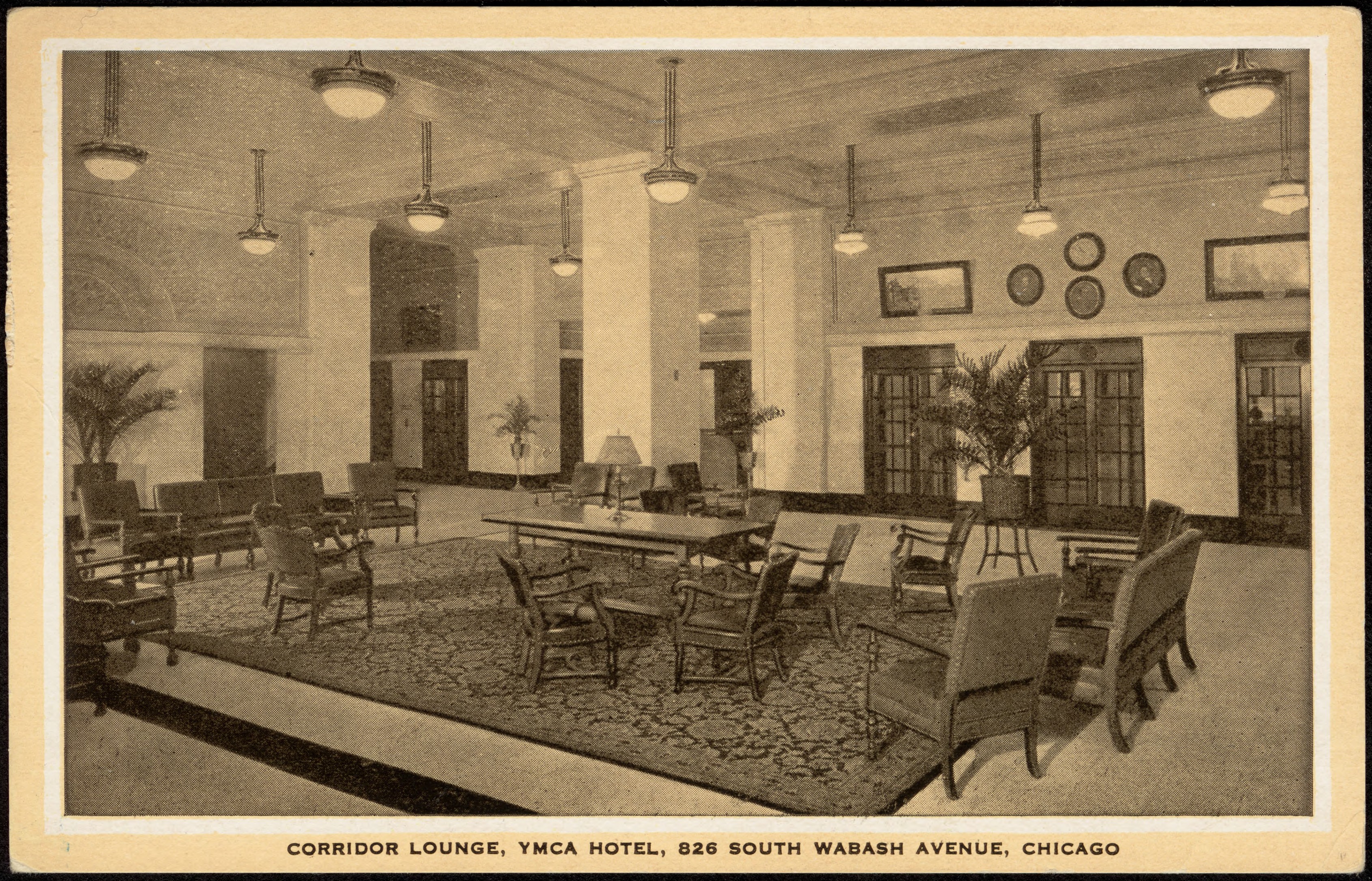
In 1867 the Young Men’s Christian Association (YMCA) began operating an alcohol-free hotel for young men in Chicago. Besides lodgings, the Chicago YMCA offered a parlor and a library for members’ use.

The lounge in a YMCA Chicago branch location, about 1923.

Unfortunately, the Chicago YMCA burned down only a year after it opened. Though a new building was constructed in its place, it was built without any sleeping rooms.

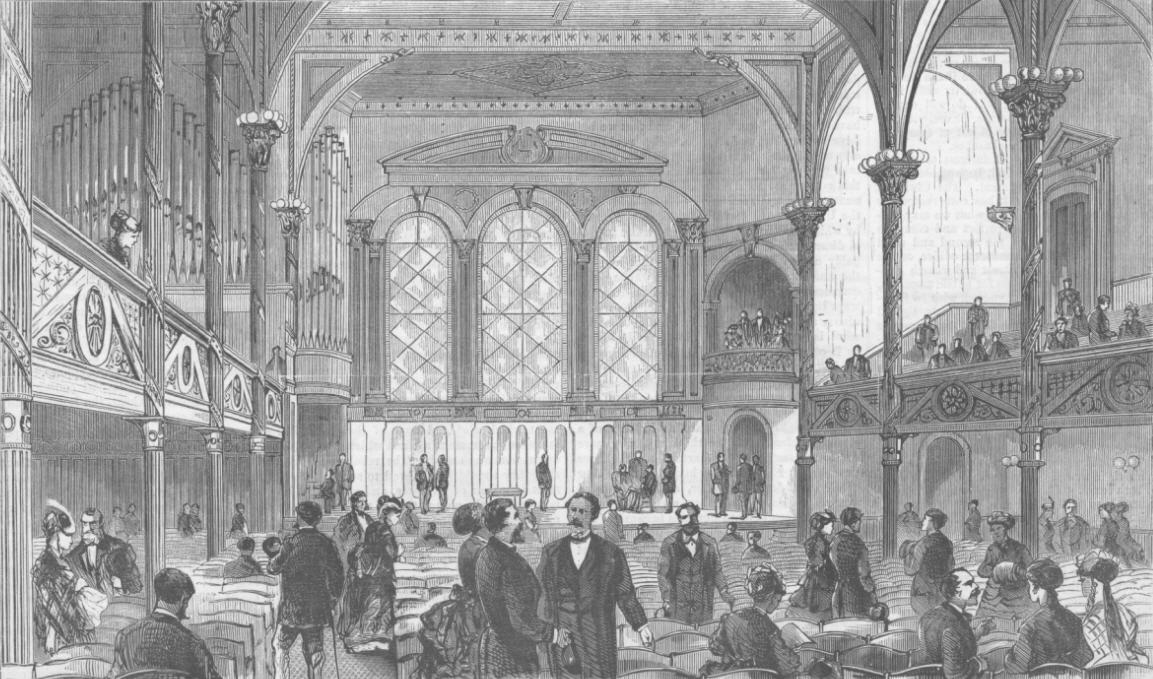
In 1869—the same year Isabella wrote The Randolphs—a new YMCA opened in New York City with great fanfare. It housed art studios, a large library, and a lecture hall that could seat 1,500 people.

Artist’s rendering of the lecture room in the New York YMCA. From Harper’s Weekly magazine, 1869.

Members of the New York Y could use the services of a nearby gymnasium; and they could take advantage of a steady schedule of activities designed to offer young men wholesome entertainment. But, again, the New York YMCA was built without sleeping rooms.

The library at the New York YMCA. From Harper’s Weekly magazine, 1869.

Isabella would have been aware of the YMCA and the great growth the organization had enjoyed in the U.S.A. Newspapers across the country regularly printed articles about the Y, and the programs it offer young men that promoted a healthy spirit, mind, and body.

The billiard room in the Hoboken, New Jersey YMCA in 1918.

Most YMCAs had extensive libraries, billiard rooms, and well-appointed cafeterias.

Cafeteria in the Omaha, Nebraska YMCA, 1916.

They were places where young men could socialize and have fun, make friends and learn new skills, all in a “vice-free” environment.

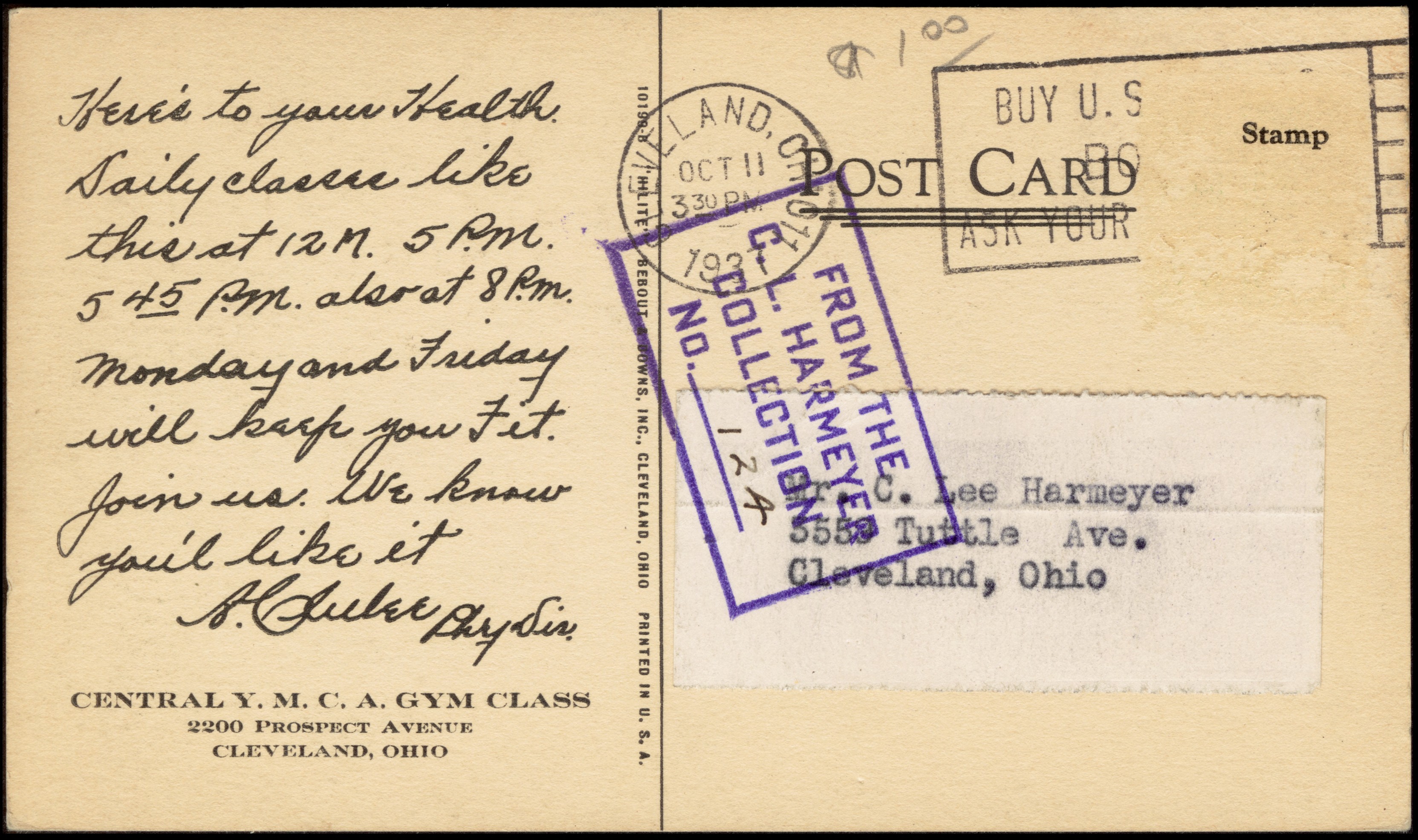
YMCAs often reached out to young men, encouraging them to join and take advantage of the Y’s programs. This is a postcard the YMCA in Cleveland Ohio used in 1910:

On the reverse side is a message of invitation to a young man to join one of the Y’s health classes:

Isabella knew, however, that despite all the wonderful activities and programs the YMCA offered, the Y’s influence over young men ceased the moment they left left the premises. Some young men went home to good families; but far too many went to hotels or boarding houses where liquor was served. That’s one reason she liked the idea of temperance hotels.

A fitness class at the Cleveland, Ohio YMCA in 1910.

In the late 1880s—the same time period when Isabella wrote The Randolphs—the YMCA began putting up a few new buildings that included residence arrangements.

Some of the accommodations were similar to small hotel-like rooms with bathrooms down the hall. Others had dormitories with rows of beds in a single, large room.

A corner of a dormitory style room in the Troy, New York YMCA, 1907.

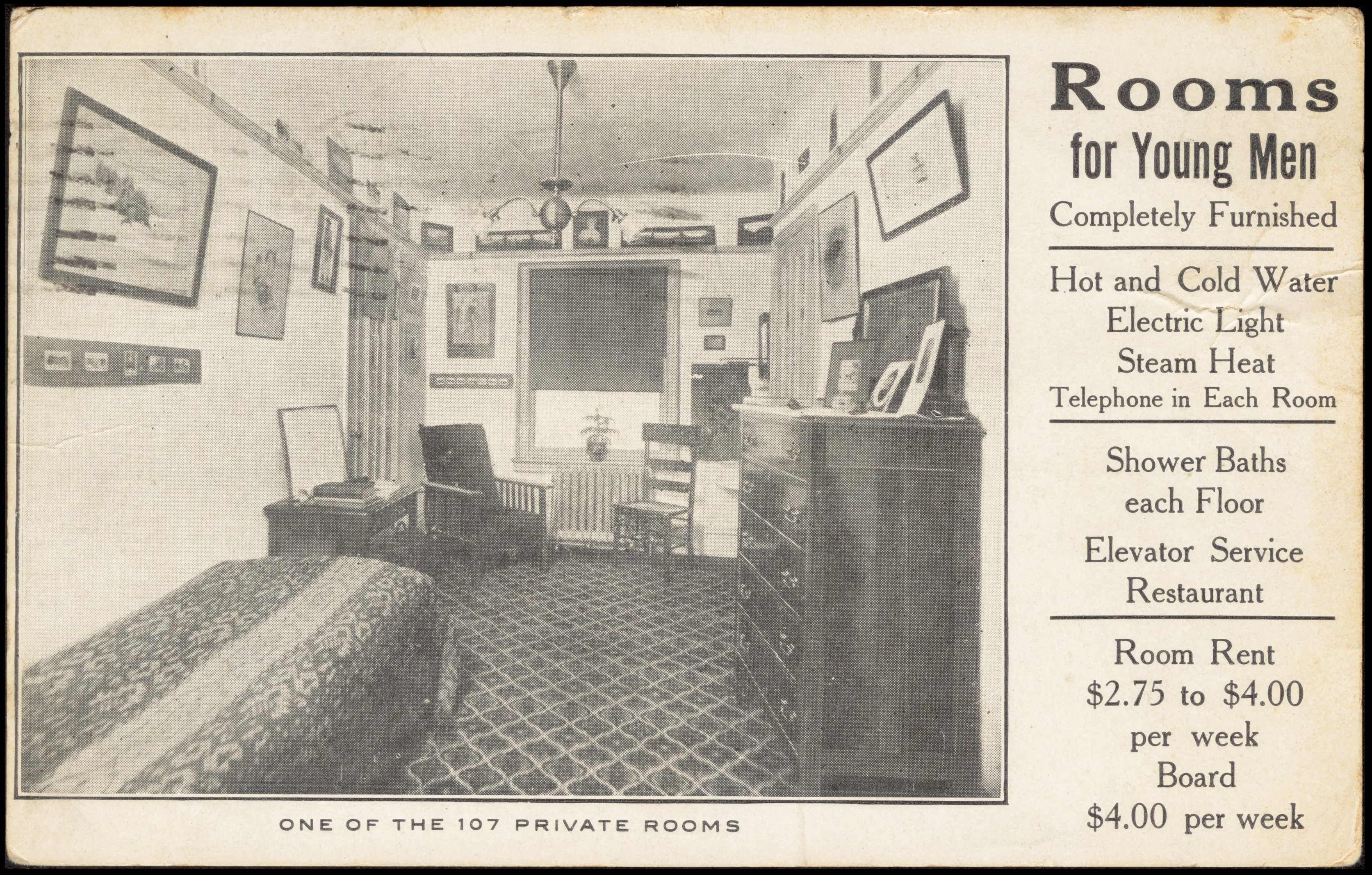
The YMCA advertised their lodgings as safe and affordable. They were serviceable places to sleep, but they were far from first-class accommodations.

In The Randolphs, Tom Randolph thought it was possible to create a better Christian-based hotel.

Tom envisioned a temperance hotel that had . . .

“. . . carpets, and mirrors, and sofas, and brilliant gaslights, and the glitter of silver, and everything else that is used to entice and entrap. I would have such a place as would offer not a shadow of excuse to any living man for not stopping at the Temperance House, except the one honest reason that he wanted to go where there was rum.”

As Tom said in the story, the best way to fight Satan was with “his own weapons—if they do really belong to him.” If Satan used bright gaslights and glittering glassware to tempt men to drink in saloons, Tom would use the same to entice men into his temperance hotel.

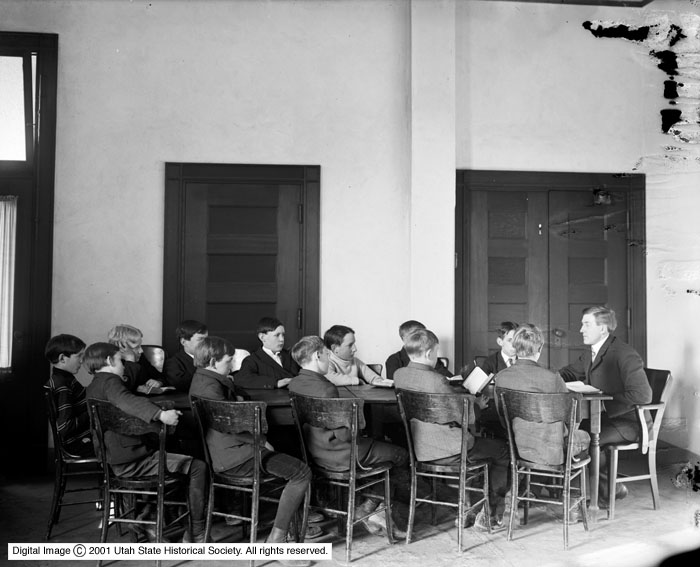
Bible study at a Utah YMCA in 1906.

He thought a nice hotel that offered first-class rooms and excellent service was the very thing needed to interest young men; and if the sleeping rooms were affordably priced, there would be no excuse for men to stay at any other hotel unless they specifically wanted to be able to drink alcohol on the premises.

The lobby of the YMCA in Amsterdam, New York, 1910.

Tom was to have his wish. In the novel, Tom was able to secure the financial backing he needed to buy an old New York City hotel and remodel it. Tom’s adventures in opening and operating the hotel soon include other members of his family, and their involvement helps drive the rest of the story.

An invitation to attend the opening of new rooms at the Carbondale, Pennsylvania YMCA.

Isabella was something of a visionary when she wrote The Randolphs. She foresaw the need for temperance hotels, just as she foresaw the welcome such establishments would receive from communities.

From The Asbury Park Press (New Jersey), April 9, 1906.

By the turn of the century the idea of first-class temperance hotels began to catch on in America. Some communities, like the seaside resort town of Asbury Park, New Jersey, openly invited temperance hotels to open in their town.

From The Daily Notes, Canonsburg, Pennsylvania, December 22, 1906.

The YMCA recognized the need, too. The organization had always offered first-class entertainment for its members, but in the 1900s they began upgrading their residence accommodations. Newer YMCAs had residential rooms that were more spacious and home-like (although they still couldn’t be described as “luxurious”).

This 1908 trade card from the Brooklyn New York YMCA pictured a home-like single room.

In 1912 the Boston YMCA began construction on their flagship location in Boston.

The Boston YMCA, 1915.

The building was so large, it covered almost an entire city block on Huntington Avenue. It offered men extensive classes on a range of subjects, including engineering and science. Its health education and body-building programs were the first in the nation. And its residential floors provided plenty of dormitory style sleeping accommodations for young men.

When Tom Randolph opened his temperance hotel in The Randolphs, he named the place Randolph House. Before he opened the doors for business, he ensured Randolph House was consecrated with prayer.

And he did one other thing: he remodeled the old ballroom that was part of the previous hotel. He did the work himself and kept the work secret, until he showed his sister Helen what he had done.

“What is all this for?” she asked, gazing up and down the room with satisfied eyes. The beauty and the refinement displayed here actually rested her, she was such a lover of beautiful things, especially of things that meant wealth and cultured taste and leisure to enjoy.  

Then Tom unveiled the sign he intended to hang at the entrance to the remodeled ballroom:

Young Men’s Christian Association Rooms.

Only then did he reveal his plan to start a branch of the YMCA at Randolph House, where young Christian men could pray, and socialize, and study their Bibles together.

In The Randolphs Isabella gave us a glimpse into her own dreams and ideals of what a first-class Christian temperance hotel might look like . . . and what it could accomplish in the lives of young men.

You can find out more about Isabella’s novel The Randolphs by click on the book cover.


A New Free Read!

As the editor and principal contributor to The Pansy magazine, Isabella had many opportunities to reach children and teens with a message of Christ’s love.

Stories, poems and novels were her vehicles for teaching young readers about salvation, forgiveness, and honesty. Isabella especially used the magazine to show children what it meant to walk with Jesus in their everyday lives.

Today’s story—from an 1895 issue of The Pansy—teaches young readers about the impact one act of kindness can have on a young girl.

Choose the way you want to read the story:


.

Angela’s Temptation

It was a very warm morning, and the basement kitchen in which Angela had been at work, was dark and hot. Her work was by no means done; the floor must be scrubbed, and everything in and about the kitchen put into perfect order, and the dishes were not all washed. Yet Angela stood in the middle of the room, her cheeks very red, and a look almost of despair in her beautiful Italian eyes, as she gazed at the fragments of a handsome cut-glass pitcher which lay at her feet. That pitcher she knew was very much prized by Miss Ethel, Mrs. Parker’s only daughter; and whatever Miss Ethel liked was doubly dear to her mother’s heart. It was only this morning that Angela had received a caution to handle it carefully, and here it lay in a dozen pieces!

She could not have told how it happened. She had remembered the caution given her, and had rinsed and dried the pitcher with the utmost care, and was climbing to the top shelf to set it away. At that moment a gust of wind had blown one of the closet doors against her elbow, and so startled her that she almost lost her balance, and then the pitcher somehow had escaped from her grasp.

Poor Angela! Perhaps you cannot think how bitter was her temptation. As quickly as thought can travel, she was back in her Italian home, leaning against one of the tall pillars of Madame Carara’s workroom, watching the kettle which hung over the fire, and polishing •the elegant fruit plates, and doing more dreaming than anything else. It was very warm, she remembered, and she was bare-footed, and wore nothing but her loose blouse and skirt; and had the sleeves pushed up above her elbow, and sat thinking, what if she were the mistress of this beautiful home, instead of the little kitchen girl whose duty it was to wait on all the other servants, and do anything that they did not like to do? If she were the mistress, she would wear, she thought, a white silk dress trimmed with diamonds and lace, and would order her gondola to be made ready, and would float about on the lovely green and gold and purple water, just as long as she pleased; for dinner she would have—and then she had jumped up quickly, hearing Rosa’s call, and had forgotten that she had a plate on her lap, and it had smashed itself!

Angela believed that she would never forget that morning. There had been no chance to hide the mischief; if there had been, she would not have told of it for the world; but Rosa was upon her even before she could gather up the tell-tale pieces; then, oh, how Angela had been scolded! Yes, and whipped! The Italian lady with whom she lived was not above raising her own strong arm to punish Angela. Her poor head and ears and neck had tingled and ached all day from the blows which they received. But worse than that, Angela was not allowed to go to the great fete which was held for two days, and to which she was to go that afternoon. Instead, she spent the long bright afternoon shut up in her room, weeping bitterly.

That was a year ago; but every detail of the day was as vivid to her mind this July morning as though she had just lived through it. Many things had happened since. She had crossed the great ocean, and come to America to live, and was a Sunday-school scholar, and a Junior Christian Endeavor member—A large girl for that society, older than the most; but they had made room for her and been good and kind, and Angela loved them.

But what hard fate followed her that her troubles must come so near to holidays? Tomorrow would be the fourth of July, the American fete day, as Angela called it; and tomorrow afternoon they, the Juniors, were to go on the cars out to the Superintendent’s lovely home, and have games on the lawn, and tea in the summer house, and ice cream and fireworks in the evening! And she was to go with the rest. Mrs. Parker had planned a new white dress for her, with pink ribbons to match her eyes, Miss Ethel said, though surely her eyes were not pink! In the way of all this beauty lay a mountain, in the shape of a broken pitcher.

Do you begin to understand Angela’s temptation? To be sure there was no Rosa to spy out her trouble. Cook was away for the day, and Mrs. Parker and Miss Ethel would not be downstairs until nearly lunch time. Nothing would be easier than to hide out of sight forever the broken pieces, and let Mrs. Parker suppose the pitcher safe on the top shelf where it was usually kept. If only Miss Ethel had not wanted to send cream in it this morning to that sick girl, it would be there now! Couldn’t she say nothing about it until after the Fourth-of-July fete? Only until then; after that she would be willing to tell the whole story, and take the hardest whipping any girl could receive.

She walked the floor and cried, and wrung her hands in her intense Italian fashion, but she did not resolve to carry out this plan. What was in the way? Why, as I told you, she was a Junior Endeavorer, Despite the fact that she had been only a year in this country, and spoke our language in a broken fashion which made some of the girls laugh, and found everything about her very new and strange, she had taken to her heart the pledge of the Juniors, and meant to keep it if she could. Moreover, the very night she was received as an active member, she walked home behind some of the large girls and heard their talk. There had been an Italian boy received at the same time, into the older society. One of the girls in speaking of it said, “I think he ought to have waited until he understood things better. Those Italians are not trustworthy people; father says it is all but impossible for them to tell the truth.”

Then Miss Ethel had said, “Oh, I don’t think so! I feel almost certain that our Angela is truthful, and would be, even though she were tempted.”

Angela’s face had glowed, in the darkness, with joy and pride over those words. This July morning she thought of them, and they finally settled for her the question of concealment. It was a dreadful trial; it was to her like giving up everything, for the time being, but she would do it.

A very red-cheeked, swollen-eyed girl knocked presently at Mrs. Parker’s door and was invited in. The kitchen work was all neatly done now, and Angela had taken up her heavy cross and gone upstairs. With eyes downcast and lips that quivered, she told her woeful tale. Silence for a minute, then Mrs. Parker said:

“Very well, Angela; I am sorry, of course; but I am glad you came directly to me with it, instead of leaving me to find it out for myself, as some might have done. Next time you will be more careful and close the door, so that the wind cannot cause you trouble. If you have finished in the kitchen, you may take these letters to the post-box, and stop at the corner and order some berries for luncheon.”

Could she believe her ears? She was not to be whipped, nor scolded, nor shut up in her room, nor given just a crust of bread to eat! None of these things. Instead, she went out on her errands, and returned, and was treated quite as usual.

Never was a happier heart than Angela’s. It was actually pleasant to do right; one felt so glad over it. Yes, she could give up the fete, even, and be glad that she had told. Had not Mrs. Parker commended her?

In the evening, as she was going upstairs, Mrs. Parker said something about the basket she would need the next day for flowers. Angela stopped and turned, her great eyes looking larger than usual.

“Ma’am,” she said, “for flowers?”

“Why, yes, child, don’t you remember that you are each invited to bring a little basket for flowers, and roots that you can plant?”

“Oh, but, ma’am, I am not to go! Surely I am not to go!”

Mrs. Parker looked bewildered. “Why not?” she asked. “I thought you wanted of all things to go.”

“Oh, yes, ma’am, yes, indeed! But you forget the pitcher.”

“The idea!” said Ethel, before her mother could speak. “Did you suppose we would keep you away from the lawn party because you had an accident and broke a dish?”

“Mother,” said Ethel the next day, as they watched Angela making an eager dash down the street, arrayed in her white dress with pink ribbons, “the child must have had a very hard life before she came to this country. Fancy being whipped and fed on crusts and water, and not allowed to go anywhere, because she broke a plate! I wonder if all Italians are cruel?”

“The Italians do not know Christ,” said Mrs. Parker. “It is acquaintance with Him which makes people patient, and forgiving, and long suffering.”

“But all people who are not Christians are not unreasonable and cruel!”

“Oh, no; no, indeed! Some are very kind-hearted. But have you never wondered how much their surroundings and education in a Christian land, and the influence of Christian fathers and grandfathers had to do with their kind heartedness? In other words, we have Jesus Christ to thank for much that is not directly recognized as his work.”


Have a happy 4th of July celebration!