God is Greater Than

In Isabella’s early days of teaching Sunday school, the blackboard was an innovation. In her books, Isabella often wrote about how intimidating the blackboard was for many teachers, and some refused to use it.

That’s what happened in her 1878 novel Links in Rebecca’s Life. In the story, a young woman named Almina had the charge of teaching young children their Sunday-school lesson, but she refused to use a blackboard:

“It is quite the fashion to rave over them … but I won’t have one. What could I do with it? I don’t know how to draw, and as for making lines and marks and dots … I am not going to make an idiot of myself. What’s the use?”

Isabella saw things differently. With inspiration from her old Chautauqua friend Frank Beard (creator of “Chalk Talks”), Isabella embraced the blackboard as a teaching tool, especially for her youngest students who were just learning to read.

Of course, not all Sunday-school teachers had Frank Beard for a friend and guide. And not all teachers had a talent for drawing and diagramming.

Publications like The Sunday School Times recognized that, and published “Blackboard Hints” in many issues of their magazine, showing teachers that simple lettered blackboard illustrations could be just as effective:

It was Isabella’s opinion that any lesson could be better taught by the use of a blackboard or a slate.

“Children are invariably more impressed with what grows into being before their eyes then with what is brought in a completed form before them,” she said.

In her Sunday school lessons, Isabella used pictures and objects whenever she could to illustrate her lessons, but she liked the blackboard better.

“I never attempt elaborate drawings. In the first place, I cannot draw anything. In the second place, but I would not if I could, in a Sunday school room. There is not time. The barest outline is all you can spare time for in all that you need. A blackboard used constantly throughout the lesson — a mark for this one, a dot for that, a crooked line for a river, and oval for a lake — that is better for an [children’s] class than a careful summing up of the lesson at the close.”

So Isabella often began her lessons by putting a dot or a simple symbol on the blackboard, just to get the attention of everyone in her class—at least until they found out what that mark was for.

“If I need such a dot or mark or line as the most mischievous and troublesome [child] there can make for me, I have won him as a rule for that day.”

You can learn more about Frank Beard and his “Chalk Talks” by clicking here.
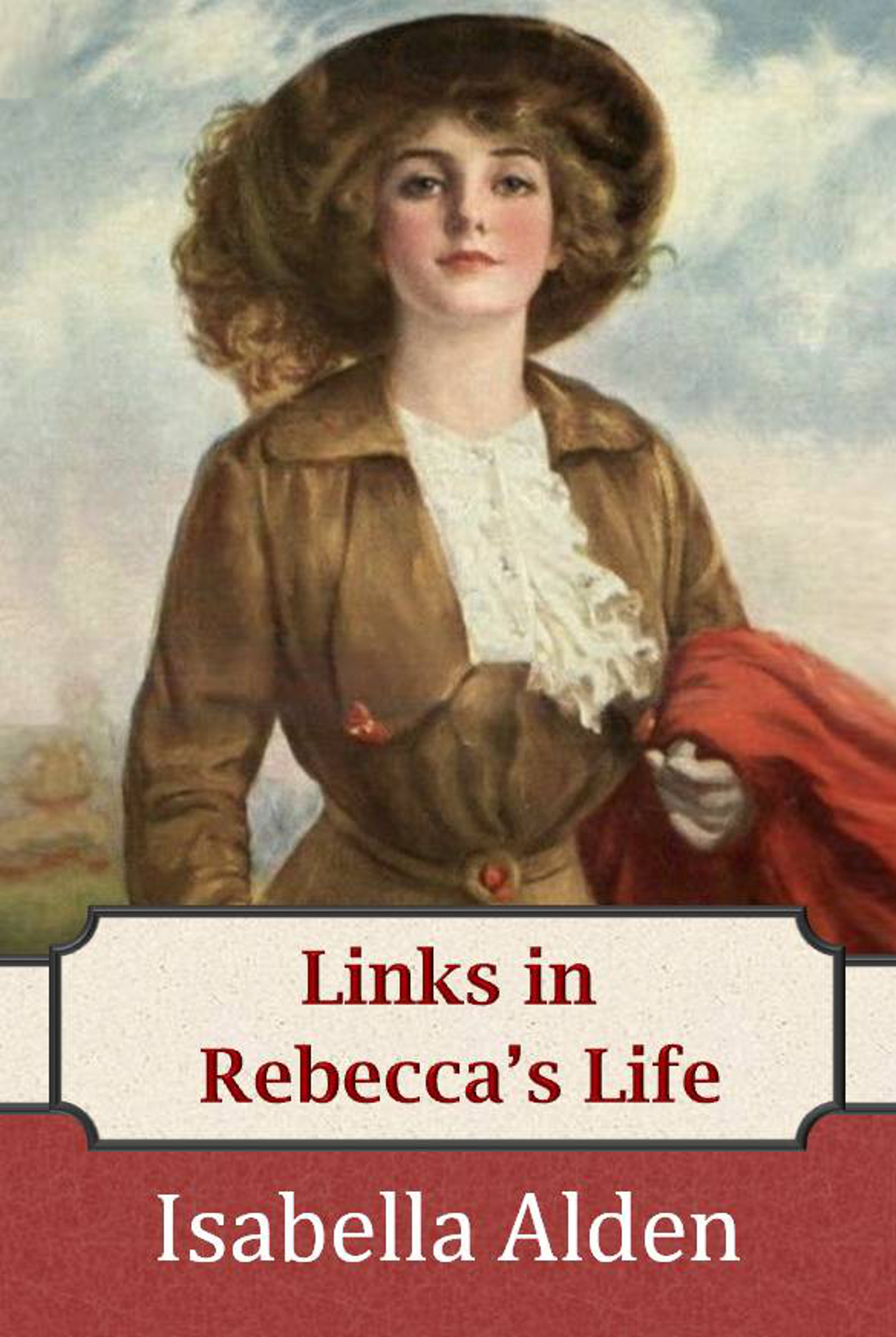
You can read Isabella’s novel Links in Rebecca’s Life for only 99 cents! Choose your favorite e-book retailer. (Your purchase from The Pansy Shop helps support this blog.)

Pansy’s Favorite Author: Amos R. Wells

Isabella Alden was one busy lady! In addition to writing novels and short stories, she wrote Sunday school lessons for teachers, and edited The Pansy magazine for children.

Along the way, she also wrote articles for many different Christian publications, including the monthly magazine Christian Endeavor World. Her good friend Amos R. Wells was the long-time editor of Christian Endeavor World, and through their mutual commitment to both the magazine and the Christian Endeavor movement, Isabella and Amos became good friends.

Isabella’s friend and fellow author, Amos R. Wells in 1901 at the age of 39.

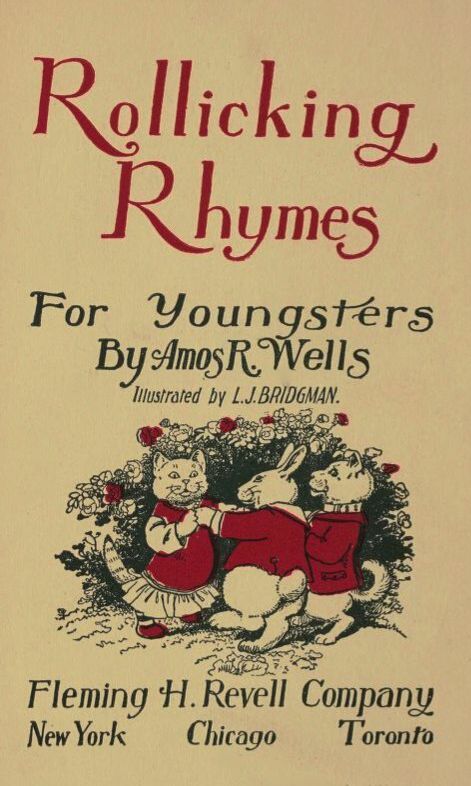
Their friendship was strong enough to withstand a good bit of teasing. In 1902 Amos published a new book of poems for children, titled Rollicking Rhymes for Youngsters.

Isabella promptly obtained a copy of the book and wrote a delightful tongue-in-cheek review , which was published in American newspapers on December 18, 1902:

Dear Mr. Wells:

I owe you a grudge; you have robbed me of an entire morning, and of no end of pocket money! Yesterday, just as I was seated in my study, all conditions favorable for work, the mail brought to me a copy of your latest book, “Rollicking Rhymes for Youngsters.”

I meant only to look at the covers and the type, and wait for leisure; but I took just a peep at the first poem and indulged in a laugh over a droll picture or two, then “Carlo” caught me, and we went together, “over the fields in the sunny weather.” On the way I met the “little laddie of a very prying mind” and—you know the rest.

It is the old story; somebody tempted me, and I fell. How could I remember that the morning was going, and the typewriter waiting, and the editor scolding? I never stopped till I reached the suggestive lines, “Two full hours ago, believe me, was this glorious day begun.” Alas for me, the morning was gone!

How delightful in you to write that which the children and their elders can enjoy together, not one whit the less because, sandwiched all throughout the fun, are charming little lessons that will sink deep into young hearts, and bear fruit. How cruel in you to write a book which a million weary mothers will have to read, and re-read and read again?”

Yours sincerely,
      Isabella Macdonald Alden.

Amos Wells probably had a good laugh over Isabella’s clever “mock review” of his new book, and Isabella probably enjoyed the chance to support her friend and fellow author (and indulge in some good-natured teasing at the same time).

You can read Amos Well’s book, Rollicking Rhymes for Youngsters and see if you agree with Isabella’s review. Click here to read the e-book version on Archive.org.

You can also read many of Amos’ other books online. Like Isabella, he was a prolific writer and published more than 60 titles during his lifetime. And like Isabella, he had a passion for properly educating the men and women who taught Christian Sunday-school lessons; he wrote many books, pamphlets, and articles on the topic. Click here to read some of Amos’ other titles.