
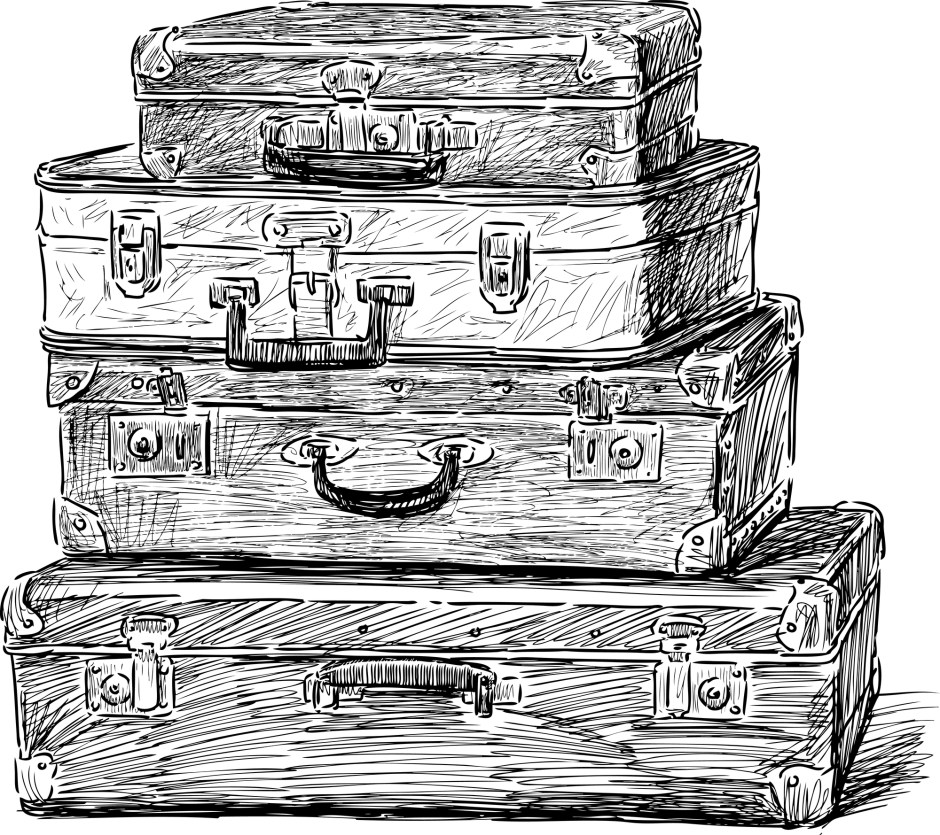
As a minister’s wife, Isabella knew a thing or two about thrift. She knew how to prepare nutritious and economical meals, how to decorate a home on a barely-there budget, and how to create useful household items from everyday materials.
She also admired those traits in others, and shared this anecdote in an 1897 magazine article she wrote:
I will tell you a little incident connected with the lives of two girl acquaintances of mine.
They belonged decidedly to the work-a-day world, and something unusual had come into their lives in the form of an opportunity for a short journey.
They met one evening to talk the matter over.
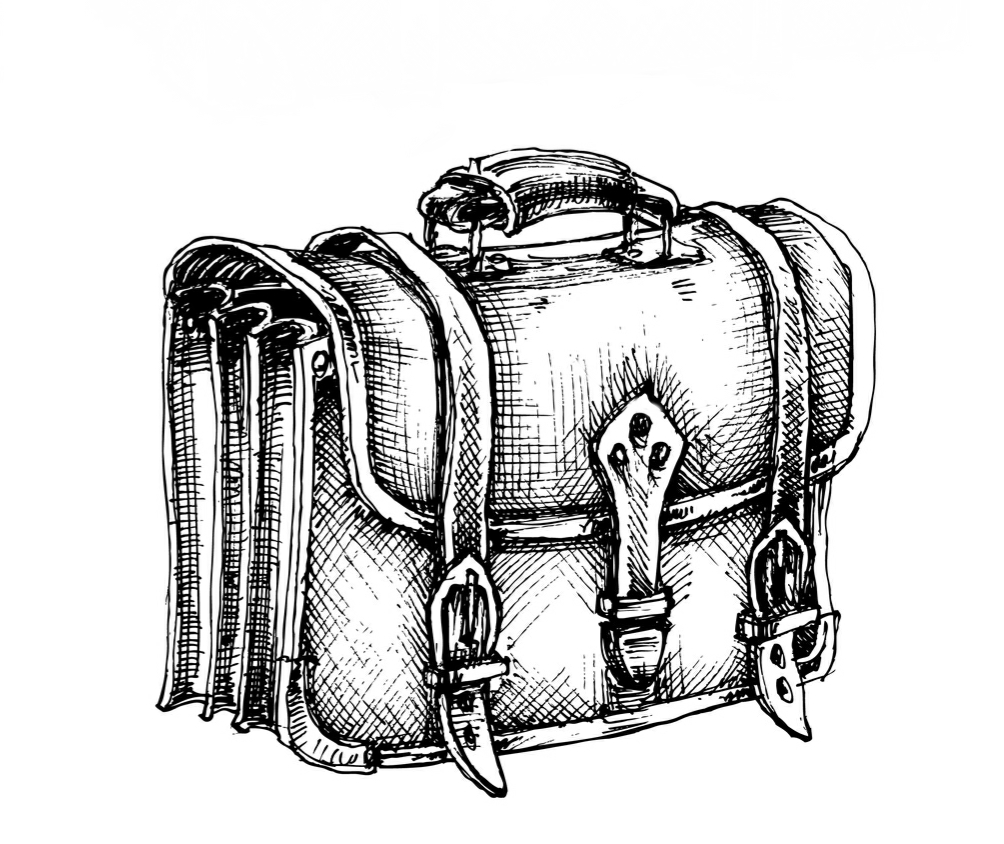
“Each pleasure hath its poison,” quoted one. “Mine comes in the shape of having nothing in which to pack my voluminous wardrobe. There is not a valise owned in our family, except an old carpetbag affair that looks as if Noah’s wife used it. And even that isn’t available. Tom must needs take it.”
Mary, who was to be her companion in travel, regarded her thoughtfully.
“It is queer that our perplexities should be the same,” she said. “Only there is no satchel of any sort in our family. I brought away my belongings in an old family trunk so large that it was a question, for a time, whether I had not better set up housekeeping in it, if I could have afforded ground-rent.”

Then the girl who had complained of the satchel looked remorseful and sympathetic. What were old-fashioned satchels, when one had father and mother and Tom?
“Never mind!” she said cheerily. “We can do our things up in newspapers. It won’t take a very large one to hold mine.”
We did not see them again until two days afterwards, when we met at the train. She of the “carpetbag” came first. Her bundle was characteristic of her, and awkwardly wound about with cord unnecessarily heavy. It was not wrapped in newspaper, it is true; but the brown paper was too stiff. It refused to listen to coaxing fingers, and crackled a good deal.
“I don’t know how to tie up bundles,” its owner said merrily, “and I did this in an awful hurry. I thought I was late. Hasn’t Mary come yet? Oh, here she is. Why, Mary Sheldon!”
The exclamation evidently belonged to Mary’s dress-suit case. That was what it looked like. A neat, trim valise, holding evidently quite a wardrobe, yet so compact and of such shape that it was easy to carry.
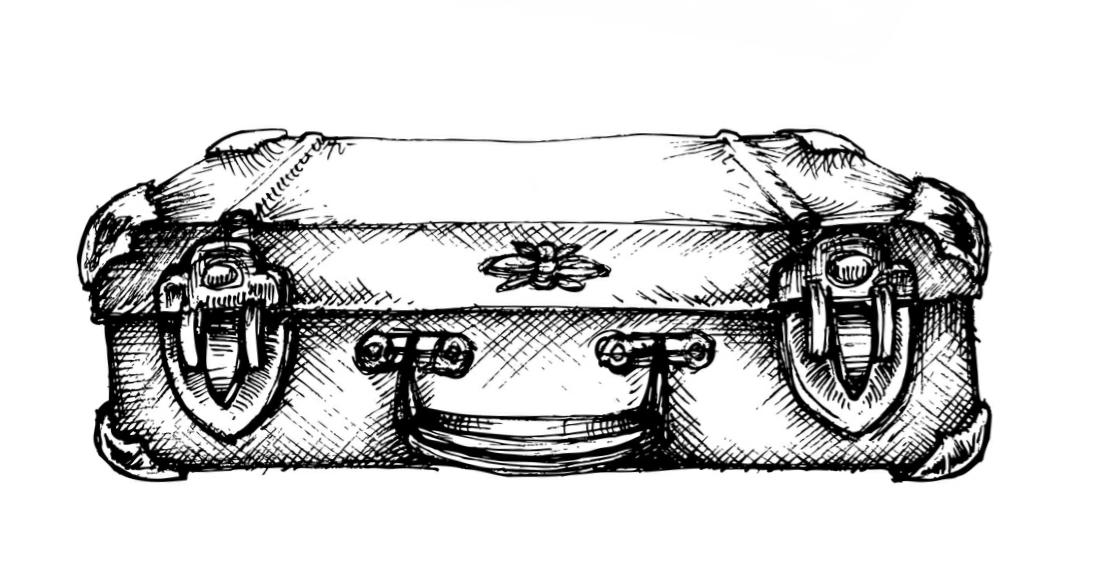
“Where in the world did you borrow that? How nice it is! It will be ashamed to have my old bundle for a travelling companion.”
“It isn’t borrowed,” said Mary with dignity. “It belongs to me. It cost fifty cents.”
We gathered around her with exclamations and inquiries, and evolved this:
One of the boarders in the act of moving threw out as rubbish a pasteboard box in which a suit of clothes had been sent home from the tailor’s. It was about two feet long, one foot wide, and six inches deep, with a cover exactly the depth of the box.
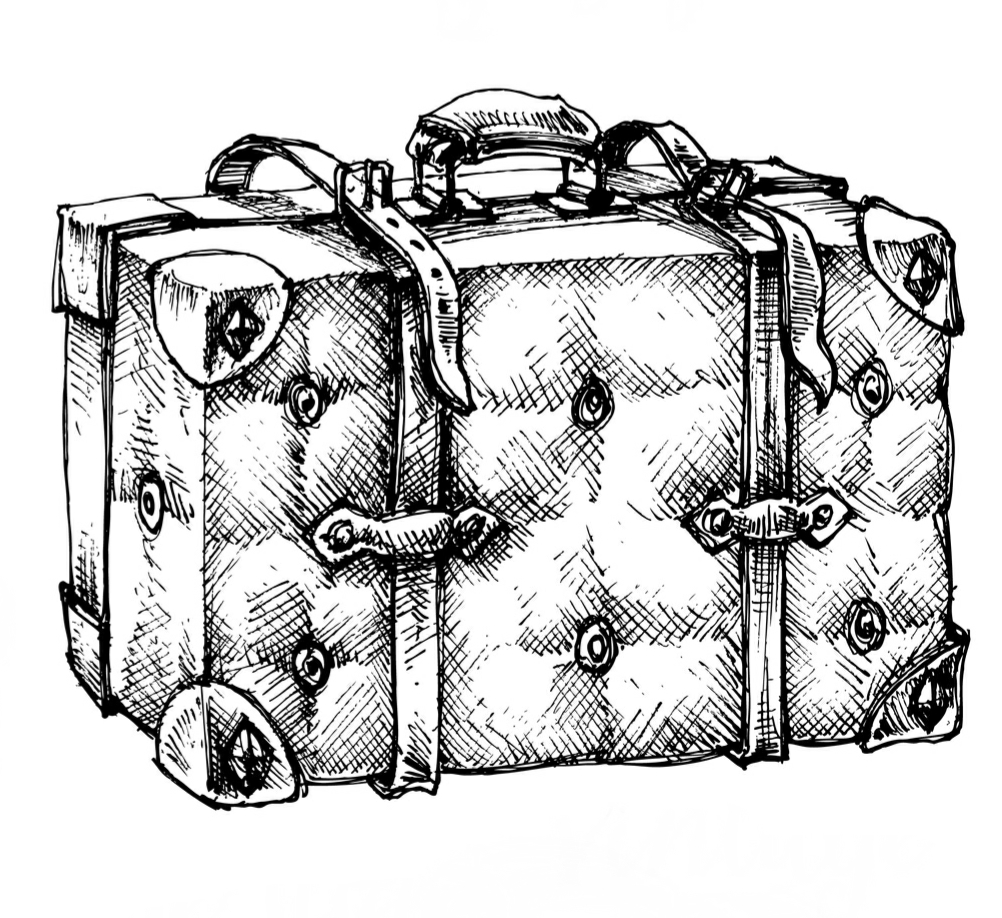
Mary, taking possession of it, covered it with dark-green cambric, at seven cents a yard. It took two yards. This was for strength. Then she re-covered it with plain wall-paper of a tint that suggested leather. Nine cents furnished enough for box and cover.

By that time she thought that she had a very good travelling-case; but, having grown ambitious, she determined to make it still more useful. Twenty-five cents bought a yard of strong gray denim. This she cut and fitted at sides and ends, and, having bound it with dark-green braid, and sewed strings on it at intervals, she had a neat protective cover for her travelling-case, and one that added materially to its strength, as well as to its capacity, should occasion require. A shawl-strap to carry it by (which she already owned) completed the neat outfit.

“You are a regular genius,” said the girl with the bundle, admiringly. “I might have invested fifty cents myself. But then, it was an awful bother to make it.”
Which, let me explain, was the marked difference between the two girls. It was not so much the inventive talent that the one possessed above the other. It was the habit that the other had of considering little common-place efforts of that character “an awful bother.”
I wonder how many girls who are sighing for “Boston bags,” or leather hand-satchels, or even neat, trim two-dollar “telescope bags” as beyond their means, will get a hint from my friend Mary’s management? I see ways of improving on her work. Do any of you?


 Isabella Alden