October’s Party

It’s hard to believe tomorrow is the first day of October! The seasons are changing and in many people’s opinion, autumn is the loveliest season of the year. (Do you agree?)
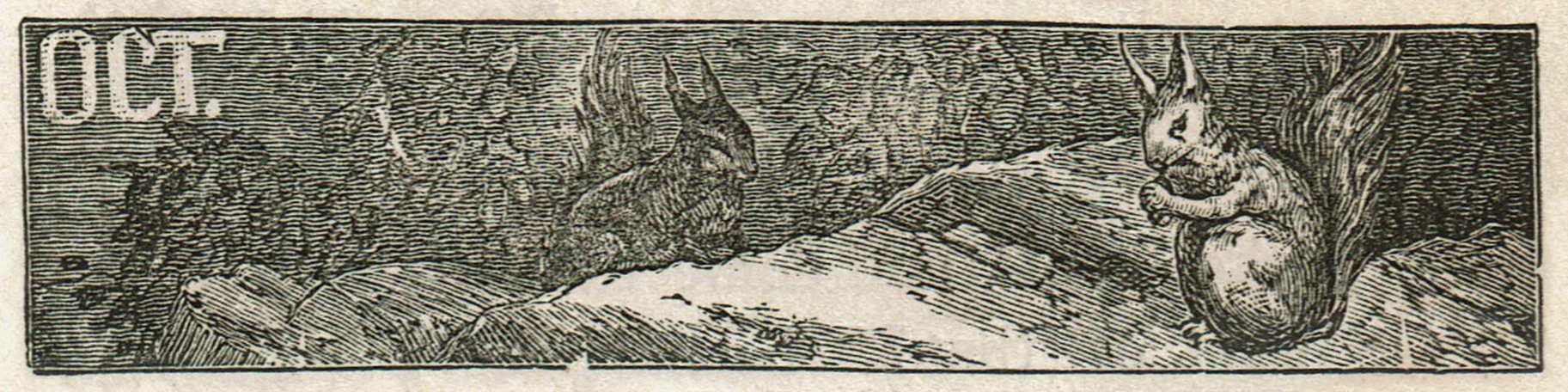
Black and white illustration of a two squirrels feasting on nuts on a mound of earth surrounded by trees. In the top left corner of the illustration is the word "Oct.".

In 1892 Isabella published this whimsical little poem that captures the magical quality of autumn, when falling leaves seem to come alive with purposeful movements.

October’s Party

October gave a party—
The leaves by hundreds came—
The Chestnuts, Oaks, and Maples,
And leaves of every name;

The sunshine spread a carpet,
And everything was grand;
Miss Weather led the dancing,
Professor Wind the band.

The Chestnuts came in yellow,
The Oaks in crimson dressed;
The lovely Misses Maple
In scarlet looked their best.

All balanced to their partners,
And gaily fluttered by;
The sight was like a rainbow
New-fallen from the sky.

Then in the rustic hollows
At hide-and-seek they played.
The party closed at sundown,
And everybody stayed.

Professor Wind played louder,
They flew along the ground,
And then the party ended
In “hands across, all round.”

Black and white pen and ink illustration of a little girl in a dress and bonnet from about 1890. She is outside standing in front of a tree. She holds her skirts out in front of her to try to catch the leaves falling from the tree.
Catch the falling leaves!

In the last line of the poem, “hands across, all round” was a common phrase that would have been immediately recognizable to Isabella’s readers. It refers to a formation in traditional country dancing and square dancing that was very familiar in 1892.

Pen drawing of a group of 10 men and women dressed in clothing from about 1900 and dancing in a circle. behind them is a white two-story house and a red barn set against the red, orange and gold colors of trees. Around the dancers some falling leaves are carried on the wind that also lifts the women's skirts slightly..
“Hands across, all round!”

In this dance move, all the dancers form a large circle and join hands, often as the grand finale of a dance.

For those of us who love autumn, this charming poem reminds us the changing seasons have always felt magical, even 130 years ago! Perhaps the next time you watch leaves swirling in the autumn wind, you’ll think of this October poem and it’s gentle reminder that wonder is always there for those who know how to look for it.

New Free Read: A Modern Sacrifice

Dancing 06Isabella Alden’s 1899 novel, A Modern Sacrifice, is about Kissie Gordon, the daughter of a minister, who had been raised to live according to the Bible’s teachings. But when Kissie’s father dies, she and her mother move to the city, where Kissie is quickly sucked into a whirl of social pleasures she’s never known before. Soon her world revolves around dancing and parties and playing cards.

Isabella wrote the story at a time when most Christian denominations denounced or forbad dancing of any kind. Ministers preached against dancing and wrote tracts about the hidden evils of dance.

Dancing 01

Isabella referred to those tracts in A Modern Sacrifice. In the story, Kissie tries to convince her friends to give up dancing by loaning them a book that warns against the promiscuous influence dance can have on young people.

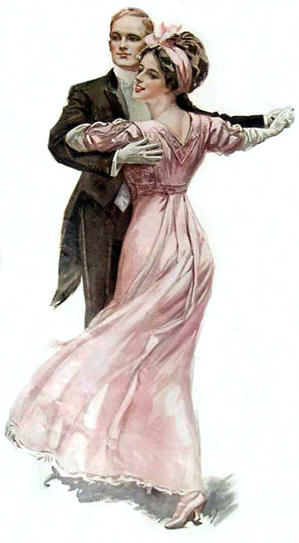
Harrison Fisher_ Ladies Home Journal 1911 02-01The idea that dancing was a gateway to promiscuity was not new. In his 1893 book Modern Dancing; in The Light of Scripture and Facts, the Reverend William W. Gardner warned that dancing “nourished passion and sensual desires” and “leads to the seduction and ruin of the innocent.”

That was pretty strong language for Victorian times; and in A Modern Sacrifice, the mothers of Kissie’s friends were offended that Kissie—a well-brought up young woman—would own a book that contained such vulgar terms.

Ministers who preached against dancing found an ally in the New York City Chief of Police, who reported that three fourths of the “abandoned girls of that city were ruined by dancing.” His simple statement was held up by clergymen as proof of a link between dancing and prostitution.

Dancing 08

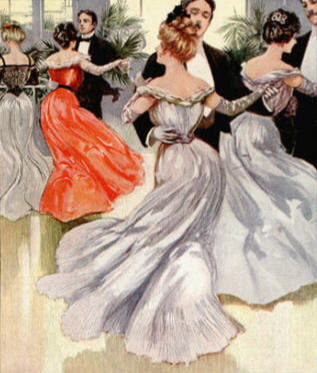
The waltz earned the most condemnation from churches. “It excites great physical intimacy among young men and young women, which should only exist between those whom wedlock has united,” declared Rev. A. B. Riker of the Fourth Street Methodist Church in his series of discourses condemning popular social pastimes.

Even the humble square dance was prohibited:

“The square dances create a taste for the round dances and, usually, if not invariably, lead to them. The step is so easily taken from apparently innocent dancing to that which is free, indecent, amorous and licentious, that a tender conscience will find it safest to reject all.”

 Dr. Archibald Alexander
Professor, Princeton Theological Seminary

Dancing 09

In A Modern Sacrifice Kissie Gordon finally comes to realize how far she has strayed from her upbringing; and once Kissie saves herself from society’s extravagances, she vows to try to save her friends, too, by organizing her own social event that soon has all of society talking.

Cover_A Modern Sacrifice 02You can read A Modern Sacrifice; the Story of Kissie Gordon’s Experiment for free. Click on the book cover to begin reading.

Would you like to read a popular 1893 tract on the perils of dance? Click here to read Modern Dancing; in the Light of Scripture and Facts by Rev. W. W. Gardner, D.D.