
In February 1881 Isabella was thirty-nine years old and an extremely busy woman. She was editor of The Pansy magazine, and was also the magazine’s primary contributor of fiction and non-fiction articles.
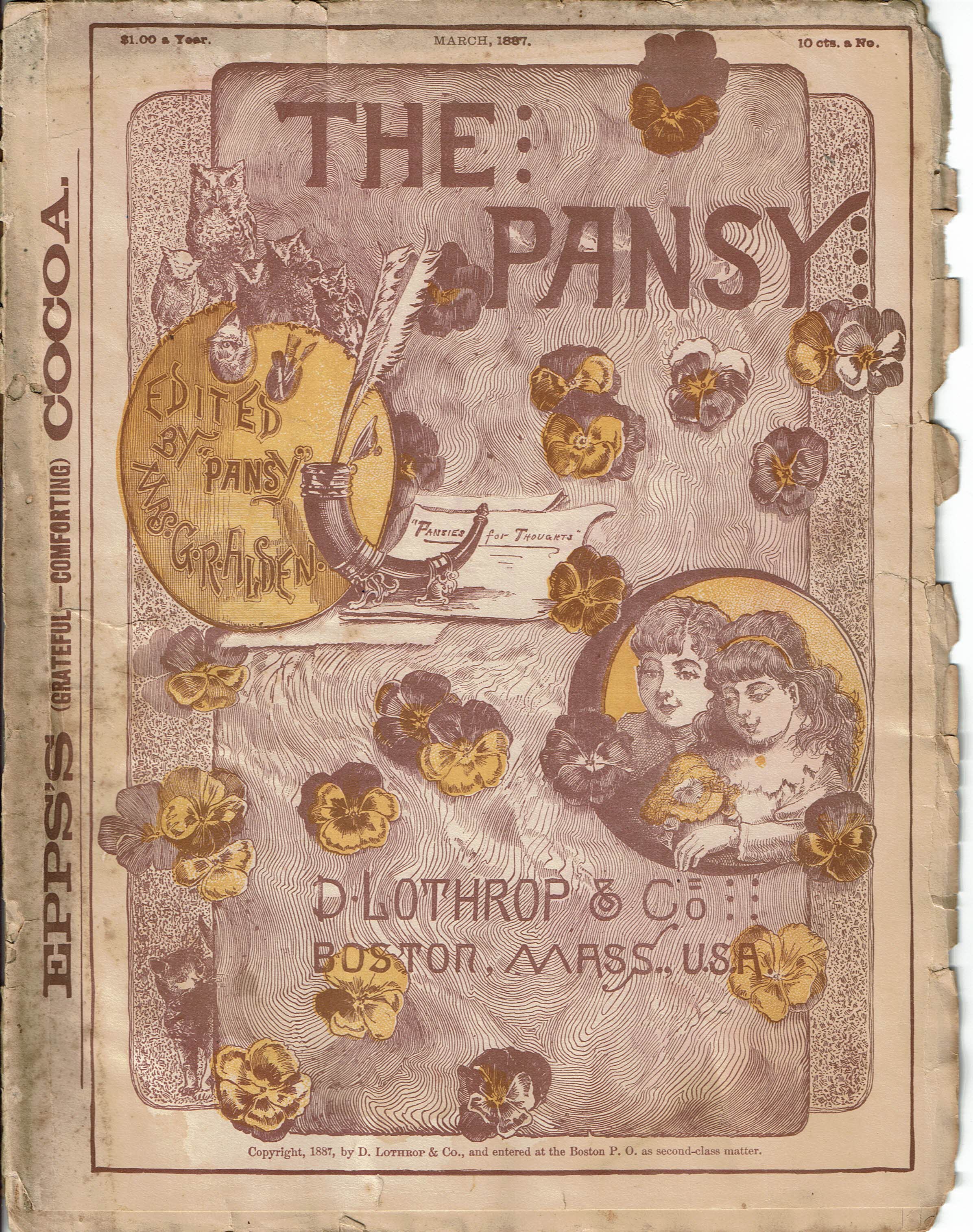
She was the primary creator of the Presbyterian church’s Sunday school lessons for young children, which were published in The Sabbath School Monthly and distributed to Presbyterian churches across the country. She also wrote stories for other Christian magazines that were published in America and Europe.
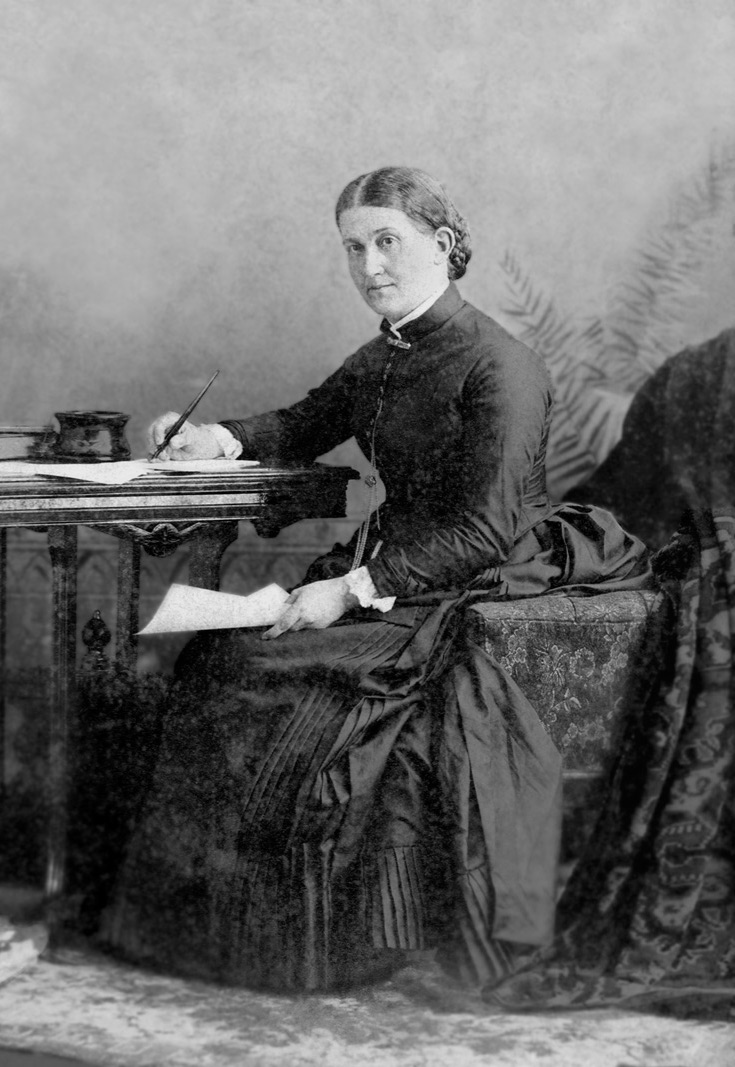
Almost every week she had a speaking engagement somewhere in Ohio—where she and her family were living at the time—or in a neighboring state. Sometimes her appearances included a public reading of her newest story or novel; sometimes she lectured on the proper content and delivery of Sunday school lessons for young children, a topic on which she was an acknowledged expert.
At home in Cincinnati, she was a busy minister’s wife in a demanding household that also included:
- Her seven-year-old son Raymond
- Her fourteen-year-old step-daughter Anna
- Her forty-four-year-old sister Julia
- And her precious seventy-seven-year-old widowed mother, Myra Spafford Macdonald, whose health was slowly declining.
How Isabella managed to juggle so many responsibilities all at once is a mystery, but there must have been times when the mounting pressures threatened to overwhelm her.
One of those pressure points may have occurred in January 1881, when her husband became pastor of a congregation in Cumminsville, Ohio. The new church was only about five miles away, but it meant the family had to once again pack up their lives and begin again in an entirely new place.
Is it any wonder, then, that this curious little paragraph appeared in a Cincinnati newspaper just one month later:
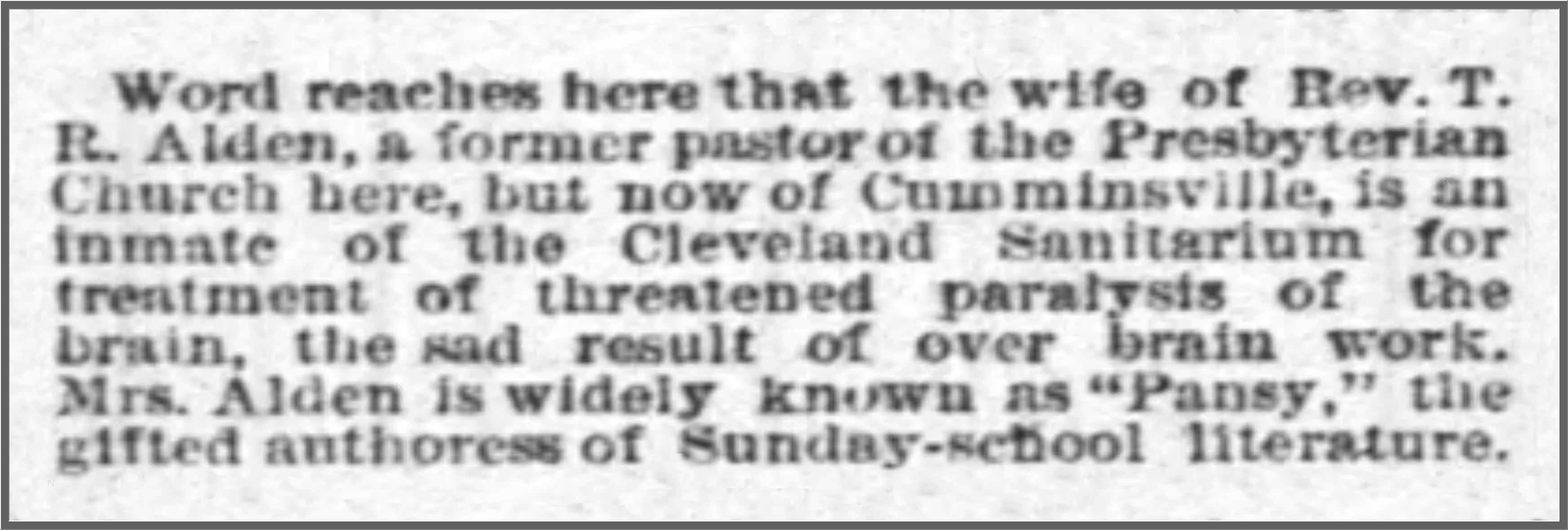
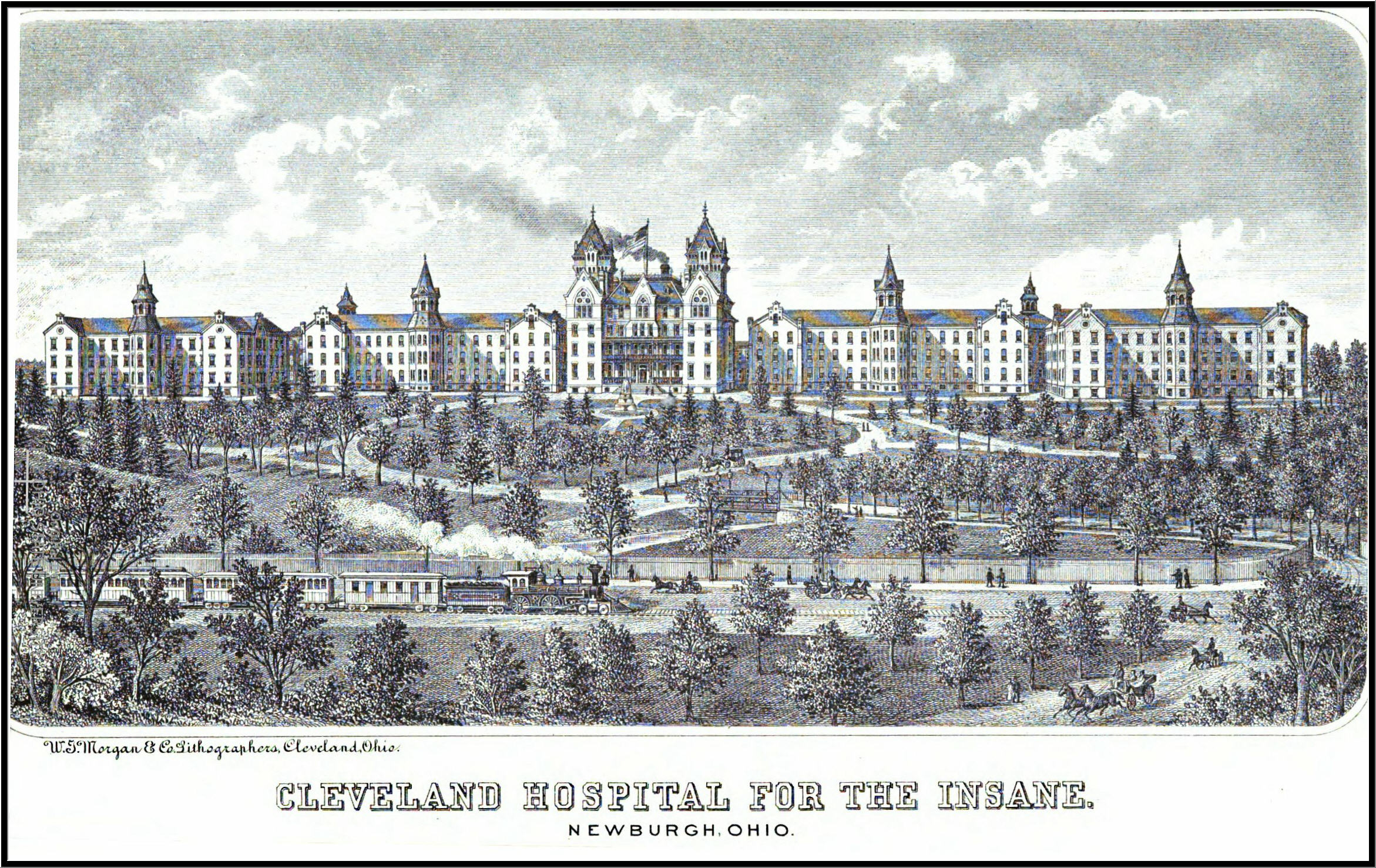
The “Cleveland Sanitarium” was a polite name for an inpatient psychiatric hospital near Cleveland (some 250 miles from Isabella’s new home in Cumminsville).
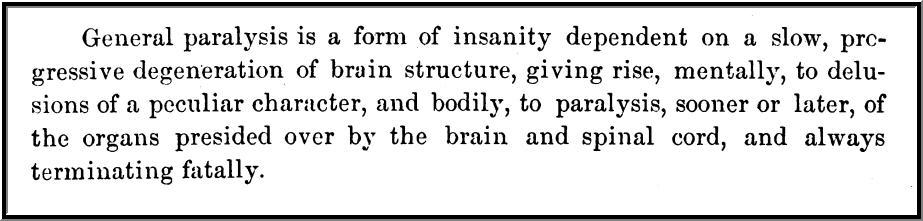
At that time the hospital was formally named “The Northern Ohio Hospital for the Insane,” and “paralysis of the brain” was among the many conditions they treated. In the hospital’s 1880 annual report to the governor, they gave this definition of the condition:
It wasn’t the first time Isabella had sought help for her physical and emotional needs. Twenty years earlier, as a new bride, Isabella checked into the Castile Sanitarium in New York and stayed five months. During her stay there she gardened and played croquet, walked and spent as much time out of doors as possible in between her scheduled therapy treatments.
She may have had the same experience during her stay in Cleveland. The Cleveland Illustrated Guidebook, published by William Payne in 1880, describes the hospital’s grounds where “nature and art have united to make [them] attractive.”
Immediately in front is a stream, separating the grounds from the … railroad track. A grove skirts the entire grounds, affording an abundance of shade and strolling room for the patients, and adding to the general beauty of the location.
Perhaps the beautiful grounds reminded Isabella of the New York sanitarium and the benefit she’d found in similar treatment twenty years earlier.
Here’s what is most striking about this episode: Isabella didn’t hesitate to get help when she needed it. She checked into a hospital that literally had “Insane” in its official name, and she didn’t seem worried about the stigma. Maybe that’s because mental and emotional health were viewed differently in the 1880s. Conditions like “paralysis of the brain,” melancholy, and nervous exhaustion were treated as medical conditions—ailments that could be cured with rest, therapy, and proper care. Or maybe Isabella was just remarkably practical about her own wellbeing. When life became overwhelming, she took action.
Unlike Isabella’s previous stay at a sanitarium (which you can read about here), we can’t know what treatments she received this time. But just a little more than a month later, on March 14, 1881, the Cincinnati Enquirer published a single line update about Isabella:
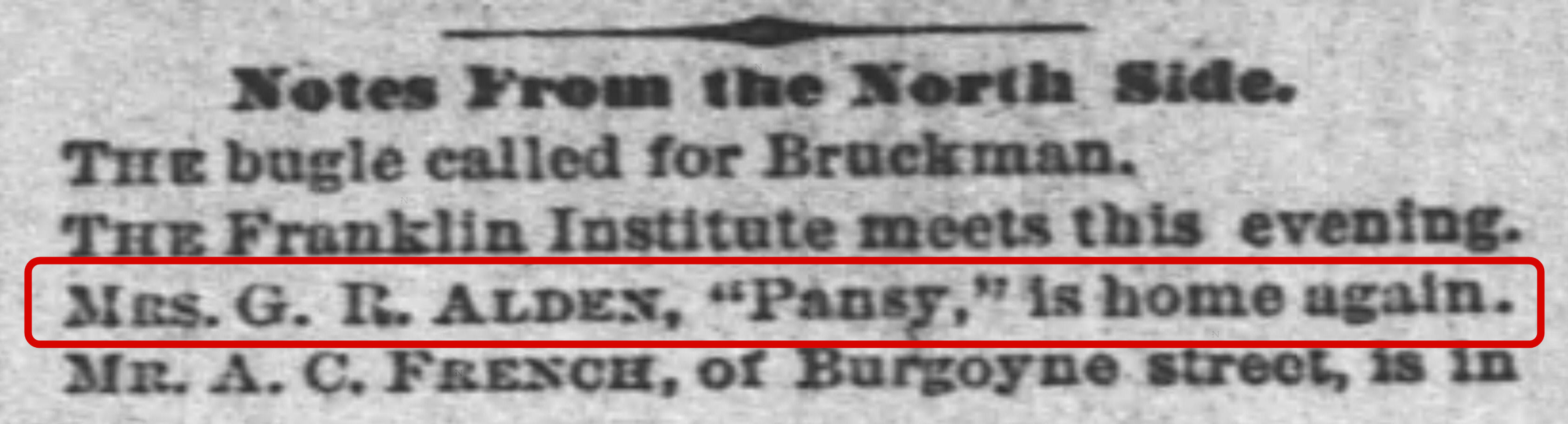
And just like that, Isabella was home. A little over a month of treatment, and she was back to her family, her work, and her impossibly busy schedule. We don’t know exactly what happened during those weeks in Cleveland, but we know the outcome: she recovered and went on to maintain her extraordinary productivity for decades to come. Sometimes the bravest thing we can do is admit we need help—and then actually get it.

What strikes you most about Isabella’s decision to seek help? Do you think it would have been harder or easier in the 1880s compared to today?
Have you ever had a moment when life’s responsibilities threatened to overwhelm you? What helped you get through it?
YOU CAN READ MORE ABOUT ISABELLA’S HEALTH AND HOW ILLNESSES WERE TREATED DURING HER LIFETIME BY READING THESE PREVIOUS POSTS:
Isabella’s Mystery Illness and the Water Cure
Fantastic Cures for What Ails You

 Isabella Alden