Isabella’s Authentic Faith

Despite her popularity as a best-selling author, Isabella gave very few interviews. She made an exception in 1892 when a magazine called The Ladies Home Journal (which was quickly becoming the most widely-read magazine in the world) came calling.

The interviewer, Denny Johnson, asked Isabella the usual interview questions about her home life, her childhood, and what inspired her to write. But in the process of sharing Isabella’s answers to those very standard questions, Johnson’s article reveals the quiet power of Isabella’s Christian principles.

Reading the article, you get the sense that what made Isabella extraordinary wasn’t just her prolific writing career; it was the way in which her personal character was very much reflected in the stories she published.
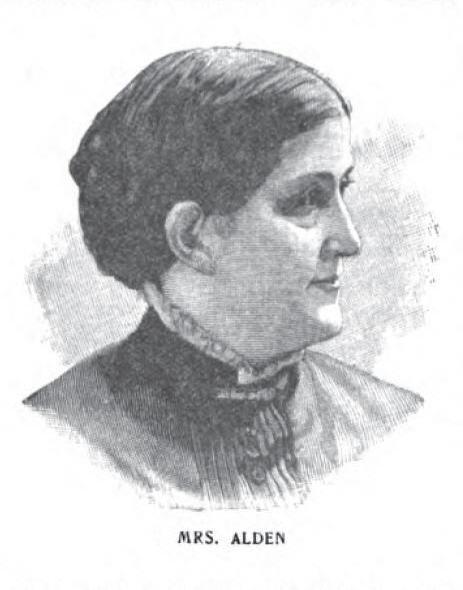
A black and white pencil and charcoal drawing of Isabella Alden in profile. Her hair is parted in the middle and shaped in a braided bun at the back of her head. She wears a high-collared dress or blouse with lace trim. She wears no jewelry.
The image of Isabella that was published with the 1892 article in The Ladies Home Journal.

So, here are four things The Ladies Home Journal interview revealed about Isabella’s personal character:

1. Isabella Lived Her Message

Johnson wrote that Isabella’s Christian principles weren’t “mere theories, existing only on paper.” Instead, they were “the rules that govern her own daily life.”

In those few words, Johnson revealed what is essentially the foundation of Isabella’s stories. Readers don’t just admire her characters’ moral courage—they can sense it comes from the reality of Isabella’s life.

Isabella believed in what Johnson called “practical “Christianity”—faith that rolled up its sleeves and got to work.
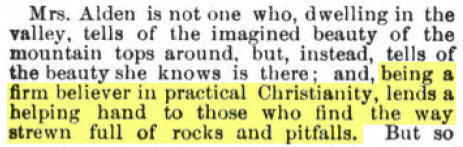
She quietly helped others navigate life’s difficulties, often so unobtrusively that people didn’t realize she was the one who had “smoothed this bit of path, or pushed aside that jagged stone.” To Isabella, that was genuine Christian service.

Article excerpt: "In manner she is unassuming, genial, refreshingly natural, and possessed of a gentle dignity that, while repelling undue familiarity from effusive strangers, yet invites confidence from any who  may need her help or sympathy.

2. Isabella had Humility in Success

By 1892 Isabella had already authored over one hundred books that were beloved by readers around the world, yet the article describes her “as unspoiled as when she signed her name for the first time ‘Pansy.'” She shrank from publicity and seemed genuinely surprised by the impact of her work.
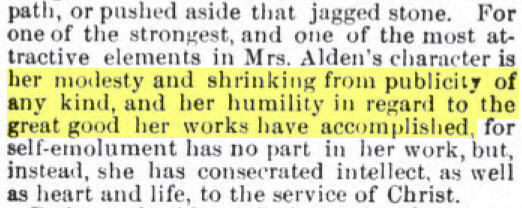
Article excerpt: "One of the most attractive elements in Mrs. Alden's character is her modesty and shrinking form publicity of any kind, and her humility in regard to the great good her works have accomplished."

Her modesty wasn’t false humility; it reflected Isabella’s belief that her talents were gifts meant for service rather than self-promotion. As Johnson wrote, “self-emolument has no part in her work,” but instead she had “consecrated intellect, as well as heart and life, to the service of Christ.” In other words, she didn’t write stories for personal gain.

3. Isabella was Consistent

What gave Isabella her unique influence over young people wasn’t just her writing skill, but her consistent character. The same “high standard of right and wrong,” the same genuine care for others, the same joy in her faith that readers found in her books—all of this could be witnessed in her daily life.

The article said she had an infectious laugh and youthful spirit that weren’t manufactured for her audience.
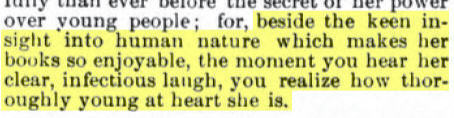
Excerpt from magazine article, "beside the keen insight into human nature which makes her books so enjoyable, the moment you hear her clear, infectious laugh, you realize how thoroughly young at heart she is."

She would pause her important work to meet with any child who came to visit, demonstrating that her love for young people was authentic, not merely professional.

article excerpt: "her great lover for children is evinced by the cheerfulness with which she will pause in the midst of her work, to meet a child who has come to visit her."

4. Isabella’s Example is Timeless

In our present world of personal brands and influence marketing, Isabella’s story feels refreshingly honest. Her success didn’t come from clever marketing; it came from being the same person in private that she was in public. She wrote from who she actually was, not who she thought her audience wanted her to be.

Maybe that’s a big part of why her books are still being read today, long after other, flashier authors have been forgotten. There’s still something powerful about the simple consistency of Isabella’s authentic faith and the honest life she lived that still shine through when we read her stories.

You can click here to read the entire article about Isabella that appeared in The Ladies Home Journal.

What do you think? Did Denny Johnson capture the essence of Isabella’s personal character?

Playing with Paper Dolls

If you’re a female born before 1970, there’s a good chance you played with paper dolls when you were young.

Paper dolls were a popular toy because they were inexpensive to produce and they were often free to consumers. To play paper dolls, a little girl only needed a pair of scissors and a modicum of adult supervision during the cutting phase.

In the early 1900s newspapers printed paper dolls with educational themes. In 1909, for example, major newspapers printed the syndicated Dorothy Dot paper dolls that featured Dorothy traveling the world, meeting new friends and learning about foreign lands.

Dorothy Dot paper doll in a 1909 edition of the Washington DC newspaper Evening Star


"Antoinette" paper doll, published in the Los Angeles Herald newspaper in 1909.
On her travels, the fictional Dorothy Dot visited “Antoinette,” a French paper doll (published in the Los Angeles Herald newspaper in 1909).

Companies used paper dolls in advertisements for many different products, from ladies’ corsets to sewing threads.

Paper doll printed by Bortree Corsets


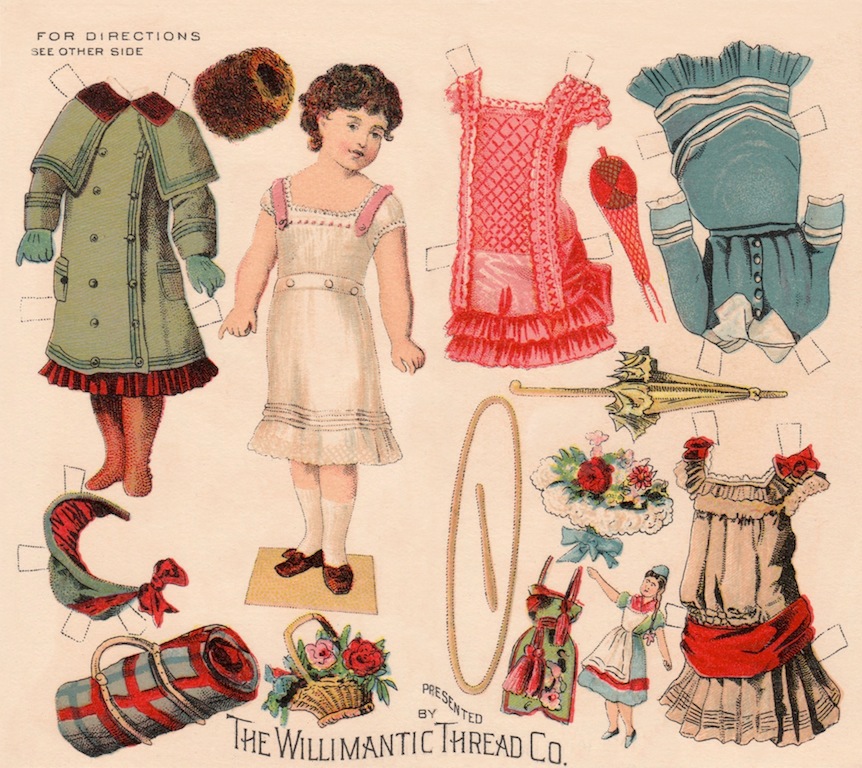
The Willimantic Thread Company published this paper doll


A paper doll compliments of Brook's Spool Cotton Thread.
A paper doll compliments of Brook’s Spool Cotton Thread.

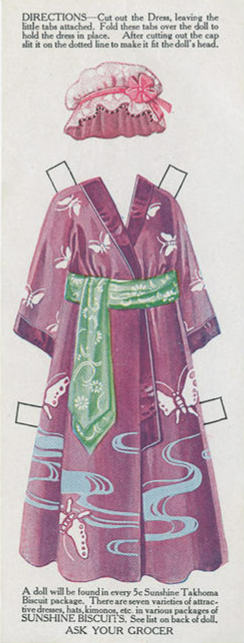
Sunshine Biscuits (still in business today as the makers of Hydrox cookies and Cheez-It crackers) often included free paper dolls in their product packaging.

Paper doll from Sunshine Biscuits

Other times, they used paper dolls to increase sales. For example, they included this paper doll kimono in one of their magazine advertisements, but the doll could only be found in packages of Sunshine cookies.

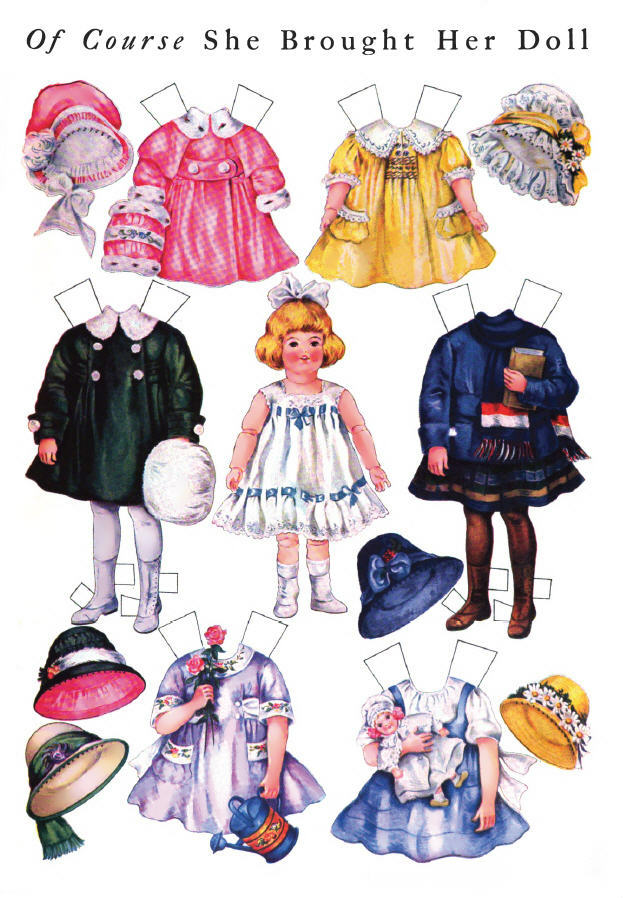
But it was American magazines that really popularized girls’ paper dolls. The Ladies’ Home Journal and Good Housekeeping magazines led the way, publishing high-quality paper dolls with wardrobes in color. This two-page spread from a 1919 edition of Good Housekeeping was typical for the magazine:

Paperdoll - Good Housekeeping Sep 1919 02e

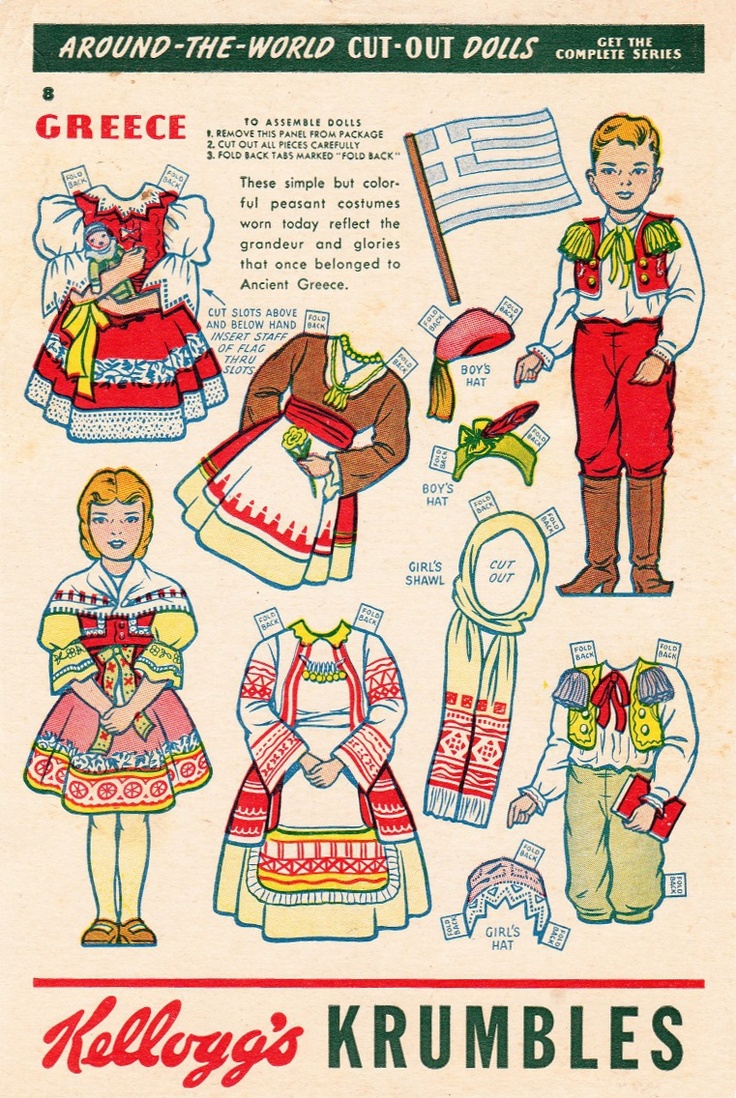
By the time paper dolls really hit their zenith of popularity in the 1950s, they were even on cereal boxes, like this Kellogg’s cereal:

Paperdoll - Kellogs Krumbles

Isabella Alden didn’t mention specific paper dolls in her books, but given their popularity, there were probably many girls of Isabella’s acquaintance who played with paper dolls.

And there are many adults who love them, too! Visit Etsy and you’ll find many vendors who create new paper dolls or reproduce vintage paper dolls from different eras.

And we found a great site that explains the history of paper dolls and features an interesting blog with many examples of dolls from different decades. Just click here to visit.

How about you? Did you ever play with paper dolls? Which was your favorite?