Flossy and the Street Children

Isabella Alden never actually said so, but there’s an argument to be made Flossy Shipley Roberts may very well have been her favorite character. Of all the characters Isabella created, Flossy made the most appearances in her novels.

Flossy first appeared in Four Girls at Chautauqua. She was also a key character in The Chautauqua Girls at Home, Ruth Erskine’s Crosses, Four Mothers at Chautauqua, and Echoing and Re-echoing.

Cover of Ester Ried Yet Speaking showing a close-up of a young woman with blonde hair dressed in a high-neck red gown. In the background is a large three-story home set amid trees and gardens.

And while she was only mentioned in Judge Burnham’s Daughters and Ruth Erskine’s Son, Flossy made her final appearance—and played a major role—in Ester Ried Yet Speaking.

Perhaps one reason Flossie was so well-loved—by Isabella and by her readers—was that she was honest and truthful, yet deceptively strong. People constantly underestimated Flossy because she was soft spoken and was willing to please others.

But Flossy also had a strong moral sense of right and wrong. She relied on her Christian faith to give her the strength she needed to always do right rather than what others wanted her to do.

She was also kind hearted, especially when it came to children. Flossy was just as willing to teach a Sunday school class full of ragged orphaned street boys as she was to serve tea on her best china to a wealthy church deacon and his wife.

That was the case in Esther Ried Yet Speaking, when Flossy took on the task of teaching a Sunday-school class of rough street boys. During the first class, Flossy took an interest in one of those boys, Dirk Colson and his sister Mart. In the story, Flossy’s concern for them and the rest of the boys—and the actions she took to help them—reflected Isabella’s own principles.

Black and white photo of a narrow alley between two multi-story brick buildings. In the foreground are trash cans and debris, a water pump and buckets. A group of six boys stand in the center of the photo. Behind them are two women wearing long dresses and aprons  from the time period, as well as more children. On the left side of the photo are two young girls, wearing short dresses that appear to be patched.
Boys in Mullens Alley, New York, 1888, by Jacob A. Riis

Isabella was keenly interested in the problem of street children living in large urban areas like New York City. In 1889 she wrote:

There is, in New York City, a meeting known as the “Woman’s Conference.” On the second Friday of every month they meet together to discuss matters of importance and see what they can do to help along the good work which is being done in this world. A few weeks ago they took for their subject the “Street Children’s Sunday,” their object being to see what they can do to help these miserable, neglected, almost forgotten, children to something better than their sorrowful lives have yet known.

The Sun (a New York newspaper) covered that women’s conference and published an account of the meeting, including this paragraph:

At the meeting, which was presided over by Mrs. Lowell of the State Board of Charities, Mrs. Houghton, literary editor of the Evangelist, introduced a subject of the Sunday Life of tenement-house children, a large class of whom do not attend the Sunday schools, and whose Sundays, owing to the drunkenness of their parents, which is more general on that day than any other, and also to the overcrowding of the small rooms in which they live by the presence of the entire family on that day, are full of wretchedness and discomfort. “The children do not laugh enough,” Mrs. Lowell said. “They did not know how to play or to be happy.” This subject has been long of great interest to Mrs. Houghton, and out of this discussion germinated a plan to do something for those little wretched waifs of humanity to brighten their lives, and ultimately to make of them better men and women and more intelligent and worthy citizens.

Isabella strongly believed in the last line of the article: that making the lives of poor boys and girls better will ultimately help them grow to be better men and women.

Black and white photo of three young children sleeping close together in an outdoor alcove of a stone-facade building. The children are barefoot and two are wearing short pants with patches on the knees, as they sleep with their arms around each other.
Children sleeping on Mulberry Street, 1890, by Jacob A. Riis

She also had the example of Jacob Riis, a newspaper reporter who documented living conditions in New York slums. Through his written articles and photographs, he almost single-handedly educated Americans about the necessity of better living conditions for the poor. He advocated for clean drinking water, public parks, and child labor laws, and he was instrumental in implementing these and many other reforms in New York City. Riis and Isabella both attended Chautauqua Institution at the same time, and Riis was close friends with Bishop John Vincent, one of Chautauqua’s co-founders.

Black and white photo of a middle-aged man seated in a chair. He has short, light-colored hair and a mustache, an wears wire-rimmed glasses. He wears a tie and three-piece suit. The chain of a pocket watch is visible on his vest.
Jacob A. Riis in 1904 (from Library of Congress)

Isabella may very well have been thinking of Riis when she wrote about Flossy’s efforts to reach and influence the street boys in her Sunday-school class.

Black and white photo of a row of three two-story attached houses in dilapidated condition, with broken windows and clothes-lines strung from one building to another. The roof of the center home sags dangerously. In the background, a multi-story building hows broken windows and objects cluttering the metal fire escape.
Dwellings of Death by Jacob A. Riis

In one scene, Flossy gets lost in the slums while trying to visit Dirk, and a street boy named Nimble Dick helps her find Dirk’s house.

Mrs. Roberts uttered an exclamation. The house was one of the most forlorn in the row, seeming, if the miserable state of the buildings would admit of comparison, to be more out of repair than the others. It came home to her just then, with a sudden, desolating force, that human beings such as she was trying to reach, and such as she hoped would live in heaven forever, called such earthly habitations as these homes. What possible idea could they ever get of heaven by calling it “home”?

“Do they have the whole of the house?”

She asked the question timidly, for the building looked very large, but she was utterly unused to city tenement life.

“The whole of that house?” Dick fairly shouted the sentence, and bent himself double with laughter. “Well, I should say not, mum! As near as I can calculate, about thirty-five different families have that pleasure. The whole of the house! Oh, my! What a greeny!” And he laughed again.

Mrs. Roberts exerted herself to laugh with him, albeit she was horror-stricken. Thirty-five families in one house! How could they be other than awful in their ways of living?

“I know almost nothing about great cities,” she said. “My home was in a much smaller one.”

This was the truth, but not the whole truth. Instinct kept this veritable lady, in the truest sense of the word, from explaining that she knew nothing about the abject poor, when she was speaking to one of their number.

But Flossy quickly set about learning all she could about Dirk, his sister, and their neighbors because she felt a distinct calling to help them. When she returned a second time to Dirk’s tenement building—this time accompanied by her husband—other residents of the tenement warned her to stay away from Dirk.

It was strange, she could not herself account for it; but with every added word of misery that set poor Dirk Colson lower and lower in the scale of humanity, there seemed to come into this woman’s heart, and shine in her face, an assurance that he was to be a “chosen vessel unto God.”
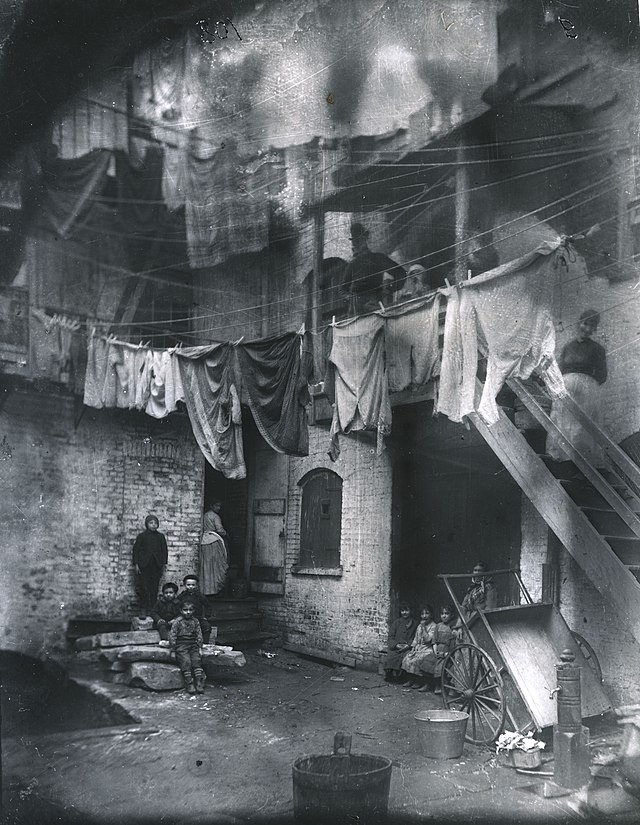
Black and white photo showing a small open area surrounded by four brick buildings. A shaft of light from above illuminates several clothes lines where clothing and blankets have been hung out to dry. On an upper balcony a man stands with children behind him. A woman wearing an apron stands on the stairs leading from the balcony to the count. On the ground an apron-clad woman stands in the doorway with four children of different ages nearby. In another doorway stands a woman with three little girls seated beside her. In the foreground is a two-wheeled pushcart, buckets, a water pump, a and debris.
A Tenement Yard by Jacob A. Riis

To Flossy, helping Dirk and the rest of “her boys” was essential. And when someone tried to change her mind by asking what good Flossy could possibly do for such creatures, she replied:

“Don’t you think that Jesus Christ died to save them? And don’t you think he wants them saved? And will he not be pleased with even my little bits of efforts if he knows that my sincere desire is to save these souls for his glory?”

Her “little bits of efforts” may seem small at first, but Flossy soon begins to see results with “her boys.”

You can read all about the plan Flossy came up with, and how the boys responded, in Isabella’s novel, Ester Ried Yet Speaking.

You can read Isabella’s novel Ester Ried Yet Speaking for only 99 cents! Choose your favorite e-book retailer. (Your purchase from The Pansy Shop helps support this blog.)

New Free Read: A Five-Cent Investment

In 1893, when Isabella’s books were at the height of their popularity, a newspaper article about her mentioned that if forced to choose one word to describe Isabella’s work, that word would be “Help.”

The writer of the article made a very insightful observation. Typically, the main characters in Isabella’s books were, indeed, helpers. No doubt Isabella made them so as a reflection of her own belief that every effort counts. In her stories, no contribution was too small, and no effort was too little, as long as her characters did their best and made the most of what God had given them.

Today’s free read reflects that theme, when Mrs. Burns (one of the story’s main characters) asks the question, “How can I turn a small donation to help missions into a large and meaningful contribution?”

When Mrs. Burns is given a five-cent budget with which to help the cause of church missions, she can’t believe her ears. Five cents! What could she possibly accomplish with a small, insignificant nickel?

But with God’s help and a little imagination, Mrs. Burns soon discovers that her five-cent investment can accomplish great things.

You can read “A Five-Cent Investment” for free!

Choose the reading option you like best:

You can read this short story on your computer, phone, tablet, Kindle, or other electronic device. Just click here to download your preferred format from BookFunnel.com.

Or you can select BookFunnel’s “My Computer” option to receive an email with a version you can read, print, and share with friends.

Reader Tip: As you read the story, be on the look-out for one of Isabella’s most beloved characters from The Chautauqua Girls series to make a brief “cameo” appearance!


This post is part of our 10-Year Blogiversary Celebration! Join us every weekday in September for another fun drawing, giveaway or free read!

Clothes Pansy’s Characters Might have Worn

There’s a new Isabella Alden Pinterest board for you to view: “Clothes Pansy’s characters might have worn” is a budding collection of clothing, jewelry, hats and shoes from the time period in which Isabella wrote her books.

This brown suit (from about 1880) might have been similar to the suit Marian Wilbur wore in Four Girls at Chautauqua.

Brown gown

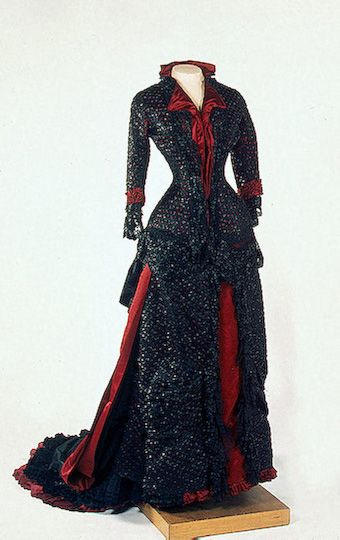
And this delicate gown may remind you of the gown Flossy Shipley ruined in the rain on her first visit to Chautauqua.

Wool Twill Embroidered Dress c 1885

You’ll also see several black gowns that Ruth Burnham might have worn (she never wore any other color) in the book Ruth Erskine’s Crosses.

Ruth Erksine black dress

You’ll find examples of traveling costumes, day dresses, tea gowns, and walking suits, as well as some jewelry, purses, and shoes to help you visualize Isabella’s beloved characters as you read her books. Click here to view Isabella’s Pinterest board now.

A Tour of Chautauqua: Palestine Park

At Chautauqua, opportunities for learning weren’t confined to classrooms and lecture halls. Dr. John Vincent, a Methodist minister and co-founder of the Chautauqua Institute, was a great proponent of learning in the out-of-doors. He embraced the forest setting and set out to make Chautauqua the standard for open air summer schools throughout the country and the world.

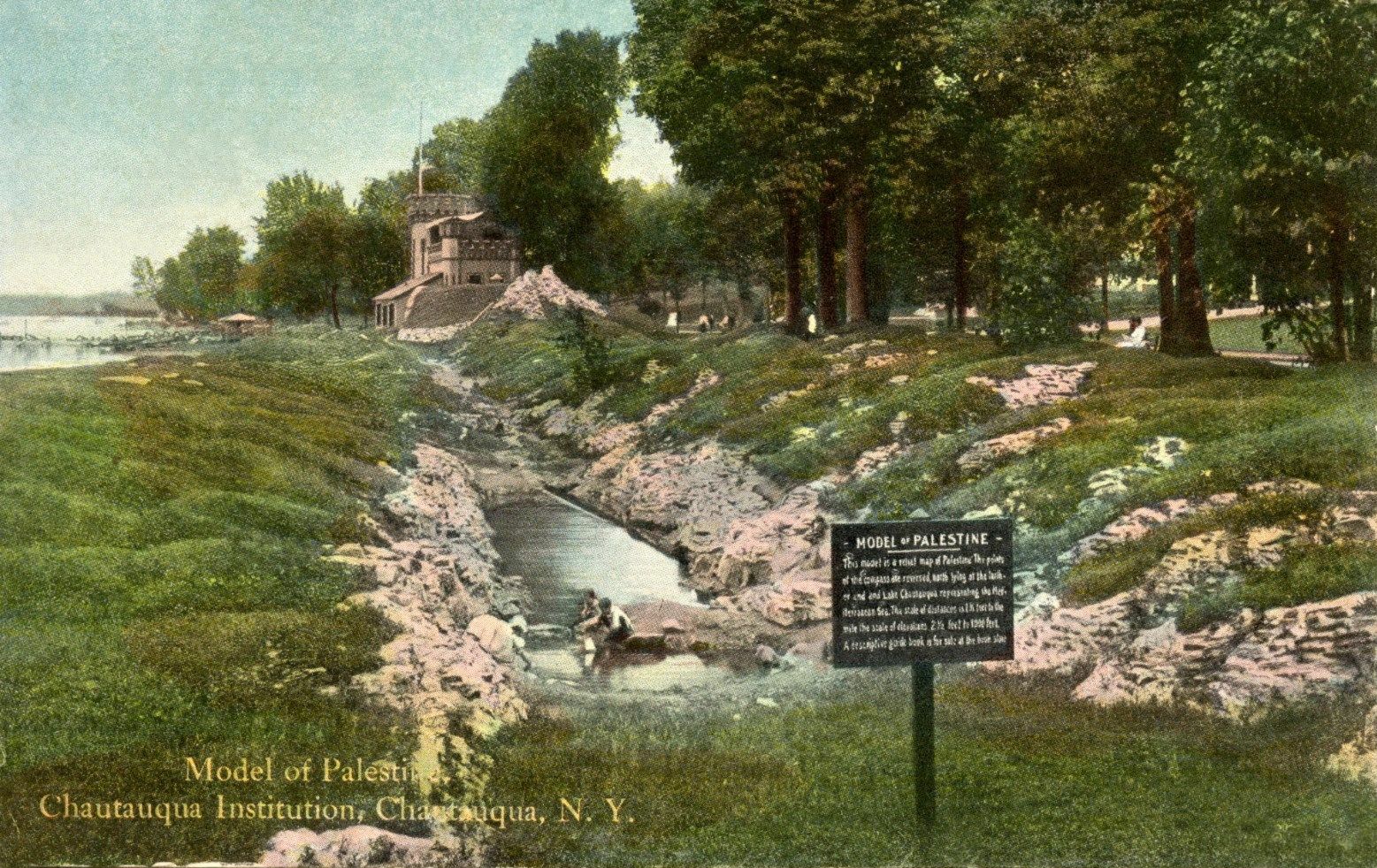
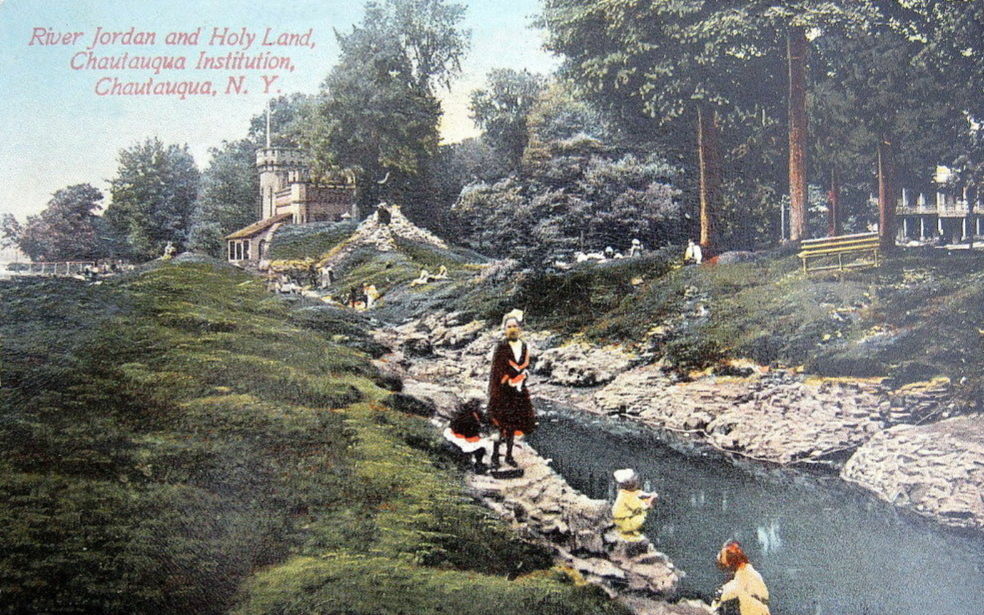
Chautauqua Model of Palestine One notable example of Dr. Vincent’s vision of a fresh-air classroom was Palestine Park. He came up with the concept of making a miniature model of the Holy Land so students could get a visual sense of the settings they learned about in their Bible classes.

Sign describing Palestine Park
Text of the sign posted at the entrance to Palestine Park. Click on the image to see a larger version.

Palestine Park was constructed near the pier on the shore of Lake Chautauqua. The lake itself represented the Mediterranean Sea. Nearby were representations of the cities of the Philistines, Joppa and Caesarea, Tyre and Sidon.

The Mountain Region showed the famous places of Israelite history from Beersheba to Dan. The sacred mountains Olivet and Zion, Ebal and Gerizem were built. And there were also the River Jordan, the Sea of Galilee, and the Dead Sea.

Guide Book to Palestine ParkSmall plaques identified each place of interest and included Bible verses that mentioned the site. In 1920 Dr. Jesse Lyman Hurlbut published a guide to Chautauqua’s Palestine Park. Click on this cover image to read Dr. Hurlbut’s guide.


Old postcard of Chautauquans enjoying Palestine Park.

The model of Palestine was one of the most popular sites at Chautauqua. Theology students regularly walked the area of Palestine Park, notebooks in hands. And Sunday school teachers held classes there, sometimes on the hills around Nazareth to illustrate a lesson on the boyhood of Jesus.

A Lecture on the Model of Palestine 1895
A Lecture on the Model of Palestine, 1895

Isabella Alden was very familiar with Palestine Park, and described it in Four Girls at Chautauqua. In the book, Eurie Mitchell and Flossy Shipley decide to walk to Palestine together one evening:

“Come,” Eurie said, “you have been to meetings enough, and you haven’t taken a single walk with me since we have been here, and think of the promises we made to entertain each other.”

Flossy laughed cheerfully.

“We have been entertained, without any effort on our part,” she said. Nevertheless she suffered herself to be persuaded to go for a walk, provided Eurie would go to Palestine.

“What nonsense!” Eurie said, disdainfully, when Flossy had explained to her that she had a consuming desire to wander along the banks of the Jordan, and view those ancient cities, historic now. “However, I would just as soon walk in that direction as any other.”

There was one other person who, it transpired, would as soon take a walk as do anything else just then. He joined the girls as they turned toward the Palestine road. That was Mr. Evan Roberts.

“Are you going to visit the Holy Land this morning, and may I be of your party?” he asked.

“Yes,” Flossy answered, whether to the first question, or to both in one, she did not say. Then she introduced Eurie, and the three walked on together, discussing the morning and the meetings with zest.

“Here we are, on ‘Jordan’s stormy banks,’” Mr. Roberts said, at last, halting beside the grassy bank. “I suppose there was never a more perfect geographical representation than this.”

“Do you really think it has any practical value?” Eurie asked, skeptically. Mr. Roberts looked at her curiously.

“Hasn’t it to you?” he said. “Now, to me, it is just brimful of interest and value; that is, as much value as geographical knowledge ever is. I take two views of it. If I never have an actual sight of the sacred land, by studying this miniature of it, I have as full a knowledge as it is possible to get without the actual view, and if I at some future day am permitted to travel there, why—well, you know, of course, how pleasant it is to be thoroughly posted in regard to the places of interest that you are about to visit; every European traveler understands that.”

“But do you suppose it is really an accurate outline?” Eurie said, again, quoting opinions that she had read until she fancied they were her own.

Again Mr. Roberts favored her with that peculiar look from under heavy eyebrows—a look half satirical, half amused.

“Some of the most skilled surveyors and traveled scholars have so reported,” he said, carelessly. “And when you add to that the fact that they are Christian men, who have no special reason for getting up a wholesale deception for us, and are supposed to be tolerably reliable on all other subjects, I see no reason to doubt the statement.”

On the whole, Eurie had the satisfaction of realizing that she had appeared like a simpleton.

Flossy, meantime, was wandering delightedly along the banks, stopping here and there to read the words on the little white tablets that marked the places of special interest.

“Do you see,” she said, turning eagerly, “that these are Bible references on each tablet? Wouldn’t it be interesting to know what they selected as the scene to especially mark this place?”

Mr. Roberta swung a camp-chair from his arm, planted it firmly in the ground, and drew a Bible from his pocket.

“Miss Mitchell,” he said, “suppose you sit down here in this road, leading from Jerusalem to Bethany, and tell us what is going on just now in Bethany, while Miss Shipley and I supply you with chapter and verse.”

“I am not very familiar with the text-book,” Eurie said. “If you are really in the village yourselves you might possibly inquire of the inhabitants before I could find the account.” But she took the chair and the Bible.

“Look at Matthew xxi. 17, Eurie,” Flossy said, stooping over the tablet, and Eurie read:

“‘And he left them, and went out of the city into Bethany; and he lodged there.’”

“That was Jesus, wasn’t it? Then he went this way, this very road, Eurie, where you are sitting!” It was certainly very fascinating.

“And stopped at the house on which you have your hand, perhaps,” Mr. Roberts said, smiling at her eager face.

“That might have been Simon’s house, for instance.”

“Did he live in Bethany? I don’t know anything about these things.”

“Eurie, look if you can find anything about him. The next reference is Matthew xxvi.”

And again Eurie read:

“‘Now when Jesus was in Bethany, in the house of Simon the leper.’”

“The very place!” Flossy said, again. “Oh, I want so much to know what happened then!”

Eurie, Flossy, and Mr. Roberts spent the better part of the day at Palestine Park, following the plaques from one location to the next and reading verses out of Mr. Roberts’s Bible.

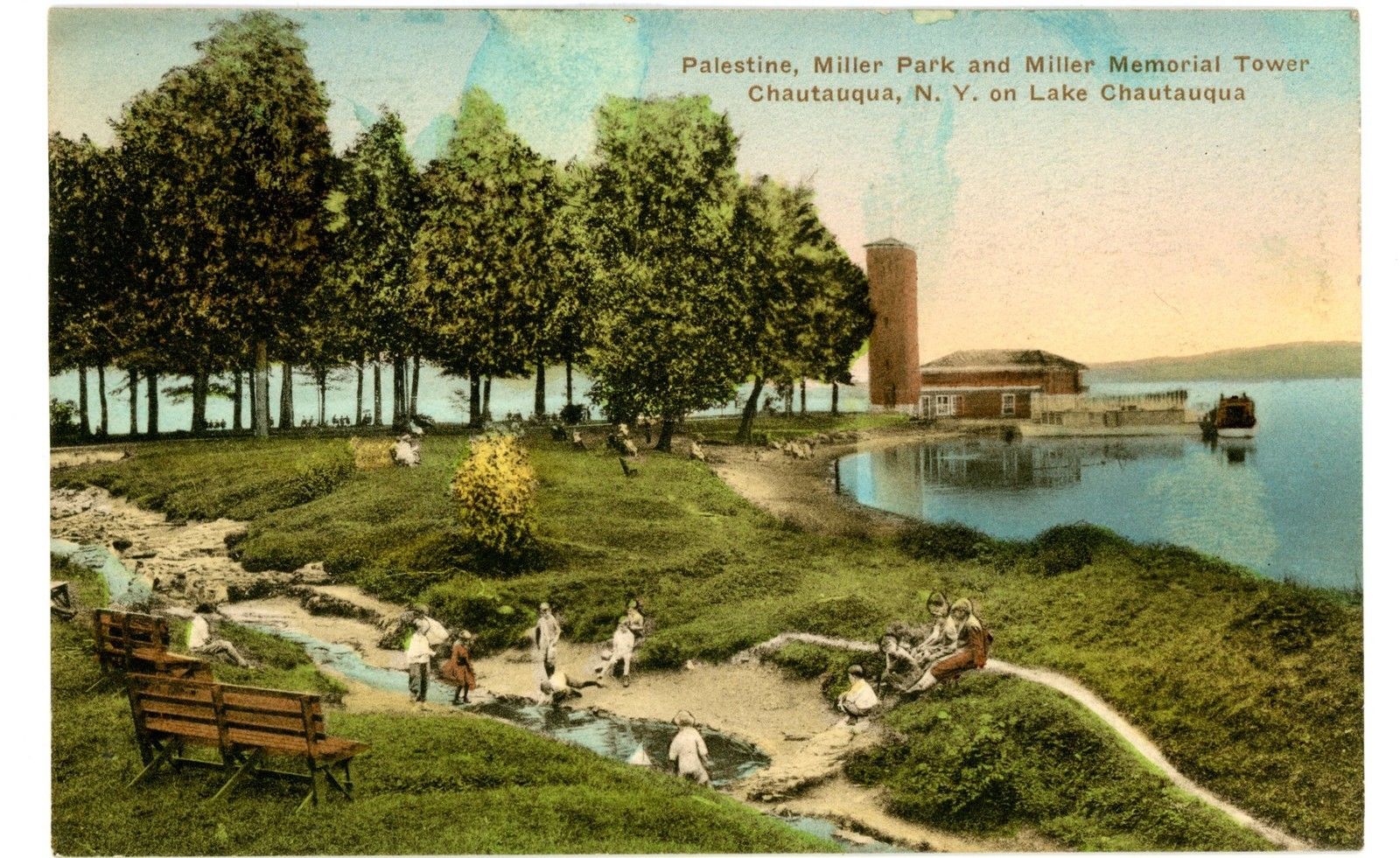
Model of Palestine with Miller Park and Bell Tower in the background

Palestine Park was among the great attractions at Chautauqua and, as Isabella mentioned in her book, it received accolades from Biblical scholars of the time because of its accuracy and geographical precision.

But Palestine Park did have one major flaw, which was alluded to in the sign that marked the entrance to the model. In order to use Chautauqua Lake to represent the Mediterranean Sea, the geography of the Holy Land had to be flipped; north had to be south, and east was made the west.

Jesse Lyman Hurlbut, D.D.

Jesse Lyman Hurlbut, who regularly used the park as part of his theology lectures and children’s Sunday school classes, explained:

“Chautauqua has always been under a despotic though paternal government and its visitors easily accommodate themselves to its decrees. But the sun persists in its independence, rises over Chautauqua’s Mediterranean Sea where it should set, and continues its sunset over the mountains of Gilean, where it should rise. Dr. Vincent and Lewis Miller [the founders of the Chautauqua Institute] could bring to pass some remarkable, even seemingly impossible achievements, but they were not able to outdo Joshua and not only make the sun stand still, but set it moving in a direction opposite to its natural course.”

Over the years, Palestine Park was repaired, rebuilt and expanded to add a model of Jerusalem and its surrounding hills, as well as Bethlehem, Jericho, and other places of interest until, ultimately, it almost doubled in size.


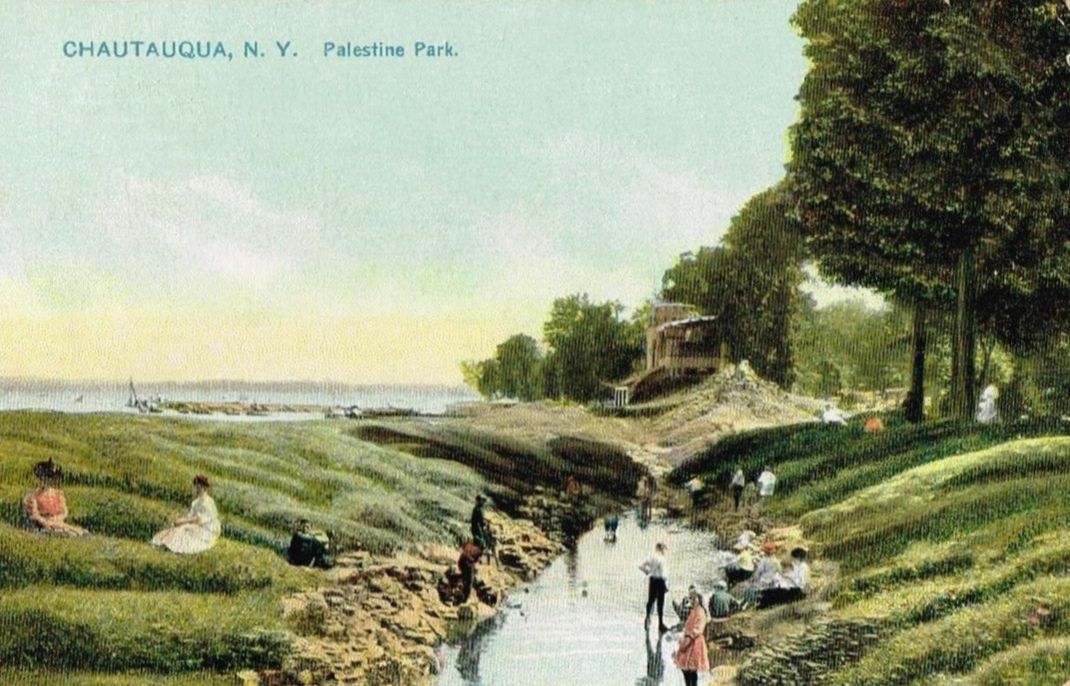
Palestine Park as it looked in 1908


Palestine Park in 1914

Click on the map below to see where Palestine Park was located on the Chautauqua Institution grounds. You’ll find it on the shore of Lake Chautauqua near the steamboat landing at The Point.

Map of Chautauqua 1874

Next on our Tour of Chautauqua: A Healthy Body