Pansy’s Best Advice Giveaway

In past blog posts we’ve share some of Isabella’s advice columns that appeared in Christian magazines in the early 1900s. Sometimes humorous, sometimes serious, but always straightforward, Isabella answered reader questions on a variety of topics, from unwanted marriage proposals to a fear of praying in public.

Cathy and Elaine—two longtime readers of this blog—mentioned they would love to be able to have a booklet that contained all of Isabella’s advice columns.

What a great idea!

Thanks to Cathy and Elaine, today’s giveaway is an e-book collection of Isabella’s most popular bits of advice.

Book cover for Pansy's Advice to Readers. Image of a blue teacup and saucer filled with purple and yellow pansies and butterflies against a pink polka-dot background.

You can read Pansy’s Advice to Readers for free!

Choose the reading option you like best:

You can read the e-book on your computer, phone, tablet, Kindle, or other electronic device. Just click here to download your preferred format from BookFunnel.com.

Or you can select BookFunnel’s “My Computer” option to receive an email with a version you can read, print, and share with friends.


This post is part of our 10-Year Blogiversary Celebration! Join us every weekday in September for a fun drawing, giveaway, or Free Read!

We're 10! It's our Blogiversary Celebration! IsabellaAlden.com. September 2023. Join Us!

Advice to Readers on Church v. Nature

Isabella wrote a popular advice column for a Christian magazine. Some topics she addressed may sound very familiar to today’s readers, like this one from 1897:

“What can be said to someone who says he can get as much good from reading sermons at home, or communing with nature, as in going to church to hear, perhaps, a poor sermon?”

Here is Isabella’s answer:

I infer from your letter that the person who takes this position is a professing Christian. To that person should come, first, a reminder of this direct command: The church we believe to be a divine institution, and careful study of the Bible shows that the Lord has promised to be in a special sense “in the midst” with those who gather in His name. To argue, then, that as much good can be secured in other ways is to set one’s self in opposition to the Lord’s wisdom, and to thwart His plans of grace for us.

Photo of man sitting on a large rock as he looks out over a pastoral scene.

.

Moreover, the first object in attending church is not to hear a sermon—good or poor—but to worship God in united prayer and song. He has planned that we shall gather in companies to do this, in order to be helpful to one another, as well as to ourselves. There is always that question of influence over others to be remembered. The habit of church-going is an unquestioned safeguard to thousands of people who have no deep-seated Christian principle in regard to it; and whatever I can do to confirm and increase this habit I am bound—by the rules that govern good society—to do. So that (leaving myself out of consideration altogether) for the sake of others I should be regular at church; but God has planned so wisely for us that in helping others we are, as it were, compelled to help ourselves.

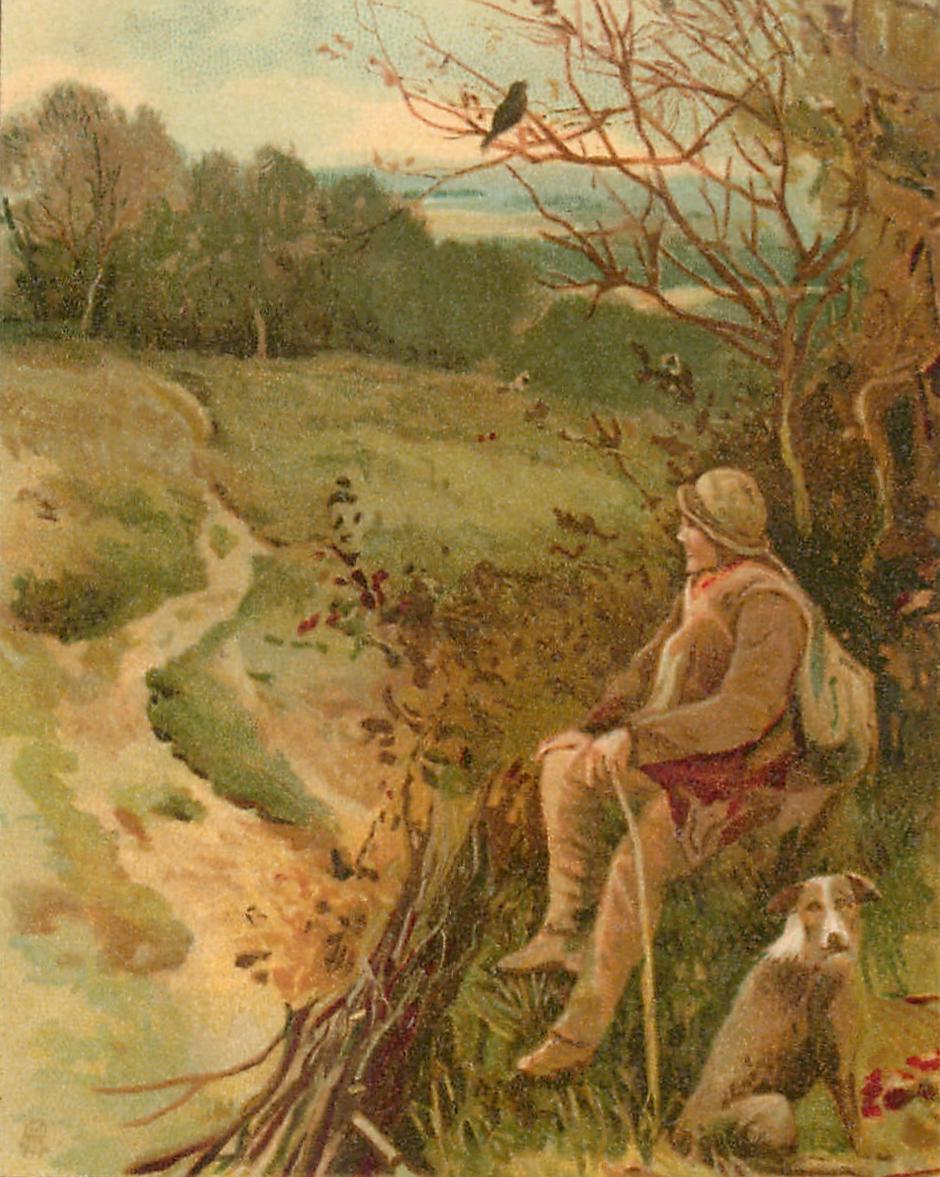
Illustration of a man and his dog sitting at the base of a tree, looking out over a open field with a grove of trees in the background.

.

These are some of the reasons for habitual church-going that appear on the surface. But the best remedy for one not inclined to regularity in this matter is to ask the Master who “went into the synagogue on the Sabbath day,” “as his custom was,” what He thinks.

Have you ever heard someone say they believe reading their bible or communing with nature is just as good as attending church?

What do you think of Isabella’s advice?